Events of the Cardiac Cycle
 Studied by 0 people
 Call Kai
 Learn
Learn Practice Test
 Spaced Repetition
 Match
Match Flashcards
 Knowt Play
1/29

There's no tags or description
Looks like no tags are added yet.
Name | Mastery | Learn | Test | Matching | Spaced | Call with Kai |
|---|
No analytics yet
Send a link to your students to track their progress
30 Terms
what are the three basic components of the circulatory system?
heart
blood vessels
blood
why does the heart need a co-ordinated pumping mechanism?
because it works as a pump
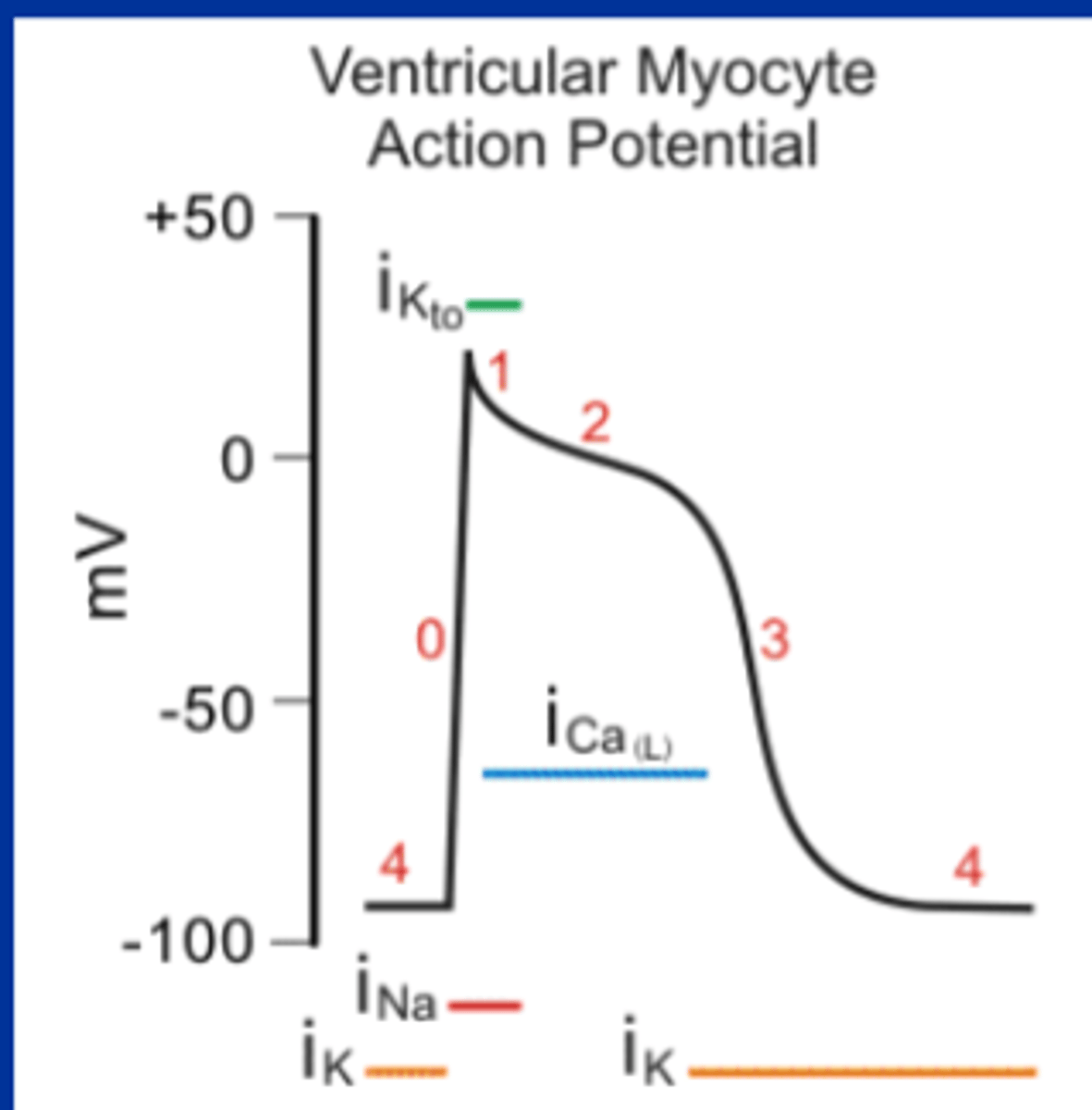
what leads to a cardiac contraction?
cardiac excitation (SA node - pacemaker cells. Conduction pathways. )
excitation-contraction coupling (ventricular myocyte action potential. Ca influx)
cardiac contraction.
the heart is 2 pumps in series - diagram
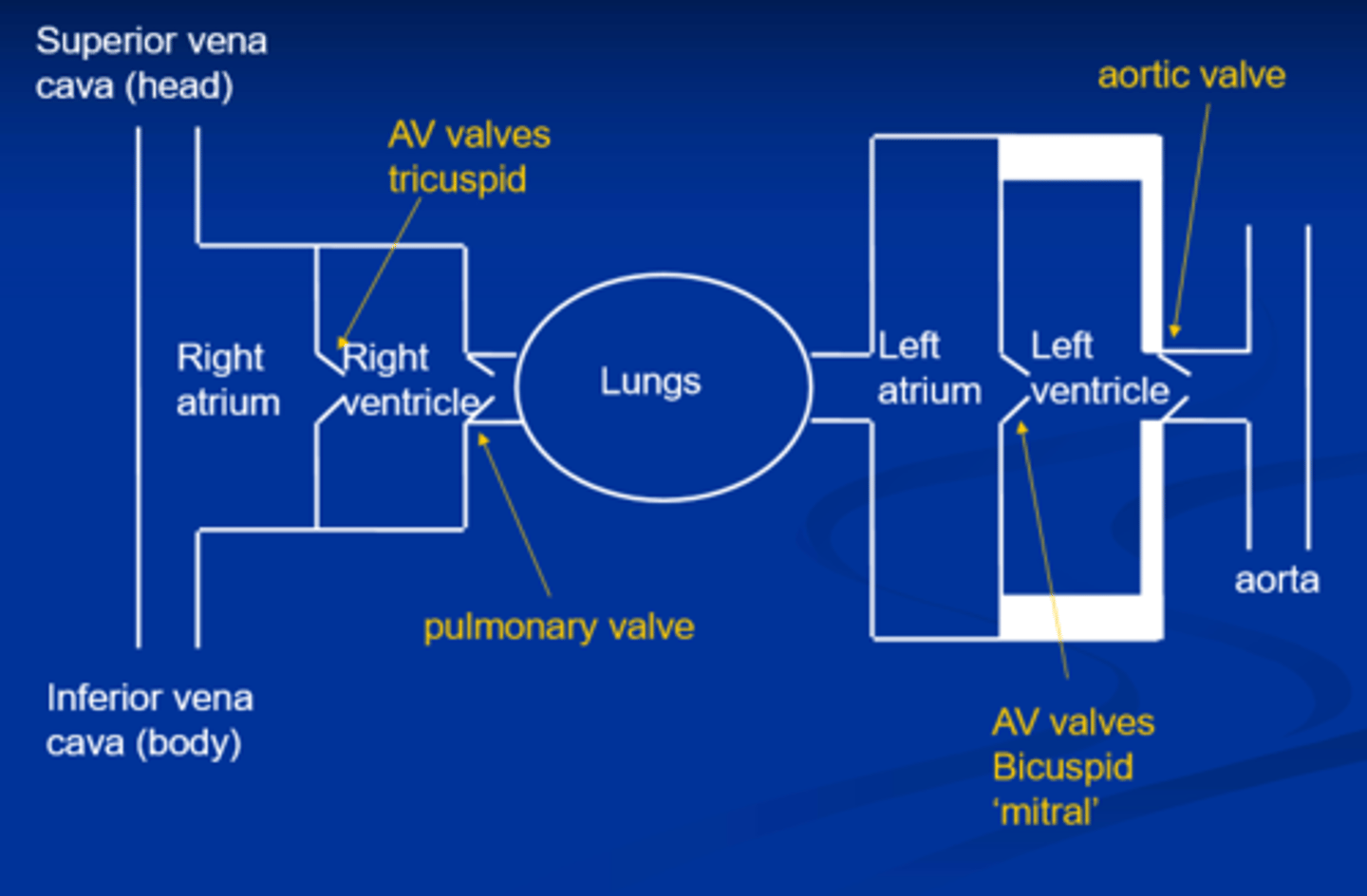
why is a valve tricuspid?
it has three leaves
are the volume outputs the same per side?
identical from left hand side and right hand side.
5 L per minute.
70ml per beat.
how much higher is the pressure coming from the left hand side of the heart?
x4
pressures in the aorta and pulomnary aerteries?
L (aorta) = 120mmHg
R (pulmonary) = 30mmHg
what is systolic blood pressure?
when the left side of the heart contracts.
what is diastolic blood pressure?
when ventricle relaxes.
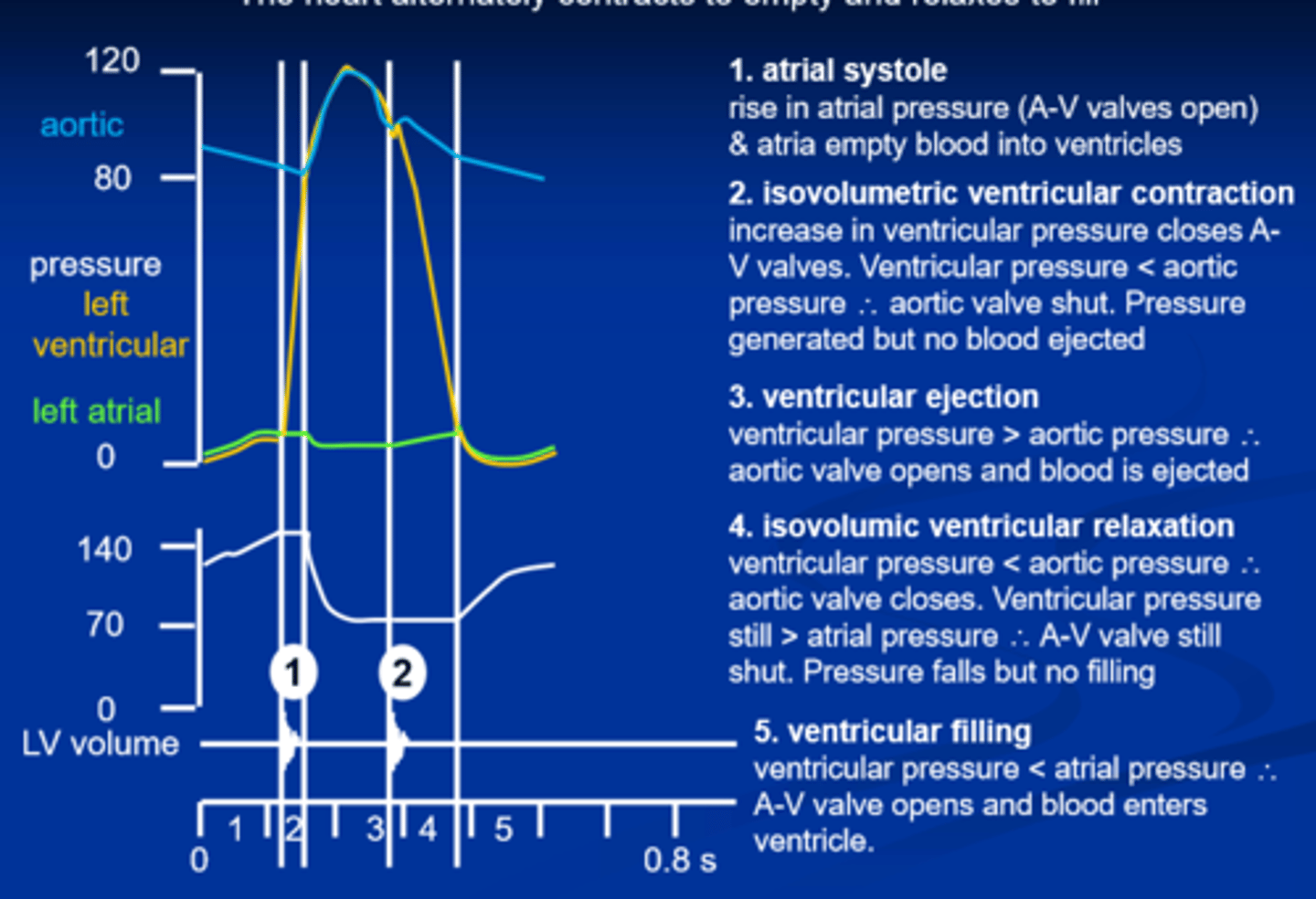
why do valves open and close?
in response to pressure changes

pressure in atrial systole? 1
rise is atrial pressure (AV valve open) and atria empty blood into ventricles.
pressure in isovolumetric ventricular contraction? 2
increases in ventricular pressure closes AV valve.
ventricular pressure< aortic pressure therefore aortic valve shut.
Pressure generated but no blood ejected.
what is the first heart sound?
closure of the AV valves
pressure in ventricular ejection? 3
ventricular pressure > aortic pressure therefore aortic valve opens and blood is ejected.
why is the heart never properly emptied of blood?
efficiency - much easier to fill from halfway as opposed to completely empty.
50% of volume of blood is ejected into the aorta.
pressure in isovolumic ventricular relaxation? 4
ventricular pressure < aortic pressure therefore aortic valve closes.
Ventricular pressure still > atrial pressure therefore AV valve still shut.
pressure falls but no filling.
what is the second heart sound?
closure of the aortic valve
pressure in ventricular filling? 5
ventricular pressure < atrial pressure therefore AV valve opens and blood enters ventricle.
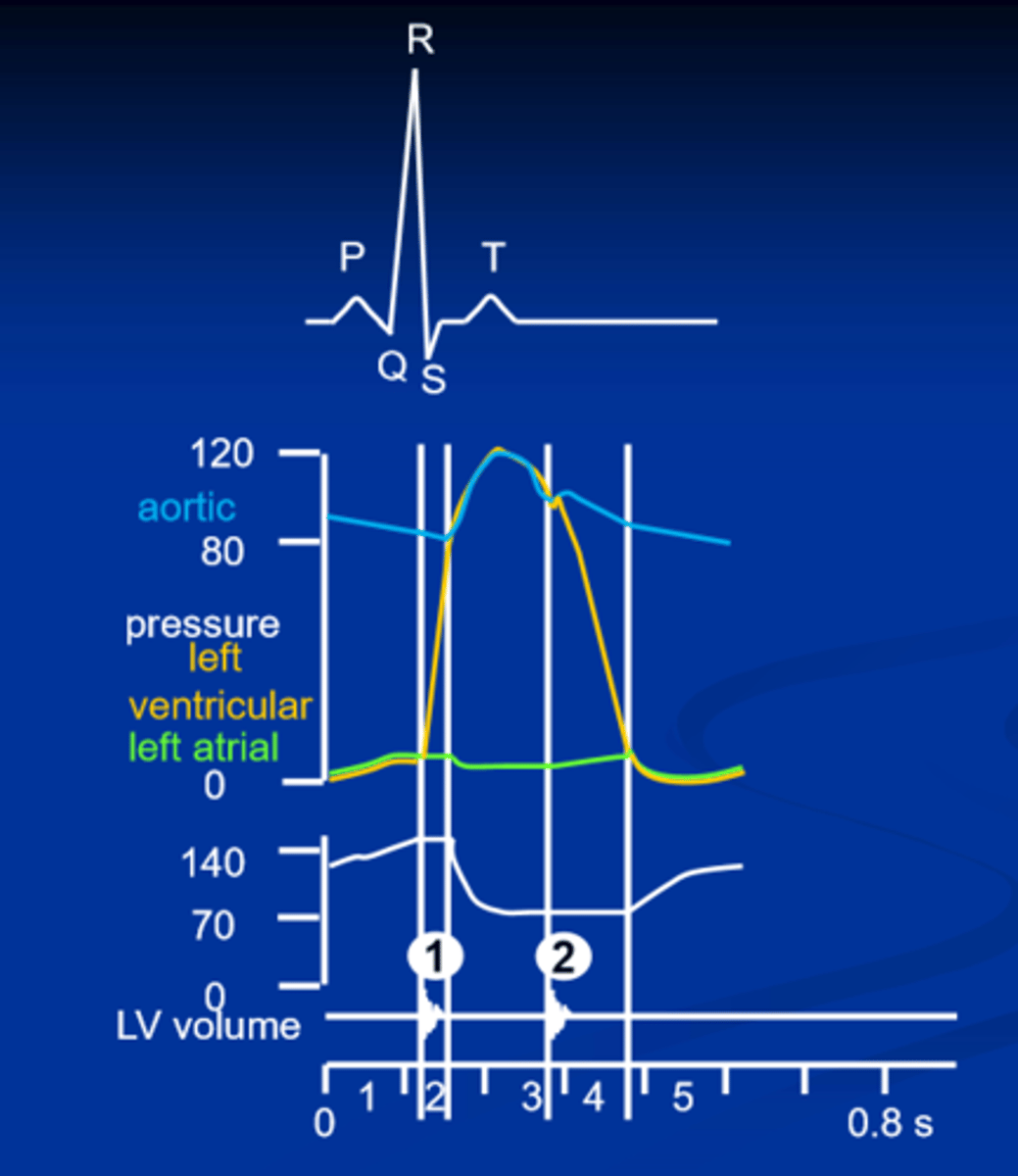
graph of pressures in heart contraction
pressures in heart graph compared to ECG
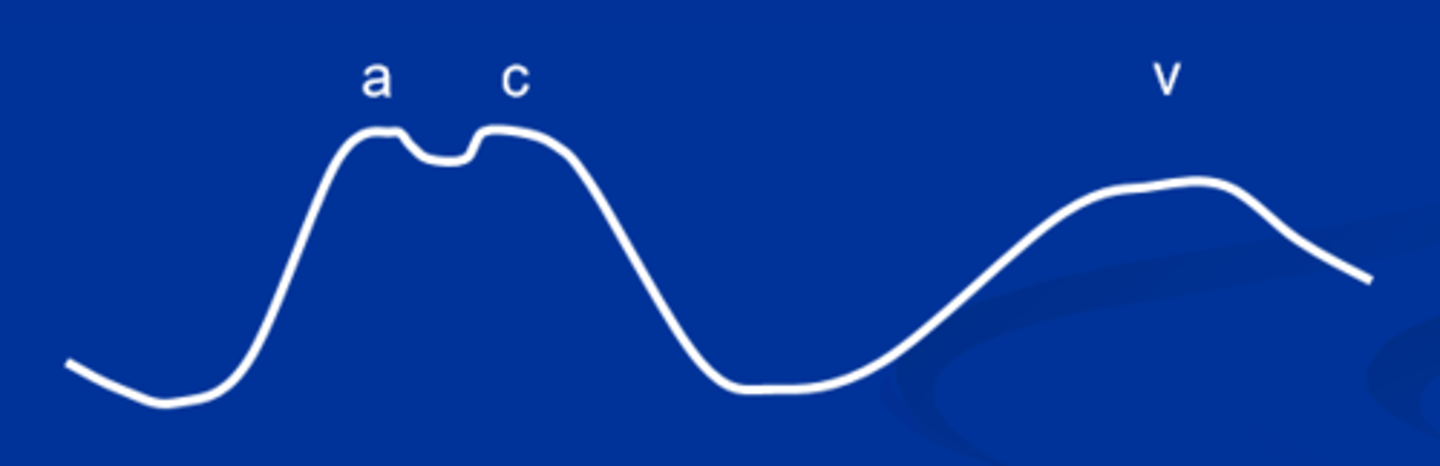
what do jugular venous pulses show?
pulsation in the internal jugular vein reflects right atrial pressure changes (no valves)
graph of jugular venous pulses
a - rise in pressure. atrial systole.
c - isovolumetric ventricular contraction causing bulging of the AV tricuspid valve.
v - rise is pressure. atrium fills during ventricular systole.
what sound does heart sound 1 make?
low pitches 'lub'
what sound does the second heart sound make?
brief high pitched 'dup'
What makes the 3rd heart sound?
vibration of ventricular wall when filling
what makes the 4th heart sound?
associated with ventricular filling during atrial systole.
why would there be a heart murmur?
excessive noise caused by turbulence.
can eb due to high flow or flow in different directions.
when would there be a murmur in stenosis?
steep pressure gradient = high flow across the valve.
murmur when valve opens.
when would there be a murmur in a insufficient valve?
flow can occur in different directions.
murmur when valve should be closed.
 Note
Note  Flashcards (74)