Chapter 1 Anatomy
 Call Kai
 Learn
Learn Practice Test
 Spaced Repetition
 Match
Match Flashcards
 Knowt Play
1/140

Earn XP
Description and Tags
FA26-IN-BIOL-N261-30804
Name | Mastery | Learn | Test | Matching | Spaced | Call with Kai | Chat |
|---|
No analytics yet
Send a link to your students to track their progress
141 Terms
Anatomy (morphology)
The study of internal and external structures in the body. Structure determines function.
Branches of anatomy are…
microscopic anatomy
gross anatomy
developmental anatomy
comparative anatomy
pathological anatomy
radiographic anatomy
surgical anatomy
microscopic anatomy
the study of body structures that cannot be viewed without magnification
histology (study of tissues) / cytology (study of cells)
gross anatomy
the study of body structures which are visible without magnification
surface anatomy (the study of shapes and markings on the bodies surface)
regional anatomy (study of all structures in specific body area)
systemic anatomy (study of all organs and their functions)
histology
study of tissues
cytology
study of cells
surface anatomy
the study of shapes and markings on the bodies surface
regional anatomy
study of all structures in specific body area
systemic anatomy
study of all organs and their functions
developmental anatomy
examines structural changes over time
embryology (study of first two months of development)
embryology
study of first two months of development
Comparative anatomy
study of anatomy on different types of animals
pathological anatomy
study of structural changes in cell tissues and organs caused by disease
Radiographic anatomy
involves the study of anatomical structures as they are visualized by x-rays,
ultrasound scans, or other specialized procedures performed on an intact body
Levels of structural organization
chemical level
cellular level
tissue level
organ level
organ system level
organism level
Levels of structural organization: chemical level
atoms combine to form molecules and macromolecules to form the body
Levels of structural organization: cellular level
cells are comprised of molecules and are the smallest living unit in the body
Levels of structural organization: tissue level
many cells and some surrounding material
Levels of structural organization: organ level
combination of tissues
Levels of structural organization: organ system level
organs that work closely together to accomplish a similar purpose
Levels of structural organization: organism level
the highest level of structural organization
The 4 elements that make up 99% of the body
Hydrogen, oxygen, carbon, and nitrogen
5 major classes of compounds apart of the chemical level of a cell
water, carbohydrates, proteins, lipids, nucleic acids
The human body is composed of ___ organ systems
11 organ systems
The human bodies 11 organ systems
Integumentary
Skeletal
Muscular
Nervous
Endocrine
Cardiovascular
Lymphatic/Immune
Respiratory
Digestive
Urinary
Reproductive
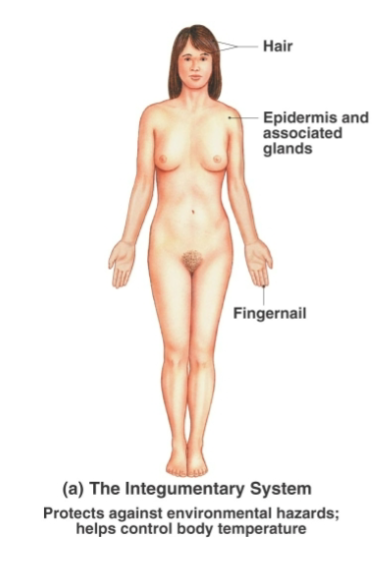
Integumentary System
Protection from environmental hazards; temperature control.
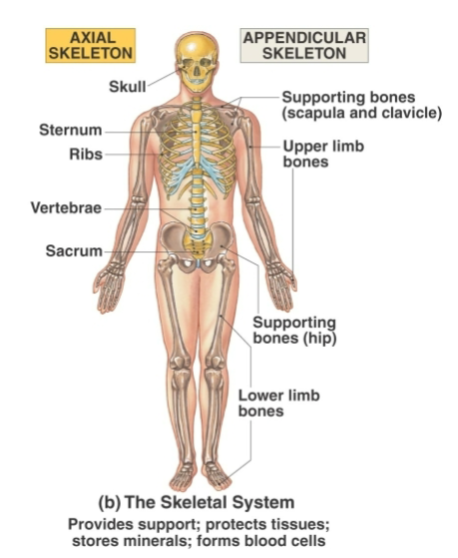
Skeletal System
Support, protection of soft tissues; mineral storage; blood formation.
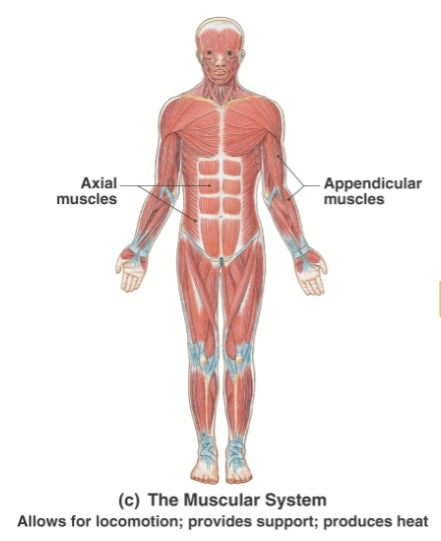
Muscular System
Locomotion, support, heat production.
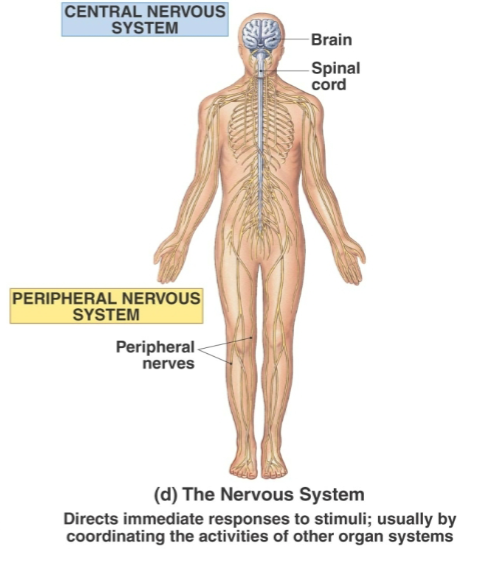
Nervous System
Directing immediate responses to stimuli; coordinating and moderating the activities of other organ systems.
Endocrine System
Directing long-term changes in the activities of other organ systems.
Cardiovascular System
Internal transport of cells and dissolved materials, including nutrients, wastes, and gases.
Lymphoid System
Defense against infection and disease.
Respiratory System
Delivery of air to sites where gas exchange can occur between the air and circulating blood.
Digestive System
Processing of food and absorption of organic nutrients, minerals, vitamins, and water.
Urinary System
Elimination of excess water, salts, and waste products; control of pH.
Reproductive System
Production of sex cells and hormones.
Integumentary System is comprised of…
Skin, hair, nails, sweat glands, sebaceous (oil) glands
Skeletal System is comprised of…
Bones, cartilage, joints, ligaments, bone marrow
Muscular System is comprised of…
Skeletal muscles, tendons
Nervous System is comprised of…
Brain, spinal cord, nerves, sensory organs
Endocrine System is comprised of…
Pituitary gland, thyroid gland, parathyroid glands, adrenal glands, pineal gland, pancreas, ovaries, testes
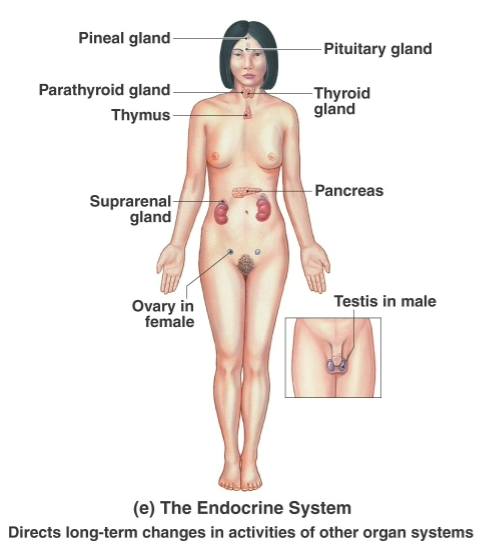
Cardiovascular System is comprised of…
Heart, blood, arteries, veins, capillaries
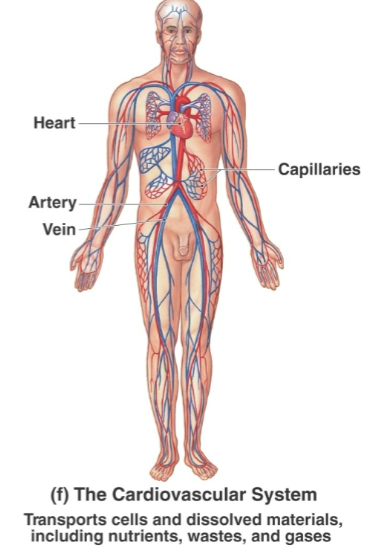
Lymphoid System is comprised of…
Lymph nodes, lymphatic vessels, spleen, thymus, tonsils
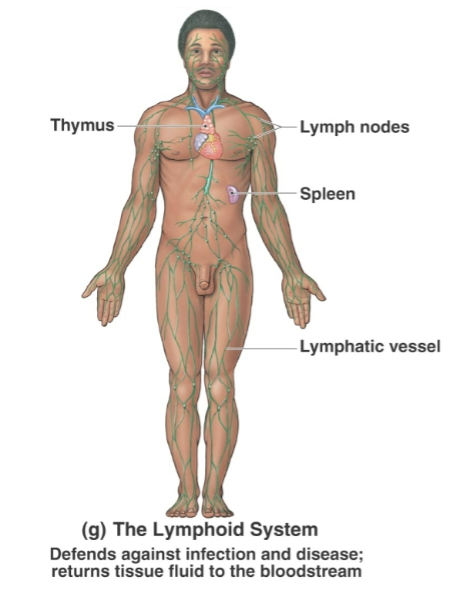
Respiratory System is comprised of…
Nose/nasal cavity, pharynx, larynx, trachea, bronchi, lungs
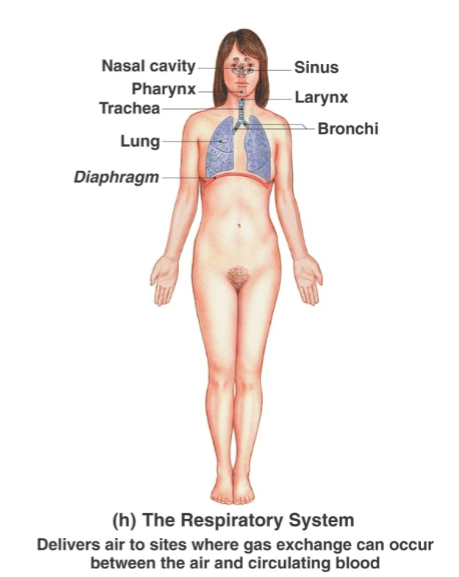
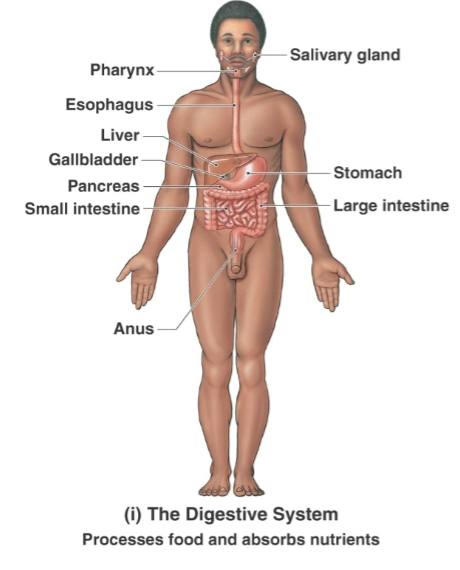
Digestive System is comprised of…
Mouth, teeth, tongue, salivary glands, pharynx, esophagus, stomach, small intestine, large intestine, liver, gallbladder, pancreas, rectum, anus
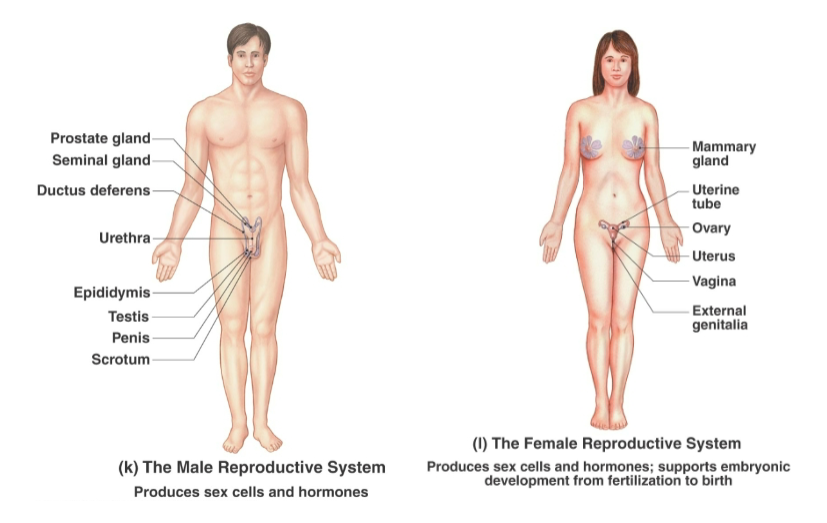
Reproductive System is comprised of…
Female: ovaries, uterine tubes, uterus, vagina, mammary glands.
Male: testes, epididymis, vas deferens, seminal vesicles, prostate gland, penis
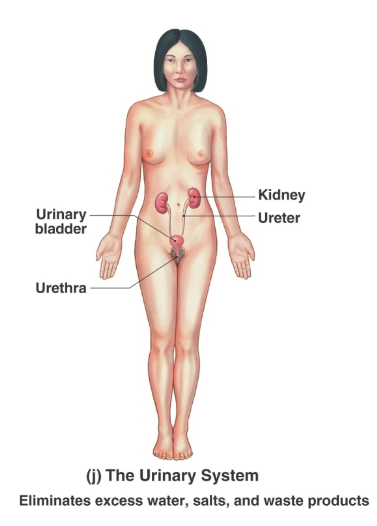
Urinary System is comprised of…
Kidneys, ureters, urinary bladder, urethra
Responsiveness (irritability)
is a change activity based upon a stimulus.
Adaptability
is long-term responsiveness.
Growth
is the increase in size of an organism.
Differentiation
is becoming specialized to perform particular functions.
Reproduction
is the production of new generations of the same organism.
Movement
is the ability to change the position of something.
Metabolism
is all of the chemical reactions in the body.
anabolism / catabolism
Anabolism
is the bonding of chemicals together.
Catabolism
is the breaking of chemical bonds.
Absorption
is the process of bringing chemicals into the body.
Respiration
is the absorption, transport, and use of oxygen by cells.
Excretion
is the removal of wastes.
Digestion
is the processes of catabolism that makes nutrients small enough to be absorbed.
Superficial Anatomy
anatomical landmarks and correct directional terms help in understanding the underlying structures.

Types of anatomical landmarks
anatomical position
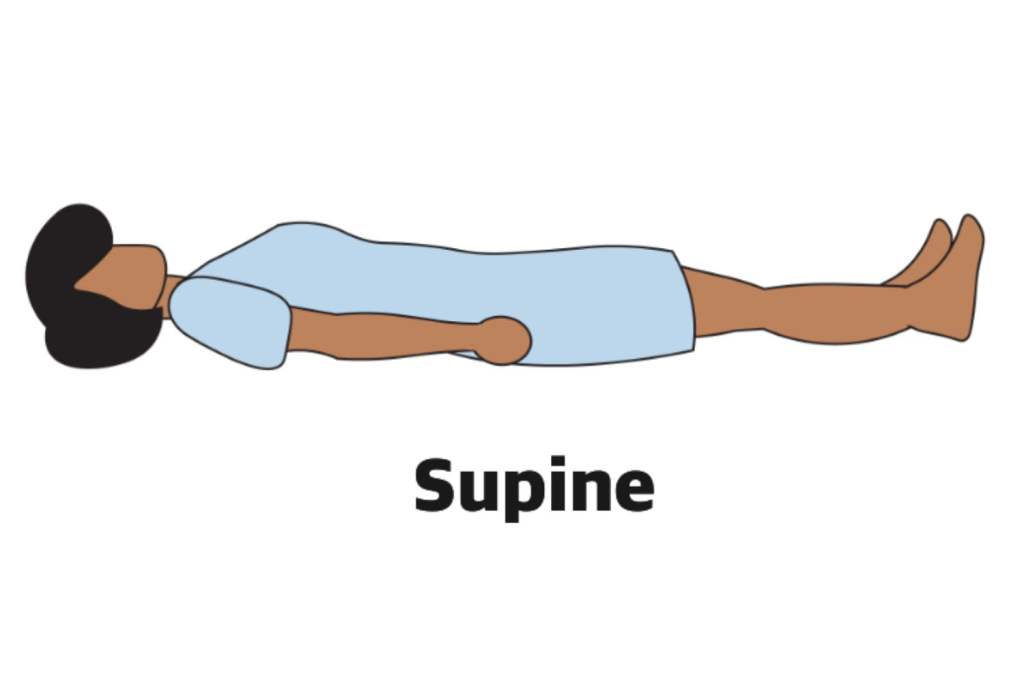
supine
prone
anatomical position
A universal reference posture.
The person standing upright, arms at sides, palms facing froward (anteriorly), feet flat on floor, face straight ahead.

supine anatomical position
is lying down with the face up. palm facing upwards
prone anatomical position
is lying down with the face down. palms facing floor.

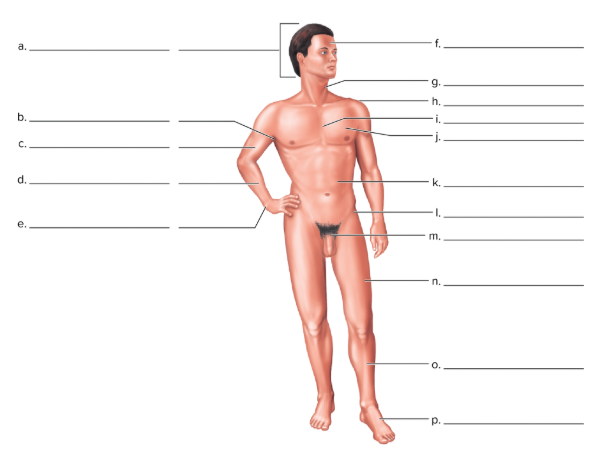
Complete the illustration by correctly placing the following terms.
a. Cephalic
b. Axillary
c. Brachial
d. Carpal
e. Coxal
f. Frontal
g. Cervical
h. Acromial
i. Pectoral
j. Sternal
k. Abdominal
l. Antebrachial
m. Genital
n. Femoral
o. Crural
p. Pedal
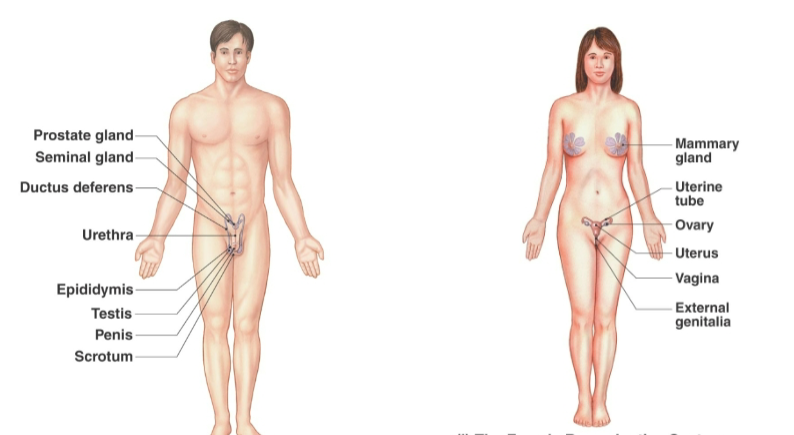
What system?
reproductive
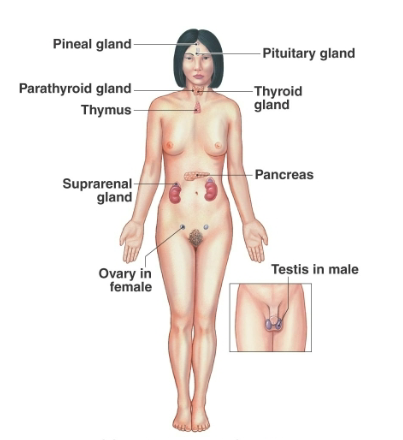
What system?
endocrine system
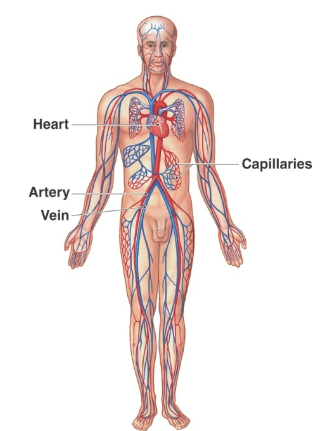
What system?
cardiovascular system
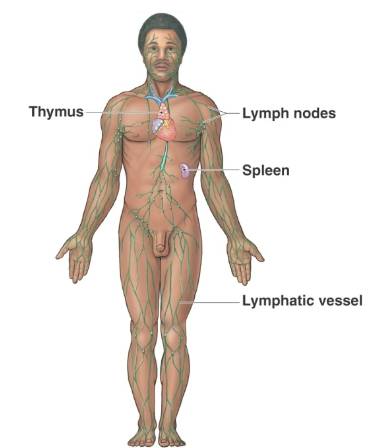
What system?
lymphoid system
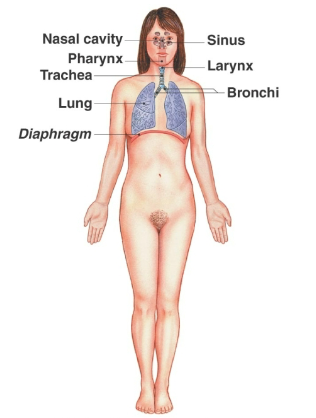
What system?
respiratory system
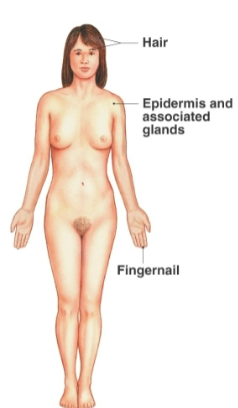
What system?
integumentary system
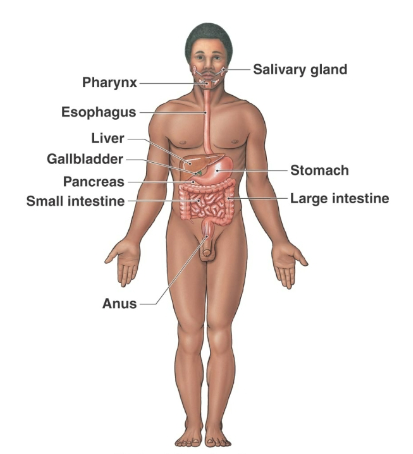
What system?
digestive system

What system?
urinary system
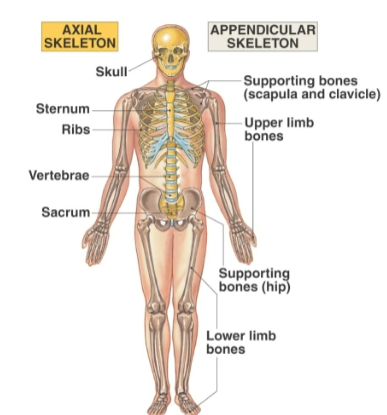
What system?
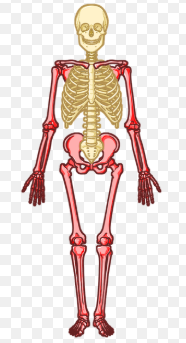
skeletal system
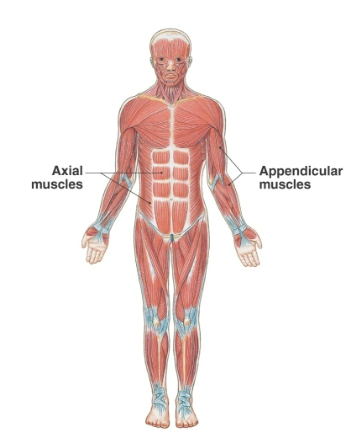
What system?
muscular system
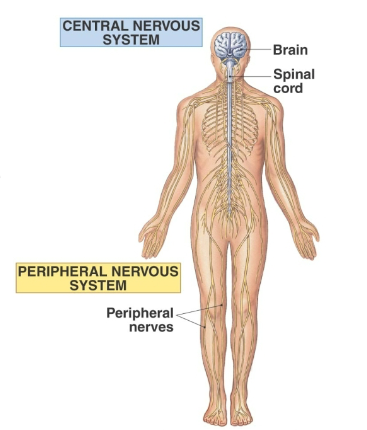
What system?
nervous system
Axial region
anatomical region that consists of head, neck and torso
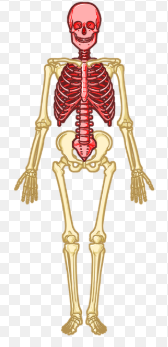
appendicular region
anatomical region that consists of upper and lower limbs
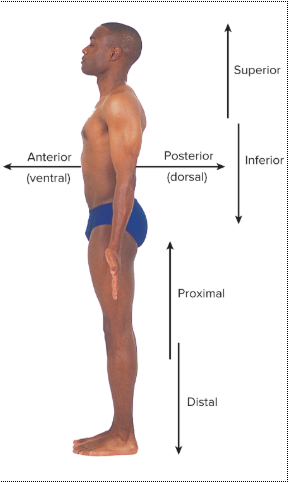
Superior (cranial or cephalic) direction
above the point of reference; towards the head end or upper part of a structure or the body.
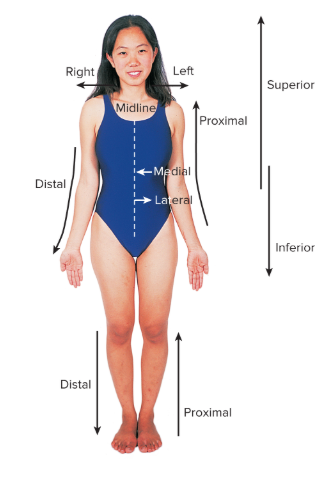
Inferior (caudal) direction
below the point of reference; toward the tail end or lower part of a structure or the body.

Anterior (ventral) direction
toward or at the front of the body; in front of; the front or belly side.

Posterior (dorsal) direciton
toward or at the back of the body; behind; the back side.
Medial position
toward or at the midline of the body; on the inner side of.
Example: The trachea is medial to the arm.
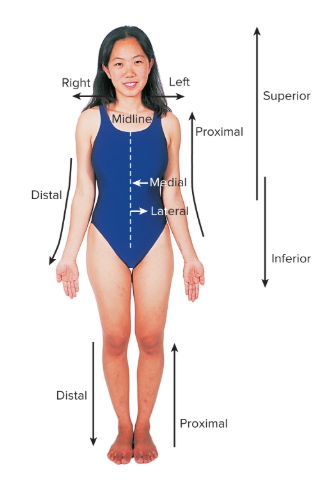
Lateral position
away from the midline of the body; toward the sides or on the outer sides of.
Example: The ears are lateral to the nose.

Proximal position
closer to the origin of a body part or the point of attachment of a limb to the body trunk.
Example: The shoulders are proximal to the elbows.

distal position
away from the origin of a body part or the point of attachment of a limb to the body trunk.
Example: The fingers are distal to the wrist.

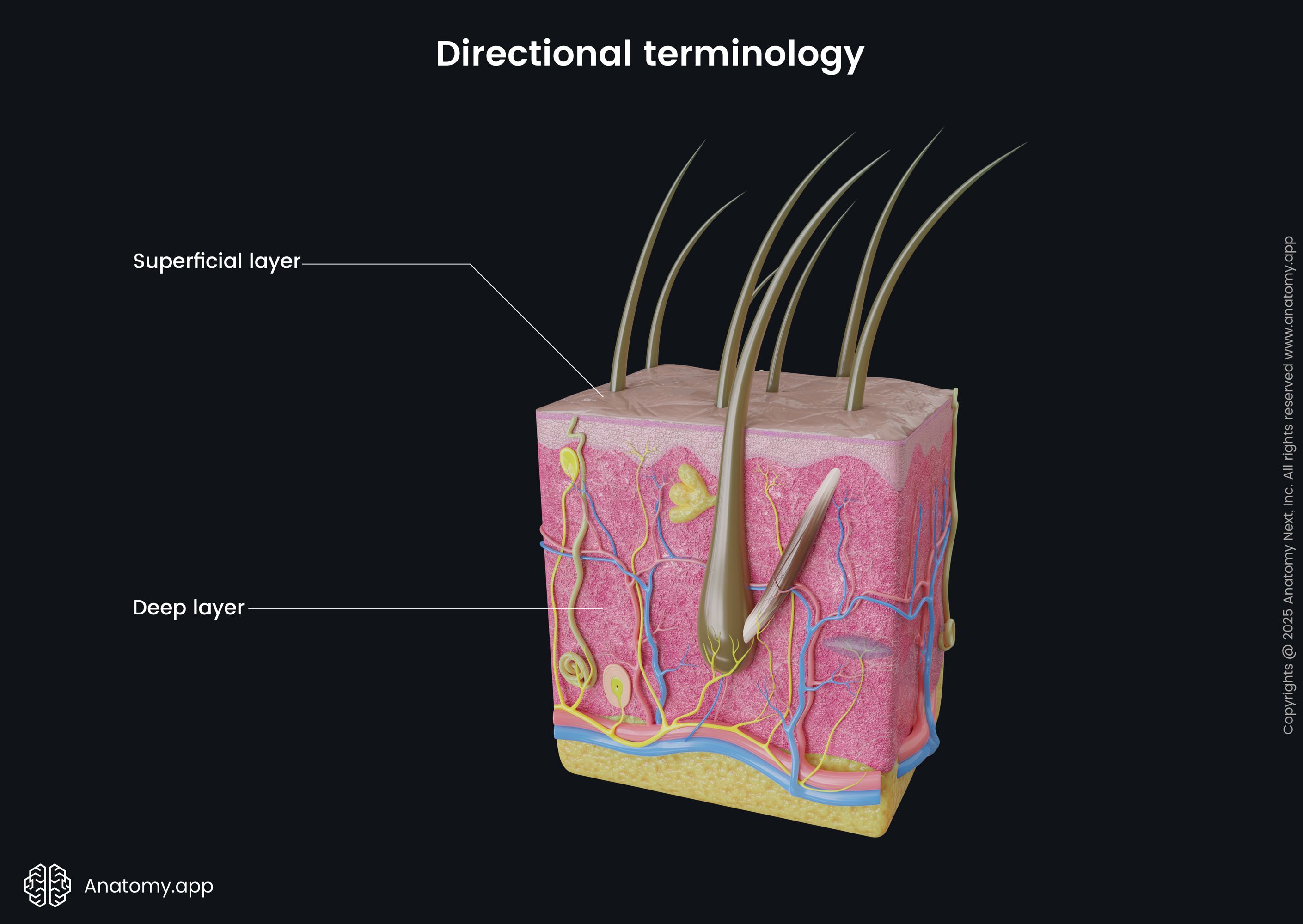
superficial (external) position
closer to or at the body surface.
Example: The skin is superficial to the heart.
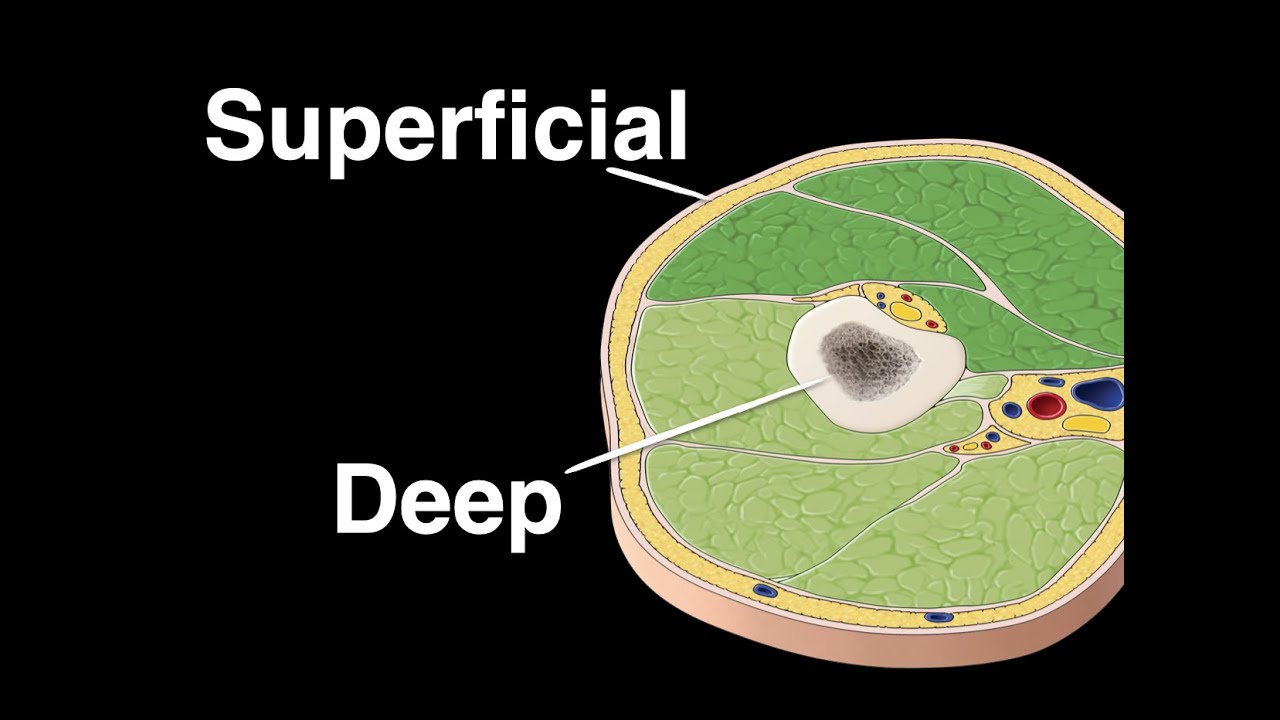
deep (internal) position
farther from or away from the body surface; more internal.
Example: The lungs are deep to the skin.
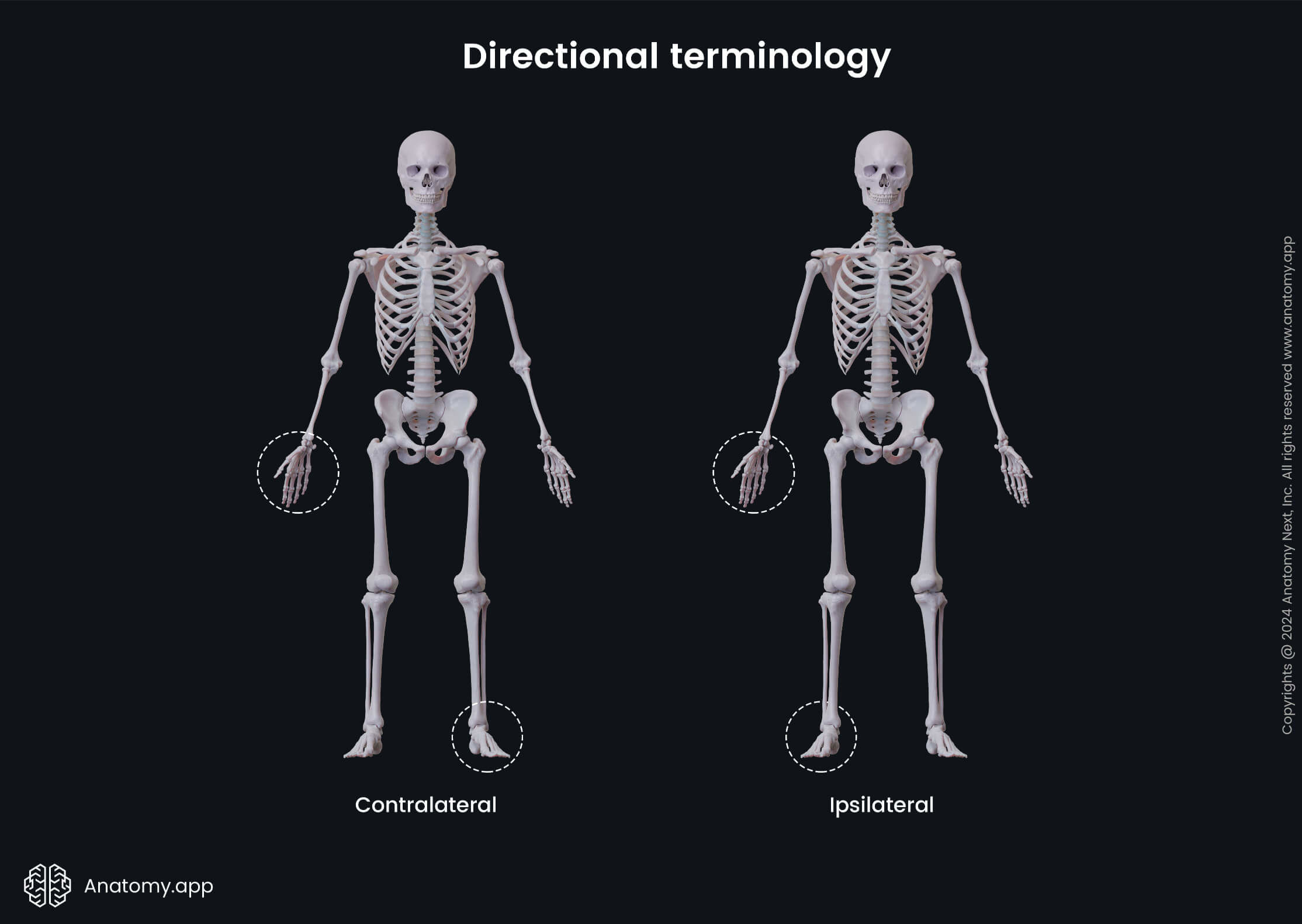
ipsilateral position
on the same side
example: The right arm and right leg are ipsilateral
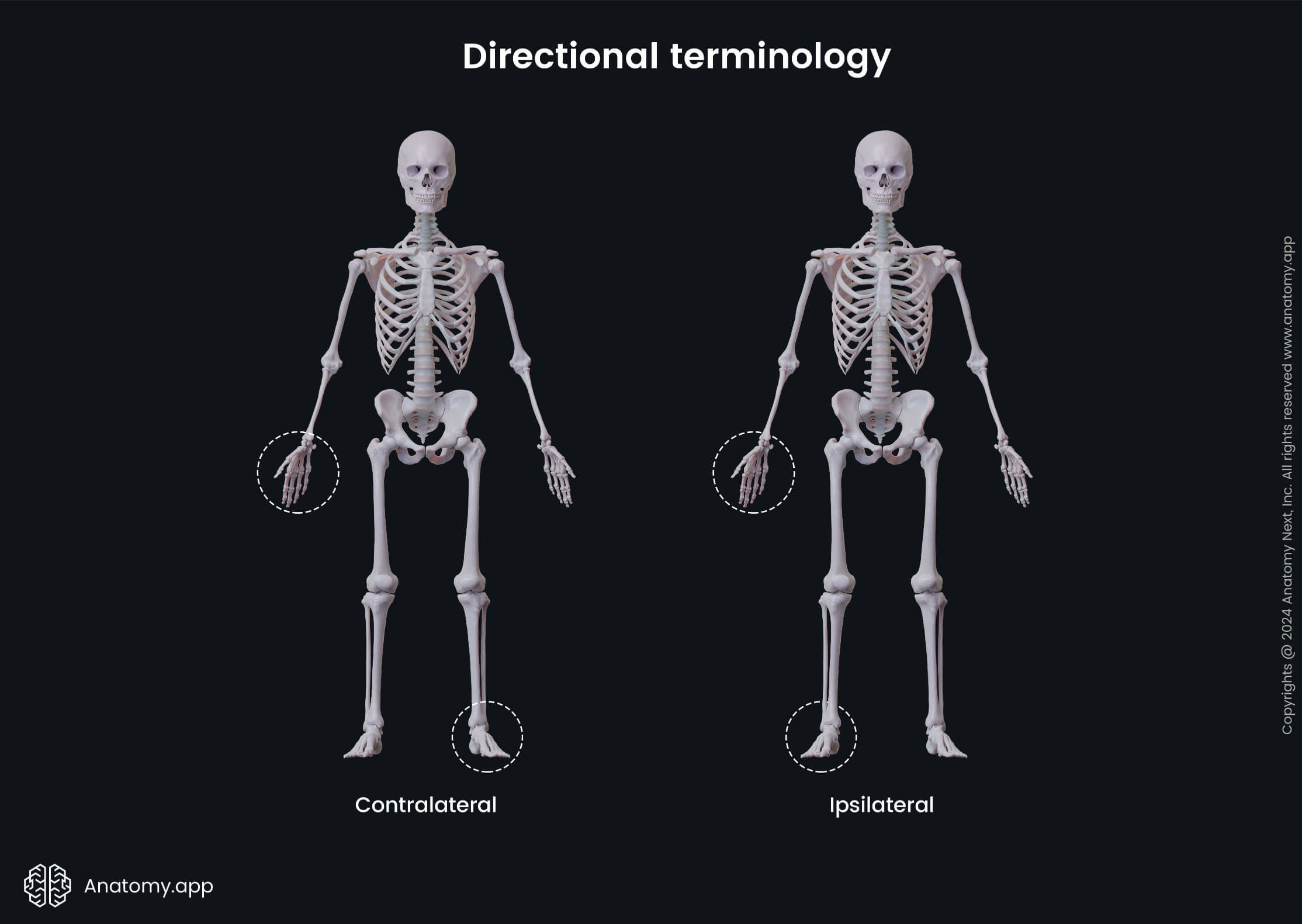
contralateral position
on opposite sides
Example: the right arm and left leg are contralateral.
area of the head
Common Term
CEPHALON (cephalic)
Anatomical Name (Anatomical Region)
neck region
Common Term
CERVICIS (cervical)
Anatomical Name (Anatomical Region)
neck region
Common Term
THORACIS (thoracic)
Anatomical Name (Anatomical Region)
upper arm
Common Term
BRACHIUM (brachial)
Anatomical Name (Anatomical Region)
forearm
Common Term
ANTEBRACHIUM (antebrachial)
Anatomical Name (Anatomical Region)
wrist
Common Term
CARPUS (carpal)
Anatomical Name (Anatomical Region)
hand
Common Term
MANUS (manual)
Anatomical Name (Anatomical Region)
thumb
Common Term
POLLICIS (pollex)
Anatomical Name (Anatomical Region)
abdominal region
Common Term
ABDOMEN (abdominal)
Anatomical Name (Anatomical Region)