High Classical prescribed statues
 Call Kai
 Learn
Learn Practice Test
 Spaced Repetition
 Match
Match Flashcards
 Knowt Play
1/11

Earn XP
Description and Tags
Name | Mastery | Learn | Test | Matching | Spaced | Call with Kai |
|---|
No analytics yet
Send a link to your students to track their progress
12 Terms
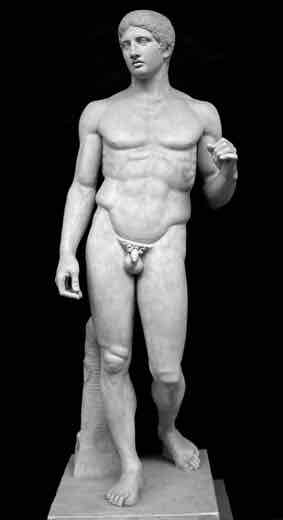
The Doryphoros (Spear-bearer)
Height? Date? Material? Location?
Height: Over life size, 2.12M
Date: 450-440 BC
Material: Roman marble copy of the Greek bronze
Location: Found in a palaestra (gymnasium) at Pompeii
Who sculpted the Doryphoros?
Polykleitos
The Doryphoros
What makes him aesthetically pleasing?
Dynamic contrapposto pose exemplifies Polykleitos’ Canon as it displays a mathematical precision in the counterbalance of tense VS relaxed limbs e.g.tense left arm vs relaxed right arm, relaxed leg vs tense leg.
Polykleitan ‘S’ curve
Defined iliac crest and pectoral muscles→Ideal male athletes physique
Missing prop: Spear→Conveys a rich narrative→breaking frontal plane
Integrated and harmonic anatomy seen in the reactive features→raised left pectoral reacting to raised foot
Original bronze→sign of wealth
The Doryphoros
Scholarly quotes
Barringer: ‘signals the change from severe to high classical’
Spivey: ‘sets up an equilibrium of opposing ‘moments’
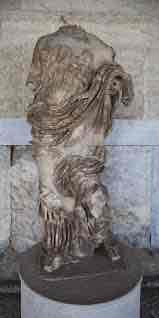
Aphrodite from the Agora
Height? Date? Material? Location?
Height: 1.83M (without head) so she would have been over life size
Date: c.420 to c.410 BC→Early Classical but has traits pointing to the late classical period
Material: Parian marble
Location: Identified as one of the two statues of Aphrodite that the travel writer Pausanias saw within the Sanctuary of Ares
Aphrodite from the Agora
What makes her aesthetically pleasing?
Modelling and motion lines on billowing himation curves naturally around the body illustrating her ethereal figure and ideal female anatomy→ characterisation
Contrapposto pose→ counter balance of tense and relaxed limbs
Asymmetric action pose with a raised right foot and planted foot→ she appears to be moving makes her feel more 3D→ Polykleitan stance
Wet drapery technique seen on the lower drapery→knee and upper thigh on the left leg→navel is visible
Aphrodite of the Agora
Where does her characterisation come from?
Pausanias describes seeing two statues of Aphrodite at the Sanctuary of Ares in the Athenian agora
Aphrodite from the Agora
Scholarly quotes
Woodford: ‘swirl of vigorous curvilinear drapery’ ‘excuse for his virtuoso rendering of exuberant drapery’
UNPRESCRIBED
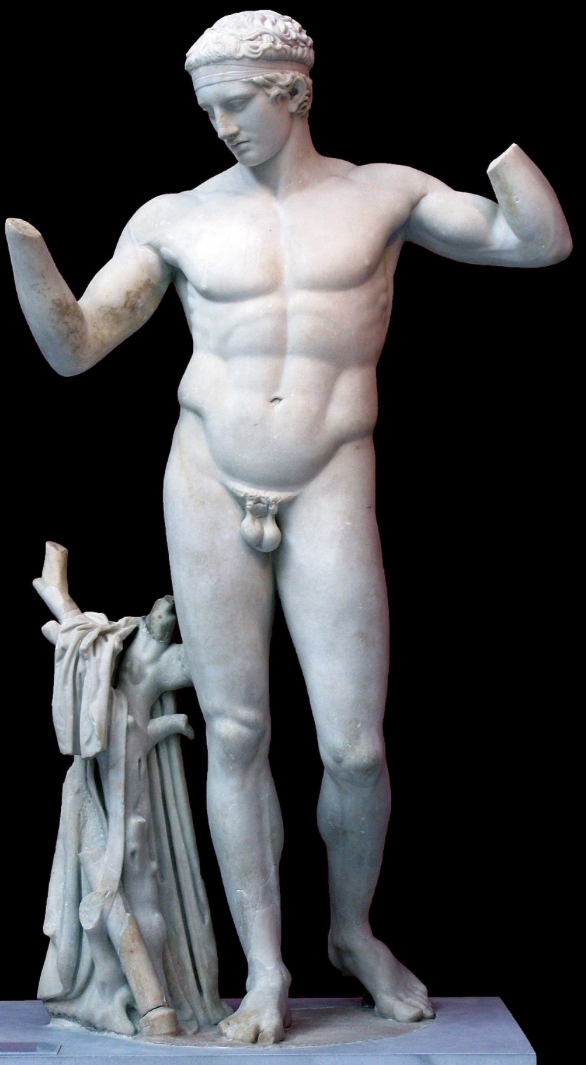
The Diadoumenos by Polykleitos (Fillet Binder)
Height? Date? Material?
Height: 1.95m
Date: The original bronze is dated to c.430 BC
Material: Roman marble copy of a lost bronze original
UNPRESCRIBED
How is The Diadoumenos aesthetically pleasing?
Ideal male athletic physique: narrative of him tying his fillet which is a symbol of an athletes victory, highly defined iliac crest, pectorals and abdominals
The techne in his advanced asymmetric contrapposto pose showing his reactive anatomy e.g. his raised left foot and planted right foot cause the hips to jut out at an angle and his left pectoral to rise higher than his right
Disinterested serene facial expression creates a sense of calm confidence
Turned head looking down reacting to the fillet being tied.
UNPRESCRIBED
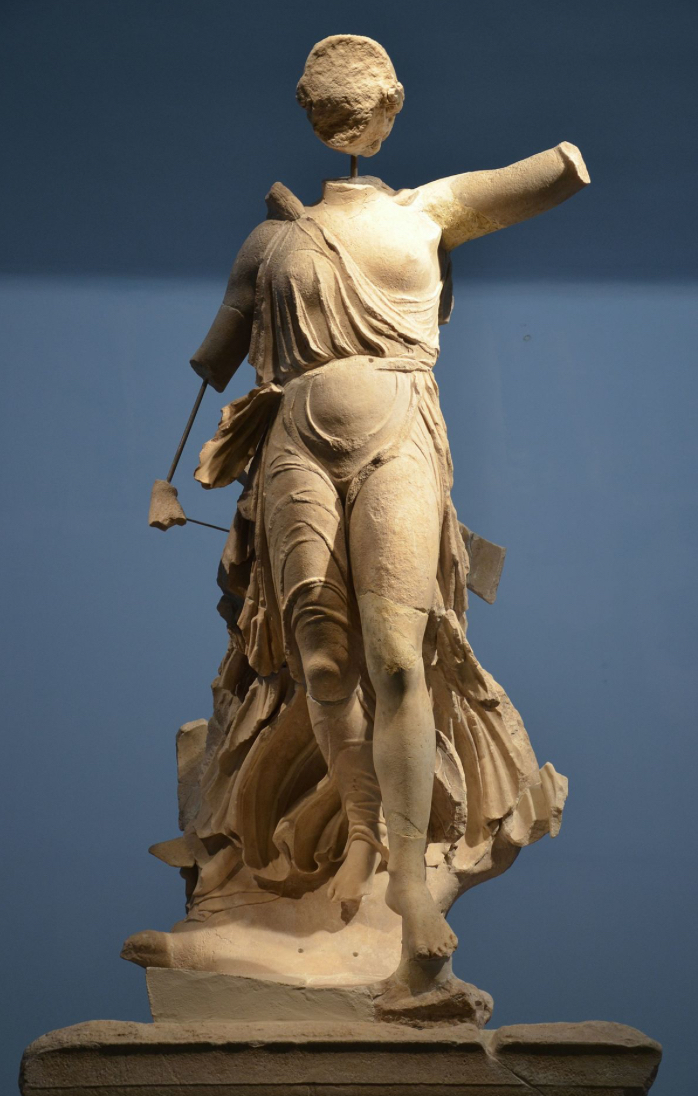
Nike by Paionios
Height? Date? Material? Location?
Height: 2.16m (c.3M with wings)
Date: 420 BC
Material: Parian marble
Location: Originally located on an 8M+ pillar close to the temple of Zeus
UNPRESCRIBED
What is the context behind Nike by Paionios?
The statue was dedicated by the Messenians and Naupactians in the Sanctuary of Zeus at Olympia to celebrate a military victory over the Spartans.