Learn: Cell-Extracellular Interactions & Membrane Transport in Biology
 Call Kai
 Learn
Learn Practice Test
 Spaced Repetition
 Match
Match Flashcards
 Knowt Play
1/51

There's no tags or description
Looks like no tags are added yet.
Name | Mastery | Learn | Test | Matching | Spaced | Call with Kai | Chat |
|---|
No analytics yet
Send a link to your students to track their progress
52 Terms
What does the extracellular environment encompass?
All components of the body located outside of the cells.

What is the primary function of the extracellular environment?
It serves as a medium for cellular function and communication.
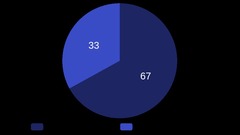
What percentage of total body water is found in the intracellular compartment?
67%
What percentage of total body water is found in the extracellular compartment?
33%
What are the two main components of extracellular fluid?
Blood plasma (20%) and interstitial fluid (80%).
What property of the plasma membrane regulates the passage of substances?
Selective permeability.
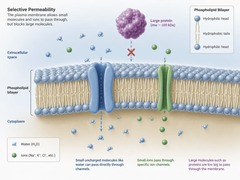
What types of molecules are generally impermeable to the plasma membrane?
Large molecules such as proteins and nucleic acids.
What types of molecules are generally permeable to the plasma membrane?
Small molecules like ions, nutrients, and waste products.
What is noncarrier-mediated transport?
Transport that does not require a specific carrier protein, including simple diffusion and osmosis.
What is carrier-mediated transport?
Transport that requires a specific protein to move molecules across the membrane, including facilitated diffusion and active transport.
What is passive transport?
Movement of molecules from a higher to a lower concentration without using metabolic energy (ATP).
What is active transport?
Movement of molecules from a lower to a higher concentration, requiring metabolic energy (ATP).
What drives the process of diffusion?
Random molecular motion and concentration gradients.
What is osmosis?
The net movement of water across a selectively permeable membrane.

What is the rule for water movement in osmosis?
Water moves from an area of low solute concentration to an area of high solute concentration.
What is osmotic pressure?
The force required to prevent osmosis, indicating the tendency of a solution to draw water into it.
What is molarity (M)?
The number of moles of solute per liter of solution.
What is osmolarity (Osm)?
The total molarity of a solution, accounting for all solute particles.
What is tonicity?
The effect of a solute concentration on the osmosis of water and how it affects cell volume.
What happens to a cell in an isotonic solution?
There is no net movement of water, and cell volume remains constant.

What happens to a cell in a hypotonic solution?
Water moves into the cell, causing it to swell and potentially lyse (burst).
What happens to a cell in a hypertonic solution?
Water moves out of the cell, causing it to shrivel or crenate.
What aids the passage of water through the plasma membrane?
Aquaporins, which are special protein channels.
What is the average time for diffusion related to distance?
Mean diffusion time increases with the square of the distance.
What factors affect the rate of diffusion?
Magnitude of concentration difference, permeability of the membrane, temperature of the solution, and surface area of the membrane.
What is the significance of microvilli in relation to diffusion?
They increase the surface area, allowing more particles to cross the membrane simultaneously.

What is the primary example of gas exchange in tissues?
Net diffusion of O₂ into cells and CO₂ out of cells, driven by their concentration gradients.
What is the fate of red blood cells in an isotonic solution?
The cell remains normal.
What triggers the sensation of thirst during dehydration?
Osmoreceptors in the hypothalamus detect increased plasma osmolarity.
What hormone is secreted in response to dehydration?
Antidiuretic Hormone (ADH).
What is the role of ADH in the kidneys?
ADH decreases water excretion in urine, promoting water retention.
What type of molecules require carrier proteins for transport across the plasma membrane?
Large or polar molecules, such as amino acids and glucose.
What are the characteristics of carrier proteins?
Specificity, competition, and saturation.
What is facilitated diffusion?
A form of carrier-mediated transport that does not require ATP and moves molecules down their concentration gradient.
What is the function of GLUT4 carriers?
GLUT4 is found in adipose tissue and skeletal muscles and is stimulated by insulin.

What is primary active transport?
Transport that derives energy directly from the hydrolysis of ATP.
What does the Na⁺/K⁺ pump do?
It pumps 3 Na⁺ ions out of the cell and 2 K⁺ ions into the cell for each ATP molecule hydrolyzed.

What is secondary active transport?
Transport that uses the energy from the movement of one molecule down its gradient to move another molecule against its gradient.
What is symport in secondary active transport?
The movement of two molecules in the same direction, such as glucose and Na⁺ into the cell.

What is antiport in secondary active transport?
The movement of two molecules in opposite directions, such as Na⁺ entering the cell and Ca²⁺ exiting.

What is exocytosis?
The process by which large molecules are secreted from the cell by the fusion of a transport vesicle with the plasma membrane.

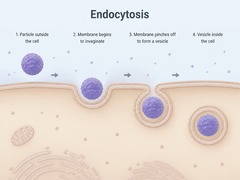
What is endocytosis?
The movement of large molecules into the cell, often triggered by the interaction of a transport protein with the plasma membrane.
What are gap junctions?
Channels between adjacent cells that allow direct passage of ions and small regulatory molecules.
What is paracrine signaling?
Local signaling where cells secrete molecules that diffuse to nearby target cells.
What is synaptic signaling?
A specialized form of paracrine signaling where neurons secrete neurotransmitters across a synapse.
What is endocrine signaling?
Long-distance signaling where glands secrete hormones into the bloodstream.
What are intracellular receptors?
Receptors for nonpolar signals that can penetrate the plasma membrane.
What are membrane receptors?
Receptors for large or polar signals that cannot cross the membrane and must bind to cell surface receptors.
What are second messengers?
Intermediaries produced inside the cell that affect cellular activity after a polar signal binds to a surface receptor.
What role do G-proteins play in cell signaling?
They act as molecular switches linking surface receptors to enzymes that produce second messengers.

What happens when a signaling molecule binds to a receptor?
The receptor activates the G-protein, causing the α subunit to release GDP and bind GTP.
What is the role of cAMP in cell signaling?
cAMP activates other enzymes (protein kinases), leading to changes in cell activity.