UIOWA Psychopathology PSY:3320 Exam 4 Flash Cards
 Call Kai
 Learn
Learn Practice Test
 Spaced Repetition
 Match
Match Flashcards
 Knowt Play
1/240

There's no tags or description
Looks like no tags are added yet.
Name | Mastery | Learn | Test | Matching | Spaced | Call with Kai | Chat |
|---|
No analytics yet
Send a link to your students to track their progress
241 Terms
Geropsychology
The field of psychology dedicated to the mental health of older adults
-adult development and normal aging
-behavioral and mental health in late life
-Assessments (mood, cognition, and functional capacities)
-intervention and consultation
Cognitive "mishaps"
are common features of stress or aging
ex. leaving without keys, or forgetting someones name
as people age these memory lapses increase at the age range of 60 or 70
Cognitive Problems come from … later in life?
organic roots
leading cognitive disorders among older adults
1) Mild Neurocognitive Disorder
2) Major Neurocognitive Disorder
Neurocognitive Disorders (NCDs)
experience a significant decline in at least one (often more than one) area of cognitive functioning
-memory
-executive functions
-attention
-visual perception
-language ability
-social awareness
May also see changes in personality and behavior
Mild Neurocognitive Disorder
decline in cognitive functioning is modest, does not interfere with independence
Mild Neurocognitive Disorder - DSM Criteria
1. modest decline in at least one of the following
-memory and learning
-attention
-perceptual-motor skills
-planning and decision-making
-language ability
-social awareness
2. Cognitive deficits do not interfere with the individual's everyday independence
Major Neurocognitive Disoder
decline in cognitive functioning is substantial and interferes with independence
Major Neurocognitive Disoder - DSM Criteria
1. Individual displays a substantial decline in at least one of the following areas of cognitive function
-memory and learning
-attention
-perceptual-motor skills
-planning and decision-making
-language ability
-social awareness
2. Cognitive deficits interfere with the individual's everyday independence
Aphasia
Inability to understand or produce speech
Palilalia
involuntary/compulsive repetition of words
Apraxia
Motor disorder, affects ability to plan and sequence voluntary movements
Agnosia
difficulty recognizing and identifying objects, people, sounds, or smells
The most common type of NCD is due to what?
Alzheimer's Disease (AD)
In the US:
-5% to 10% of people over the age 65
-7.2 million people estimated to have AD
Neurocognitive Disorders (NCDs) types:
Delirium
Alzheimer's Disease
Vascular Dementia
Frontotemporal Dementia
Huntington's Disease
Parkinson's Disease
Neurocognitive Disorders can be caused by:
HIV Infections
Traumatic Brain Injury
Substance Abuse
Medical Conditions
-Meningitis
-Advanced syphilis
Modifiable Risk Factors
variables in lifespan that we can modify and change with lifestyle changes or interventions
Interventions: Cognitive Engagement
Focus on cognitive training and socializing
-the goals of these interventions is to:
-focus on continued learning with hopes of transferring learned skills to everyday life -though minimal transference has been observed
-promote brain plasticity to perserve cognition longer and mitigate decline: improvements in psychomotor and reward pathways
Interventions: Physical Activity
the goal is to maintain a healthy level of blood and energy perfusion to the brain
-helps in cellular communication
-maintain and promote brain plasticity
-Research has shown that moderate levels of physical activity can increase hippocampal volume size compared to stretching controls
delirium
major disturbance in attention and orientation to the environment.
What difficulties do individuals with delirium experience?
great difficulty concentrating, focusing attention, and thinking sequentially.
How does memory function in delirium?
progressive difficulty with memory, starting with immediate memory and, if untreated, progressing to long-term memory.
What is 'sundowning' in relation to delirium?
fluctuation of delirium symptoms, which can get worse at night.
What are some symptoms of delirium?
disrupted sleep-wake cycles
incoherent speech
delusions
hallucinations
In which age group is delirium most common?
older adults, but it can occur in any age group, including children.
How quickly does delirium typically develop?
over a short period of time, usually hours or days, and can have a sudden onset.
What dramatic change can occur in individuals with delirium?
A quiet individual can suddenly become loud, verbally abusive, and combative.
What is a common issue with diagnosing delirium?
People often receive an incorrect diagnosis when experiencing delirium.
Delirium DSM-5 Diagnostic Criteria
1. Over the course of hours or a few days, individual experiences fast-moving and fluctuating disturbances in attention and orientation to the environment
2. Individual also displays a significant cognitive disturbance
Causes of Delirium
Other NCDs are strong predictors as well as:
stroke
infectious diseases
high fever
congestive heart failure
HIV infection
Other medical conditions, drugs, or toxic substance abuse that affect the brain such as acetylcholine, dopamine, serotonin, and GABA
Treatment of Delirium
important to recognize and treat quickly
first priority is to treat the medical condition
Monitoring individuals is important so they do not harm themselves
providing a reasurring atmosphere filled with personal belonging, family photographs
psychosocial treatments to help with sleep, address sensory issues, and encourage mobility have shown promise but more work is needed
Alzheimer's Disease
the most common form of neurocognitive disorder
gradual progressive disease sometimes appears in middle age (early onset) but most often occurs after the age of 65 (late onset)
-AD is more common among women than men
-2/3 of patients show psychiatric symptoms
US POPULATION-
abt 1 in 9 people age 65+ has AD
Alzheimer's Disease Psychiatric Symptoms
Agitiation
Irritability
Apathy
Dysphoria
Hallucination and delusions may appear in severe cases
What is the typical time between onset and death in Alzheimer's Disease?
8-10 years, although some people may survive 20 years.
What are the initial symptoms of Alzheimer's Disease?
Mild memory problems, lapses of attention, and difficulties in language and communication.
What happens as Alzheimer's Disease progresses?
Less awareness of limitations, leading to confusion, withdrawal, and loss of knowledge of past and faces.
What are some behavioral changes in Alzheimer's Disease patients?
Disturbed sleep patterns and becoming fully dependent on others.
physical health of AD patients until later stages
Usually remain in good health until the later stages of the disease.
Alzheimer's Disease Memory Systems
The pattern of decline in brain structure typically impacts memory processes affecting learning and recall
2 memory systems that work together to aid learning and recall
-short-term and working memory gather new info
-info held in short-term memory must be transformed or consolidated into long term memory
-long term memory is the accumulation of info that we have stored over the years
-remembering info stored in long-term is called retrieval
Alzheimer's Disease - Brain Structures affected
Prefrontal Cortex (PFC) and Temporal Cortex: appear to hold info temporarily, help with attention, and hold meaning based info
Hippocampus and Medial Parietal Cortex: seem to help transform short-term memory into long-term memory and help with navigation
Research indicates that cases of dementia involve damage to or improper functioning of one or more of these areas
Alzheimer's Disease Brain Abnormalities
Can only be diagnosed with certainty after death, when structural changes in the brain can be fully examined
-plaques
-beta amyloid
-neurofibrillary tangles (tau)
Alzheimer's Disease - Plaques
depositis of an amyloid protein that accumulate in the extracellular spaces of the cerebral cortex, hippocampus, and other forebrain structures
Alzheimer's Disease - Beta Amyloid
class if proteins that accumulates in the spaces between neurons in the brain, contributing to alzheimer's disease
Alzheimer's Disease - Neurofibrillary Tangles (Tau)
twists or tangles of filaments within neurons, especially prominent in the cerebral cortex and hippocampus
Alzheimer's Disease Diagnostic Criteria
1. Individual displays the features of major or mild neurocognitive disorder
2. Memory impairment is a prominent feature
3. Genetic Indications or family history of Alzheimer's disease underscore diagnosis, but are not essential to diagnosis
4. Symptoms are not due to other types of disorders or medical problems
What is a common genetic basis for Alzheimer's Disease?
It often has a genetic basis and is highly heritable.
What are the two types of Alzheimer's Disease distinguished by clinicians?
Early-onset (familial) and late-onset
What characterizes early-onset Alzheimer's Disease?
Irregularities in genes responsible for producing beta-amyloid precursor protein (beta-APP).
What factors contribute to late-onset Alzheimer's Disease?
A combination of genetics, environmental, and lifestyle factors.
Which gene is associated with an increased risk of late-onset Alzheimer's Disease?
Apolipoprotein E (ApoE-4) gene.
What are the two types of gene forms that may trigger Alzheimer's Disease?
1. Gene forms that promote plaque buildup (beta-amyloid). 2. Gene forms that promote tau protein irregularities and tangle formations.
Which chemicals are involved in the production of proteins in the brain related to memory?
Acetylcholine, glutamate, ribonucleic acid (RNA), and calcium.
What happens if the activity of key chemicals in the brain is disturbed?
The proper production of proteins may be prevented, interrupting the formation of memories
What is the role of diagnosticians in Alzheimer's Disease assessment?
usually able to build a very strong circumstantial case and arrive at an accurate diagnosis.
What types of assessment tools are used for diagnosing Alzheimer's Disease?
neuropsychological tests, intelligence tests, brain scans, blood tests, and other laboratory work, and careful history taking
What biomarkers are typically looked for in Alzheimer's Disease?
Blood-based biomarkers looking for the prevalence of Amyloid and tau found in the blood as they are cleared out from the brain.
How can biomarkers be used in relation to Alzheimer's Disease?
They may be used to predict cases of Alzheimer's and other neurocognitive disorders.
Alzheimer's Disease - Interventions
-drug therapies
-Cognitvie-Behavioral Interventions
-Sociocultural Approaches
treatments for the cognitive features of Alzheimer's Disease have been only modestly helpful
-drug therapy, cognitive techniques, behavioral intervention, support for caregivers and sociocultural approaches
none of these interventions stops the progression of the disorder
Alzheimer's Disease - Interventions: Drugs
the drugs currently prescribed target neurotransmitters known to play an important role in memory
-ex. donepezil (Aricept), rivastigmine (Exelon), galantamine (Reminyl), memantine (Namenda)
-may help slightly with some short-term memory, reasoning abilities, language, and ability to cope under pressure
-limited benefits, sometimes high risk or harmful side effects; FDA approval, most effective in early, mild stage
-Vitamin E; nonsteroidal anti-inflammatory drugs may be used prior to onset
-No strong consistent evidence that these lead to prevention
Alzheimer's Disease - Interventions: Cognitive-Behavioral
strategies that focus primarily on behaviors, rather than on cognition, seem to be even more useful in preventing and managing this disease
-engagement in regular physical excercise
-changing everyday behaviors that are stressful for the family
-ex. wandering at night, loss of bladder control, demands for attention, inadequate personal care
-Use role-playing exercises, modeling and practice to teach family members how and when to use reinforcement to shape behaviors
Alzheimer's Disease - Interventions: VR therapy
started being used and tested to bring life experiences to pateints who are typically isolated
-can help reduce symptoms like anxiety and depression
-also used for cognitive training to help with memory abilities
Alzheimer's Disease - Interventions: Caregiving
can take a heavy till on the close relatives of people with dementia
-more than 80% of all people with dementia are cared for by their relatives
-compared with caregivers of people without dimentia, caregivers of those with dementia indicate more substantial emotional, financial and physical difficulties
-one of the most frequent reason for the institutionalization of people with Alzheimer's Disease is that overwhelmed caregivers can no longer cope with the difficulties of keeping them at home
Alzheimer's Disease - Interventions: Sociocultural
-day-care facilities: provide activities for outpatients during the day and returning them home to their families at night
-assissted-living facilities: apartments typically designed to meet special needs for the residents
unfortunately these types of approaches can become expensive
Vascular Dementia (VaD)
A common neurocognitive disorder typically associated with a recent cerebrovascular event or cerebrovascular disease.
How can Vascular Dementia present in terms of severity?
It can present as mild or major neurocognitive disorder depending on the severity.
What are the most prominent cognitive symptoms of Vascular Dementia?
Declines in processing speed, attention, and executive functions.
What percentage of all dementia cases does Vascular Dementia account for?
17-30%.
Is the prevalence of Vascular Dementia higher in men or women?
Rates are marginally higher in men
What other conditions can lead to Vascular Dementia?
Brain inflammation or traumatic brain injuries (TBI).
What percentage of stroke patients develop cognitive deficits severe enough to be classified as NCD?
25%.
Who is at a higher risk of developing cognitive deficits after a stroke?
Individuals over 80 years of age with a history of strokes or diabetes.
What underlying medical conditions increase the risk of developing Vascular Dementia?
Seizures, cardiac arrhythmias, congestive heart failure, and pneumonia.
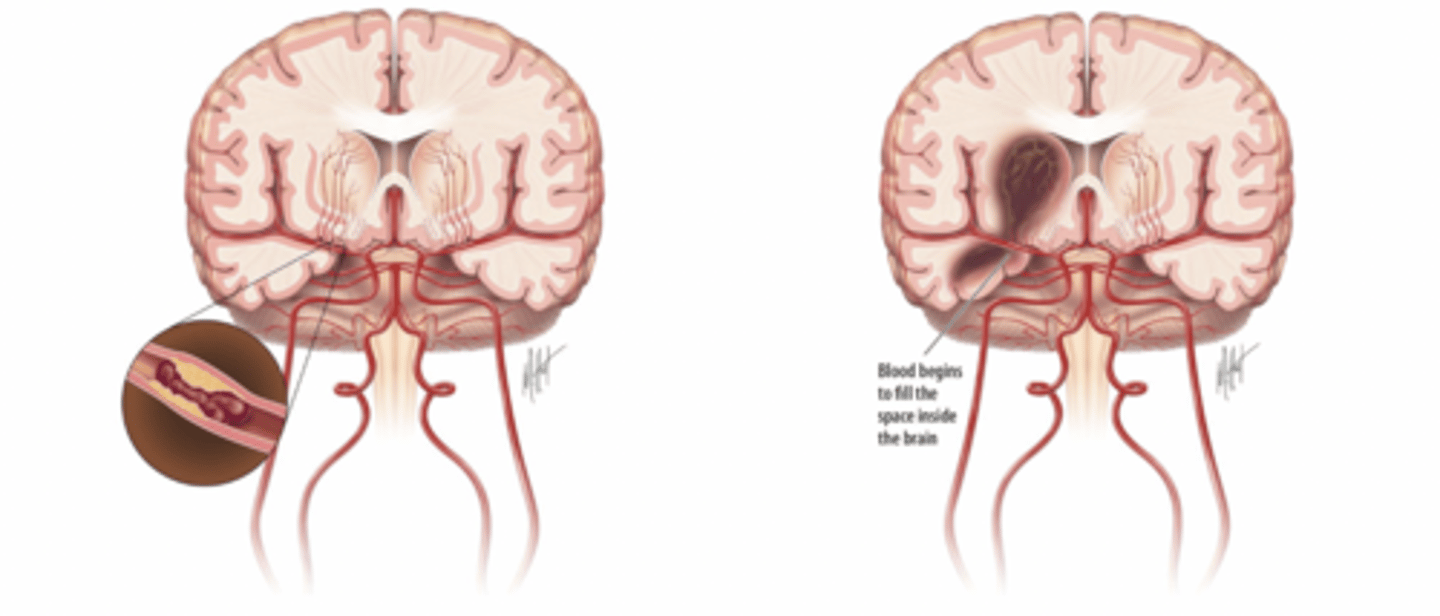
Vasculature of the Brain - Causes
-can be caused by sudden stroke (blockage or hemorrhage)
-blood supply to an area of the brain is blocked or reduced, causing tissue damage
-CVD can be progressive with high blood pressure and accumulation of fatty deposits in the arteries which block blood flow
-fatty deposiss and plaque buildup can cause arteries to become stiffer where they lose compliancy and elasticity
Vascular Dementia (VaD) - Treatments
addressing underlying issues (blood pressure, cholesterol, etc.) to prevent future strokes
-lifestyle and supportive therapies
-nimodipine (may improve blood circulation)
-recent investigations into Psoriasis medication (piclidenoson, used to treat plaque psoriasis)
Frontotemporal Dementia (FTD)
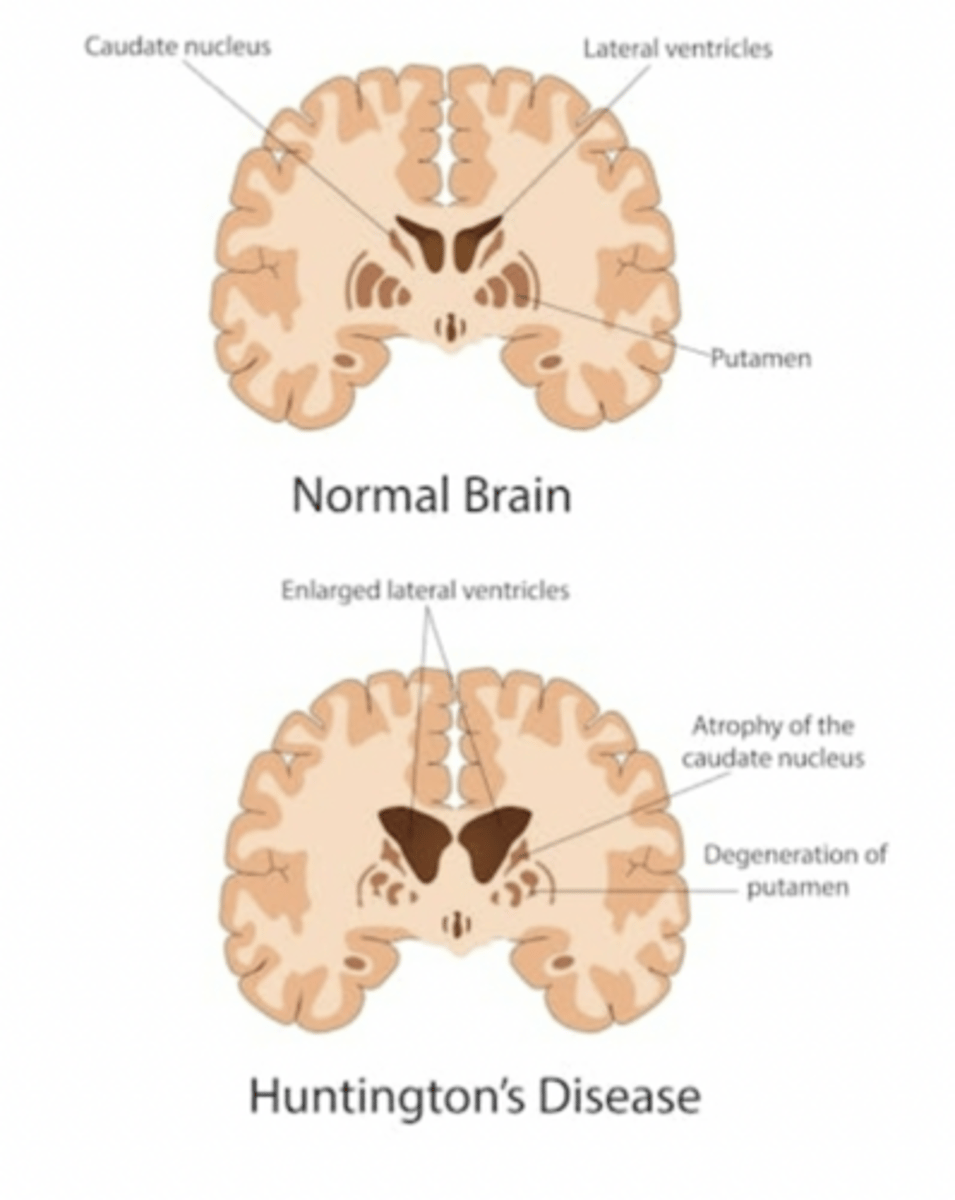
diseases that mainly affect the frontal and temporal lobes, where we see shrinking and atrophy of brain tissue
-can be misdiagnosed as a mental health disorder of AD
-typically associated with changes personality, behavior, and language
Frontotemporal Dementia (FTD) - Symptoms
-behavioral changes: inappropriate social behavior, loss of interpersonal skills, lack of judgment, loss of inhibition, and increase in compulsive behaviors
-speech and language: trouble naming things, loss of word meaning, trouble using and understanding written or spoken language
-movement condition: tremors, muscle weakness, inappropriate laughing or crying, falls or trouble walking
What is Huntington's Disease?
A progressive, fatal, inherited genetic disorder that leads to involuntary movement and cognitive decline.
How is Huntington's Disease inherited?
often passed down through a mutated gene from a parent.
What causes Huntington's Disease?
It is caused by trinucleotide repeats (CAG) on the HTT gene.
What is the risk associated with 36 or more CAG repeats on the HTT gene?
It may put someone at risk of developing Huntington's disease.
What is the implication of having 40 or more CAG repeats on the HTT gene?
It will 'almost certainly' cause Huntington's disease.
At what age do individuals usually develop symptoms of Huntington's Disease?
Between ages 25-55.
What major neurocognitive disorder does Huntington's Disease develop into?
Major NCD and chorea.
What are some symptoms of chorea in Huntington's Disease?
Irregular jerks, grimaces, and twitches.
Huntington's Dementia - Symptoms
Movement disorders: involuntary jerky movements, Muscle Rigidity, Trouble with speech or swallowing
Cognitive decline: trouble learning new info, lack of impulse control, perseveration
Mental Health: social withdrawal, fatigue, trouble sleeping, as well as OCD, Mania, Bipolar Disorder (depression and mania)
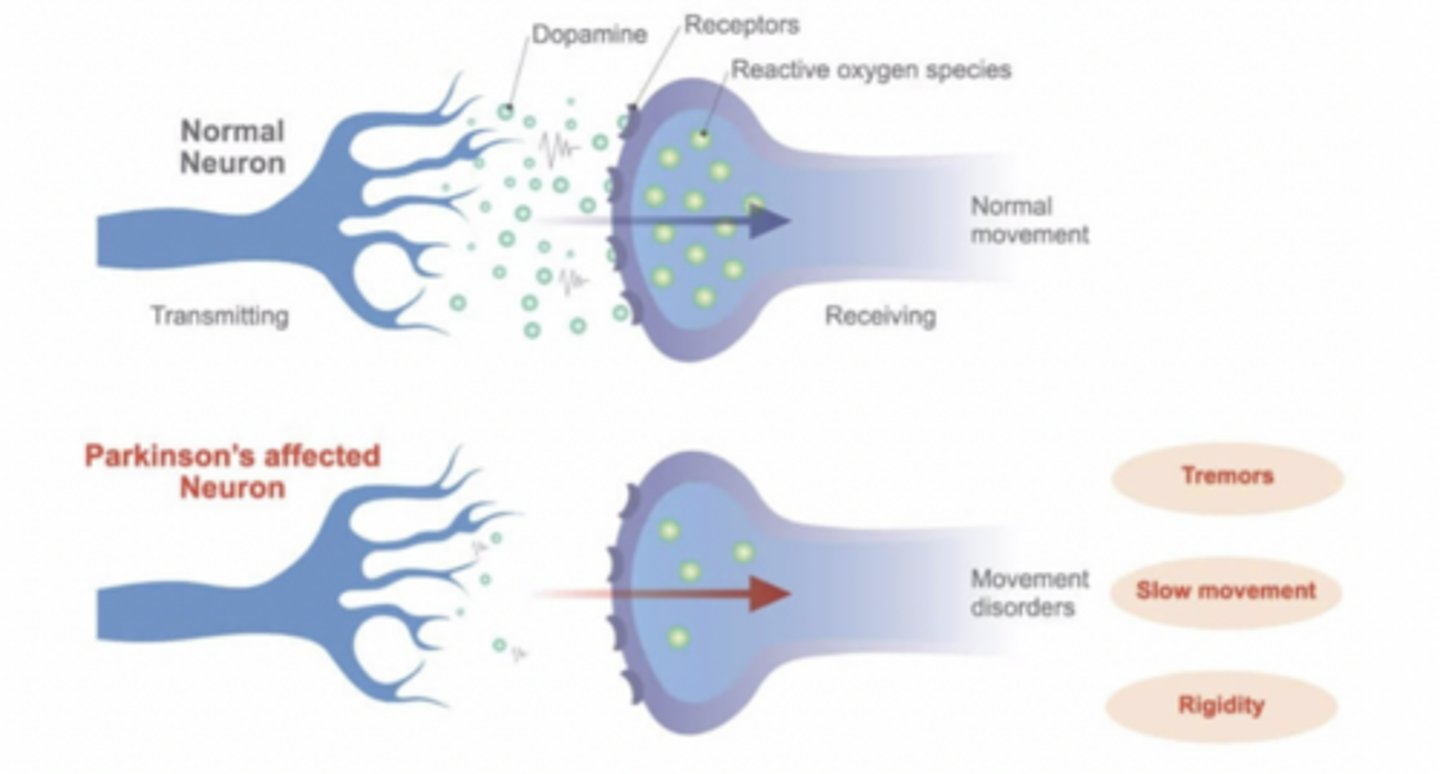
Parkinson's Dementia
A movement disorder with symptoms of tremors, muscle rigidity, and the inability to initiate movement.
What are the risk factors for Parkinson's Dementia?
Age, genetics, gender, and exposure to toxins.
What is known about the cause of Parkinson's Disease?
The cause is unknown, but symptoms are caused by declines in dopamine levels.
What environmental factors are thought to play a role in Parkinson's Disease?
Pesticides and well water, though more research is needed.
Various types of "drugs"
medication (aspirin, antianxiety)
caffience
nicotine
cocaine
alcohol
intoxication
temporary changes in behavior, emotions, or thoughts
tolerance
the need for increasing doses of a substance to produce a desired effect
withdrawal
reactions that consist of unpleasant and sometimes dangerous symptoms (eg. cramps, anxiety, sweating, nausea, seizures)
Substance Use Disorders
patterns of maladaptive behaviors and reactions brought about by the repeated use of substances
causing distress or functional impairment
types of Substance Use Disorders
Depressants: alc, sedative-hypnotic drugs, opiods
stimulants: cocaine, amphetamines, caffeine
hallucinogens: LSD
Cannabis
Substance Use Disorder DSM 5 Diagnostic Criteria
1. Individual displays a maladaptive pattern of substance use leading to significant impairment or distress
2. Presence of at least 2 of the following substance-produced symptoms within a 1-year period
-substance is often taken in larger amounts
-unsuccessful efforts to reduce or control substance use
-much time spent trying to obtain, use, or recover from the effects of a substance
-failure to fulfill major role obligations
-continued use despite persistent interpersonal problems
-reduction of important activities
-continued use in dangerous situations
-continued use despite worsening of physical or psychological problems
-craving for substance
-tolerance effects
-withdrawal reactions
Depressants
Slow the activity of the central nervous system
-moderate doses can lead to:
-relaxation, sleepiness
-reduced concentration
-impairment in thinking, judgement, and motor skills
-heavy doses:
-induce stupor
-can cause death
What type of substance is alcohol classified as?
Depressant
What is the active ingredient in alcoholic beverages?
Ethyl alcohol
How is ethyl alcohol absorbed into the body?
Quickly through the lining of the stomach and intestines