light and the eye science year 9!
 Call Kai
 Learn
Learn Practice Test
 Spaced Repetition
 Match
Match Flashcards
 Knowt Play
1/44

Earn XP
Description and Tags
this is for test term 3 week 3 year 9
Name | Mastery | Learn | Test | Matching | Spaced | Call with Kai | Chat |
|---|
No analytics yet
Send a link to your students to track their progress
45 Terms
what kind of energy is light
light is a form of radiant energy specifically electromagnetic energy that travels through waves
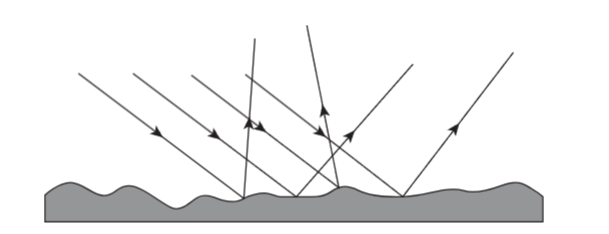
diffuse reflection
no image is formed also known as glare
regular reflection
forms an image
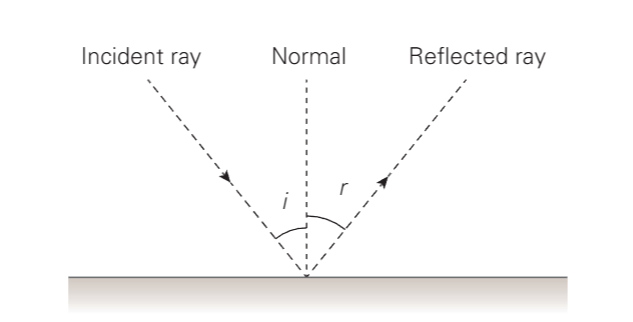
law of reflection
states that the angle of incidence and the angle of reflection are equal to each otherThis principle applies when light reflects off a smooth surface, maintaining the same angle relative to the normal.
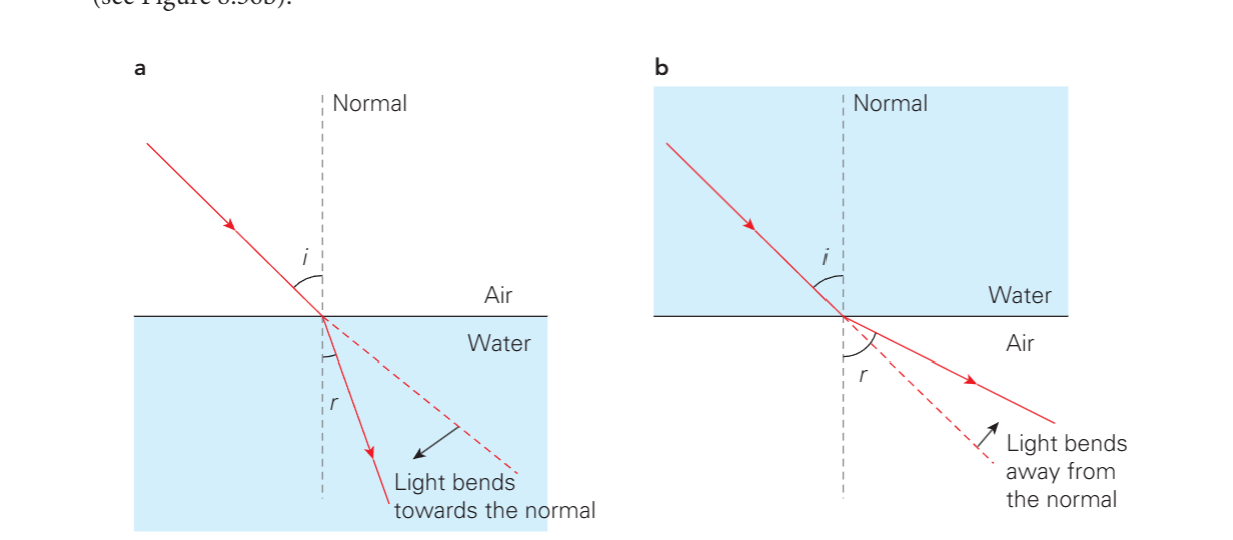
law of refraction
states when light travels from one medium into another at an angle, it bends
light and water
when light enters water it bends towards the normal
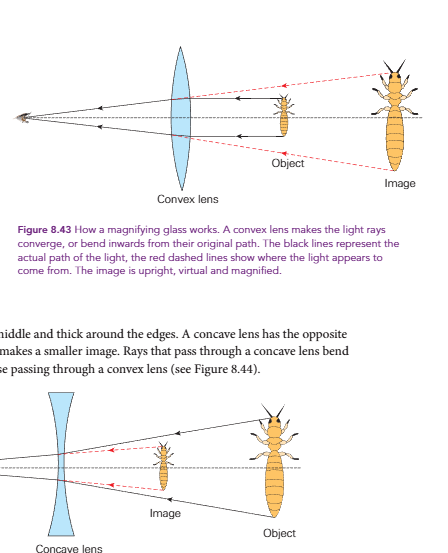
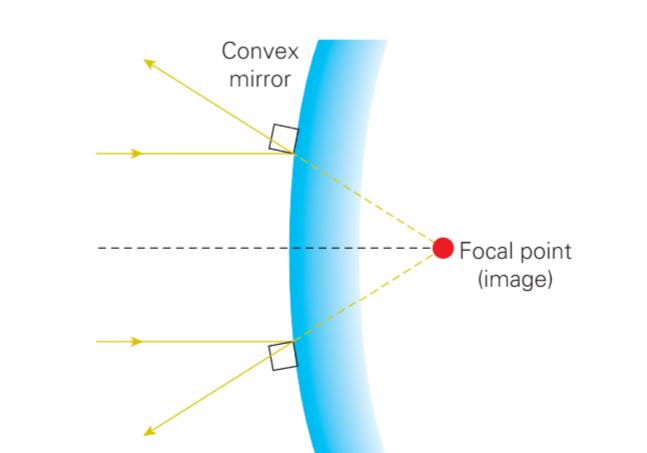
convex
makes light rays bend inwards from the original path
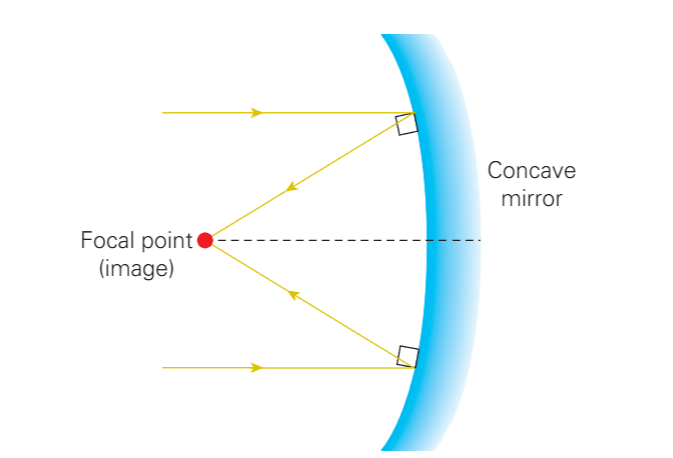
concave
makes light rays bend outwards from their original path
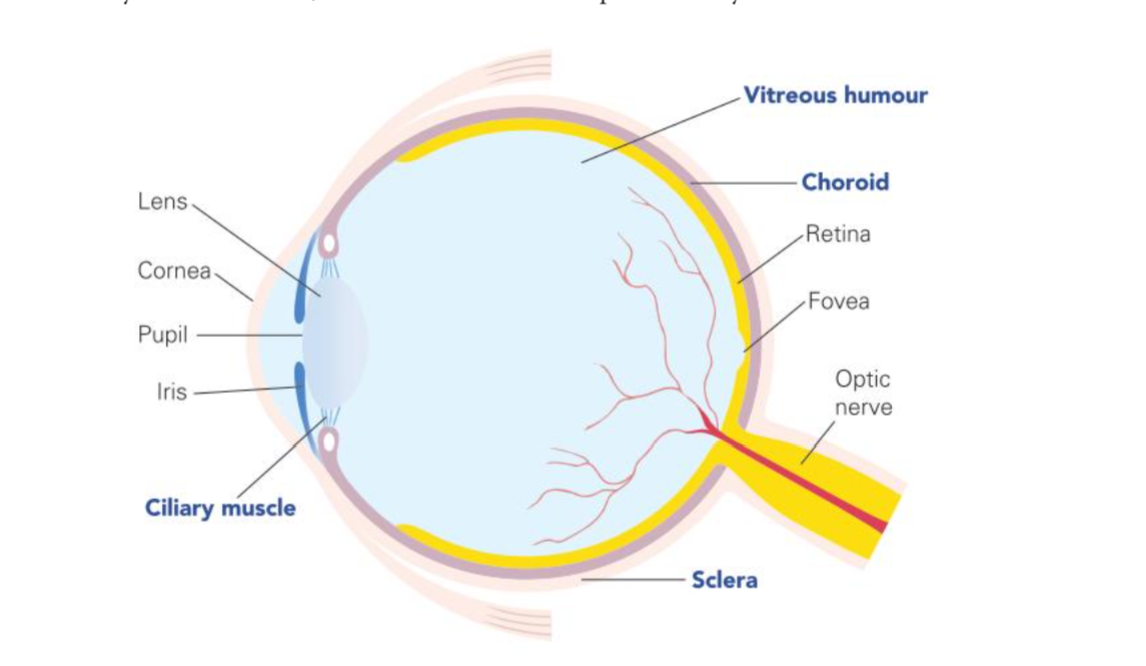
cornea
transparent outer covering of the eye
pupil
circular black area in the centre of the eye through which light enters
iris
coloured circular part of the eye surrounding the pupil
vitress humour
clear jelly like substance through which light passes
choroid
layer of blood vessels that supply the retina
ciliary muscle
muscle that controls the focus of the lengs by chaning its shape
sclera
white outer layer
lens
small disc of transparent tissue behind the pupil allowing the eye to focus on near and far objects
fovea
small part of the retina containing light sensitive cells
retina
area of tissue at the back of the eye containing cells that detect light and colour
optic nerve
the nerve that connects the eye to the brain
blindspot
the area in your vision where the optic nerve exits the eye
plane mirror properties
image is upright and appears to be behind the mirror
convex mirror properties
image shows wider field of view and is upright and the objects appear smaller
concave mirror properties
images are magnified and can be upside down
plane mirror up close
clear
plane mirror elbows length away
the image is even spaced and clear
plane mirror arms length away
cant see very well
concave up close
the image is magnified
concave elbow length away
blurry and inverted
concave arms length away
kind of distorted
convex up close
image shows a large surface area
convex elbows length away
image is elongated
convex arms length away
shows a much larger field of view
objects in water
Objects in water appear closer to the surface because the refraction of light. light bends slowly in water and the light rays bend away from the normal
transverse wave
a wave in which the particle vibrate or move at right angles to which the direction of energy transfers
frequency
the number of cycles of a wave per second
wavelength
the distance form one wave to the next
amplitude
the distance of a wave crest or the depth of a wave trough from the centre line of the wave
transverse wave
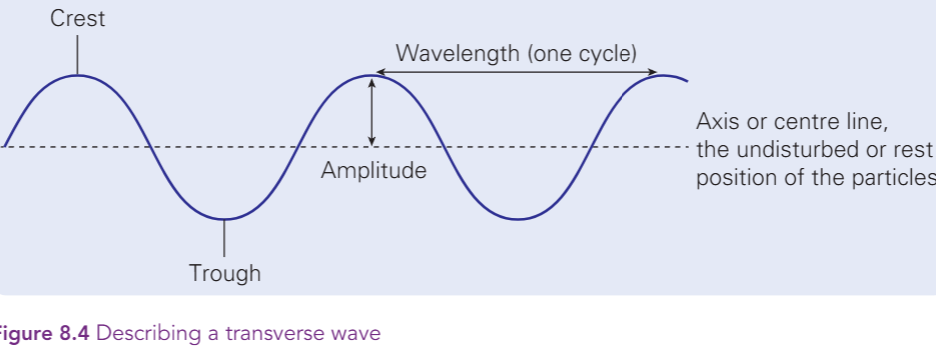
image hitting rough surface
law of refleciton diagram
concave mirror diagram
convex mirror diagram
light rays in water vs air
the eye
images