Micro. Chapter 3: The Cell (Prokaryotic)
 Call Kai
 Learn
Learn Practice Test
 Spaced Repetition
 Match
Match Flashcards
 Knowt Play
1/29

There's no tags or description
Looks like no tags are added yet.
Name | Mastery | Learn | Test | Matching | Spaced | Call with Kai | Chat |
|---|
No analytics yet
Send a link to your students to track their progress
30 Terms
General Characteristic
2-8µM in length
1-2µM in diameter
Shapes
Coccus - round
Bacillus - rod
Coccobacillus - short rod
Vibrio - cured
Spirilla and spirochetes

Coccoid Arrangements
Used as an identifying characteristic
- When observing a sample go with shape that is most present
Caused by divisional planes of various organisms
Pairs
Tetrads
Chains
Clusters

Cell Wall
Made of plasma membrane
Maintains structure
Functions just as in human cells
Cytosol
Jelly on the inside of the cell
Mostly water
Cytoplasm
Cytosol plus other components
Nucleoid
Where the DNA is
Not organized and doesn’t have any histones
- Nucleoid-associated proteins act in the place of histones
DNA
Single chromosome
Located in a circle around the cell
AGTC based with a sugar / phosphate backbone
Aranged in genes
Double stranded
Plasmids
Small extrachromosomal DNA, hundreds
Doesn’t have genes required for normal life
- House keeping genes only
Holds specialty genes
- Antibiotic resistance
- Toxins
- Special nutrient processing
Replicated in-depended of chromosome
Ribosomes
The exact same as eukaryotes cells
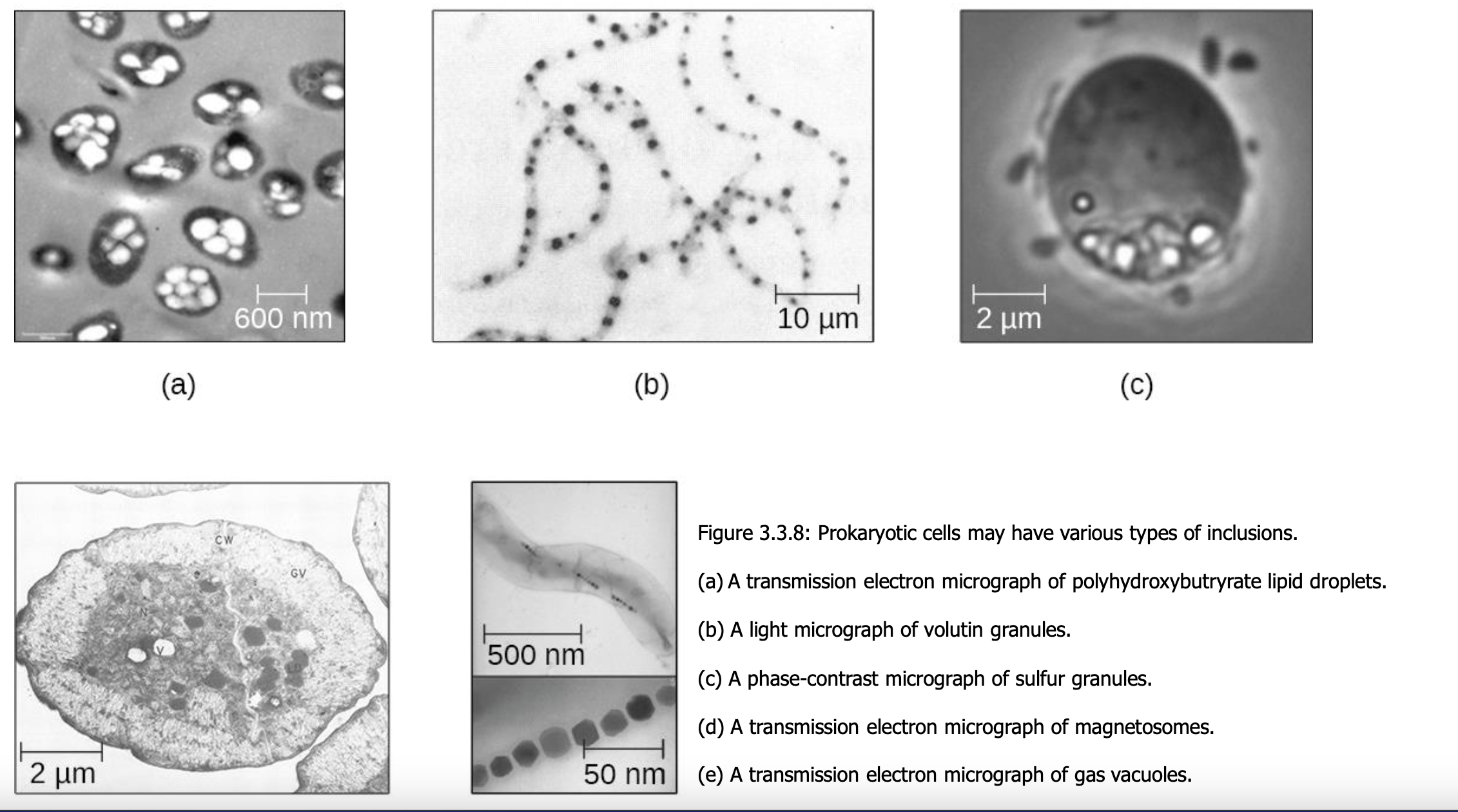
Inclusions
Pockets of excess nutrients and other components
Some have a phospholipid monolayer and proteins but others don’t
Endospores
Form when conditions are to hard for life
Inert forms of bacteria
Only formed by some Gram positive rods

Bacterial spore
A released endospore
Inert
Vegetative cell
Active, metabolizing cell formed from a bacterial spore
Germination
Bacteria going from a spore (inactive) back to vegetative state (active)
Sporulation
Bacteria moving from a vegetative state (active) to a spore (inactive)
Peptidoglycan
A peptide that is unique to bacteria
Amount and arrangement are used to separate bacteria into groups
- Gram positive
- Gram negative
Gram positive cell wall
Thick layer of peptidoglycan
2 layers of teichoic acid threaded in
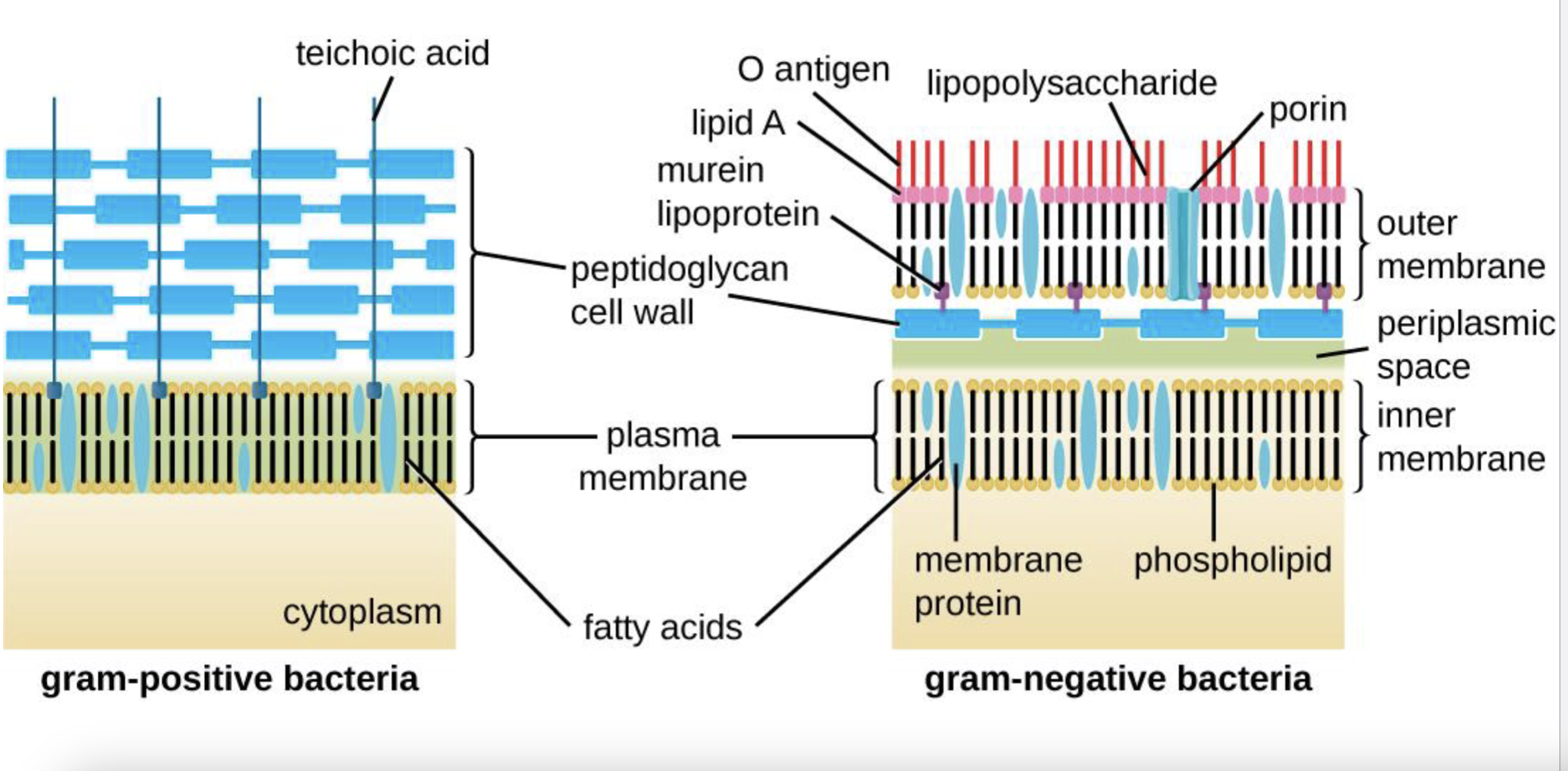
Gram negative cell well
Thin layer of peptidoglycan
3 layers of Lipopolysaccharide threaded in

Acid fast bacteria
Gram positive
Mycolic acid on the outer most layer
- Waxy
Messes up our gram stinging process

Exterior of a bacteria cell
Glycocalyx
- Subdivided into Capsule and Slime layer
S layer
Fimbriae
Pili
Flagella
Glycocalyces
Part of the exterior of the cell
Made of sugar and sometimes protein
Makes the cell slippery or sticky
Subdivided into capsule and slime layer
Capsule
Subdivision of glycocalyces
More organized and denser than slime layer
Slime layer
Subdivision of glycocalyces
Less organized and denser than capsule
S layer
Made of proteins and glycoproteins
May help in withstanding osmotic pressure
May interact with the immune system with pathogens
Fimbriae
Plentiful, hair like projections
Functions in adhesion
- May have other functions to
Pili (F pilus)
Often used interchangeably with fimbriae but that’s incorrect
Hollow tube that extends from one cell and connects with another
- Plasmid transfer
M Protein
Antigen displayed on the surface of some Streptococcus
pyogenes (Group A Streptococcus)
Works to prevent phagocytosis in infection
- Virulence factor
- Prevents certain opsonization
Flagella
Hair like projections
Used for motility
- Has sticky ends
Made from the protein flagellin
- Structure is slightly different depending on gram reaction
Flagellar arrangements
The identify characteristic of bacteria
Depend on attachment point and amount of flagella
