#19
0.0(0)
Studied by 3 people Call Kai
 Learn
Learn Practice Test
 Spaced Repetition
 Match
Match Flashcards
 Knowt Play
Card Sorting
1/74

Earn XP
Description and Tags
Last updated 4:10 AM on 11/1/22
Name | Mastery | Learn | Test | Matching | Spaced | Call with Kai |
|---|
No analytics yet
Send a link to your students to track their progress
75 Terms
1
New cards
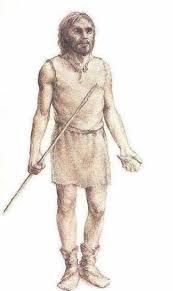
Homo sapiens
200,000 ya in Africa, anatomically modern humans
2
New cards
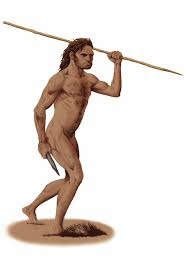
Homo sapiens characteristics
- high forehead
- large braincase
- pronounced chin
- large braincase
- pronounced chin
3
New cards
Why are homo sapiens sometimes called homo sapiens sapiens?
Due to evidence of intermingling between neanderthals and modern humans, to say homo sapiens would indicate that they were the same species according to the biological species concept. to say homo sapiens sapiens would distinguish homo sapiens as a subspecies
4
New cards
Asia had ___________ DNA
neanderthal
5
New cards
Australia had ___________ DNA
denisovan
6
New cards
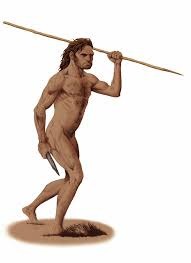
Homo sapiens practices
- advanced stone tools
- extensive use of fire
- bows and arrows, projectiles
- produced symbolism and art
- extensive use of fire
- bows and arrows, projectiles
- produced symbolism and art
7
New cards
What has caused hominin populations to go extinct?
competition, warfare, and intermixing
8
New cards
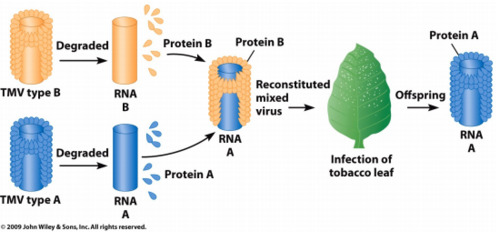
Tobacco Mosaic Disease
Discovered in the 1800s, stunts the growth of Tobacco plants and gives them a mottled coloration. Confirmed in the 1930s: purified and crystallized
9
New cards
Tobacco Mosaic Virus Experiment
1. Extracted sap from infected plant
2. Passed sap through a porcelain filter known to trap bacteria
3. Rubbed filtered sap on healthy tobacco plants
4. Healthy plants became infected
2. Passed sap through a porcelain filter known to trap bacteria
3. Rubbed filtered sap on healthy tobacco plants
4. Healthy plants became infected
10
New cards
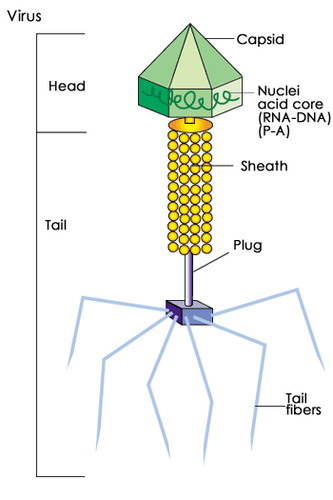
Virus
A tiny, nonliving infectious particle that invades and then reproduces inside a living cell.
11
New cards
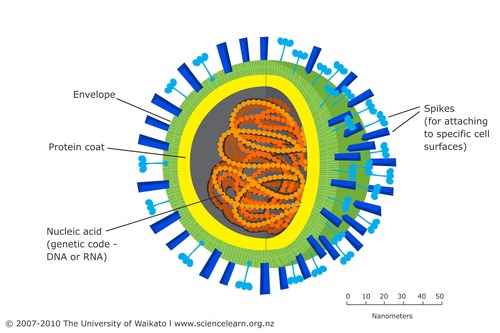
What is a virus made of?
DNA or RNA enclosed by a capsid, and sometimes also a membrane envelope
12
New cards
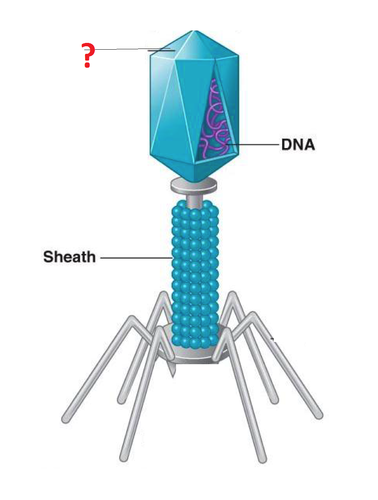
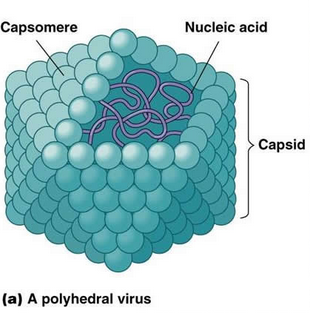
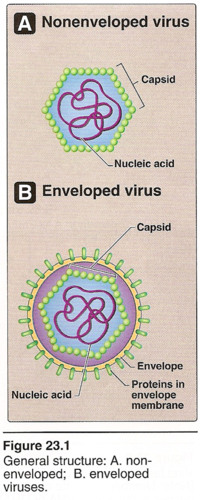
capsid
protein coat surrounding a virus
13
New cards
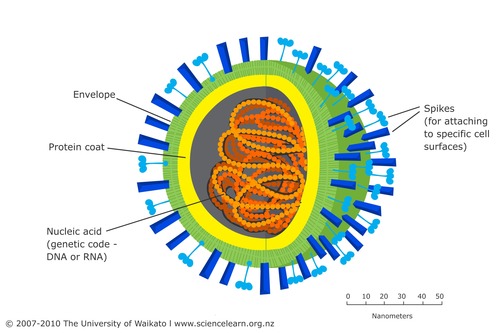
membranous envelope
similar to cell membrane, can sometimes surround a virus
14
New cards
capsomere
protein subunits that make up the capsid
15
New cards
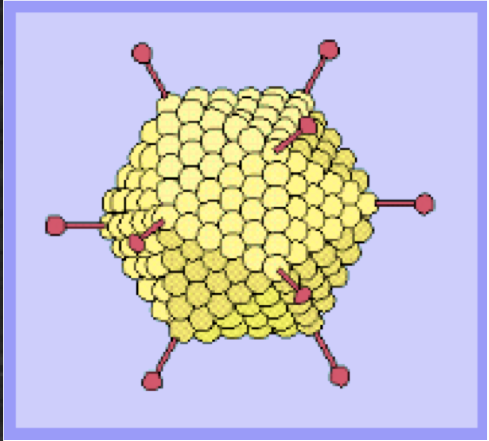
adenovirus
covered in glycoproteins
16
New cards
What are the two virus hypotheses?
1. Ancient Virus Origin
2. Cell-First Origin
2. Cell-First Origin
17
New cards
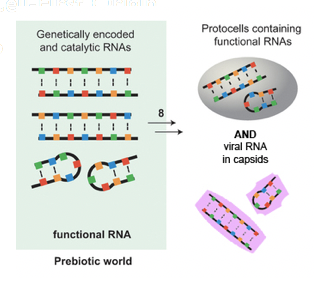
Ancient Virus Origin
- Viruses coexisted with protocells on early earth
- "Selfish" genetic elements parsitized on independent replicating protocells since early Earth
- "Selfish" genetic elements parsitized on independent replicating protocells since early Earth
18
New cards
Evidence of Ancient Virus Origin
- all 3 domains of life can be infected by viruses
- the genomes of most cells contain integrated viral genetic information
- the genomes of most cells contain integrated viral genetic information
19
New cards
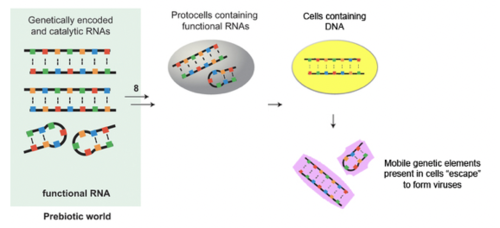
Cell-First Origin
- most likely to have happened
- viruses evolved after cells from components of cells capable of exiting the cell
- viruses evolved several times
- viruses evolved after cells from components of cells capable of exiting the cell
- viruses evolved several times
20
New cards
Evidence of Cell First Origin
- viruses can only replicate within cells
- physical structure and nucleic acids used vary enormously
- mobile genetic elements (plasmids) exist in bacteria
- physical structure and nucleic acids used vary enormously
- mobile genetic elements (plasmids) exist in bacteria
21
New cards
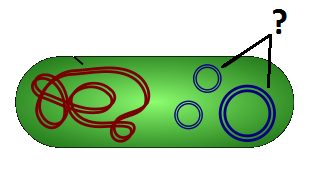
plasmid
A small, circular section of extra DNA that confers one or more traits to a bacterium and can be reproduced separately from the main bacterial genetic code.
22
New cards
viral genome
can be either double or single-stranded DNA or double or single-stranded RNA
23
New cards
bacteria can swap _____ for sexual reproduction
capsids
24
New cards
host range
the limited number of species whose cells can be infected by a particular virus
25
New cards
types of host range
1. broad range
2. narrow range
2. narrow range
26
New cards
broad range
can infect many different animals in addition to humans
27
New cards
narrow range
infects a narrower variety of species.
28
New cards
broad range virus example
West Nile: can infect humans, birds, insects
29
New cards
narrow range virus example
malaria, infects umans only
30
New cards
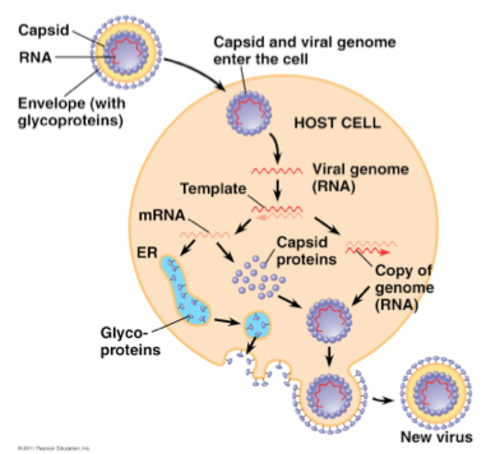
How do viruses infect?
Make use of host enzymes, ribosomes, ATP and other molecules
31
New cards
How do viruses bind to the cell?
Surface molecules on the virus bind to specific host cells "lock-and-key"
32
New cards
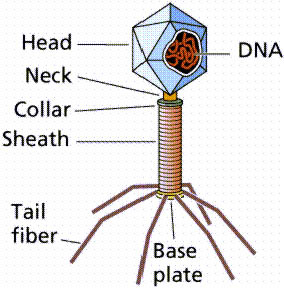
bacteriophages
A virus that infects bacteria; also called a phage.
33
New cards
Some of the most complex capsids found among viruses are
bacteriophages
34
New cards
How do phages infect bacteria?
Protein tail piece attaches the phage to the host and injects the phage dna INSIDE

35
New cards
The best understood of all viruses
phaes
36
New cards
Reproductive Mechanisms of Virsues
1. Lytics cycle
2. Lysogenic Cycle
2. Lysogenic Cycle
37
New cards
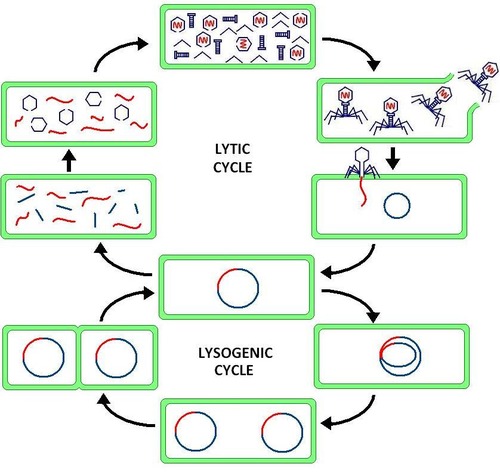
Lytic cycle
a viral reproductive cycle in which copies of a virus are made within a host cell, which then bursts open, releasing new viruses
38
New cards
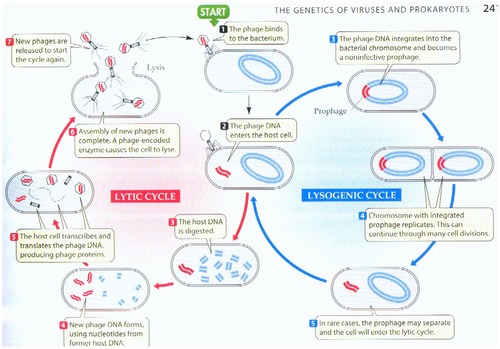
lysogenic cycle
a viral reproductive cycle in which the viral DNA is added to the host cell's DNA and is copied along with the host cell's DNA
39
New cards
the lysogenic cycle includes a ___________ _____________
prophage stage
40
New cards
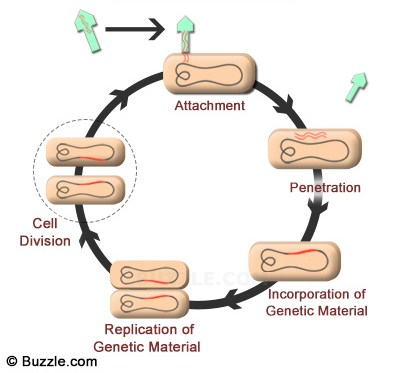
prophage stage
viral material injects its DNA
41
New cards
lysogenic cycle does not kill the bacterium unless it enters _________
lytic cycle
42
New cards
anti-virus mechanisms
bacteria produce restriction enzymes that recognize and cut up viral phage DNA
43
New cards
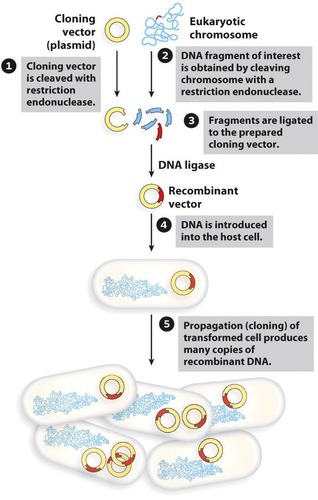
restriciton enzymes
cut DNA at specific recognition sequences called restriction sites
44
New cards
CRISPR
Clustered Regularly Interspaced Short Palindromic Repeats
45
New cards
CRISPR function
lead to production of enzymes that cut that specific viral DNA, part of antivirus immune system
46
New cards
CRISPR technology
Derived from bacterial immunity to target and destroy invading viral DNA, often used in gene editing
47
New cards
Example of virus attacking animals
HIV
48
New cards
HIV
human immunodeficiency virus, the virus that causes AIDS
49
New cards
retrovirus
An RNA virus that reproduces by transcribing its RNA into DNA and then inserting the DNA into a cellular chromosome; an important class of cancer-causing viruses.
50
New cards
HIV is a class of
retrovirus
51
New cards
How does someone get AIDS
HIV attacks the white blood cells
52
New cards
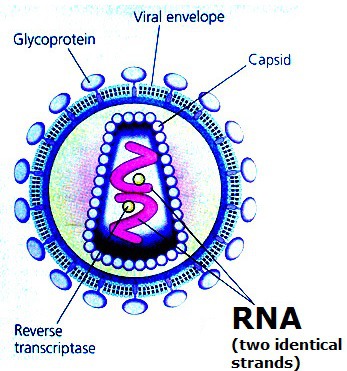
HIV characteristics
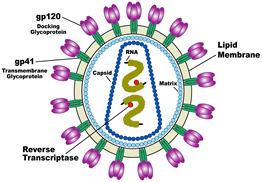
two viral RNA strands within protein capsid, surrounded by a membrane envelope with glycoproteins which bind to the surface of while blood cells
53
New cards
How does HIV infect a cell?
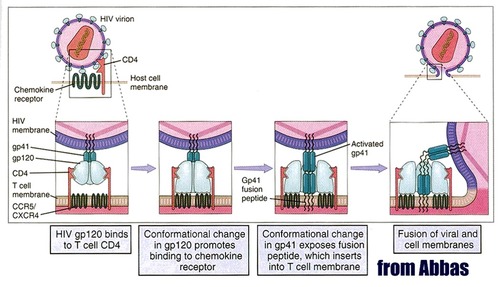
- the membrane envelope has glycoproteins that bind to the surface of white blood cells
- transcribes its RNA into DNA with reverse transcriptase, and inserts it into the cell
- the new DNA (provirus) becomes a permanent part of the chromosome
- the DNA codes for the production of new RNA and viral protein
- these proteins are assembled into a new virus which leaves the white blood cell
- transcribes its RNA into DNA with reverse transcriptase, and inserts it into the cell
- the new DNA (provirus) becomes a permanent part of the chromosome
- the DNA codes for the production of new RNA and viral protein
- these proteins are assembled into a new virus which leaves the white blood cell
54
New cards
Reverse transcripstase
makes a copy of the RNA
55
New cards
provirus
Viral DNA that inserts into a host genome.
56
New cards
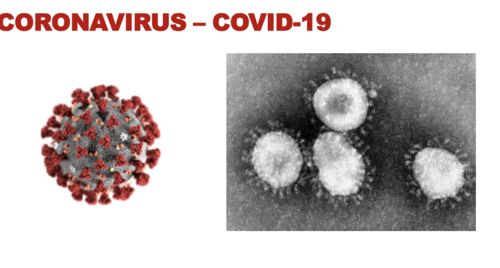
Coronavirus
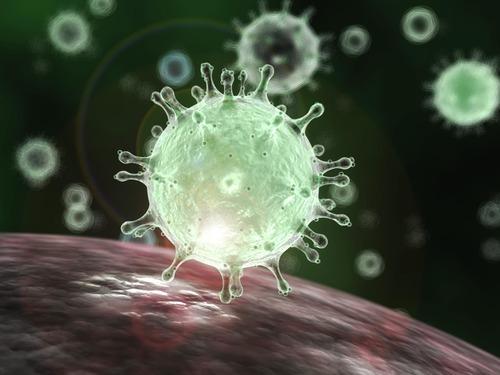
RNA virus whose membrane envelope is surrounded by surface glycoproteins making it resemble a crown
57
New cards
What type of cell do coronaviruses typically attach to?
animal mucus membrane cells
58
New cards
Genetic material in coronaviruses
Single RNA strand, capsid tightly bound to RNA
59
New cards
Sars-Cov-2
the strain that causes COVID-19
60
New cards
COVID-19 is especially dangerous for
elderly people, those with respiratory issues, or immune system problems
61
New cards
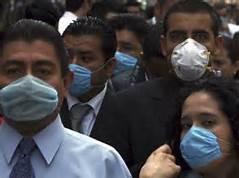
pandemic
an epidemic of disease caused by one viral strain that has spread around the world
62
New cards
How does the immune system react to coronavirus?
The human immune system handles it normally, producing antibodies and memory B cells
63
New cards
Who is more resistant to Sars2/COVID-19?
people who have had previous serious corona infections, including severe cold
64
New cards
_________ do not work on viruses
Antibiotics
65
New cards
Antiviral Drug
can interfere with the virus binding to the cells or to the virus replicating inside the cell
66
New cards
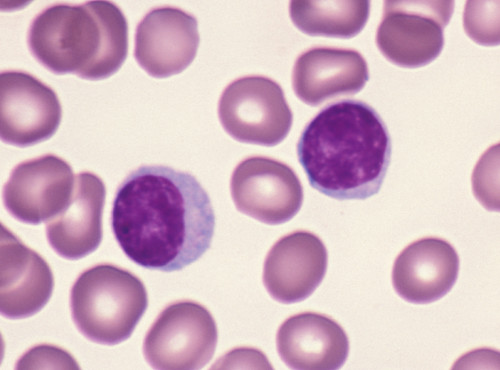
lymphocytes
white blood cells
67
New cards
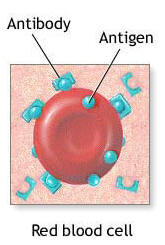
How do lymphocytes work?
- recognise the antigens on pathogens
- produce antibodies
- antibodies destroy pathogens
- produce antibodies
- antibodies destroy pathogens
68
New cards
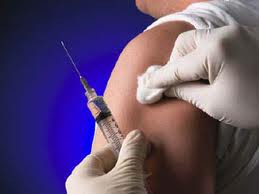
vaccine
injects inert/harmless derivative of a pathogen that stimulates a host's immune system to mount defenses against the pathogen
69
New cards
example of immunization vaccine
small pox
70
New cards
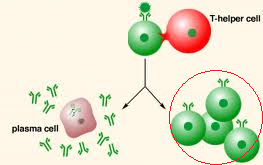
memory B cells
a kind of white blood cell that remains in reserve to respond to next infection, ensures that future infection will be counteracted by your own immune system
71
New cards
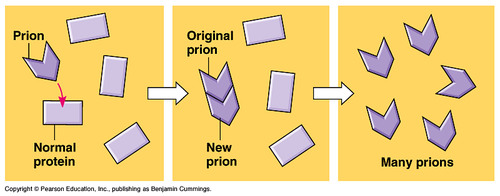
prions
misfolded proteins that induce normal proteins to be misfolded the same way, inducing a "chain reaction" causing disease
72
New cards
prion example
kuru, mad cow disease
73
New cards
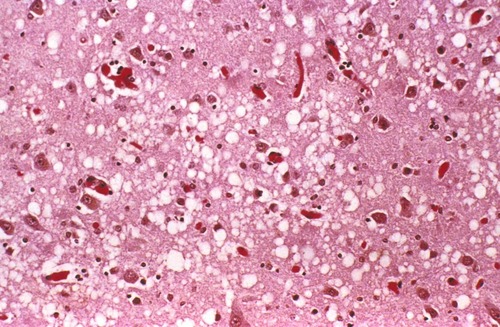
kuru
prion disease in humans that is caused by cannibalism, characterized by breakdown of tissue in brain
74
New cards
BSE/mad cow disease
prions, cattle fed with materials containing cattle meat
75
New cards
what part of the body do prions affect?
attacks the brain