BLOCK 2 lecture 1
 Call Kai
 Learn
Learn Practice Test
 Spaced Repetition
 Match
Match Flashcards
 Knowt Play
1/18

There's no tags or description
Looks like no tags are added yet.
Name | Mastery | Learn | Test | Matching | Spaced | Call with Kai | Chat |
|---|
No analytics yet
Send a link to your students to track their progress
19 Terms
biological nitrogen fixation - microbes
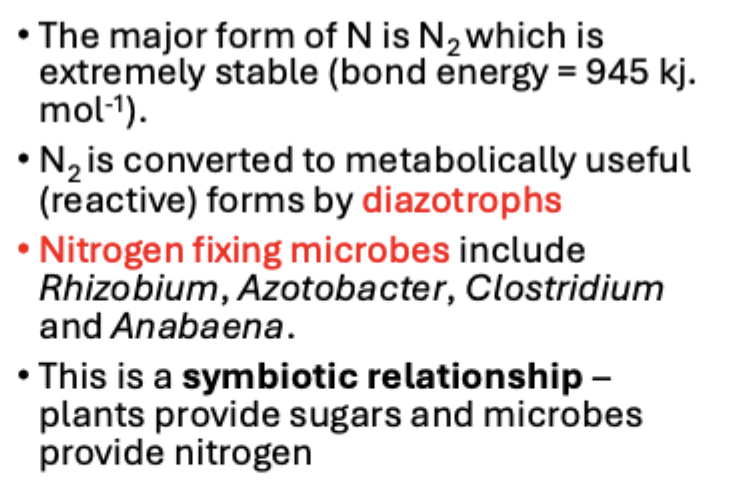
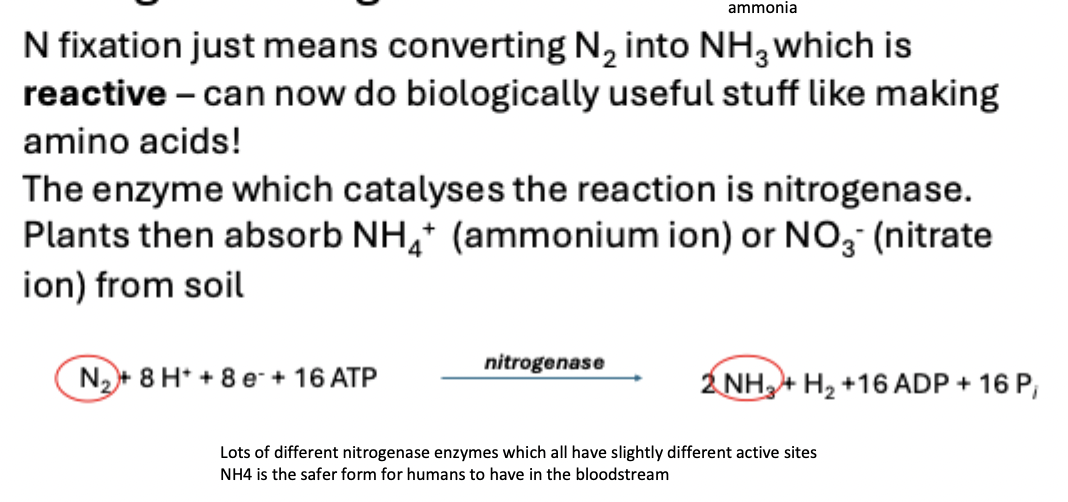
biological nitrogen fixation
overall nitrogen cycle
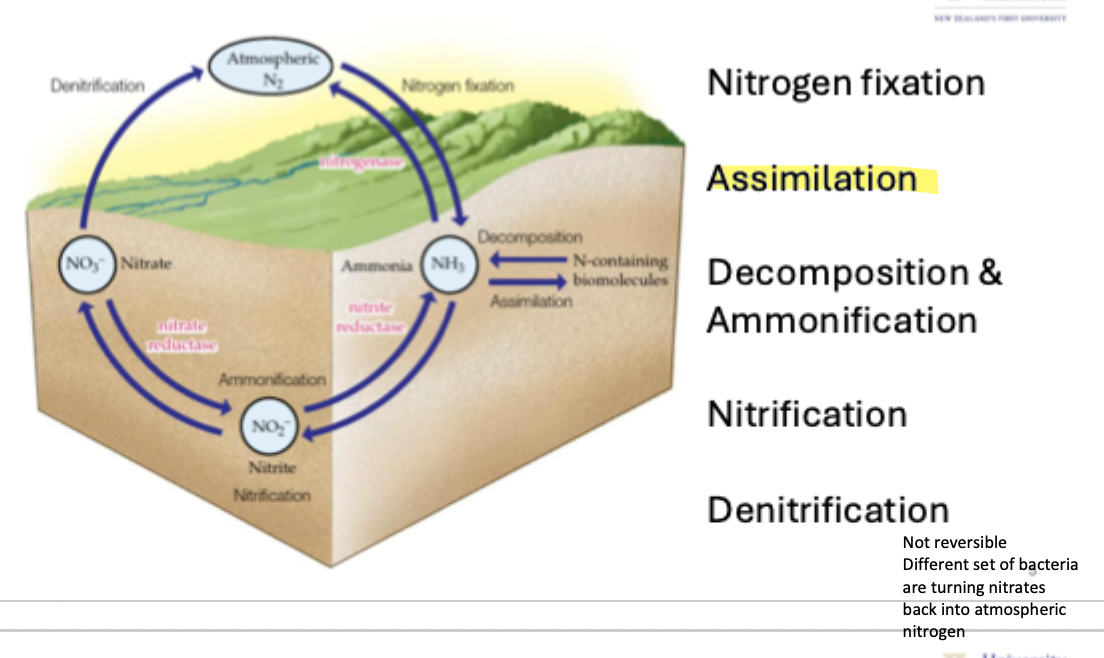
This happens constantly but humans are only involved in a very small part -assimilation and decomposition
Nitrogen fixation is whats on the last slide - bacteria that use nitrogenases
This means the nitrogen can be taken up by plants and then we wat plants or eat animals that have eaten the plants
Nitrification to become a nitrate
recycling of nitrogen in the biosphere
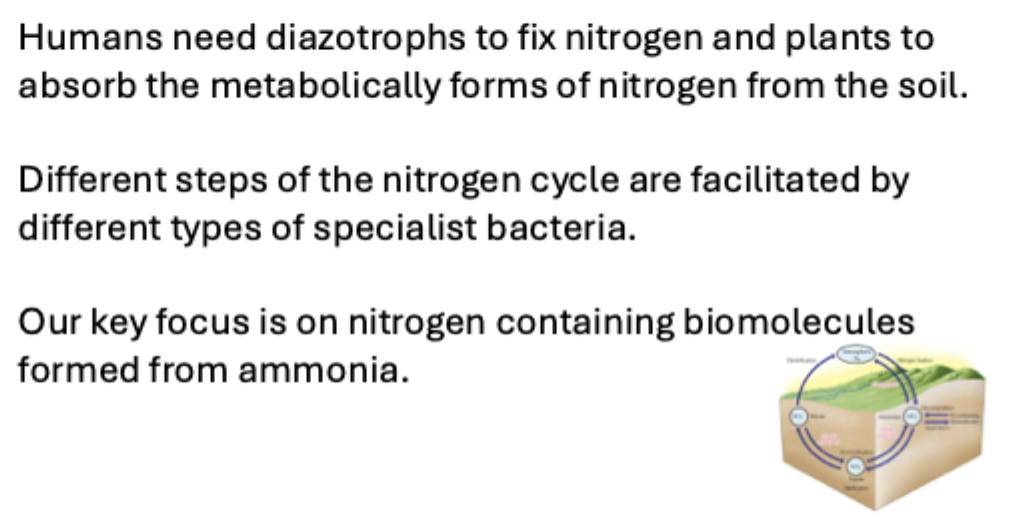
nitrogen containing biomolecules
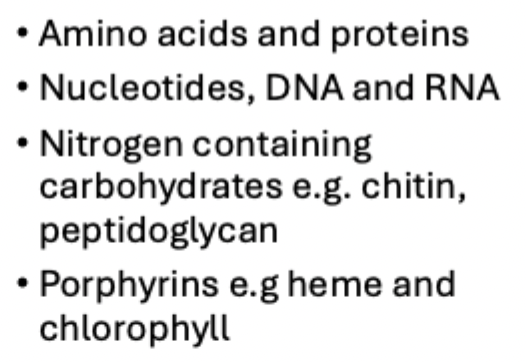
Proteins that we eat are around 16% nitrogen
major sources of amino acids in metabolism
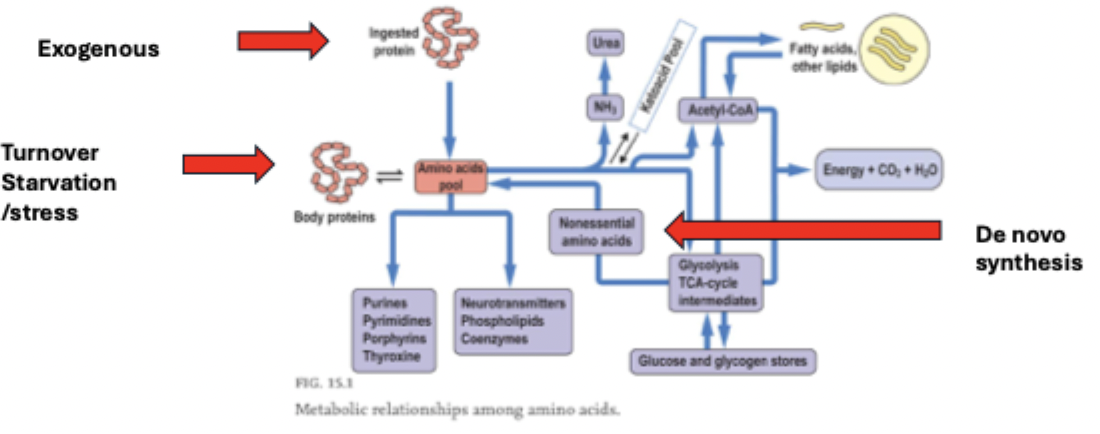
Taking in quite a lot through food - proteins
But we cant store it the way we can store fats and other fuel sources
If you are in nitrogen balance you will excrete the same amount of nitrogen as you take in to stay in balance
A lot coming from protein turnover within the body
essential and non-essetial amino acids
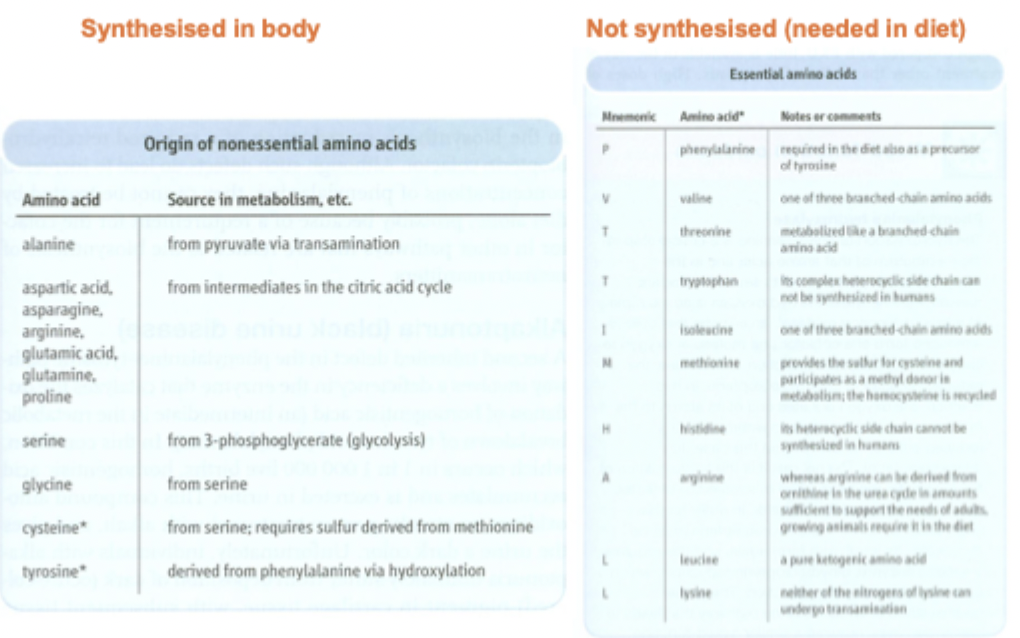
Non essential amino acids can be produced through reactions in the body
Know that alanine and pyruvate as a bit of a pair
We make pyruvate at the end of glycolysis
Alanine is the corrosponding ketoacid
Can be interconverted within each other
Also have some amino acids that can be interconverted with subtstrates of the citric acid cycle
Plus other sources
Although tyrosine is called nonessential, it is made from phenylalanine so you will not be able to make it without that amino acid in high enough numbers
Same with cysteine - cant produce it unless you have enough serine
Arganine is on both lists - can derive from ornathine in the irea cucle need more when growing so need it from the diet
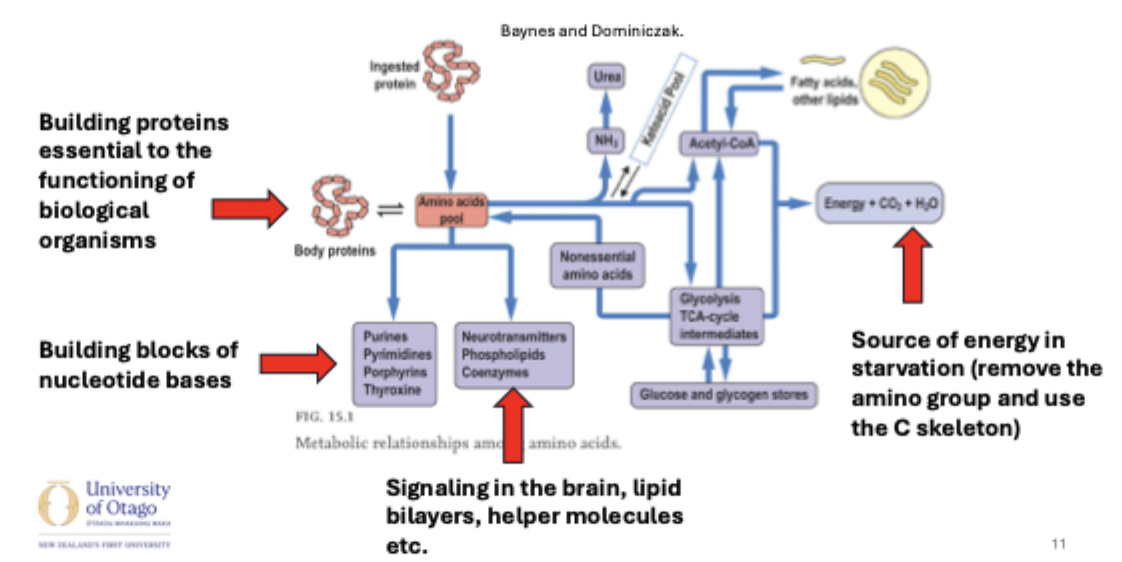
major uses of amino acids in metabolism
basic transamination reaction
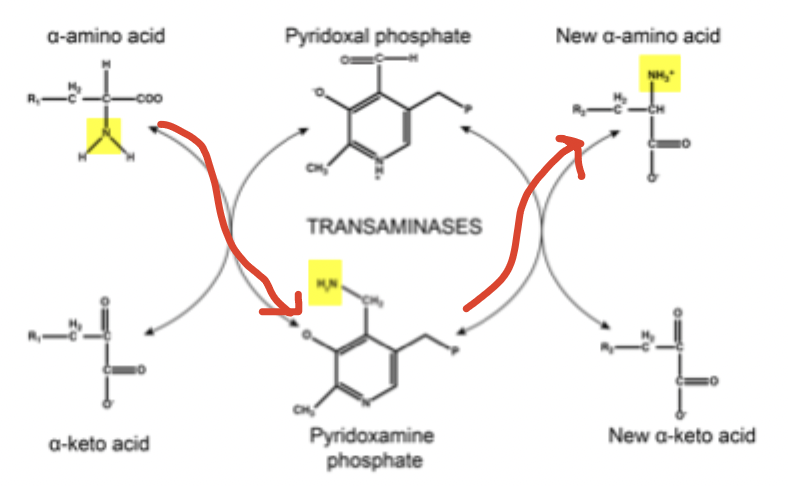
Pyridoxal phosphate is essential in these reactions as well as a group of enzymes that can just be referred to as transaminases
amino acid catabolism overview
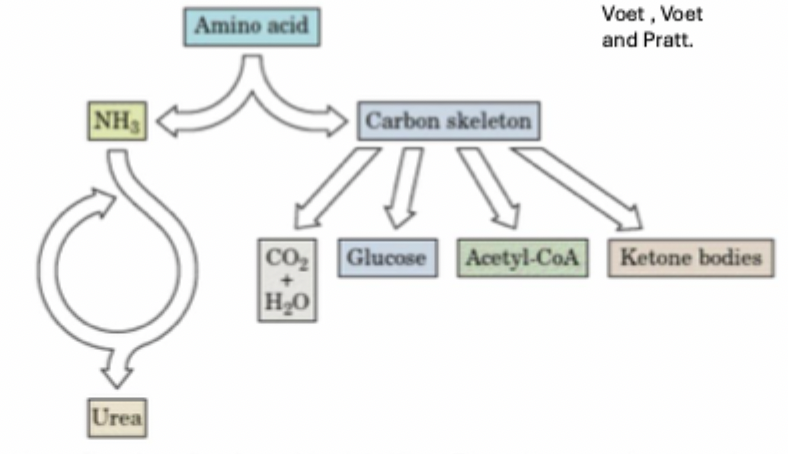
Transamination is moving nitrogens from one amino acid onto a keto acid to make a new amino acid
But there are also other types of reactions involved in this process of moving nitrogen from the body (because we have an excess) into the urea cycle
Here nitrogne is removed to get amino acids and carbon skeletons are left over (keto acids)
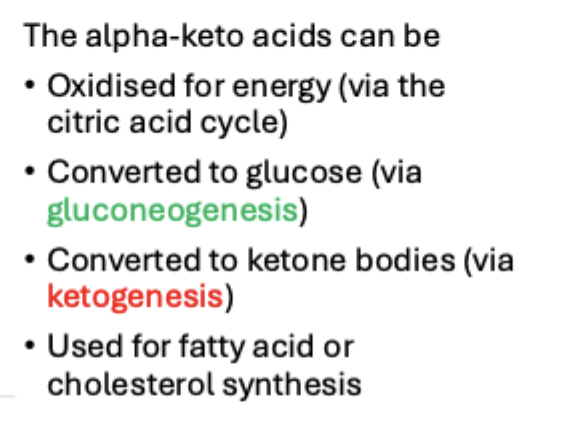
Keto acids can feed into various pathways
how do the amino acid C skeletons fit into intermediary metabolism
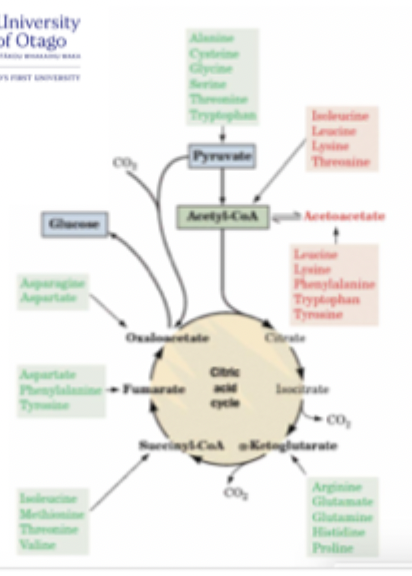
Not all simple one step reactions
most common transamination reactions
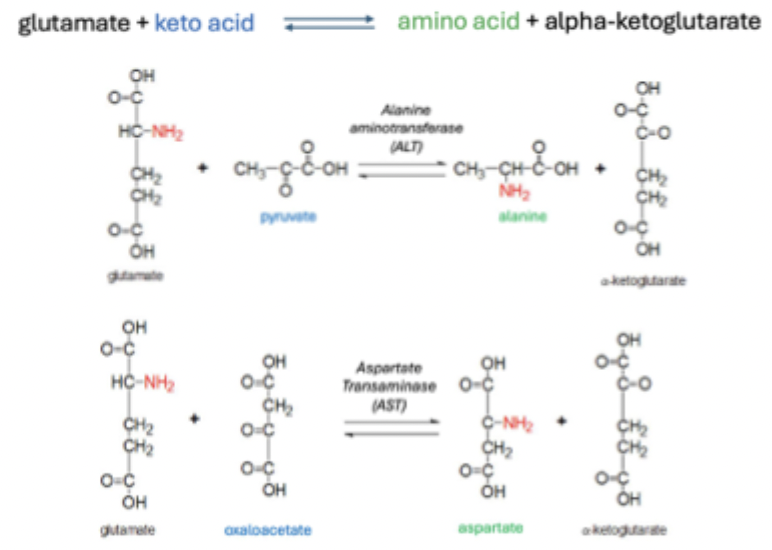
three key reactions
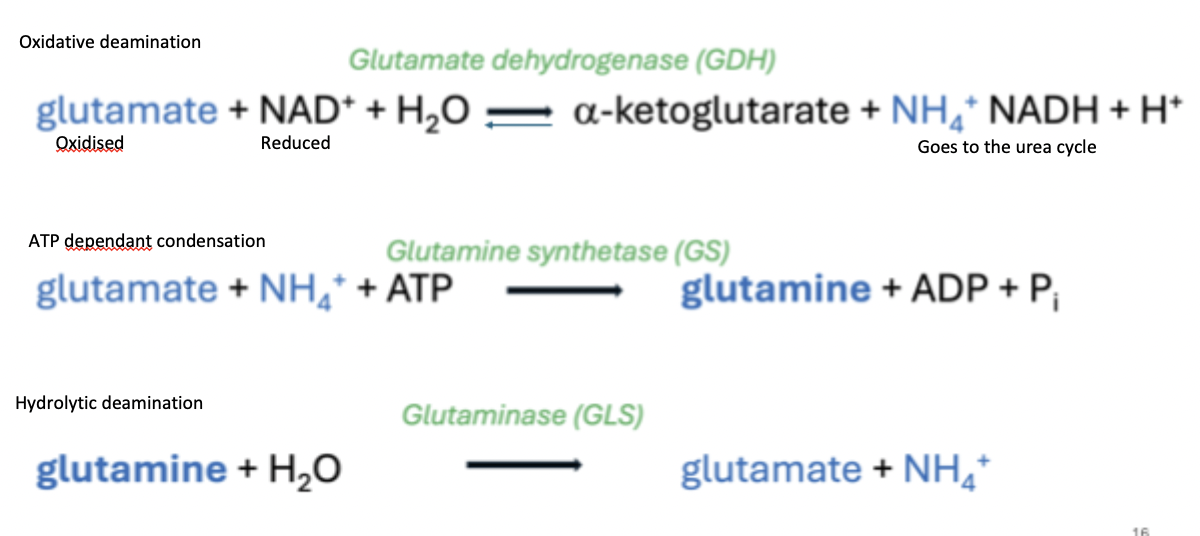
oxidative deamination

Requires NAD
Not passing the nitrogen onto another molecule, it is just there as ammonia (but could also be ammonium)
ATP dependant condensation

hydrolytic deamination

amino acids in skeletal muscle
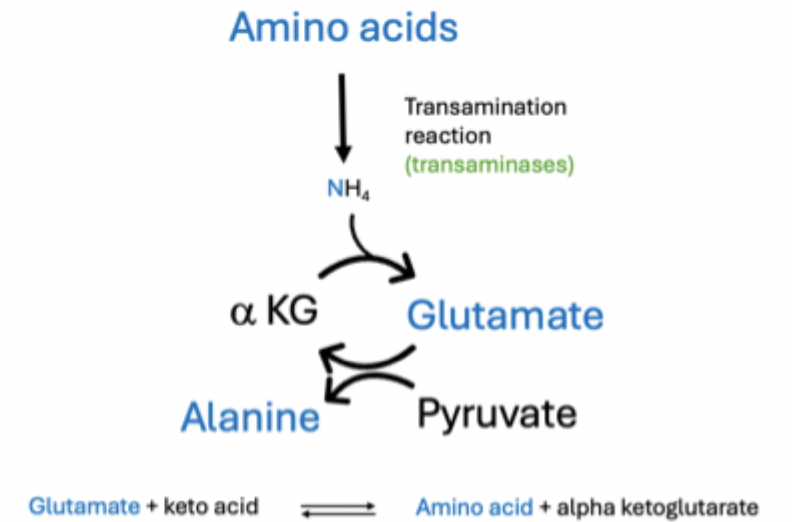
Another transamination reaction - glutamate pases on nitrogen to pyrivate to form alanine
Want alanine because its good at transporting nitrogen to the loiver from the skeletal muscle
Non-reactive molecule so non-toxic way to transport toxic ammonia
Alanine can be used for gluconeogenesis (can be turned back into pyruvate in the liver)
amino acids in most tissues
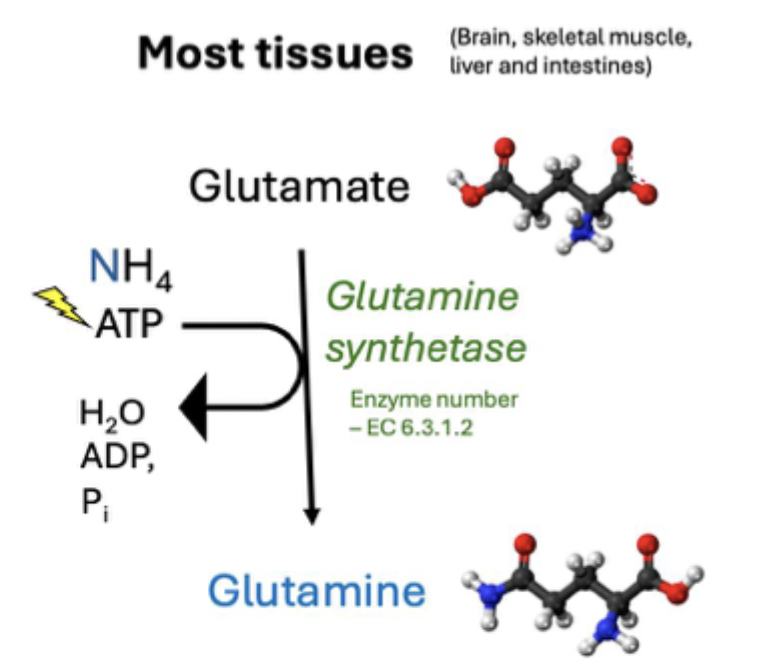
overall diagram
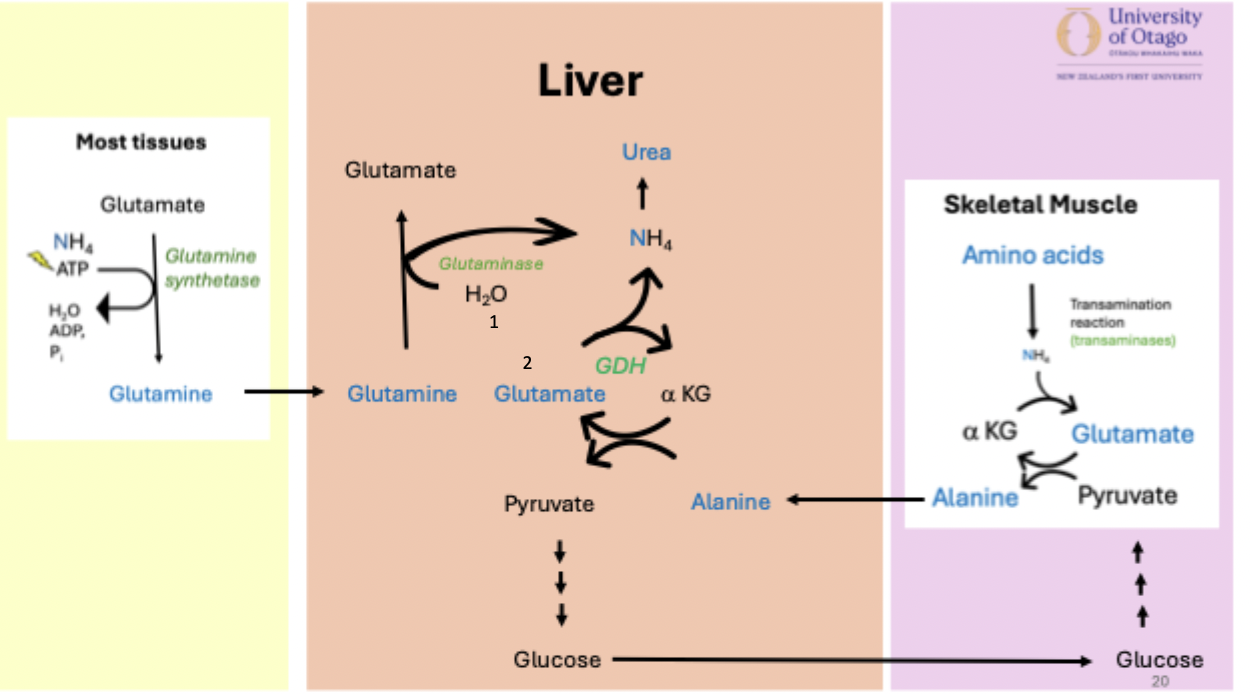
Liver is the main place that actually have a high enough conc of GDH for this reaction to be favoured
Glutamate rekeased its nitrogen so it can go into the uirea cucle