Cardiopulmonary Diseases
 Call Kai
 Learn
Learn Practice Test
 Spaced Repetition
 Match
Match Flashcards
 Knowt Play
1/169

There's no tags or description
Looks like no tags are added yet.
Name | Mastery | Learn | Test | Matching | Spaced | Call with Kai | Chat |
|---|
No analytics yet
Send a link to your students to track their progress
170 Terms
cardiomyopathies
diseases of the heart muscle
dilated cardiomyopathy
what is canine DCM?
old, male, large & giant breeds
in what age, sex, and size dogs is DCM more prevalent in?
Dobermans
Irish Wolfhounds
St. Bernards
Newfoundlands
Afghans
Cocker Spaniels**
what are the breed predilections for canine DCM?
exercise intolerance
weakness
coughing
weight loss
anorexia
cool extremities
abdominal distention
clinical signs of DCM
radiographs
cardiomegaly
pleural effusion
ascites
echocardiogram**
thin muscle mass of ventricles +/- atria
valvular regurgitation
electrocardiogram (ECG)
arrhythmias
bloodwork
Pro-BNP
cardiac troponin
diagnosis for DCM
protein released with stressed cardiac muscle
moderate sensitivity & specificity, so best used in conjunction with other diagnostics
what is Pro-BNP?
how sensitive is it diagnostically?
protein released with cardiac muscle damage
indicates more the extent of damage rather than diagnosing dz
what is cardiac troponin?
what does it indicate?
treatment
oral medications
positive inotropes (pimobendan, digitalis)
vasodilators / ace inhibitors (enalapril / benazepril)
supplements (more beneficial in Cocker Spaniels)
taurine
L-carnitine
treat for heart failure if presents
NO CURE - goal is to keep the pt comfortable
treatment of DCM
~50% survival 1 yr post diagnosis
prognosis of DCM
increases contractility & dilates blood vessels
reduces resistance to cardiac output
decrease fluid retention by dilating blood vessels
what do positive inotropes do?
what do vasodilators do?
what do ace inhibitors do?
heritable biochemical
dilation
canine DCM
suspected to be (1)_________ _________ underlying problem
diet associated? - think grain-free diets
results in (2)_______ of the left & right ventricles with some atrial _______ as well
dilation; decreased
decreased
increased
regurgitation; murmur
congestive heart failure
(1) DCM = _________ of the cardiac muscles results in weak, thin, flabby heart walls & ____________ contractility
(2)__________ cardiac output
(3)__________ cardiac afterload
mitral & tricuspid (4)__________ is possible (resulting in heart _______)
(5) congestion of blood in the veins due to poor cardiac output may result in…
cardiac output
amount of blood circulated out of the heart per minute
stroke volume
amount of blood circulated out of the heart per beat
cardiac afterload
amount of blood remaining in the heart after contraction
taurine
1990s; taurine
rare
taurine supplementation
feline DCM
associated primarily with (1)_______ deficiency in the diet
common prior to the (2)_____ when commercial diets were changed to incorporate more _______
(3)_____ today, but may be observed in patients on home-made diets that are not properly balanced
(4) treatment…
**otherwise similar to canines
thickening; left; decreased; left
left; dilation
malpositioning; regurgitation
feline hypertrophic cardiomyopathy (HCM)
(1)_________ of the ____ ventricular myocardium, resulting in ___________ volume in the ____ ventricle
results in back-up of blood in the (2)____ atrium & secondary atrial _________
may result in (3)______________ of the mitral valve leaflets & secondary mitral ______________
thromboemboli
______________ may form in the atrium & break off to move to the aorta, causing a saddle thrombus
saddle thrombus
when a blood clot from the heart lodges at the bifurcation of the aorta & blocks the femoral artery
often asymptomatic until secondary heart failure occurs
depression
anorexia
crying
rear leg paralysis
dyspnea
clinical signs of feline HCM
Maine Coon, Ragdoll
breed predispositions for feline HCM
radiographs
“valentine” shaped heart w/ pronounced atria
pleural effusion
hepatomegaly
echocardiogram***
thickened ventricular walls / septum
dilated left atrium
+/- mitral regurgitation
bloodwork
Pro-BNP is slightly more sensitive in cats
cardiac troponin
diagnosis of feline HCM
controversial in asymptomatic cats
new drug studied - rapamycin
diltiazem (calcium channel blocker) - may allow some regression of moderate hypertrophy by inhibiting cardiac contractility
tx for heart failure if present
clopidogrel (plavix) - to reduce risk of clot formation
treatment of feline HCM
varies with progression of disease in asymptomatic cats
poor prognosis if congestive heart failure present
prognosis of feline HCM
rare
small
echocardiogram
canine hypertrophic cardiomyopathy
(1)____ in dogs
typically (2)______ breeds
diagnosis via (3)_____________
tx the same as cats
congestive heart failure
end stage process from other underlying heart diseases (DCM, HCM, etc.)
exercise intolerance
coughing
dyspnea
abdominal distention
sudden death
clinical signs of congestive heart failure
congestion; edema
CHF = heart pump failure leading to ___________ of blood within the vena cava & _______ in the body (pleural effusion, peritoneal effusion)
radiographs
echocardiogram
diagnosis of CHF
true!!
true or false: do NOT stress dyspneic patients for radiographs
oxygen therapy for distressed patients
oral medications
diuretics (furosemide / lasix)
+/- beta-blockers (atenolol)
anti-thrombolics (aspirin, clopidogrel / plavix)
ace inhibitors (enalapril)
+/- pimobendan (vetmedin)
thoracocentesis
abdominocentesis
treatment for CHF
true
true or false: ace inhibitors are a specific type of vasodilator
poor
prognosis of CHF
false!! - they are often heritable genetic traits
true or false: it is okay to breed animals with congenital defects
aorta; pulmonary artery
14 hours
4-6 days
volume; left
patent ductus arteriosus (PDA)
shunting of blood from the (1)______ to the __________ ______
normal shortly after birth, but should functionally close within (2)__ hours after birth in dogs & cats
does occur in foals & calves - should close normally within (3)__-__ days
results in (4)________ overload of the ____ side of the heart
often none
exercise intolerance
failure to thrive
coughing
clinical signs of PDA
continuous murmur on PE
ECG
radiographs
echocardiogram**
diagnosis of PDA
surgical tie off of shunt
canine ductal occluder
treatment for PDA
good w/ treatment
without treatment
poor
~60% will die within 1 year
prognosis of PDA
ventricle septum; left; right
aortic
left
right
ventricular septal defect (VSD)
failure of the (1)___________ ______ to completely close during fetal development so blood is shunted from the _____ ventricle to the _____ ventricle
opening usually remains just below the (2)_____ valve
smaller VSDs will overload the (3)_____ side of the heart
larger VSDs may have more (4)_____ sided effects
often none
exercise intolerance
failure to thrive
coughing
clinical signs of VSD
systolic murmur on PE
radiographs
echocardiogram***
diagnosis of VSD
some tertiary hospitals may be able to do open-heart repair
most patients are only able to be medically managed for congestive heart failure if present
treatment of VSD
small defect: good
large defect: guarded
prognosis of VSD
atrial septum; left; right
right
atrial septal defect (ASD)
defect in the (1)_______ _______, resulting in shunting of blood from the _____ atrium to the _____ atrium
leads to volume overload of the (2)_____ side of the heart
usually none
clinical signs of ASD
+/- heart murmur on PE
radiographs***
echocardiogram
diagnosis of ASD
medically manage heart failure if present
open heart surgery
canine ductal occluder
treatment of ASD
varies with size of defect
prognosis of ASD
narrowing; ventricle
ventricular hypertrophy
valvular stenosis (pulmonic or aortic)
(1)__________ of the pulmonary or aortic valve, resulting in pressure build up in the __________ on the same side
increased pressure results in (2)__________ __________
asymptomatic
exercise intolerance
syncope
sudden death
clinical signs of valvular stenosis
murmur on PE
radiographs
ECG
echocardiogram***
diagnosis of valvular stenosis
balloon dilation
surgical correction
treatment of valvular stenosis
good with mild stenosis
severe stenosis usually results in 1-3 yr lifespan
prognosis of valvular stenosis
ventricular septal defect
pulmonic stenosis
right ventricular hypertrophy
overriding aorta
what are the 4 defects seen with tetralogy of fallot?
aorta is located over the ventricular septal defect rather than the left ventricle; oxygen deficient blood is distributed around the body
what is an overriding aorta?
pulmonary artery; stenosis
hypoxemia
cyanosis
polycythemia
tetralogy of fallot
blood shunting through the VSD rather than into the (1)_________ ______ (in part due to pulmonic ______) results in…
(2)_______ = low oxygen concentration in the blood
(3)_______ = blue discoloration to the skin / tissues
(4)_______= increase in red blood cells
syncope
failure to thrive
hyperpnea
cyanosis
exercise intolerance
clinical signs of tetralogy of fallot
increased depth & rate of breaths
what is hyperpnea?
murmur on PE
ECG
radiographs
echocardiogram***
diagnosis of tetralogy of fallot
phlebotomy
treats for the polycythemia, but not the hypoxemia
surgery rarely performed
treatment of tetralogy fallot
average lifespan is 3-4 years
prognosis for tetralogy fallot
persistent right aortic arch (PRAA)
most common vascular ring anomaly
regress
esophagus; obstruction
persistent right aortic arch (PRAA)
fetuses have multiple pairs of aortic arches during development that will usually (1)_______ throughout later stages of development
if the right aortic arch remains, it entraps the (2)_________ & can result in _________
regurgitation
poor growth
coughing & fever (from aspiration pneumonia)
clinical signs of PRAA
radiographs with barium contrast
diagnosis of PRAA
ligation of the persistent vascular ring
treatment of PRAA
degenerative; shortening / thickening
chordae tendinae
regurgitate; ventricular contraction
pathogenesis of endocardiosis
(1)___________ change in the valves, resulting in ___________ / ___________ of the valve leaflets
also possible rupture of the (2)___________ ___________
structural change results in the inability of the valves to close completely so blood is able to (3)___________ back into the atrium with ___________ ___________
valve disease, valve regurgitation, valve insufficiency
endocardiosis, aka…
the mitral valve
which valve is most commonly effected with endocardiosis?
endocardiosis
what is the most common cardiac disorder in dogs?
Cavalier King Charles Spaniels & Dachshunds
males
10 yrs
endocardiosis
(1) what are the breed predispositions?
more common in (2)_______ (males or females?)
usually develops after (3)__ years of age
coughing
dyspnea
decreased appetite
clinical sings of endocardiosis
systolic murmur on PE
echocardiogram***
elevated pro-BNP
diagnosis of endocardiosis
goal = give the pt a good QOL; no cure or preventative measures
weight management
treat for congestive heart failure if it presents
treatment of endocardiosis
varies with extent of progression of disease
prognosis of endocardiosis
valves
mitral
aortic
tricuspid
bacterial endocarditis
bacteria in the bloodstream accumulate on the (1)______ of the heart
primarily the (2)______ valve is influenced in cats & dogs
(3)______ valve in horses
(4)______ valve in cattle
ulceration
collagen; platelets
fibrous vegetations; antibiotics
deform
pathogenesis of bacterial endocarditis
infection results in (1)_________ of the valve leaflets
exposes (2)________, which attracts ________ to the area
(3)_______ __________ form over the platelets, which prevents __________ from getting to the bacteria
vegetations (4)_______ the valve leaflets
weight loss
lethargy
depression
inappetance
fever
clinical sings of bacterial endocarditis
sudden onset heart murmur
endocardiogram - masses on thickened valve leaflets
blood cultures
diagnosis of bacterial endocarditis
treatment = aggressive antibiotic therapy
prognosis = guarded
treatment & prognosis of bacterial endocarditis
progression of renal disease
retinal detachment
stroke
left ventricular hypertrophy
what secondary tissue damage can hypertension cause?
elevated; 160
hypertension = ________ blood pressure; systolic BP >___mmHg
in-clinic
normotensive
autonomic
true
situational hypertension
increased blood pressure resulting from (1)__-_____ measuring
pt is (2)__________ at home
(3)_________ nervous system response (fear / excitement)
(4) true or false: routine BP screening is not rec’d in otherwise healthy patients due to this condition
renal disease
Cushing’s disease
diabetes
pheochromocytoma
what are some common diseases causing secondary hypertension?
secondary hypertension
pathological elevation in blood pressure resulting from another disease process
as a side effect of certain drug administration
other than from another disease process, how else can secondary hypertension occur?
normal CBC / chem / UA w/ elevated BP measurement in relaxed pt
diagnosis of idiopathy hypertension
idiopathic hypertension
elevation in blood pressure thought to be due to a combination of genetic, lifestyle, and environmental factors
direct blood pressure vs. indirect blood pressure reading
diagnosis of hypertension
antihypertensive drugs
ace inhibitors (enalapril, benazepril)
calcium channel blockers (amlodipine)
treatment of hypertension
true
true or false: routine monitoring of BP in patients with hypertension is recommended as it may be progressive
cardiac arrhythmias
variation from the normal cardiac rhythm
sinoatrial (SA) node
atrioventricular (AV) node
bundle of His
ventricles
the rhythm of the heart is maintained by electrical impulses fired by the pacemakers…
arrhythmias
_________ may occur if there is an abnormal pacemaker or a conduction disturbance
area of damage that prevents the heart from “recharging” appropriately
cardiac disease
hereditary
acquired
cardiomyopathies
endocarditis
neoplasia
autonomic nervous responses
vagal stimulation
excitement
fear
pain
hypoxia
acid-base disturbances
electrolyte abnormalities
systemic disease
what are some causes of abnormal arrhythmias?
P wave = atrial depolarization
QRS complex = ventricular depolarization
T wave = ventricular repolarization
what do the P wave, QRS complex, and T wave represent on an ECG
SA; R-R
a normal sinus rhythm is electrical activity that initiates from the __ node & features consistent __-__ intervals
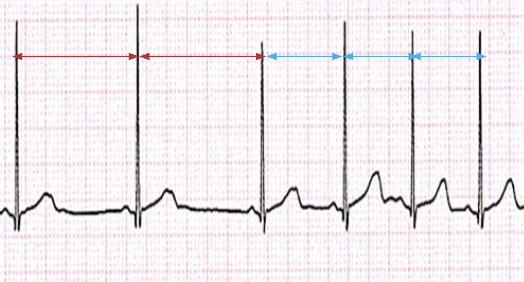
respiratory sinus arrhythmia (RSA)
heart rate increases with inspiration & decreased with exhalation (R-R intervals are not consistent)