ARH 301 - Test 1
 Call Kai
 Learn
Learn Practice Test
 Spaced Repetition
 Match
Match Flashcards
 Knowt Play
1/11

There's no tags or description
Looks like no tags are added yet.
Name | Mastery | Learn | Test | Matching | Spaced | Call with Kai | Chat |
|---|
No analytics yet
Send a link to your students to track their progress
12 Terms

Pyramid of Khufu
Giza
Granite/limestone (originally sheathed in limestone with granite used in inner chamber)
26th c. BCE
Part of a large necropolis that includes two other pyramids, numerous temples, and tombs for queens and noblemen. The lack of interior interior space makes this both a a functional piece of architecture (tomb for Pharaoh Khufu) and a large scale sculpture. Pointed shape resembles a solidified ray of sun, it was thought the the Pharaoh uses sun rays as a ramp into the sky.
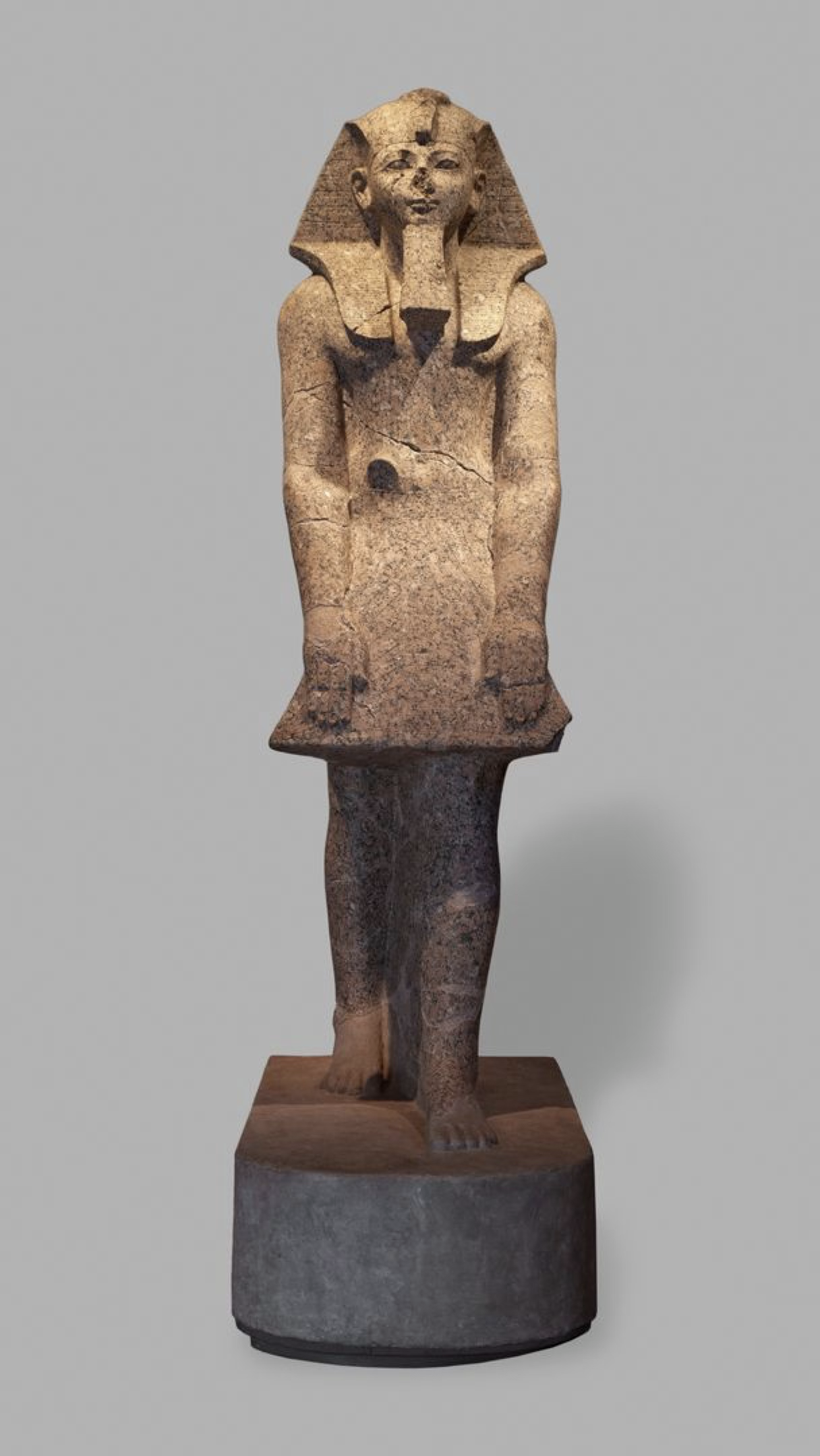
Hatshepsut in a Devotional Attitude
Deir el-Behri
red granite/paint
c. 1473-1458 BCE
Stature portrays the female queen as the Egyptian ideal: a young man in his prime. It is angular, stiff, and formal; this was partly determined by the material because granite is so hard it is difficult to get soft details. Originally part of a pair that sat on either side of a doorway.

Book of the Dead for Chantress of Amun, Nauny
paint on papyrus
c. 1050 BCE
This was an instruction manual for Nauny’s soul, guiding her through the afterlife so she could reach somewhere good. Nauny was the chantress of the god Amun and her father was the high priest of Amun. This part shows the judgment of her heart by the God Osiris. There are many God’s depicted including Anubis, Osiris, and Thoth.

Standing Male Worshipper
Square Temple, Eshnunna (Iraq)
Limestone/alabaster/shell,bitmuen, c. 2900-2600 BCE
Access to temples was reserved for priests, so rich patrons had statues made to be put inside the temples. Sometimes they were buried or broken. This statues might be dedicated to the god Abu. Humans and Gods were believed to be physically present in statues once a ritual was performed, so this statue is praying perpetually on behalf of the person it represents.

Kore from Chios
marble/paint
Acropolis, Athens
c. 510 BCE
From Archaic period of Greek art. Originally painted in bright colors. There is not a lot of detail in the back so it was likely placed by a wall, niche, or corner. Greek art grew more in the round over time, this piece is far removed from the original very Egyptian inspired greek statues, but not at the level of the naturalistic contrapposto statues to come.
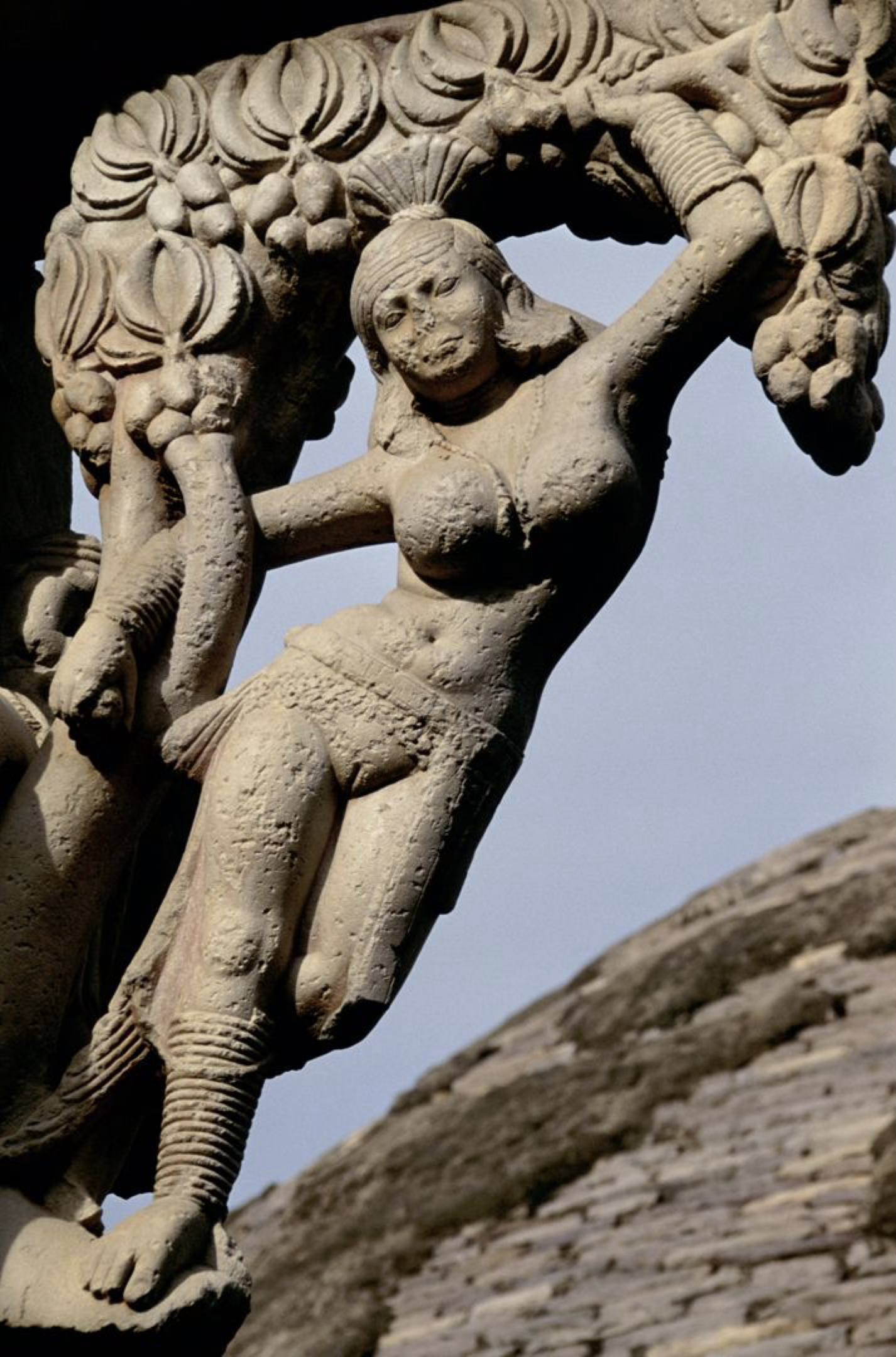
Yakshi Bracket Figure and Relief
East Torana, Great Stupa, Sanchi
Stone
c.150-50 BCE
Depictions of women with voluptuous figures, sparsely clothed, and next to a blossoming tree were a common image in Hindu sculpture to represent fertility and growth. As a structural element, she is holding up the gate and is meant to bring success and well-being to the building. The scultpture and relief showed that one was entering a holy space at the stupa.
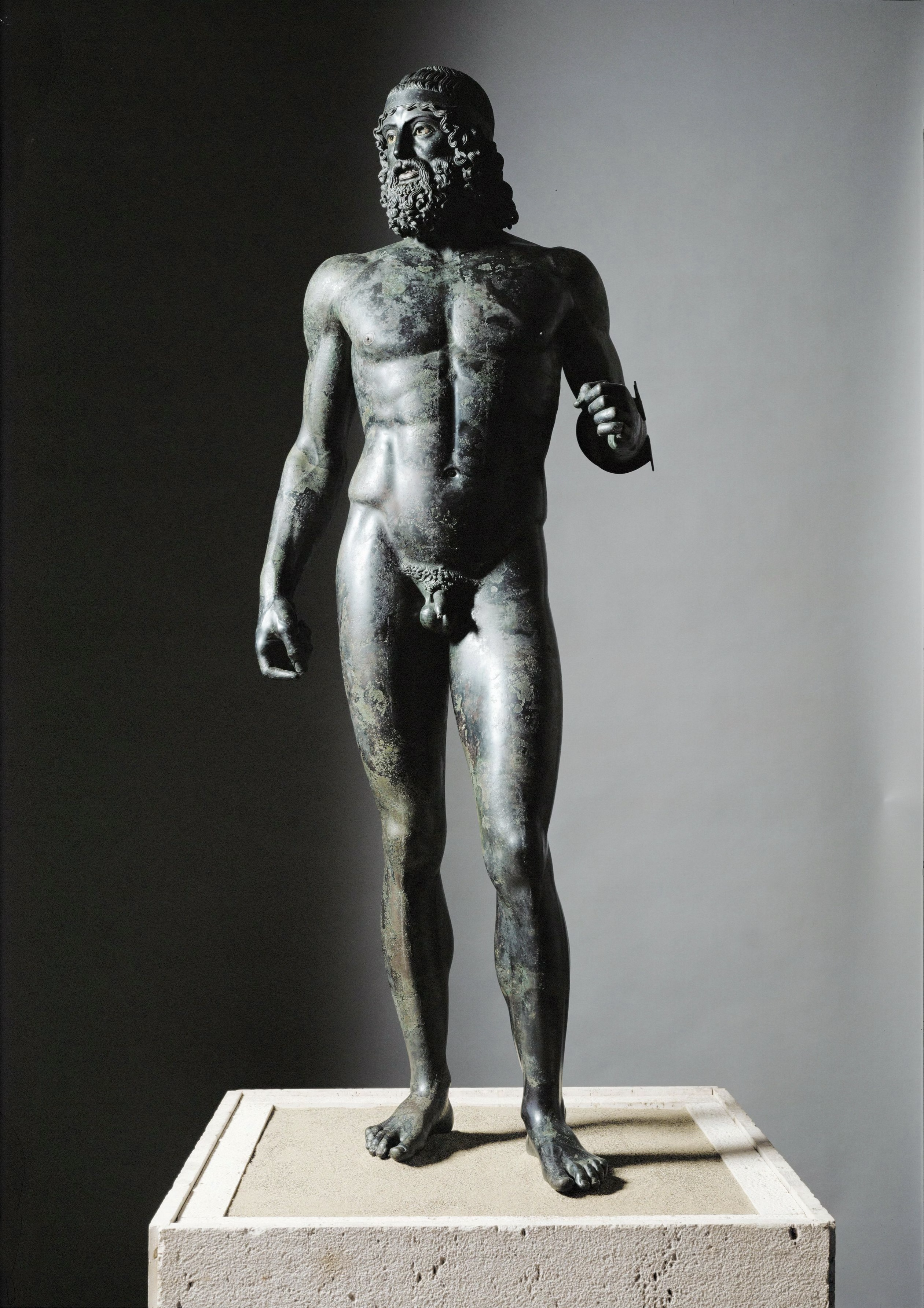
Warrior (Statue A)
Shipwreck near Riace (Italy)
Bronze/bone/glass/silver/copper
c. 460-450 BCE
Made using the “lost wax” technique: clay core, wax model around it, cover that in clay, fire it to burn the wax away, pour bronze into the empty area. In the contrapposto making it very naturalistic. Young strong frame with an older head (idealistic).
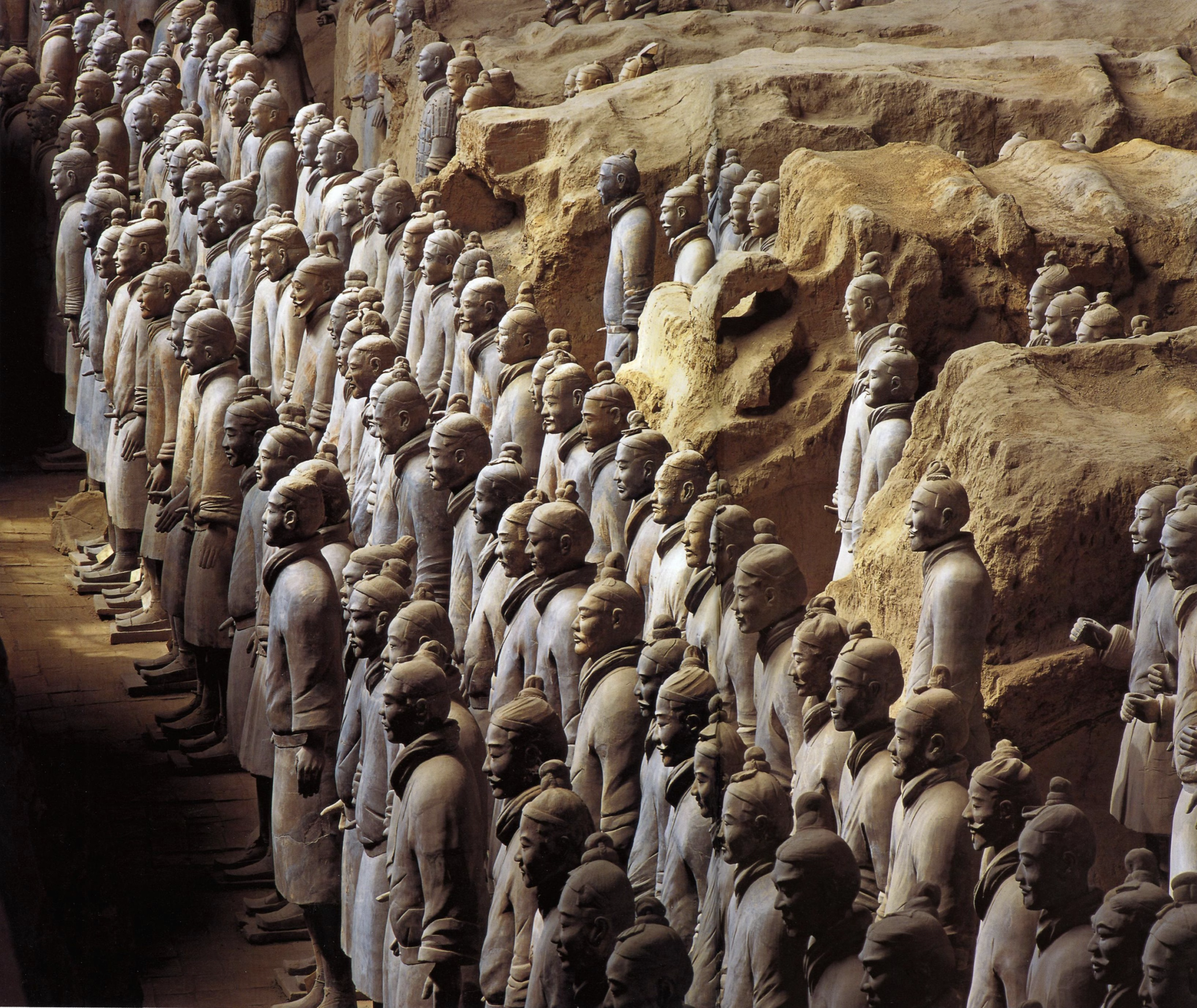
Soldiers from Mausoleum of Shihuangai, first Qin emperor
Lintang (China)
Earthnware
c. 210 BCE
8,000 soldiers, 100 horses, and many other statures in huge necropolis. All face the emperor. Each one started as a cast statue but was individualized by artists. Lower half is wide and strong to be more functional, the torso and head is very naturalistic. Figures were originally painted and some glazed, some had metal armor or other adornments.

Sasanian Wall Panel, Bird in Rondel
Near Ctesiphon (Iraq), Persian
Stucco
c. 6th C. CE
Stucco is cheap, light, and easier to add details. Was originally painted. From an iwan - a rectangular hall with three walls.
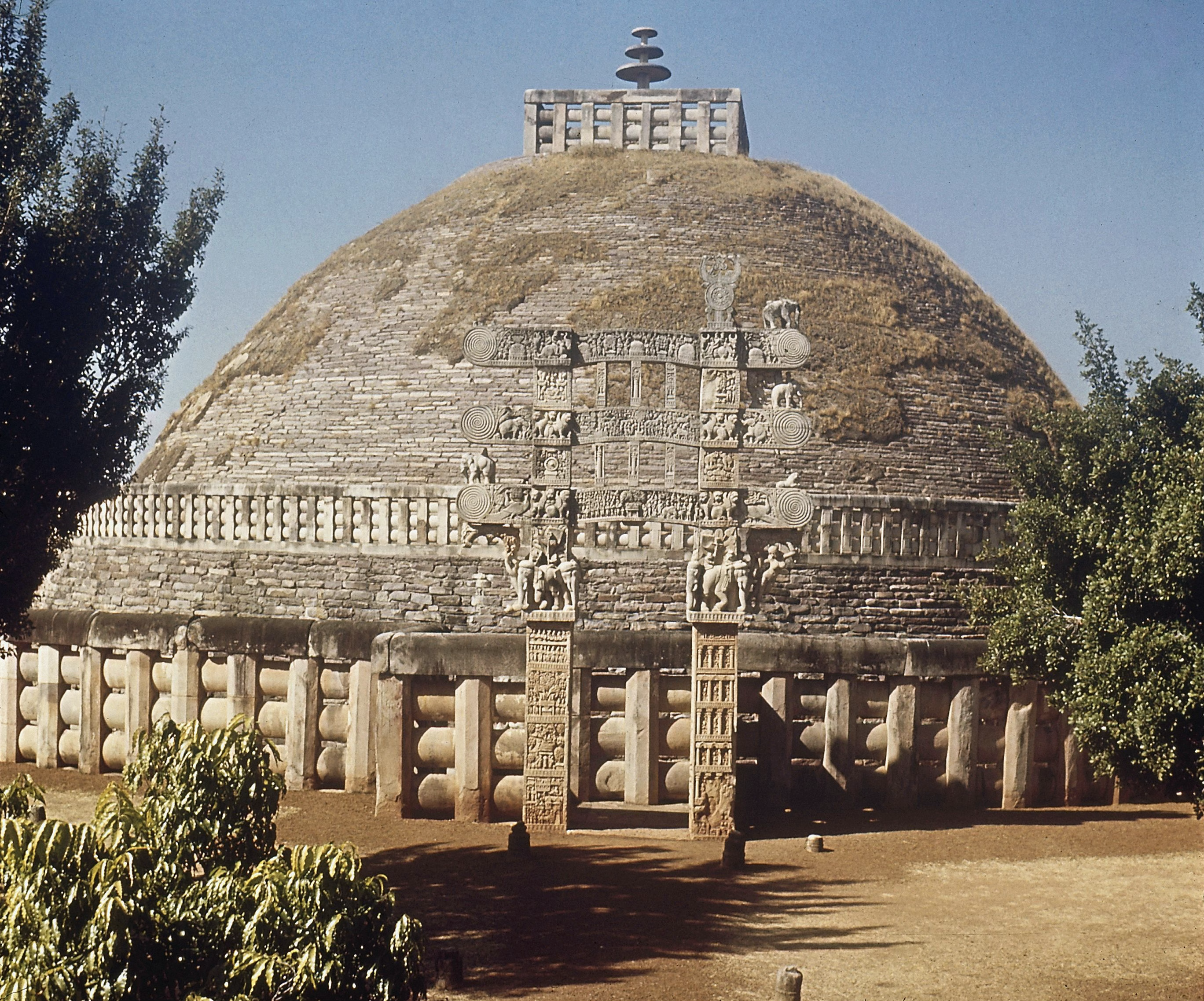
Great Stupa
Sanchi, India
founded 3rd C., enlarged c. 150-50 BCE
Torana gate on cardinal directions. Surrounded by a complex of other stupas. Contained some of the remains of the Buddha so it was a pilgrimage cite. People entered the gates and circumambulated the stupa. Uses the idea of axis mundi, imagined axis everything aligns with to link below the earth, the earth, and the sky. Has a yasti spire which is the axis the gates align with.
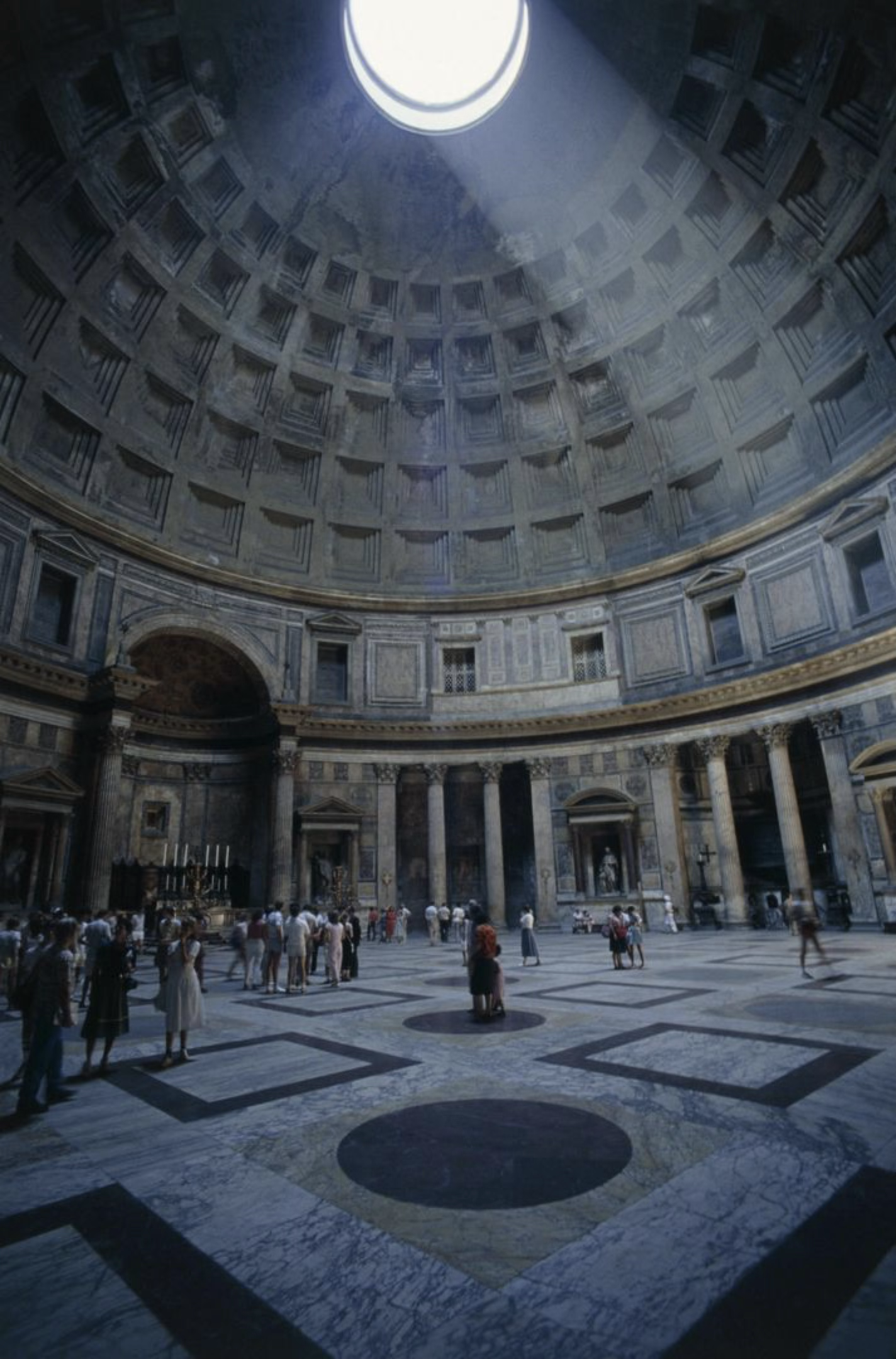
Pantheon
Rome
stone/concrete
110-128 BCE
Post and lintel architecture is where posts hold up the horizontal part. Pantheon designed to look like its just post and lintel, then you enter and realize there is a much more complicated rotunda structure (go through greek facade). Drum is the circular wall topped iwth a dome made of coffers (panels that recessed) leading to the oculus at the top (29ft wide in the pantheon). The pantheon means all of the gods but the space functioned more as a judicial area.

Main Hall, Inner Shrine (Shinto), Ise
Mie Prefecture, Japan
rebuilt every 20 years since 690 CE
The most important Shinto shrine in Japan. It is a double shrine, the inner Naiku shrine is dedicated to Amaterasu Omikami the sun goddess and supreme deity of Shinto. The architecture style mimics forms of ancient rice granaries. The building has gold plated caps and other decorative elements. The most sacred object is the goshintai, a mirror the gods have used to try and tmept her out of her self-imposed imprisonment. The complex include smaller shrines and another larger outer shrine, but this is the most important one.