DERM IE2 Material: Antihistamine MEDCHEM
 Call Kai
 Learn
Learn Practice Test
 Spaced Repetition
 Match
Match Flashcards
 Knowt Play
1/35

There's no tags or description
Looks like no tags are added yet.
Name | Mastery | Learn | Test | Matching | Spaced | Call with Kai | Chat |
|---|
No analytics yet
Send a link to your students to track their progress
36 Terms
Histamine structure
imidazole ring (basic, pKa 5.8)
aliphatic primary ring (basic, pKa 9.4)
single bonds in side side chain allow free rotation
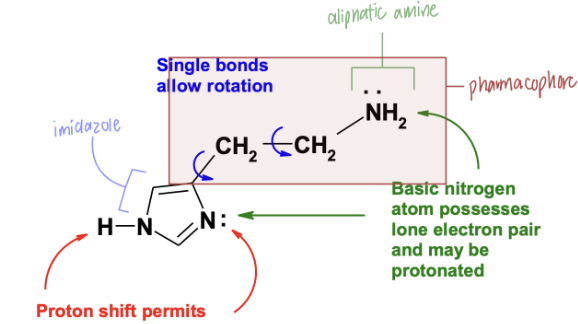
at physiological pH (7.4), histamine exists as a —-? what is the significance for its activity?
monocation
sufficient for agonist activity
protonation of heterocyclic (imidazole) ring NOT required
how do 1st gen AH relate to histamine’s strucure?
mimics moncation form of histamine
has protonable amine at similar distance form aromatic system, allowing them to bind to and block H1 receptor
general pharmacophore for 1st gen AH
2 aromatic groups (Ar)
linker (X) → O, N, or C
protonable tertiary amine
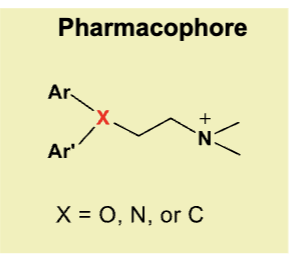
2 main characteristics/side effects of 1st gen AH
sedation (crosses BBB)
affects other receptors (cholinergic, adrenergic, dopaminergic, serotonergic)
subclasses of 1st gen AH
ethylenediamines
ethanolamine ethers
alkylamines
tricyclics
piperazines
ethylenediamine: characteristic linker structure
2 carbons between 2 nitrogens (N-C-C-N)
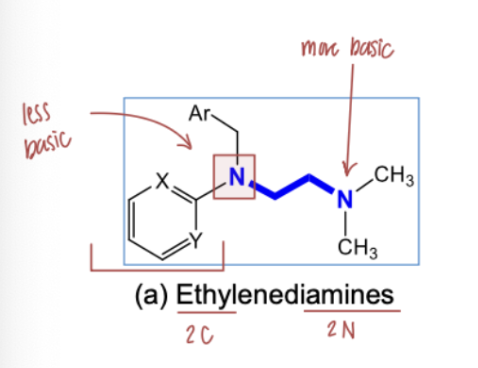
ethanolamine ethers: characteristic linker structure
C-O-C
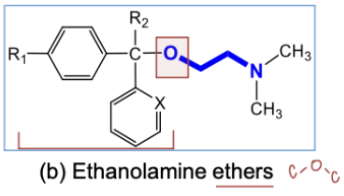
ethanolamine ether: drugs
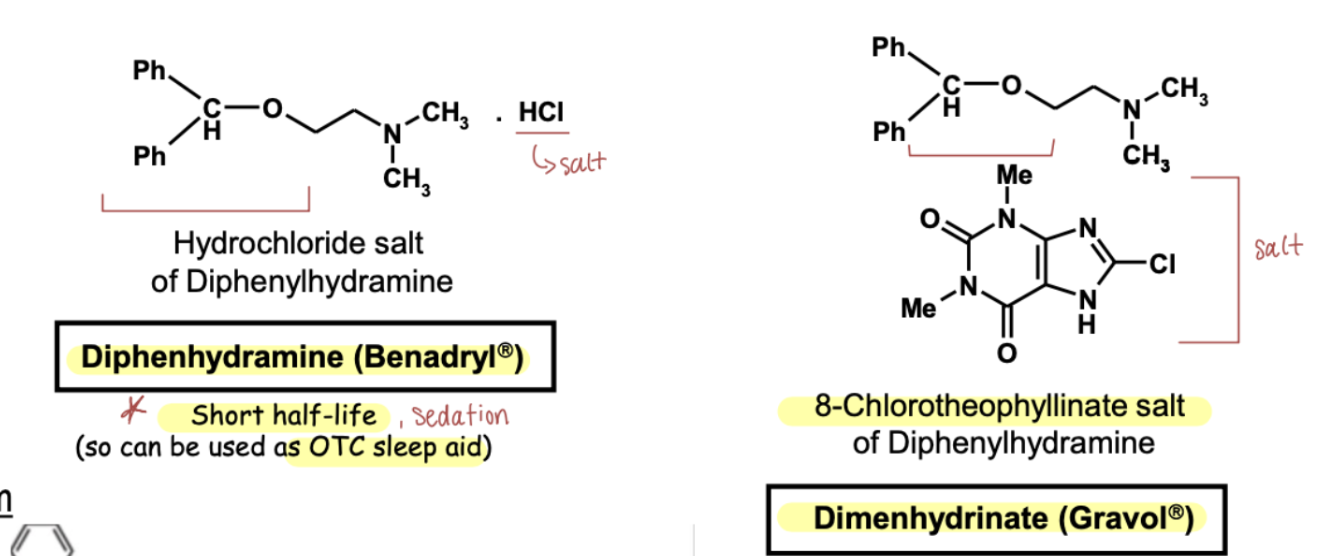
Diphenhydramine (Benadryl)
short t ½
significant sedation → OTC sleep aid
Dimenhydrinate (Gravol)
8-chlorotheophyllinate salt of Diphenhydramine
for motion sickness
Alkylamines: characteristic linker structure
C
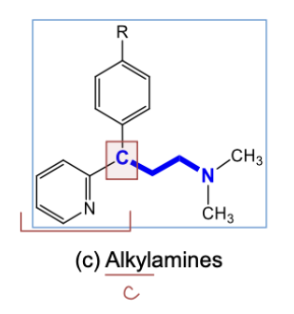
alkylamine distinguishing properties compared to ethylenediamines and ethanolamines
longer duration of action (t ½ up to 24 hrs)
decreased sedation
major metabolic pathway for alkylamines
N-dealkylation
alkylamines can contain
maleate salt
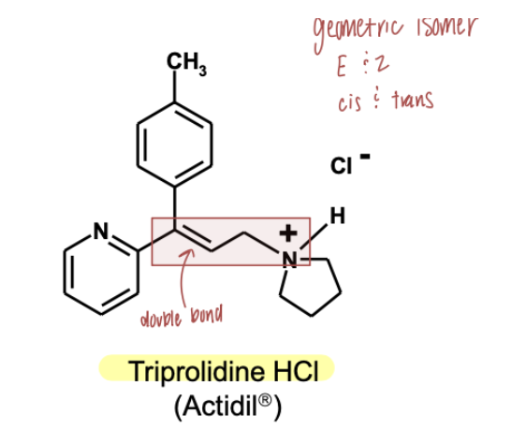
Alkylamine: Triprolidine HCl (Actidil)
E isomer more potent (by 1000 fold)
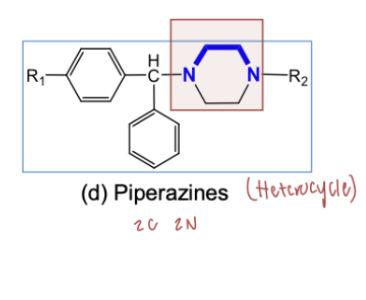
Piperazines: structural feature
piperazine (hexagon) ring
how is Cetirizine (Zyrtec) related to Hydroxyzine?
Cetirizine = acid metabolite of Hydroxyzine
OH of hydroxyzine → oxidized → COOH
cetirizine classification, despite its origin from a 1st gen drug
2nd gen, non-sedating AH
Tricyclics: structural feature
tricyclic ring system
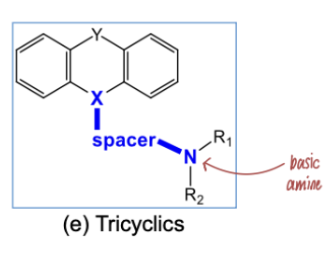
main metabolic pathways for tricyclic
N dealkylation
aromatic hydroxylation
2nd gen AH advantages
improved H1 selectivity
little to no sedative effects
less anticholinergic activity
long half life
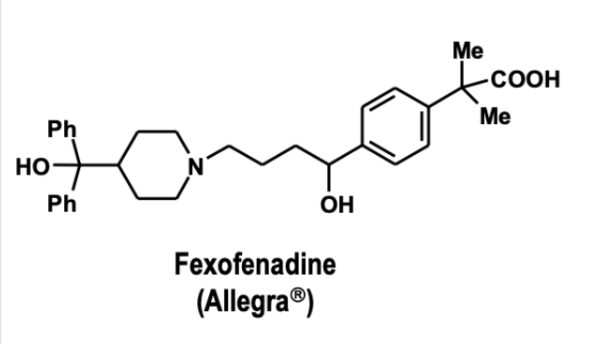
which 2nd gen AH contains COOH
fexofenadine (Allegra)
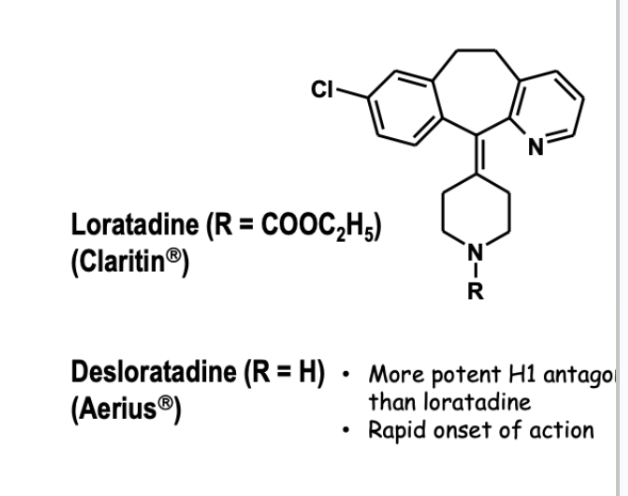
wwhich 2nd gen AH has active metabolite of Loratadine (Claritin)? key properties?
Desloratadine (Aerius)
more potent than Loratadine and rapid onset of action
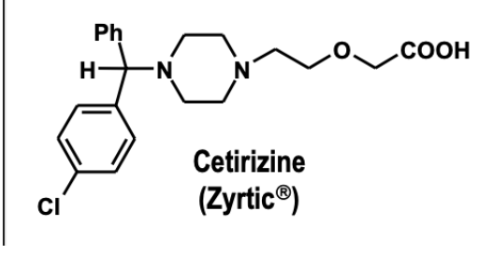
what special chemical characteritic describes Cetirizine (Zyrtec)
zwitterionic (positive and negative charges)
Mechanisms of action of topical AH
potent, selective H1 receptor antagonist
prevent release of histamine from mast cells
what are topical AH used for?
nasal sprays
eye drops
examples of topical AH

decongestants are
alpha-adrenergic receptor agonists
decongestant: catecholamines
NE (R=H) and Epi (R=CH3)
nonselective
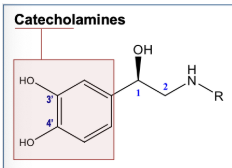
who do catecholamines have poor oral bioavailability and short DOA
poor oral bioavailability → given IV
rapidly metabolized by COMT and MAO
DOA = 1 - 2 mins
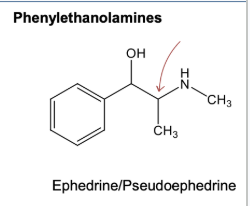
decongestant: phenylethanolamine agonists
components
drugs
components
substituted benzene rig
aliphatic primary or secondary amine separated from benzne by 2 carbons
R-hydroxyl at C1 carbon
drugs
ephedrine/pseudoephedrine (added CH3 on position 2)
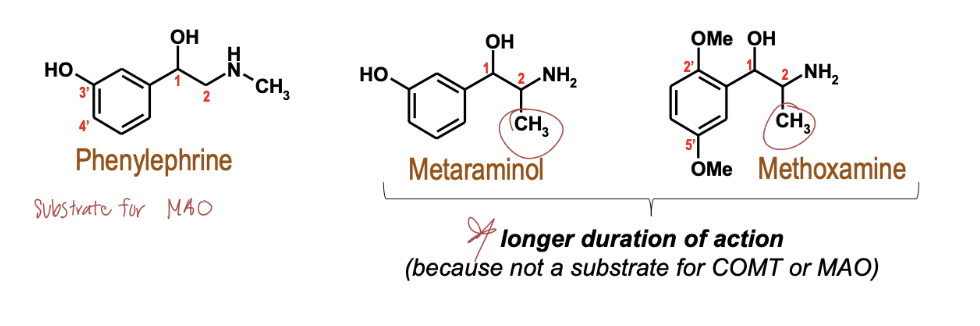
what specific substitution on phenylephrine makes it a selective alpha-agonist
3-OH substitution on benzene ring → keeps out of CNS
why do Metaraminol and Methoxamine have onger DOA than phenylephrine?
they are NOT subtrates for COMT or MAO
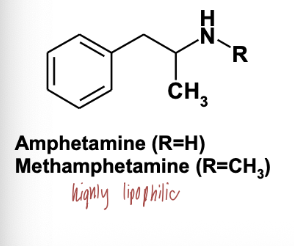
what is key characteristic of Amphetamine and Methamphetamine? clinical implication?
highly lipophilic (log P ≥ 2)
crosses BBB → increased risk of drug abuse
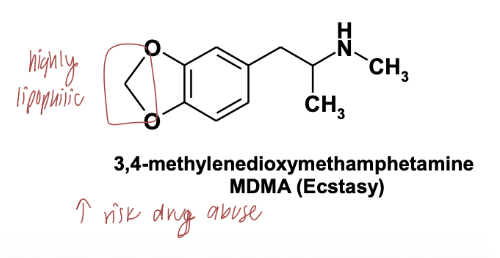
MDMA? key properties?
3,4-methylenedioxymethamphetamine
highly lipophilic
high risk of drug abuse
decongestant: imidazole alpha 1 agonist example
Oxymetazoline
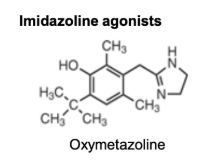
characteristic that describes imidazoline alpha1 agonists? affect on administration?
highly ionized (zwitterionic)
topically used only due to high ionization limiting systemic absorption