5.3 Sources of Evidence for Evolution

0.0(0)
Studied by 0 people
call kaiCall Kai
learnLearn
examPractice Test
spaced repetitionSpaced Repetition
heart puzzleMatch
flashcardsFlashcards
GameKnowt Play
Card Sorting

1/7

flashcard set

Earn XP

Description and Tags

Last updated 2:04 PM on 2/20/24
Name
Mastery
Learn
Test
Matching
Spaced
Call with Kai

No analytics yet

Send a link to your students to track their progress

8 Terms

1
New cards

What are the sources in which we can find evidence of evolution?

  1. Fossils

  2. Biogeography

  3. Anatomy

  4. Embryology

  5. DNA

2
New cards

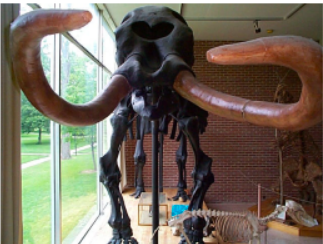
How do Fossil Records tell us that Evolution exists?

  • Provides history of life by showing kinds of species that were alive in past

  • Fossils found in rock closer to surface are from recent geological periods whereas ones in deeper layers (older rocks) are from past periods

  • Appear in chronological order

<ul><li><p>Provides history of life by showing kinds of species that were alive in past</p></li><li><p>Fossils found in rock <strong><span style="color: yellow">closer to surface</span></strong> are from <mark data-color="yellow">recent</mark> geological periods whereas ones in <strong><span style="color: blue">deeper layers</span></strong> (older rocks) are from <mark data-color="blue">past periods</mark></p></li><li><p>Appear in <strong><span style="color: green">chronological</span></strong> order</p></li></ul>
3
New cards

How do the Fossils themselves tell us that Evolution exists?

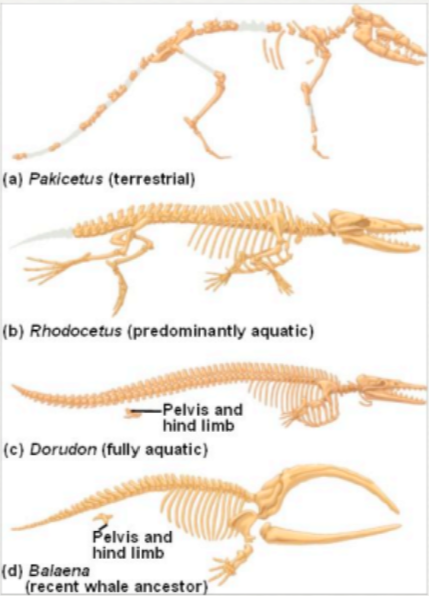
Transitional Fossils - show intermediary links between groups of organisms

Vestigial Structures - structures that are reduced forms of structures that were functional in organism’s ancestors

  • e.g. wings on flightless birds, wisdom teeth, the appendix, tailbone, body hair, snakes’ pelvic bone, goosebumps, etc.
<blockquote><p><strong><span style="color: yellow">Transitional Fossils</span></strong> - show intermediary links between groups of organisms</p></blockquote><blockquote><p><strong><span style="color: blue">Vestigial Structures</span></strong> - structures that are reduced forms of structures that were functional in organism’s ancestors</p><ul><li><p>e.g. wings on flightless birds, wisdom teeth, the appendix, tailbone, body hair, snakes’ pelvic bone, goosebumps, etc.</p></li></ul></blockquote>
4
New cards

How does Biogeography tell us that Evolution exists?

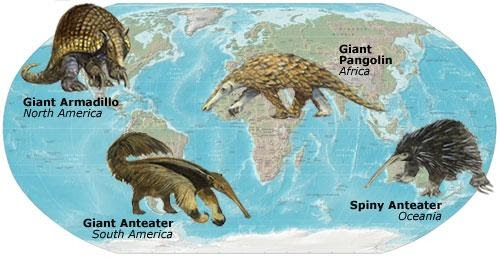
  • Geographically close environments more likely to be populated by related species than locations far apart even if environmentally similar

    • Species found on islands closely resemble species found on closest continent

    • Fossils of same species are found on coastline of neighbouring continents

  • Closely related species are almost never in exact same location
<ul><li><p><strong><span style="color: green">Geographically close environments</span><span> </span></strong>more likely to be populated by <mark data-color="green">related species</mark> than locations far apart even if environmentally similar</p><ul><li><p><em>Species found on </em><strong><em><span style="color: red">islands</span></em></strong><em> closely resemble species found on <mark data-color="red">closest continent</mark></em></p></li><li><p><em>Fossils of </em><strong><em><span style="color: blue">same species</span></em></strong><em> are found on <mark data-color="blue">coastline</mark> of neighbouring continents</em></p></li></ul></li><li><p>Closely related species are almost <strong><span style="color: yellow">never</span></strong> in exact same location</p></li></ul>
5
New cards

How does Anatomy tell us that Evolution exists?

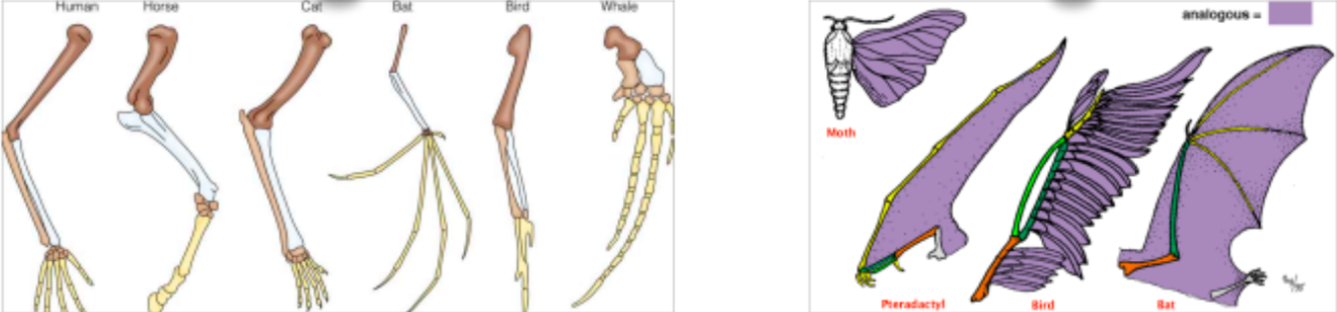
Homologous Structures - structures that have similar structural elements and origin but may have a different function

  • e.g. wings on bats vs. forearms of humans vs. flippers on whales

Analogous Structures - structures that do not have a common origin but perform similar functions

  • e.g. wings on bats vs. birds

<blockquote><p><strong><span style="color: red">Homologous Structures</span></strong> - structures that have similar structural elements and origin but may have a different function</p><ul><li><p>e.g. wings on bats vs. forearms of humans vs. flippers on whales</p></li></ul><p><strong><span style="color: purple">Analogous Structures</span></strong> - structures that do not have a common origin but perform similar functions</p><ul><li><p>e.g. wings on bats vs. birds</p></li></ul></blockquote>
6
New cards

What do the Homo- and Ana- in Anatomy refer to?

The ancestor which the traits originate from

7
New cards

How does Embryology tell us that Evolution exists?

  • Embryos of different organisms exhibit similar stages of embryonic development

  • Similarities between embryos in related groups (vertebrates) point to a common ancestral origin
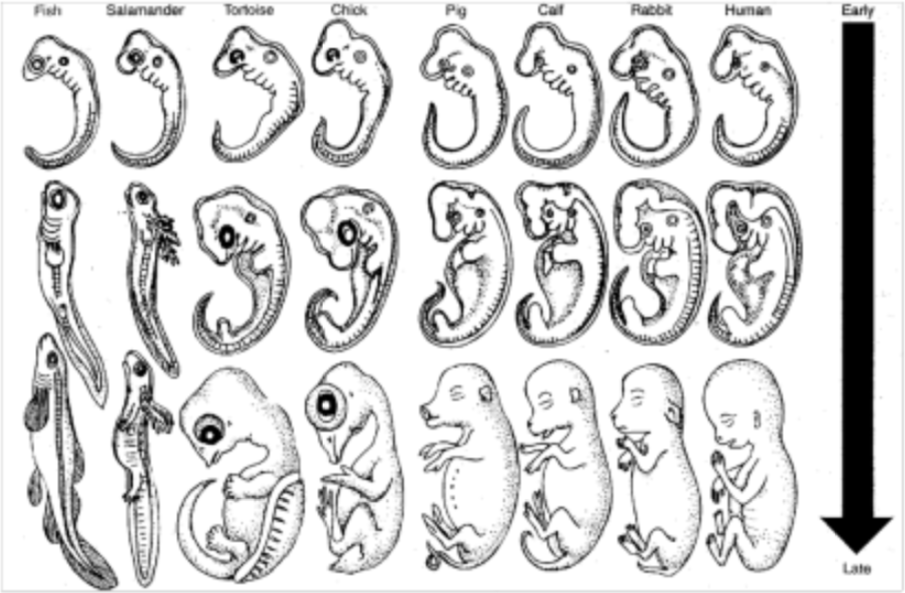
<ul><li><p>Embryos of different organisms exhibit <strong><span style="color: blue">similar stages</span></strong> of embryonic development</p></li><li><p>Similarities between embryos in related groups (vertebrates) point to a <strong><span style="color: red">common ancestral origin</span></strong></p></li></ul>
8
New cards

How does DNA tell us that Evolution exists?

Similar DNA sequences indicates organisms are more closely related and have a shared common ancestor
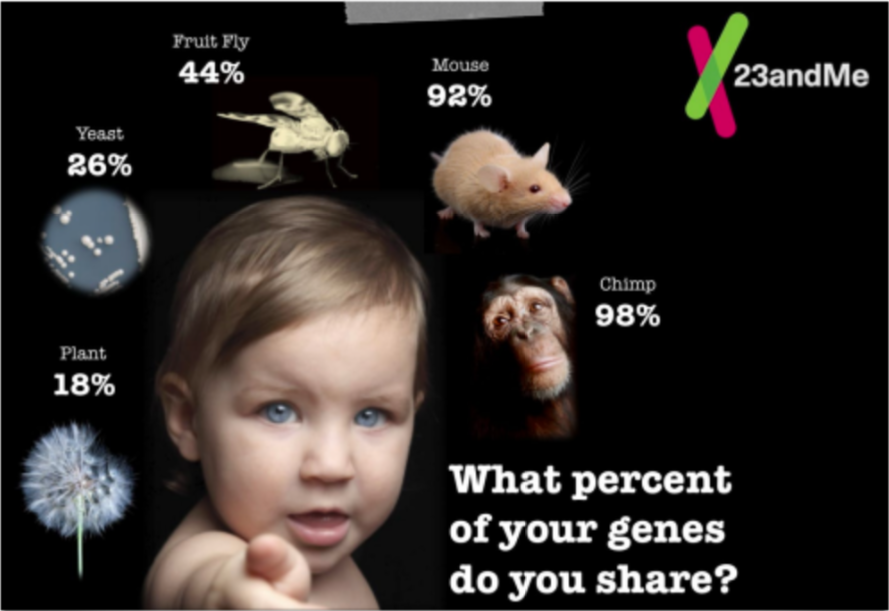
<p><strong><span style="color: purple">Similar DNA</span></strong> sequences indicates organisms are more closely related and have a shared common ancestor</p>