Sheet Metal Study guide. Airframe 2
 Call Kai
 Learn
Learn Practice Test
 Spaced Repetition
 Match
Match Flashcards
 Knowt Play
1/143

Earn XP
Name | Mastery | Learn | Test | Matching | Spaced | Call with Kai | Chat |
|---|
No analytics yet
Send a link to your students to track their progress
144 Terms
What does the satisfactory performance of an aircraft require?
It requires continuous maintenance of aircraft structural integrity
How must metal structural repairs be made and why?
Repairs must accept stresses and carry load across repairs.
What does the reliability of an aircraft depend on?
The quality of design and workmanship of repairs and transfer load back to the original structure.
Repairs must be made ___ enough to carry all of the loads with the required factor of safety, but they must not have too much extra___.
Strong……strength.
What often causes damage to metal aircraft structures?
Corrosion, erosion, normal stress and accidents/mishaps.
How is the problem of repairing a damaged section usually solved?
By duplicating original strength, material and dimensions.
What does forming mean?
The process of shaping a flat sheet of metal into a desired three-dimensional shape without removing any material.
What must a tech think about before forming a part?
Must give some thought to the complexity of the bends, the material type, the material thickness, the material temper, and the size of the part being fabricated
How must an aircraft structure be designed in relation to stress?
Must be made to accept all of the stresses imposed upon it by the flight and ground loads without any permanent deformation.
How must any repair made to an aircraft structure be made?
It must accept the stresses, carry them across the repair, and then transfer them back into the original structure.
How does a scratch or gouge in the surface effect sheet metal?
It causes a stress concentration at the point of damage and could lead to failure of the part.
What is the effect of the forces acting on an aircraft while in flight and on the ground?
It introduce pulling, pushing, or twisting forces within the various members of the aircraft structure
Tension stress
Stress that resists a force that pulls apart
What is tensile strength?
It refers to the maximum amount of tensile (pulling or stretching) stress that the material can withstand before it fails or breaks. It is a key mechanical property of sheet metal, indicating its ability to resist deformation and maintain structural integrity under load.
What is tensile strength units measured in?
Measured in pounds per square inch (psi) and is calculated by dividing the load (in pounds) required to pull the material apart by its cross-sectional area (in square inches).
Compression stress
Stress that resists a force that pushes together or crushes
Shear stress
Stress that resists causing 1 layer to slide over another
What concerns an AMT in relation to shear stress?
The rivet and bolt application when attaching sheet metal. If a rivet used in a shear application gives way, the riveted or bolted parts are pushed sideways
Bearing stress
The resistance to shear and tension.
Torsion stress
Stress that produces twisting
Torsional strength
It is the materials resistance to twisting/torque
Bending definition.
Combo of compression and tension
Layout tools
Measuring tools: Rule, calipers, combo square, 6 & 12 in. scales
Dividers
Rivet spacers
Fiber tipped pens (Fine tip sharpie)
Scribes
Punches: prick, center, auto center, transfer, drive, pin, chassis, awl.
Hole duplicator
Cut off wheel
Is a thin abrasive disc driven by a high-speed pneumatic die-grinder and used to cut out damage on aircraft skin and stringers
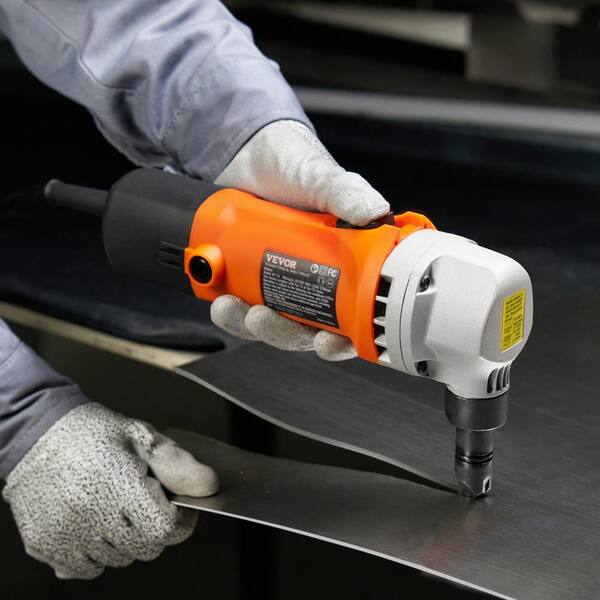
Nibbler
A power tool used in sheet metal work to cut or punch through metal sheets with precision and ease. It works by rapidly shearing small bits of material in a continuous line, allowing for clean and accurate cuts, including complex shapes and tight curves.
Comes in manual, electric, pneumatic and bench mounted.
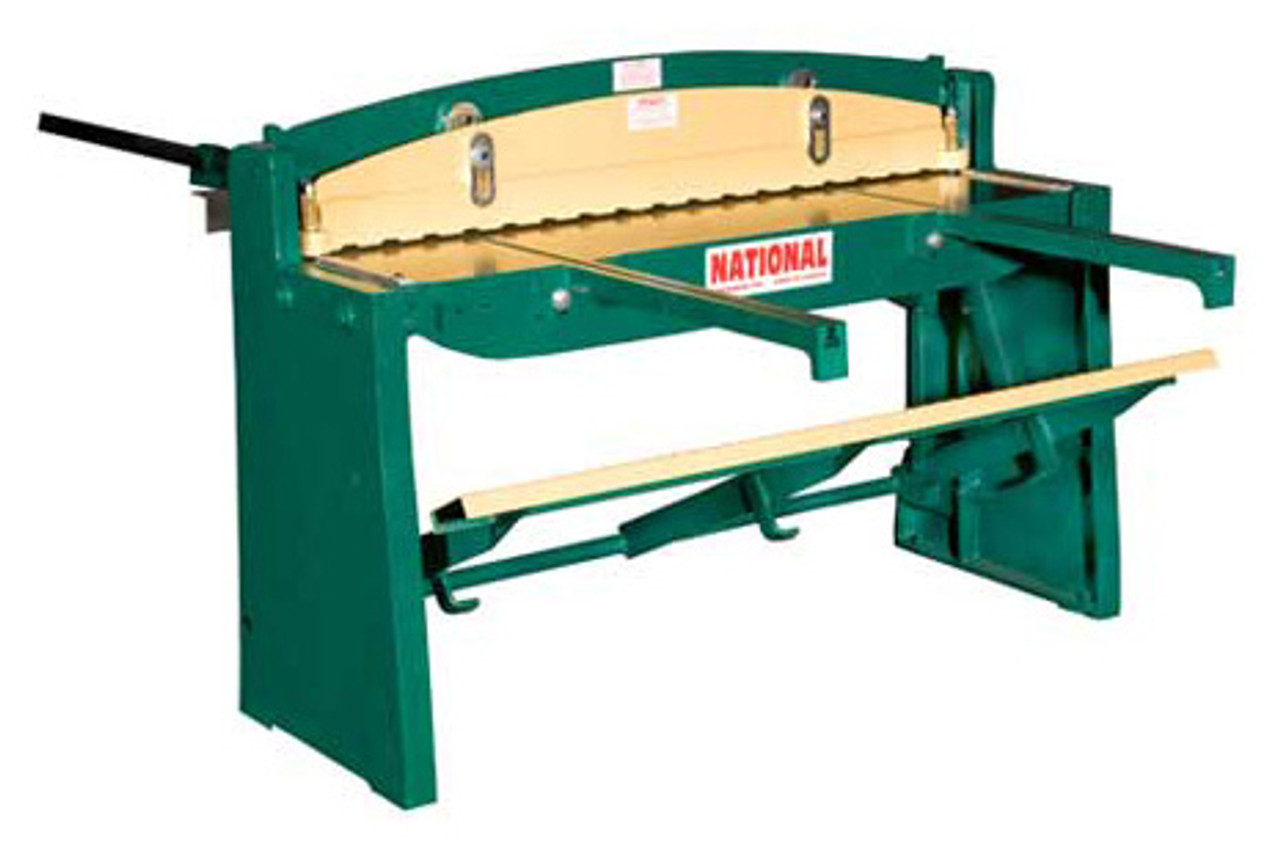
Squaring shear
Machine that can cut and square sheet metal. Models are manual, hydraulic or pneumatic.
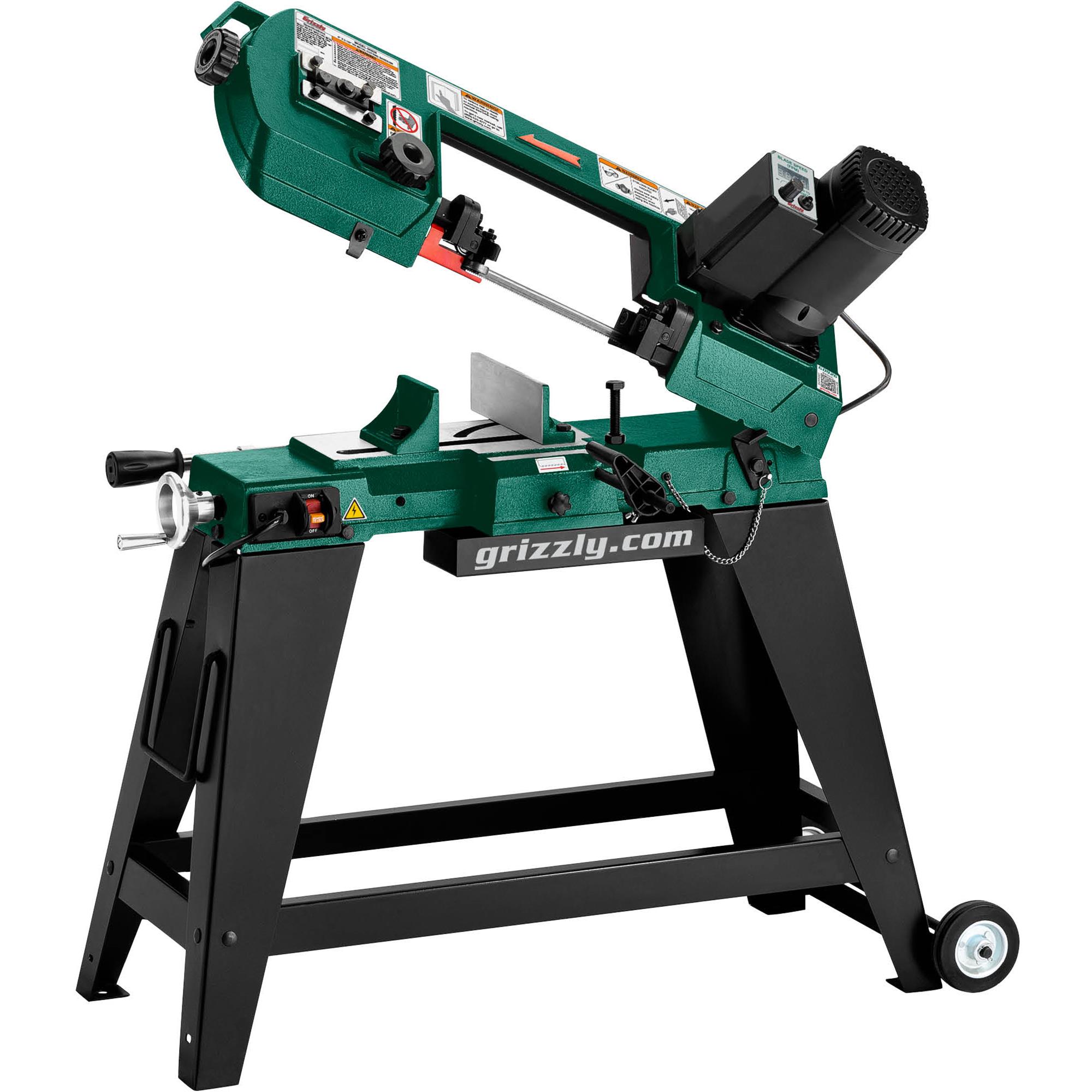
Band saw
It consists of a toothed metal band coupled to, and continuously driven around, the circumferences of two wheels. It is used to cut aluminum, steel, and composite parts
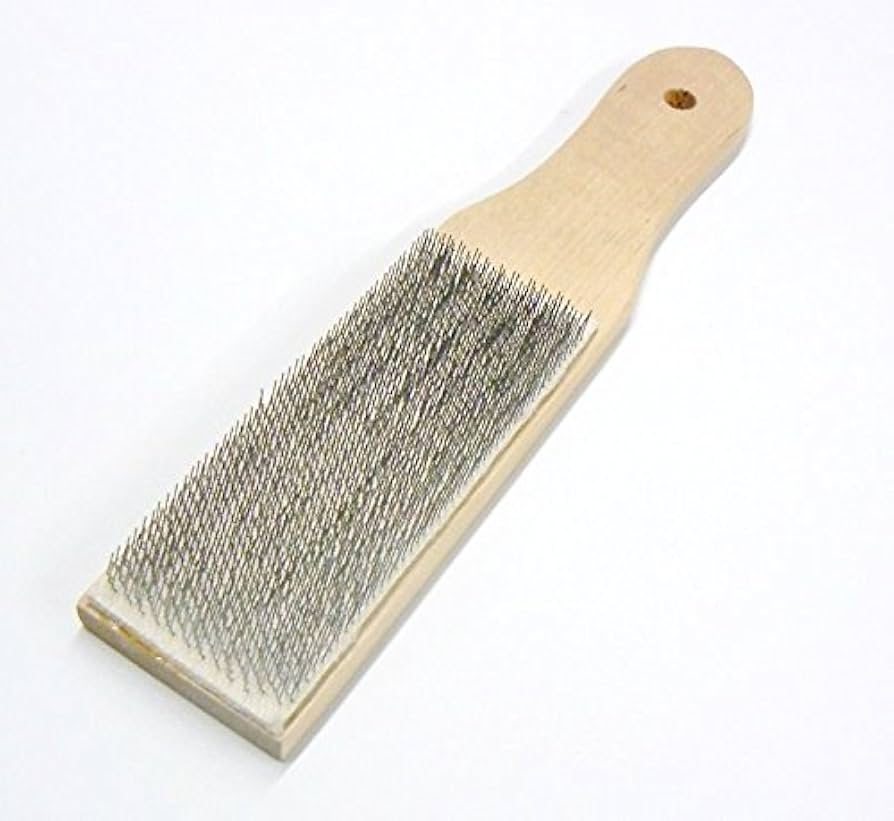
How can teeth of a file be cleaned?
A file card
What’s a die grinder?
A handheld tool that turns a mounted cutoff wheel, rotary file, or sanding disc at high speed
How is a die grinder powered?
By compressed air or electric.
What angles are die grinders available in?
Available in straight, 45 and 90 degree models.
What are die grinders used for?
Is excellent for weld breaking, smoothing sharp edges, deburring, porting, and general high-speed polishing, grinding, and cutting.
Most common type of drill for aircraft repair work and at what speed are they rated for sheet metal work?
Pneumatic drill motors are most common and 3000 rpm.
Technical definition of speed of a drill bit and units of measure:
The rate at which the drill bit rotates around its axis and measured in RPM’s (revolutions per minute)
Recommended speed for drilling aluminum:
200-300 surface feet per minute
Jobber drill bit
Standard length of drill bit
Whats HSS and why are they industry standard for drilling metal?
High speed steel. They’re the standard because they can withstand high temps without losing hardness and they stay sharp longer.
Procedure for drilling holes larger than 3/16” in sheet metal?
Make pilot holes with drill
Purpose of reamer:
Used for enlarging holes and finishing them smooth to a required size
Why must a reamer never be turned in the reverse direction?
Because chips can be forced into the surface, scarring the hole.
Purpose of drill stop:
They can prevent excessive drill penetration that might damage underlying structure or injure personnel and prevent the drill chuck from marring the surface.
Decimal equivalent of 1/16” drill bit
0.0625
Decimal equivalent of 3/32” drill bit:
0.0937
Decimal equivalent of #40 drill bit:
0.0980
Decimal equivalent of 1/8” drill bit:
0.1250
Decimal equivalent of #30 drill bit:
0.1285
Decimal equivalent of 5/32” drill bit:
0.1562
Decimal equivalent of #21 drill bit:
0.1590
Decimal equivalent of 3/16” drill bit:
0.1875
Decimal equivalent of #10 drill bit:
0.1935
Recommendation for holes 3/16” or larger:
Drill pilot holes.
Annealing:
Process of toughening steel by gradually heating and cooling it.
Standard counter-sink angle?
100 degrees
What’s spring-back and how is it accounted for?
Refers to the tendency of the material to partially return to its original shape after being bent or formed. This occurs because the elastic recovery of the material counteracts the plastic deformation imparted during the forming process.
To account for it, simply over-bend so it can bend back to desired bend angle.
Purpose of slip roller:
It is used to form sheets into cylinders or other straight curved surfaces
Stretch forming:
Process that thin or elongates sheet metal
Most common/reusable sheet metal fastener:
A cleco
2024 aluminum used for in aviation:
Used for aircraft structures, rivets, hardware, machine screw products, and other miscellaneous structural applications. Heat-treated parts, airfoil or fuselage skins, extrusions and fittings.
MS
Stands for Military standard
NAS
National aerospace standard
AN
Army-Navy
Most frequently used repair rivet code and why:
AD / recessed dot / 2117T. Used frequently because it can be installed in the received condition.
How is diameter of rivet determined?
3x the thickness of the thickest sheet.
What does repair layout involve?
Determine the size,style and # of rivets.
Determine the hole size, edge distance and distance between holes (pitch)
How is rivet length determined?
Grip length + (1.5 (Rivet diameter)) =
Stresses applied to rivets:
Shear and tension
Min and max of edge distance:
2D and 4D are the min and max edge distance.
Rivet pitch:
Distance between the centers of neighboring rivets in same row.
Transverse pitch:
Perpendicular distance between rivets and rows
Bucking bar
A dolly, bucking iron or bucking block. Is a heavy chunk of steel whose counter vibration during installation contributes to proper rivet installation
How is a bucking bar used?
Is used by holding it against the shank end of a rivet while the shop head is being formed. Always hold the face of the bucking bar at right angles to the rivet shank
How can the improper use of a buck bar contribute to a defective rivet installation?
Wrong use causes the rivet shank to bend with the first blows of the rivet gun and causes the material to become marred with the final blows
Countersink tool:
Tool that cuts a cone-shaped depression around the rivet hole to allow the rivet to set flush with the surface of the skin
Most common rivet upsetting tool used in airframe repair work:
Pneumatic rivet gun
Describe riveting action:
It should begin gradually and be completed in a single, continuous motion. Starting too quickly may cause the rivet header to slip off, potentially damaging the rivet (causing a "smiley") or the material surface (leaving an indentation). Aim to drive the rivets within 3 seconds to avoid work hardening, which can occur if the process takes too long.
Safety precautions to be observed when using a rivet gun:
Never point rivet gun at anyone
Never depress the trigger mechanism unless the set is held tightly against the rivet
Always disconnect air hose when not in use.
Hole prep for preparing a rivet:
It is very important that the rivet hole be of the correct size and shape and free from burrs
Describe the difference between the size of the hole and the diameter of the rivet to be installed:
If the hole is too small, the protective coating is scratched from the rivet when the rivet is driven through the hole. If the hole is too large, the rivet does not fill the hole completely
What type of counter-sink tool works best in aluminum?
Six fluted counter-sink
Dimpling:
Making an indention around rivet hole for flush rivet head.
Common causes of bad riveting:
Are improper bucking, rivet set slipping off or being held at the wrong angle, and rivet holes or rivets of the wrong size. Additional causes are countersunk rivets not flush with the well, work not properly fastened together during riveting, the presence of burrs, rivets too hard, too much or too little driving, and rivets out of line.
Process of removing a flush head rivet:
Select drill about 0.003 “ smaller than rivet shank diameter
Drill into the exact center of the rivet head to the approximate depth of the head.
Remove the head by breaking it off. Use a punch as a lever.
Punch out shank
What situations are special fasteners used designed for?
Applications in which fastener strength, ease of installation, or temperature properties of the fastener require consideration.
Why is CherryMax rivet popular?
Because it features the one tool concept to install three standard rivet diameters and their oversize counterparts
Hi-Loks advantages:
It includes its lightweight, high fatigue resistance, high strength, and its inability to be over torqued
How should Hi-Lok be prepped and installed in different materials?
The hole shall be prepared so that the maximum interference fit does not exceed 0.002-inch. This avoids build up of excessive internal stresses in the work adjacent to the hole. The Hi-Lok® pin has a slight radius under its head to increase fatigue life. After drilling, deburr the edge of the hole to allow the head to seat fully in the hole. The Hi-Lok® is installed in interference fit holes for aluminum structure and a clearance fit for steel, titanium, and composite materials.
Describe pop rivets and their use in aviation:
Produced for non-aircraft related applications, are not approved for use on certificated aircraft structures or components. Typically made of aluminum and can be installed with hand tools.
Forming process:
A simple process, such as making one or two holes for attaching; it may be a complex process, such as making shapes with complex curvatures
What does the amount of shrinking and stretching during forming depend on?
The # of degrees in the bend.
Folding sheet metal:
Is to make a bend or crease in sheets, plates, or leaves
Base measurement:
Outside of dimension of a formed part
Leg:
Longer part of a formed angle
Flange
Shorter part of a formed angle- opposite of leg
Bend allowance
Curved section of metal within the bend
Bend radius
The arc is formed when sheet metal is bent.
Bend line tangent
Location at which the metal starts to bend and the line at which the metal stops curving
Neutral axis
An imaginary line that has the same length after bending as it had before bending
Mold line
Extension of the flat side of a part beyond the radius.
Mold Line dimension
The dimension of a part made by the intersection of mold lines. It is the dimension the part would have if its corners had no radius.
Mold point
The point of intersection of the mold lines. The mold point would be the outside corner of the part if there were no radius