cranial nerves
 Call Kai
 Learn
Learn Practice Test
 Spaced Repetition
 Match
Match Flashcards
 Knowt Play
1/111

There's no tags or description
Looks like no tags are added yet.
Name | Mastery | Learn | Test | Matching | Spaced | Call with Kai |
|---|
No analytics yet
Send a link to your students to track their progress
112 Terms
what is CN I?
Olfactory - sensory
What is CN II?
Optic - sensory
What is cranial nerve CN III?
Oculomotor - motor
What is cranial nerve IV?
Trochlear - motor
what is CN V
Trigeminal - mixed
What is CN VI?
abducent - motor
what is CN VII?
facial - mixed
What is CN VIII
Vestibulocochlear - sensory
What is CN IX?
glossopharyngeal - mixed
What is CN X?
vagus - mixed
what is CN XI?
accessory - motor
What is CN XII?
hypoglossal - motor
What cranial nerves are motor?
CN III - oculomotor
CN IV - trochlear
CN VI - abducent
CN XI - accessory
CN XII - hypoglossal
what cranial nerves are sensory?
CN I - olfactory
CN II - optic
CN VIII - vestibulocochlear
what crainal nerves are mixed (sensory and motor)?
CN V - trigeminal
CN VII - facial
CN X - vagus
CN IX - glossopharyngeal
what are Cranial nerves? what do they enter/ exit through?
Bundles of sensory, motor, or mixed fibers that innervate muscles or glands. They emerge through foramina or fissures in the cranium
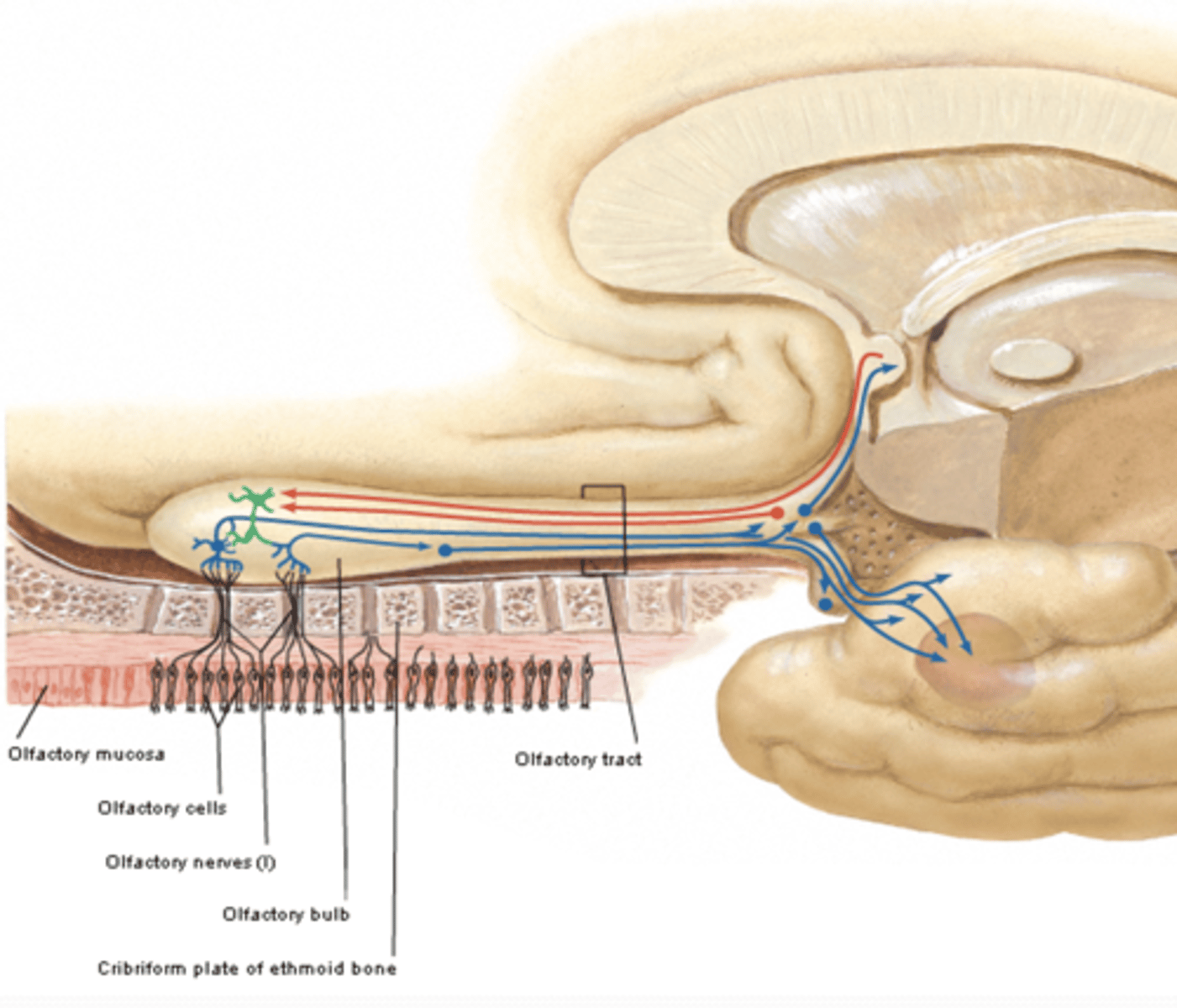
What is the course and type of CN I?
olfactory receptors on olfactory mucosa
1. CN I arise through the foramina of the cribriform plate
2. synapse on olfactory bulb
3. axons of secondary nerve cells (mitral cells) become olfactory tract
Type: special sensory
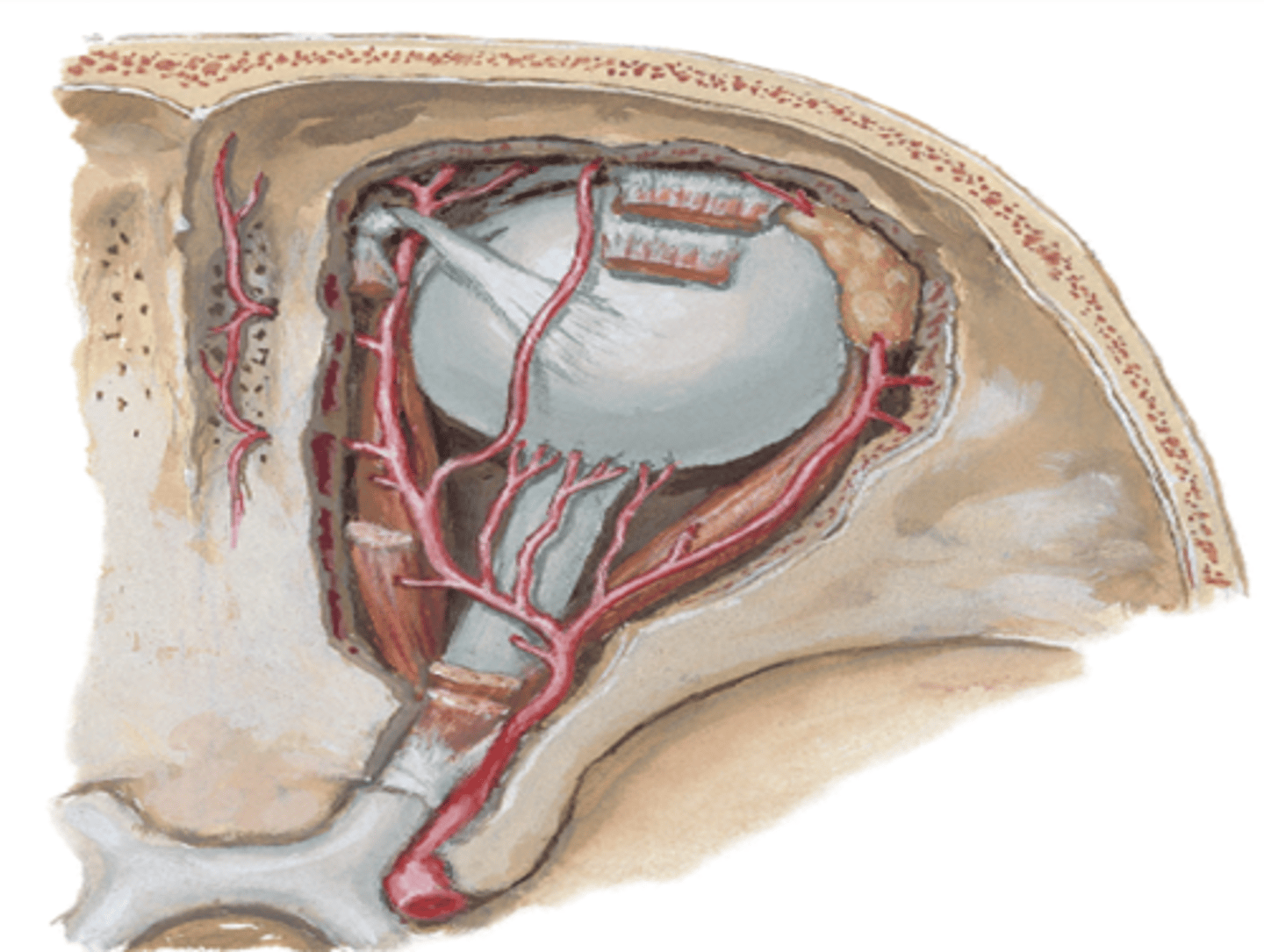
What is the course and type of CN II?
axons of 3rd order nerve cells in the retina (retinal ganglion cells) project back to the brain forming the optic nerve
(CN II) enters cranium through the optic canal > form the optic chiasm > posterior to the chiasm becomes the optic tract
Type: special sensory
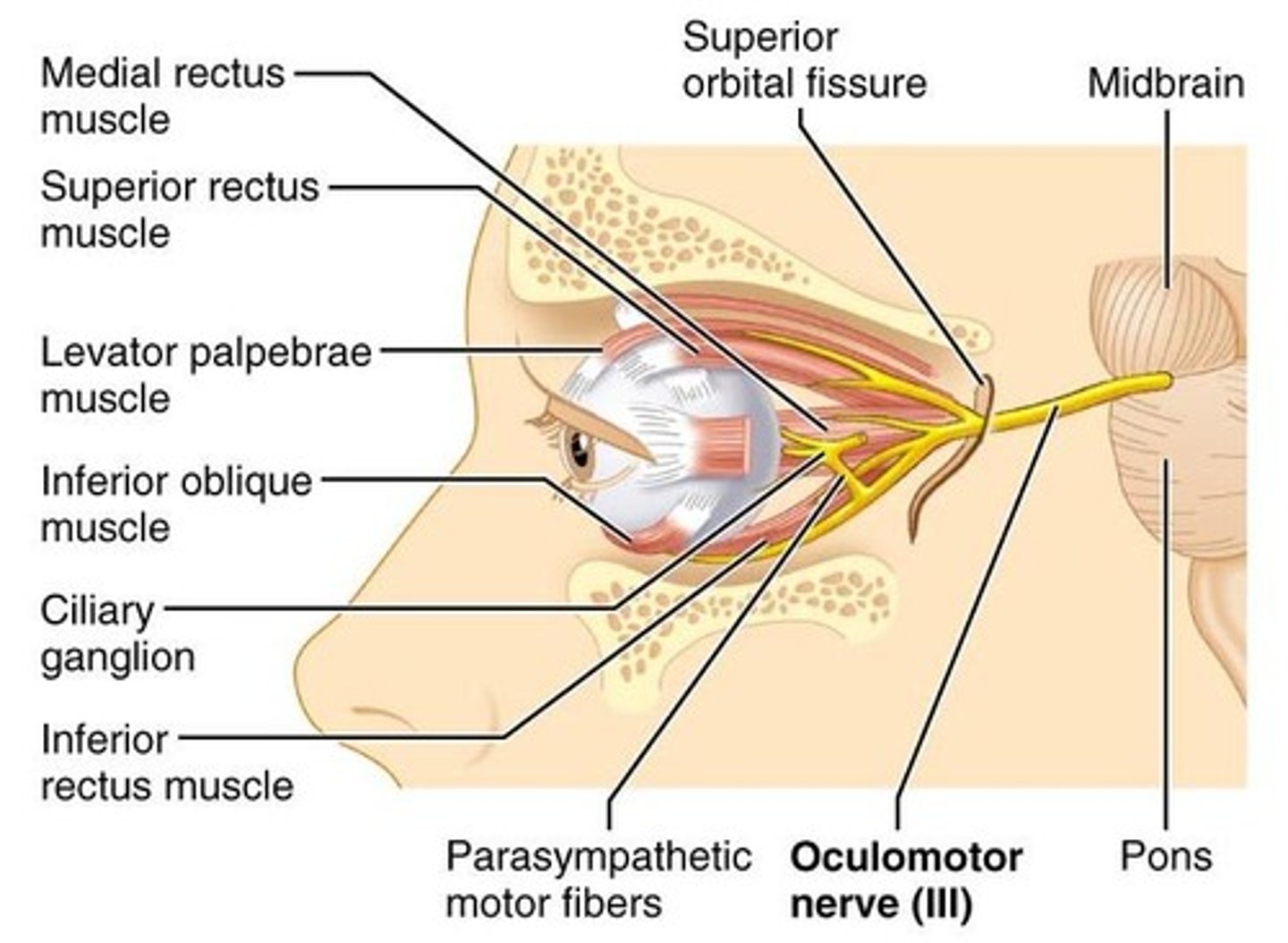
What is the course and type of CN III?
Course: runs anteriorly in the lateral wall of the cavernous sinus > enters the orbit through the superior orbital fissure > branches out into superior and inferior divisions
Type: Somatic motor and visceral motor (parasympathetic fibers)
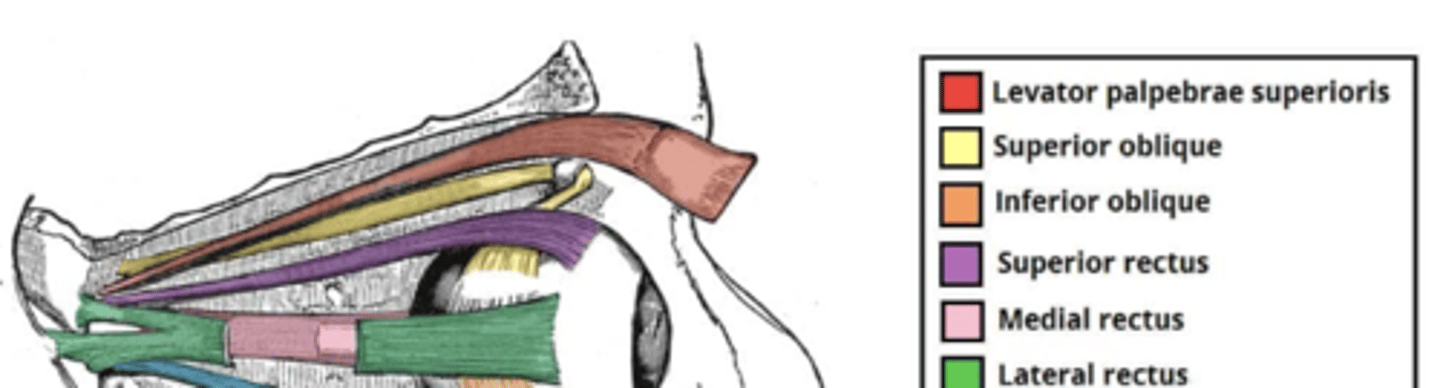
What is the innervation of CN III of the superior division?
1. Levator palpebrae superioris muscle
2. Superior rectus muscle
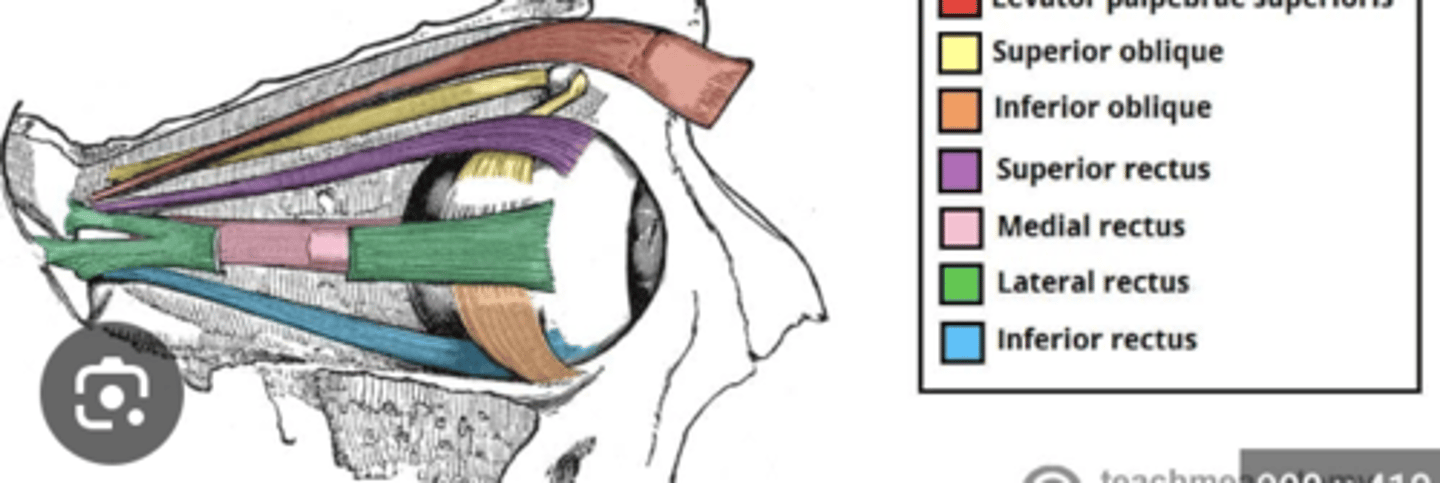
What is the innervation of CN III of the inferior division?
1. Medial rectus
2. Inferior rectus
3. Inferior oblique
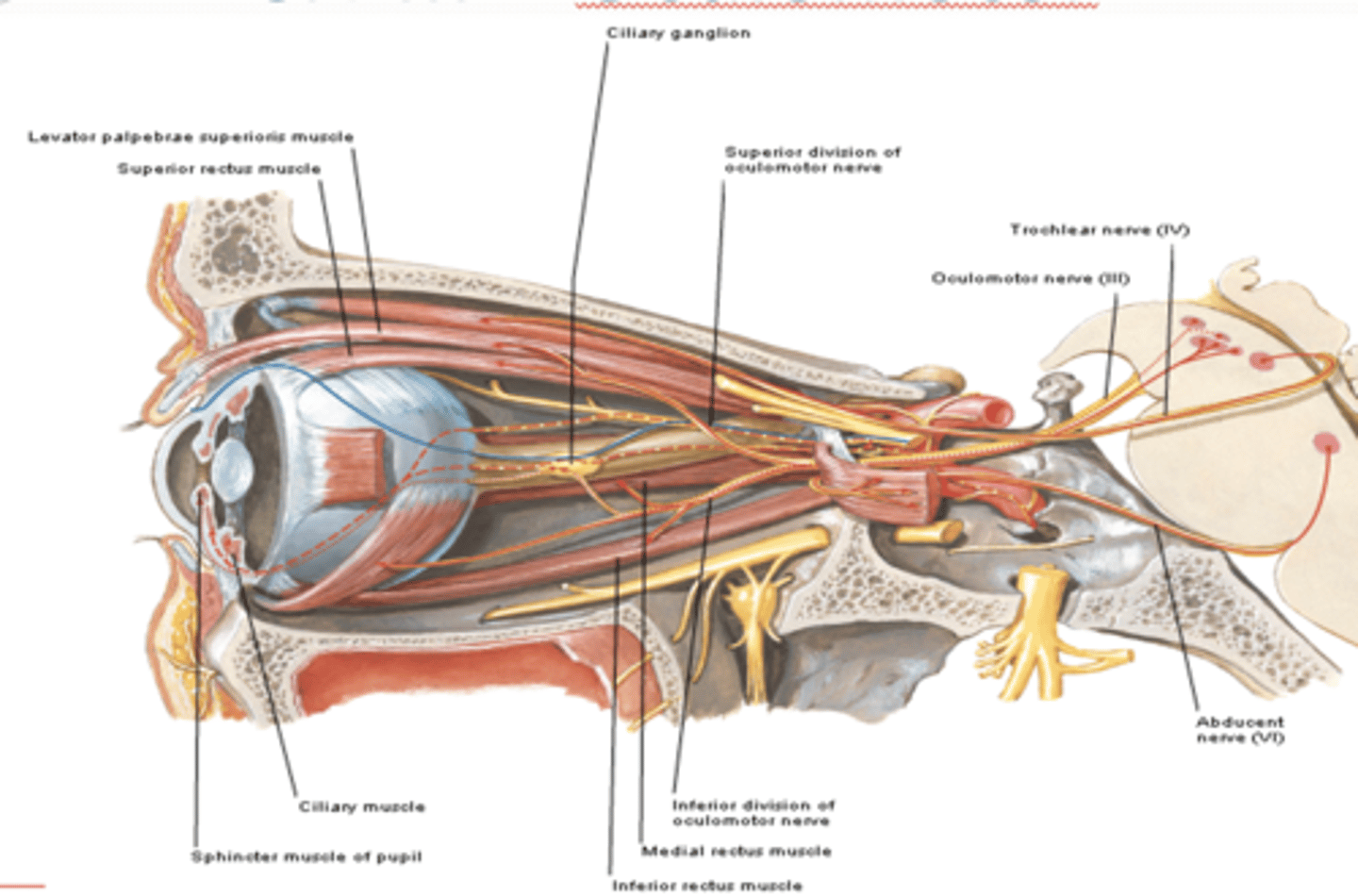
What is innervation of CN III of the parasympathetic fibers (via short ciliary nerves of ciliary ganglion)?
1. sphincter pupillae muscle (constriction of pupil)
2. ciliary muscle (accommodation of lens)
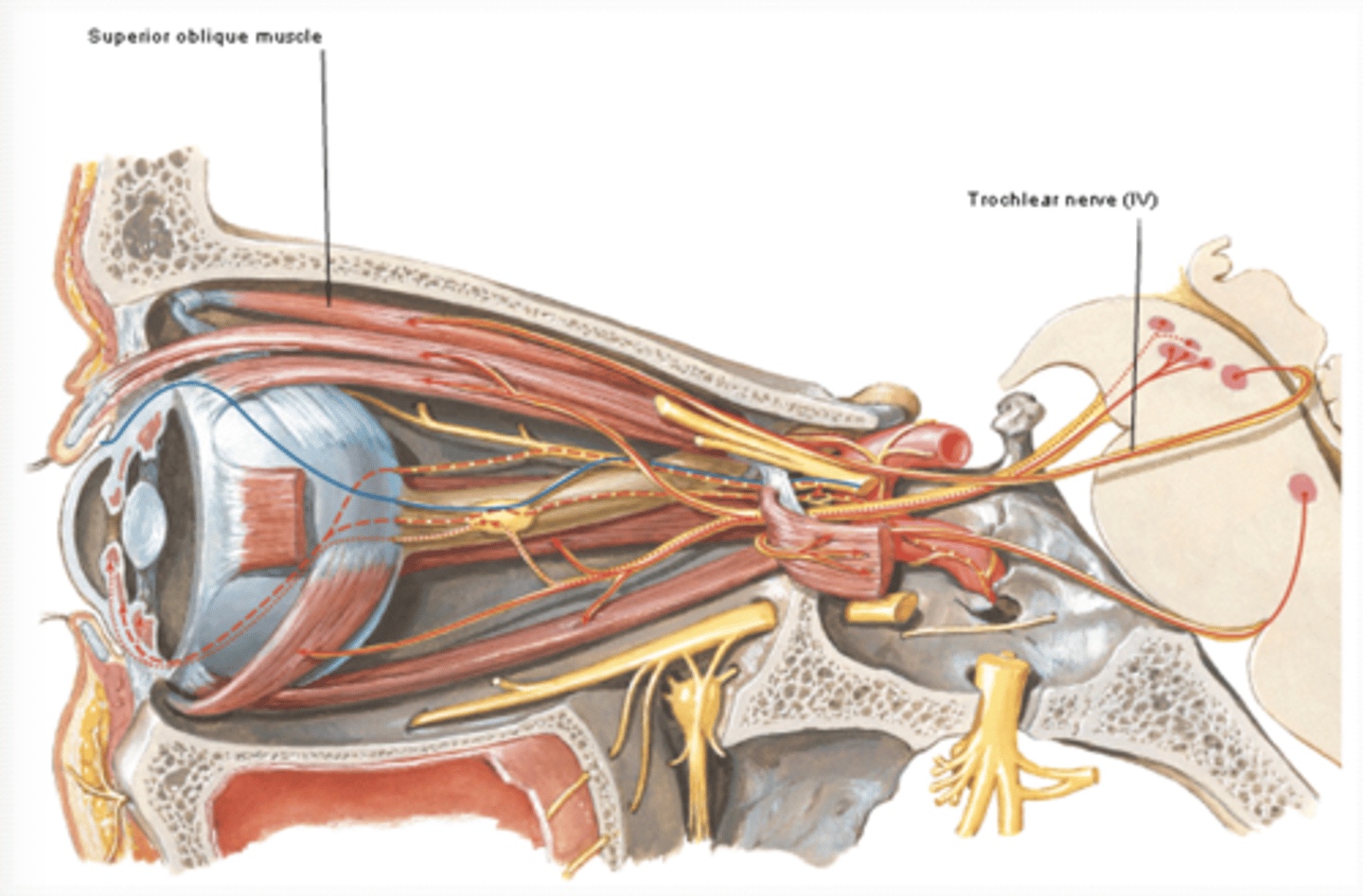
What is the course and type of CN IV?
Smallest cranial nerve, with longest intracranial course.
Course: runs anteriorly in the lateral wall of the cavernous sinus > enters the orbit through the superior orbital fissure
Type: Somatic motor
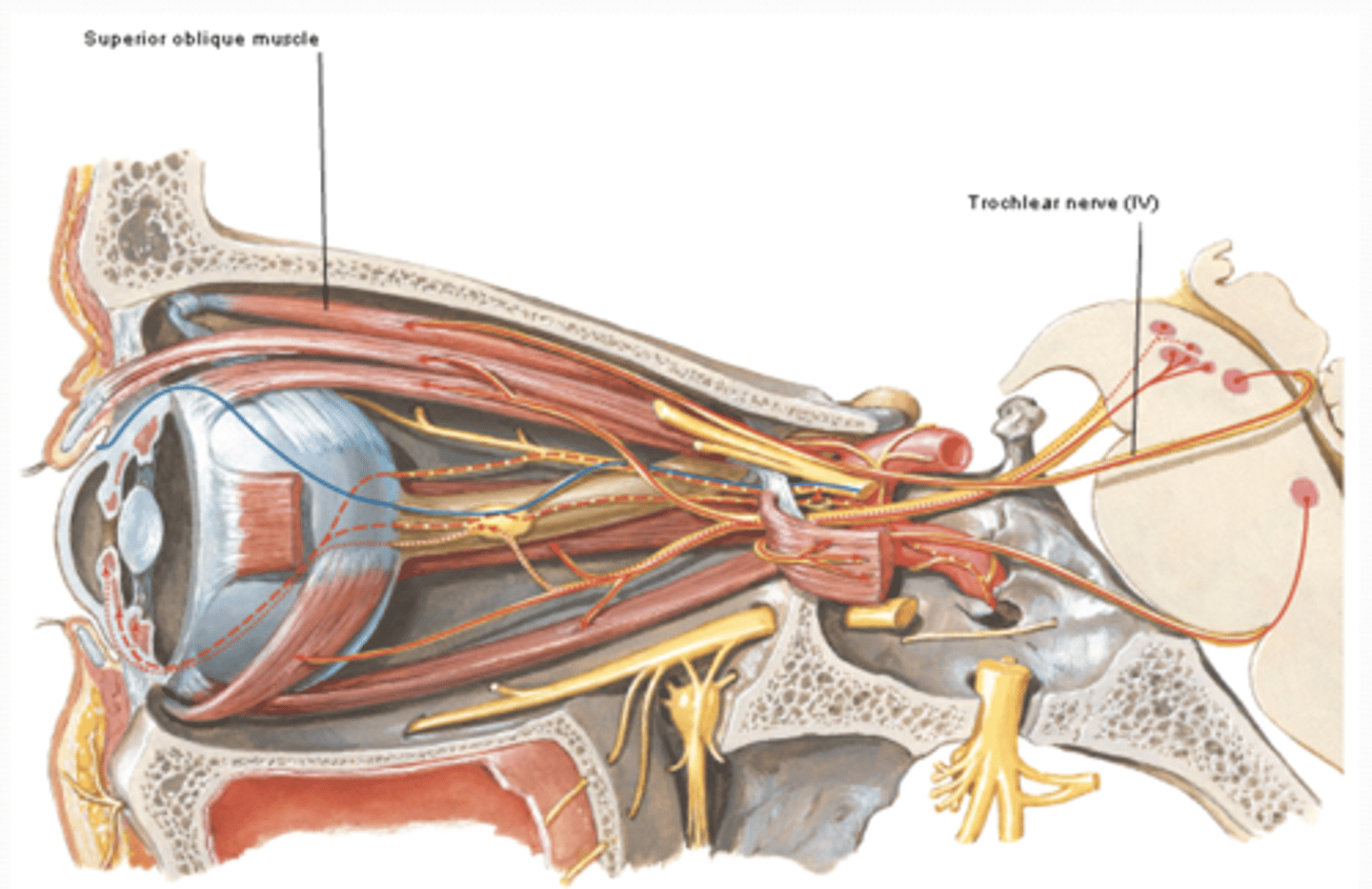
What does CN IV innervate?
Superior oblique muscle (uses a pulley or trochlea to redirect its line of action, giving name to CN IV)
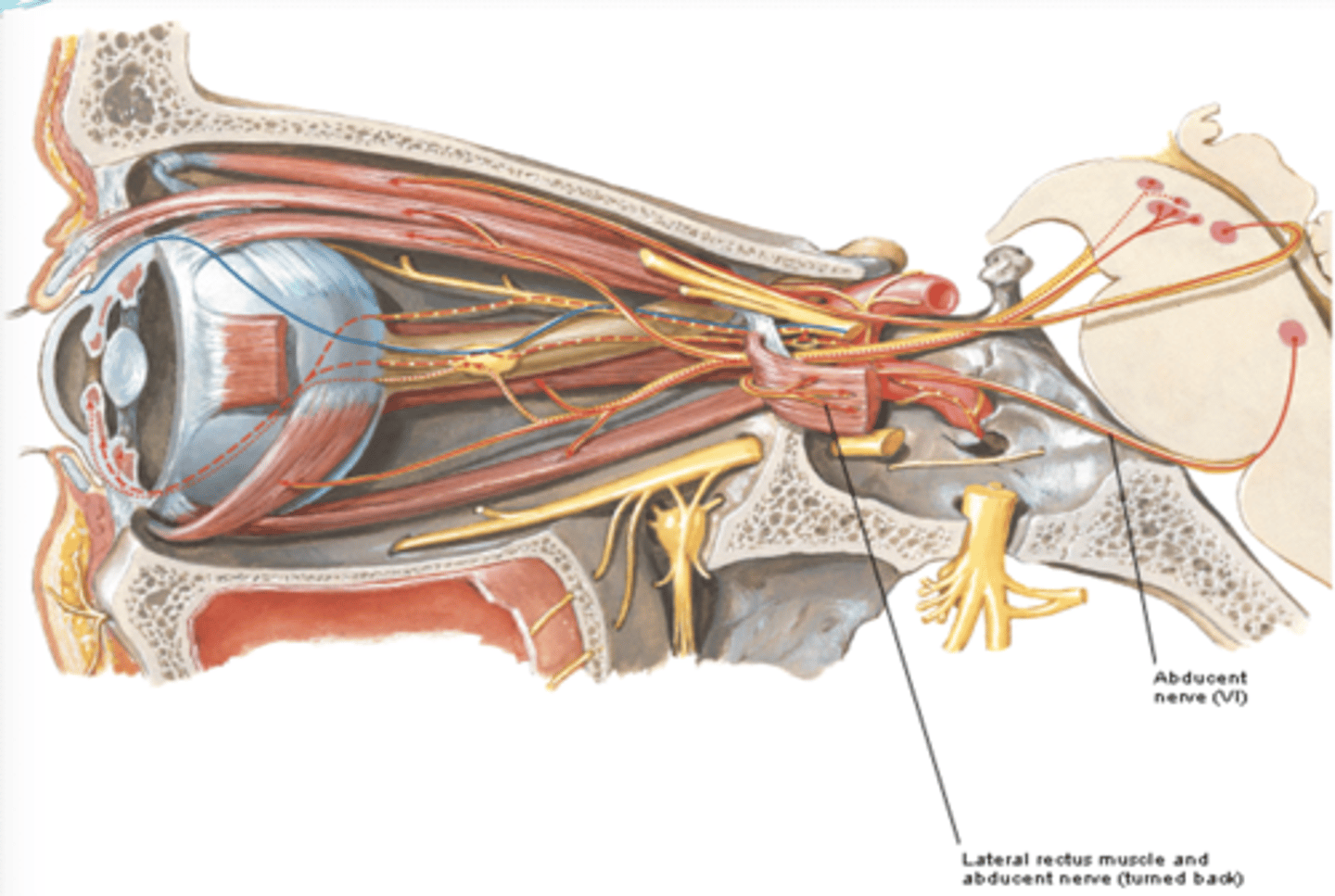
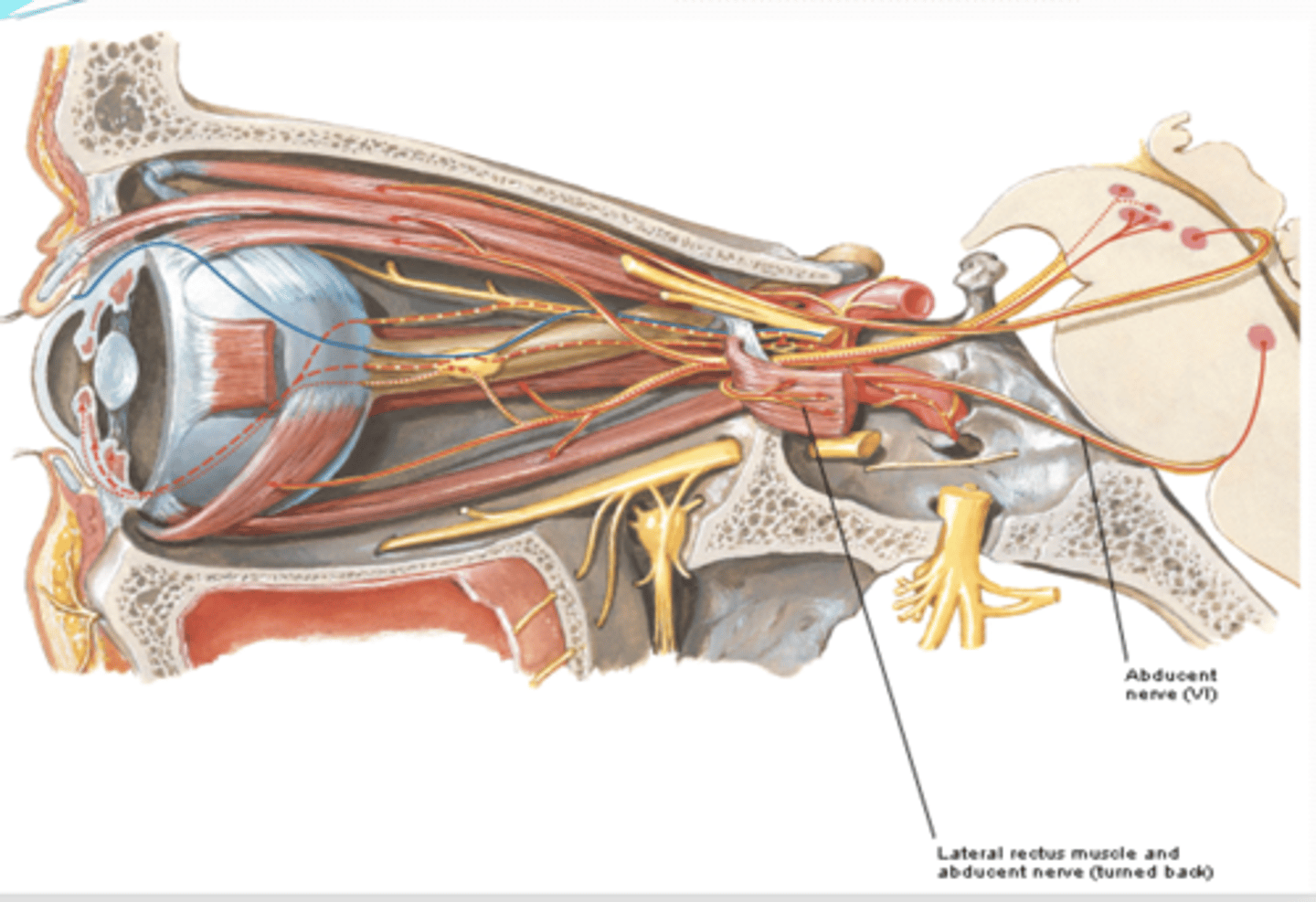
What is the course and type of CN VI?
Course: runs through the cavernous sinus parallel and inferior to internal carotid artery > enters the orbit through the superior orbital fissure
Type: Somatic Motor
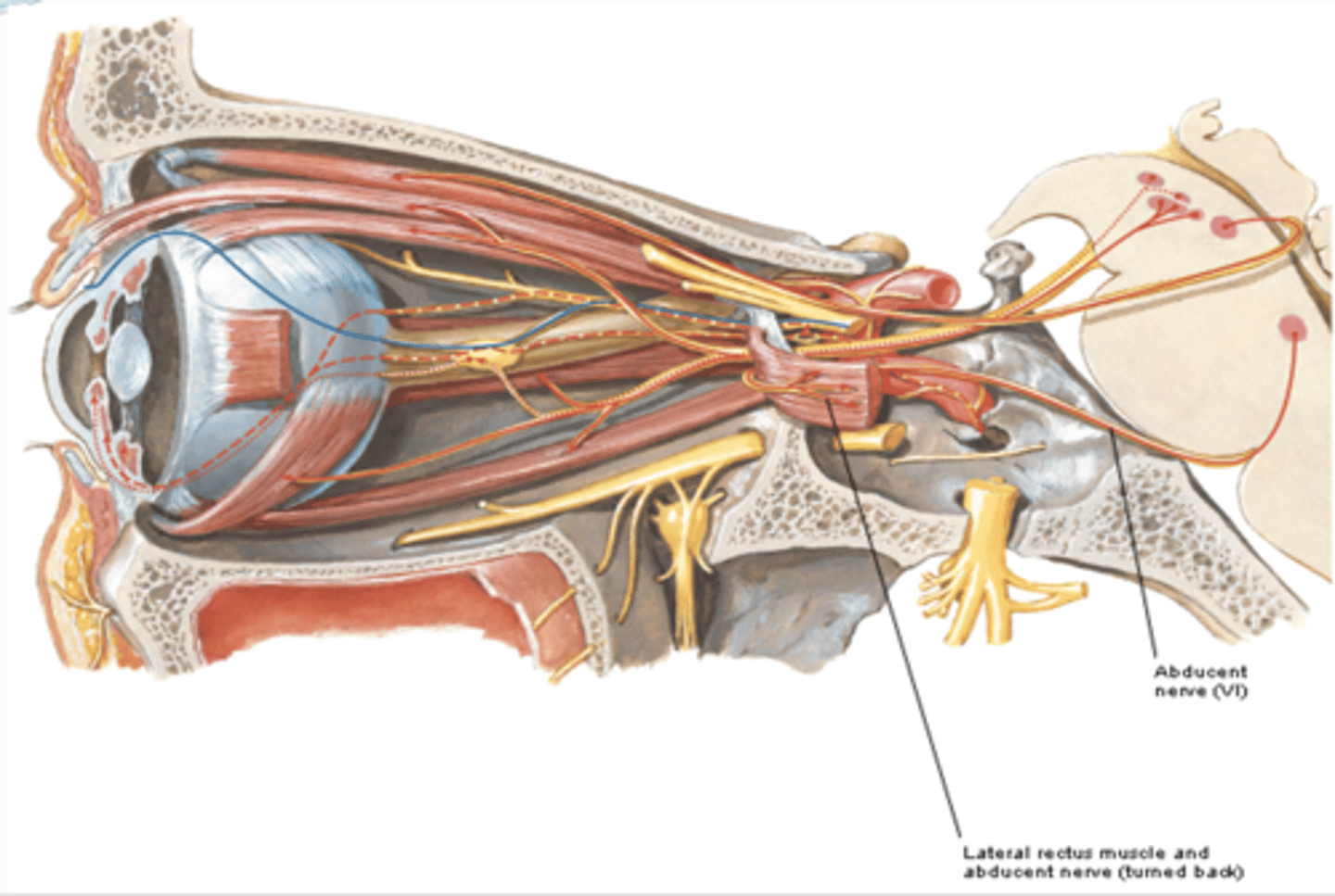
What does CN VI innervate?
Lateral rectus muscle (abducts the eye)
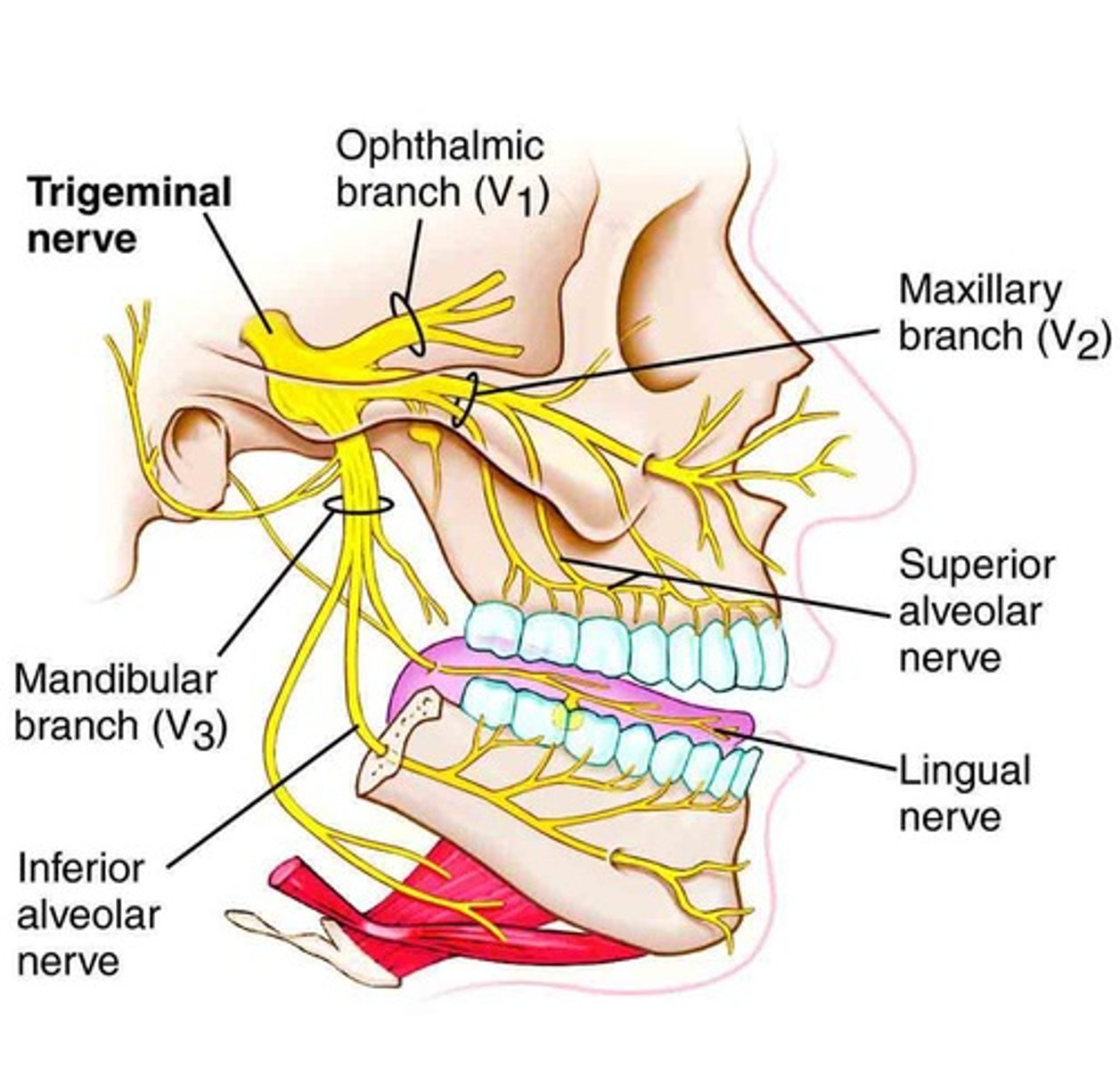
What type is the CN V?
Type: somatic sensory and somatic motor
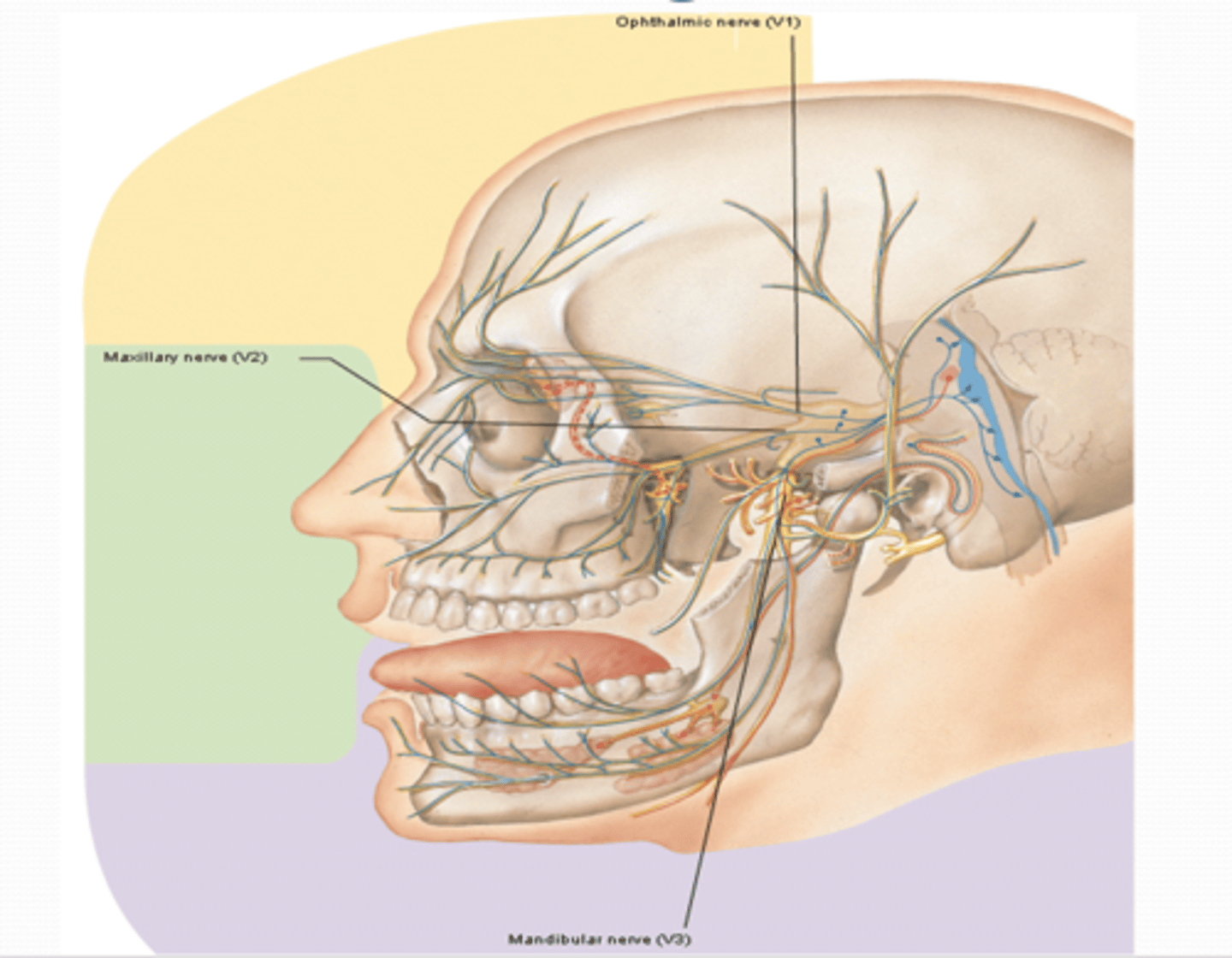
What is the principal somatic sensory nerve of the head and what does it innervate?
CN V
Innervates:
1. face
2. teeth
3. mouth
4. nasal cavity
5. dura mater of the cranial cavity.
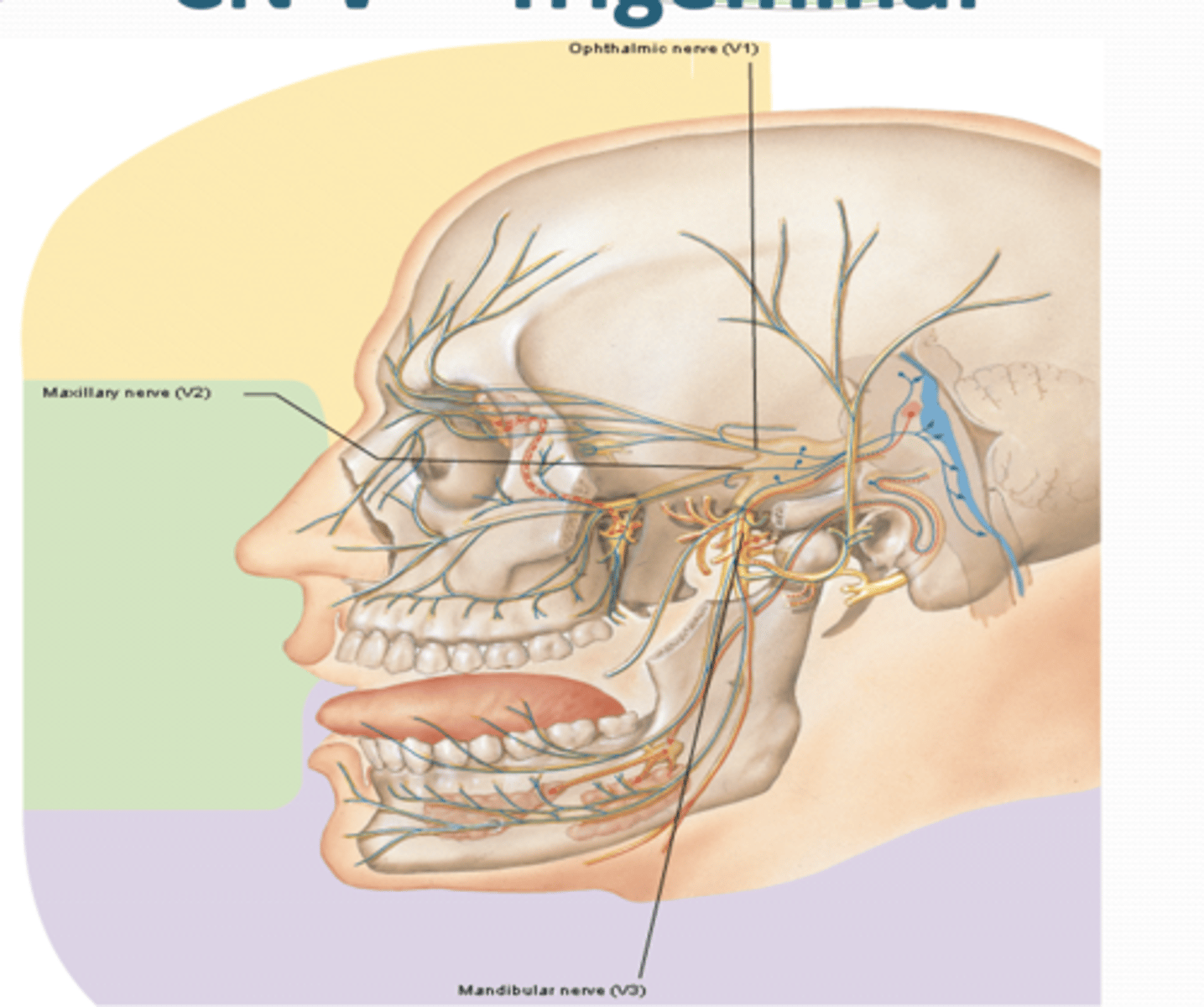
Which part of CN V is responsible for motor function, and what division is it distributed through?
The motor root is distributed exclusively via the mandibular division (CN V3).
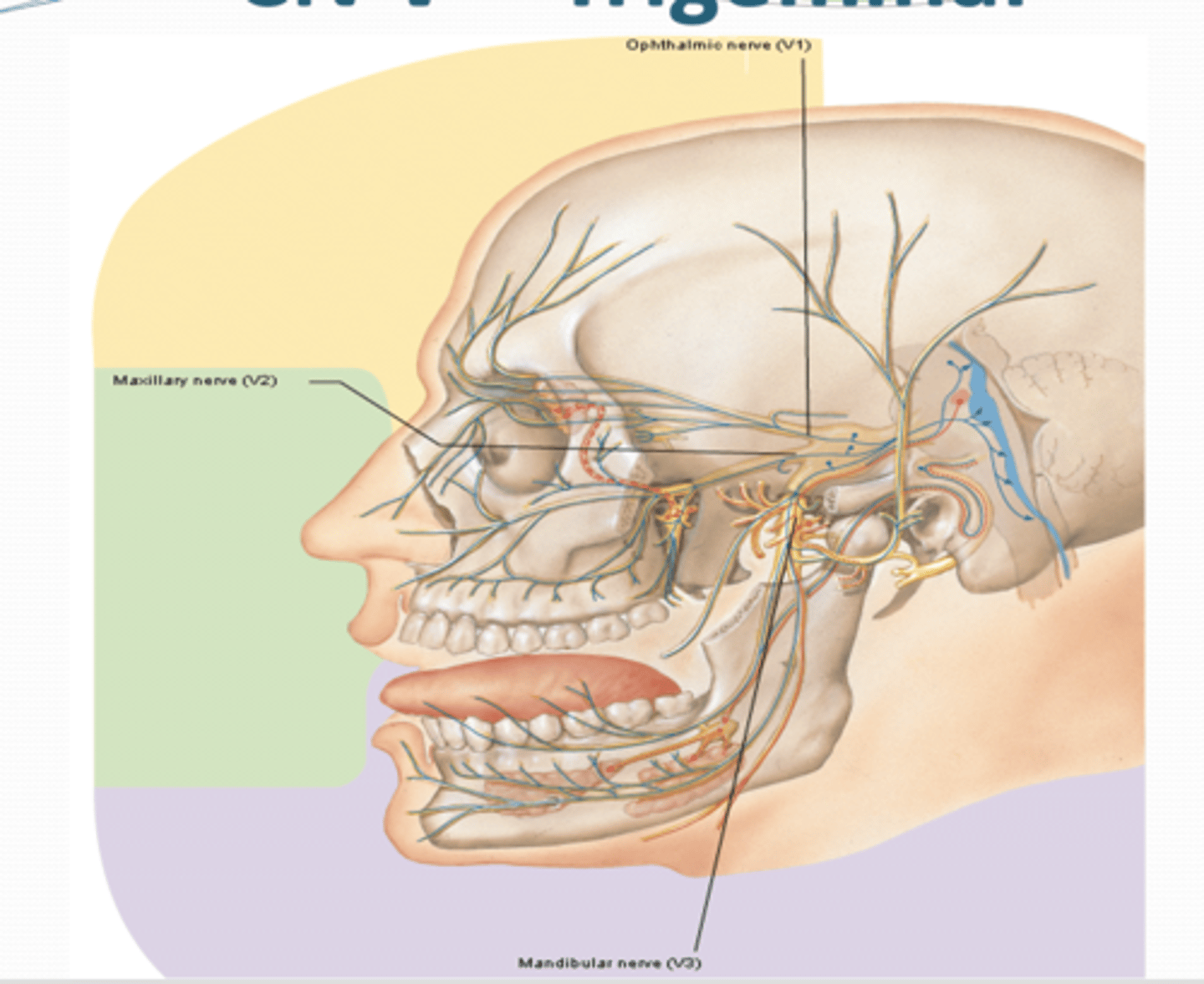
What are the three divisions of Cranial Nerve V (CN V)?
1. Ophthalmic (CN V1)
2. Maxillary (CN V2)
3. Mandibular (CN V3)
What is the course and type of CN V1?
Course: runs anteriorly in the lateral wall of the cavernous sinus > enters the orbit through the superior orbital fissure
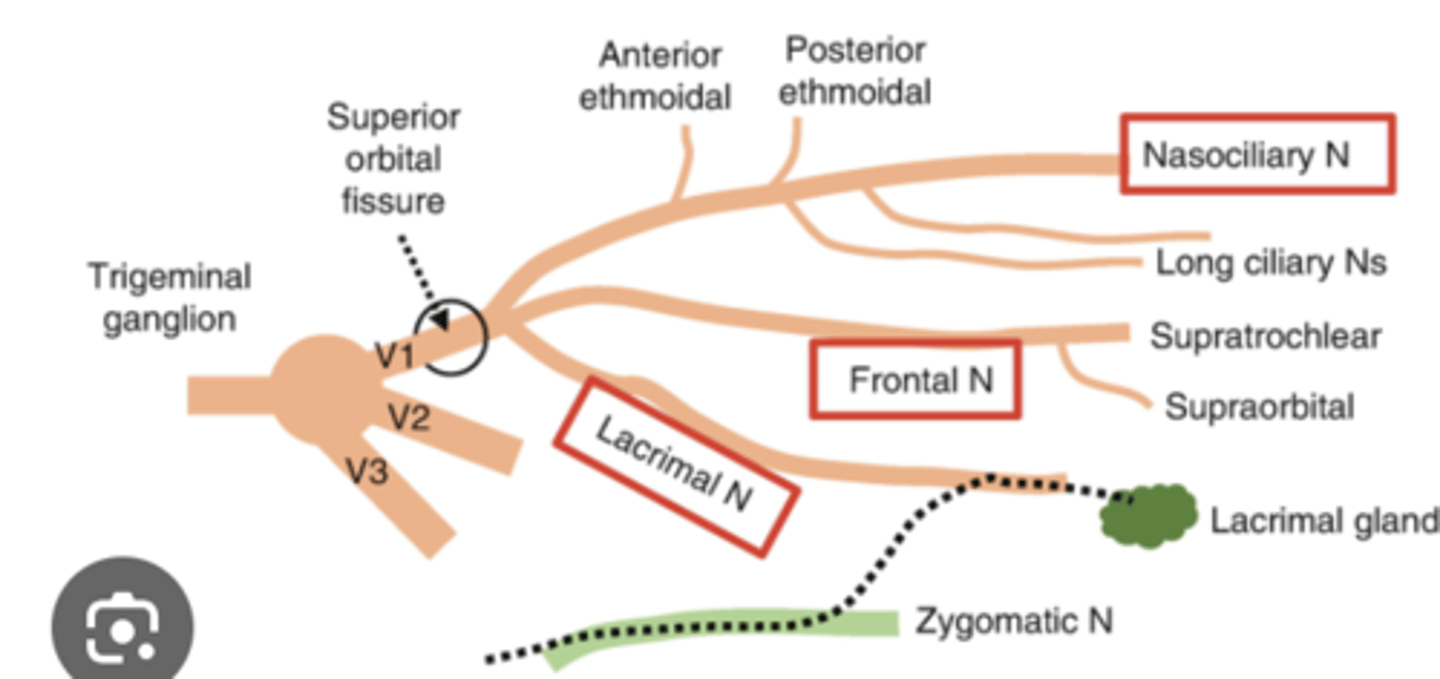
What are the branches of CN V1?
1) lacrimal nerve
2) frontal nerve
3) nasociliary nerve
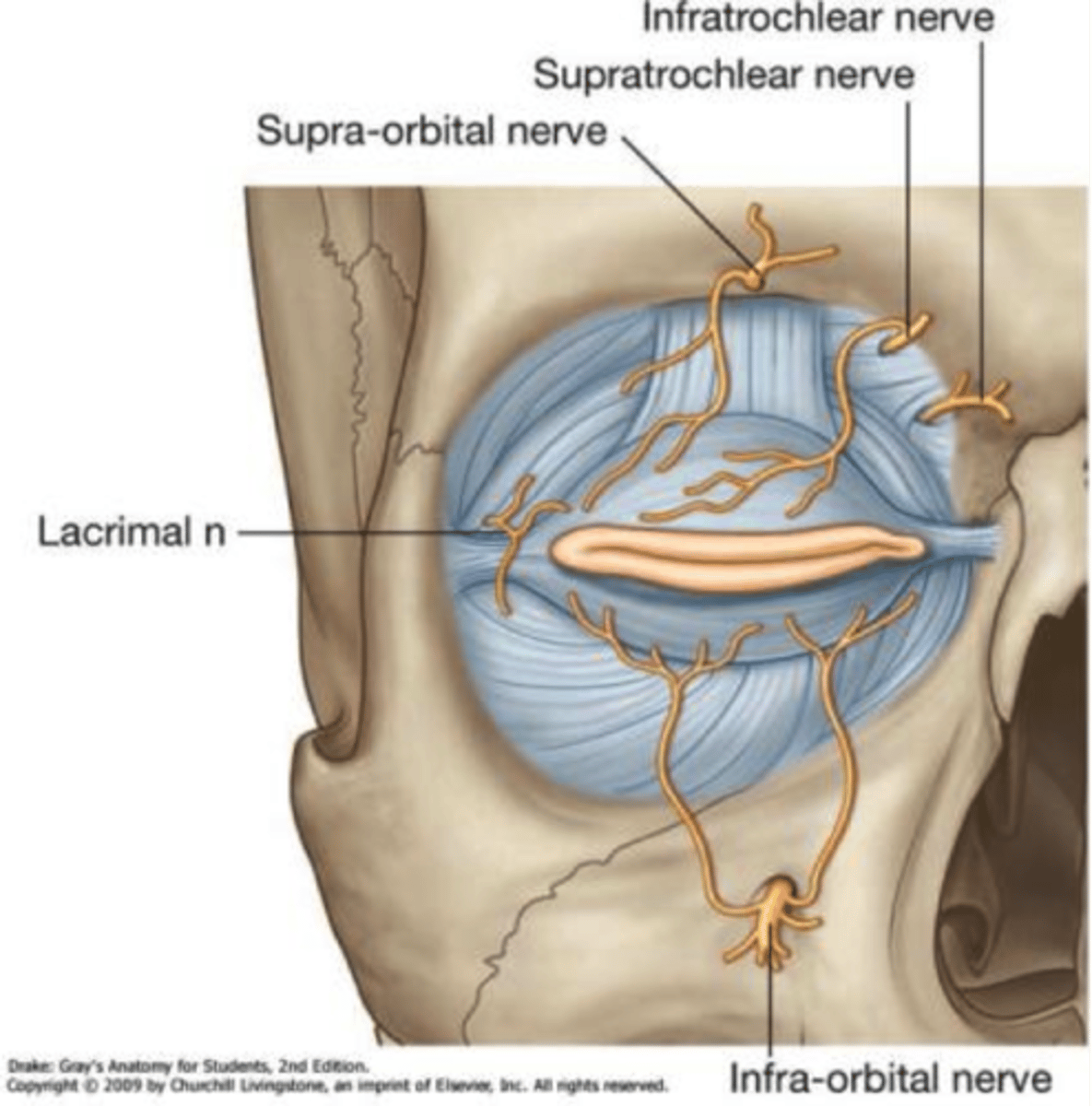
What does the lacrimal nerve (CN V1 ) run and innervate?
runs anteriorly along lateral aspect of orbit
Intervates:
1. upper eyelid (sensory)
2. lacrimal gland (parasympathetic fiber from the pterygopalatine ganglion via the zygomatic nerve of CN V2)
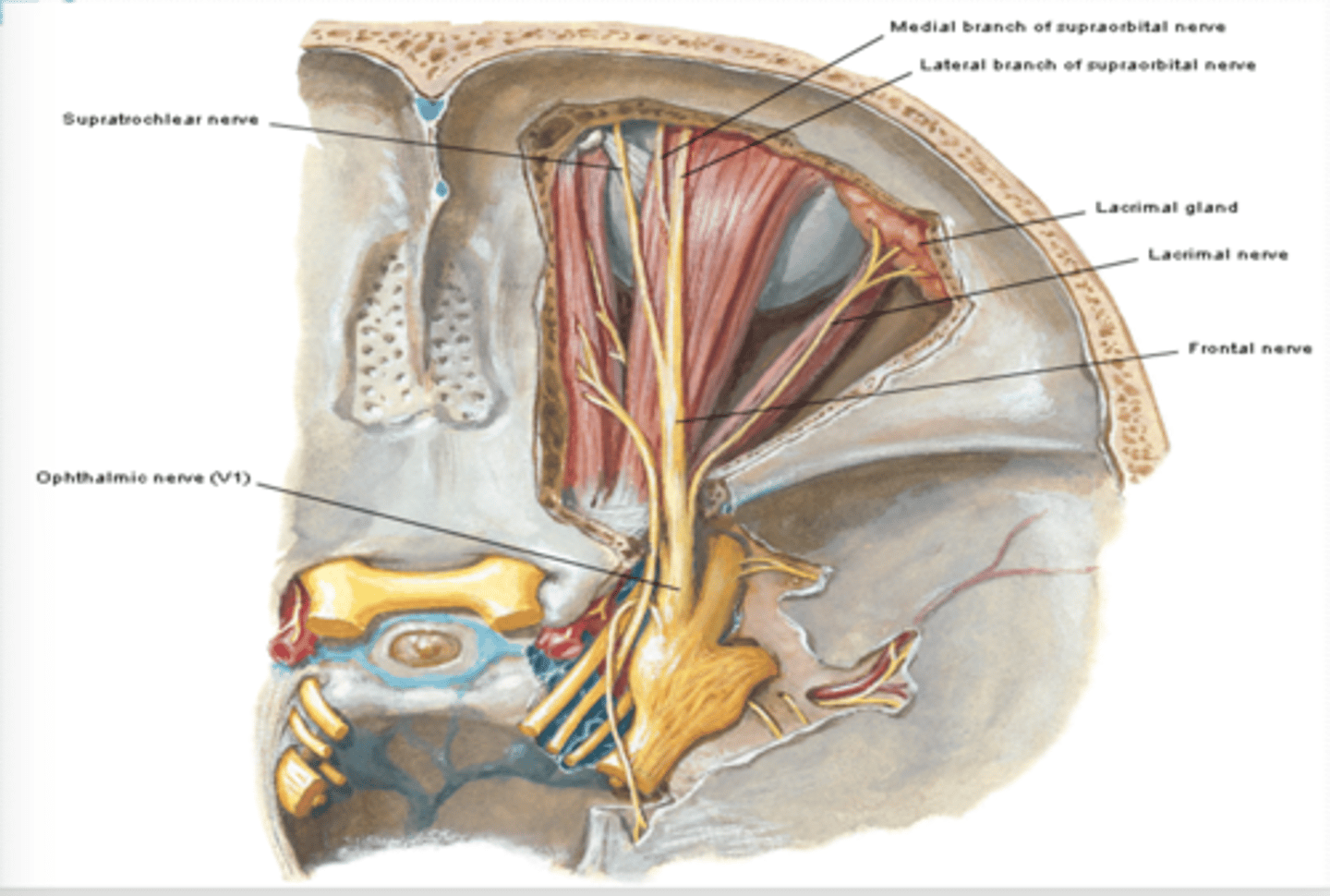
What does the frontal nerve (CN V1 ) run and innervate?
runs anteriorly in the center of orbit
Supraorbital nerve (exits through supraorbital foramen)
Supratrochlear nerve (medial to supraorbital nerve)
Inntervate:
1. forehead
2. anterior scalp
3.upper eyelid
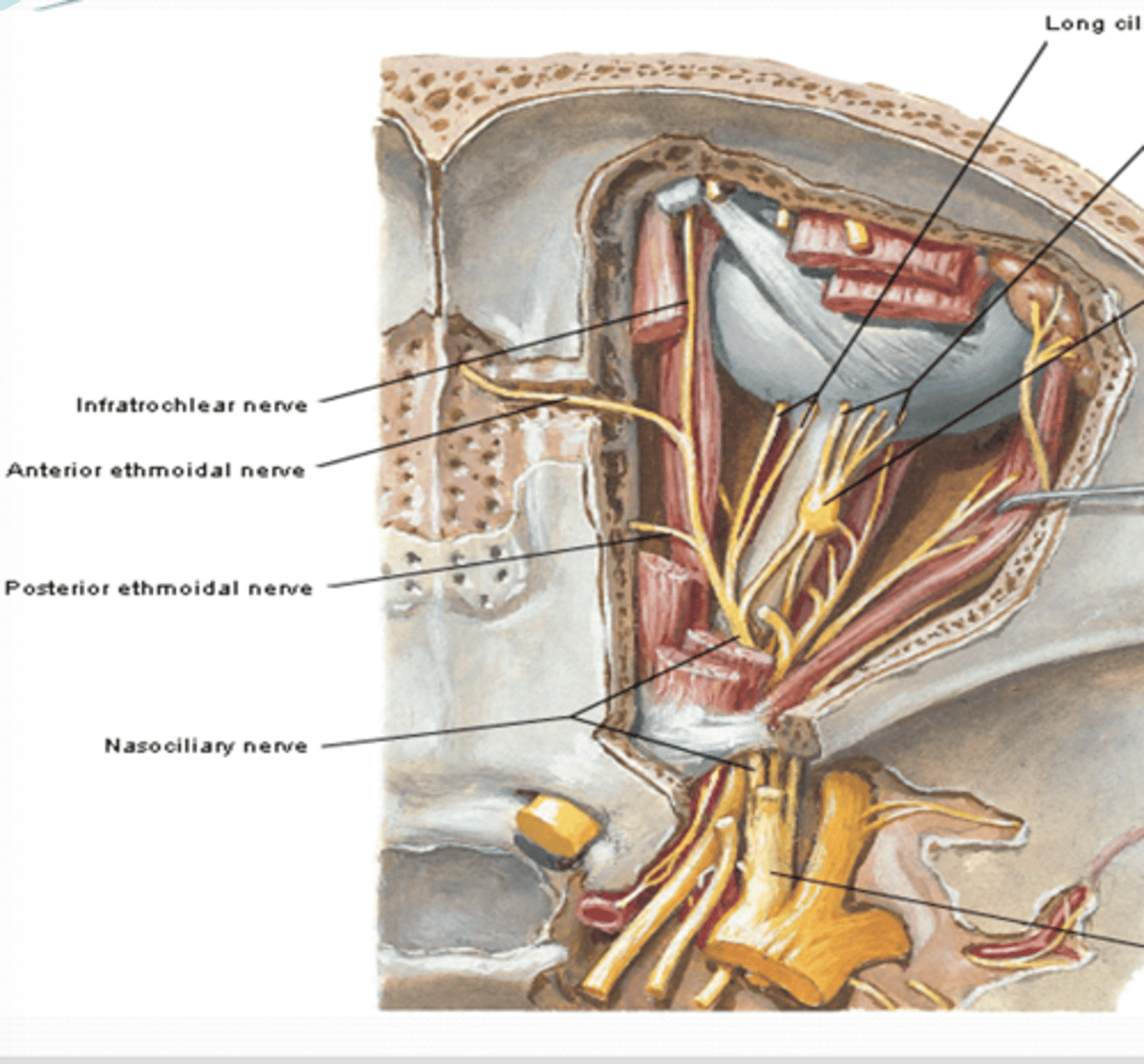
Where does the nasociliary nerve run what other nerves does it contain?
runs anteriorly along medial wall of orbit
1. Long ciliary nerve
2. Infratrochlear nerve
3. Anterior & Posterior ethmoidal nerves
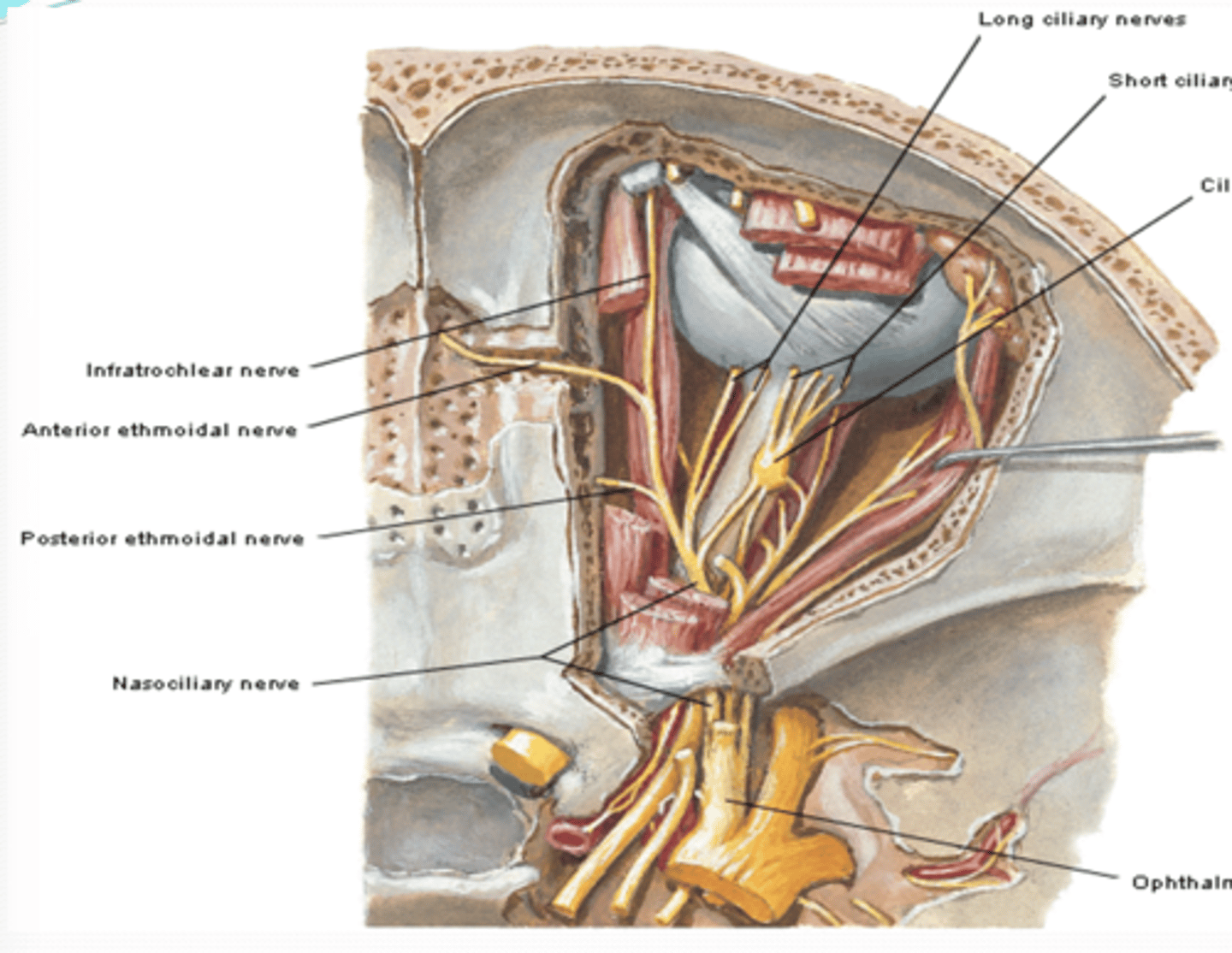
what does the long ciliary nerve of the nasociliary nerve innervate?
1. iris
2.cornea
Contains sympathetic fibers to
the dilator pupillae muscle
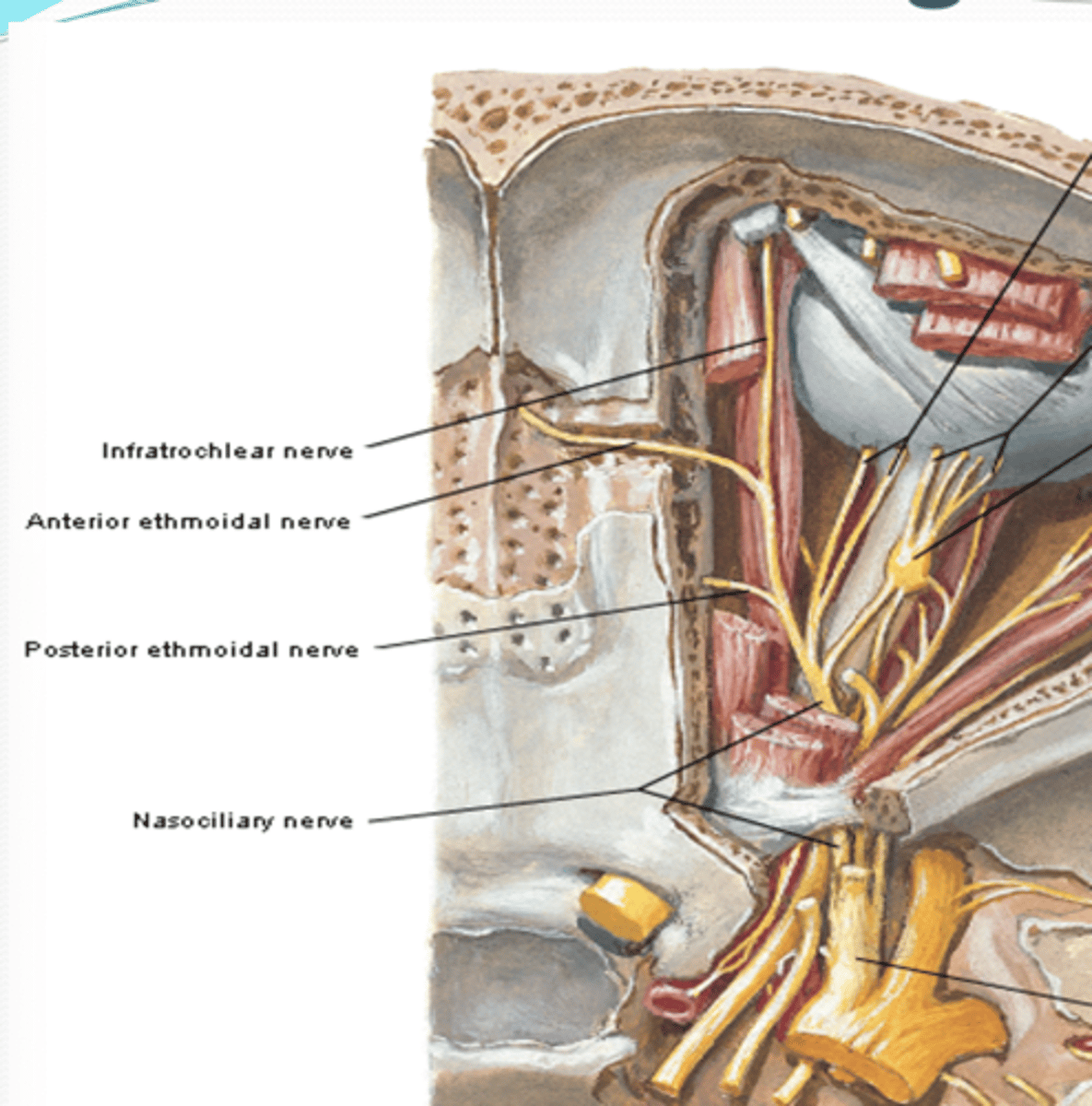
What does the infratrochlear nerve of the nasociliary nerve innervate?
1. skin of eyelid
2. side of nose
3. conjunctiva
4. lacrimal sac
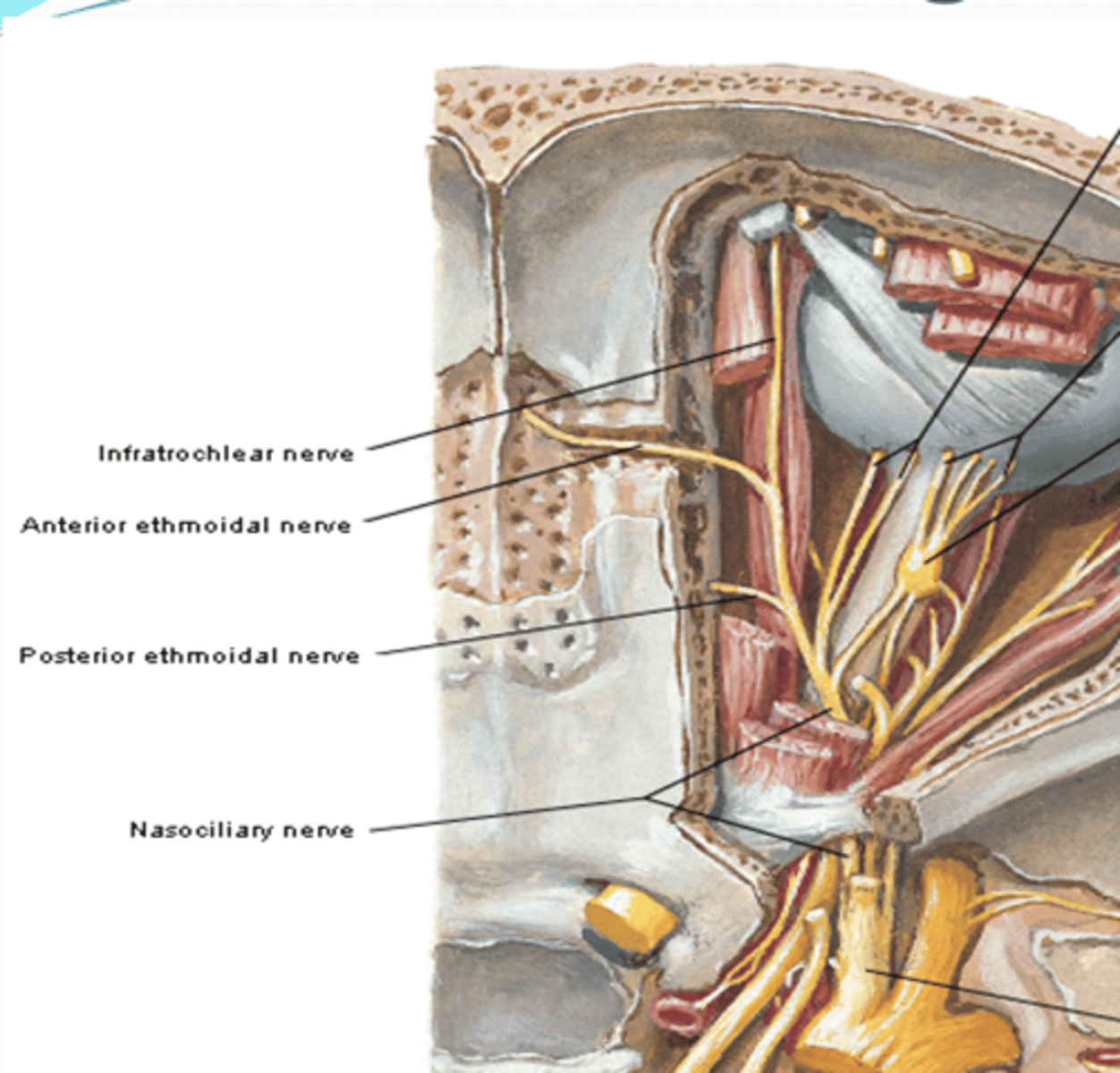
What does the anterior and posterior ethmoidal nerves of the nasociliary nerve innervate?
1. ethmoid
2. sphenoid
3. air sinuses
4. part of nasal cavity
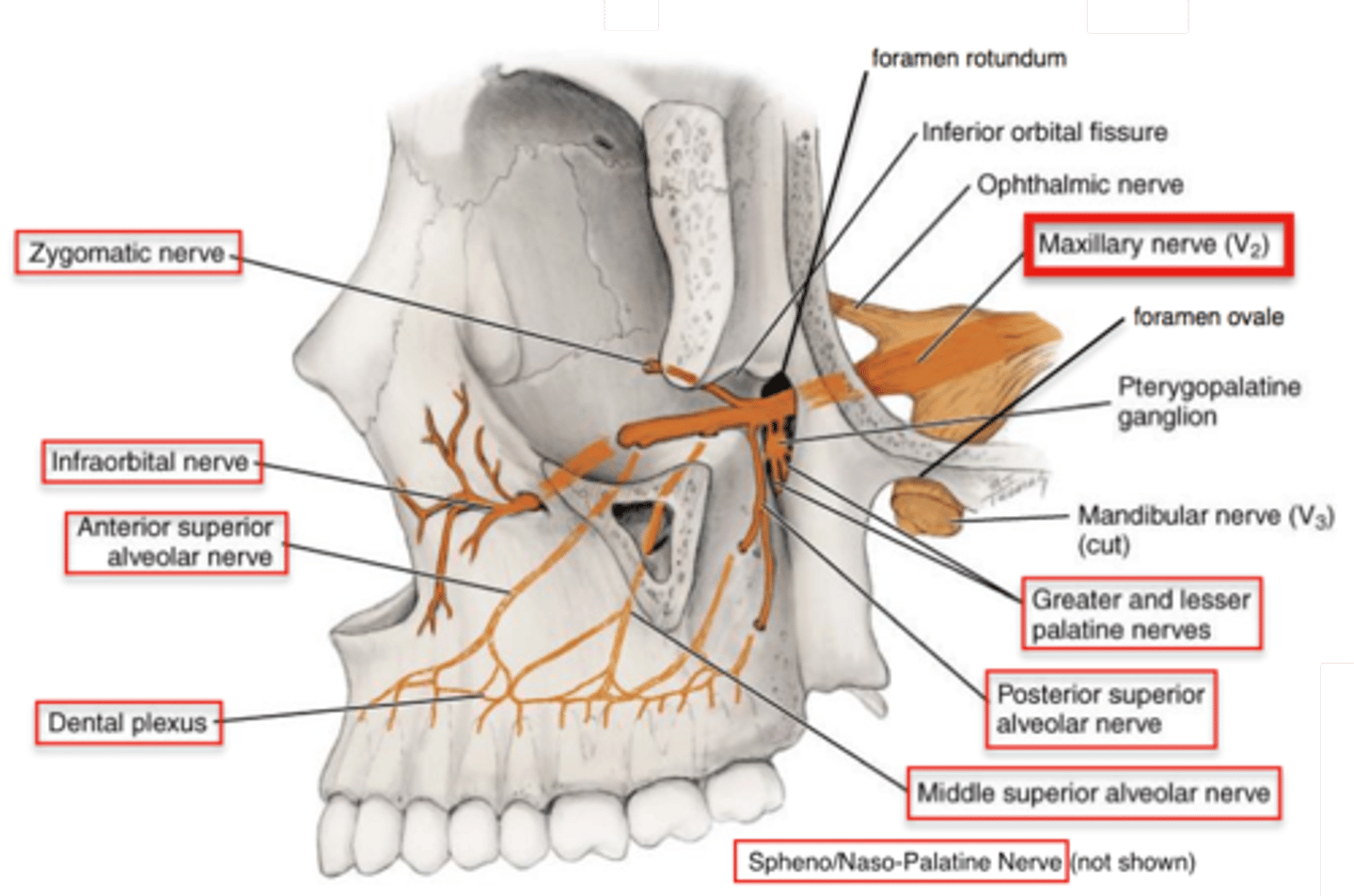
What is the course and type of the maxillary nerve (CN V2)?
Course: goes through lateral wall of the cavernous sinus > exits cranium via foramen rotundum > travel in the pterygopalatine fossa
Type: Sensory ONLY
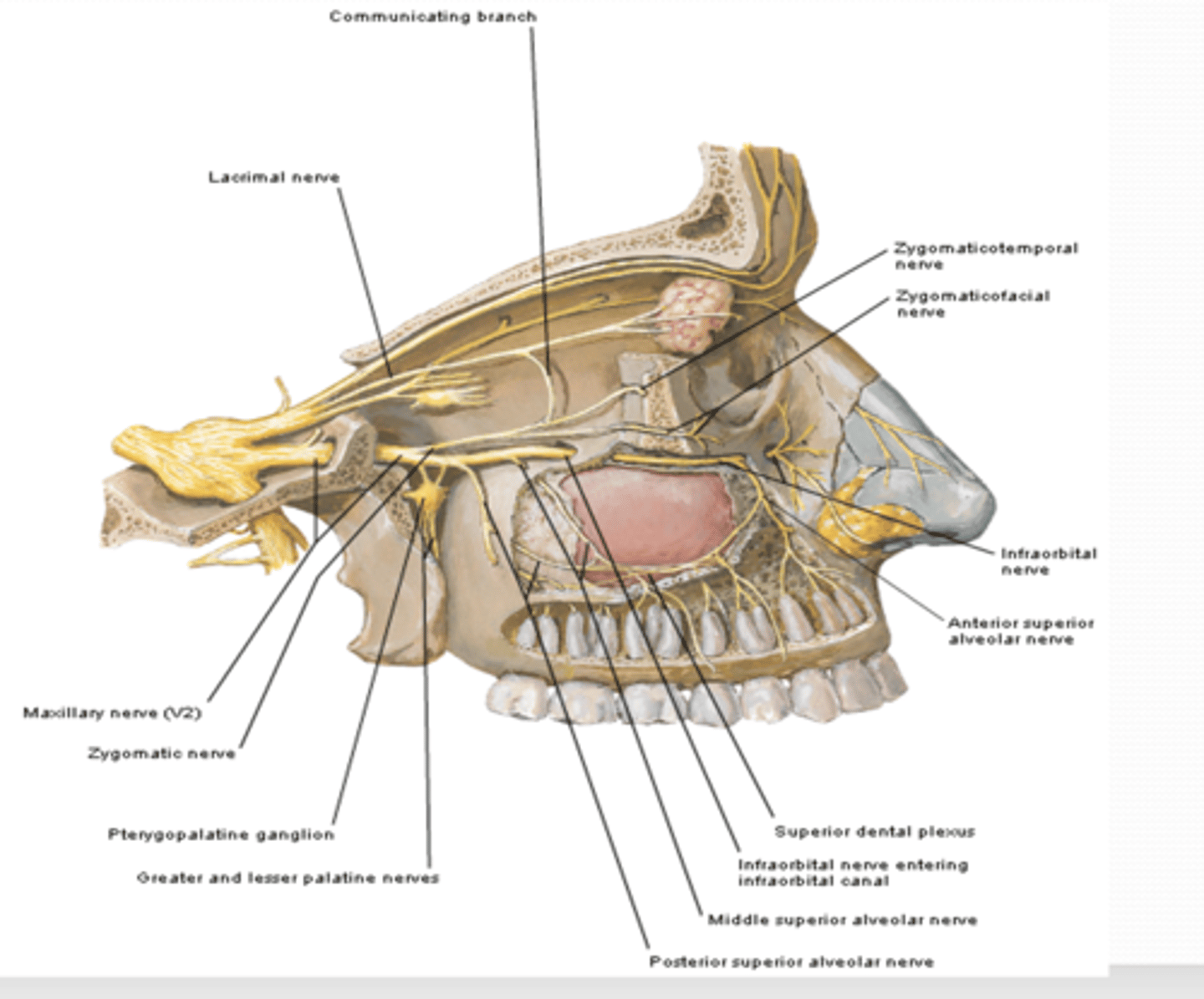
What are the major nerves and branches of the maxillary nerve (CN V2)?
1. Zygomatic nerve
Braches
- Zygomaticofacial nerve
- Zygomaticotemporal nerve
2. Infraorbital nerve (exits through infraorbital foramen)
braches
- Posterior superior alveolar nerve
- Anterior & Middle superior alveolar
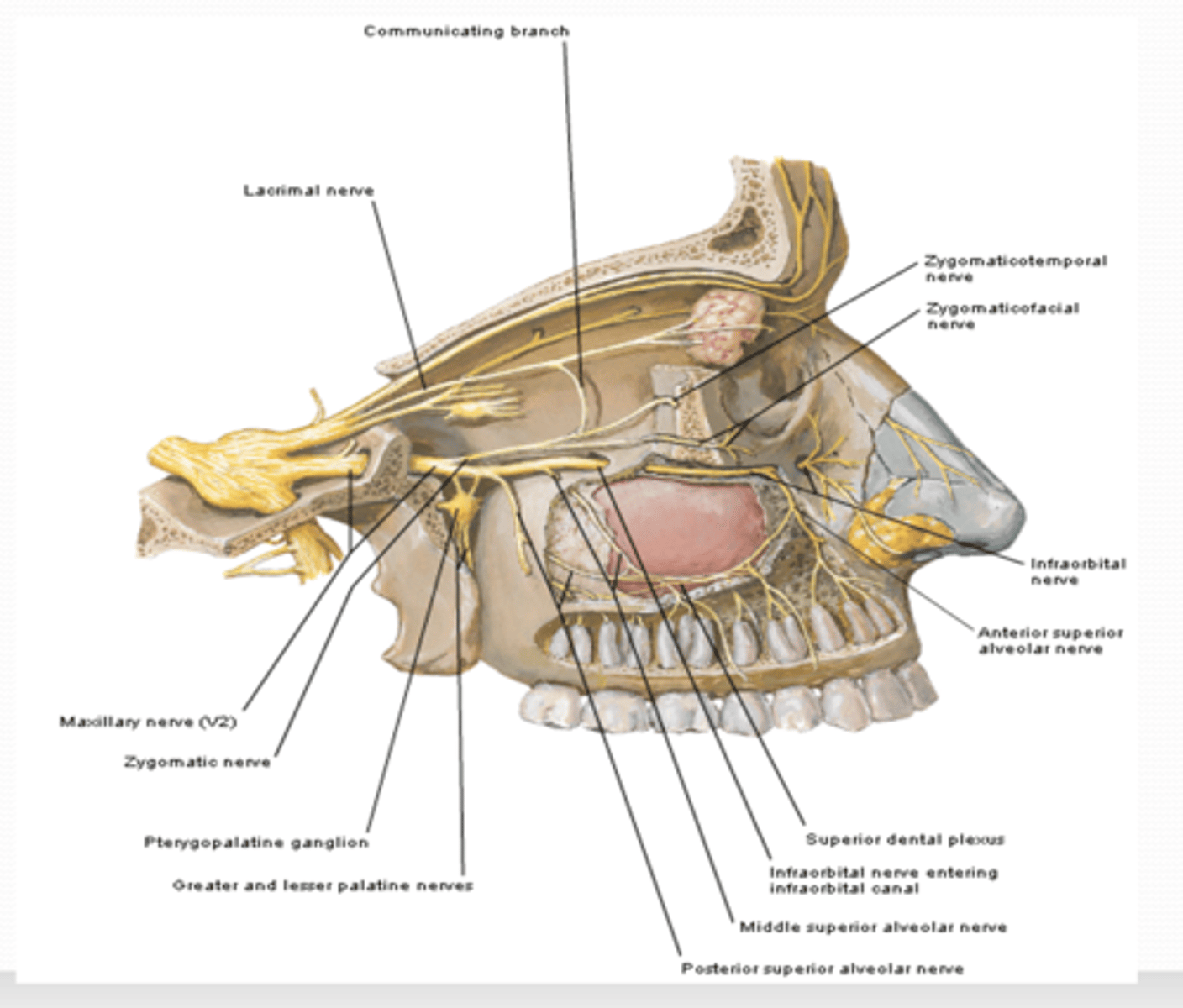
What does the zygomaticofacial nerve innervate?
skin of upper cheek
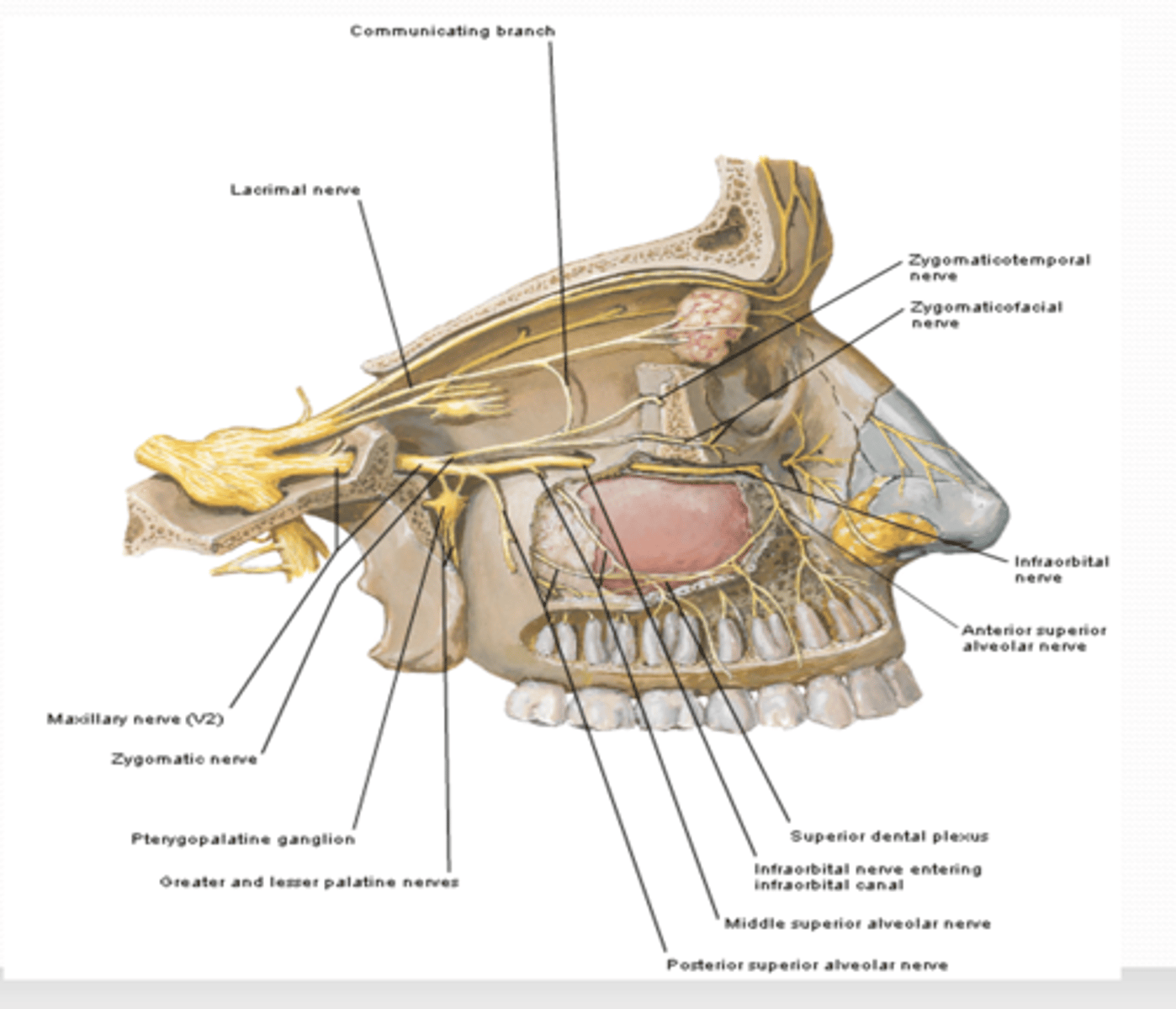
What does the Zygomaticotemporal nerve innervate?
skin over side of forehead
Carries communicating branch to lacrimal nerve
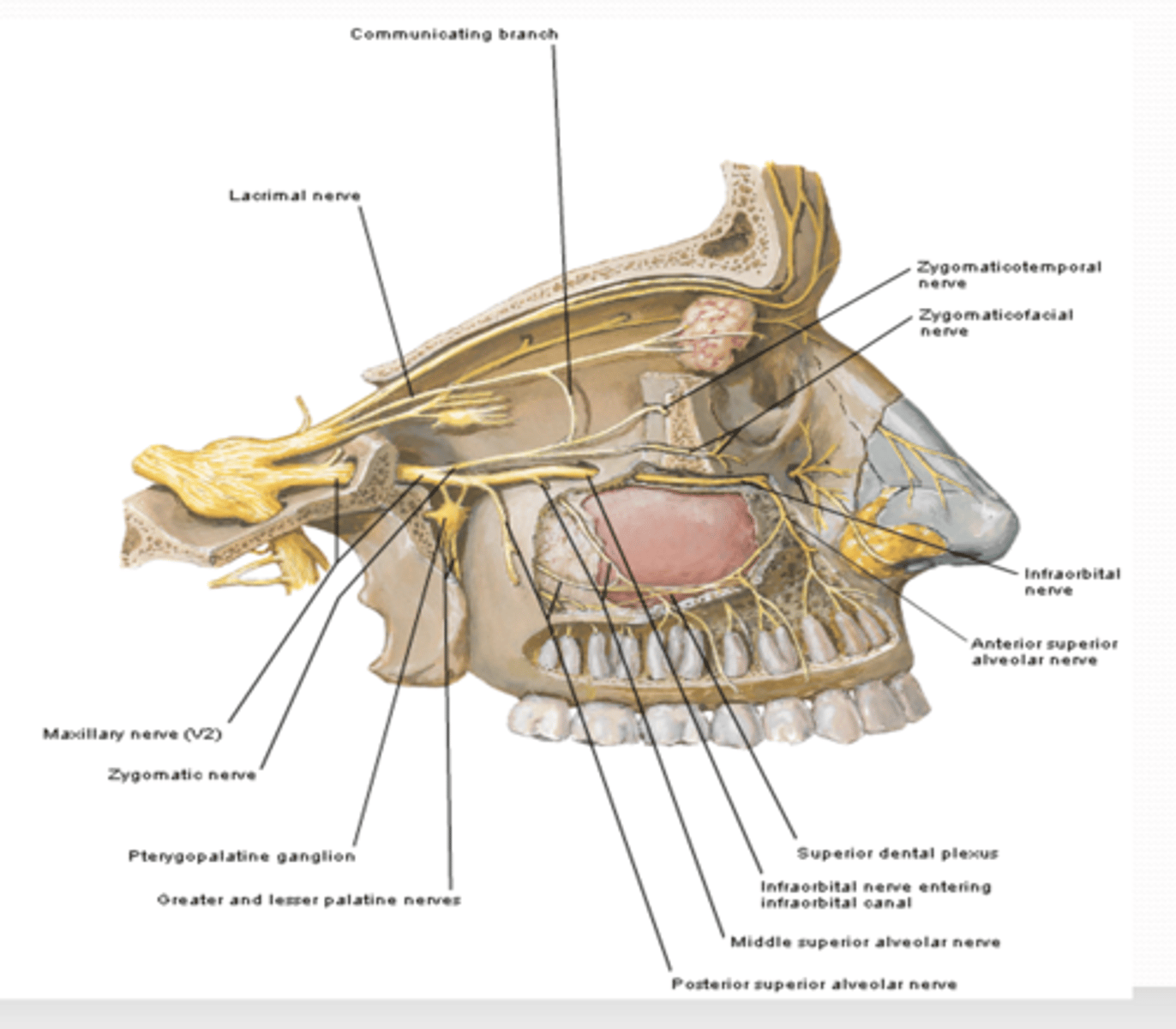
What does the infraorbital nerve innervate?
1. upper teeth
2. lower eyelid
3. upper lip
4. part of nasal vestibule
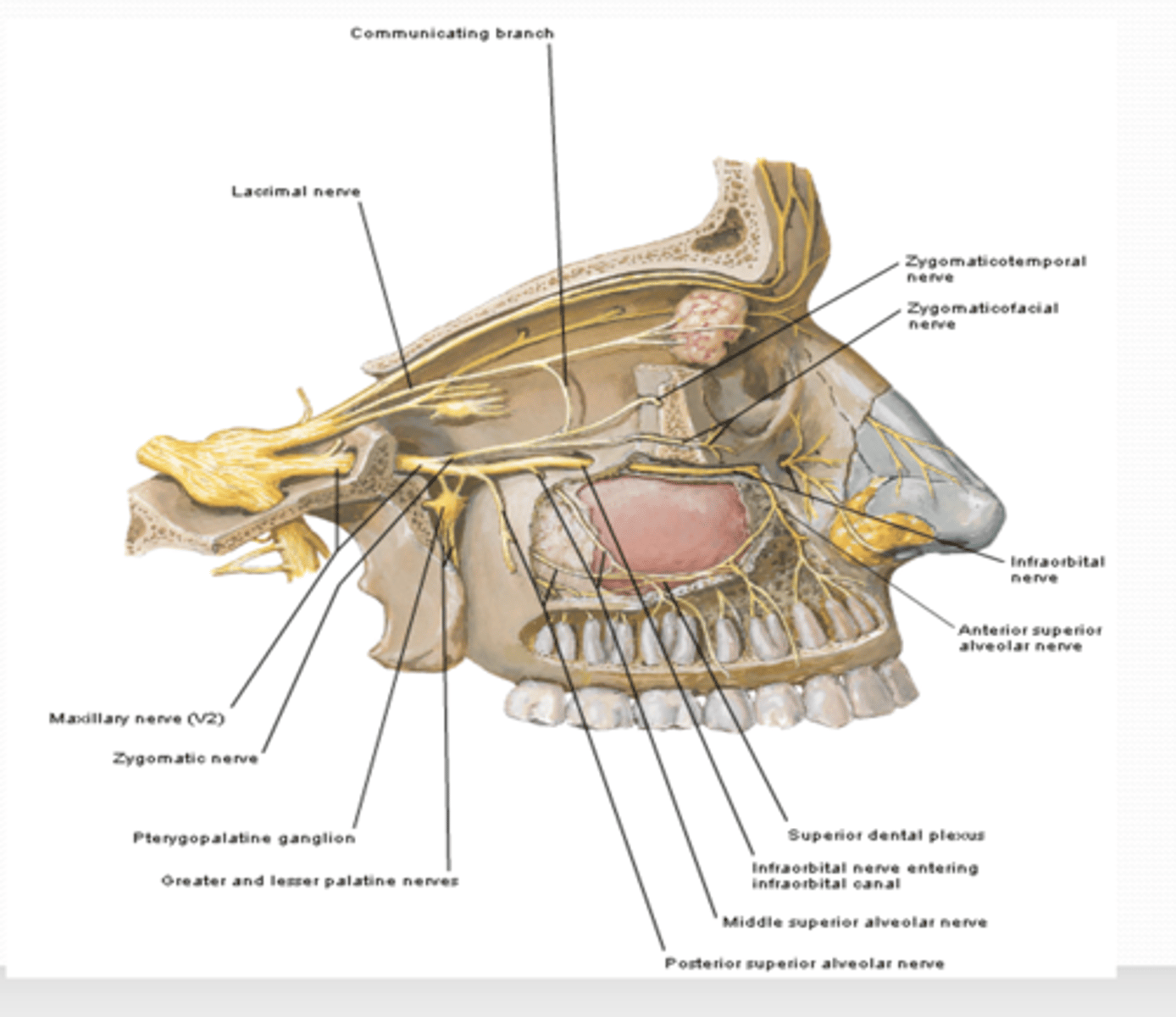
what does the anterior and middle superior alveolar intervate?
1. premolar
2. canine
3. incisive teeth
4. associated gum
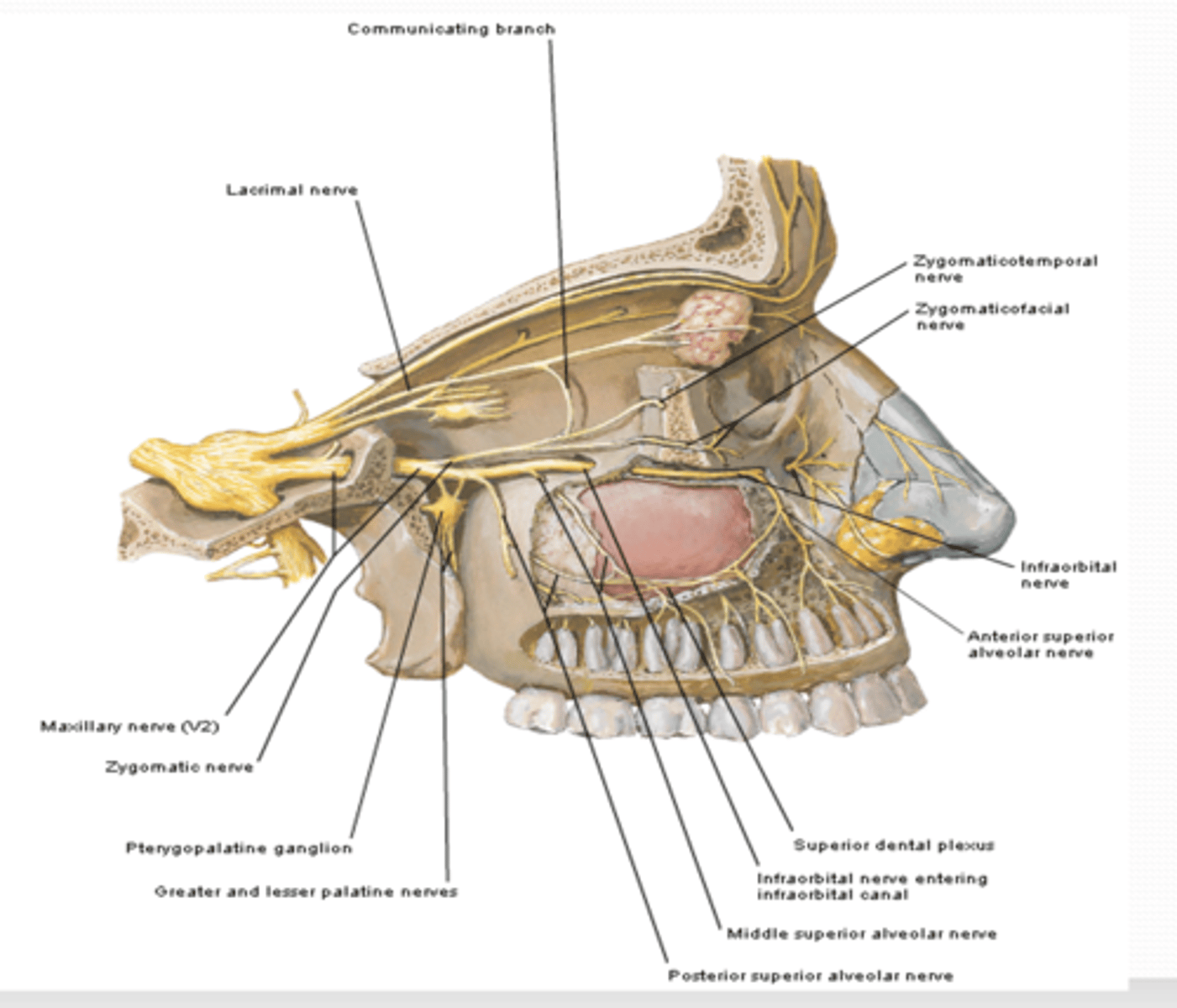
What are the nasal branches of the maxillary nerve (CN V2) what do they innervate?
1. Posterior superior and inferior lateral nasal nerves
2. Nasopalatine nerve
Innervate: walls and septum of nasal cavity
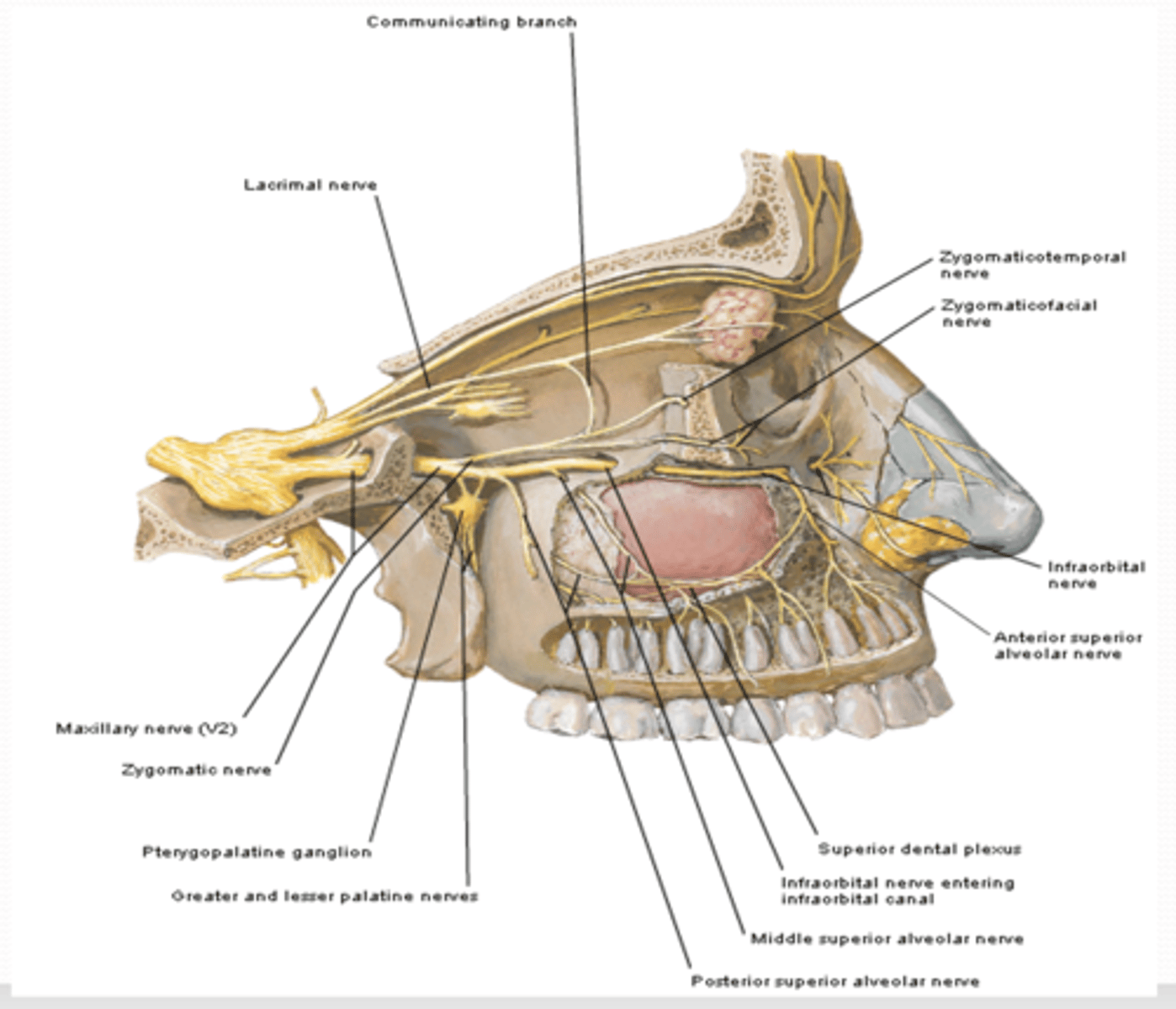
What are the pterygopalatine ganglion branches of the maxillary nerve (CNV2)?
1. Ganglion located inferior to the maxillary nerve in the pterygopalatine fossa
- Receives parasympathetic fibers via the greater petrosal nerve from the Facial nerve (CN VII)
2. Greater & Lesser palatine nerve: enter nasal cavity and supply palate mucosa and glands and nasal cavity
Inntervates: lacrimal gland
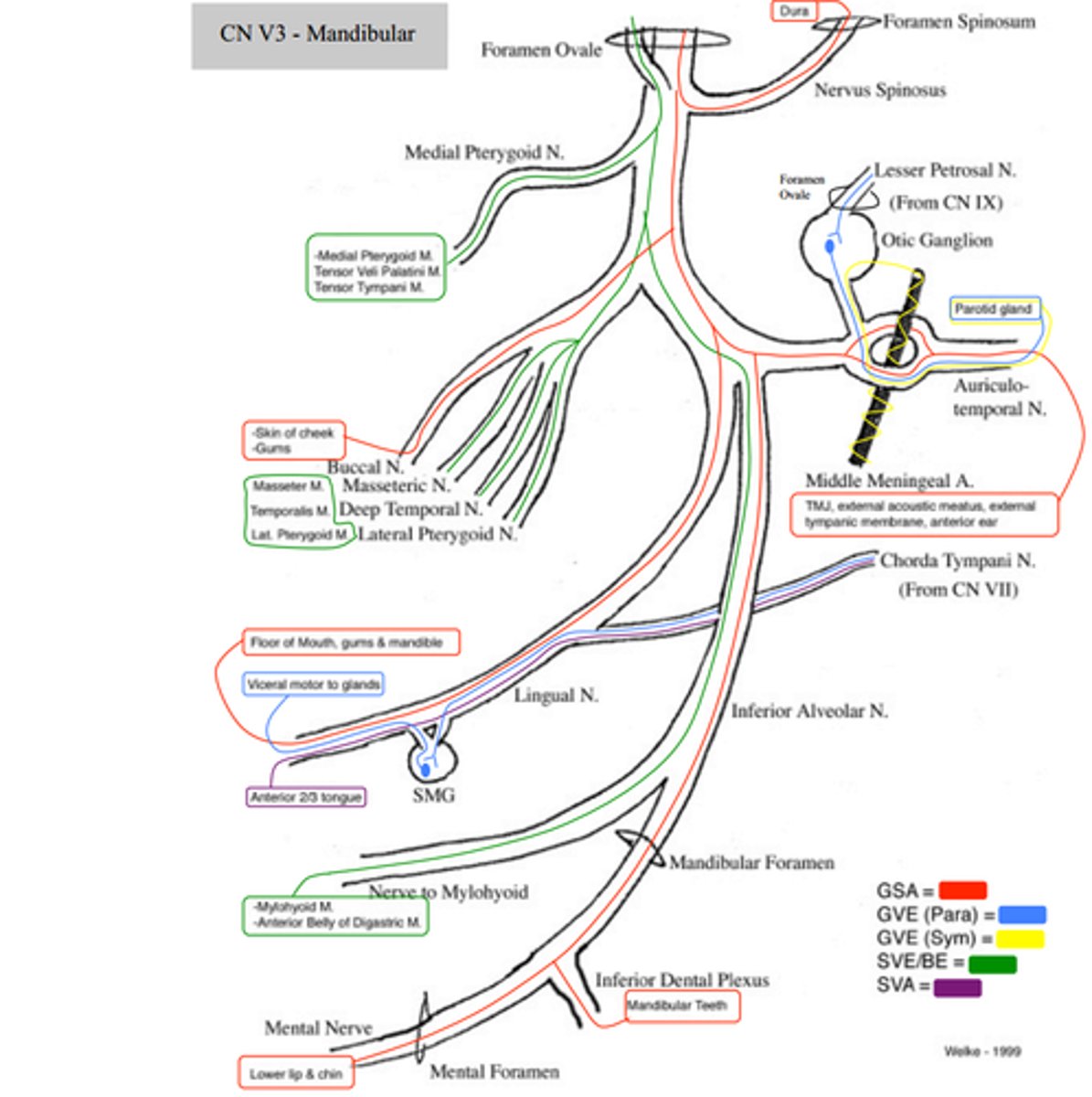
What is the course and type of the mandibular (CN V3) nerve?
exits cranium via foramen ovale
Type: Sensory and Motor
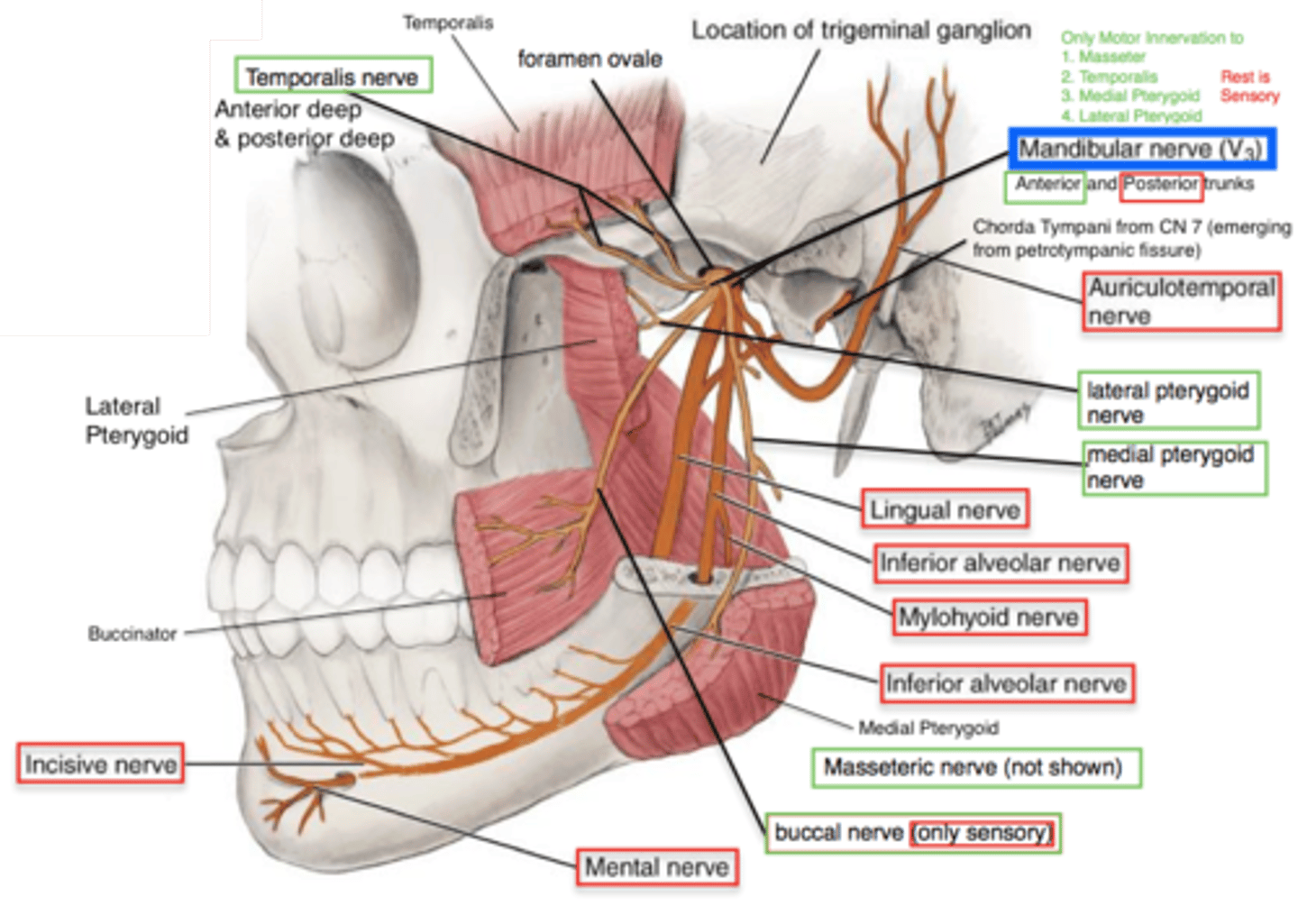
What are the motor branches of the mandibular nerve (CN V3) innervate?
1. Muscles of mastication (temporalis, masseter, & lateral and medial pterygoid)
2. Tensor veli palatini: in palate, tenses soft palate
3. Tensor tympani: in tympanic cavity, dampens sounds
4. Mylohyoid and anterior belly of digastric via mylohyoid nerve
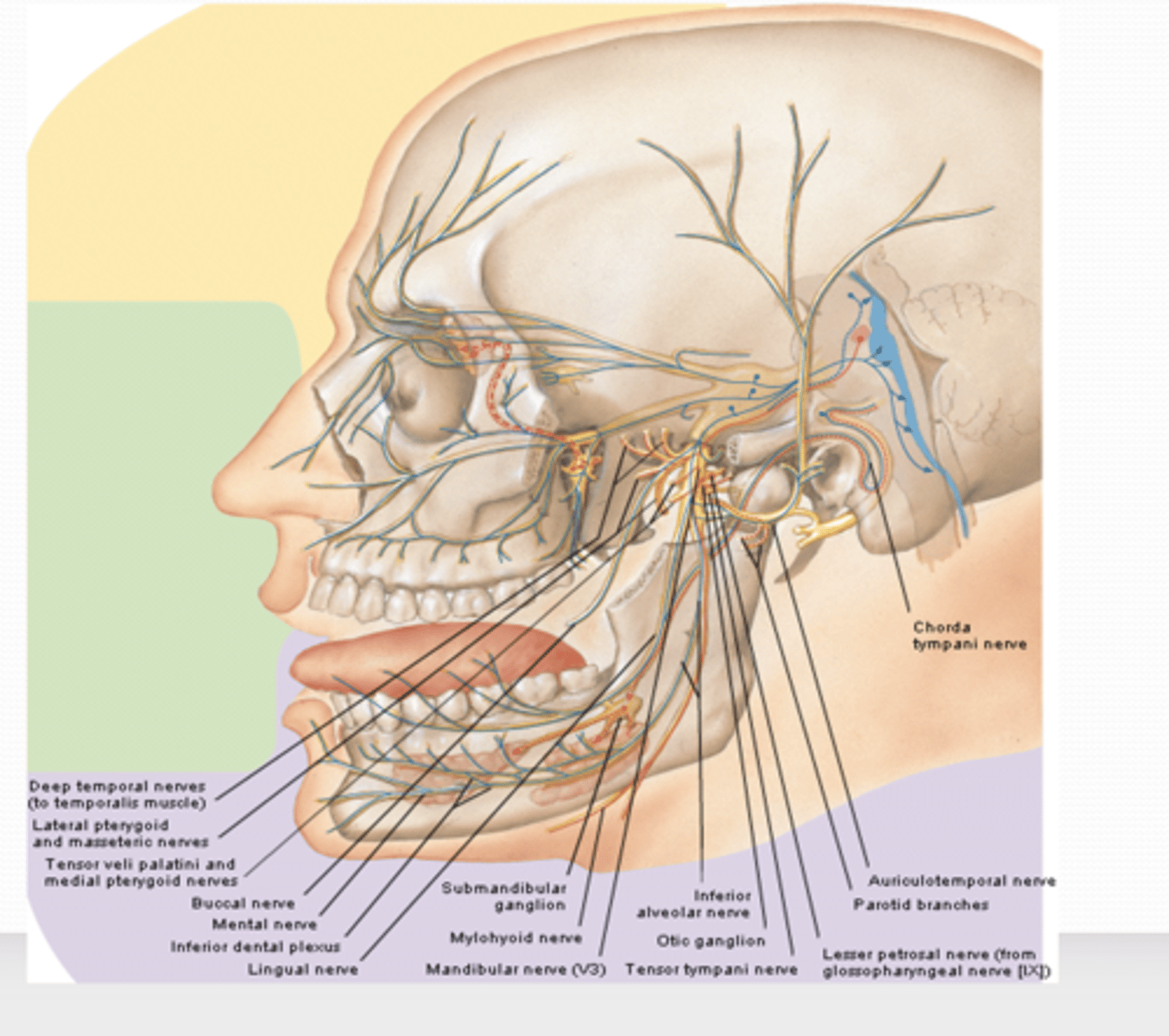
What are the sensory branches of the mandibular nerve (CN V3)?
1. Auriculotemporal nerve
2. Buccal nerve
3. Lingual nerve
4. Inferior alveolar nerve
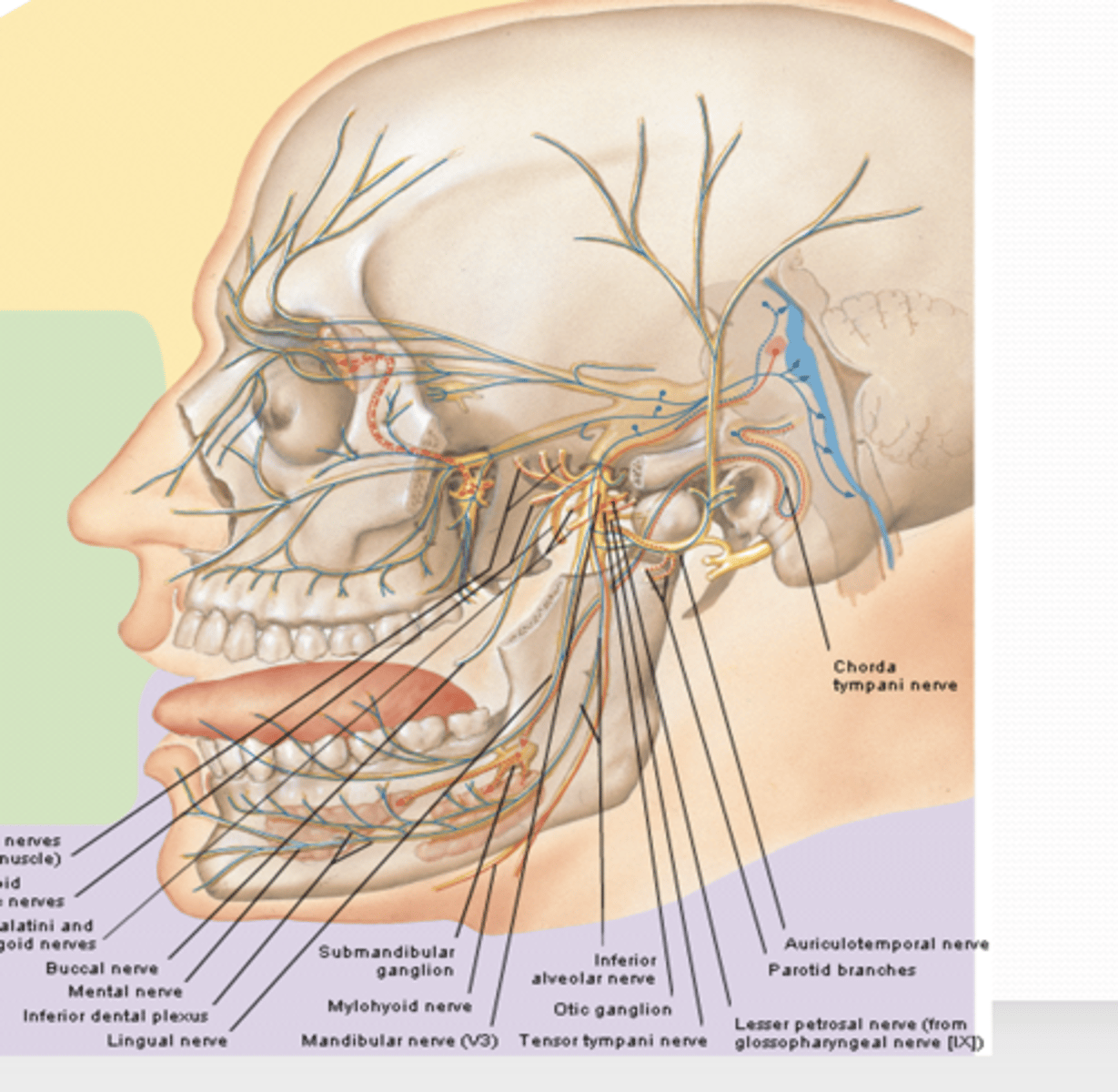
What does the sensory branch (Auriculotemporal nerve) of the mandibular (CN V3) innervate?
1. auricle
2. TMJ
3. anterior temporal region
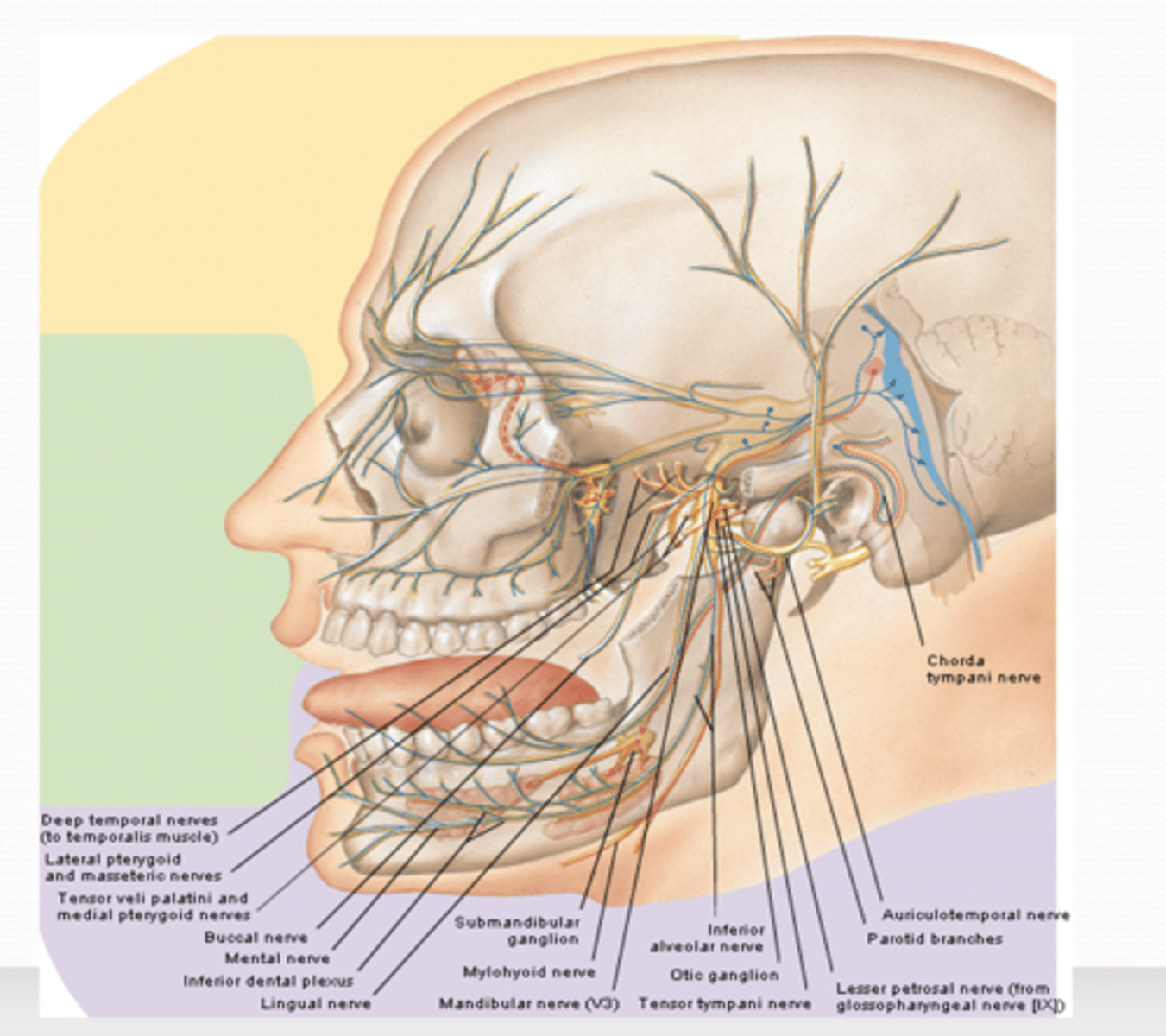
what is the sensory branch of the Auriculotemporal nerve?
Parotid branches: parasympathetic fibers from the glossopharyngeal nerve (CN IX) via the lesser petrosal nerve > otic ganglion > auriculotemporal nerve
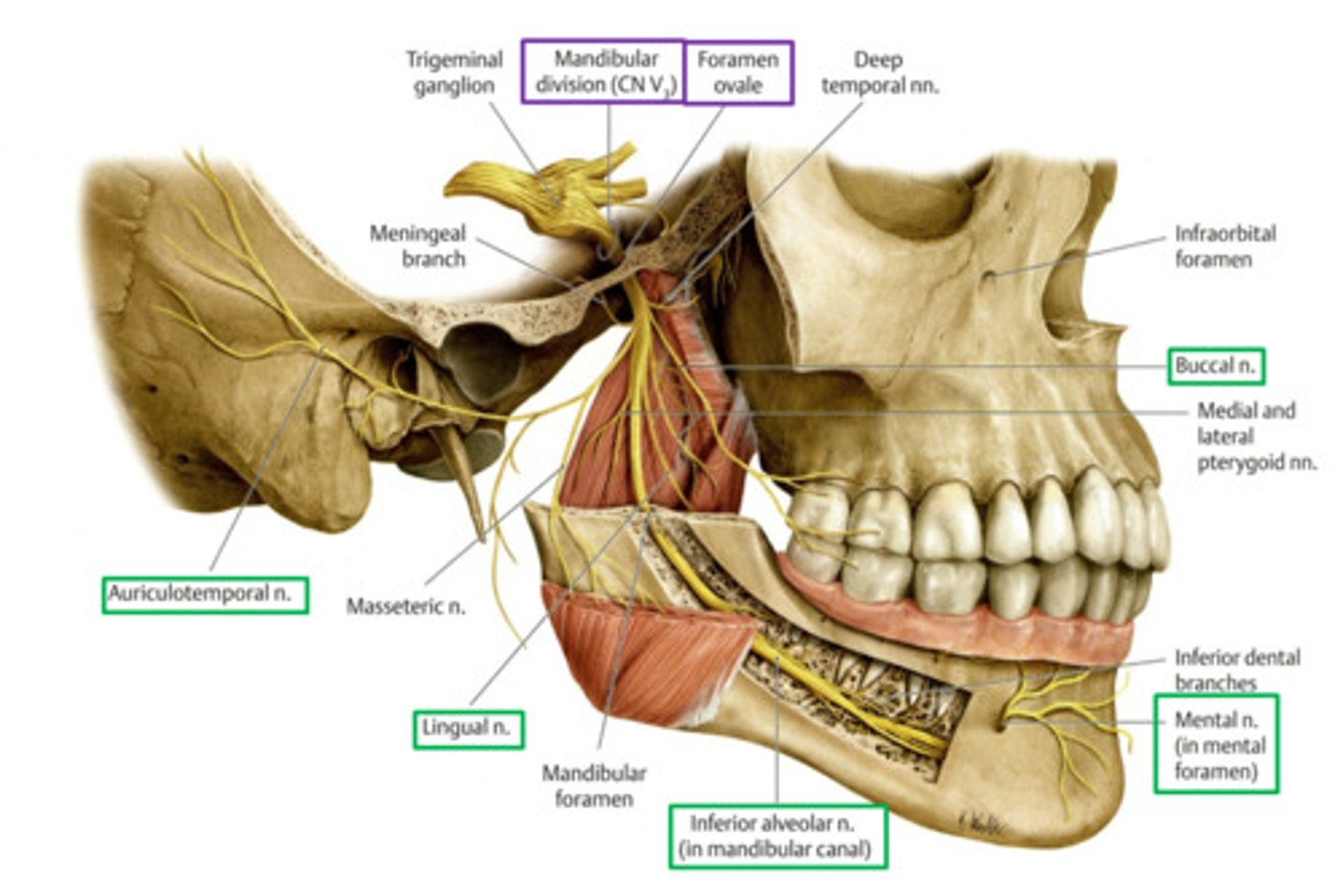
What does the sensory branch of the buccal nerve innervate?
skin over buccinator muscle (cheeks) and internal mucosa membrane of the same area
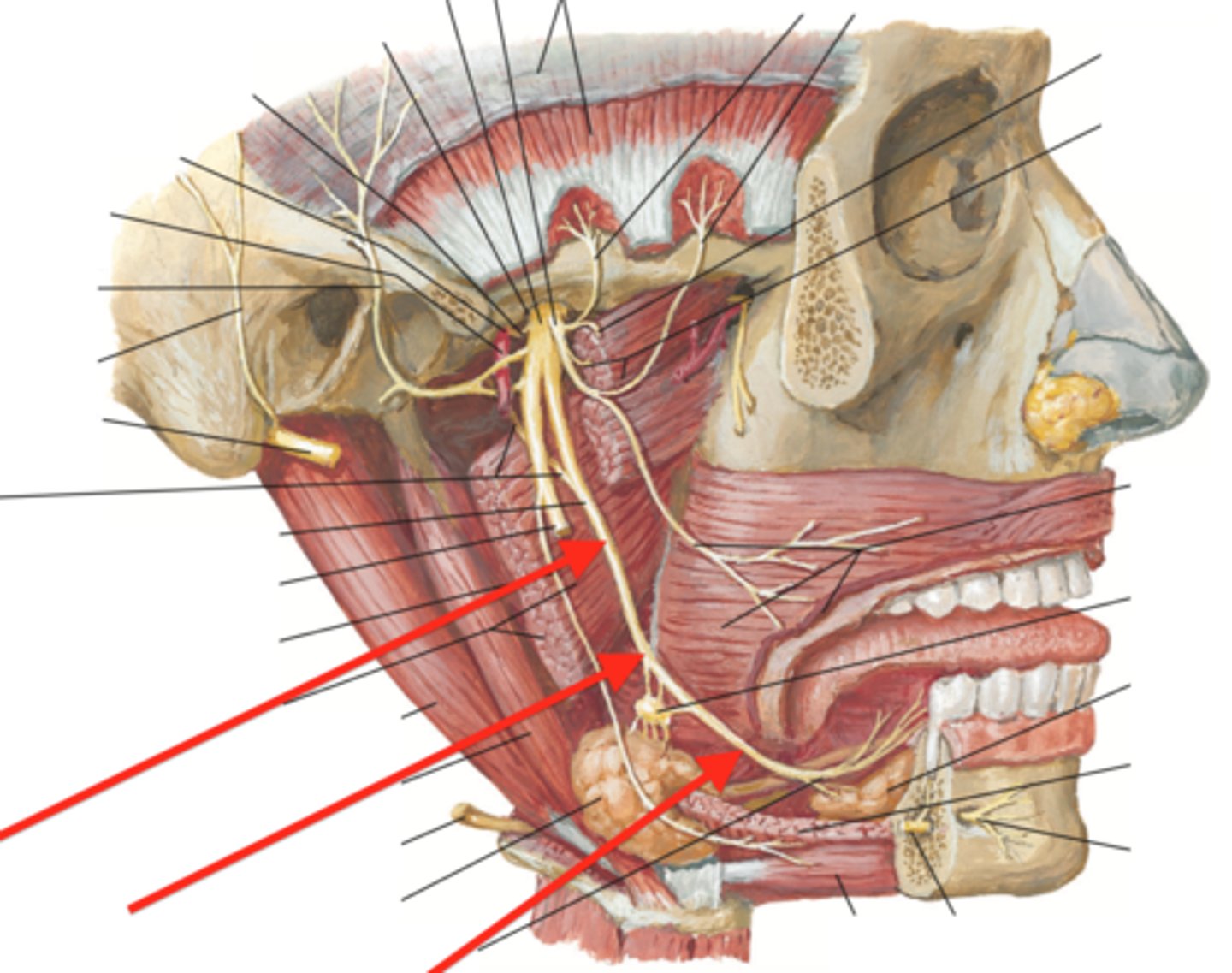
what does the sensory branches of the lingual nerve innervate?
sensation to anterior 2/3rd of tongue
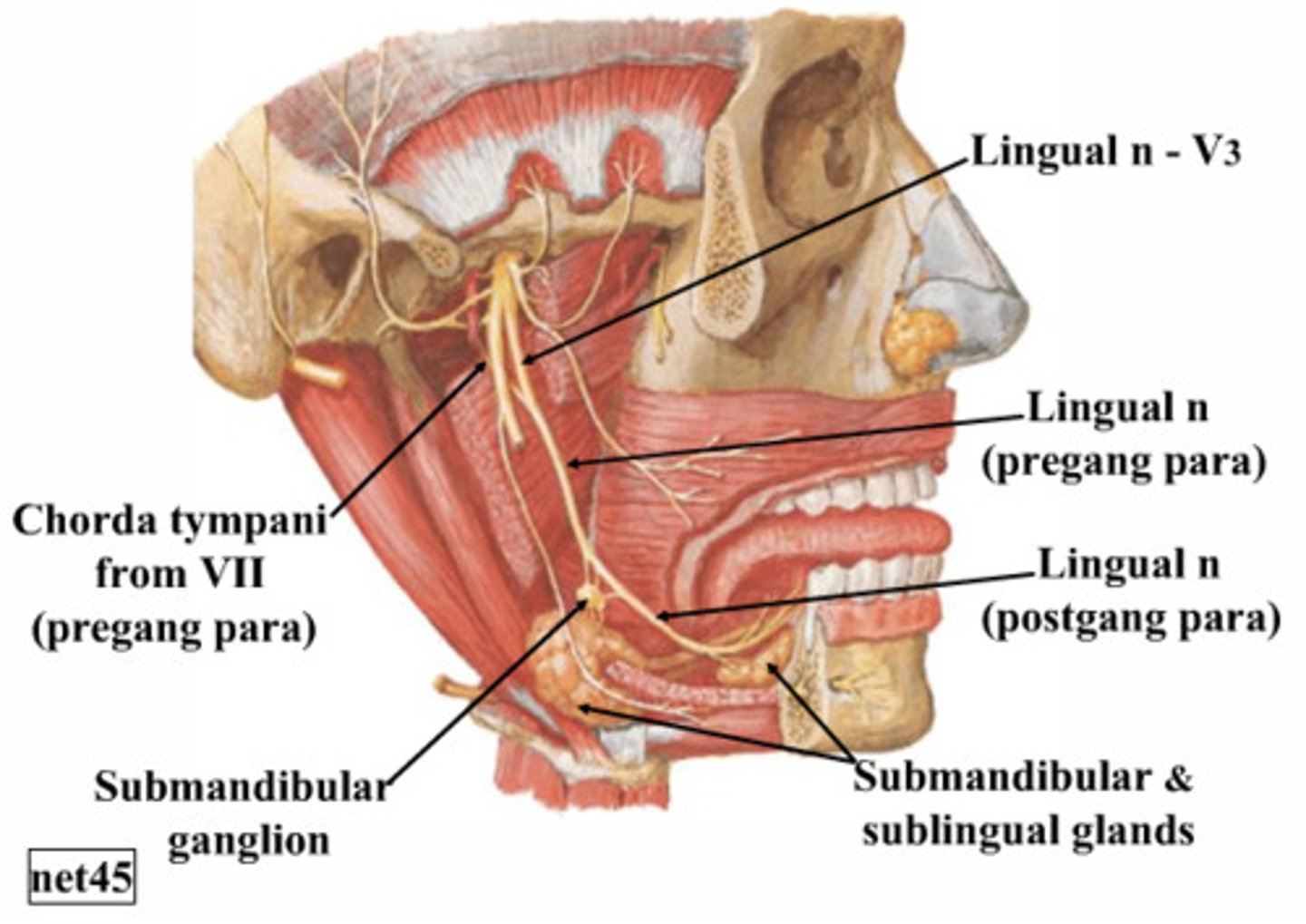
what are the lingual nerve submandibular ganglion branches?
visceral fibers from the facial nerve (CN VII) via chorda tympani nerve join the lingual nerve posteriorly to reach the submandibular ganglion
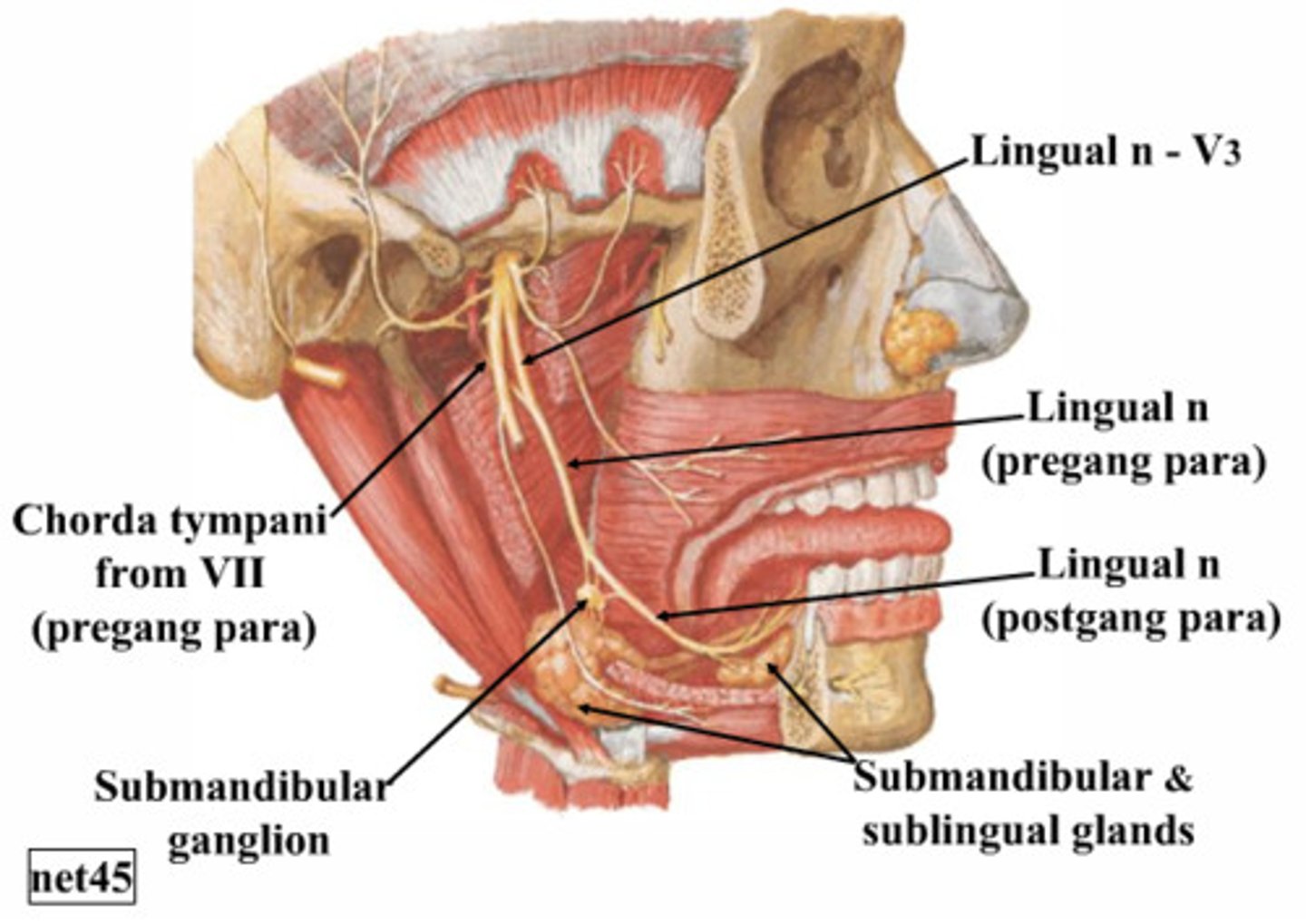
What does the submandibular ganglion branch of the lingual nerve innervate?
submandibular and sublingual glands and carry taste fibers from anterior 2/3rd of tongue
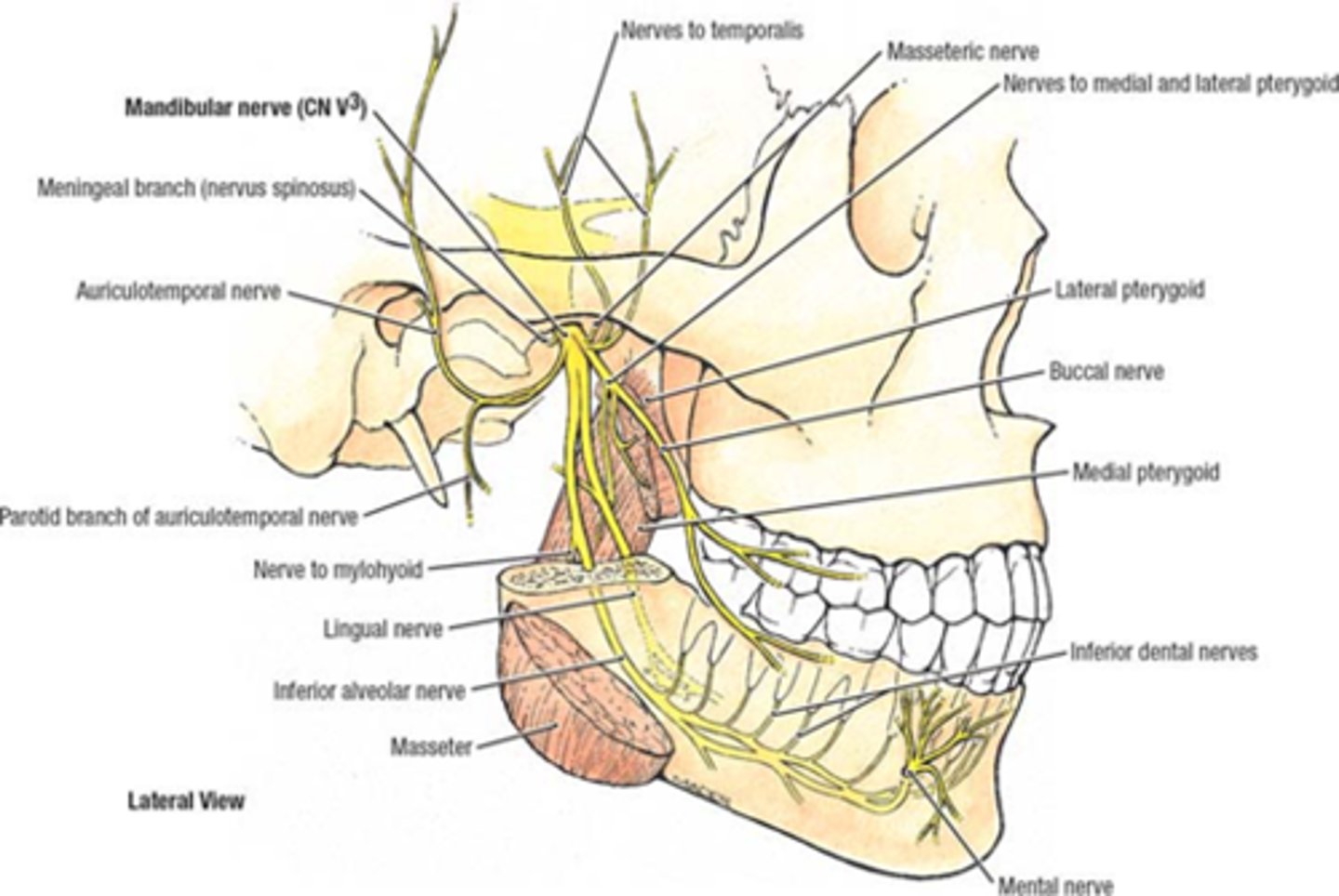
What does the sensory branches of the Inferior alveolar nerve of the mandibular nerve (CN V3) enter and run?
enters mandibular foramen > runs anteriorly in the body of mandible > emerges through the mental foramen as the mental nerve
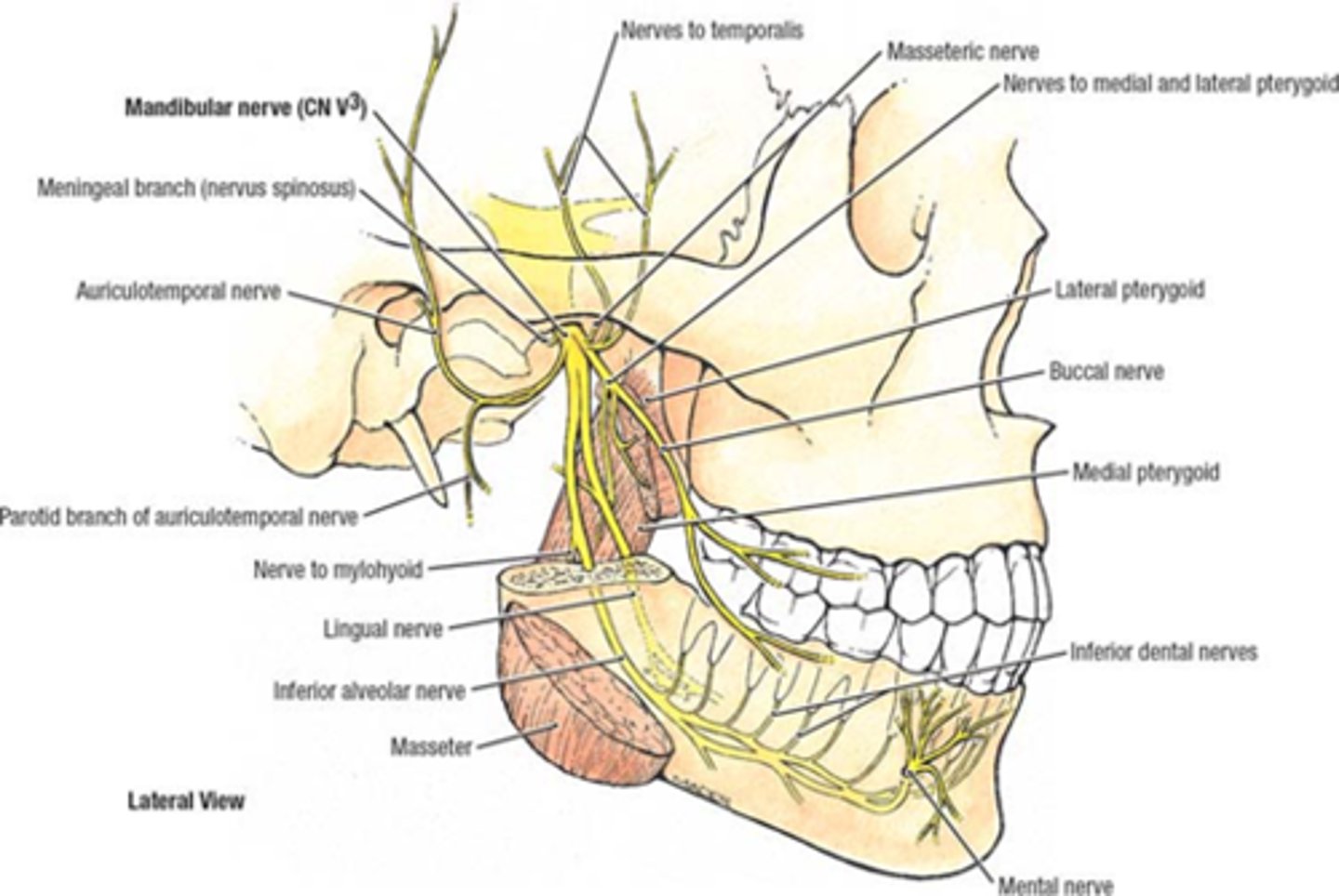
What does the inferior alveolar nerve innervate?
mandibular teeth (IAN)
skin of chin, and skin and mucosa of lower lip (MN)
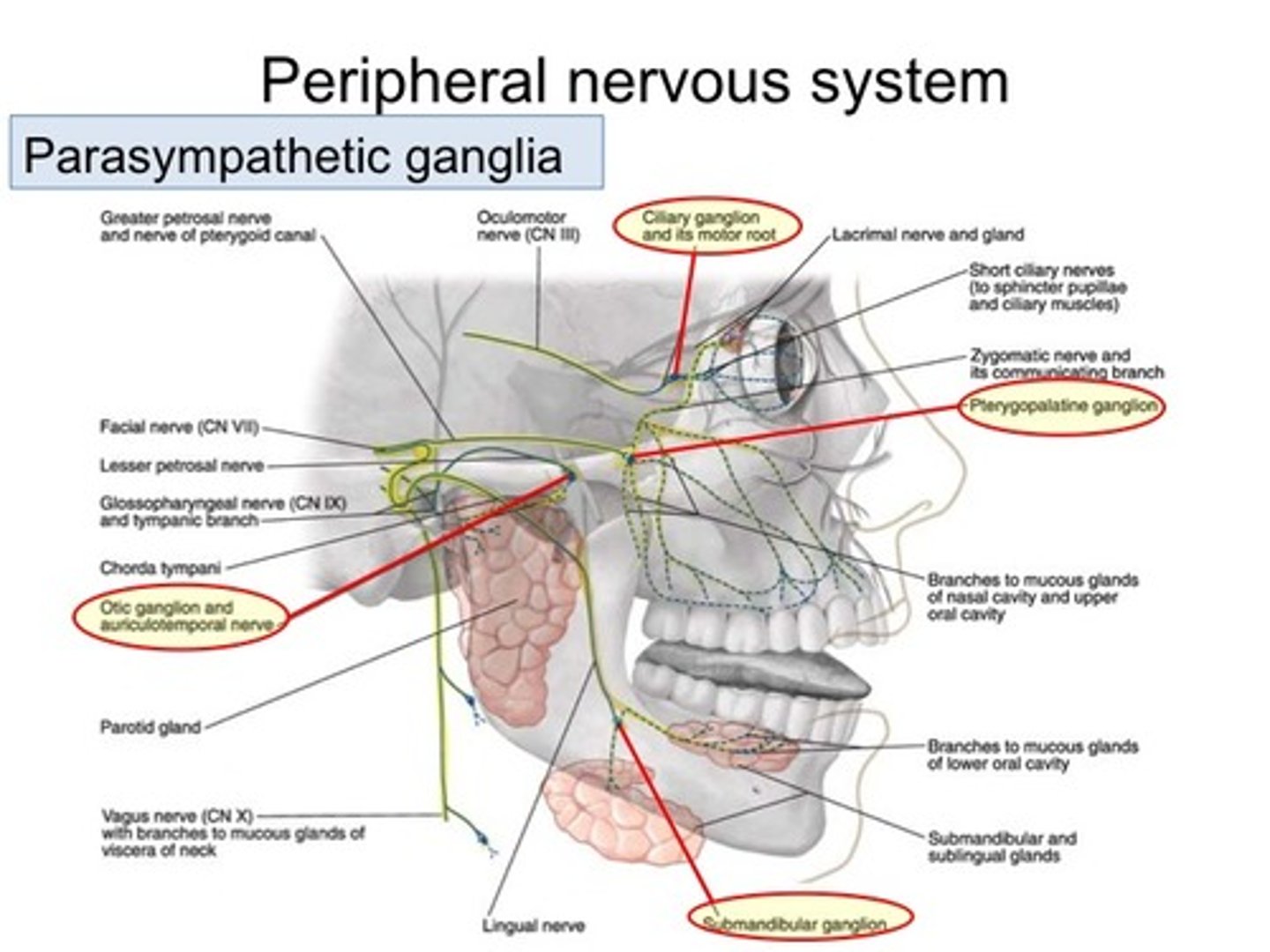
There are 3 parasympathetic ganglia associated with the trigeminal nerve because
this cranial nerve goes everywhere in the head and the parasympathetic innervation utilizes its projections to reach its targets.
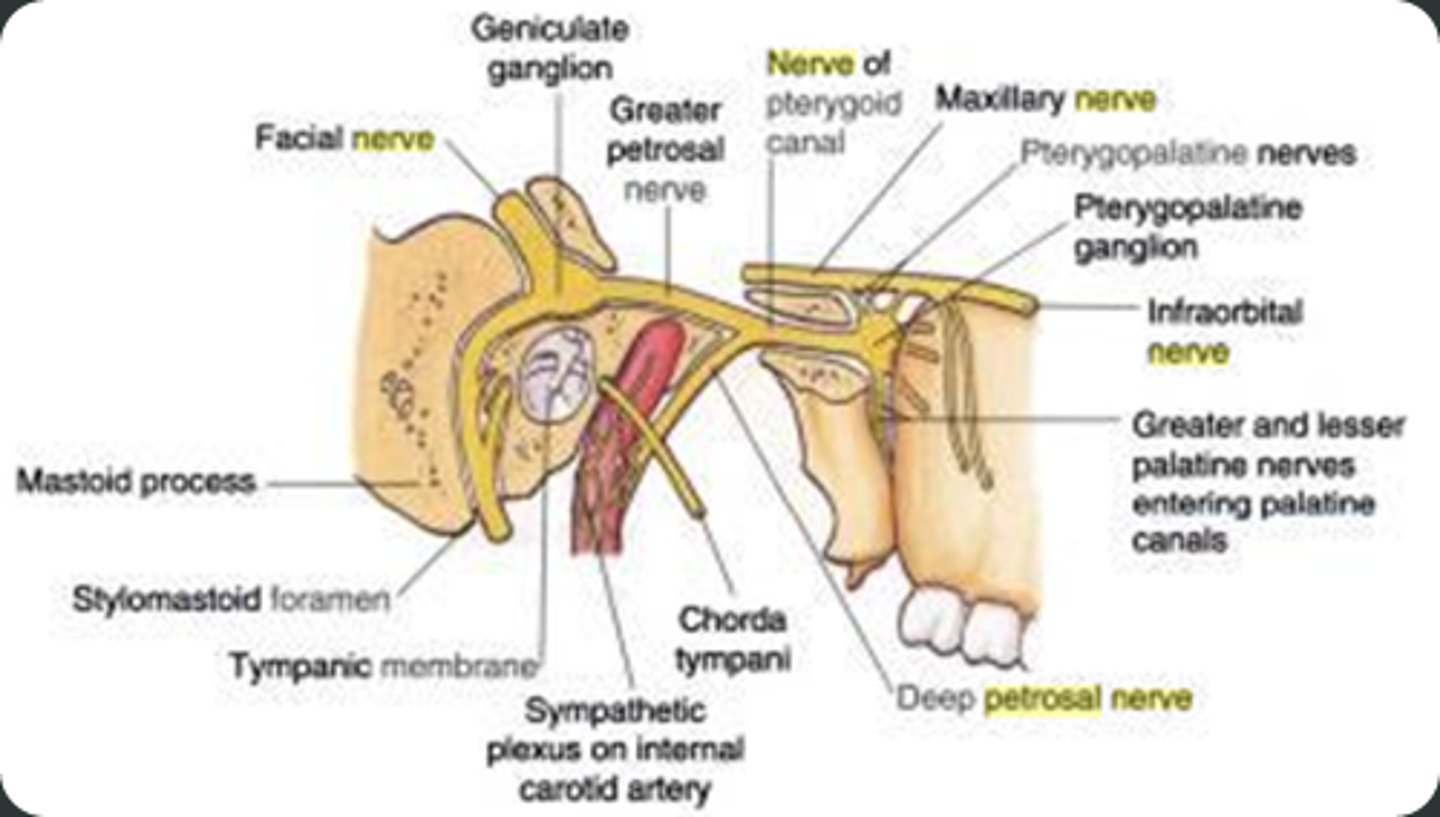
The Pterygopalatine ganglion goes from CN VII > _____
CN V2
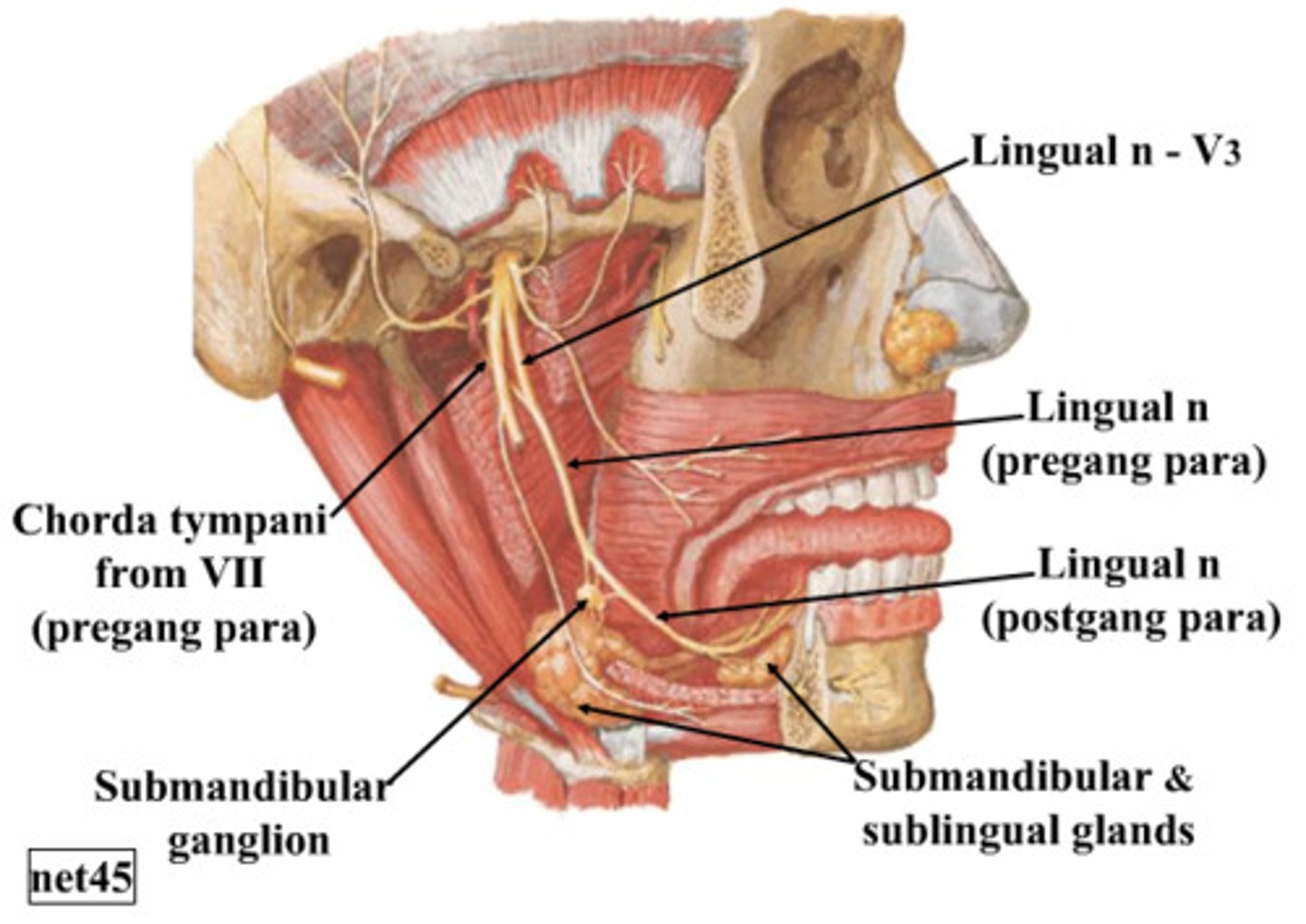
The submandibular ganglion goes from CN VII > __________
lingual nerve of CN V3
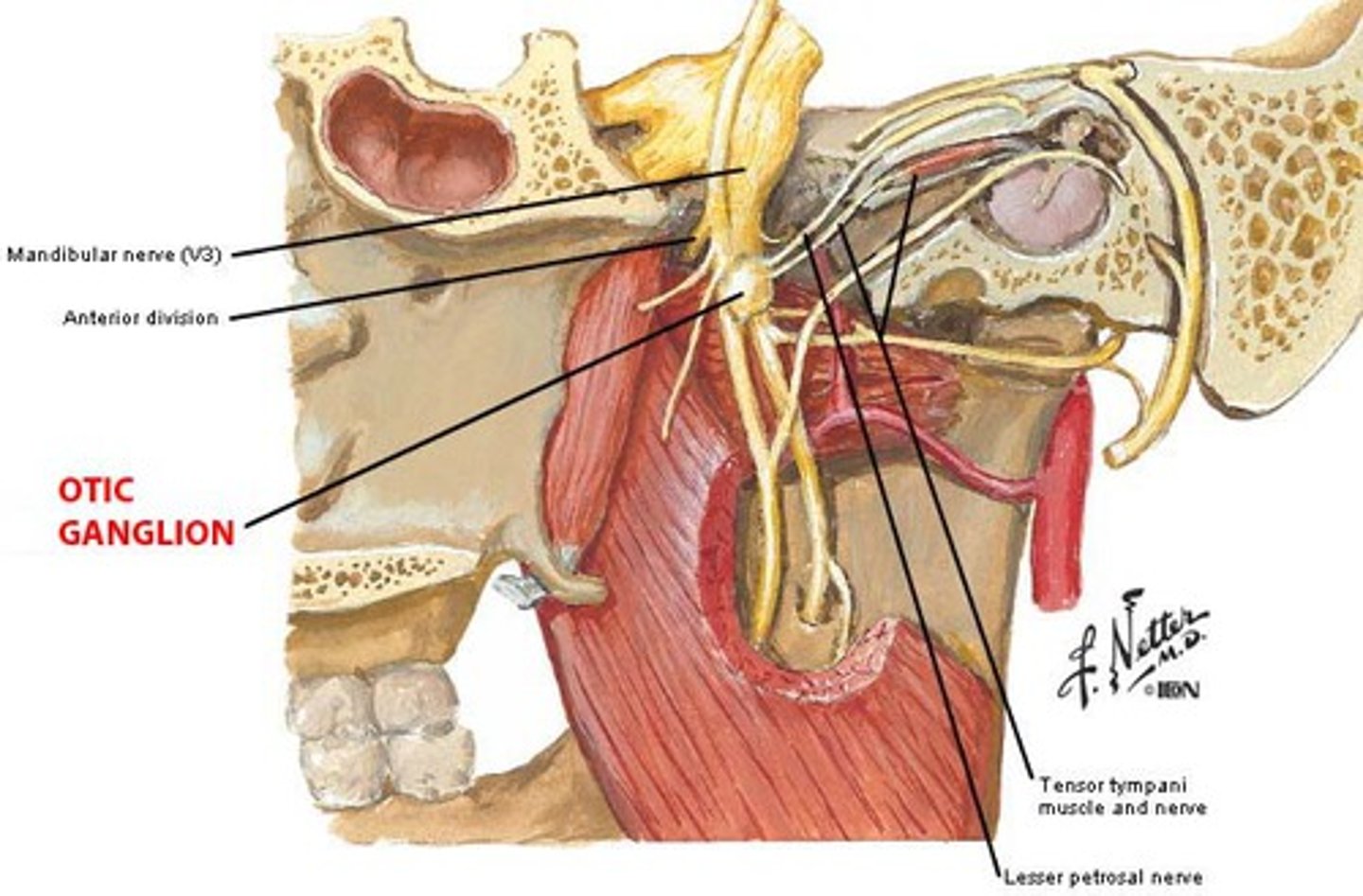
The otic ganglion goes from CN IX > _________
auriculotemporal nerve of CN V3
What is the course and type of CN VII?
Course: enters cranium through internal acoustic meatus > runs in facial canal (geniculate nucleus) > exits cranium through stylomastoid foramen
What is the clinical relevance associated with CN VII?
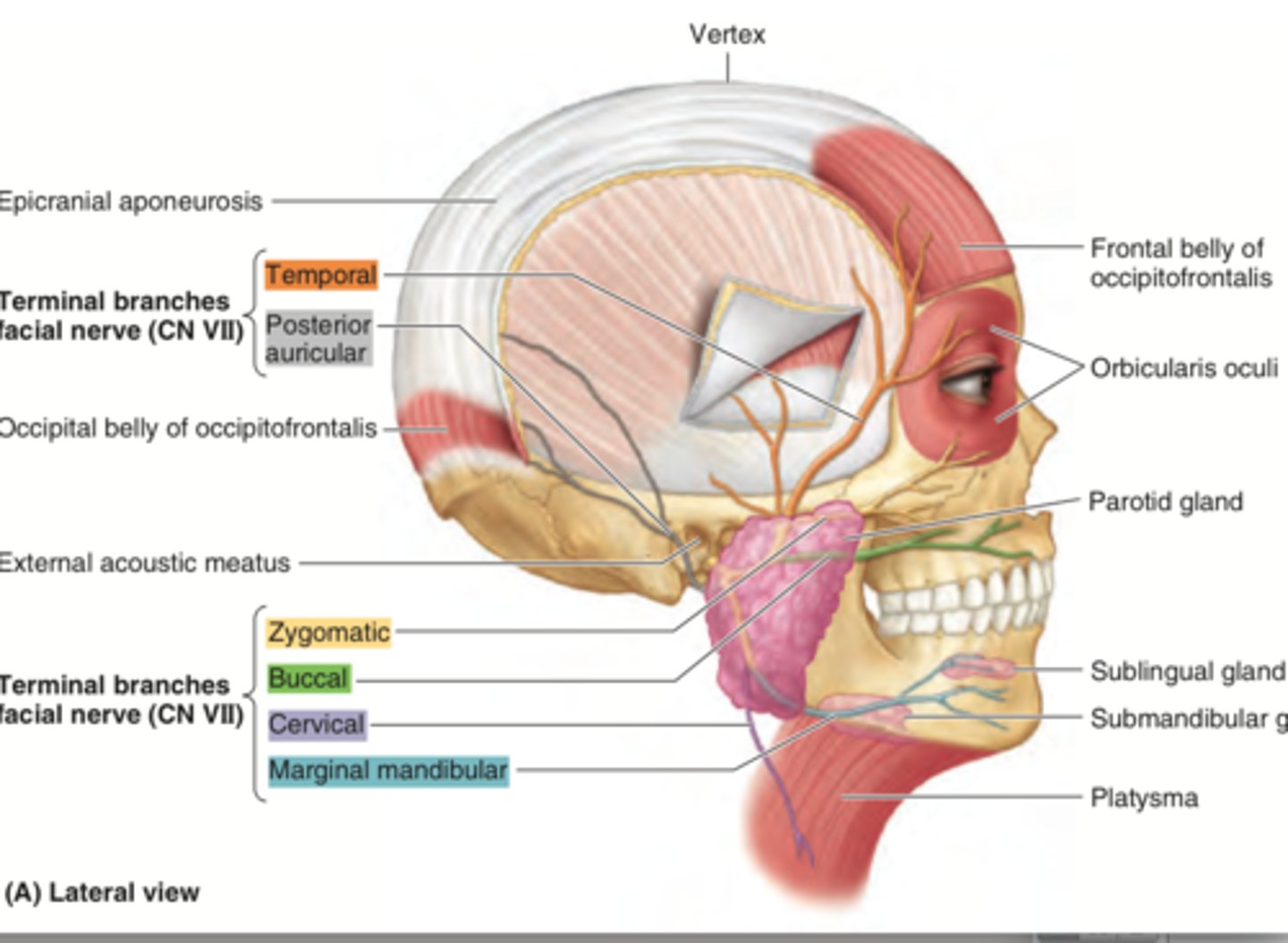
Lesions in CN VII (facial) lead to facial paralysis
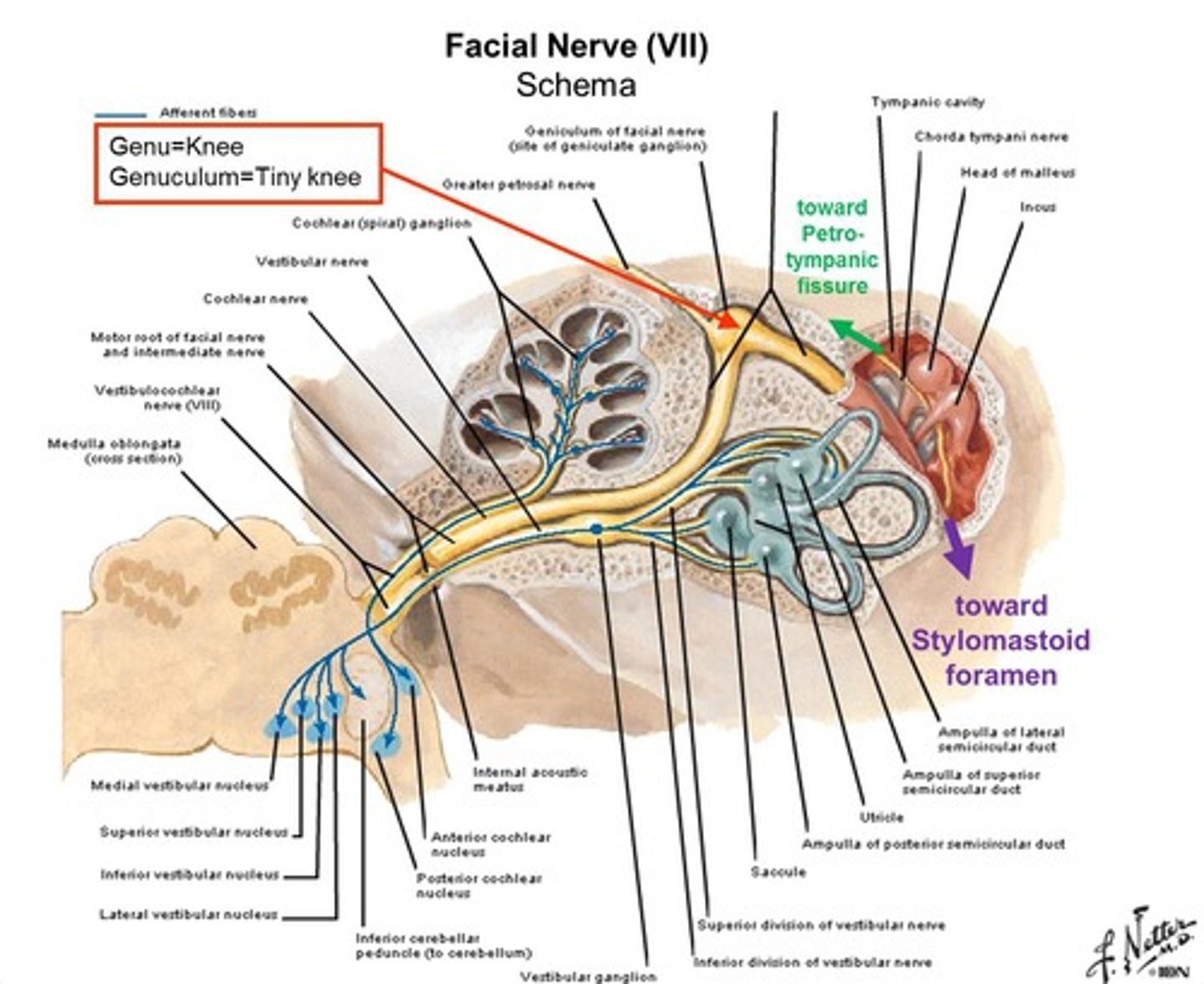
What are the branches of CN VII of the geniculate ganglion?
1. Greater petrosal nerve
2. Chorda tympani
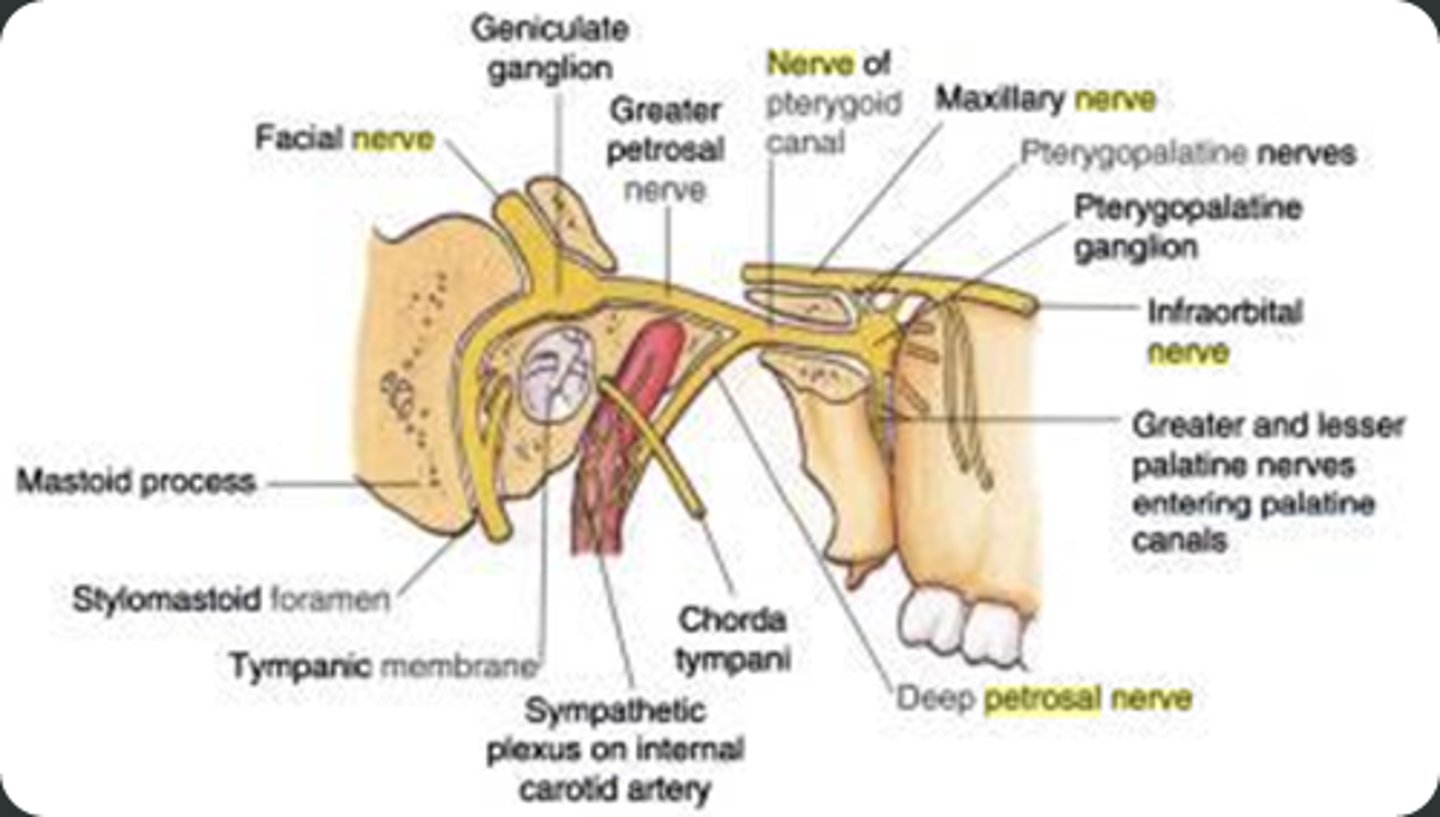
what is the course of the Greater petrosal nerve of the geniculate ganglion (CN VII)?
from geniculate ganglion > to pterygopalatine ganglion (CN V2 in the pterygopalatine fossa) > via the zygomatic nerve to lacrimal nerve (CN V1) to lacrimal gland
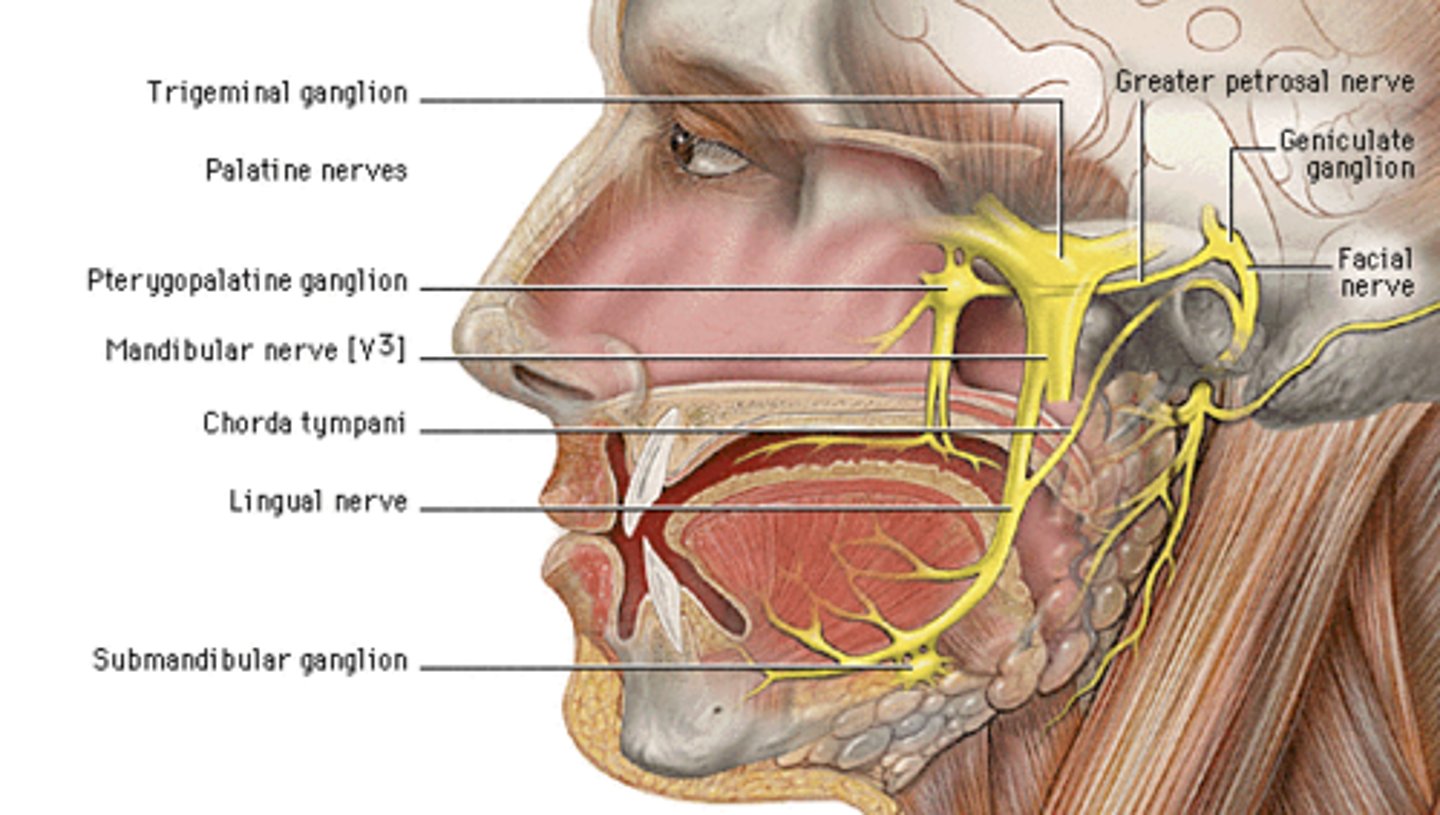
What is the course of the chorda tympani of the geniculate ganglion (CN VII)?
petrotympanic fissure to submandibular ganglion via the lingual nerve (CN V3) > to sublingual and submandibular glands.
It also carries taste (special sensory) fibers from anterior 2/3rd of tongue
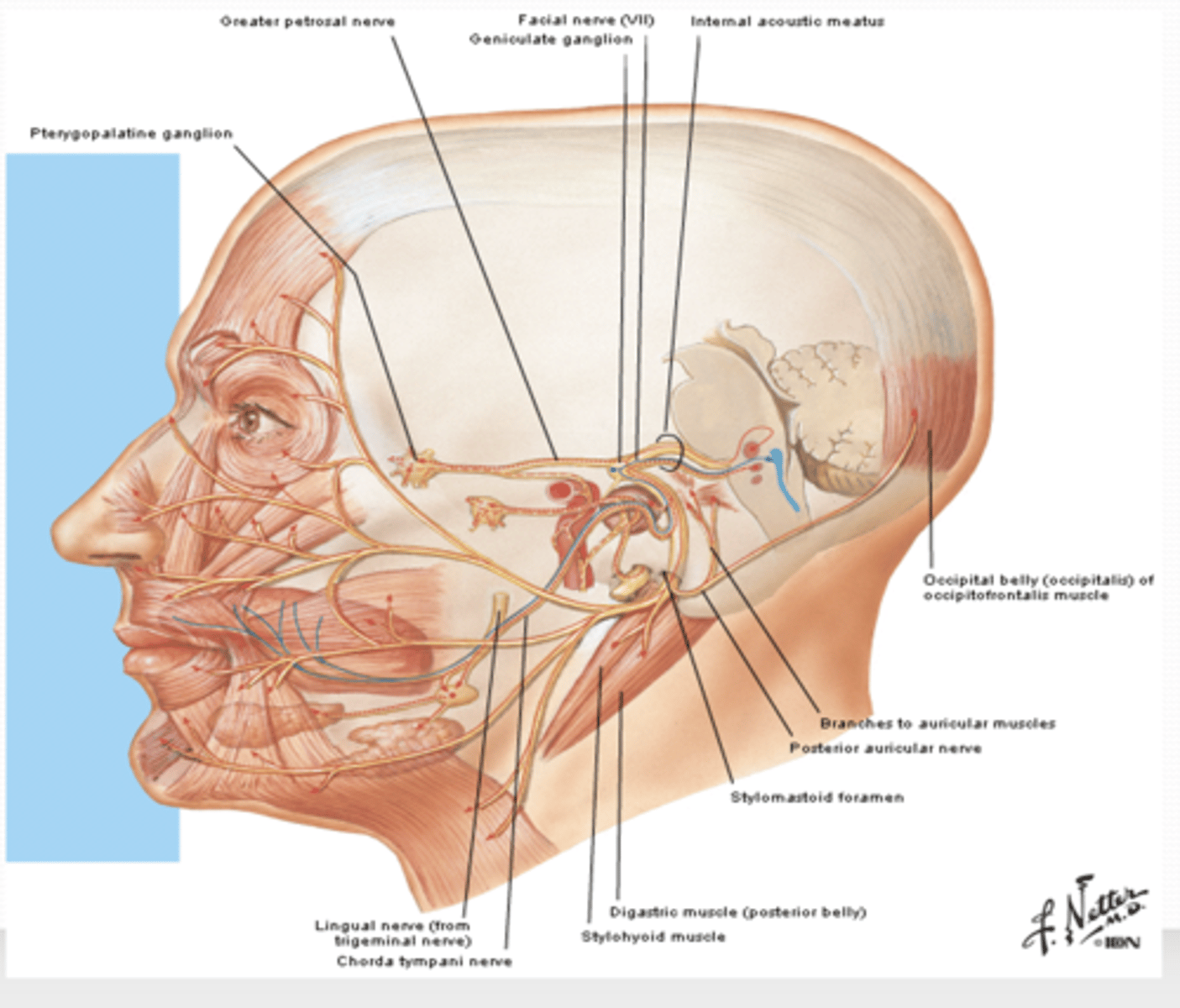
what are the motor branches of CN VII ?
1. Stapedius nerve
2.Posterior auricular nerve
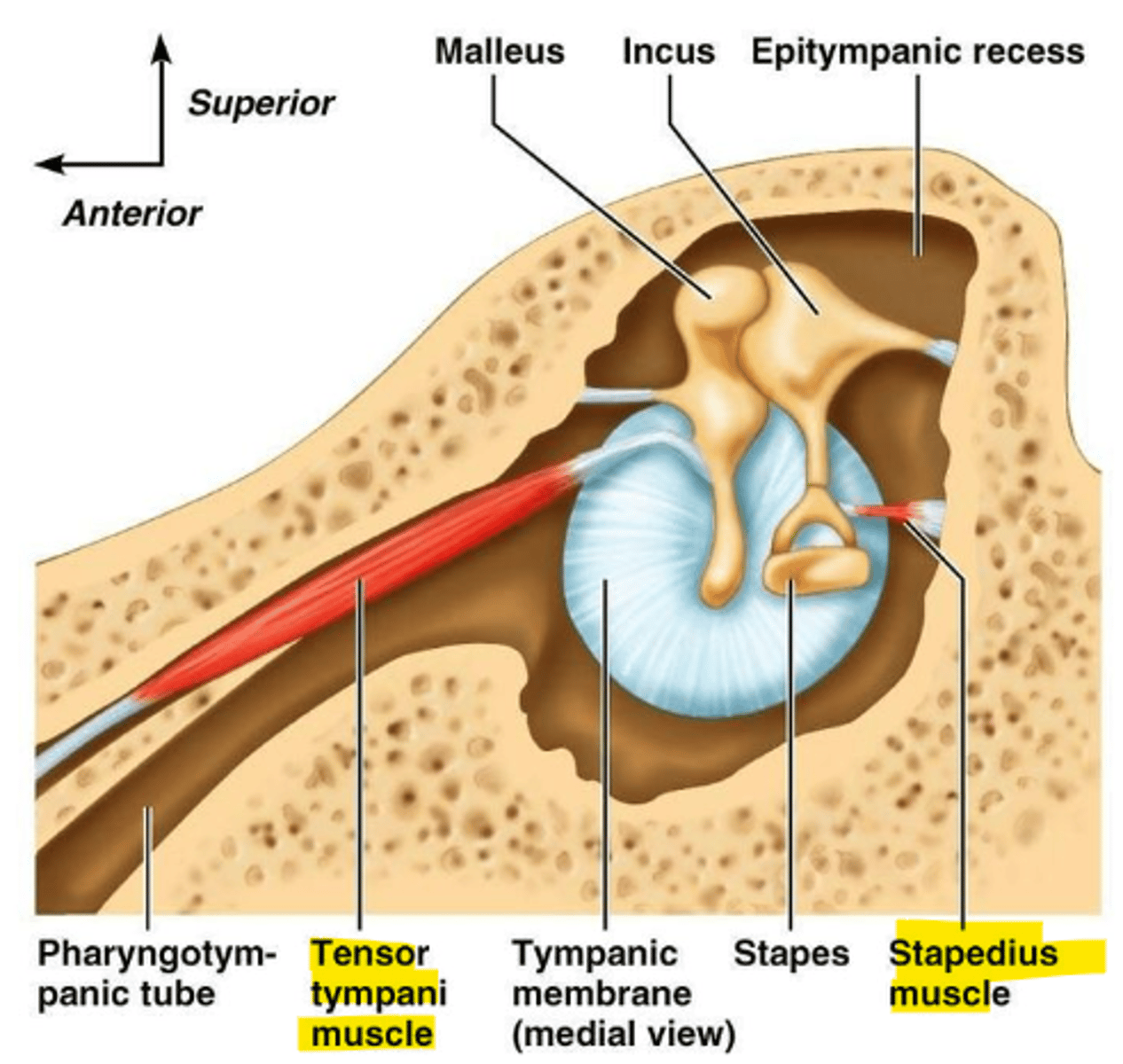
Where does the stapedius nerve of the motor branches (CN VII) run?
to stapedius muscle in middle ear. Before coming out of stylomastoid foramen
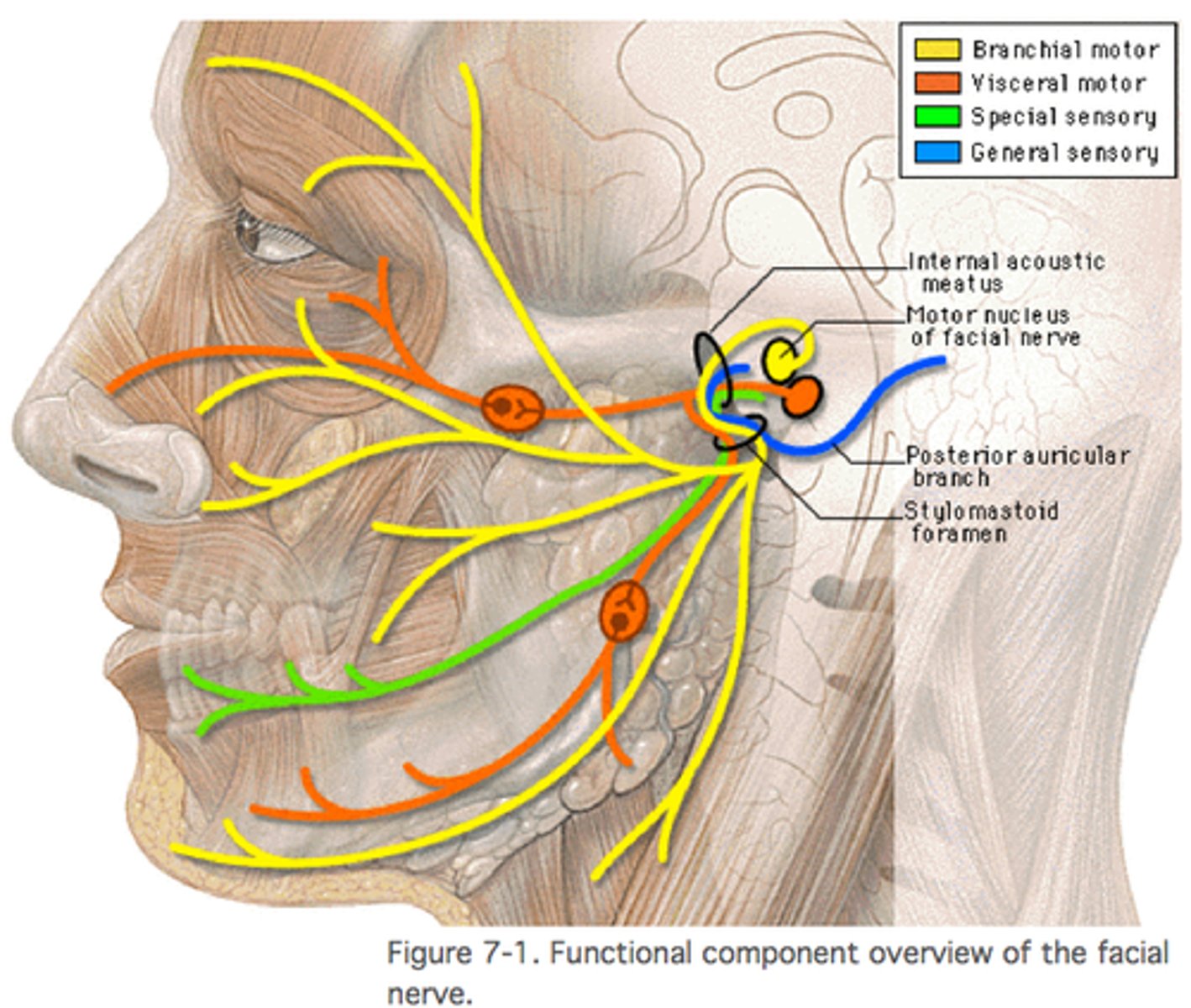
What does the posterior auricular nerve of the motor branches (CN VII) run? what does it innervate?
runs posterior to auricle
Innervates:
1. Muscles of auricle
2. occipitalis muscle
3. Posterior belly of digastric
4. stylohyoid muscle
What is the source of parasympathetic innervation to the parotid gland?
CN IX via otic ganglion
What is the source of parasympathetic innervation to submandibular and sublingual glands?
CN VII via submandibular ganglion
what is the source of parasympathetic innervation to lacrimal gland?
CN VII via pterygopalatine ganglion
what is the source of parasympathetic innervation to eyeball?
CN III via ciliary ganglion
What is the source of sympathetic innervation to the parotid, submandibular, sublingual, and lacrimal glands, as well as the eyeball?
superior cervical ganglion
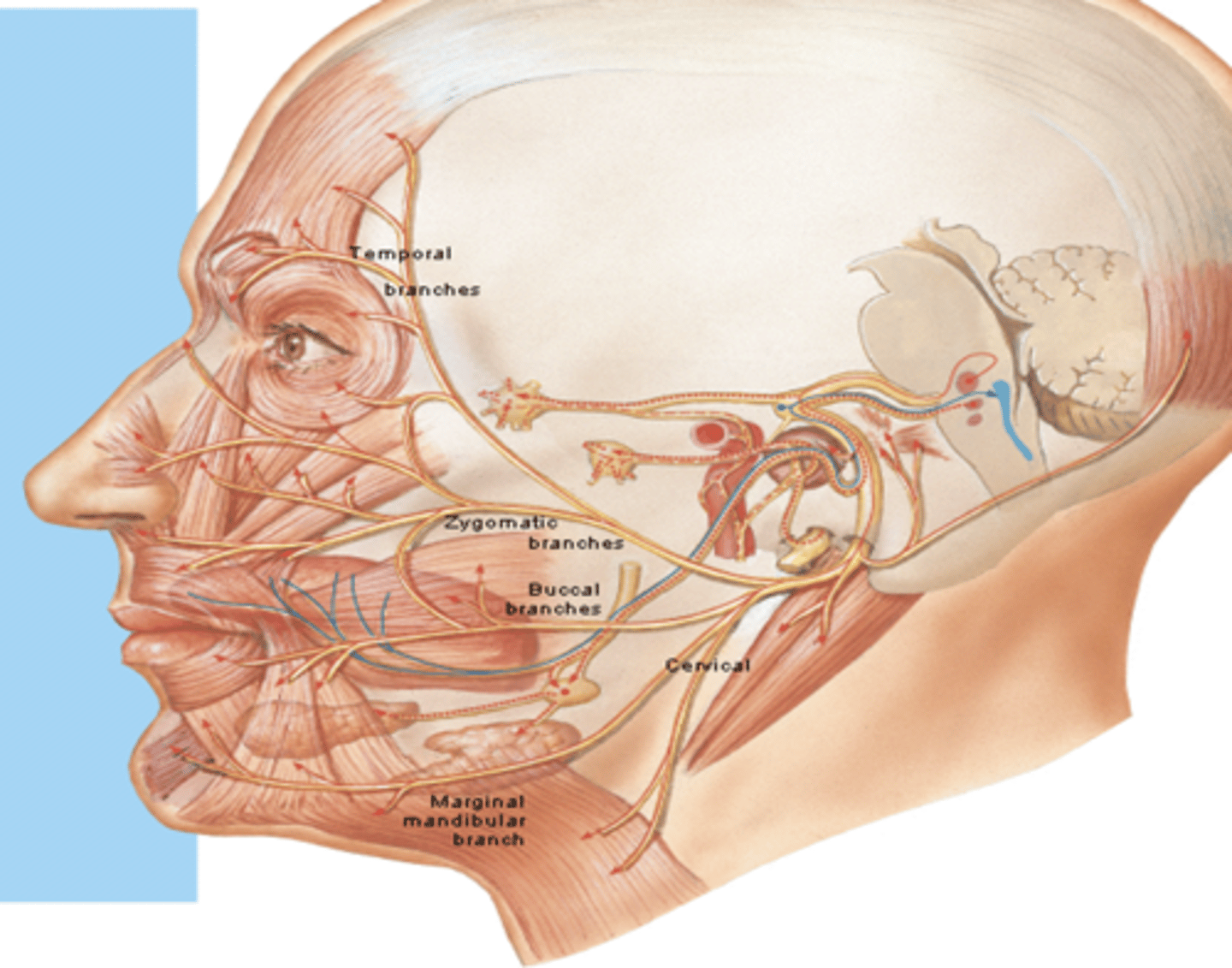
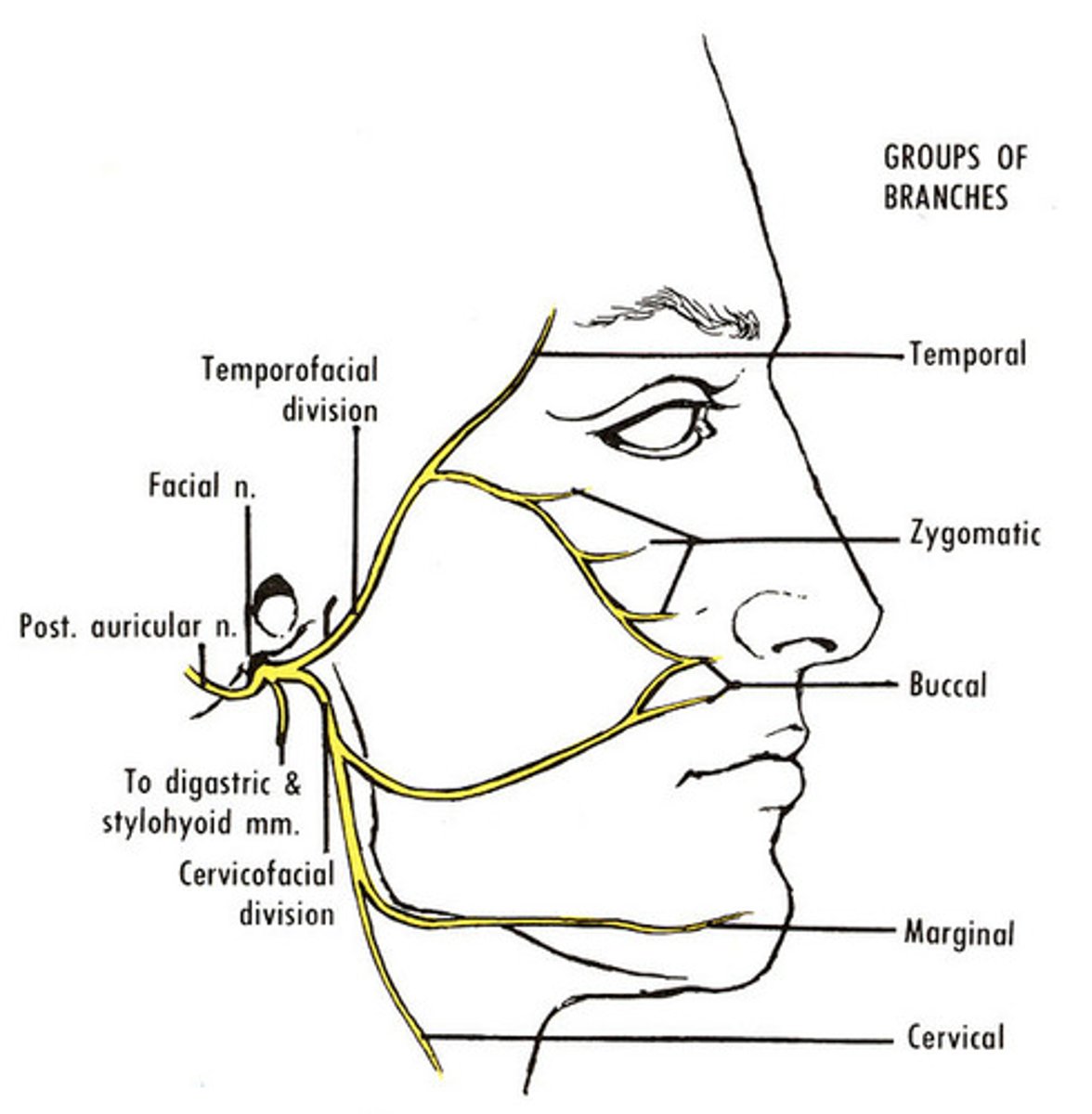
After the CN VII (motor) goes into the parotid gland it splits into 5 branches that innervate muscles of facial expression which include what?
1. Temporal branches
2. Zygomatic branch
3. Buccal branch
4. Mandibular branch
5. Cervical branch
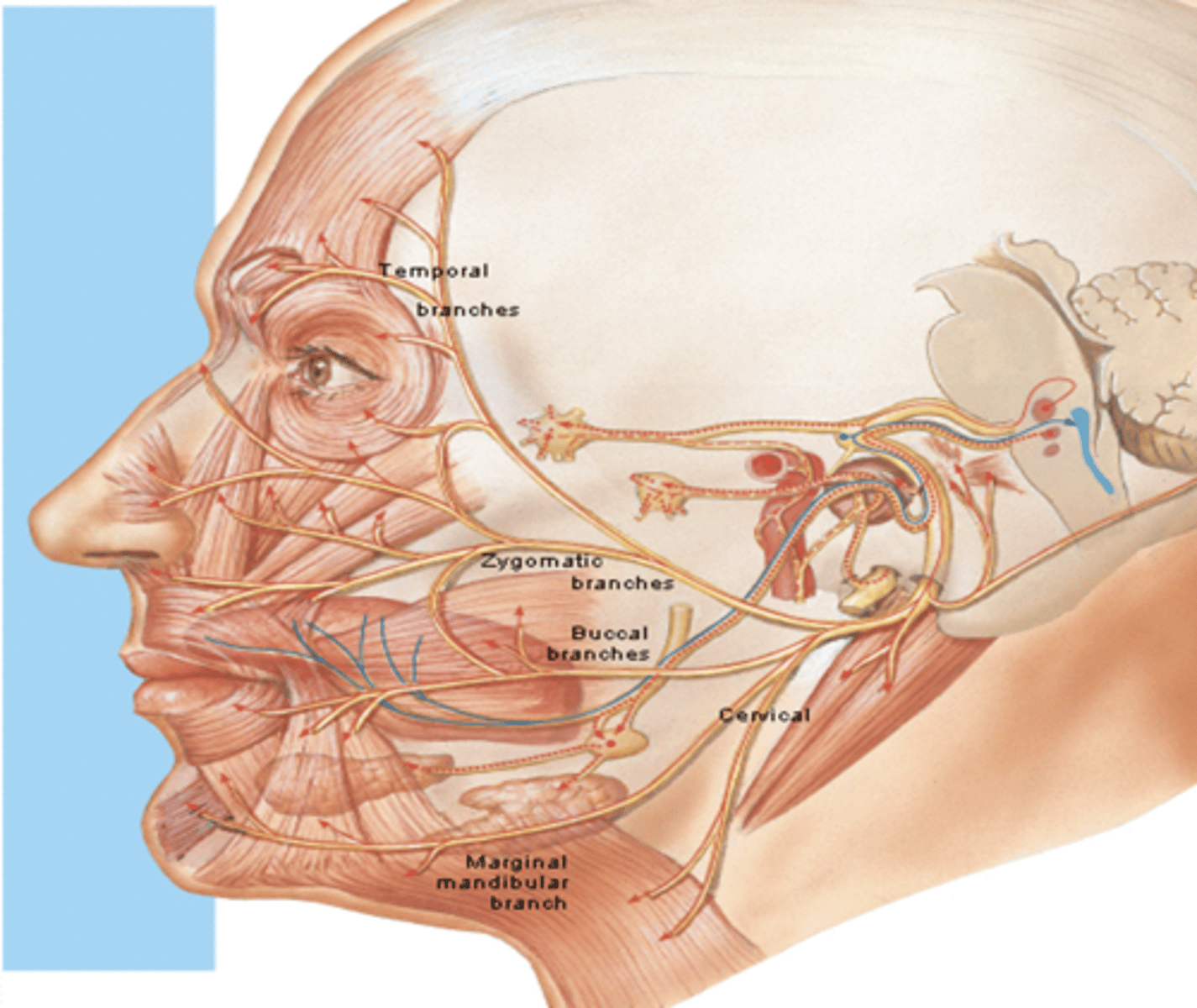
What is the course of the temporal branches of CN VII?
Course: superior to parotid gland > crosses zygomatic arch > to temporal and frontal regions of scalp
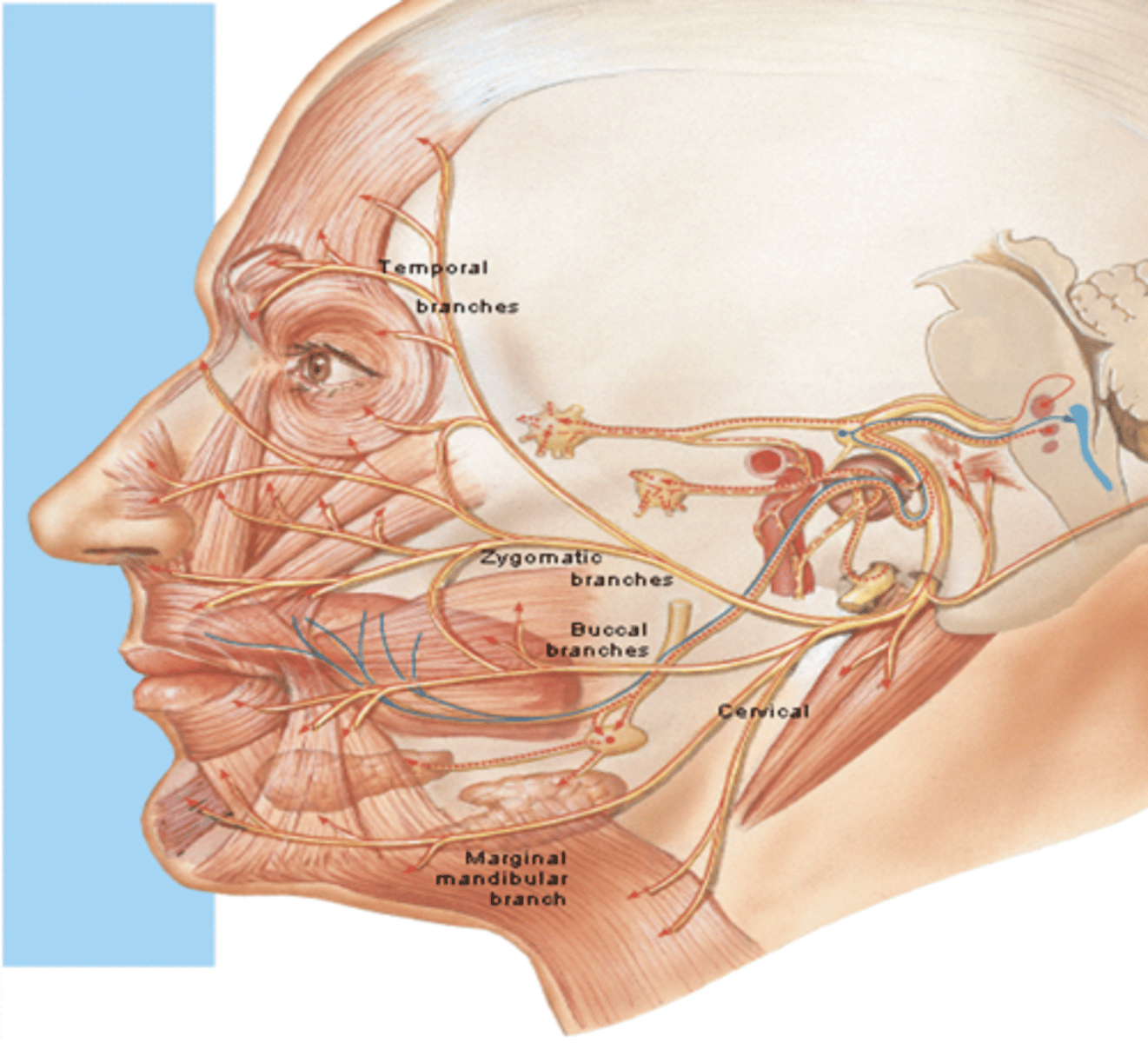
What is the course of the zygomatic branch of CN VII?
Course: anterior to parotid gland > innervates muscles as it goes forward on the upper cheek
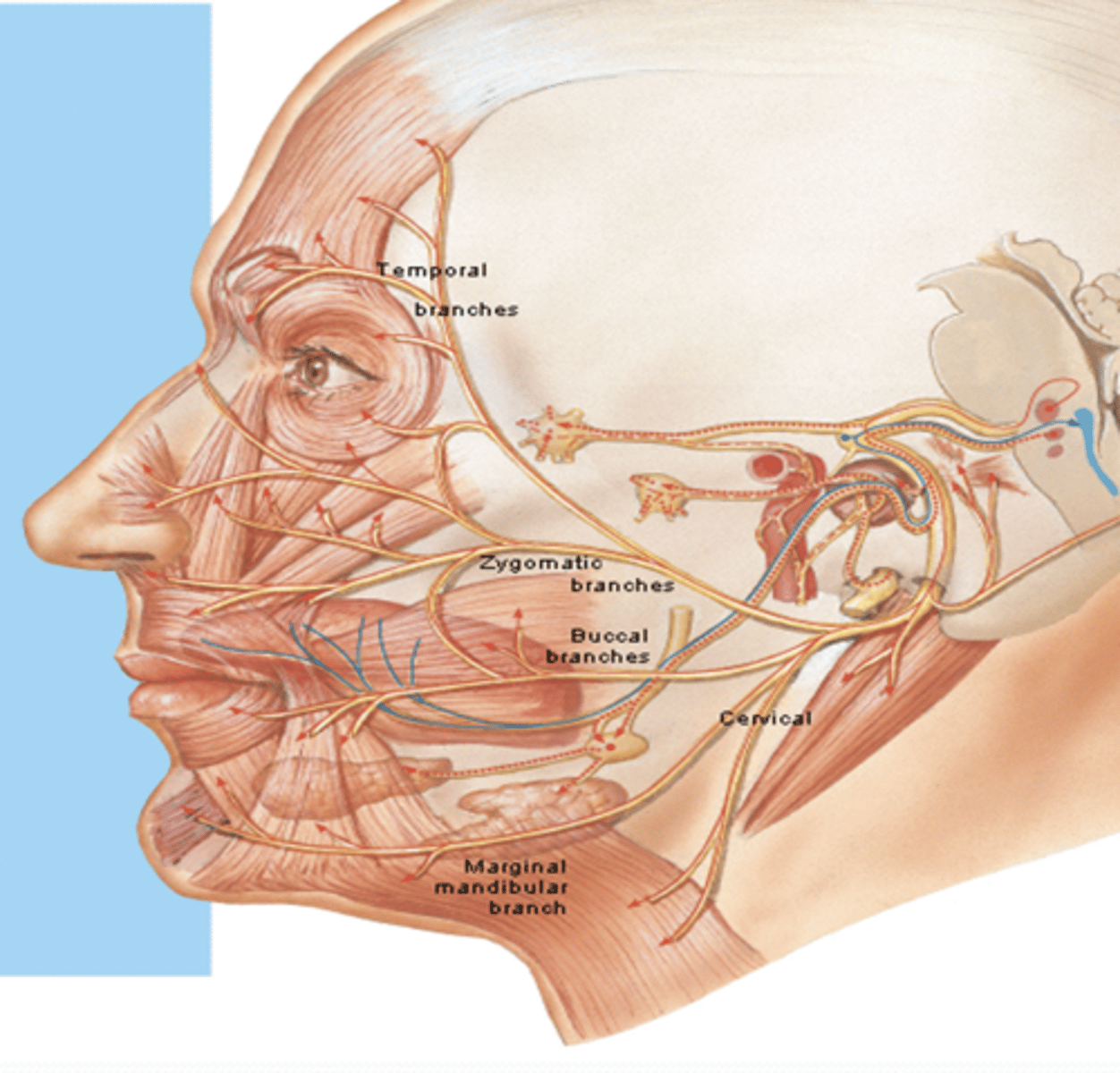
What is the course and innervation of the buccal branch of CN VII?
Course: medially through cheek
Innervate: buccinator.
This is motor, remember that CN V3 has a buccal branch as well, but it is sensory
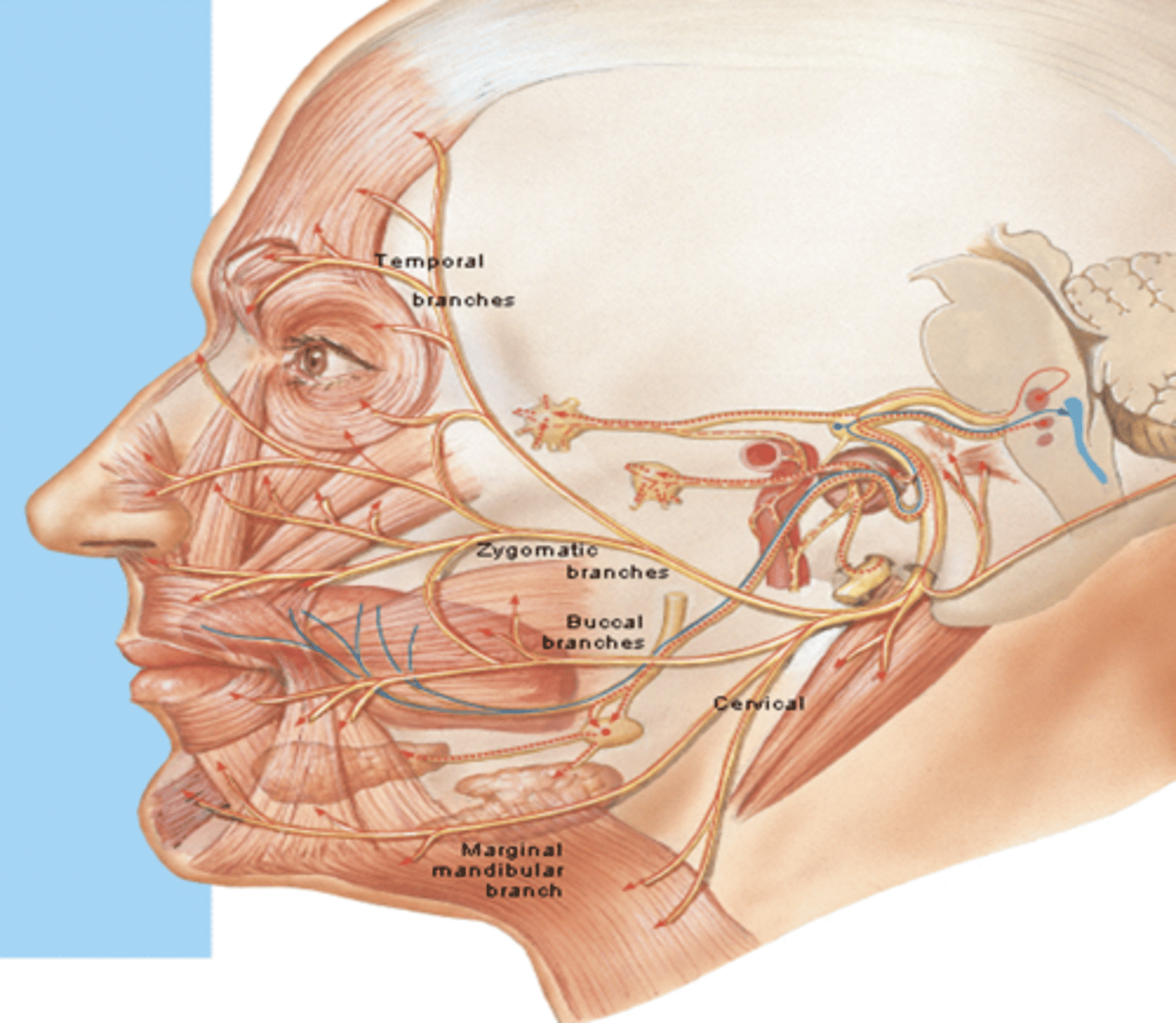
what is the course of the mandibular branch of CN VII?
Course: along lower border of mandible, innervates muscles on its course
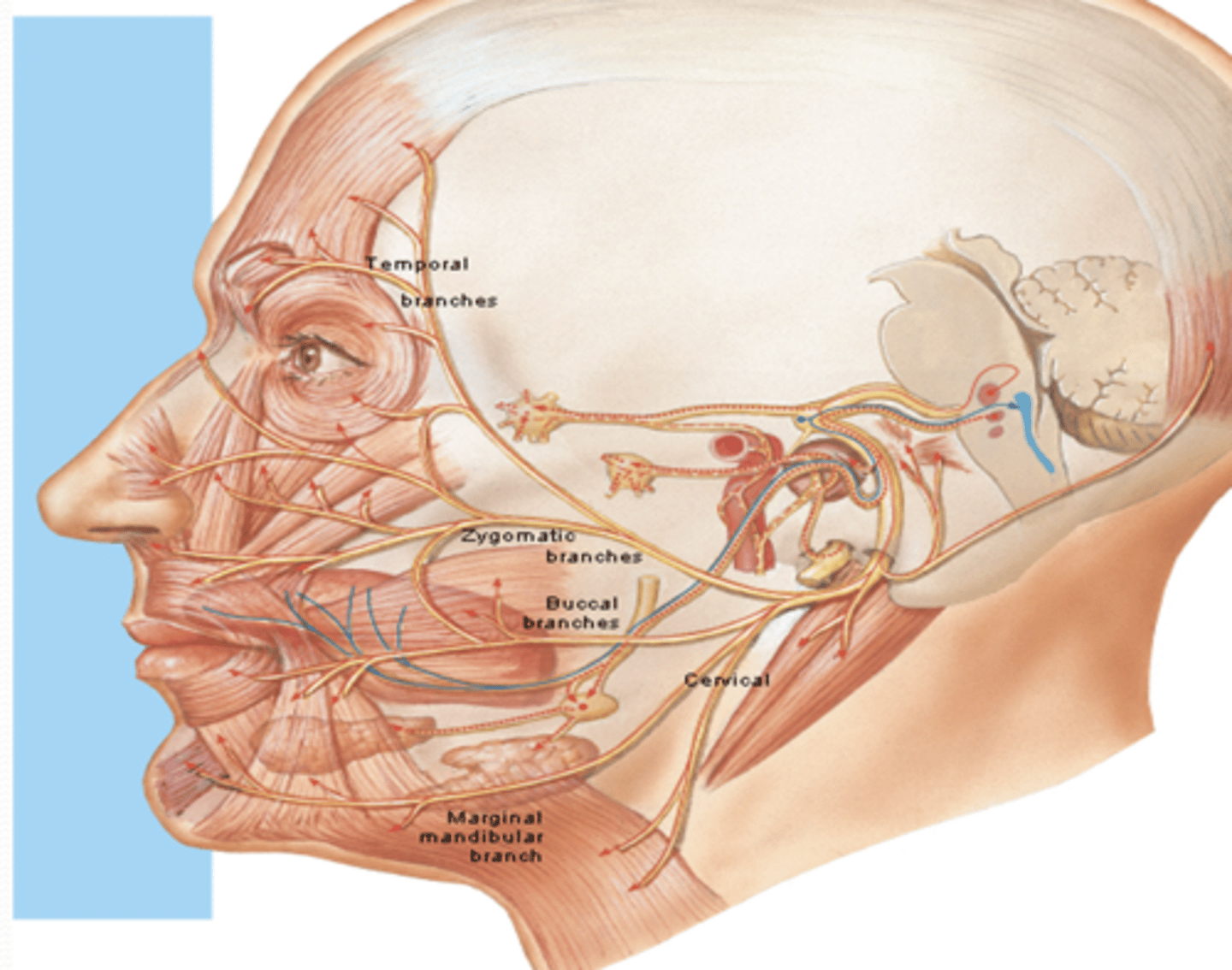
What is the course of the cervical branch of CN VII?
Course: courses inferiorly to innervate the platysma
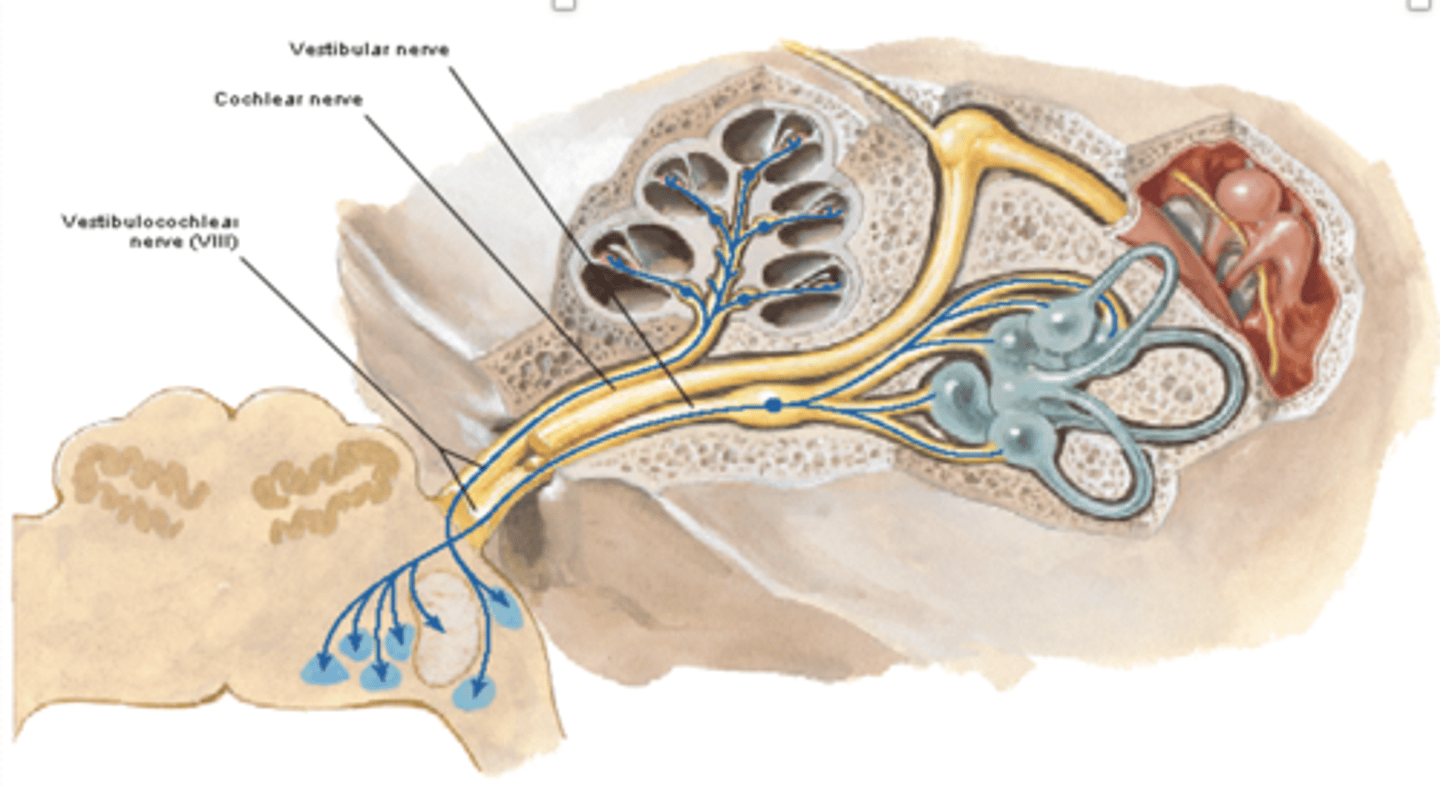
What is the course and type of CN VIII?
Course: Enters the internal auditory meatus with the facial nerve divides in two parts
Type: special sensory (hearing and equilibrium and motion)
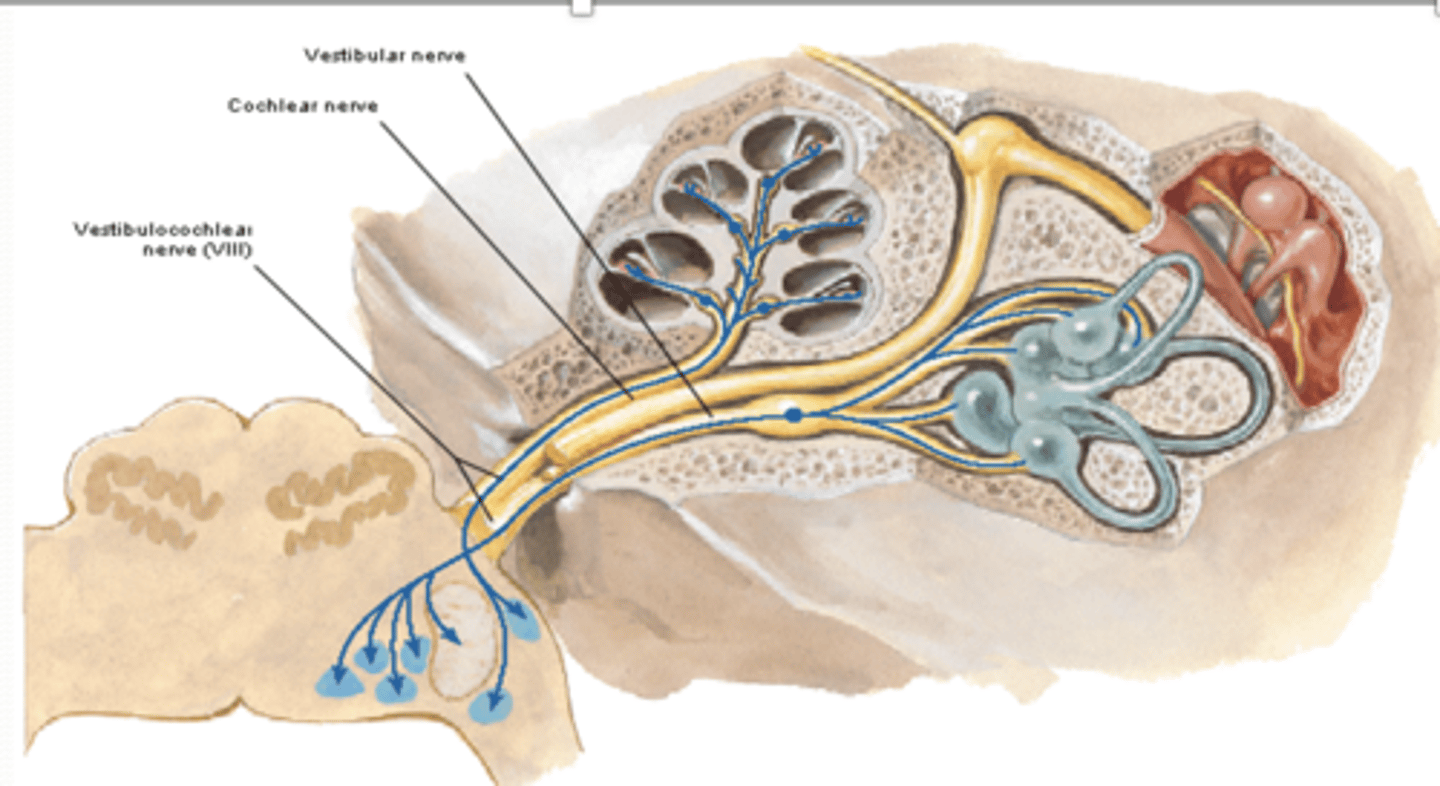
What are the two divisions of CN VIII what are they for?
1. Cochlear: to the cochlear or organ of hearing
2.Vestibular: to the semicircular canal for balance and equilibrium
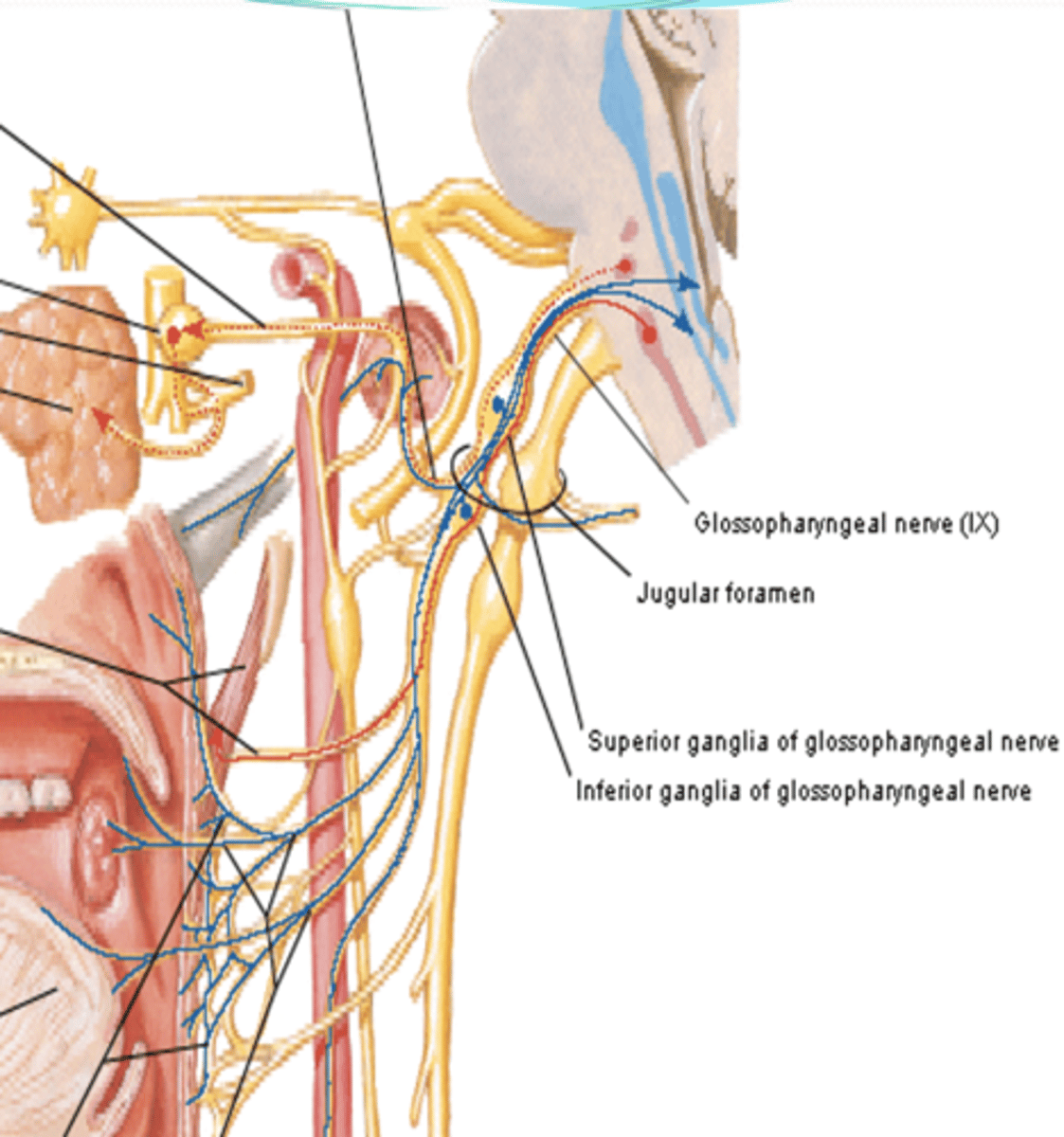
What is the course and type of CN IX?
Course: exits cranium through anterior aspect of the jugular foramen. At this foramen the CN IX has two ganglia
Type: somatic, visceral, and special sensory (taste) & somatic and visceral motor
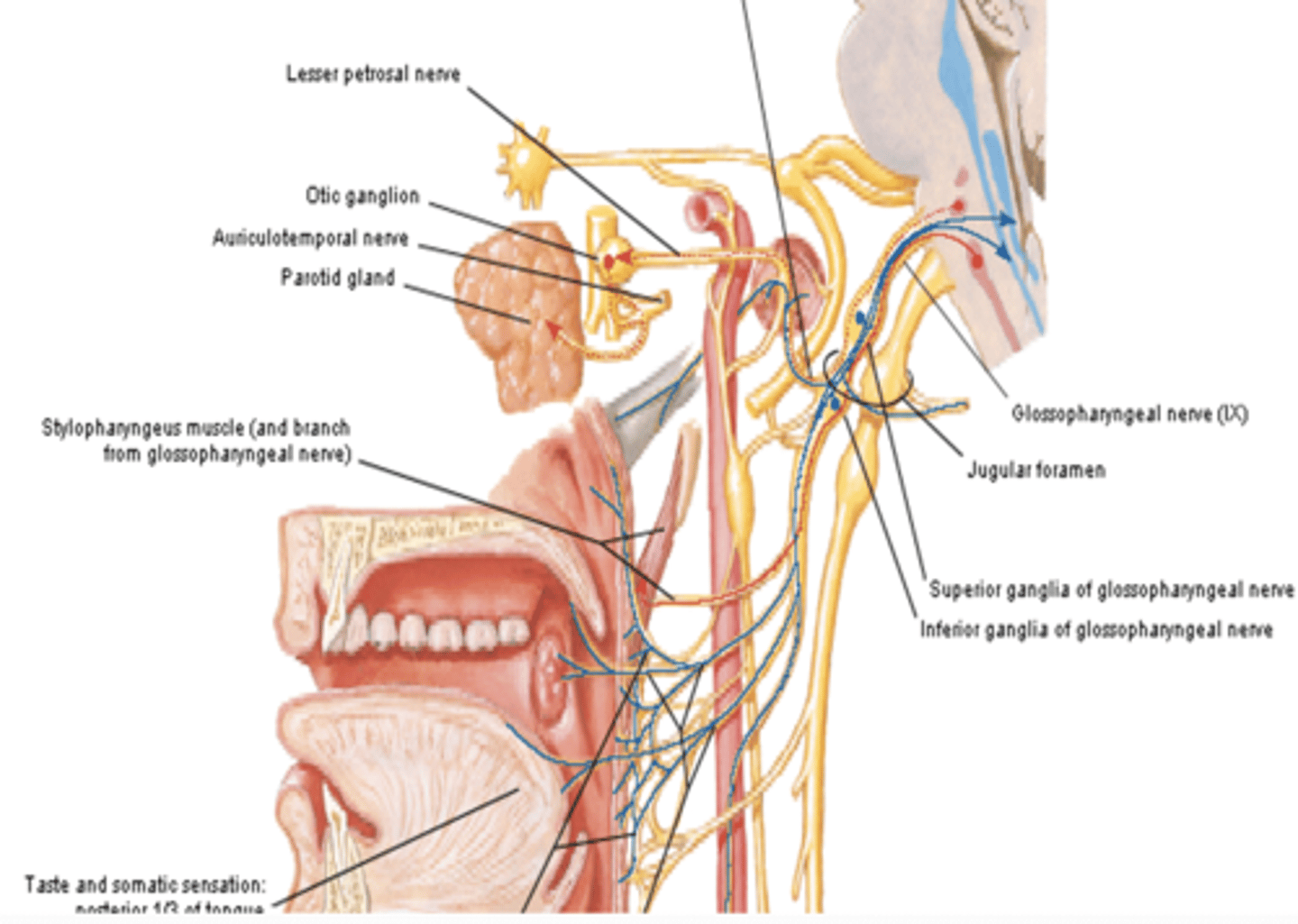
What are the branches of CN IX?
1. somatic sensory
2. somatic motor
3. visceral motor
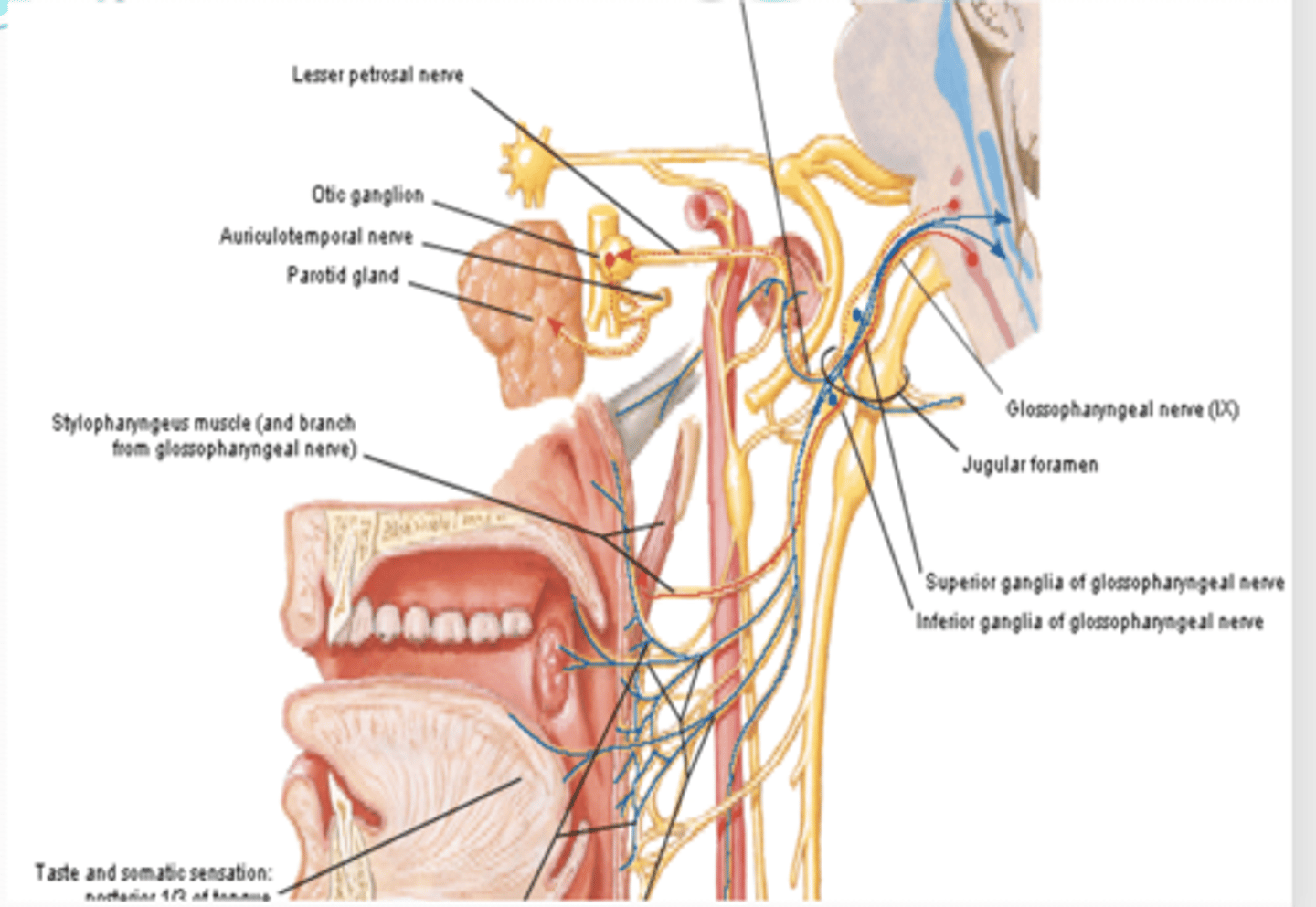
what does the somatic motor branch of CN IX innervate?
Stylopharyngeous muscle
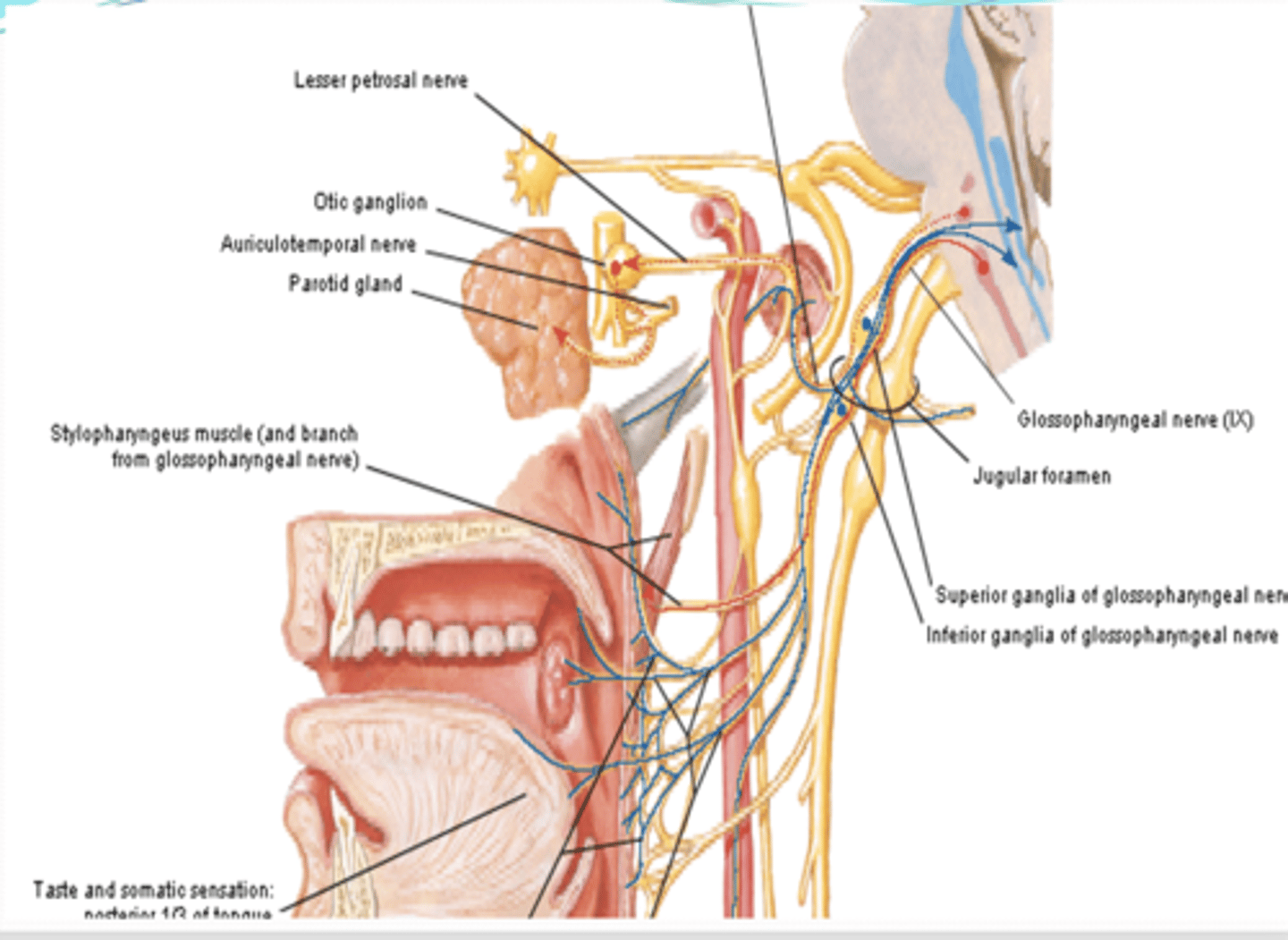
what does the somatic sensory branch of CN IX innervate?
1. Tympanic nerve
2. Carotid sinus nerve
3. Pharyngeal and tonsillar nerves
4. Lingual nerve
what does the typmpanic nerve of CN IX provide sensory to? what is it affected by?
sensory to middle ear (affected during ear infection)
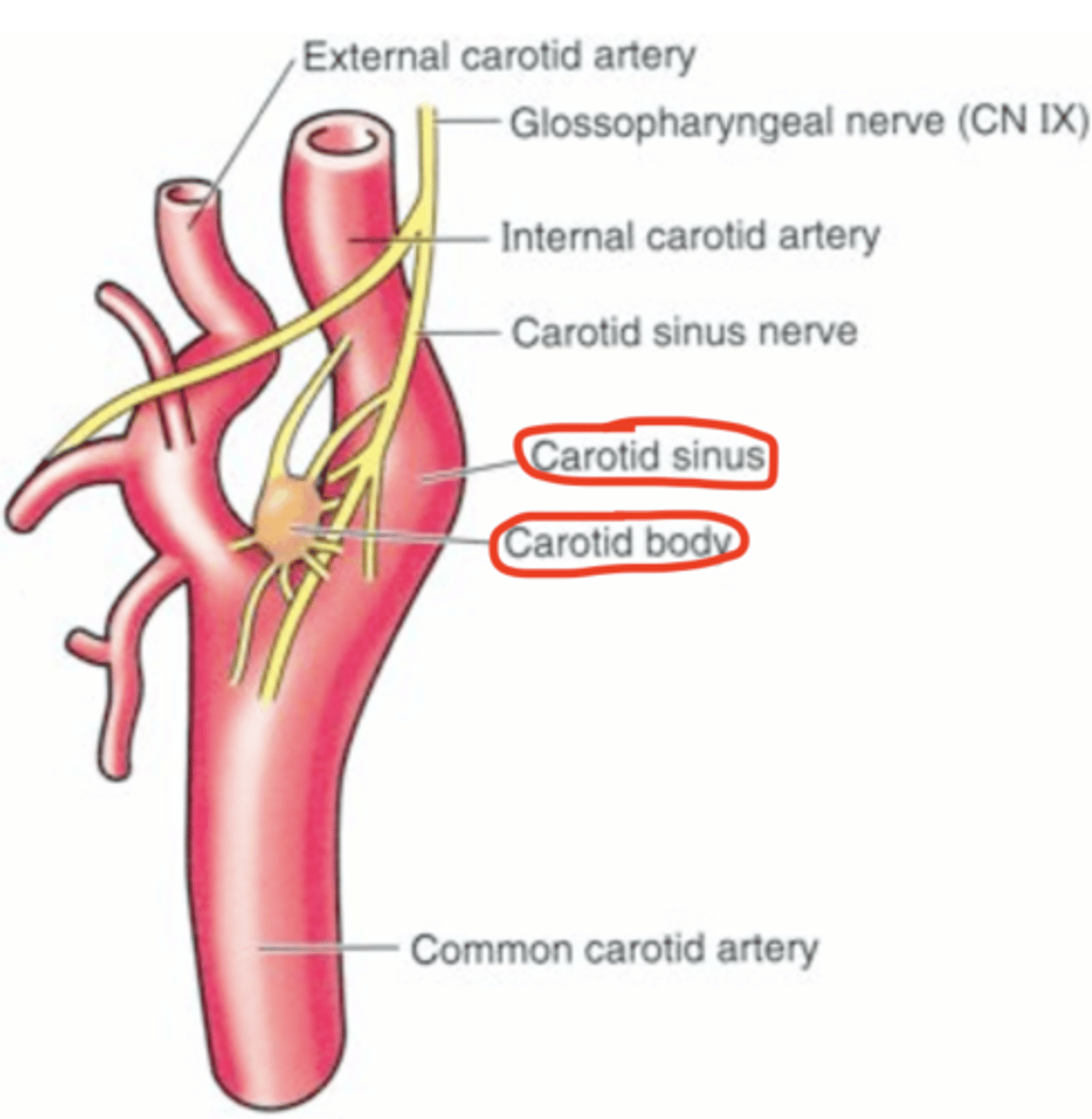
What does the carotid sinus nerve of CN IX provide sensory to?
sensory to carotid sinus (baroreceptor) and body (chemorecreceptor)
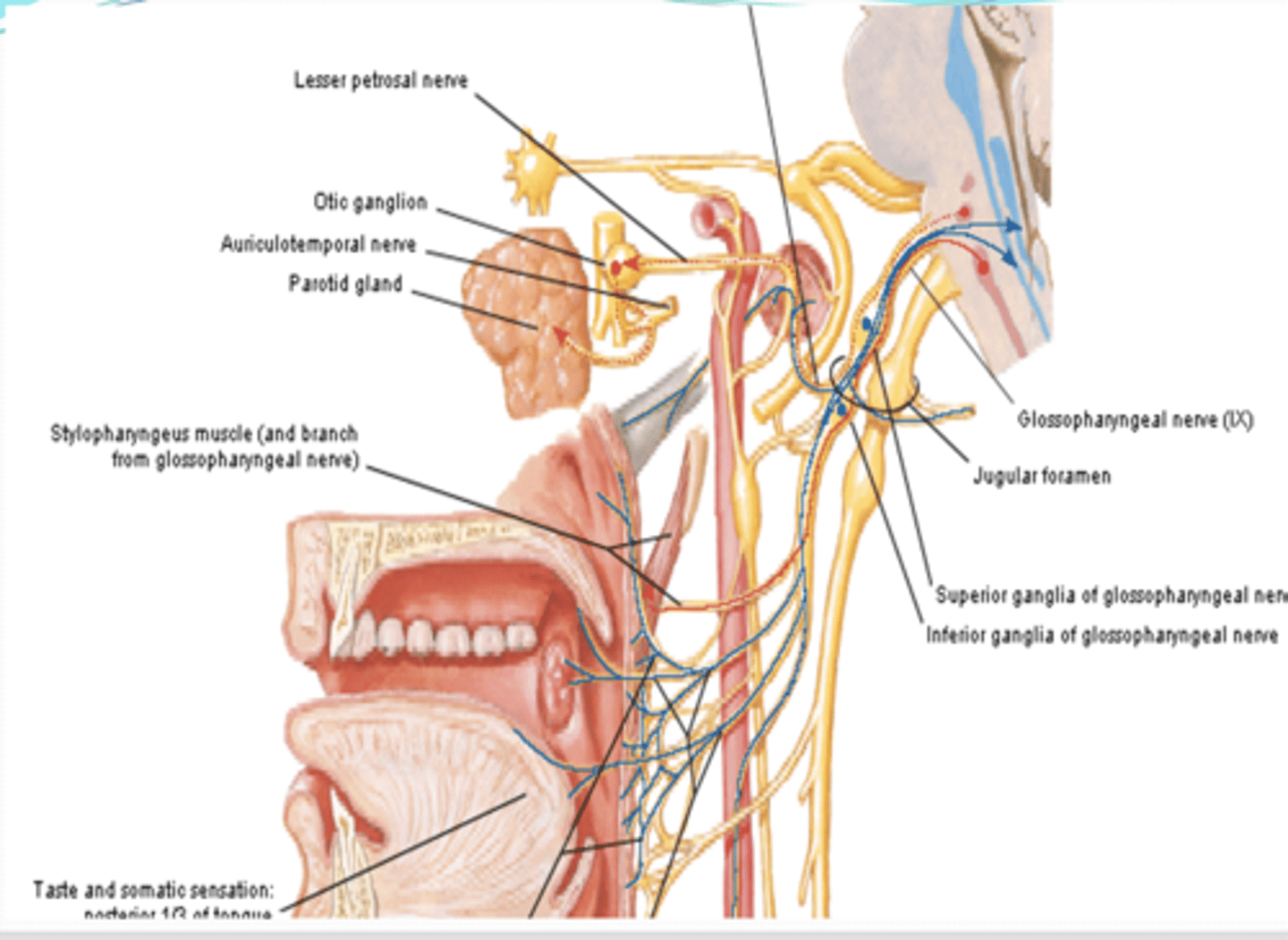
what does the pharyngeal and tonsillar nerve of CN IX provide sensory to?
sensory to superior portion of pharynx, palatine tonsils, and soft palate
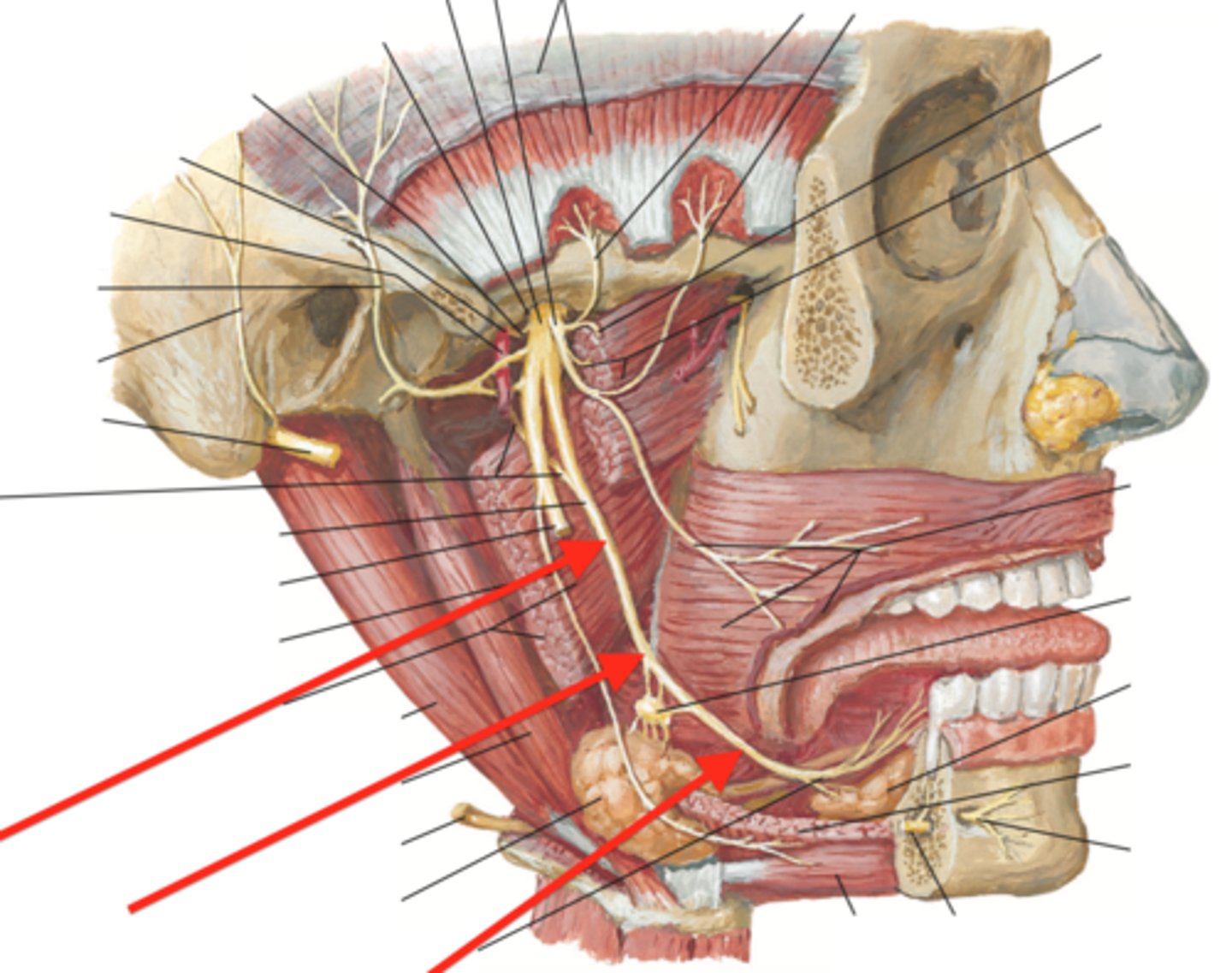
What does the lingual nerve of CN IX provide sensory to?
sensory and taste (special sensory) to posterior 1/3rd of tongue
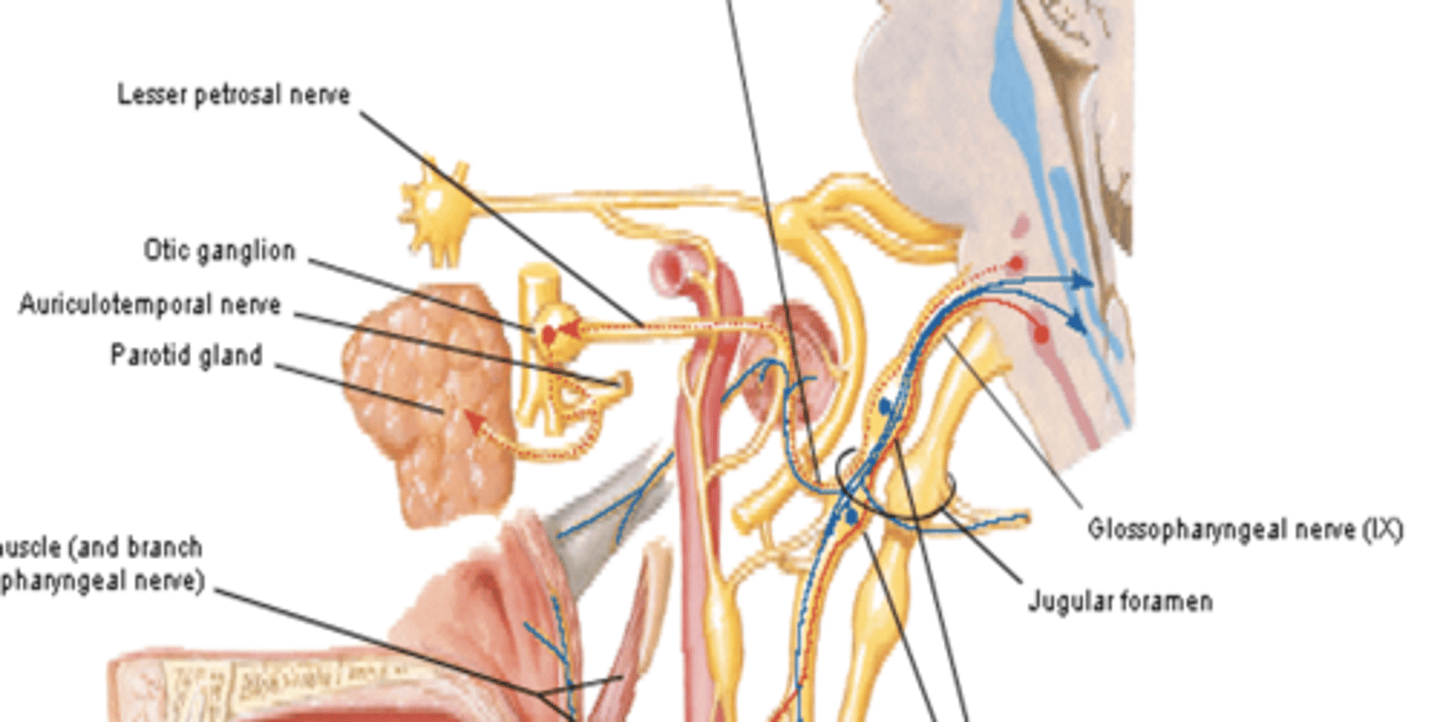
what is the course of the lesser pectoral nerve of the versceral motor branch of CN IX?
Lesser petrosal nerve to otic ganglion (associated with CN V3) > auriculotemporal nerve > to parotid gland
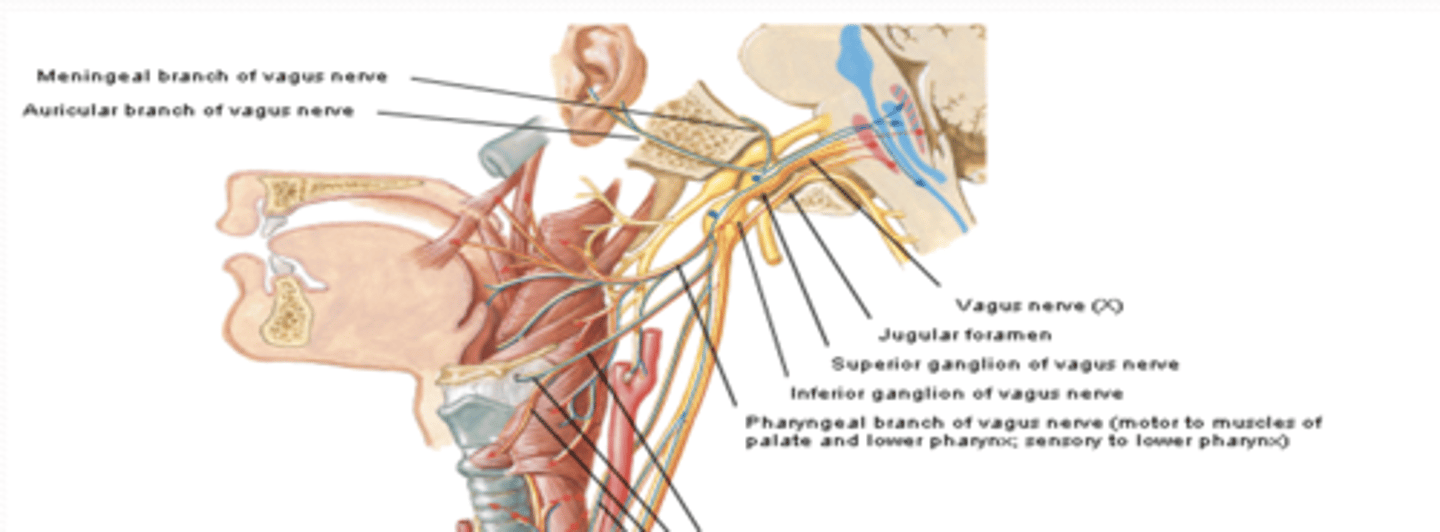
What is the course and type of CN X
Course: exits cranium through middle aspect of jugular foramen between CN IX and XI and travels inferiorly in the neck in the carotid sheath
Type: somatic, special, and visceral sensory & somatic and visceral motor
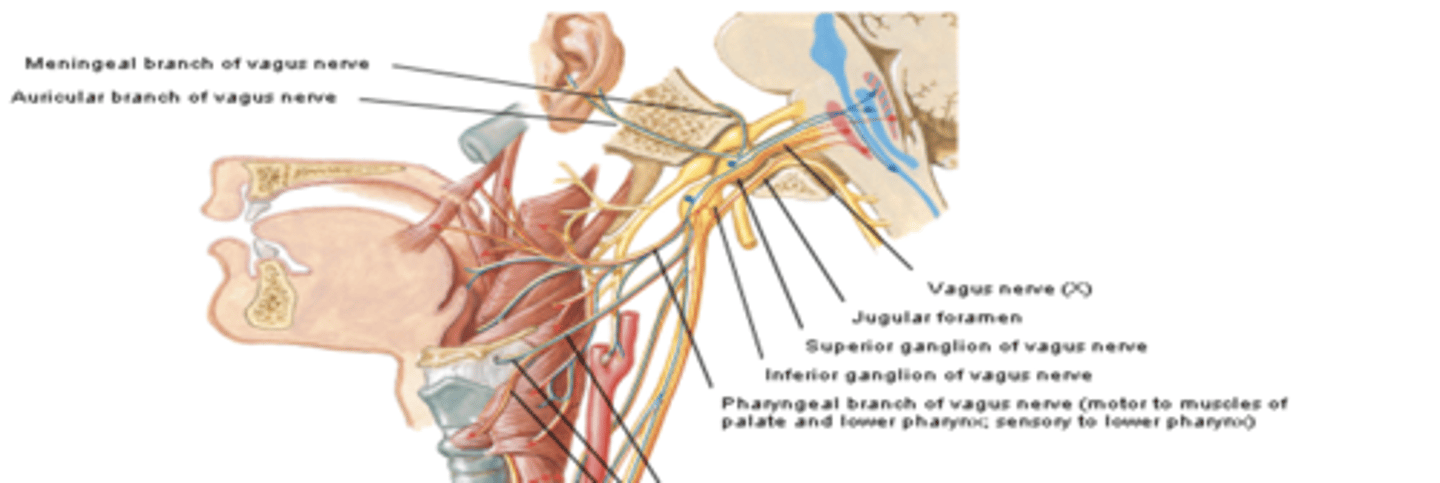
what are the branches of CN X?
1. Meningeal branch
2. Auricular branch
3. Pharyngeal branch
4. Superior laryngeal nerve
5. Cardiac branches
6. Recurrent laryngeal nerve
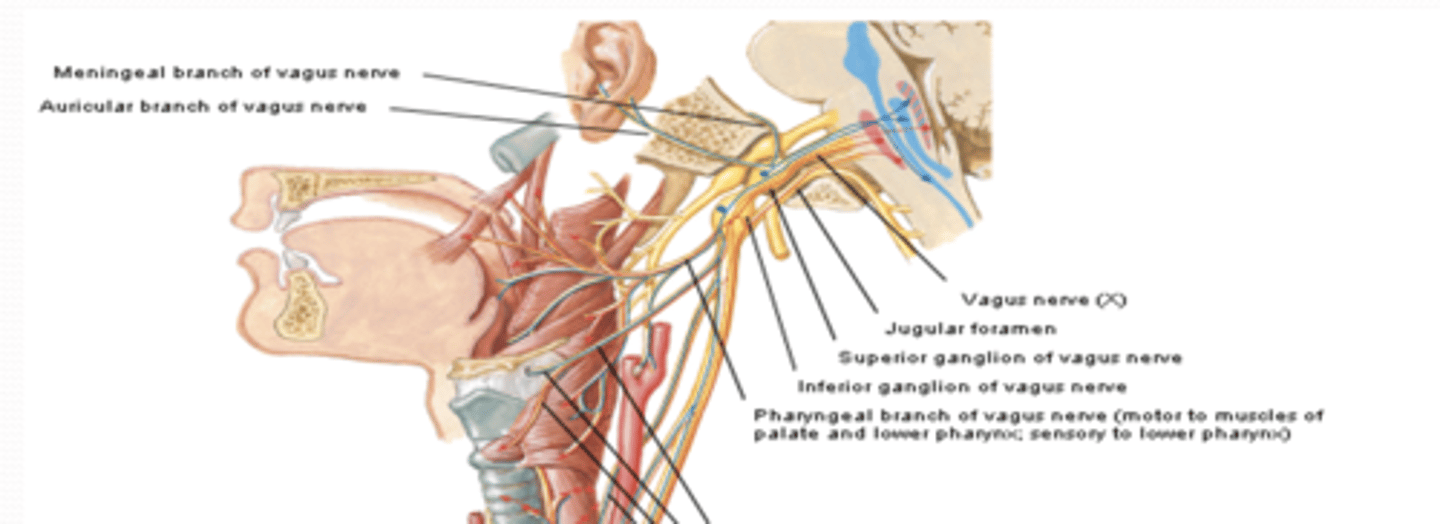
What does the meningeal branch of CN X provide sensory to?
sensory to dura mater of posterior cranial fossa
rest of dura mater (CN V)
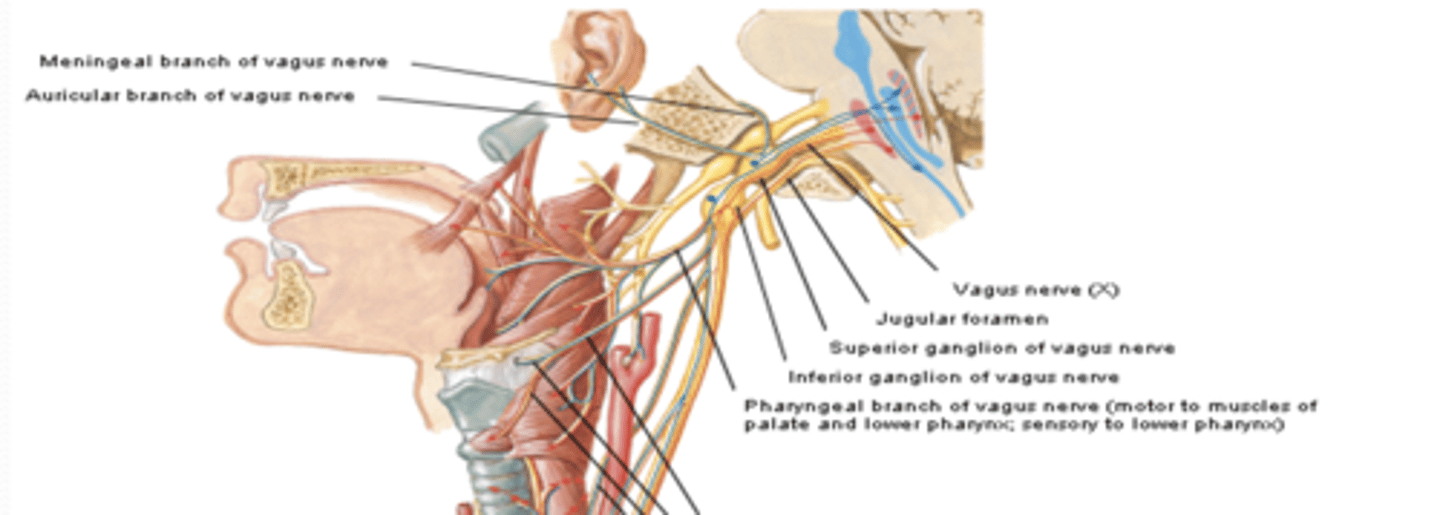
what does the auricular branch of CN X provide innervation to?
tympanic membrane, part of ear canal, and auricle
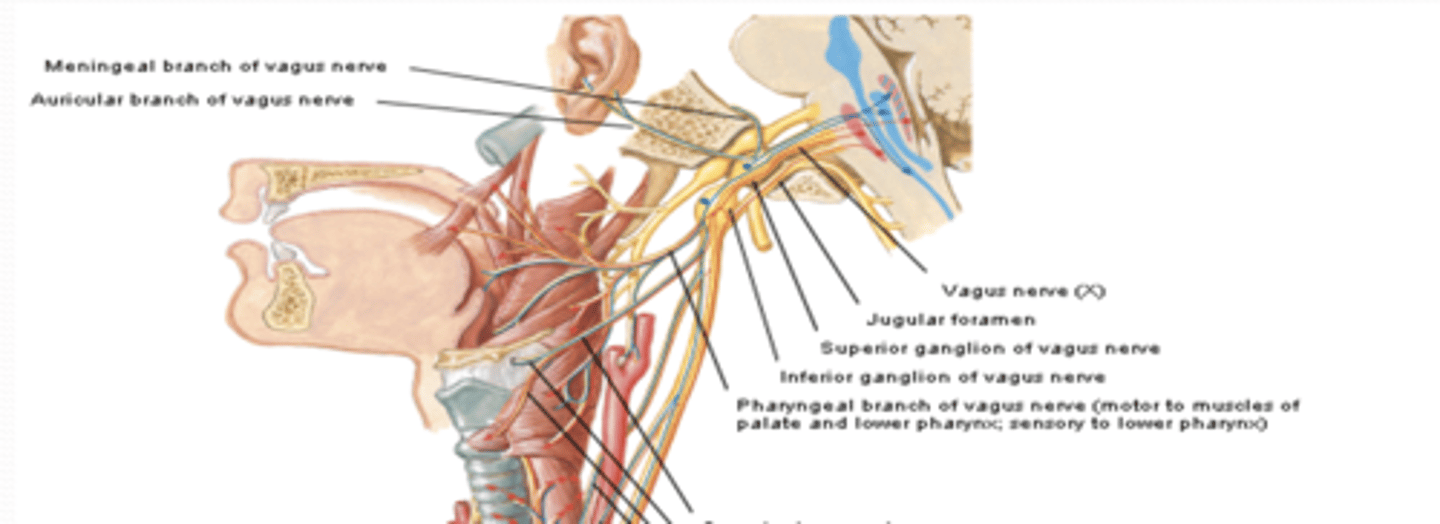
What does the pharyngeal branch of CN X provide motor and sensory intervation to?
- motor to pharyngeal muscle, except stylopharyngeous (CN IX) & to soft palate, except tensor veli palatini (CN V3).
- Sensory to lower pharynx, rest of pharynx (CN IX)
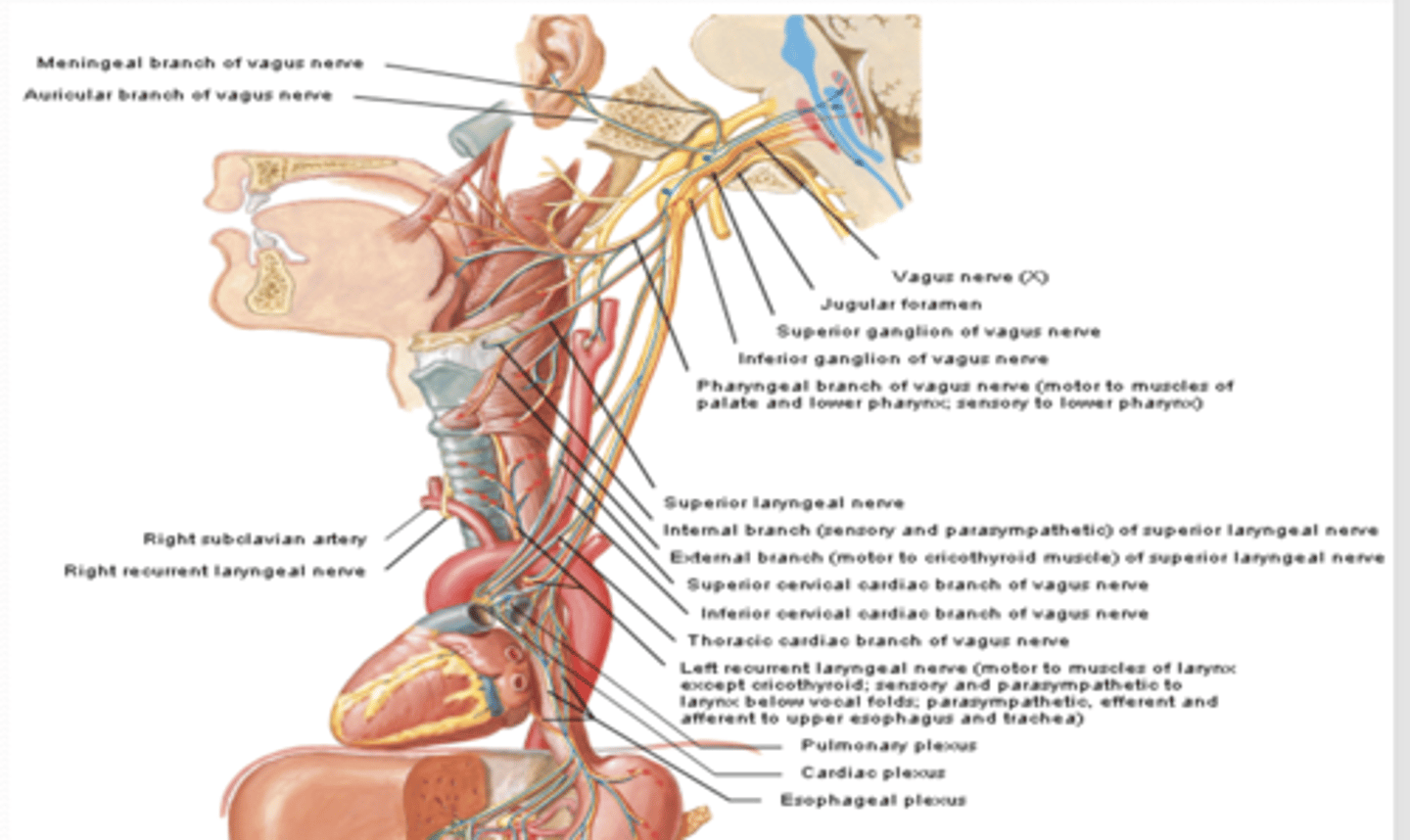
what does the internal laryngeal nerve of the superior laryngeal nerve CN X branch provide sensory to?
sensory to larynx (above vocal folds), and soft palate. Taste to root of tongue and epiglottis
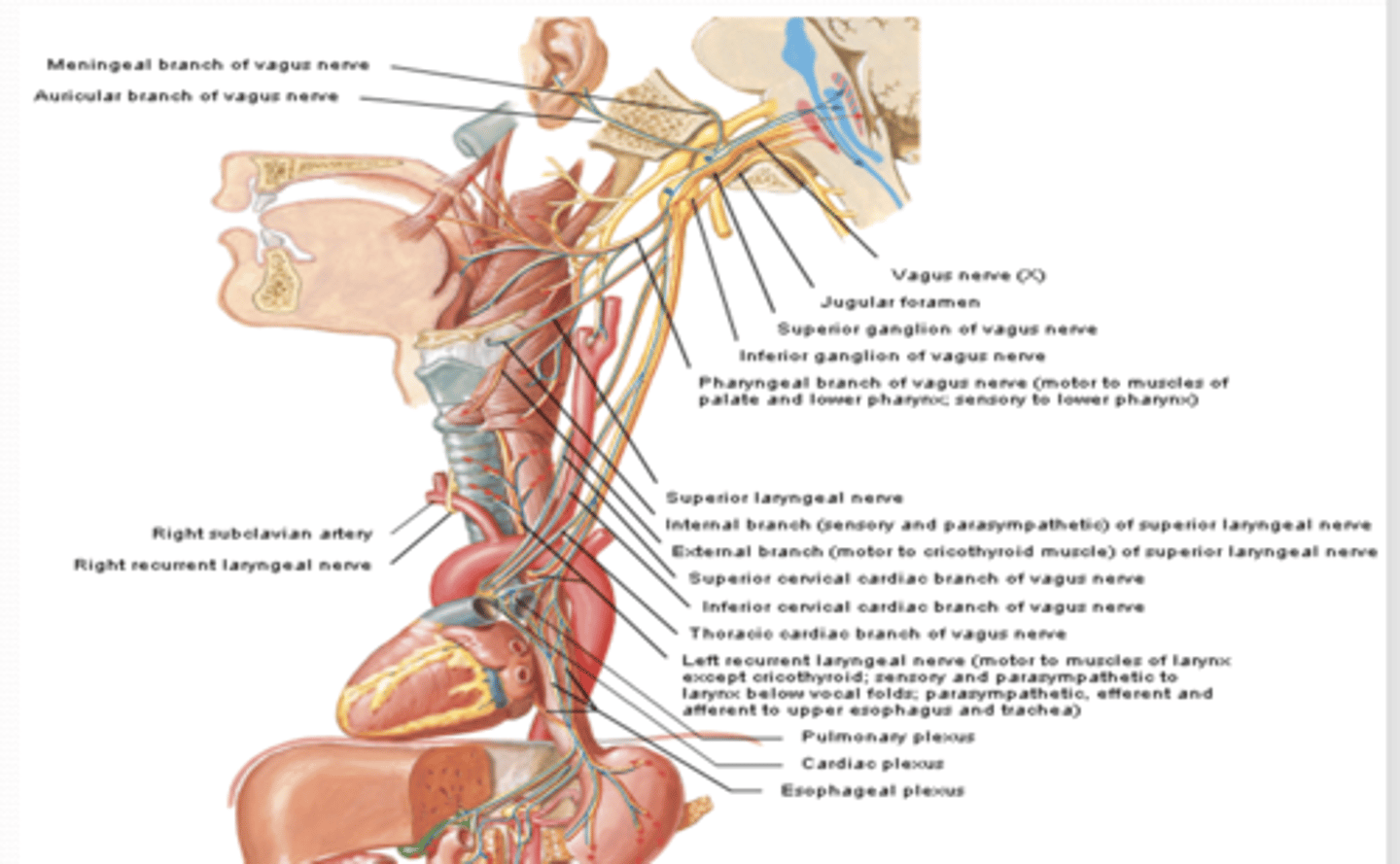
what does the External laryngeal nerve of the superior laryngeal nerve CN X branch provide motor to?
motor to cricothyroid
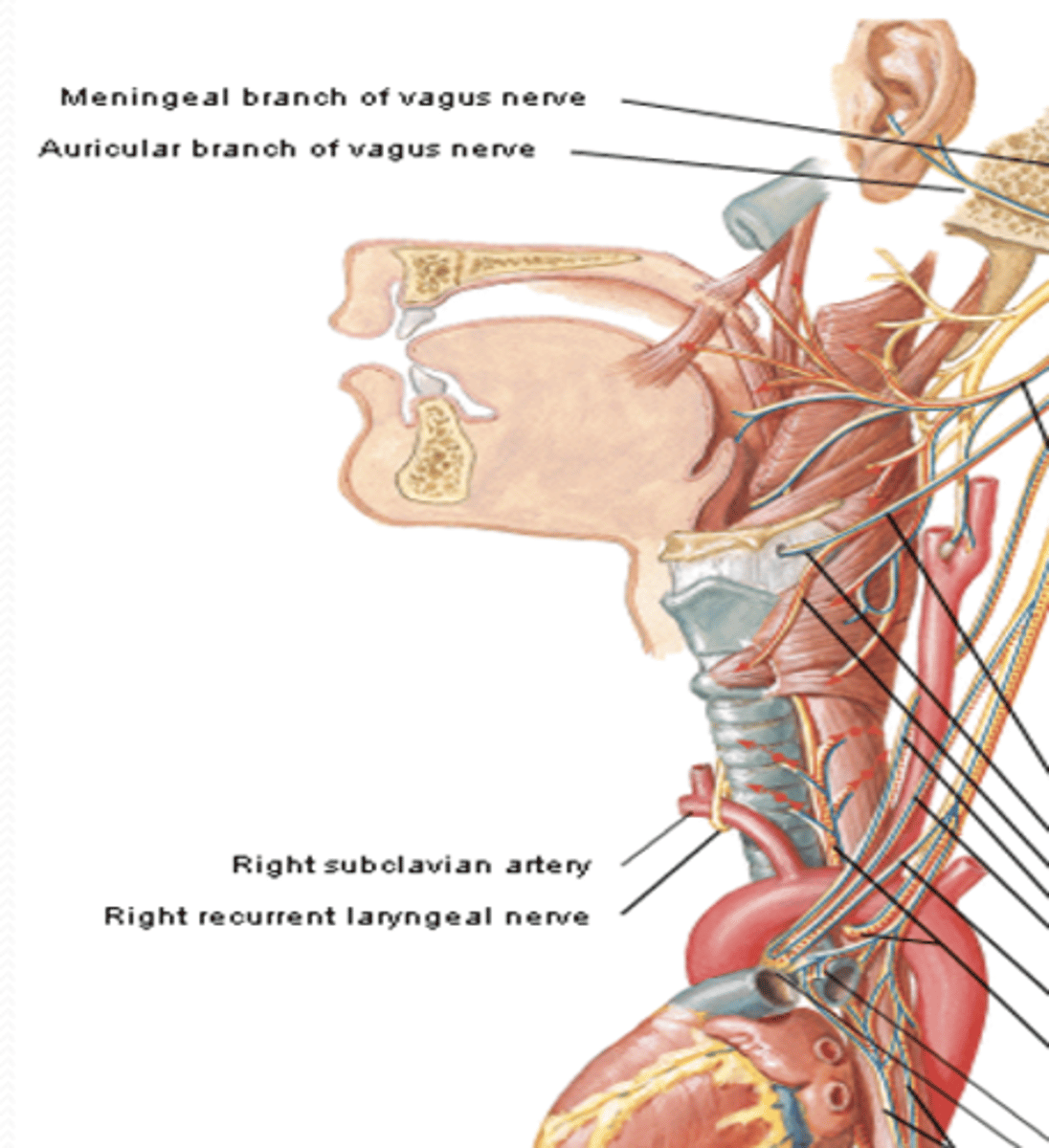
What is the course of the recurrent laryngeal nerve branch of CN X?
Course: goes inferiorly, wraps around subclavian artery (R) & around aortic arch (L) à ascends in the neck in the groove between the trachea and esophagus
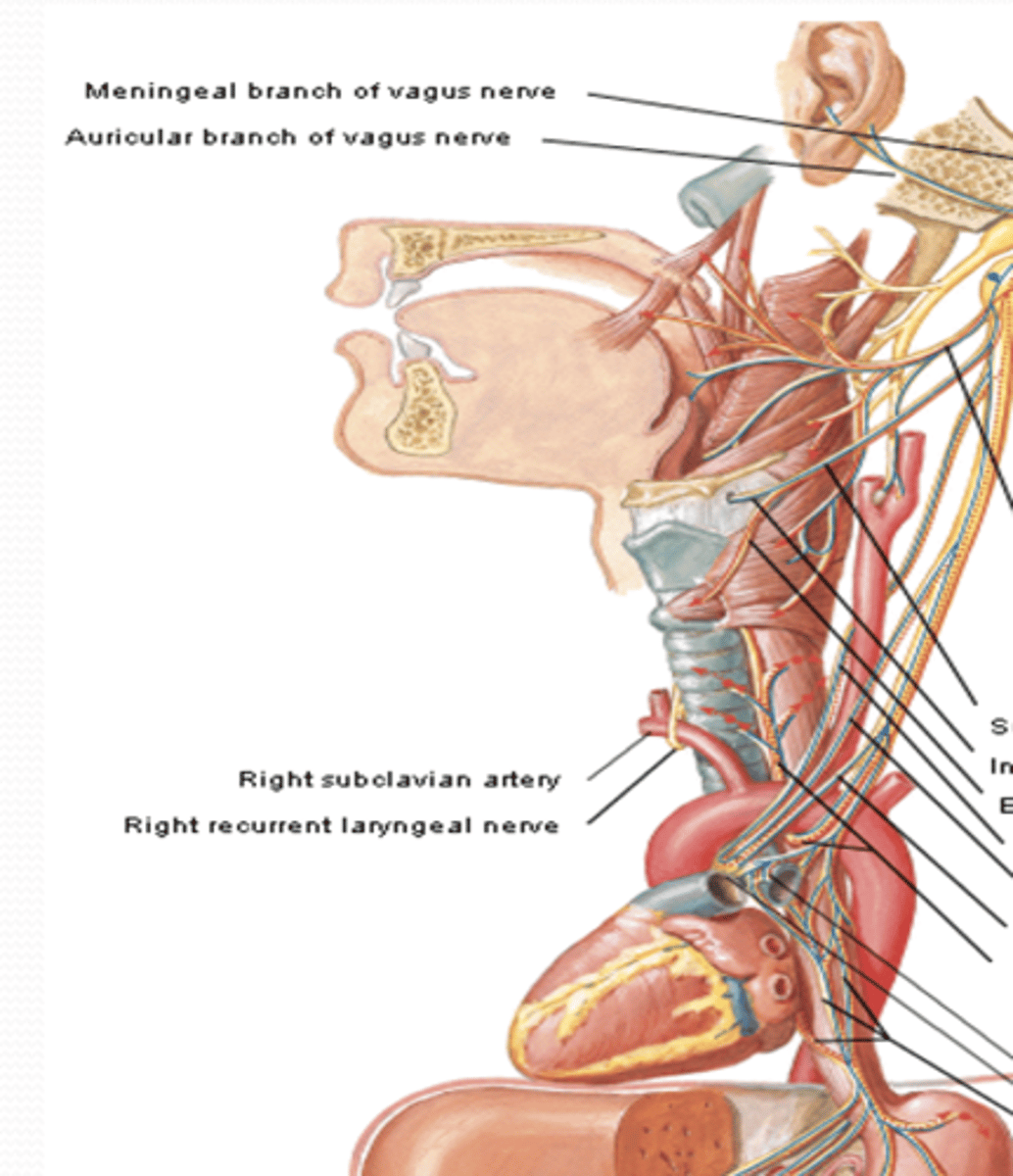
What does the recurrent laryngeal nerve branch of CN X provide sensory and motor to?
- Motor to laryngeal muscle, except for cricothyroid.
- Sensory to larynx (below focal folds)