Dysphagia Quiz 1👅
 Call Kai
 Learn
Learn Practice Test
 Spaced Repetition
 Match
Match Flashcards
 Knowt Play
1/26

There's no tags or description
Looks like no tags are added yet.
Name | Mastery | Learn | Test | Matching | Spaced | Call with Kai | Chat |
|---|
No analytics yet
Send a link to your students to track their progress
27 Terms
Swallowing is defined as the transfer of the bolus from …..
the mouth to the digestive system
Mouth and throat are part of the….
“aerodigestive tract”
The “aerodigestive tract” is shared by two systems. Which systems?
it is shared by both the digestive and respiratory systems
Dysphagia is not a disease! It is a….
symptom
Swallowing impairment (dysphagia) is a risk factor for _____
mortality
Dysphagia affects the entire________.
lifespan
While it can affect the whole lifespan, dysphagia is more common in ….
older adults
What are some signs that someone has dysphagia?
Unintentional weight loss
Double/multiple swallows
Drooling
What Causes Dysphagia?
Damage to neurological structures (stroke, TBI, ALS) or various other medical concerns (head and neck cancer, pulmonary disease, surgery)
What is the question you should be asking when assessing someone’s swallow safety on x-ray?
Safety: where did the bolus go?
What are the questions you should be asking when assessing someone’s swallow efficiency on x-ray?
Efficiency: how fast did the bolus travel? Was anything left behind?
A videofluorographic study is a type of X-ray video that…?
shows the movement of food and liquid as a person swallows
What are the biggest clinical implications associated with dysphagia?
dehydration and malnutrition
What is an SLP's role in treatment of dysphagia?
identification of abnormal swallowing, have knowing of eitologies of dysphagia, be able to apply safe treatment
dysphagia can be treated in 3 ways:
medically, surgically, behaviorally
behavioral management of dysphagia can fit into two categories:
compensatory (adapt), restorative
Silent aspiration occurs when….
material enters the airway and lungs without obvious signs such as coughing or choking
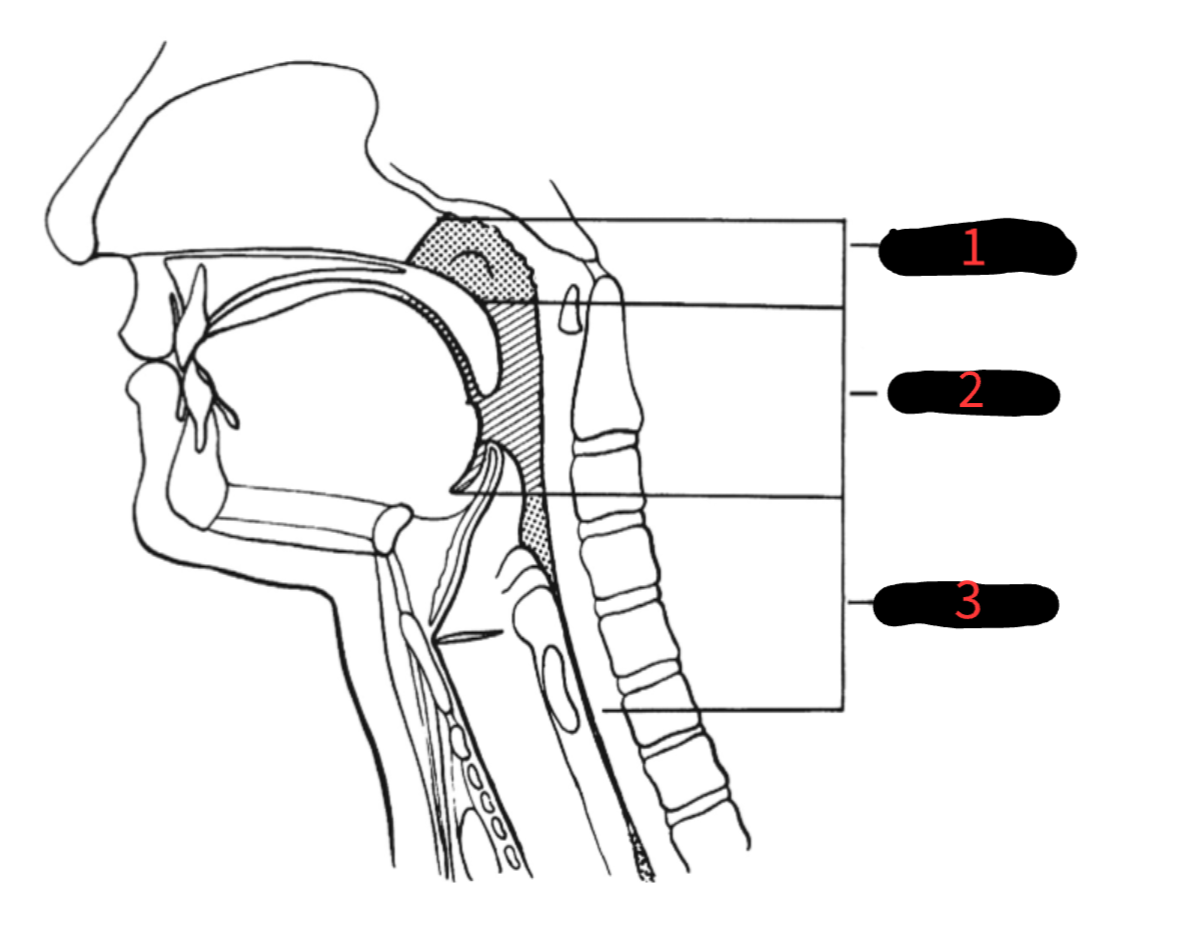
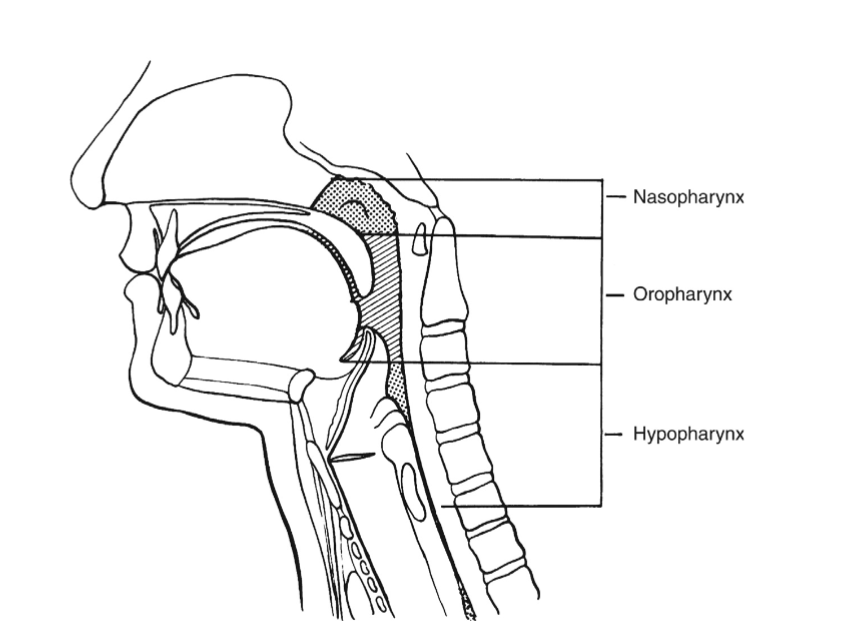
What is the area labelled 1?
nasopharynx
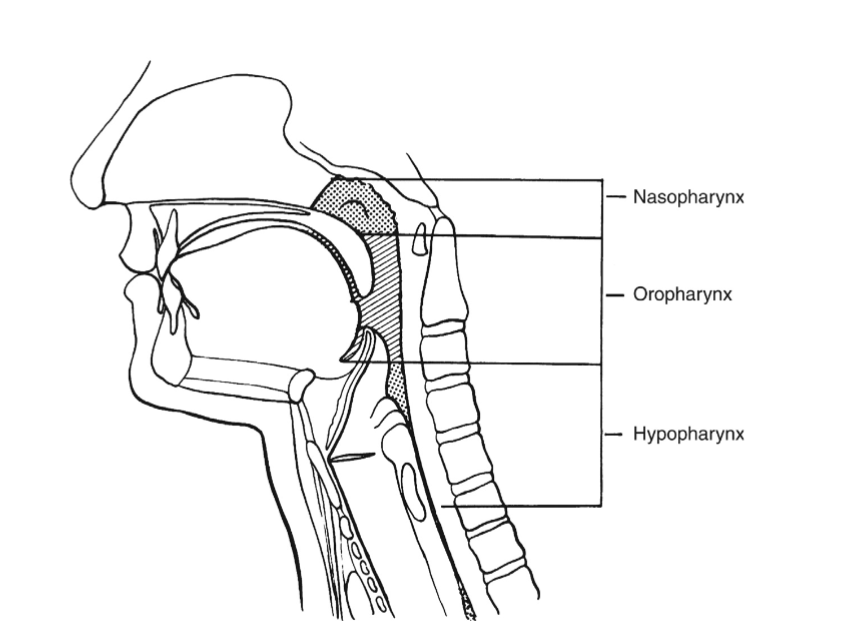
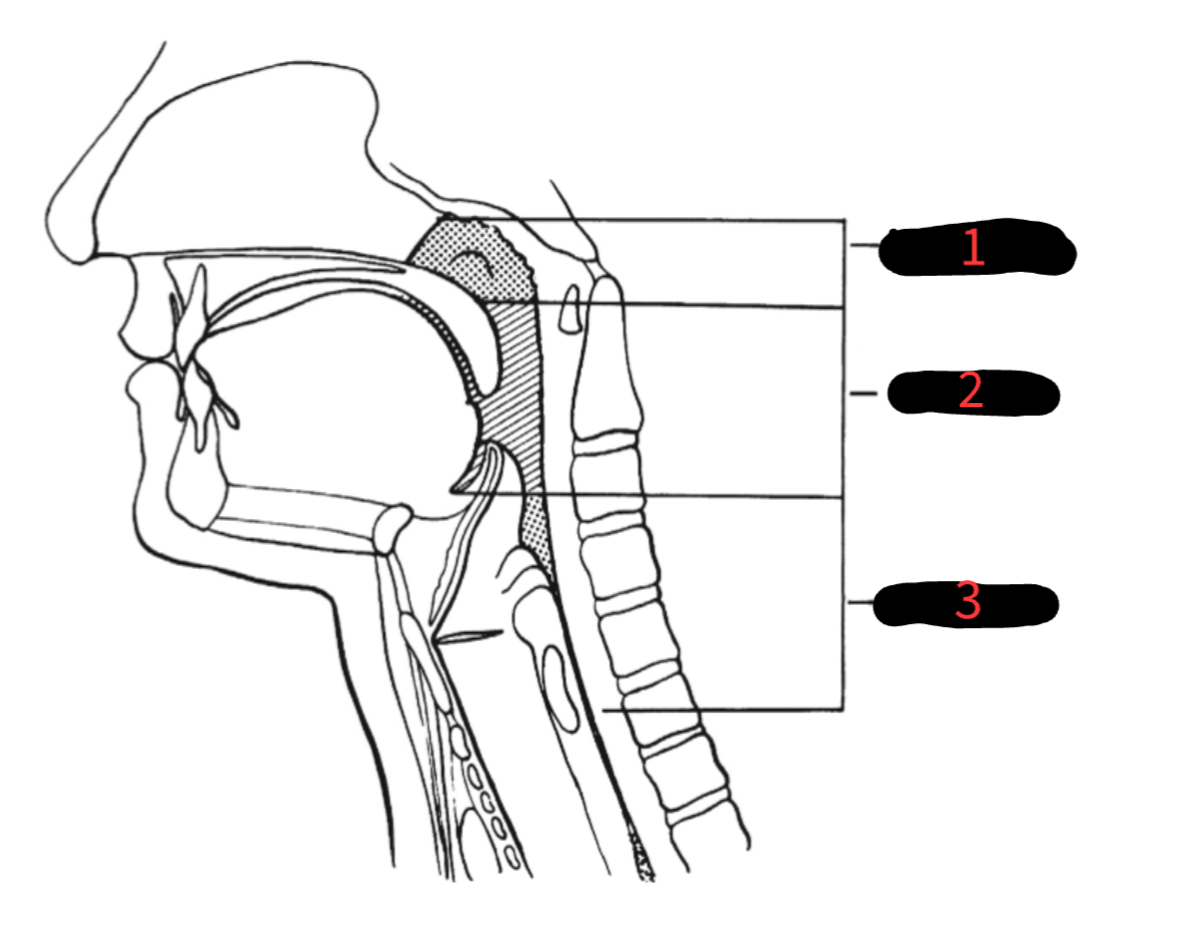
What is the area labelled 2?
Oropharynx
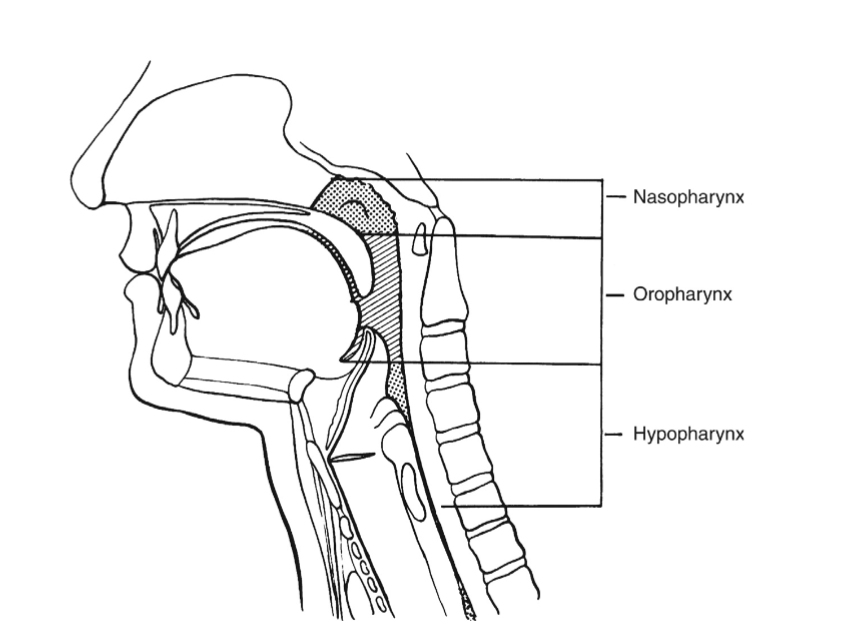
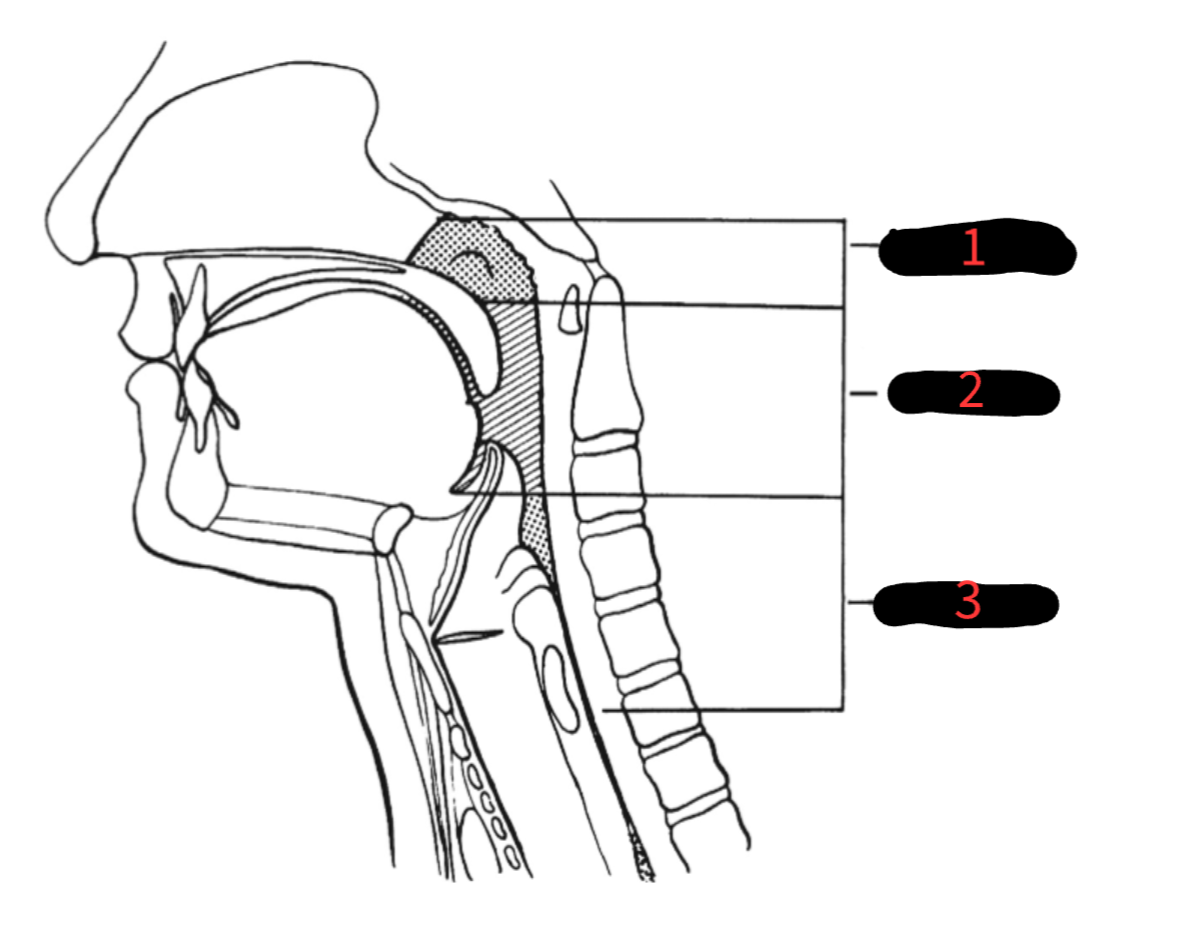
What is the area labelled 3?
Hypopharynx
4 stages of swallowing
oral preparatory, oral pharyngeal, esophageal, pharyngeal
Trigeminal (V)
Mandible movement, hyoid positioning
Facial (VII)
Cheeks, lips, salivary glands
Hypoglossal (XII)
Tongue movement
Accessory (XI)
Pharyngeal stage
Glossopharyngeal (IX)
Back of tongue
Vagus (X)
swallowing