Density, upthrust and viscosity
 Call Kai
 Learn
Learn Practice Test
 Spaced Repetition
 Match
Match Flashcards
 Knowt Play
1/23

There's no tags or description
Looks like no tags are added yet.
Name | Mastery | Learn | Test | Matching | Spaced | Call with Kai | Chat |
|---|
No analytics yet
Send a link to your students to track their progress
24 Terms
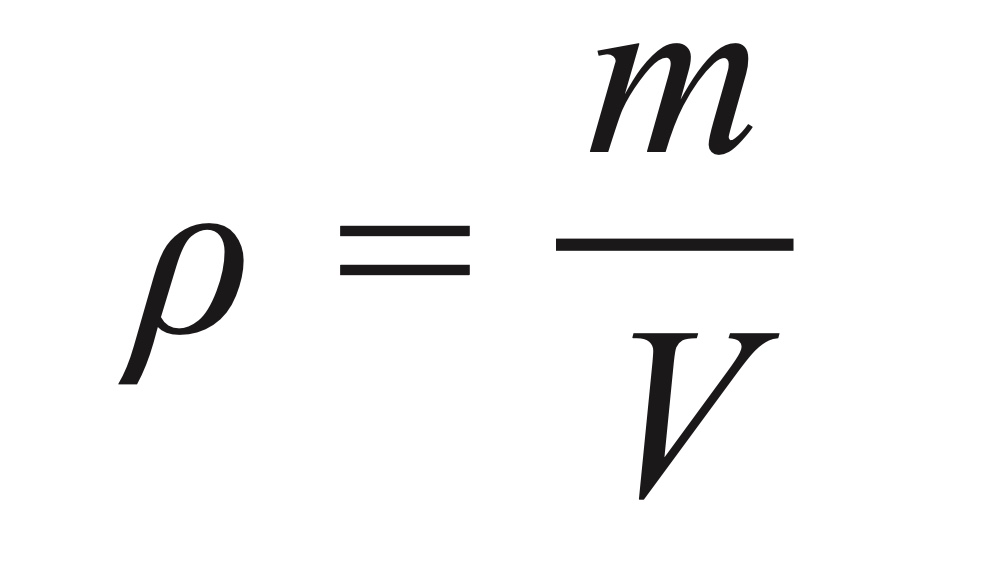
Density equation
ρ = m/V
How does the density determine whether an object floats
An object will float in a fluid it is less dense than
Normal pressure equation
p = F/A
Pressure in a fluid equation
p = hρg
Explain why upthrust occurs
The upward force on the bottom of an object submerged in a fluid is greater than the downward force on the top of an object submerged in a fluid, so the resultant force is upwards
Explain why the upwards force below an object submerged in a fluid is greater than the downwards force above that object
There is a greater weight of fluid at the bottom, so the pressure in all directions is increased, including upwards
Archimedes principle
When a body is completely or partially immersed in a fluid, it experiences an upthrust equal to the weight of the fluid it has displaced
Viscous drag
Friction between the surface of an object and a fluid as one of them is in motion
What does Stoke’s law tell you
The force due to viscous drag
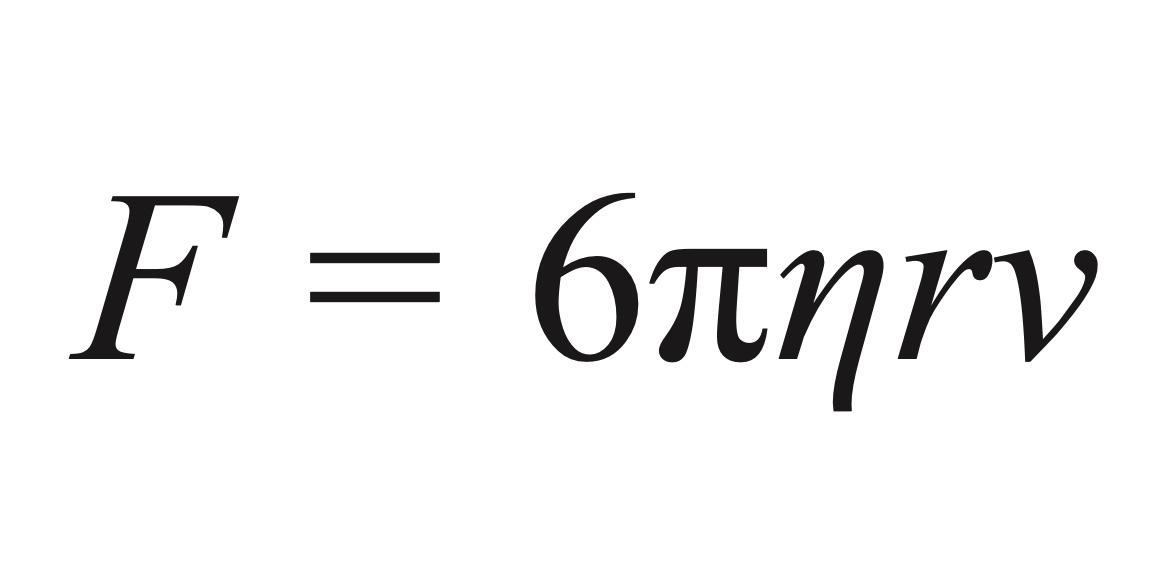
Stoke’s Law equation
F = 6πηrv
What does the η symbol mean
Viscosity of the fluid
η units
Nsm-2
How does increasing temperature affect the viscosity of a liquid
Decreases
How does increasing temperature affect the viscosity of a gas
Increases
Laminar flow
All the parts of a fluid are flowing in the same direction such that the layers do not mix
When does laminar flow occur
When a fluid is flowing slowly or an object is moving slowly through a fluid
Turbulent flow
The layers of a fluid are moving in different directions such that the layers mix
When does turbulent flow occur
A fluid is flowing quickly or an object is moving quickly through a fluid
What does Stoke’s Law apply to
Small, spherical objects moving slowly with laminar flow
Experiment to measure the viscosity of a liquid
1- Drop a ball bearing of known radius and density ρ down a column of liquid of known density σ.
2- There is a series of 3 rubber bands near the bottom of the column at a measured distance apart. When the ball bearing reaches the first at terminal velocity, start a stop watch to calculate the time between the 1st and 2nd and 2nd and 3rd.
3- Repeat with different sized balls.
4- Calculate separate velocity with d/t and find the average for each measurement. Then, calculate viscosity with η = (2r2g(ρ-σ))/9v
Explain how the viscosity equation in the ball bearing experiment can be derived
At terminal velocity Fgrav = Fupthrust + Fdrag
How should the ball bearing be retrieved from the bottom of the column of liquid
A magnet
Explain why the ball bearing should not fall too close to the wall in the viscosity experiment
The flow will no longer be laminar, so Stoke’s law no longer applies
Explain how submarines float and sink
Large tanks are filled with water to increase weight so it exceeds upthrust to sink. The tanks are filled with compressed air to reduce weight to rise