Ib Biology
 Call Kai
 Learn
Learn Practice Test
 Spaced Repetition
 Match
Match Flashcards
 Knowt Play
1/28

There's no tags or description
Looks like no tags are added yet.
Name | Mastery | Learn | Test | Matching | Spaced | Call with Kai | Chat |
|---|
No analytics yet
Send a link to your students to track their progress
29 Terms
An atom that has gained an electron
ion
A positively charged ion
Cation
A negatively charged ion
Anion
Carbon has an atomic number of
6
Carbon can form up to ___ covalent bonds
4
Why does carbon's bonding ability makes it especially important to living organisms?
Its four covalent bonds allow it to bond with other atoms, creating complex molecules.
Non polar Covalent Bond
-Electrons are shared unequally
-Strong
-Lipids/Fats
Polar Covalent Bond
-Electrons are unevenly shared
-Strong
-Water
Ionic Bond
-An electron is removed or added
-Strong
-Sodium
Hydrogen bond
-Sharing,losing gaining
-Weak
-Water
Why is a hydrogen bond not considered a true covalent/ionic bond?
Hydrogen bonds are only between hydrogen and another electro negative atom, it does not involve the complete transfer of electrons.
Identify the type of carbon structure represented.
A. CH₃–CH₂–CH₂–CH₃
Straight change alkane
A carbon chain with a smaller carbon chain branching from its middle
Alkane
A carbon chain whose ends are connected to form a loop
Cyclic compound.
A molecule containing several connected carbon rings
Steroid
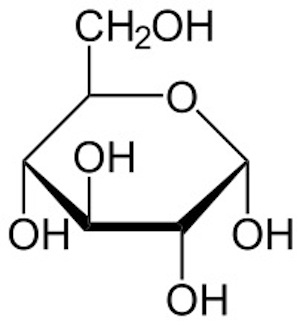
What is the OH? What is it’s important property? Biological example?
-Hydroxyl Group
-High polarity
-Glucose

What is the CH3? Important property? One biological example?
-Methyl Group
-Hydrophobic
-DNA

What is this?
-Carboxyll group (When carbon is double bonded to O, and single bonded to hydroxyl group (OH)
-Strong polarity
-Amino Acids
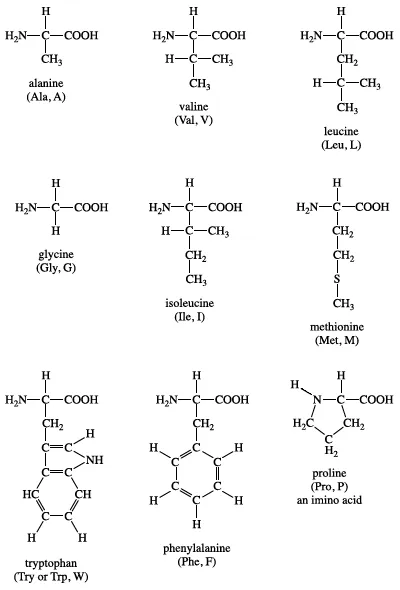
What is the H2N? Important property? Biological example?
-Amino (Nitrogen atom bonded to two hydrogen atoms)
-Allowing it to accept protons and become positively charged
-Amino acids.
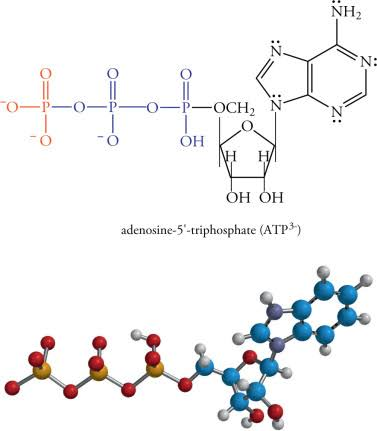
What is the red molecule? Important property? Biological example?
-Phosphate group (One phosphorus atom bonded to four oxygen atoms)
-Polar and hydrophilliyc because of net negative charges
-ATP
Monomer
A small, basic molecule that can chemically bond with other similar molecules to create a large, chain-like structure known as a polymer
Polymer
A large molecule made of many smaller, repeating chemical units called monomers linked together in long chains
Condensation reaction
-molecules combine to form a single larger molecule while releasing water.
-Anabolic reaction
-ATP required
Hyrolysis reaction.
-A chemical process where water is consumed to break the chemical bonds of a larger molecule, splitting it into smaller parts
-Catabolic
-Break down compley polymers
Monosaccharide
-Carbohydrate
-Simple sugars
-Short term energy
Polysaccharide
-Carbohydrate
-Lipids, fats
-Long term energy storage
-More branching, meaning they are better for long energy.
Triglyceride
-Fat
-Central glycerol connected to 3 fatty acids
Phospholipid
-Long chains of simple sugars
Saturated fatty acid | Unsaturated fatty acid |
-SFA- contains no double bonds between carbon atoms
-UFA- contains one or more double bonds in their carbon chain, creating kinks.