Egyptian history midterm 2
 Studied by 1 person
 Call Kai
 Learn
Learn Practice Test
 Spaced Repetition
 Match
Match Flashcards
 Knowt Play
1/15

There's no tags or description
Looks like no tags are added yet.
Name | Mastery | Learn | Test | Matching | Spaced | Call with Kai |
|---|
No analytics yet
Send a link to your students to track their progress
16 Terms
story of sinuhe
Middle Kingdom literary tale
written during 12th dynasty (1875-1840 bce)
set during the rule of amenemhet I and senusret I
follows an official (sinuhe) who flees from egypt to syria (after amenenmhet’s death)
he loves a good life in syria (with a family) but returns home
the new king senusret understands why he ran and respects him still
explores themes about kingship, loyality, and Egypts relationships with foreign lands
important because it is one of the earliest Middle Kingdom texts
Amenemhet I
founder of the 12th dynasty
lived in the capital Itj-tawy
strengthened centralized government after the first intermediate periods government instability
ordered irrigation and building projects to better Egypt
important: he strengthened Middle Kingdom government and started reforms
he was eventually assassinated and his son Senusret I took over the throne
Hatshepsut
ruled as a female pharaoh during the 18th dynasty (1473-1458 bce)
she originally co-ruled with thutmose III but later fully became the pharaoh
she wore traditntal male pharaoh attire like the nemes headdress and fake beard
she commissioned many architecture projects one famous one is her temple in the temple complex called deir el bahri
deir el bahri
multi level temple complex located on the West Bank of Thebes
the 18th dynasty pharaoh Hatshepsut built her funerary temple in this complex
also includes temples for mentuhotep II and thutmose III
mentuhotep II originally built his tempe here to signify the reunification of egypt and transition into the Middle Kingdom era
building structure reflects Middle Kingdom architecture
seqenenre tao
late 17th dynasty ruler
based in Thebes
he fought against the hyksos
his rule lead to the eventual downfall/ expulsion of the Hyksos
his mummy showed a violent head wound which means he probably died in battle
coffin texts
time period is from first intermediate period to middle kingdom
popular in middle egypt but were seen all over
mostly in non royal coffins
the texts granted protection and happiness in the afterlife
important part of Middle kingdom religious beliefs/ practices
hyksos
the Hyksos was group of rulers from the 15th dynasty
from avaris near the eastern delta
their rule was during a period of political conflict/ fragmentation
they fought with the theben 17th dynasty (king seqenenre tao)
other than conflict and military influence they also created advanced technology like horse chariots
amenhotep III
ruled during 18th dynasty
his rule was centered in Thebes
Egypt was thriving at mostly at peace during his rule
he focused on marriage and diplomacy over fighting
his mortuary temple is a sun temple, as he worshiped the sun-disc aten
and he connected his rulership to aten- promoting divine kingship
amarna letters
collection of stone tablets from the reigns of amenhotep III and Akhenaten.
the tablets were found in the city of akhetaten
they show written records of political diplomacy such as alliances, negotiations, and marriages
these tablets are used as direct evidence of writing in the Middle Kingdom
senusret I
he ruled in the early 12th dynasty (start of middle kingdom)
he ruled over the Itj-tawny region
he ordered many building projects, like temples
he also strenghthed trade with nubia
his rule is known for forming the early stages of the middle kingdom
Akhenaten
ruled during the 18th dynasty
establishes a new capital city called akhetaten named after the god aten
his reign is marked by his religious reforms centered around aten
he transformed art, buildings, and government to be more focused on the sun-disc aten
aten
solar god
amarna period
centered in city of akhetaten
pharaoh Akhenaten favored him
he was represented as a sun disk/ sun rays
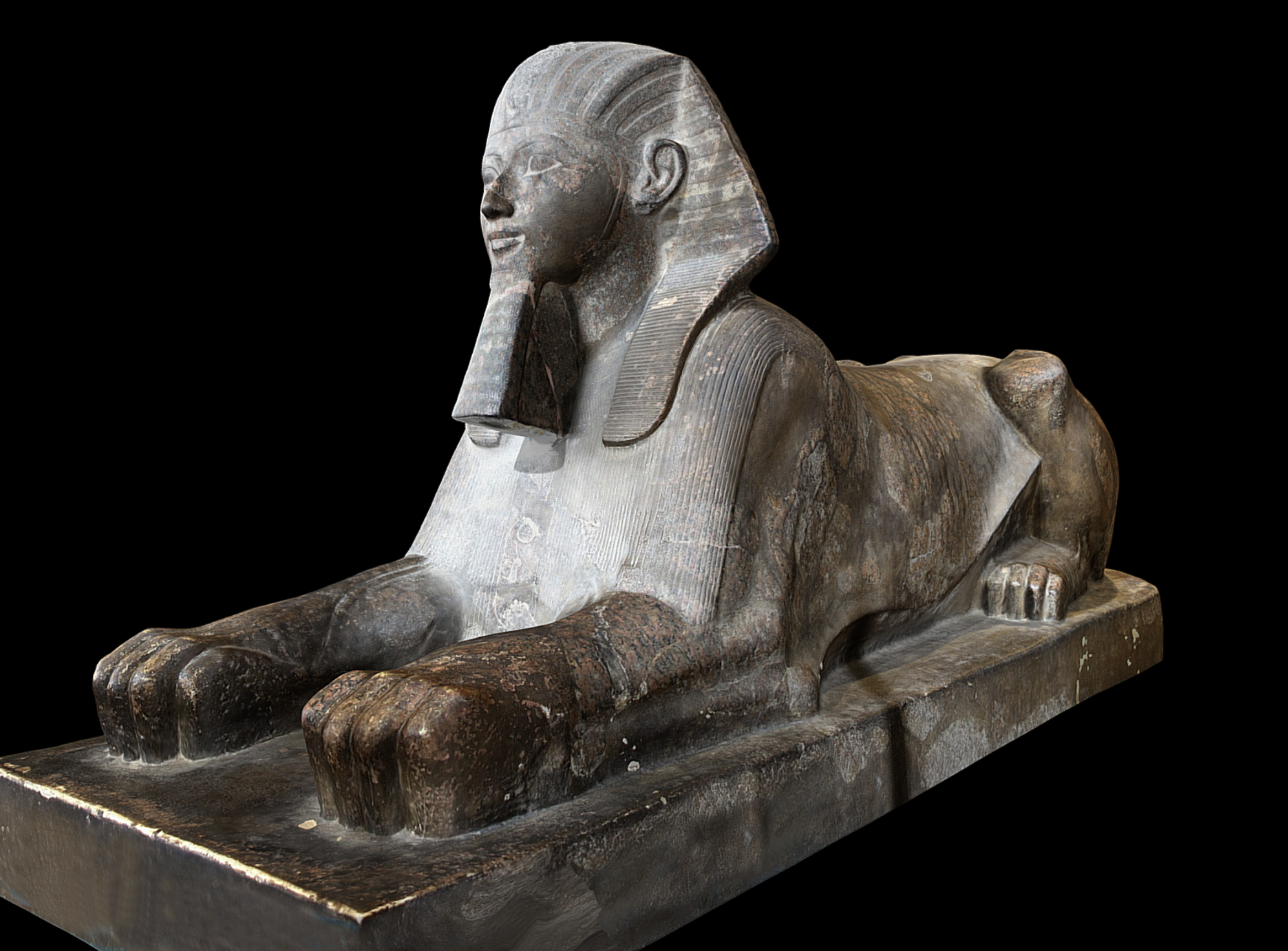
Sphinx of Hatshepsut
Red granite sphinx of Hatshepsut
from Deir el-Bahari in her mortuary temple
Located in the Cairo Museum
its her head on a lion body - wearing male pariah attire to show her rule
18th dynasty
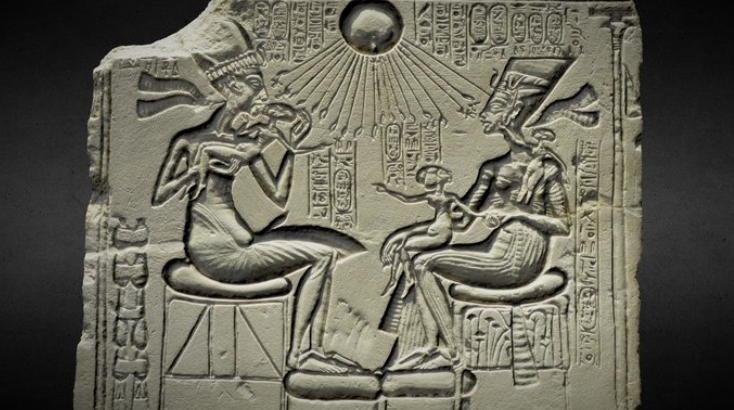
Akhenaten & Nefertiti
relief plate from an altarpiece
showing the royal couple (Akhenaten & Nefertiti) and their children
the family depiction represents humanity
18th dynasty
found in Akhetaten - was probably a house hold shrine
made from stone
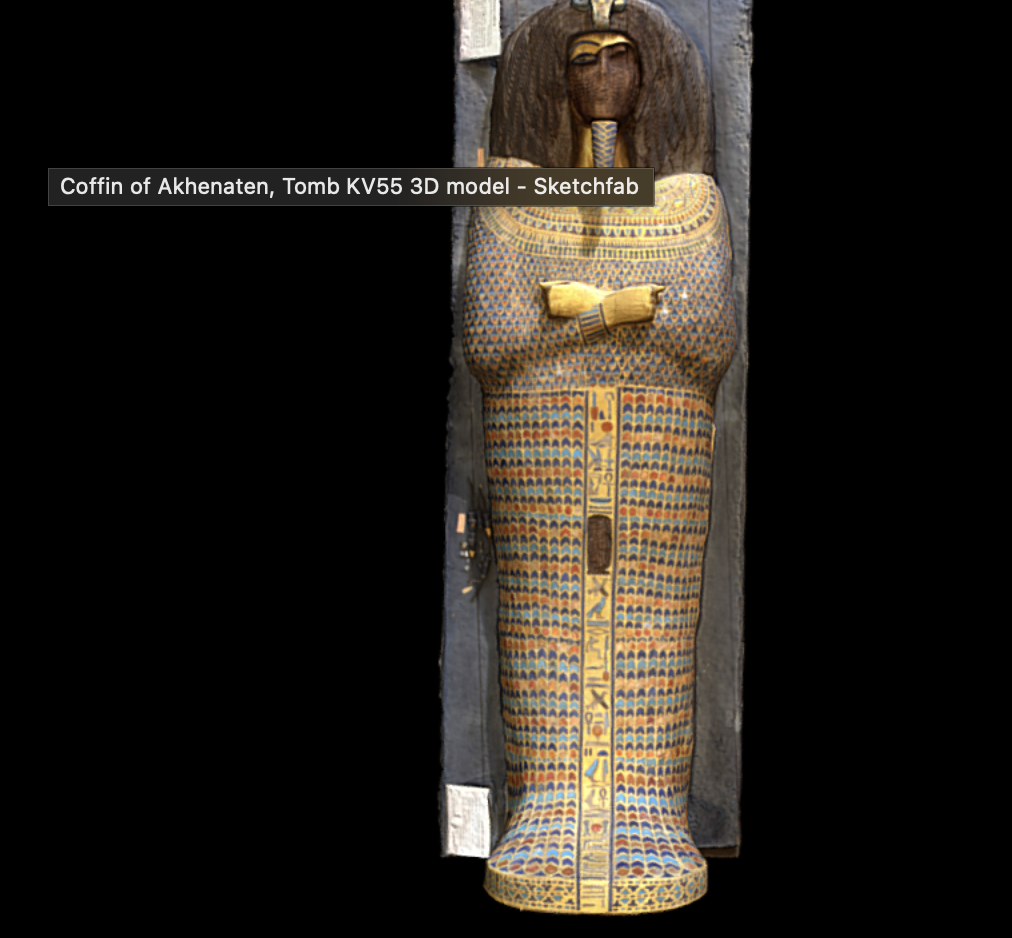
Coffin of Akhenaten, Tomb KV55
Coffin of the Pharaoh Akenaten
in the Egyptian Museum, Cairo, Egypt
found in a tomb in the Valley of the Kings
18th dynasty
someone removed the pharaoh’s name from the coffin because they believed he was a heretic
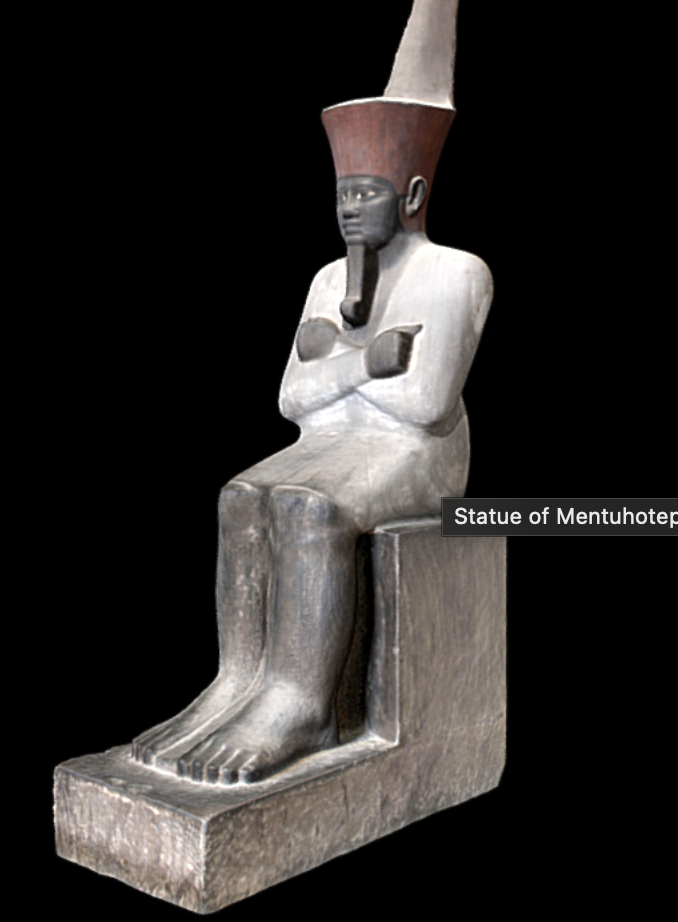
Statue of Mentuhotep II
dynasty 11
sand-stone statue that is painted for detail
from his mortuary complex at Deir el-Bahri
similar form to the osiris - the god of the under world
like his crossed arms and dark painted skin - represents his continued rule in the after life
 Note
Note  Flashcards (46)