Comparative Advantage - Columbia Uni Summer
 Call Kai
 Learn
Learn Practice Test
 Spaced Repetition
 Match
Match Flashcards
 Knowt Play
1/17

There's no tags or description
Looks like no tags are added yet.
Name | Mastery | Learn | Test | Matching | Spaced | Call with Kai | Chat |
|---|
No analytics yet
Send a link to your students to track their progress
18 Terms
Opportunity cost
What you sacrifice when choosing an option
Comparative Advantage
The ability of a person/nation to produce a good at a lower opportunity cost than another person/nation
Absolute Advantage
The ability of a person/nation to produce a good at a lower resource cost than another person/nation
3 Reasons on how to increase productivity
Repetition (More time spent -> more proficiency)
Continuity (More time spent -> more proficiency)
Innovation (Better production methods -> more proficiency)
Import
a product produced in a foreign country and purchased by residents of the home country
Export
a product produced in the home country and sold in a foreign country
Outsourcing
Paying an external third party to do your work
Offshoring
When a domestic firm shifts part of its production to a different country
Market Economy
an economy in which people specialise and exchange goods and services in markets
Centrally Planned Economy
An economy in which a government decides the how much, how to, and who gets the goods produced
Market Failure
When a market’s outcome isn’t the most efficient
How does the government enforce rules on consumer products?
Punish people who violate the rules
Creates an implicit contract that the product is safe to use (through product liability/tort law)
Spreads information about consumer products
How does the government reduce economic uncertainty?
Funds a social safety net for poorer citizens
Helps fill in for unavailable private insurance
How do entrepreneurs play a role in a market economy?
They increase production to meet the higher demand
As there is more supply, prices will decrease but profit will still be available
Examples of social and government intervention in market economies?
Contracts 2. Insurance 3. Patents
Formula to calculate opportunity cost
Max output of A/ Max output of B
(Opportunity cost of what you’re finding goes on the bottom)
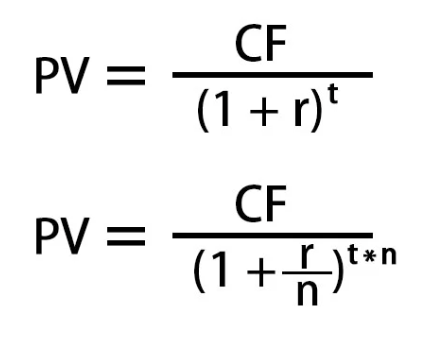
Net Present Value Formula
CF = Future value
PV = Present Value
r = Rate of interest (percentage ÷ 100)
n = Frequency of interest
t = Time in years
How do you find the comparative advantage from the opportunity costs determined?
Compare both the opportunity costs by both producers, and choose the lowest one.