Chapter 15 - Metamorphosis
 Call Kai
 Learn
Learn Practice Test
 Spaced Repetition
 Match
Match Flashcards
 Knowt Play
1/41

There's no tags or description
Looks like no tags are added yet.
Name | Mastery | Learn | Test | Matching | Spaced | Call with Kai | Chat |
|---|
No analytics yet
Send a link to your students to track their progress
42 Terms
metamorphosis
the hormonal reactivation of development that gives the animal a new form
- the remodeling of existing larval tissues into adult structures
- aquatic larva = becomes terrestrial adult frogs
- tails = become legs
- gills = become lungs
what occurs in amphibian metamorphosis?
1. decrease in protein synthesis
2. increase in digestive enzyme : proteases, RNases, DNases, and collagenases
3. cell death by apoptosis when these enzymes are released to the cytoplasm in the cells of the tails for tail regression
what are the 3 effects of thyroid hormones on the tail of an amphibian during metamorphosis?
lysosomal protease
apoptotic gene product in tail of amphibian that causes tail regression through apoptosis
- the more of it, the more the tail regresses
1 limb growth before tail regression (locomotion)
2. adult lung function before gill regression (breathing)
- otherwise, the terrestrial animal will have no way of moving or breathing
what is the specific sequence of the events of metamorphosis and why?
differential responses to hormone concentrations thresholds ensures that the correct sequence of changes occur
what ensures the correct specific sequence of events of metaphorosis?
Threshold Hypothesis
states that tissues that change earlier can respond to lower concentrations of thyroid hormone , while tissues that change later require higher concentrations of the hormone
limb growth, requires less thyroid hormone
what is considered an early response for thyroid hormone concentration for tails?
tail regression, requires more thyroid hormone
what is considered a late response for thyroid hormone concentration for tails?
1. Duration of metamorphosis (larva to adult)
2. Timing of appearance of changes
- some amphibians spend their entire lives as aquatic larvae, and a few amphibians skip the aquatic stage
what 2 developmental events in amphibian life cycles vary due to heterochrony?
neoteny
the retention of juvenile features in the adult animal
- no terrestrial stage
- observed in salamanders
1. No metamorphosis is observed in specimens in the wild
2. They retain gills, larval skin, and tails but grows legs
3. Sexual maturity occurs while larval features are retained
4. the thyroid gland does not produce thyrotropin, a thyroid hormone necessary for metamorphosis
what are the 4 features of neoteny in the Mexican axolotl?
the gills regress and lungs grow + changes in the skin
what happens if you feed a Mexican axolotl thyrotropin?
direct development
feature in which amphibian does not have aquatic larval stage
- extremely rare in amphibians
- seen in Eleutherodactylus coquí, the common Puerto Rican
coquí
1. No aquatic tadpole stage
2. The limb buds appear shortly after the neural tube closes
3. The hatching frogs are fully terrestrial individuals
what are 3 features of direct development?
Oviviparous
Type of reproduction in which eggs stay in mother's body after internal fertilization and they give birth to fully terrestrial juveniles
1. ametabolous
2. hemimetabolous
3. holometabolous
what are the 3 types of insect metamorphosis?
direct development, ex: silverfish
ametabolous
gradual changes ex: grasshoppers and roaches
hemimetabolous
complete metamorphosis ex: butterflies, drosophila
holometabolous
1. There is no larval stage
2. The embryo hatches into a pronymph (a miniature version of the adult)
3. The animal grows with each molt until it reaches the adult size
what are 3 features of ametabolous insect metamorphosis?
1. the embryo hatches into a pronymph, then molts into a nymph (immature adult)
2. the rudiments of the adult organs are present in the nymph such as wings and genital organs
3. the animal grows and the structures mature with each molt until it reaches the adult size : the imago
what are the 3 features of hemimetabolous insect metamorphosis?
1. there is no pronymph stage
2. a feeding larva hatches from the egg
3. the larva becomes progressively larger with each molt
what are the 2 features of holometabolous insect metamorphosis?
1. metamorphic molt
2. imaginal molt
what are the 2 types of molts in holometabolous insect metamorphosis?
metamorphic molt
the larva transforms into a pupa (embryo inside cocoon), which does not feed while metamorphosis is occuring, the larval tissues are destroyed and replaced with adult tissues
imaginal molt
the adult (imago) ecloses from the cocoon
Regeneration
the restoration of severed tissues/body parts that involves the reactivation of development
1. Stem cell mediated - occurs in most animals
2. Epimorphosis - occurs in salamanders
3. Morphallaxis - occurs in hydra
4. Compensatory Regeneration - occurs in most mammals
what are the types of regeneration?
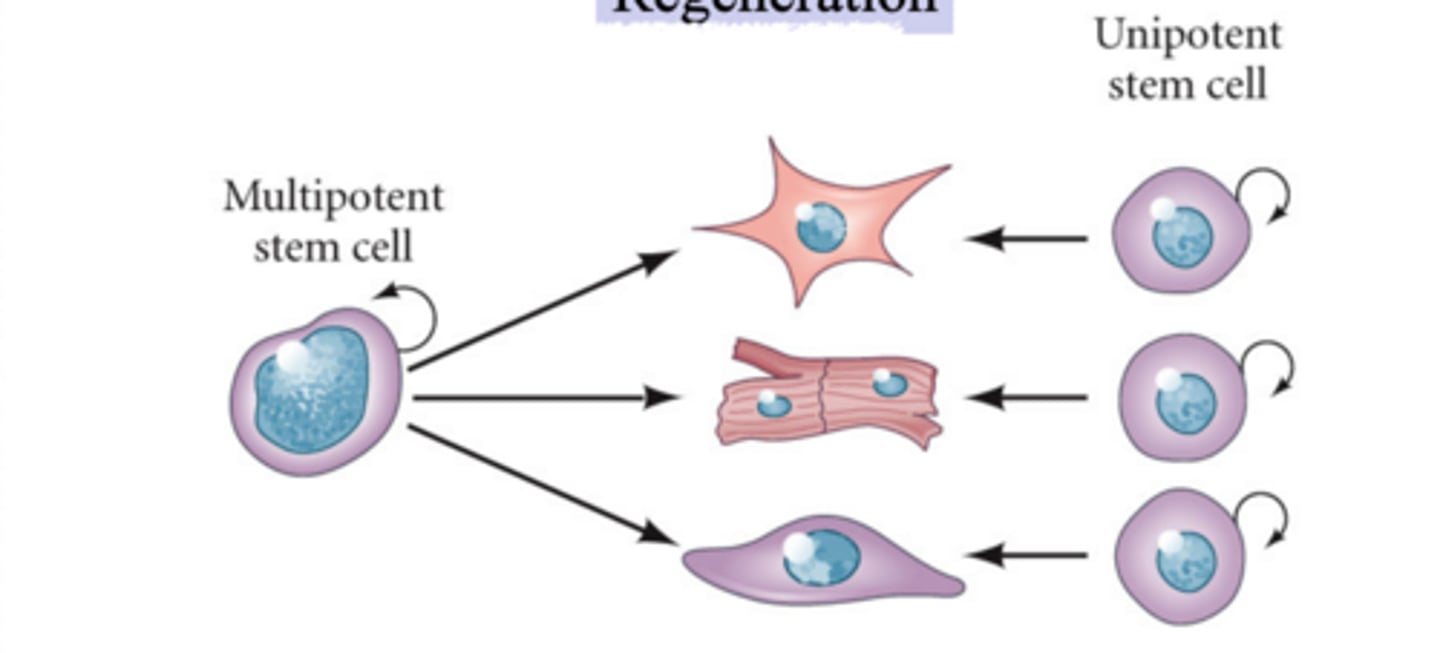
Stem-cell mediated regeneration
populations of pluripotent cells are present in animals which allow for the regrowth of lost tissues or severed body parts
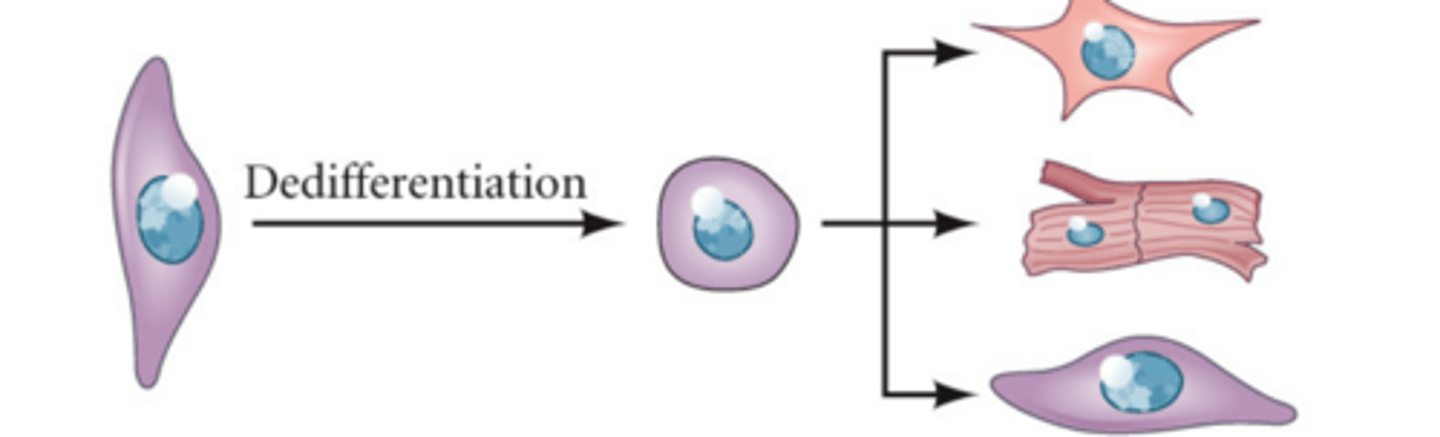
1. adult cells dedifferentiate to become neoblasts
2. the neoblasts form a mass of undifferentiated cells
3. cell division occurs
4. the blastema cells become re specified to form the missing structures
what are the 4 steps of epimorphosis?
stem cell mediated regeneration
what type of regeneration is this?
epimorphosis
what type of regeneration is this?
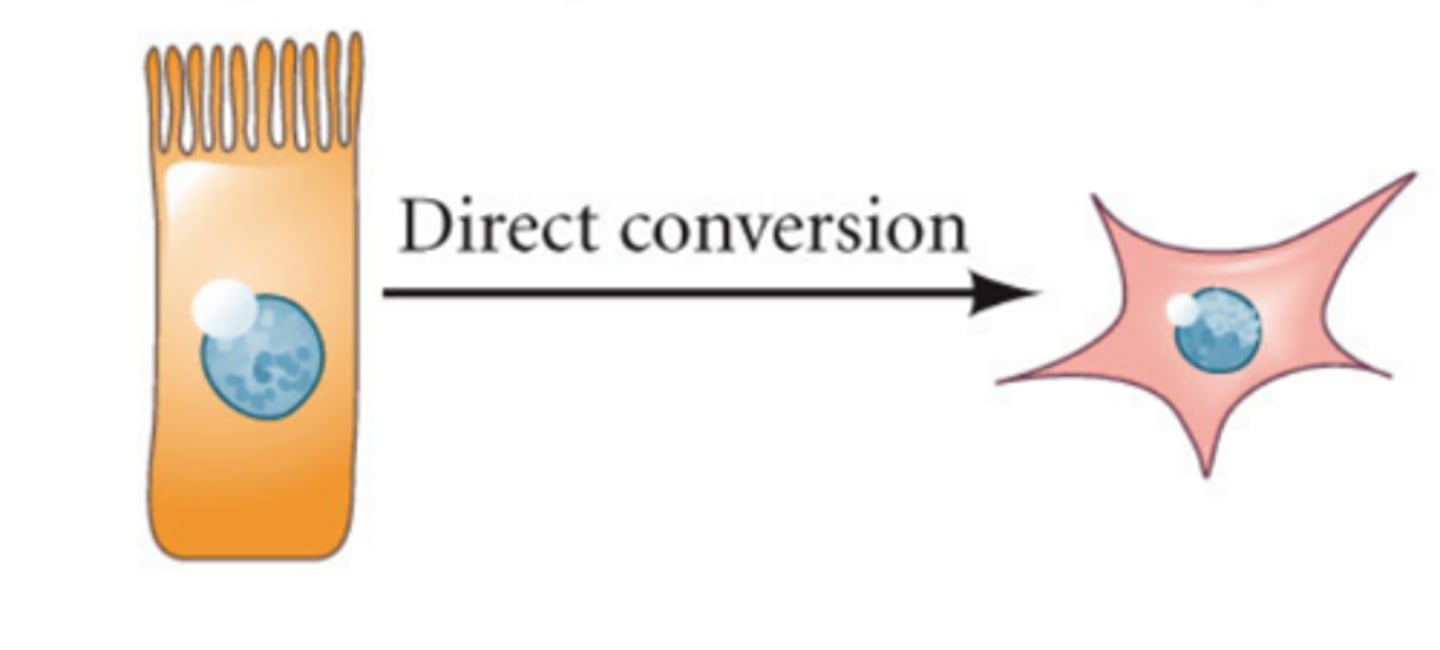
Morphallaxis (transdifferentiation)
redifferentiation and re-patterning of existing tissues into the missing structures (direct conversion)
- very little cell division occurs
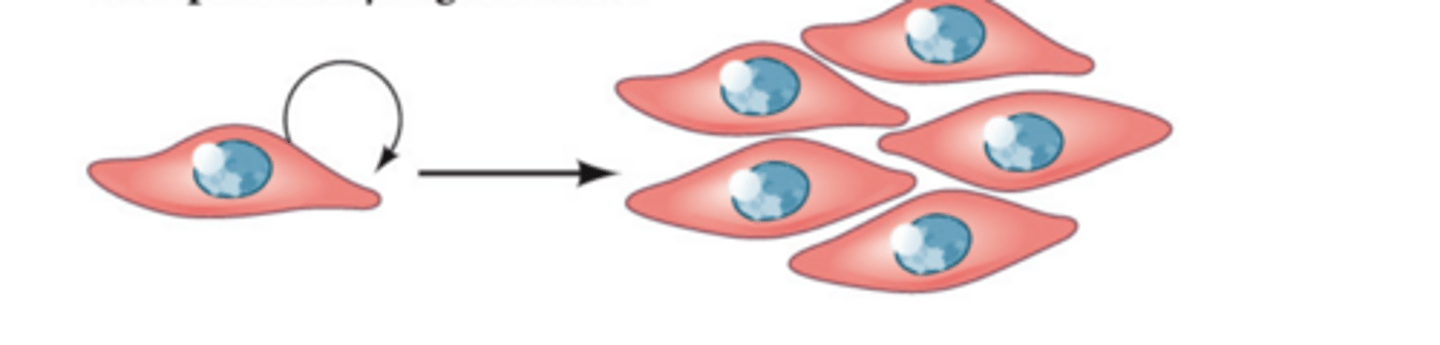
compensatory regeneration
cells do not re differentiate but divide to become a mass or tissue (scar tissue) that is equivalent, but not identical to the mass of tissue lost, because there is no memory of the exact pattern of the lost tissue
Morphallaxis (transdifferentiation)
what type of regeneration is this?
compensatory regeneration
what type of regeneration is this?
Hematopoiesis
stem cell mediated regeneration of blood cell type
clonogenic neoblasts which are always present
- they migrate and accumulate at the site of the wound to form regeneration blastema
what does stem cell mediated regeneration in planarians depend on?
BMPs (the dorsal signals) and their inhibitors such as Noggin
what 2 things does dorsal-ventral polarity depend on in regards to Morphogen gradients and positional information for regeneration in planarians?
Wnts (the posterior signals) and their inhibitors
what 2 things does anterior-posterior polarity depend on in regards to Morphogen gradients and positional information for regeneration in planarians?
if tail is cut, instead of regenerating another tail, a head is regenerated
what happens if Wnt1 is blocked by RNAi in the posterior morphogen gradient for regeneration of planarians?
what is the difference between distal vs proximal regeneration in a salamander?