TEAS 7 SCIENCE PRCATICE TEST
 Call Kai
 Learn
Learn Practice Test
 Spaced Repetition
 Match
Match Flashcards
 Knowt Play
1/17

There's no tags or description
Looks like no tags are added yet.
Name | Mastery | Learn | Test | Matching | Spaced | Call with Kai | Chat |
|---|
No analytics yet
Send a link to your students to track their progress
18 Terms
Changes in states of matter
Evaporation: Liquid to gas
Condensation: Gas to liquid
Sublimation: Solid to gas
Deposition: Gas to solid
Physical and chemical changes
Physical changes(AKA phase changes)
Breaking a pencil
Chemical changes
Burning a pencil
Characteristics of ACIDS
Turns limitus paper red
Donates protons
Reacts with metals to form hydrogen gas
Acids produce H+
Salts composition
A cation from a base & an anion from an acid
Spleen facts
Part of the immune system
Filters blood
Fights bacteria
Largest organ in the lymphatic system
Scientific laws and theories
Scientific LAW: An explanation of results that always happens
Newtons law of universal gravitation; Gravity
Scientific theory: Generally accepted explanation that has been highly developed & tested
A hypothesis has been verified & tested
Atom characteristic
Full complete shell = Stable atoms
Not complete shell = bonding with other atoms
Bond with other atoms occurs by gaining or losing electrons in ionic compounds
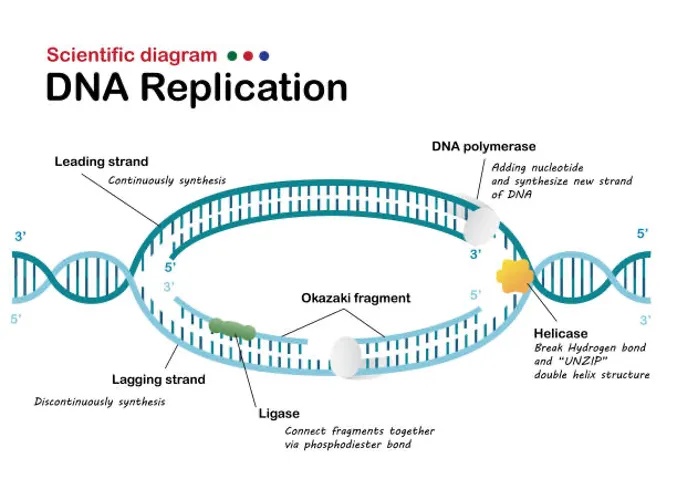
DNA replication process
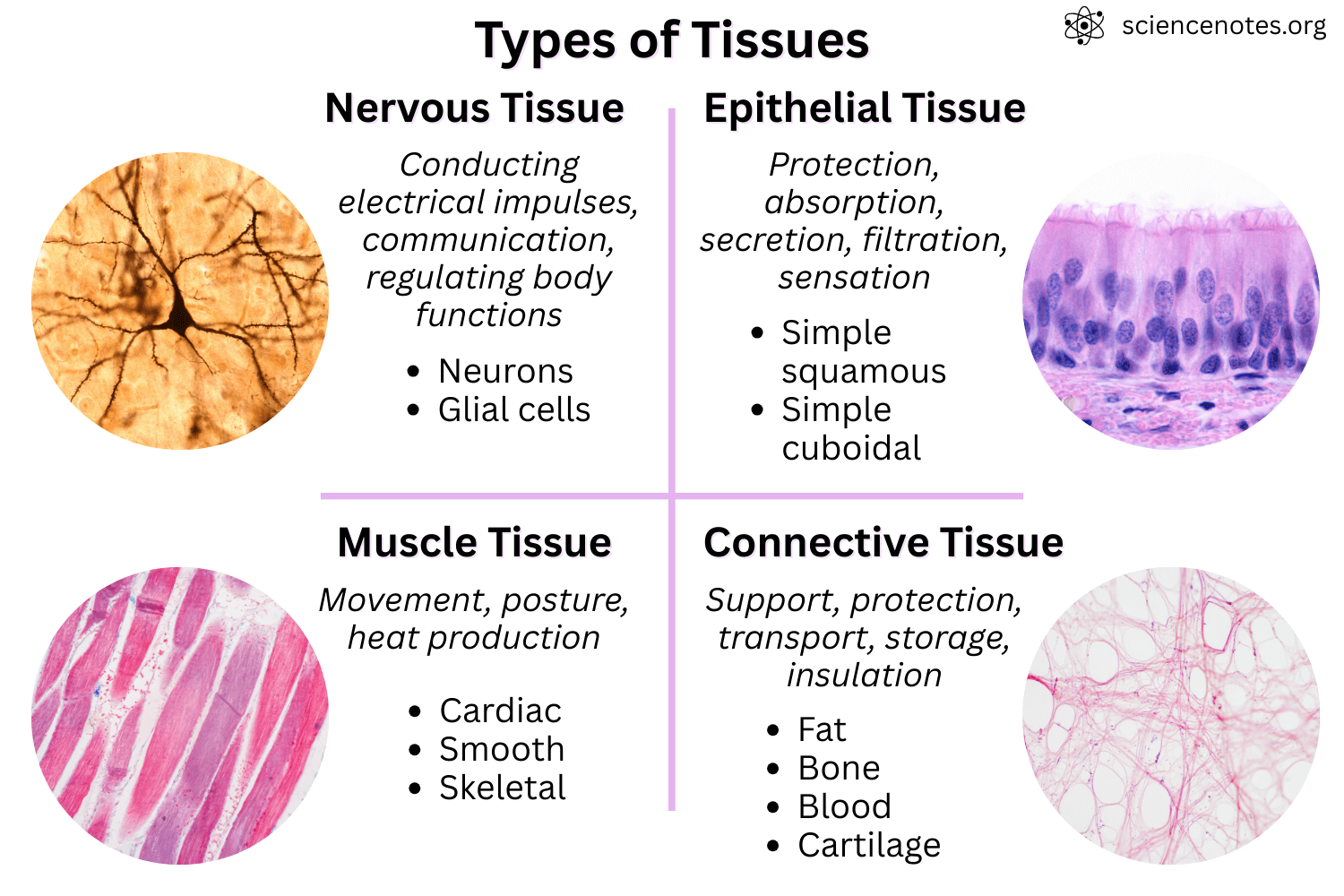
Tissue types
Epithelial Tissue
Location: Skin surface, organ linings, and digestive tract.
Muscle Tissue
Location: Attached to bones, in the heart, and lining hollow organs (stomach, intestines, blood vessels).
-Skeletal muscle: attached to bones, voluntary movement. Tightly packed & cubodial.
-Cardiac muscle: heart, pumps blood. Cross striated, quadrangular.
-Smooth muscle: walls of hollow organs, involuntary movement. Elongated spindle shape.
Nervous Tissue
Location: Brain, spinal cord, and peripheral nerves.
Supportive Connective Tissue
Location: Bones, blood, fat (adipose tissue), cartilage, and tendons.
Fascia, Tendons, Ligaments, Cartilage
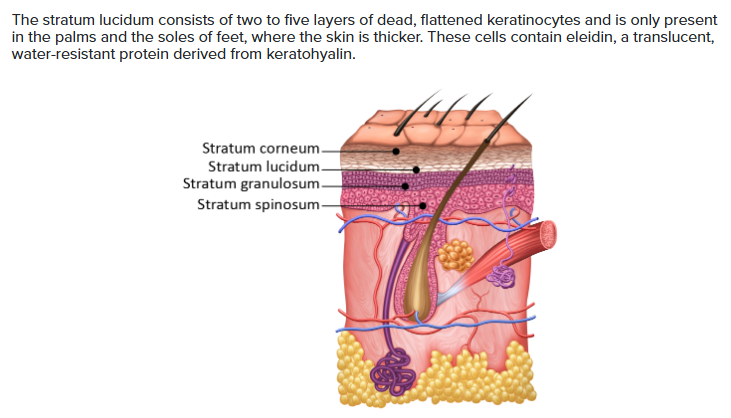
skin layers
Periodic table groups
Group 1: Alkali Metals (e.g., Sodium, Potassium)
Group 2: Alkaline Earth Metals (e.g., Magnesium, Calcium)
Groups 3–12: Transition Metals (e.g., Iron, Copper, Gold)
Group 13: Boron Family
Group 14: Carbon Family
Group 15: Pnictogens (e.g., Nitrogen, Phosphorus)
Group 16: Chalcogens (e.g., Oxygen, Sulfur)
Group 17: Halogens (e.g., Fluorine, Chlorine)
Group 18: Noble Gases (e.g., Helium, Neon)
Genetic rules
Homozygous: inherited the same version (allele) of a gene from both biological parents.
dominant AA or recessive aa
Heterozygous: inherited two different versions of a gene—one from each parent
Aa
Determining genetic percentages
EX.
Let's cross a brown-eyed parent who carries a hidden blue gene (\(Bb\)) with another brown-eyed parent who also carries a hidden blue gene (\(Bb\)).
Box 1: \(BB\) (Brown eyes)
Box 2: \(Bb\) (Brown eyes)
Box 3: \(Bb\) (Brown eyes)
Box 4: \(bb\) (Blue eyes) [1, 2, 3, 4, 5]
Offspring Percentages:
Genotype: 25% \(BB\), 50% \(Bb\), and 25% \(bb\).
Phenotype: 75% will have brown eyes (3 out of 4 boxes), and 25% will have blue eyes (1 out of 4 boxes)
![<p>EX.</p><p>Let's cross a brown-eyed parent who carries a hidden blue gene (\(Bb\)) with another brown-eyed parent who also carries a hidden blue gene (\(Bb\)). </p><ul><li><p><span><strong>Box 1:</strong> \(BB\) (Brown eyes)</span></p></li><li><p><span><strong>Box 2:</strong> \(Bb\) (Brown eyes)</span></p></li><li><p><span><strong>Box 3:</strong> \(Bb\) (Brown eyes)</span></p></li><li><p><span><strong>Box 4:</strong> \(bb\) (Blue eyes)</span> [1, 2, 3, 4, 5]</p></li></ul><p><strong>Offspring Percentages:</strong></p><ul><li><p><span><strong>Genotype:</strong> 25% \(BB\), 50% \(Bb\), and 25% \(bb\).</span></p></li><li><p><span><strong>Phenotype:</strong> 75% will have brown eyes (3 out of 4 boxes), and 25% will have blue eyes (1 out of 4 boxes)</span></p></li></ul><p></p>](https://assets.knowt.com/user-attachments/a284deba-aa95-4535-a592-6e58e9c30099.png)
Functions of muscular system
Produce movement through contraction
Support circulation through the body
Support & maintain posture
Hypersensitivity of the immune system
Causes allergies
Cardiac conjuction system
The hearts natural pacemaker
SA node (sinoatrial): Starts the electrical signal, atria contracts » P wave on ECG (60 to 100 BPM)
Bachman bundle:
signal from SA node to left atrium
Internodal pathways
Anterior, middle, posterior
Signal from SA node to AV node
Secondary pacemaker
AV node (Atrioventricular): Shows signal briefly, delays signal from SA node, contracts atria, gives ventricle time to fill with blood » PR on ECG (40 to 60 BPM)
Bundle of his
ONLY route between atria & ventricles
Right bundle branch: Signal to right ventricle
Left bundle branch: Signal to left ventricle
Purkinje fibers- Last ditch pacemaker if SA & AV node fail
Connect with myocytes
Initialize depolarization » contraction (20 to 40 BPM)
Path: Bundle of his » bundle branches » purkinje fibers (carries electrical impulse to ventricles that depolarize & contract (QRS complex))
Catalyst & substrate
catalyst: Accelerates a chemical reaction, LOWERS activation energy
substrate: Either the target molecule is transformed or the physical surface where the catalyst is anchored
Platelet functions
Form blood clots to stop bleeding