Chemistry 30: Organic Chemistry Quiz 2
0.0(0)
Studied by 2 people Call Kai
 Learn
Learn Practice Test
 Spaced Repetition
 Match
Match Flashcards
 Knowt Play
Card Sorting
1/10

Last updated 3:48 AM on 2/13/23
Name | Mastery | Learn | Test | Matching | Spaced | Call with Kai | Chat |
|---|
No analytics yet
Send a link to your students to track their progress
11 Terms
1
New cards
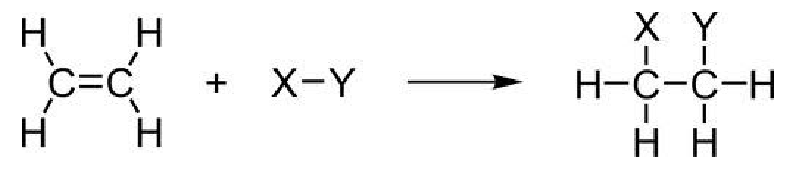
Addition Reactions
• Double and triple bonds in alkenes and alkynes allow them to undergo addition reactions
• Double bond → single bond
• Triple bond→ double bond
• Reactant must be unsaturated
• Two reactants → one product
• Double bond → single bond
• Triple bond→ double bond
• Reactant must be unsaturated
• Two reactants → one product
2
New cards
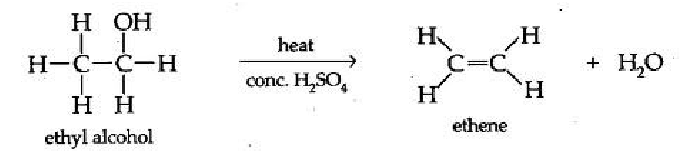
Elimination Reactions
• Atoms are removed from an organic molecule \\n and a double bond forms between the carbons from which atoms were removed
• Single bond → double bond
• Reactant saturated
• One reactant → two products
• Single bond → double bond
• Reactant saturated
• One reactant → two products
3
New cards
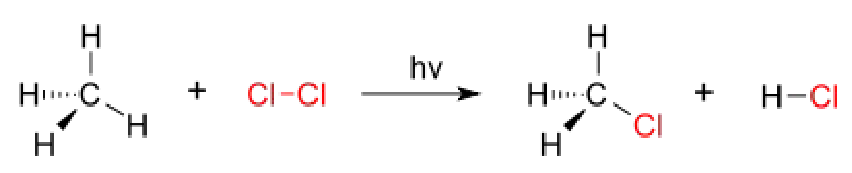
Substitution Reactions
• Hydrogen atom or functional group is replaced by a different functional group
• No change in bond type (single vs. double vs. triple)
• Saturated → saturated
• Reactant must be saturated (or aromatic)
• Two reactants → two products
• No change in bond type (single vs. double vs. triple)
• Saturated → saturated
• Reactant must be saturated (or aromatic)
• Two reactants → two products
4
New cards
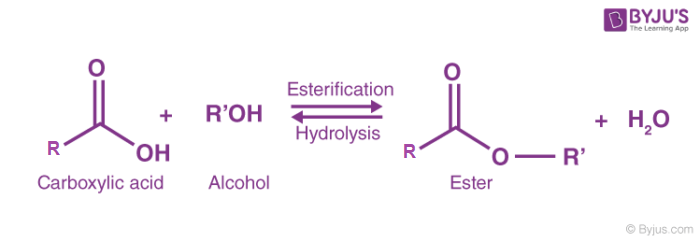
Esterification Reactions
• Alcohol combines with carboxylic acid to \n produce ester and water \n • An example of a condensation reaction \n – Two molecules combine to form a larger molecule \n as well as a small, stable molecule (such as water) \n • Many flavors and aromas of fruits and spices \n are due to esters
5
New cards
Hydrocarbon Derivatives
\-organic compounds containing elements other than C and H
\-defined by functional groups → the arrangement is responsible for behaviour
\-defined by functional groups → the arrangement is responsible for behaviour
6
New cards
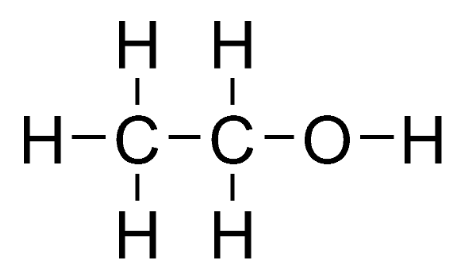
Alcohols
• Hydroxyl group
– R-OH \\n
• Hydrogen bonding -> Water soluble
– Higher boiling points than hydrocarbons
\-ends with ”-ol”
– R-OH \\n
• Hydrogen bonding -> Water soluble
– Higher boiling points than hydrocarbons
\-ends with ”-ol”
7
New cards
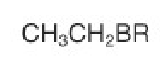
Alkyl Halides (Halogenated Hydrocarbons)
• Halogen group
– -F, -Cl, -Br, -I
• May have dipole-dipole
– Higher boiling points than hydrocarbons
– Not water soluble
\-ends with “-ane”, “-ene”, or “-yne”
– -F, -Cl, -Br, -I
• May have dipole-dipole
– Higher boiling points than hydrocarbons
– Not water soluble
\-ends with “-ane”, “-ene”, or “-yne”
8
New cards
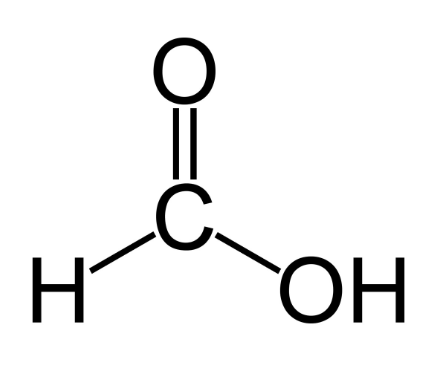
Carboxylic Acids
• Carboxyl Group:
– R-COOH
• Hydrogen bonding
– Water soluble
– Higher boiling points than hydrocarbons and alcohols
– R-COOH
• Hydrogen bonding
– Water soluble
– Higher boiling points than hydrocarbons and alcohols
9
New cards
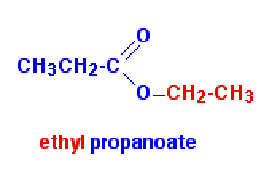
Esters
• Form from the reaction between an alcohol and a carboxylic acid
• Water is also produced
\-Since ester molecules cannot experience hydrogen bonding amongst one another, they are expected to have lower boiling points than similar alcohols and c. acids.
\
• Water is also produced
\-Since ester molecules cannot experience hydrogen bonding amongst one another, they are expected to have lower boiling points than similar alcohols and c. acids.
\
10
New cards
complete hydrocarbon combustion
\-blue flame
\-has excess oxygen
\-has excess oxygen

11
New cards
incomplete hydrocarbon combustion
\-orange flame
\-has limiting oxygen
\-also produces C (soot) and CO
\-has limiting oxygen
\-also produces C (soot) and CO
