L2 | Femur

0.0(0)
Studied by 11 people
call kaiCall Kai
Locked
learnLearn
examPractice Test
spaced repetitionSpaced Repetition
heart puzzleMatch
flashcardsFlashcards
GameKnowt Play
Card Sorting

1/10

encourage image

There's no tags or description

Looks like no tags are added yet.

Last updated 3:09 PM on 7/29/26
Name
Mastery
Learn
Test
Matching
Spaced
Call with Kai
Chat

No analytics yet

Send a link to your students to track their progress

11 Terms

1
New cards
<p>Q: …… is the heaviest and the largest bone of the skeletal system. </p><p>A. Femur </p><p>B. Tibia </p><p>C. Fibula </p><p>D. Ilium</p>

Q: …… is the heaviest and the largest bone of the skeletal system.

A. Femur

B. Tibia

C. Fibula

D. Ilium

A. Femur
2
New cards
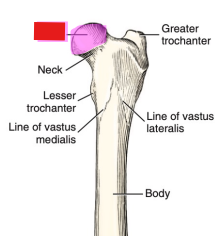
<p>Q: …… articulates with the acetabulum of the os coxae to form the hip joint. </p><p>A. Greater trochanter </p><p>B. Head of the femur </p><p>C. Lesser trochanter </p><p>D. Third trochanter</p>

Q: …… articulates with the acetabulum of the os coxae to form the hip joint.

A. Greater trochanter

B. Head of the femur

C. Lesser trochanter

D. Third trochanter

B. Head of the femur

3
New cards
<p>Q: …… is a depression at the head of the femur for the attachment of the round ligament of the femur. </p><p>A. Trochanteric fossa </p><p>B. Extensor fossa </p><p>C. Fovea capitis </p><p>D. Acetabulum</p>

Q: …… is a depression at the head of the femur for the attachment of the round ligament of the femur.

A. Trochanteric fossa

B. Extensor fossa

C. Fovea capitis

D. Acetabulum

C. Fovea capitis
4
New cards
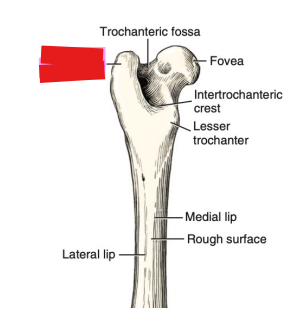
<p>Q: …… is a large prominence lateral to the head. </p><p>A. Lesser trochanter </p><p>B. Third trochanter </p><p>C. Medial epicondyle </p><p>D. Greater trochanter</p>

Q: …… is a large prominence lateral to the head.

A. Lesser trochanter

B. Third trochanter

C. Medial epicondyle

D. Greater trochanter

D. Greater trochanter (Major or Lateral)
5
New cards
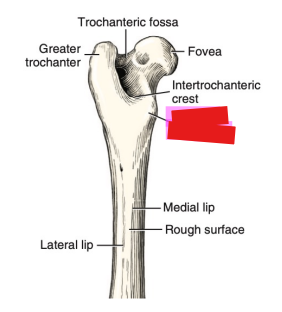
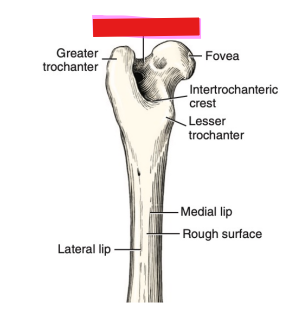
<p>Q: …… is a prominence distal to the head. </p><p>A. Lesser trochanter </p><p>B. Greater trochanter </p><p>C. Third trochanter </p><p>D. Fovea capitis</p>

Q: …… is a prominence distal to the head.

A. Lesser trochanter

B. Greater trochanter

C. Third trochanter

D. Fovea capitis

A. Lesser trochanter (Minor or Medial)
6
New cards
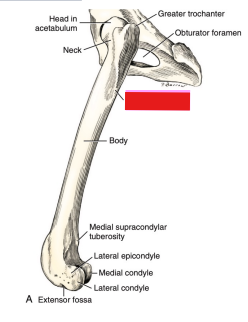
<p>Q: …… is a depression on the caudal aspect of the femur between the trochanters. </p><p>A. Extensor fossa </p><p>B. Trochanteric fossa </p><p>C. Fovea capitis </p><p>D. Acetabulum</p>

Q: …… is a depression on the caudal aspect of the femur between the trochanters.

A. Extensor fossa

B. Trochanteric fossa

C. Fovea capitis

D. Acetabulum

B. Trochanteric fossa
7
New cards
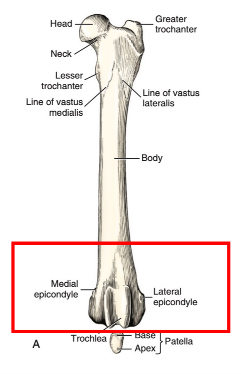
<p>Q: …… is a prominence on the lateral side, distal to the greater trochanter. </p><p>A. Lesser trochanter </p><p>B. Medial epicondyle </p><p>C. Third trochanter </p><p>D. Tibial tuberosity</p>

Q: …… is a prominence on the lateral side, distal to the greater trochanter.

A. Lesser trochanter

B. Medial epicondyle

C. Third trochanter

D. Tibial tuberosity

C. Third trochanter
8
New cards
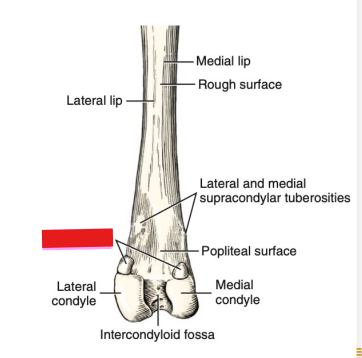
<p>Q: …… are two large prominences articulating with tibia. A. Sesamoids </p><p>B. Lateral malleolus </p><p>C. Fovea capitis </p><p>D. Medial and lateral condyles</p>

Q: …… are two large prominences articulating with tibia. A. Sesamoids

B. Lateral malleolus

C. Fovea capitis

D. Medial and lateral condyles

D. Medial and lateral condyles

9
New cards
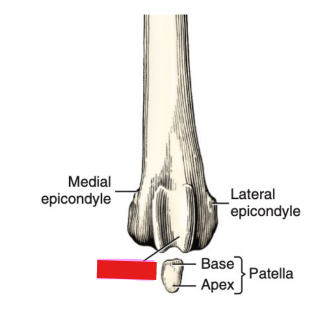
<p>Q: …… is a depression on the lateral condyle for the attachment of long digital extensor muscle. </p><p>A. Extensor fossa </p><p>B. Trochanteric fossa </p><p>C. Fovea capitis </p><p>D. Popliteal notch</p>

Q: …… is a depression on the lateral condyle for the attachment of long digital extensor muscle.

A. Extensor fossa

B. Trochanteric fossa

C. Fovea capitis

D. Popliteal notch

A. Extensor fossa
10
New cards
<p>Q: …… is the smooth groove on the distal cranial femur for articulation with the patella.<br>A. Extensor fossa </p><p>B. Patellar surface </p><p>C. Trochanteric fossa </p><p>D. Acetabulum</p>

Q: …… is the smooth groove on the distal cranial femur for articulation with the patella.
A. Extensor fossa

B. Patellar surface

C. Trochanteric fossa

D. Acetabulum

B. Patellar surface (or Femoral Trochlea)
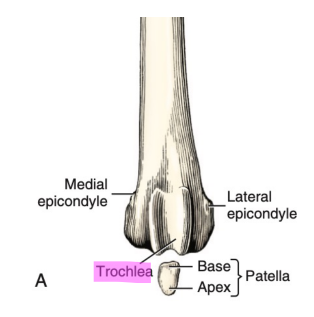
<p>B. Patellar surface (or Femoral Trochlea)</p>
11
New cards
<p>Q: …… formerly known as fabella, are found at the origin of the medial and lateral parts of the gastrocnemius in dogs only. </p><p>A. Condyles </p><p>B. Sesamoids </p><p>C. Malleoli </p><p>D. Trochanters</p>

Q: …… formerly known as fabella, are found at the origin of the medial and lateral parts of the gastrocnemius in dogs only.

A. Condyles

B. Sesamoids

C. Malleoli

D. Trochanters

B. Sesamoids