L1 Intro, Ligand Field Theory and Organometallic Introduction
 Call Kai
 Learn
Learn Practice Test
 Spaced Repetition
 Match
Match Flashcards
 Knowt Play
1/7

There's no tags or description
Looks like no tags are added yet.
Name | Mastery | Learn | Test | Matching | Spaced | Call with Kai | Chat |
|---|
No analytics yet
Send a link to your students to track their progress
8 Terms
Recap of ligand field theory, high spin/ low spin electronics from Year 1 CotE
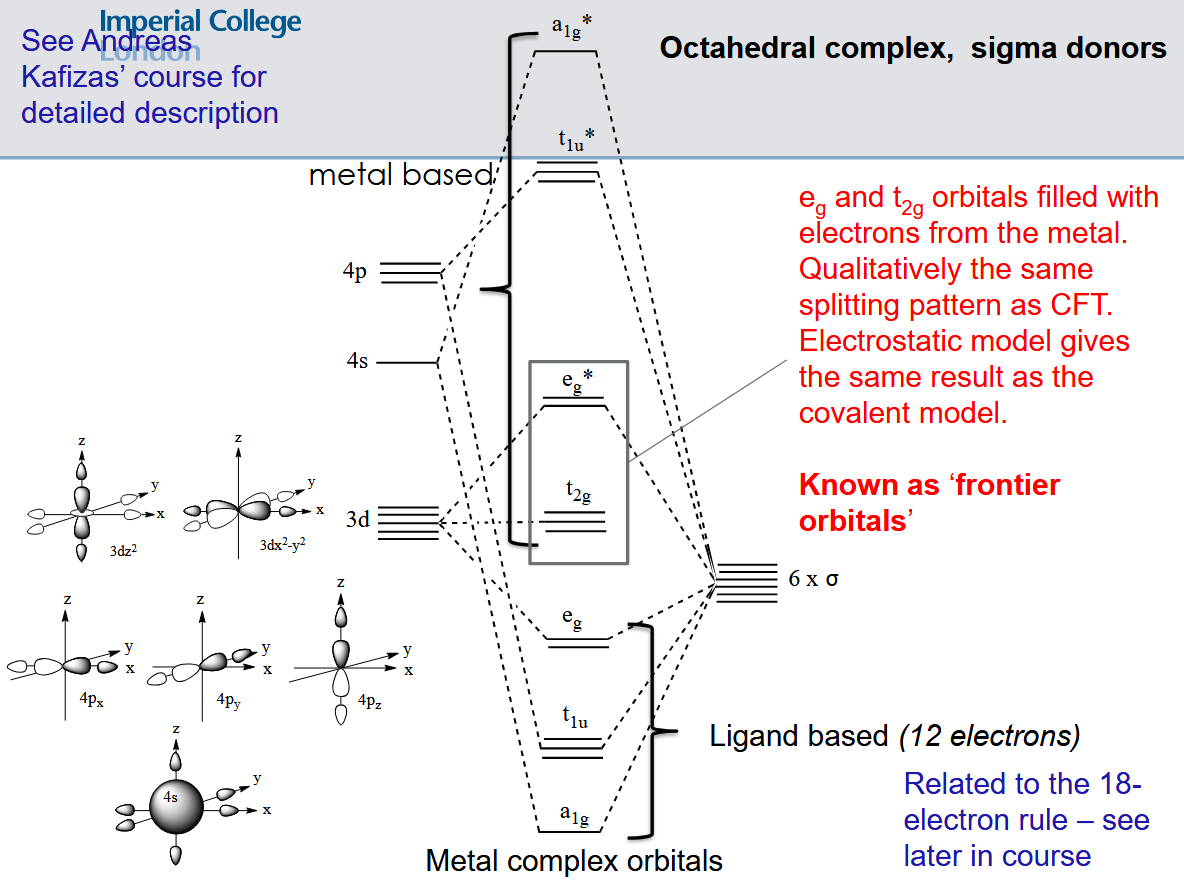
What are the frontier orbitals
The HOMO and LUMO - in the case of metal centres it is the eg and t2g orbitals
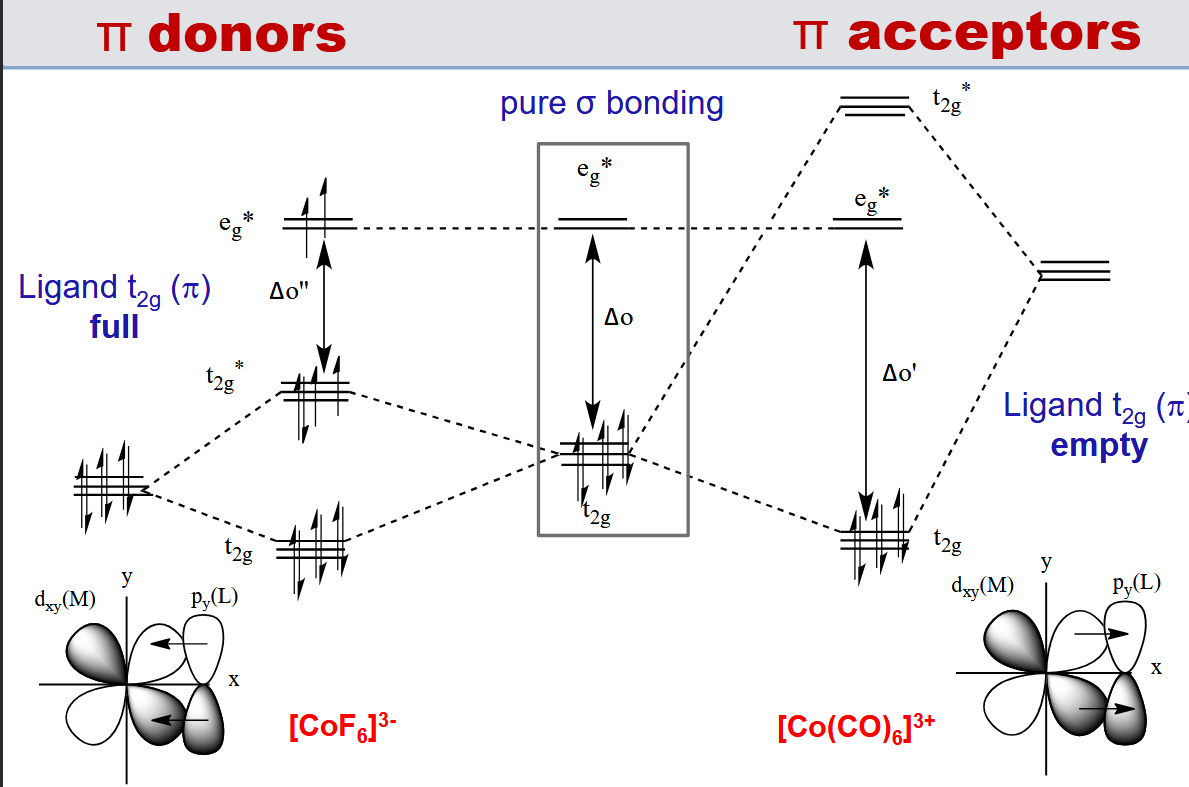
Difference in MO diagram for pi donors/pi acceptors
They both stabilise the t2g orbital compared to the sigma bonding (middle). The pi donors stabilise the t2g* more
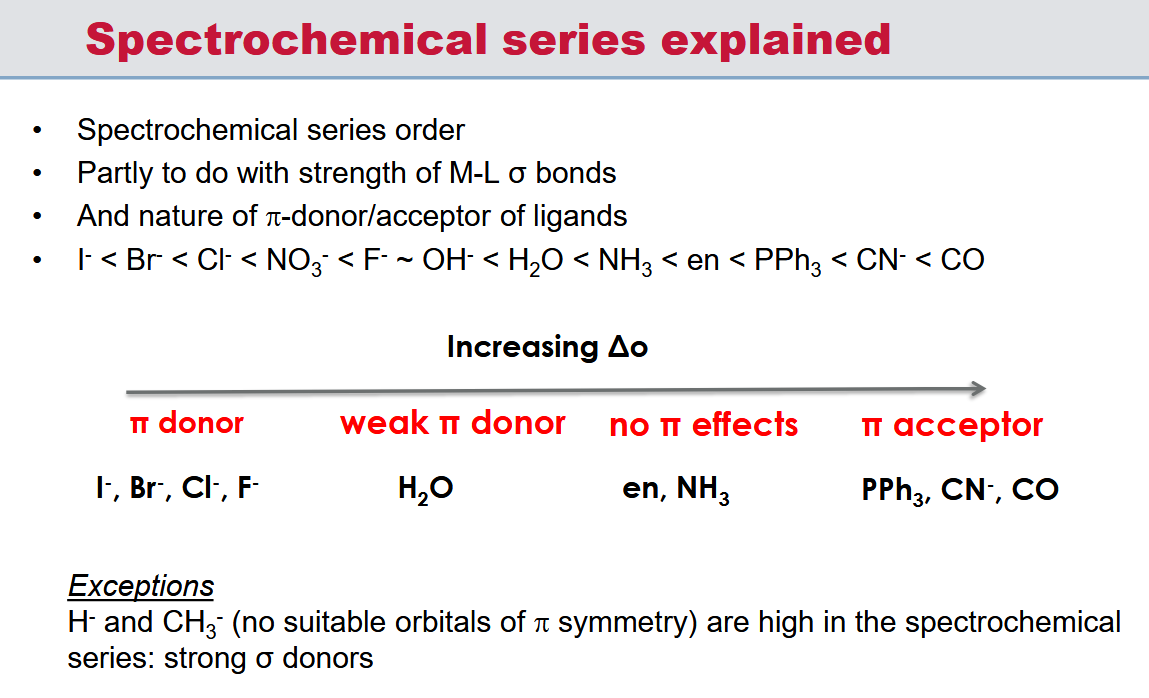
Reasoning for the spectrochemical series
Tends to be mainly pi acceptor strength.
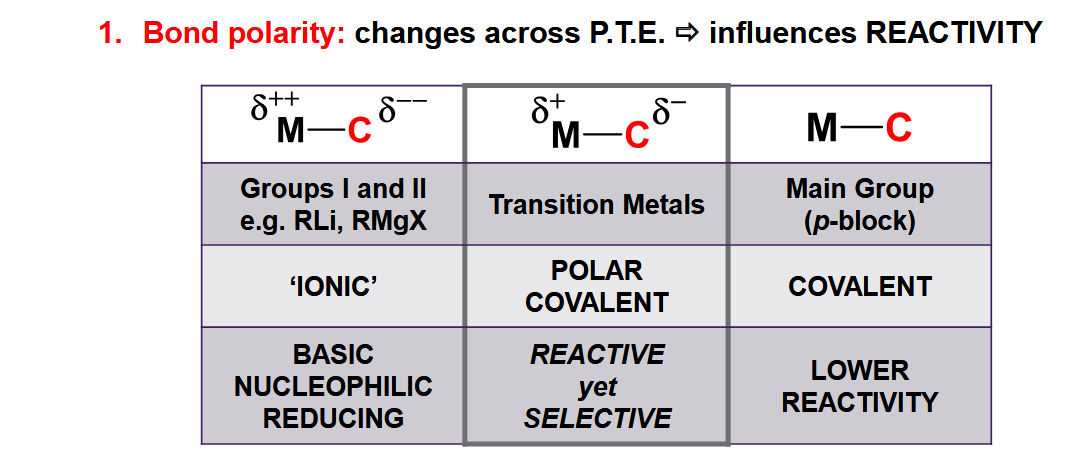
What influences organometallic reactivity in general
Bond polarity - the more polar, the more reactive/ less selective.
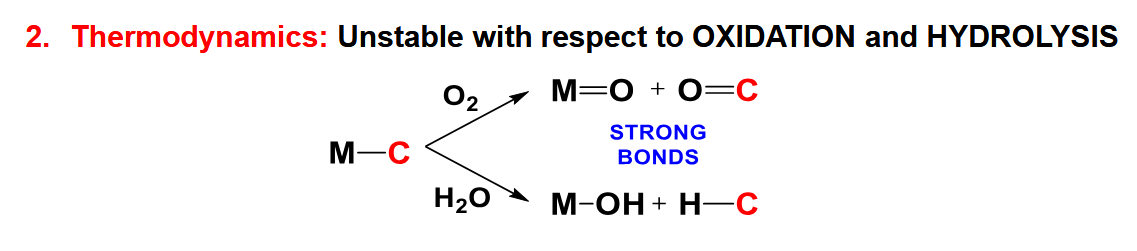
Organometallic reaction to oxidation and hydrolysis
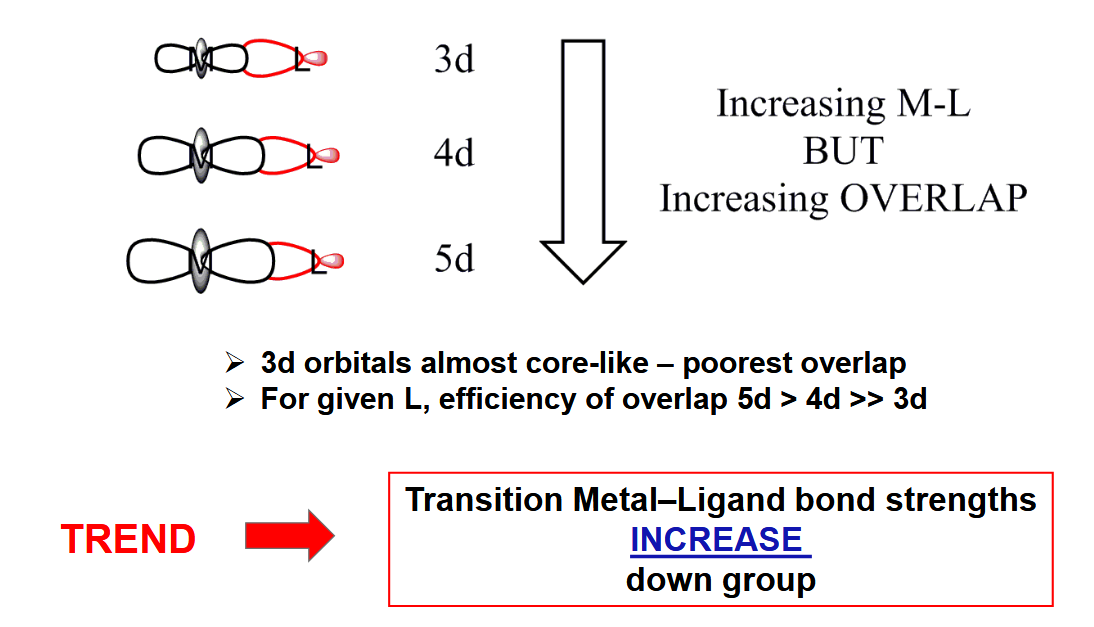
How do the bond strengths between M-L change as the metal gets larger down the group
Higher bond strength as the overlap is stronger. The increased radius is outweighed
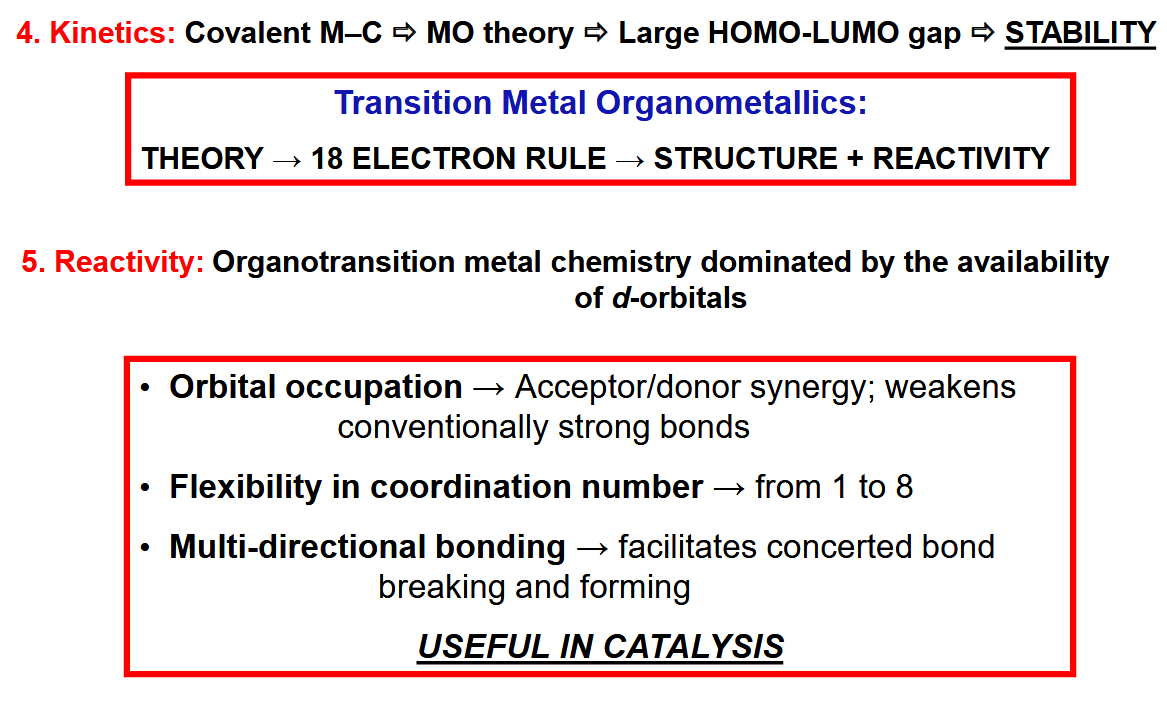
Kinetics and reactivity of organometallics