[PCOG] Part 2 - Carbohydrates
 Call Kai
 Learn
Learn Practice Test
 Spaced Repetition
 Match
Match Flashcards
 Knowt Play
1/239

There's no tags or description
Looks like no tags are added yet.
Name | Mastery | Learn | Test | Matching | Spaced | Call with Kai | Chat |
|---|
No analytics yet
Send a link to your students to track their progress
240 Terms
a. Carbohydrates
Polyhydric aldehyde or ketone alcohols that contain C, H, and O [Cn(H2O)n)
a. Carbohydrates
b. Lipids
c. Nucleic acid
d. Proteins
e. None
Function of carbohydrates except:
a. Structural
b. Energy
c. Regulatory
d. Defense
e. None
c. Oligosaccharides
Have 3-10 sugar units.
a. Monosaccharides
b. Disaccharides
c. Oligosaccharides
d. Polysaccharides
d. Polysaccharides
Have more than 10 sugar units.
a. Monosaccharides
b. Disaccharides
c. Oligosaccharides
d. Polysaccharides
b. OH
Oxidation of carbonyl compound result to:
a. COOH
b. OH
c. ROOR
d. RCHO
f. All
Reduction:
a. Removal of O
b. Addition of H
c. Removal of double bond
d. a and b
e. b and c
f. All
a. -onic acid
Oxidation of C1 of carbohydrates will produce what type of acid?
a. -onic acid
b. -uronic acid
c. -aric acid
d. a and b
e. b and c
f. All
b. -uronic acid
Oxidation of C6 of carbohydrates will produce which acid?
a. -onic acid
b. -uronic acid
c. -aric acid
d. a and b
e. b and c
f. All
c. -aric acid
Oxidation of C1 and C6 of carbohydrates will produce which acid?
a. -onic acid
b. -uronic acid
c. -aric acid
d. a and b
e. b and c
f. All
a. Glucose
Product of reduction of sugars are "-itols".
Sorbitol is a product of reduction of which of the following?
a. Glucose
b. Ethanol
c. Fructose
d. Galactose
f. All
True about about monosaccharides
a. Simplest carbohydrates
b. Cannot be hydrolyzed into simple sugars
c. Positive in Benedict's and Barfoed's test as brick red precipitate
d. a and b
e. b and c
f. All
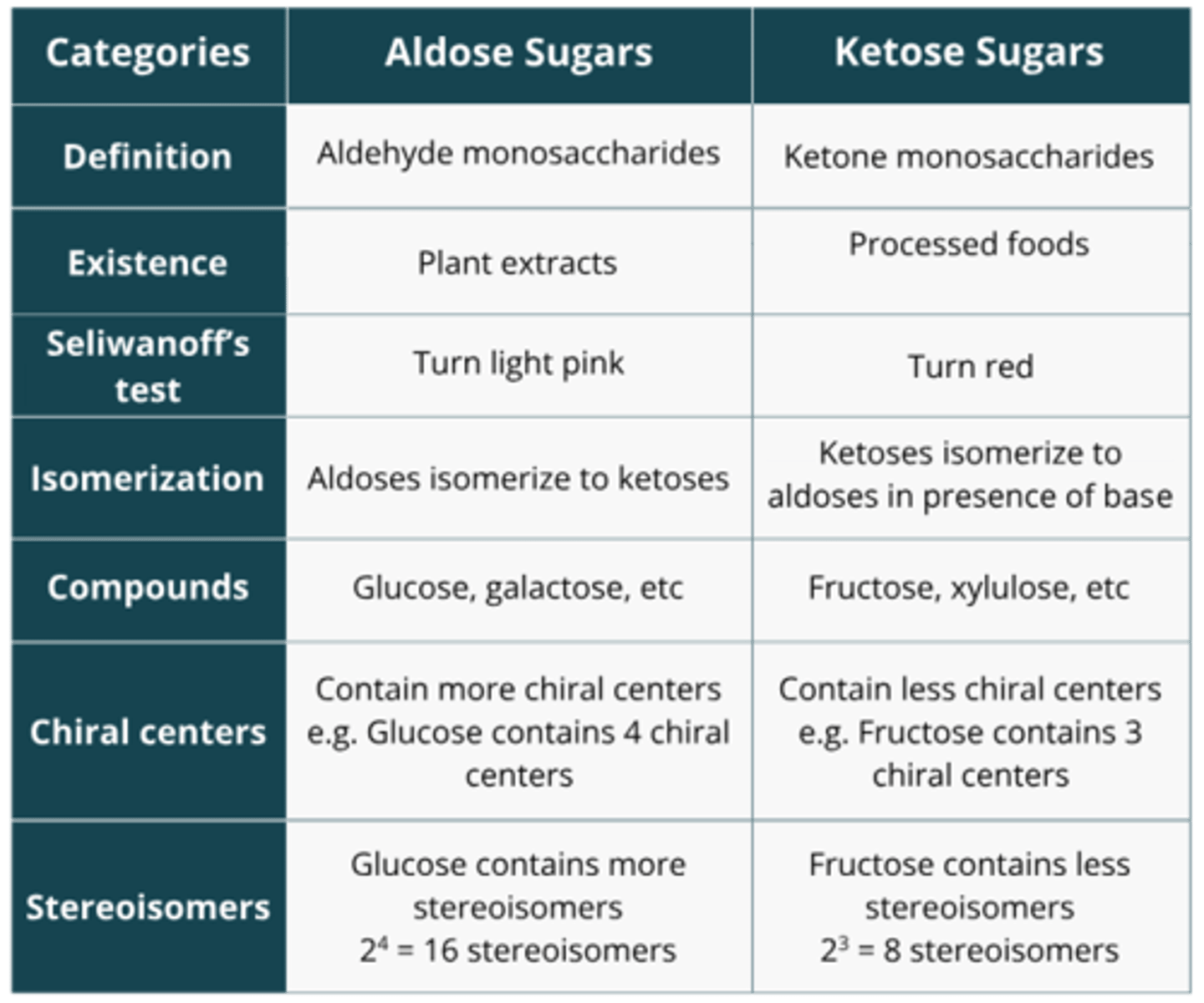
INSERT ALDOSE VS. KETOSE
INSERT ALDOSE VS. KETOSE
b. Ether bond
Glycosidic bond is a:
a. Ester bond
b. Ether bond
c. Amide bond
d. Single hydrogen bond
a. Anomeric alcohol group
Sugars are consider reducing if they don't have this group.
a. Anomeric alcohol group
b. Electron withdrawing group
c. Carbonyl group
d. Formyl group
d. a and b - Sucrose and Trehalose are not reducing sugar
Sugar without anomeric OH group.
a. Sucrose
b. Trehalose
c. Glucose
d. a and b
e. All
f. None
The following are non reducing sugars except:
a. Stachyose
b. Sucrose
c. Verbascose
d. Trehalose
e. Raffinose
f. None
a. -onic acid
Oxidation of reducing sugar result to:
a. -onic acid
b. -uronic acid
c. -aric acid
d. a and b
e. b and c
f. All
d. 4
How many carbon of erythrose?
a. 1
b. 2
c. 3
d. 4
b. I, II
Triose:
I. Glyceraldehyde
II. Dihydroxyacetone
III. Erythrose
IV. Erythrulose
V. Threose
a. I, II, III, IV
b. I, II
c. III, IV, V
d. II, III, IV
e. I, V
c. III, IV, V
Tetrose:
I. Glyceraldehyde
II. Dihydroxyacetone
III. Erythrose
IV. Erythrulose
V. Threose
a. I, II, III, IV
b. I, II
c. III, IV, V
d. II, III, IV
e. I, V
e. None
Pentose except:
a. Arabinose
b. Xylose
c. Ribose
d. Ribulose
e. None
e. None
Hexose except:
a. Dextrose
b. Levulose
c. Galactose
d. Manose
e. None
a. Sedoheptulose
An example of heptose.
a. Sedoheptulose
b. D-glycerol-D-mannoctulose
c. Galactose
d. Arabinose
b. D-glycerol-D-mannoctulose
Monosaccharide present in avocado.
a. Sedoheptulose
b. D-glycerol-D-mannoctulose
c. Galactose
d. Arabinose
e. Neuraminic acid
e. Neuraminic acid/Sialic acid
Nonose:
a. Sedoheptulose
b. D-glycerol-D-mannoctulose
c. Galactose
d. Arabinose
e. Neuraminic acid/Sialic acid
a. Aldopentose
Xylose is a
a. Aldopentose
b. Aldohexose
c. Ketopentose
d. Ketohexose
b. Xylose
Wood sugar.
a. Glucose
b. Xylose
c. Fructose
d. Methanol
b. Xylose
Obtained from boiling corn cobs and straw.
a. Glucose
b. Xylose
c. Fructose
d. Methanol
c. Xylose
Diagnostic aid for intestinal malabsorption wherein they are absorbed but not metabolized.
a. Glucose
b. Lactose
c. Xylose
d. Galactose
e. None
Other name of glucose except:
a. Blood sugar
b. Grape sugar
c. Physiologic sugar
d. Dextrose sugar
e. None
b. Aldohexose
Glucose is a
a. Aldopentose
b. Aldohexose
c. Ketohpentose
d. Ketohexose
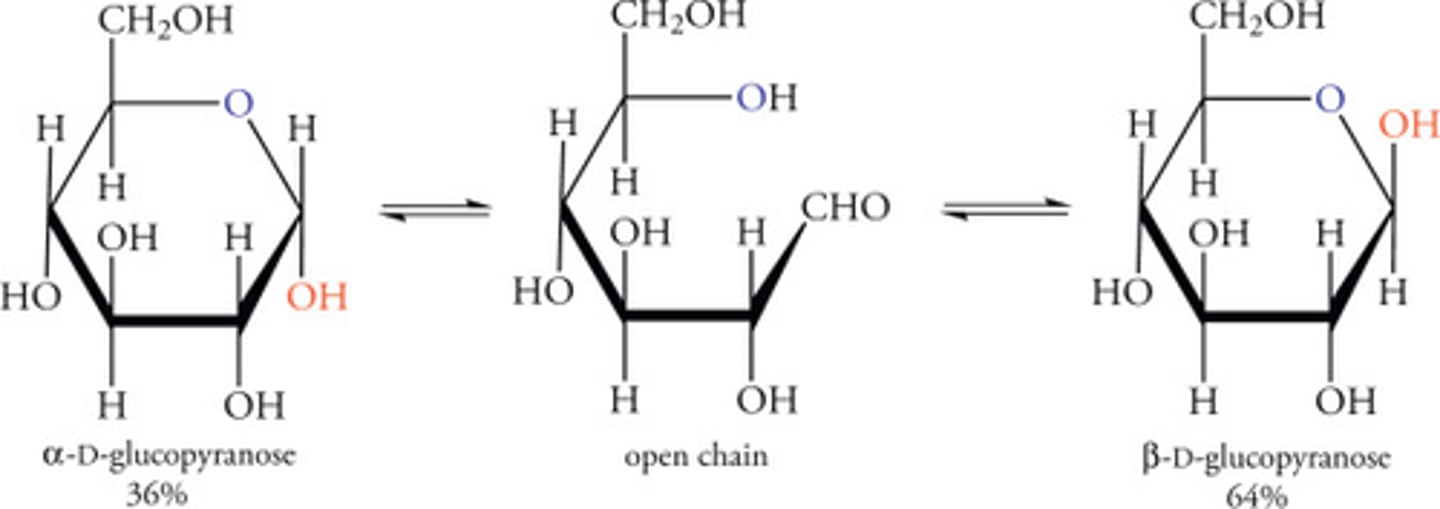
a. B-D-glucopyranose
Cyclic structure of glucose that is the most stable as it has low steric hindrance.
a. B-D-glucopyranose
b. a-D-glucopyranose
c. Both are equally stable
d. Both are unstable
b. Parenteral preparation
Glucose rigorously purified and serving as nutrient (4kcal/g) is used in
a. Oral preparation
b. Parenteral preparation
c. Sweeting agents
d. All
e. All
Isotonic parenteral
a. NSS
b. Glucose
c. Lactated Ringer
d. a and b
e. all
b. Pharmaceutical necessity
Glucose that undergone less rigorous purification
a. Parenteral preparation
b. Pharmaceutical necessity
c. Liquid glucose
d. Dextrose excipient
c. Liquid glucose
Glucose is syrupy liquid which is almost colorless, sweet, which is from incomplete hydrolysis of starch.
a. Parenteral preparation
b. Pharmaceutical necessity
c. Liquid glucose
d. Dextrose excipient
d. Dextrose excipient
Crystalline glucose used in oral glucose tolerance test (OGTT) for diagnosis of diabetes.
a. Parenteral preparation
b. Pharmaceutical necessity
c. Liquid glucose
d. Dextrose excipient
f. All
True about fructose.
a. Fruit sugar or levulose
b. Ketohexose
c. The sweetest monosaccharide
d. Positive result in the Seliwanoff's test as pink/red
e. Obtained form the inversion of sucrose solution
f. All
b. Fructose
Sucrose = Fructose (levorotatory) + Glucose (dextrorotatory)
Inverted sugar produced from hydrolysis of sucrose.
a. Glucose
b. Fructose
c. Galactose
d. a and b
e. b and c
a. Streptomyces
High fructose sweetener is formed from isomerization of glucose by
a. Streptomyces
b. Pseudomonas
c. Lactobacillus
d. Listeria
b. Fructose
Sweetener added to food for diabetic patient and formula given to infants as it has lower caloric value.
a. Glucose
b. Fructose
c. Galactose
d. Manose
c. Galactose
Also known as the brain sugar.
a. Glucose
b. Fructose
c. Galactose
d. Maltose
c. Galactose
C4 epimer of glucose.
a. Mannose
b. Fructose
c. Galactose
d. Maltose
a. Mannose
C2 epimer of glucose.
a. Mannose
b. Fructose
c. Galactose
d. Maltose
c. Galactose
Gaucher's disease is deficiency in B-Glucocerebrosidase which lead to high levels of this monosaccharide in the brain.
a. Glucose
b. Fructose
c. Galactose
d. Maltose
c. Galactose
Positive in Mucic acid and Phenyl hydralazine test as crystal formation or osazone crystals.
a. Glucose
b. Fructose
c. Galactose
d. Maltose
d. Galactaric acid
Only aric acid insoluble in water
a. Glyceric acid
b. Glucacaric acid
c. Xylaric acid
d. Galactaric acid
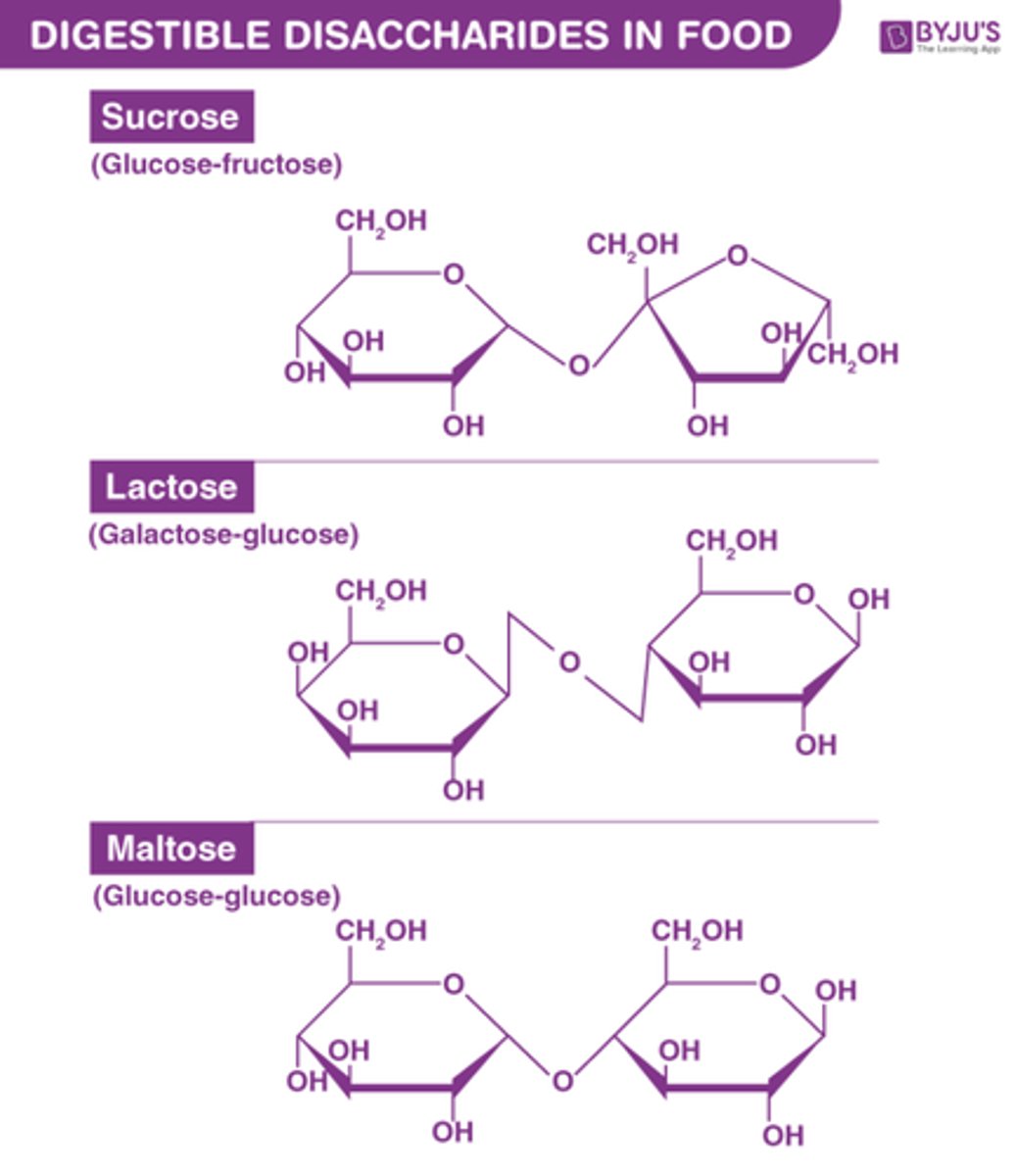
c. Mannose
The following are disaccharides except:
a. Sucrose
b. Lactose
c. Mannose
d. Maltose
e. None
True about sucrose except:
a. Known as table sugar
b. Glucose + fructose in a1-2 glycosidic bond
c. Non-reducing sugar
d. Exist in molasses
e. None
f. All
Correctly paired sources of sucrose include:
a. Sugar cane: Saccharum officinarum
b. Sugar beet: Beta vulgaris
c. Sugar maple: Acer saccharum
d. a and b
e. b and c
f. All
e. None
Uses of sucrose except:
a. Demulcent
b. Sweetening agent
c. Coating agent
d. Preservative at 65% w/w
e. None
b. 65% w/w
Sucrose is preservative at what concentration?
a. 55% w/w
b. 65% w/w
c. 75% w/w
d. 85% w/w
b. Cossettes
Cut slivers of the roots of the sugar beets.
a. Molasses
b. Cossettes
c. Pulp
d. Rossettes
a. Molasses
Residual dark colored syrup that comes after the complete crystallization of sucrose in solution.
a. Molasses
b. Cossettes
c. Pulp
d. Rossettes
a. Molasses
Preparation where disaccharides are in their free state.
a. Molasses
b. Cossettes
c. Pulp
d. Rossettes
e. None
True about maltose except:
a. Known as malt sugar
b. Glucose + glucose in a1-4 glycosidic bond
c. Reducing sugar
d. Major degradation product of starch
e. None
e. None
True about lactose except:
a. Milk sugar
b. Glucose + Galactose in b1-4 glycosidic bond
c. Present in the making of cheese
d. Abundant in whey
e. None
a. Lactulose
A semi-synthetic sugar produced from alkaline rearrangement of lactose.
a. Lactulose
b. Levulose
c. Cellulose
d. Sucrose
a. Lactulose
Hydrolyzed and converted to lactic acid and acetic acid causing catharsis.
a. Lactulose
b. Levulose
c. Lactose
d. Sucrose
a. a1-2 glycosidic bond
Sucrose is glucose + fructose in:
a. a1-2 glycosidic bond
b. a1-4 glycosidic bond
c. b1-2 glycosidic bond
d. b1-4 glycosidic bond
b. a1-4 glycosidic bond
Maltose is glucose + glucose in:
a. a1-2 glycosidic bond
b. a1-4 glycosidic bond
c. b1-2 glycosidic bond
d. b1-4 glycosidic bond
d. b1-4 glycosidic bond
Lactose is glucose + galactose in:
a. a1-2 glycosidic bond
b. a1-4 glycosidic bond
c. b1-2 glycosidic bond
d. b1-4 glycosidic bondf
a. Buttermilk
Product of churning of milk.
a. Buttermilk
b. Skimmed milk
c. Both
d. None
d. a and b
Standing of cream will produce:
a. Butter
b. Butter milk
c. Skimmed milk
d. a and b
e. b and c
f. All
a. Butter
Unified fat globules from cream.
a. Butter
b. Butter milk
c. Skimmed milk
d. Cheese
e. Whey
b. Butter milk
Liquid separating from butter.
a. Butter
b. Butter milk
c. Skimmed milk
d. Cheese
e. Whey
c. Skimmed milk
Left after cream separation.
a. Butter
b. Butter milk
c. Skimmed milk
d. Cheese
e. Whey
e. All
Reacting skimmed milk with renin or renet will produce:
a. Whey
b. Curd
c. Cheese
d. a and b
e. All
b. Curd
Coagulated portion when reacting skimmed milk with renin or renet.
a. Whey
b. Curd
c. Cheese
a. Whey
Liquid portion when reacting skimmed milk with renin or renet.
a. Whey
b. Curd
c. Cheese
c. Cheese
Formed by treatment of curd.
a. Whey
b. Curd
c. Cheese
a. Kumis
Fermented milk drink.
a. Kumis
b. Condensed milk
c. Evaporated milk
d. Skimmed milk
b. Condensed milk
Milk that has been pasteurized and evaporated.
a. Kumis
b. Condensed milk
c. Evaporated milk
d. Skimmed milk
c. Evaporated milk
Unsweetened pasteurized and evaporated milk.
a. Kumis
b. Condensed milk
c. Evaporated milk
d. Skimmed milk
e. None
Products of oxidative metabolism except:
a. Cherry juice
b. Citric acid
c. Tartaric acid
d. Lactic acid
e. None
e. None
True about cherry juice except:
a. Prunus cerasus
b. From Rosaceae family
c. Contains pectin and >1% malic acid
d. Used in making cherry syrup
e. None
a. Direct permanganometry
Assay of cherry juice for malic acid contents is through:
a. Direct permanganometry
b. Indirect permanganometry
c. Iodometry
d. Iodimetry
a. Rosaceae
Family known to contain cyanogenic glycosides.
a. Rosaceae
b. Lamiaceae
c. Poaceae
d. Bromeliaceae
a. True
Plant acids can be used as acidulants in effervescent formulation and in buffers.
a. True
b. False
a. Citric acid
Known as tricarboxylic acid sourced from lemon which when used alone, result to sticky granules.
a. Citric acid
b. Tartaric acid
c. Cherry juice
d. Acetic acid
b. Tartaric acid
A dicarboxylic acid which when used alone, result to dry granules.
a. Citric acid
b. Tartaric acid
c. Cherry juice
d. Acetic acid
b. Tartaric acid
By product of wine industry, present in making refrigerant drinks.
a. Citric acid
b. Tartaric acid
c. Cherry juice
d. Acetic acid
a. Denige test
Test uses to identify which is citric acid or tartaric acid.
a. Denige test
b. Molisch test
c. Fenton test
d. Moore's test
b. Carmine red with white precipitate
Citric acid in Denige test.
a. Emerald green without white precipitate
b. Carmine red with white precipitate
c. Emerald green with white precipitate
d. Carmine red without precipitate
a. Emerald green without white precipitate
Tartaric acid in Denige test.
a. Emerald green without white precipitate
b. Carmine red with white precipitate
c. Emerald green with white precipitate
d. Carmine red without precipitate
a. Lactic acid
Acidulant in infant formula.
a. Lactic acid
b. Fumaric acid
c. Galactaric acid
d. Citric acid
b. Fumaric adid
Plant acid more known for its used in Fe fumarate.
a. Lactic acid
b. Fumaric acid
c. Galactaric acid
d. Citric acid
a. Fe fumarate
Superior stability and well tolerated.
a. Fe fumarate
b. Fe gluconate
c. Fe sulfate
a. Fe fumarate
33% Fe
a. Fe fumarate
b. Fe gluconate
c. Fe sulfate
b. Fe gluconate
10-14% Fe
a. Fe fumarate
b. Fe gluconate
c. Fe sulfate
c. Fe sulfate
31% Fe
a. Fe fumarate
b. Fe gluconate
c. Fe sulfate
c. Fe sulfate
Most economical Fe preparation.
a. Fe fumarate
b. Fe gluconate
c. Fe sulfate
f. All
Product of reductive metabolism:
a. Alcohol
b. Mannitol
c. Sorbitol
d. a and b
e. b and c
f. All
a. Alcohol
Product of glucose fermentation.
a. Alcohol
b. Mannitol
c. Sorbitol
c. Brandy
Distillation from wine.
a. Ethanol
b. Diluted alcohol
c. Brandy
d. Whisky
e. Rum
d. Whisky
Malted grain.
a. Ethanol
b. Diluted alcohol
c. Brandy
d. Whisky
e. Rum
e. Rum
From fermentation of molasses.
a. Ethanol
b. Diluted alcohol
c. Brandy
d. Whisky
e. Rum
c. 40-55%
Distillation of fermentation product will result to this concentration of alcohol.
a. 20-35%
b. 30-45%
c. 40-55%
d. 50-65%
d. 40-70%
Concentration of alcohol for antiseptic property
a. 10-30%
b. 20-40%
c. 30-60%
d. 40-70%
a. Alcohol, USP
95% v/v alcohol at 15.56°C
a. Alcohol, USP
b. Denatured alcohol
c. Absolute alcohol
d. Methanol