Lecture #1/2: Bacterial Metabolism & Oral Microbes
 Call Kai
 Learn
Learn Practice Test
 Spaced Repetition
 Match
Match Flashcards
 Knowt Play
1/68

There's no tags or description
Looks like no tags are added yet.
Name | Mastery | Learn | Test | Matching | Spaced | Call with Kai | Chat |
|---|
No analytics yet
Send a link to your students to track their progress
69 Terms
Learning Objectives
Compare the structure, physiology, and impact of different classifications of bacteria
Differentiate between aerobic, anaerobic, and facultative metabolism and its possible impact on human health
Explain the biology (including structure, genetics, taxonomy) of major bacterial agents
Provide examples of processes in oral health care that might induce mutations in microbes and humans
Explain the range of therapies available for infectious disease, with the clinical indications for their use and their side effects
What is a microorganism?
Any small organism that can’t be seen w/ naked eye <0.1mm
Some helpful, some cause harm to humans
Why is microbiology important for DHYG students? *EXAM
Microbes bind to hard surfaces and grow in environments with a lot of nutrients
Can bind supra and sub-g, inducing a reaction from the immune system that reacts to the bacteria
Contributes towards caries and periodontal disease, changes oral bacterial ecosystem
What organisms are included under microbes?
Bacteria → Living single celled organisms
Viruses → Non-living particles that need host cell to reproduce, contains genetic viral material
Protozoa → Single cells that have all mechanisms to be independent & alive
Algae → single cell not too relevant to HYG
Fungi → only relevant fungi is candida albica
Where do microbes fit into biological classification system?
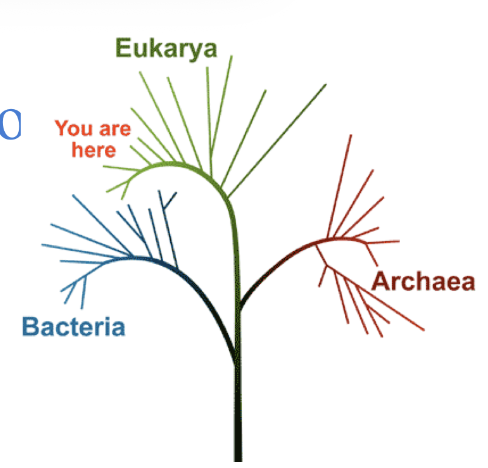
Three superkingdoms/domains
Archae (Ancient bacteria, archaebacteria)
Survive and live in extreme environments
Prokaryote (BACTERIA)
Less advanced more ancient and primitive
Eukaryote (US)
More advanced w/ multiple kingdoms
What are 5 kingdoms of eukaryotes?
Protista → Primitive Algae, Protozoa
Fungi → Yeasts, multicellular molds
Plantae → Complex algae & plants
Animalia → Multicellular vertebrate and invertibrates
What is the difference between prokaryotic and eukaryotic cells *EXAM
Prokaryotic
No nucleus
No organelles
Cell wall= peptidoglycan
Reproduction= binary fission
1 circular chromosome
Eukaryotic
Nucleus
Organelles
Cell wall= cellulose/chitin
Reproduction= mitosis
Linear chromosome
What are the four unique properties of bacteria?
Size
Metabolically Diverse
Adaptable
Ubiquitous
Explain size as an unique property of bacteria
Very small, can 2.4×10^11 bacteria /gm of plaque
Large surface to volume ratio → rapid growth + transport
Inhabit vv small ecosystems (dentinal tubules)
Mechanical removal can be difficult
Many diverse species @ single site
Explain metabolically diverse as an unique property of bacteria
Use full spectrum of nutrients (Carbs, protein, lactate, nylon tires)
Live w or w/out oxygen (aerobic or anaerobic)
Explain adaptable as a unique property of bacteria
Great opportunity for genetic change
Short generation time (time it takes to reproduce) → can divide up to every 40 minutes
Mutation rate 1/106
Genetic info exchanged rapidly
If you give antibiotics, doctors tell you to take them all at once or within a time period because if you don’t, it gives them time to adapt and genetically change so they can become resistant
After becoming resistant, the bacteria can also pass on the gene
Explain ubiquitous as a unique property of bacteria
Ubiquitous → present, appearing, found everywhere at the same time
Present in virtually all environments
Hot underwater fissures that are 300 degrees
Soil, air
Humans → Skin, nose, GI Tract, Genital tract, oral cavity
How are bacteria named?
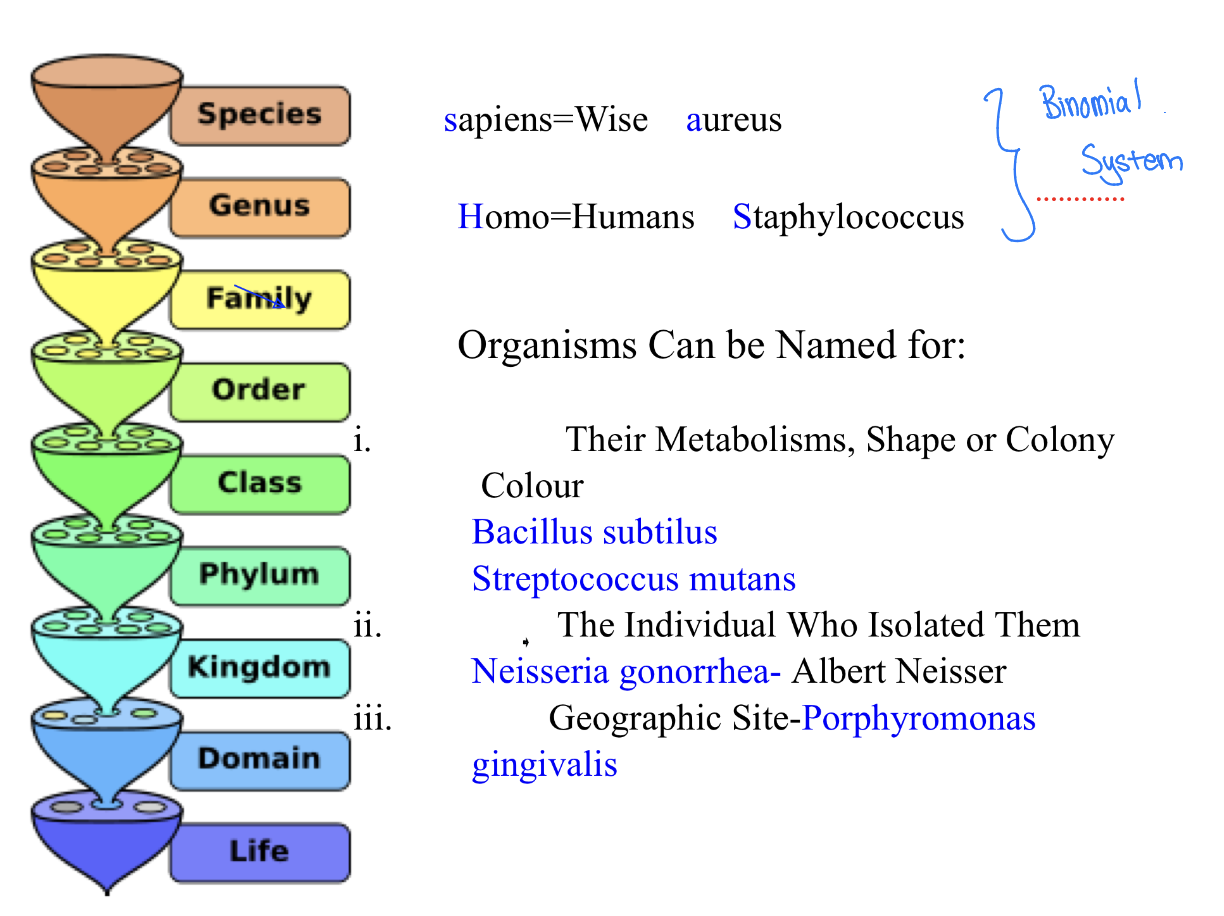
Using the taxonomy and binomial system
Taxonomy → Study of classifying & naming organisms based on similarities & differences
Binomial system → system used to give organisms their specific names
What is the old classification system for bacteria? *EXAM
Staining
Gram stain (Gram + or -)
Ziehl Neelsen → stain used to ID acid-fast bacteria like Mycobacteria tuberculosis
Silver Impregnation staining → Treponema pallidum
Shape
Microscopic
Spherical (cocci)
Rod (baccili)
Macroscopic
Colony
Nutritional Characteristics
What nutrients they consume
Bacteriodes melanogenicus asaccharolyticus → does not ferment carbohydrates
Bacteriodes melanogenicus intermedius → ferments carbohydrates
Fermentation end product
Lactobaccilus species ferments glucose to lactic acid
Cell Wall Comoposition
Ex. Streptococci subdivided based on cell-wall antigens (A-H) w/ the Lancefield Serotypes
DNA Base Composition
Molar Fractions G+C/G+C+A+T
Calculating the % of DNA ratios
Bacteriophage Bacterial virus susceptibility
Classifying bacteria based on whether they are susceptible to certain viruses
Plasmid transfer
Plasmids= small sections of DNA, can be transferred b/w similar grps of bacteria
This is the reason for why bacteria can become resistant to antibiotics
Ex. Enterobacteriaceae bcs bacteria in this family carry plasmids
What was the major method used to classify bacteria based on the old classification system?
Culturing (Growing on a petri dish)
What is the limitation of the culturing method
No sensitivity & poor specificity
Does not ID huge uncultivated majority of microbes
Location: Difficulties in sampling due to physical environment
Organisms mb not capable of adapting in laboratory culture
Lack of essential nutrients, physiological needs/growth factors in culture media. overfeeding, toxicity in culture, inhibitory substances produced by other bacteria, metabolic dependance on other species, disruption of quorum-sensing systems (comm system b/w bacteria to track population density) induced by separation of bacteria, cell in low metabolic state (dormant)
KEY idea is that when you take a sample somewhere, there is thousands of species of bacteria, but you don’t capture all of them, then when you grow them some of them are unable to grow in standard laboratory conditions
Even after successful cultivation, may not be successfully identified
In the traditional method, identification mb heavily based on phenotypic (observable) characteristics, which you compare to reference slides but its so subjective, it might be done incorrectly → Misidentification
What is the new method of classifiying bacteria?
Using genes & molecular biology → 16S Ribosomal RNA sequencing
What is 16sRNA?
16sRNA=part of machinary that bacteria uses to make proteins from amino acids
16sRNA when bound to ribosomal proteins make 30S subunit of ribosome
Gene that codes for 16sRNA found in all bacteria, part of sequence = conserved, so once the scientist find the conserved part, they can amplify it and look at the variable gene sections to classify the bacteria

Why is 16sRNA used?
Stable + present in all organisms
Sequence must be conserved sufficiently that regions of homology can be clearly established
Must be sufficiently large that info is adequate to make phylogenetic inferences
Can be used for phylogenetic reclassification (classifying organism based on how evolutionary related they are)
Similar 16sRNA= more similar
Classifying microbes based on evolutionary relationship = more stable, less likely to need additional revision
16sRNA= documents evolutionary history >2000 sequences determined for bacteria but 16sRNA makes up only 0/05% of the genome
How is 16sRNA used?
16S rRNA is isolated & sequenced
Using 16S rRNA to determine phylogeny of bacteria (relationship of organisms based on evolution)
Can be used for accurate & rapid identification of known bacterial species (PCR)
16S rRNA to differentiate, quantify, classify unknown species (esp those that cannot be cultivated)
What is PCR (Polymerase Chain Reaction)?
Laboratory technique to amplify specific DNA sequence, produce millions of copies from small starting amnt
Rxn → thermal cycler, changes temp w/ 3 main steps
What does PCR require?
Template DNA → DNA w/ target sequence
Primers → short DNA sequence that defines region to be amplified
DNA polymerase → heat-stable enzyme like Taq polymerase
Nucleotides (dNTPs) → building block for new DNA
Buffers + ions like Mg3+
What are the 3 steps for PCR?
Denaturation ~95C
Double stranded DNA separate into 2 single strands
Annealing ~50-65C
Primer bind to complementary sequence on DNA strands
Extension ~72C
DNA polymerase extends the primers and synthesizes new DNA strands
3 steps repeated 25-40 cycles, bcs DNA approx doubles each cycle, target sequence increases exponentially, generated millions of copies
How is PCR used in gel electrophoresis?
PCR makes million of copies of DNA, after put amplified DNA in gel, electrical current moves DNA thru gel
Smaller DNA → move farther
Larger DNA → move less far
DNA then become fragment bars
used to visualize DNA
Gel electrophoresis used to check if PCR copied the DNA data it wanted
Name bacterias in Phylum 1-Proteobacteria and what they cause
Beta Division
Genus: Eikenella → Periodontal disease
Gamma Division
Genus: Actinobacillus → Periodontal disease
Epsilon Division
Genus: Campylobacter → Progressive periodontal sites & root canals w/ necrotic pulp
Name bacterias in Phylum 2-Gram + and what they cause
Fusobacteria Division
Genus: Fusobacterium → associated with periodontal infections, found in root canals w/ teeth having necrotic pulp
SSV Division
Genus: Selenomonas → Aggressive forms of PD
Firmicutes
Genus: Clostridium → SubG plaque in pt w/ aggressive forms of PD
Genus: Eubacterium → PD + root canals w/ necrotic pulp
Genus: Lactobacilli spp → Root canals w/ necrotic pulp
Genus: Enterococcus → Root canals w/ necrotic pulp
Genus: Streptococcus → Root canals w/ necrotic pulp
Genus: Peptostreptococcus → Root canals w/ necrotic pulp
Name bacterias in Phylum 3-Actinobacterium and what they cause
Genus: Actinomyces spp → Root canals w/ necrotic pulp
Genus: Propionobacterium → Root canals w/ necrotic pulp
Name bacterias in Phylum 5-Spirochetes and what they cause
Genus: Treponema → Anaerobic, seen in pt w/ moderate-severe periodontal pockets
***Spirochetes are motile, have a flagella that allows it to go into the sulcus area and hide itself, brings other bacteria in with it
Name baceterias in phylum 6-Bacteriodes and what they cause
Bacteriodes Division
Genus: Porphyromonas. Species: P. gingivalis → Most known species associated w/ periodontal disease + in teeth with necrotic pulp
Genus: Prevotella. Species: P. intermedia, P.negrescens → associated w/ PD + found in root canals w/ necrotic pulp
Flavobacter Division
Genus: Capnocytophaga → Gingivitis
Name a few bacteria involved in periodontal disease or necrotic pulp
Gingivitis
Capnocytophaga
Periodontal Disease
Eikenella
Actinobacillus
Fusobacterium
Eubacterium
Porphyromonas gingivalis
Prevotella intermedia
Prevotella nigrescens
Aggressive Periodontal Disease
Selenomonas
Clostridium
Moderate–Severe Periodontal Pockets
Treponema
Root Canals with Necrotic Pulp
Campylobacter
Fusobacterium
Eubacterium
Lactobacilli
Enterococcus
Streptococcus
Peptostreptococcus
Actinomyces
Propionibacterium
Porphyromonas gingivalis
Prevotella intermedia
Prevotella nigrescens
What is Koch’s postulate?
Microorganism must be demonstrable in all cases of disease
Microorganism must be isolated from diseased animal + grown in pure culture
Microorganism from pure culture must cause disease when inoculated into healthy animal
Experimentally infected animal must contain microorganism

What are limitations to Koch’s postulate
Not all diseases are caused by microbes!!!
Auto-immune
Cancer
Asymptomatic
What is Evan’s postulate Not on exam jus know overall
Updated epidemiology criteria from Koch
In exposed/diseased groups, higher prevalence, greater exposure frequency, and higher incidence of the microbe
Preventing/eliminating microbes should decrease incidence of disease and presence of it
What is Frederick and Relman’s postulate?
Also modern nuclear version of Koch’s postulate
Since some pathogens cannot be cultured, instead used criteria of nucelic acid sequences being present
Nucleic acid sequence of pathogen should be present in areas w/ disease
Nucleic acid sequence should be absent in tissues w/out disease
What is the issue of applying Kochs postulate in periodontal disease?
Inability to culture all organisms
Difficulties defining + culturing sites of active disease
Lack of animal model system
What is Sigmund Socransky’s criteria
Criteria for whether a microbe can be considered a periodontal pathogen
Must be associated w/ disease → increase in # of organisms at diseased site
Must be eliminated/decreased in sites that demonstrate clinical resolution of disease w/ treatment (mechanical or antibiotics)
Must demonstrate host response (alteration in host cellular or humoral immune response)
Must be capable of causing disease in experimental animal model
Must demonstrate virulence factors responsible to enable microbe to cause destruction of periodontal tissue
What size are prokaryotic cells?
Length: 2u → 8u
Diameter: 2u → 0.2u
What is the morphology of prokaryotic cells?
Rods → bacilli
Diplobacilli
Streptobacilli
Coccobacilli
Spheres → cocci
Diplococci
Streptococci
Tetrads
Sarcinae
Staphylococci
Spirals
Vibrio (curbed bacilli)
Spiralla
Spirochete

How motile are prokaryotic cells depending on their shape?
Almost all spirals = motile
½ of bacilli = motile
Almost all cocci = non-motile
What are the sources of energy and carbon for chemoheterotrophs
Chemoheterotrophs include animals, fungi, and most other bacteria
Use oxidation-reduction reactions to produce ATP
Use organic molecules to supply itself with oxygen
What other factors impact bacterial growth?
Temperature
pH (7.2-7.4, some caries: 5)
CO2/O2
Facultative Anaerobes → Respire in O2, ferment otherwise (Can switch)
Obligate Anaerobes → Killed by O2
Obligate Aerobes → Require O2
Aerotolerant Anaerobes → Always ferment BUT have limited capacity to detoxify partial reduction products of O2
Why is oxygen important for bacterial growth?
For bacteria that uses oxygen, it enhances metabolism + growth of bacteria
Helps bacteria make ATP, oxygen is the final electron/hydrogen acceptor in aerobic metabolism BUT using oxygen creates H2O2 and free radical superoxide (O2), which is toxic and needs to be removed

What type of bacteria uses respiration and how many ATP does it produce?
Supra-gingival plaque
1 glucose → 38 ATP


What type of bacteria uses fermentation
Sub-gingival plaque
1 glucose → 2 ATP + Lactic acid

How is the oral cavity related to oral microbiology?
Oral cavity= continuous culture system w/ nutrients supplied in form of
saliva
gingival fluid
desquamated epithelial cells
initial despository of “incoming nutrients”
Describe the presence of microbes in the oral cavity
avg person 20-100mg plaque, equal to 1010 bacteria
1-5mm pocket = 1 million bacteria
6-10mm pocket= 1000 million bacteria
Up to 1000 diff species, 100-200 species per person
100 million bacteria/mg of plaque
Instrument full of plaque= 100 million bacteria
Only 70% of bacteria= identified & cultured
Are bacteria motile in suprag or subg plaque?
Suprag plaque=visible + adherent
Subg plaque=not visible, more difficult to demonstrate, loose flora (motile)
What is the composition of oral plaque?
Bacteria, epithelial cells, PMNs, yeast
(PMNs=polymorphonuclear leukocytes, most abudant WBC that are in blood circulation, leak out of capillaries and fight infection)
What makes the oral cavity a unique ecosystem for microbes?
Lips, cheek, palate, tongue, gum, teeth → change during life of individual!
Teeth= nonshedding surface
Specialized mucosal surfaces= KT and nonKT
Affected by chemical habitat
Saliva → Buffer host defense
GCF → “Serum like” host defense
What are the 7 factors that affect microbial growth in the oral cavity?
Temperature
Human mouth is 35-36C affects bacterial metabolism, enzyme activity, habitat
Redox potential (anaerobiosis)
Gradients of O2 [ ] and Eh(redox potential) exist in plaque in oral cavity
Some areas in plaque high in O2, deeper= lower
Affects type of microbes that can be found
pH
Most microbes require pH ~7 (Regulated by saliva)
Nutrients
Endogenous saliva → Can be both + and -, helps bring in WBCs but also helps microbes grow by regulating the environment for them
Exogenous saliva → What we eat
Adherence
Chewing + saliva will detach
Soft tissue desquamation limits bacterial load
Hard tissue=high biofilm
Antimicrobial agents & inhibitors
Dentifrices
Mouth rinses
Antibiotics
Host defences
Innate immunity
Non-specific immunity
Specific immunity
Is the oral microflora stable of unstable?
As humans, we’ve come to develop an oral community that is stable/balanced but sometimes there can be disruptions that cause microbial growth
Why is it difficult to study oral flora?
High species diversity
Surface attachment/Coaggregation
Obligate Anaerobes
Do not grow well in lab cuz they die in O2 but collecting it=exposing it to O2
Fastidious nutrition
specific nutritional requirements
Generation time
Some microbes take a very long time to divide
Identification problems
Difficulties w/ sampling environment
What are the methods of studying oral flora?
Collect sample and either direct examination under microscope OR bring the sample to a lab and culture it

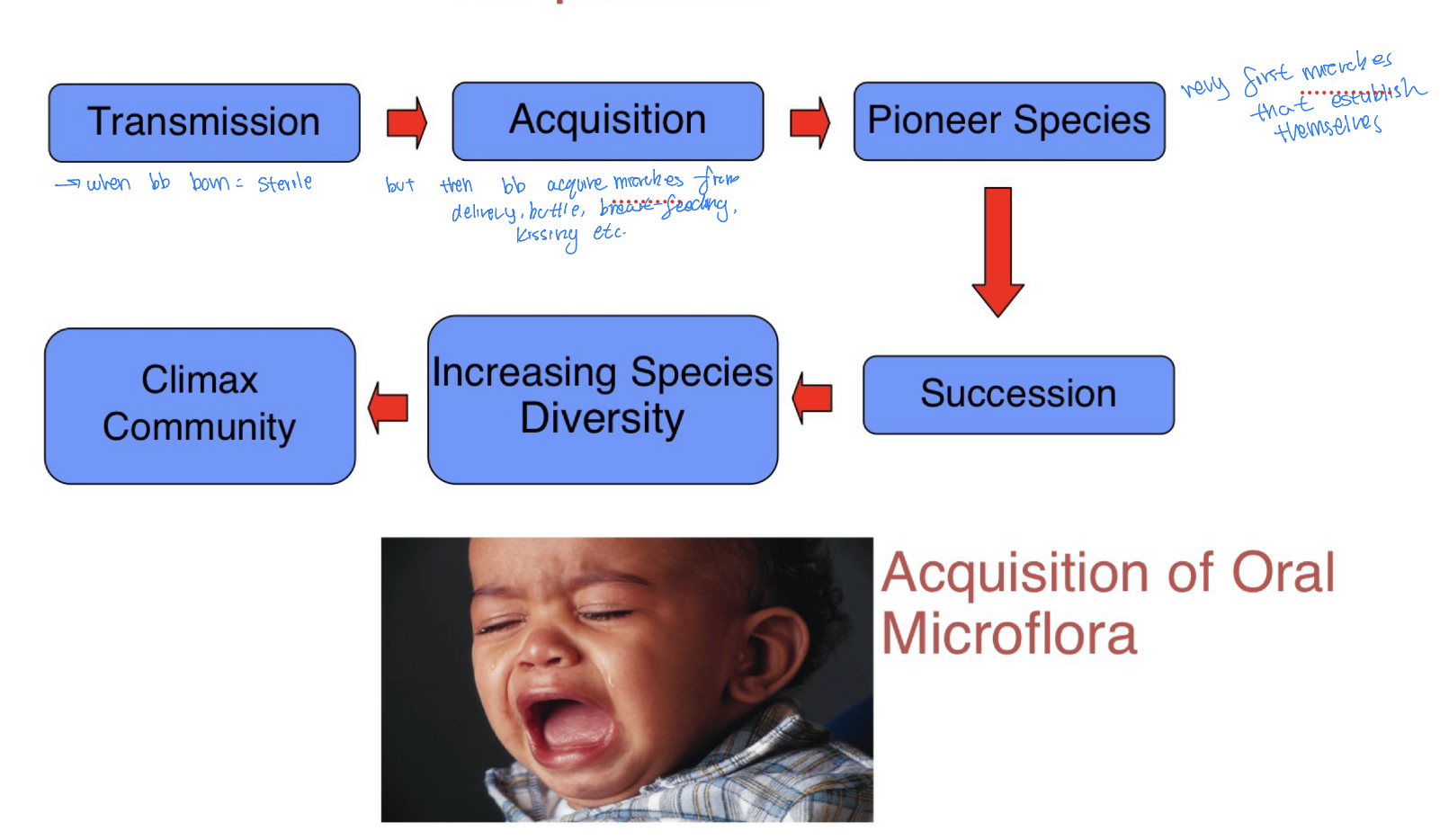
How does the oral microflora come to be? (6 stages)
6 Stages
Transmission → saliva from mother, food, milk, water
Acquisition → microbes enter mouth and colonize surfaces (epithelial & hard surfaces)
Pioneer species → first organisms to colonize usually (Streptococci, staphylococci, neisseria, veilonella)
Grow until they meet environmental resistance
Physical forces (epithelial shedding, shear forces)
Chemical factors (saliva, Eh <redox>, pH, nutritional requirements
Succession → Metabolic activity of pioneer community modifies environment, makes it suitable for new bacterial populations to colonize
Allogenic factors:
Physical environement
Eruption of teeth
Acrylic obturators for cleft palate (used in pts to mimic palate, provides hard surface for bacteria)
Autogenic factors
Toxic end products
Cryptotypes (receotors)
Receptors/binding sites where pioneer species bacteria attaches and modifies it so other bacteria can stick on it too
Metabolism/Eh
Ex. pioneer bacteria consume o2, Eh decreases, environment becomes more anaerobic and anaerobic bacteria can grow there
Increasing species diveristy
Climax community
Not static (highly dynamic)
Stable due to complexity
What are the factors responsible for stability in climax community
Competition for receptors/ligands for adhesion
Bacteria need to attach to surfaces/other bacteria
Established bacteria=limits ability of other bacteria to colonize
Competition for essential endogenous nutrients/cofactors
Bacteria need nutrients + other substance to grow, established bacteria can use up resources, limit whats available
Production of inhibitory substances
Some bacteria produce substance that inhibit/kill other bacteria
Creation of micro-environment that discourage growth of endogenous specieis
Established species can change local environment and make it difficult for other bacteria to grow like pH, O2 [ ]
![<ol><li><p>Competition for receptors/ligands for adhesion</p></li></ol><ul><li><p>Bacteria need to attach to surfaces/other bacteria</p></li><li><p>Established bacteria=limits ability of other bacteria to colonize </p></li></ul><p></p><ol start="2"><li><p>Competition for essential endogenous nutrients/cofactors</p></li></ol><ul><li><p>Bacteria need nutrients + other substance to grow, established bacteria can use up resources, limit whats available</p></li></ul><p></p><ol start="3"><li><p>Production of inhibitory substances</p></li></ol><ul><li><p>Some bacteria produce substance that inhibit/kill other bacteria </p></li></ul><p></p><ol start="4"><li><p>Creation of micro-environment that discourage growth of endogenous specieis </p></li></ol><ul><li><p>Established species can change local environment and make it difficult for other bacteria to grow like pH, O2 [ ]</p></li></ul><p></p>](https://assets.knowt.com/user-attachments/ae2e49e3-a5b7-4649-9431-3a324eda300e.png)
What are factors that interrupt the climax community?
In adults, resident microflora is usually relatively stable & co-exists in relative harmony w/ host
EXCEPTIONS
Pregnancy → hormonal changes alter environment
Tooth eruption in children → creates new surfaces
Disease (cancer/immunosuppression) → change in host defense
Denture wearing → artificial surface that changes oral environment
What is dental plaque
general term for complex microbial community found on tooth surface
Embedded in matrix of polymers of bacterial & salivary origin
Plaque being calcified is called calculus/tartar
Bacterial members cooperate + signal to each other
Fluid channels carry nutrients + remove waste
How does plaque develop?
Immediately after cleaning, on clean tooth surface, an acquired enamel pellcile forms
Enamel pellicle= thin, protein rich film from saliva & GCF
Bacteria than adheres to the enamel pellicle, colonize & multiply creating biofilm, if left alone, mineralizes and turns into calculus
Mineral alba is different from biofilm and pellicle, it is soft loosely attached containing bacteria, salivary proteins, food debris, epithelial cells
Can use disclosing solution like erythrosin to highlight presence of plaque

What is the enamel pellicle?
Uniform thick deposition of salivary proteins between enakel and layer of immature bacterial plaque
Allows for adherence and coaggregation of bacteria
Pellicle contains receptors and binding sites for bacteria then once first bacterias are attached, they provide receptors for other bacteria to attach → coaggregation
What interactions are involved in adherence and coaggregation of bacteria
Electrostatic interactions
Divalent cations
Hydogen bonding
Ionic interaction
Hydrophobic bonding
What are the contents in saliva that coat teeth and provide host ligands for bacteria attachment
Acidic proline rich (S. mutans)
Amylase
Lysozyme
Immunoglobulins
Albumin
What is the mechanism of adherence and colonization of bacteria for supragingival plaque
Development of Supragingival plaque


After tooth is clean, acquired dental pellicle is formed, saliva deposits host proteins & glycoproteins on enamel, creating acquired enamel pellicle. Pionner species bacteria bind to host ligands on dental pellicle (adherence)
Once bacteria attach → begin dividing and aggregate
THEN allow diff bacterial species to attach and COaggregate
What is the difference b/w aggregation and coaggregation
Aggregation= clumping with themselves
Co-aggregation= clumping w/ others

What is the mechanism of adherence and colonization for subgingival plaque?
Forms when supragingival plaque migrates into sulcus then inlammation creates subgingival environment
Wide variation of flora from site → site
Serotypes (dinstinct subgrp of species) w/ diff pathogenicities
Mostly anaerobic bacteria
90% anaerobic
75% gram (-)
up to 50% motile spirochaetes
Motile bacteria carry non-motile bacteria in
What part of gram (-) bacteria is bad?
Outer membranes consist of lipopolysaccharides, which stimulates immune response
What are the contributing factors for caries?
Host → have to be susceptible, saliva, tooth anatomy, OH, other host factors
Time → the other factors need to interact in sufficient duration
Microflora → need to have the bacteria that causes caries
Diet → fermentable carbohydrates (which lowers pH of mouth)

What are the bacteria that causes caries (Name 5) and how
S. mutans
Lactobacilli
S. sobrinus
S. sanguis
S. Mitis
Actinomyces naeslundii
A. casei
***Metabolize fermentable carbohydrates, produces lactic acid which causes demineralization
What is an important characteristic of streptococcus mutans and lactobacilli?
Aciduric
Able to survive + grow in acidic environments
Most bacteria can’t tolerate it well but these can and thrive in them
Describe the clinical development of caries
Tooth surface w/out caries
First sign of demineralization “white spot/incipient caries”, surface still hard and caries process can bbe halted/reversed here
Enamel surface= broken down, lesion w/ soft floor
Filling made to stop it but demineralization did not stop and lesion continues on in filling
Demineralization proceeds, undermines tooth
Tooth fractured
