amino acids
 Call Kai
 Learn
Learn Practice Test
 Spaced Repetition
 Match
Match Flashcards
 Knowt Play
1/19

Earn XP
Description and Tags
biochem exam #1
Name | Mastery | Learn | Test | Matching | Spaced | Call with Kai | Chat |
|---|
No analytics yet
Send a link to your students to track their progress
20 Terms
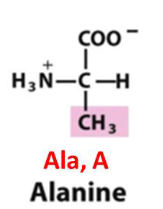
Alanine
Ala, A, Nonpolar Aliphatic R Group
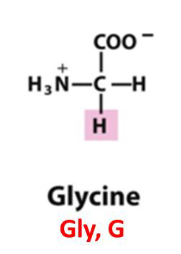
Glycine
Gly, G, Nonpolar Aliphatic R Group
Isoleucine
Ile, I, Nonpolar Aliphatic R Group

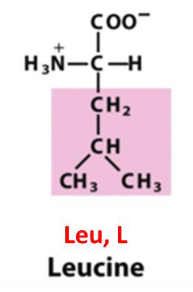
Leucine
Leu, L, Nonpolar Aliphatic R Group
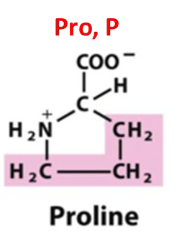
Proline
Pro, P, Nonpolar Aliphatic R Group
Valine
Val, V, Nonpolar Aliphatic R Group

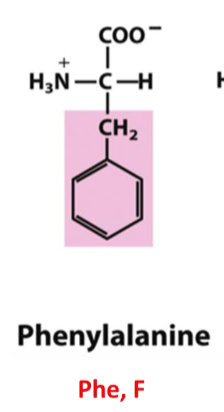
Phenylalanine
Phe, F, Aromatic R Group, non polar
Tryptophan
Trp, W, Aromatic R Group, non polar (but the N-H can form weak H bonds sometimes, because indole structure outweighs small poolarity)

Tyrosine
Tyr, Y, pKa=10, Aromatic R group, polar (bc of OH) BUT uncharged

Aspartic acid (at low pH)/ Aspartate (at pH=7.4)
Asp, D, pKa= 3.7, Aspartate → deprotonated, Negatively Charged R Group, opposite for Aspartic acid (neutral at pH < 4)

Glutamic acid (at low pH)/ Glutamate (at pH=7.4)
Glu, E, pKa= 4.3, Glutamate→ deprotonated, Negatively Charged R Group, opposite for Glutamic acid (neutral at low pH, protonated)

Arginine
Arg, R, pKa= 12, Positively Charged R Group

Histidine
His, H, pKa= 6, Positively Charged R Group, SPECIAL (ionizes at pH=7.4 bc pKa=6) so half protonated species, half deprotonated (neutral) species

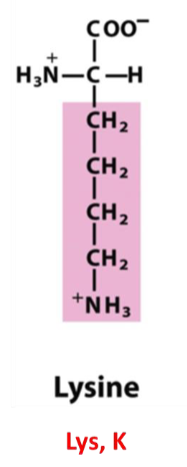
Lysine
Lys, K, pKa= 10, Positively Charged R Group
Serine
Ser, S, pKa= 13, Uncharged Polar R Group

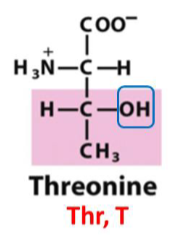
Threonine
Thr, T, pKa= 13, Uncharged Polar R Group
Cysteine
Cys, C, pKa= 8, Uncharged Polar R Group, can form disulfide bonds in oxidative environments

Methionine
Met, M, Nonpolar Aliphatic R Group

Asparagine
Asn, N, Uncharged Polar R Group

Glutamine
Gln, Q, Uncharged Polar R Group
