Lab Practical 1
 Call Kai
 Learn
Learn Practice Test
 Spaced Repetition
 Match
Match Flashcards
 Knowt Play
1/58

There's no tags or description
Looks like no tags are added yet.
Name | Mastery | Learn | Test | Matching | Spaced | Call with Kai | Chat |
|---|
No analytics yet
Send a link to your students to track their progress
59 Terms
Amphioxus
Lancelot
Ammocoete
Lamprey Larva
Notochord, dorsal hollow nerve chord, postanal tail, endostyle
Synapomorphies of Chordates
Myxiniformes
Hagfish
Petromyzontiformes
Lamprey
Strong
What is special about hagfish threads?
Produce threads and mucin cells that break open when attacked and absorb water, threads bind to mucin and expand
How do hagfish make slime?
Latch onto an animal and use teeth-covered tongue to create a hole then sucks out the bodily fluids
How do lamprey feed?
Adults have eyes and teeth, larva are filter feeders, adults are mostly parasitic, larva linve in freshwater rivers, adults migrate to ocean or large lake to feed then back to rivers to reproduce
What are the differences between larval and adult lamprey
Placoid scales, tooth whorl, cartilagenous skeleton, pelvic claspers, lipid-filled liver, high urea concentrations
Synapomorphies of Chondrichthyians
Pelvic claspers, only males have them
What is the easiest way to sex a chondrichthyian?
Polypteriformes
Ray-finned fish that have lungs (so can rise to surface for air), multiple fins across back, ganoid scales
Acipenseriformes
Sturgeons and paddlefish, cartilaginous, shark-like tails, sturgeons have heavy bony plates instead of scales, paddlefish are “naked” and have no scales, have electroreception
Lepisosteiformes
Gars, ganoid scales, sharp needle-like teeth, poisonous eggs
Amiiformes
Bowfins, bony plate on underside of throat, unchanged genome, non-collapsing gills, move tail like a ribbon to swim, false “eye” appearance on tail to confuse predators
Teleosts
When mouth is open, upper jaw protrudes, second set of jaws to grind food, suck in prey like a vaccum, perfectly symmetrical tail, scaffold bones, duplicates every gene
Skeletons made of “true bone”, lungs or swim bladder, operculum, bony dermal scales
Synapomorphies of bony fish
Elopomorpha
Eels
Osteoglossomorpha
Bonytongues
Otocephala
Herrings, carps, catfishes
Euteleostei
Salmon and Trout
Oyster Toadfish (A)
Adapted to have disruptive coloration, whiskers, and mucus-covered skin
Remora (A)
Adapted to have a sucking disc: Able to create a vaccum seal with their lips, lamellae are sharp and drive into host. Also have flat and hydrodynamic bodies
Lionfish (A)
Adapted to have venemous spikes and odd coloration, expandable stomachs, fan-like fins to trap prey
Flounder (A)
Adapted to go through metamorphosis and shift both eyes to one side of the head which allows them to lie flat on the seafloor and see upwards
Burbot (A)
Adapted to have a barbel on the chin, nocturnal vision, snake-like camoflauge pattern
Sculpin (A)
Adapted to have no swim bladder (no buoyancy since they stay on seafloor, flattened heads and bodies, camoflauge pattern, gill-cover spines (some have venom in them) and armor instead of scales
Ompok (A)
Adapted to have electroreception, elongated bodies, subcutaneous eyes, camoflauge pattern, sharp velvet-like teeth
Mexican Tetra (A)
Adapted to have lack of eyes, loss of pigment, more taste buds, stronger smell, and fat storage
Undulatory
Type of swimming that uses continuous, snake-like body waves to push water backwards, uses entire body or long fins, less efficient
Oscillatory
Type of swimming that uses tail and specific fins in a “back and forth” motion, more speed and control
Remora

Burbot
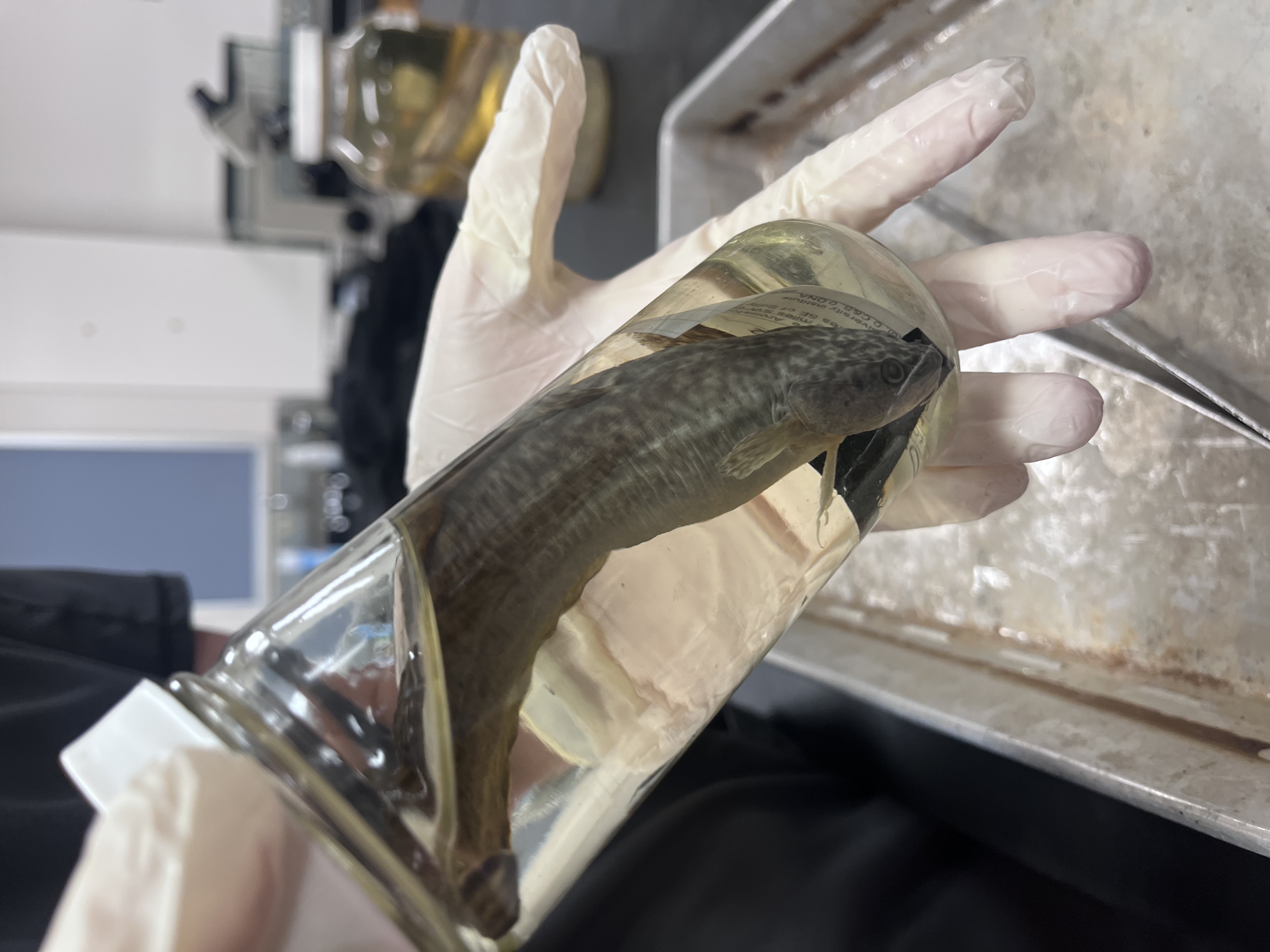
Lionfish

Ompok

Sculpin

Mexican Tetra

Flounder
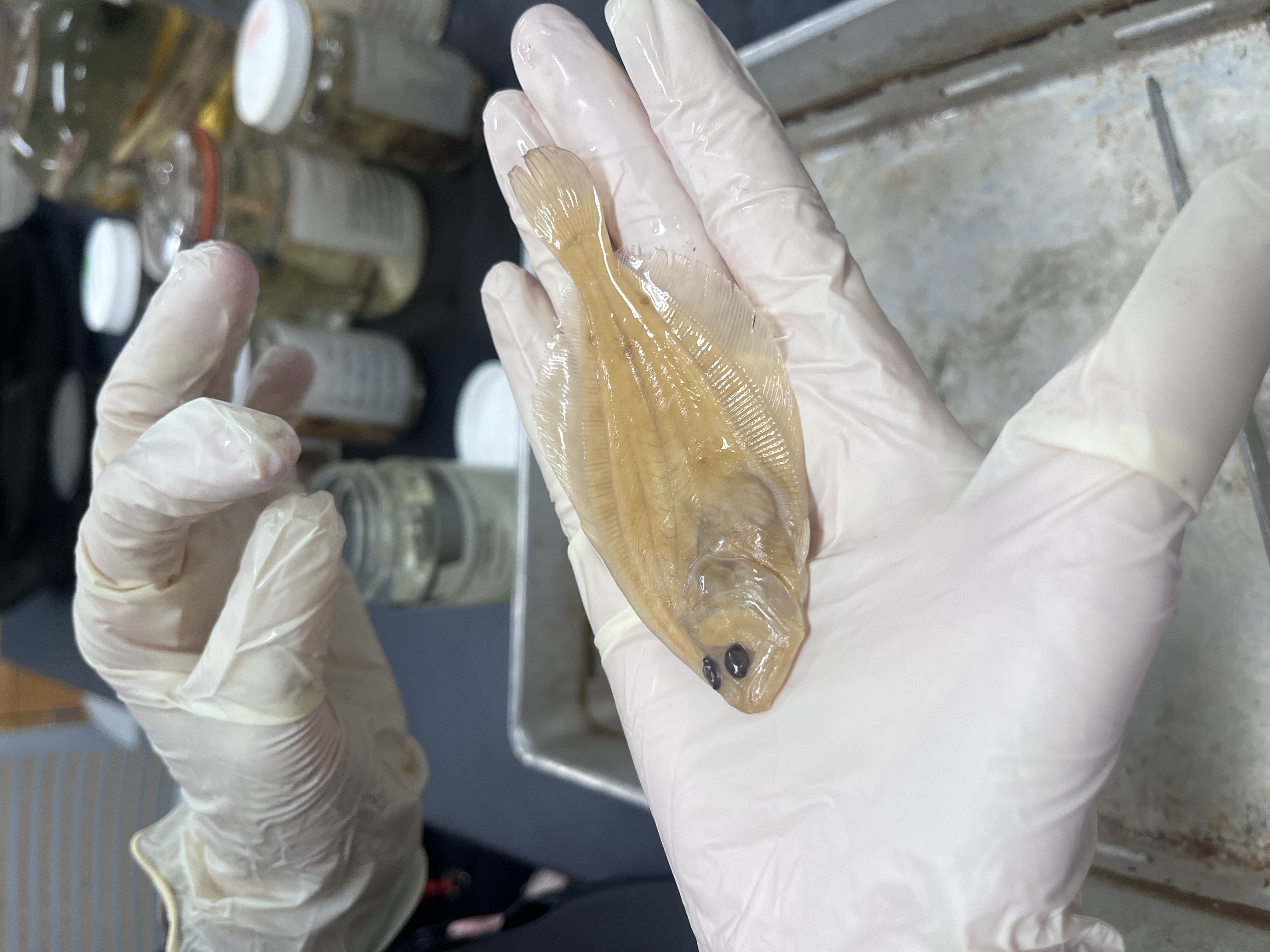
Oyster Toadfish

Piked dogfish
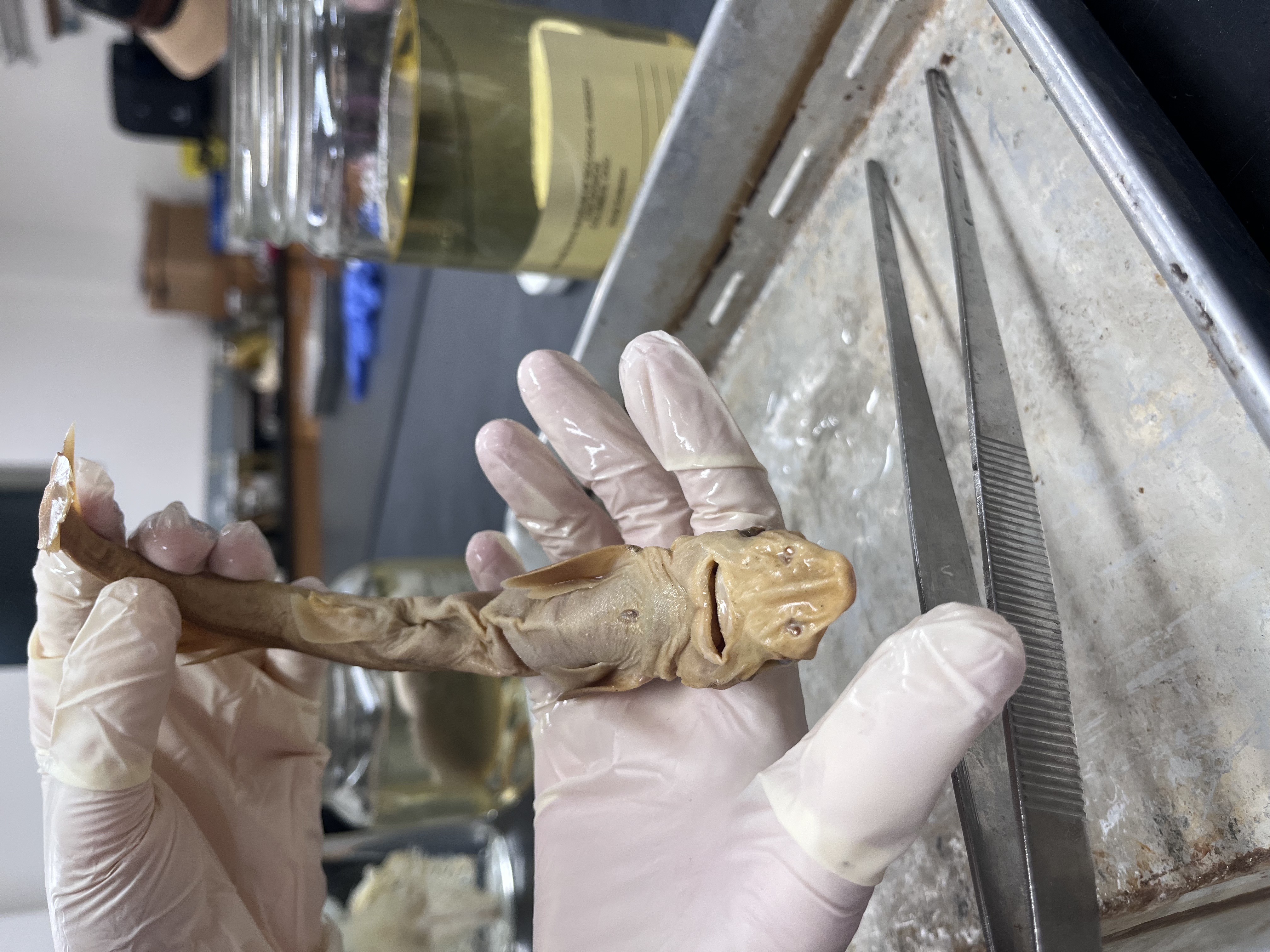
Whiptail stingray

Dogfish

American Eel

Logperch

Brook silverside/atheriniformes

Central stone roller/cypriniformes

Pickerel

Rainbow trout

Gizzard shad

Carp/cypriniformes

Chub/cypriniformes

Lamprey

Least brook lamprey

Perch Skull

Vertebrate, complex endocrine organs, cranium, tripartite brain, muscularized gut, multichambered heart, mineralized tissues, neural crest, gills from endoderm, hox gene duplication
Synapomorphies of vertebrates
Placoid Scale

Ganoid Scale

Cycloid Scale

Ctenoid Scale
