APTA Code of Ethics
 Call Kai
 Learn
Learn Practice Test
 Spaced Repetition
 Match
Match Flashcards
 Knowt Play
1/23

There's no tags or description
Looks like no tags are added yet.
Name | Mastery | Learn | Test | Matching | Spaced | Call with Kai | Chat |
|---|
No analytics yet
Send a link to your students to track their progress
24 Terms
purpose of professional documents in resolving ethical concerns
*articulate=put in writing
*support=examples

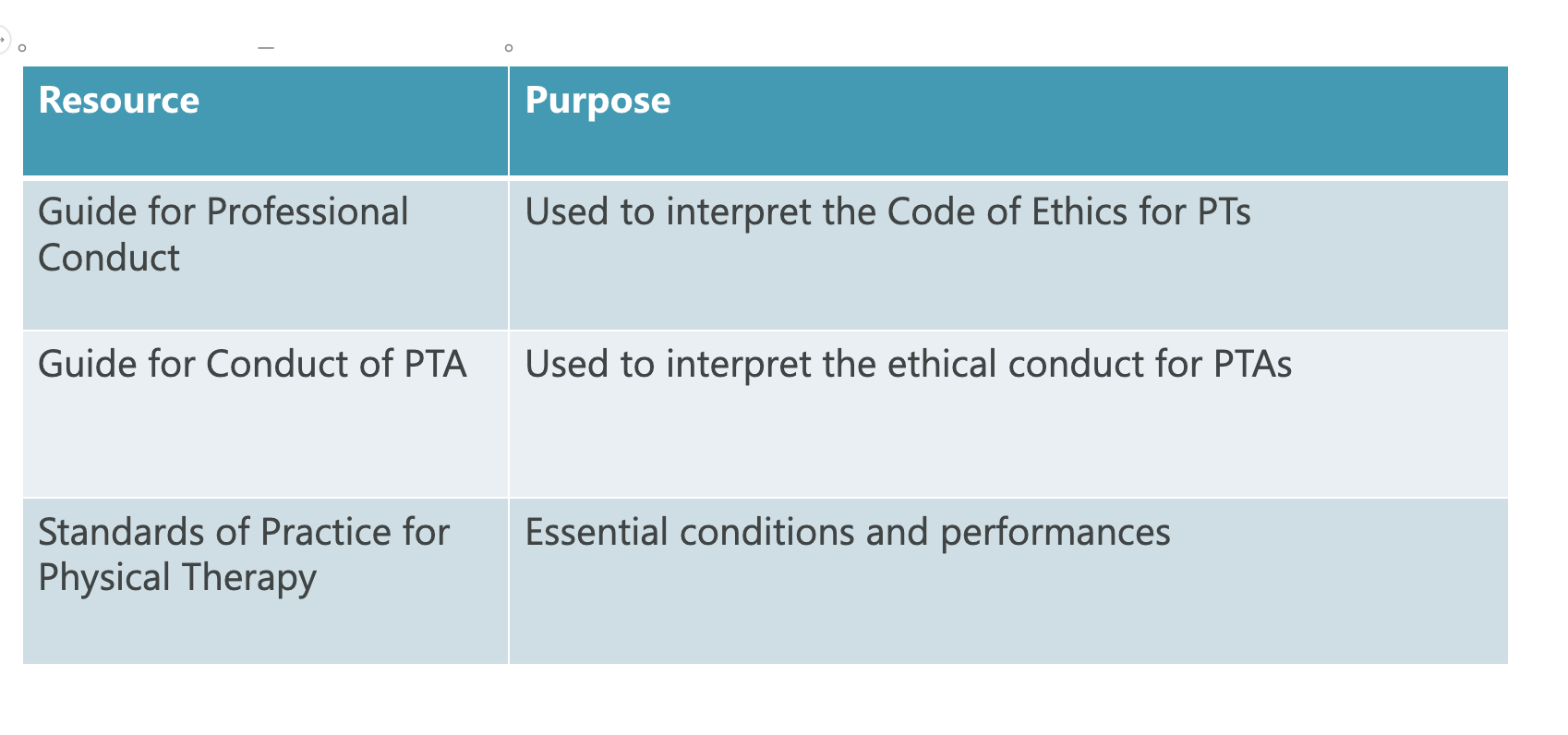
resourced for professional considerations
APTA Code of Ethics: Historical Evolution
adapted overtime

overview code of ethics
-ethical framework
-unified for PT’s and PTA’s
-Adopted by the HOD in 2025
-Persuasive Authority

why needed new code of ethics
As the physical therapy profession evolves and grows, the ethical guidelines for PT and PTA ethical decision-making must change to address contemporary practice issues, like:
•New technologies, social media, telehealth, AI in the clinic and classroom
•Clinician productivity metrics
•Clinic payer constraints
•Shifting patient challenges
•Team-oriented physical therapy care
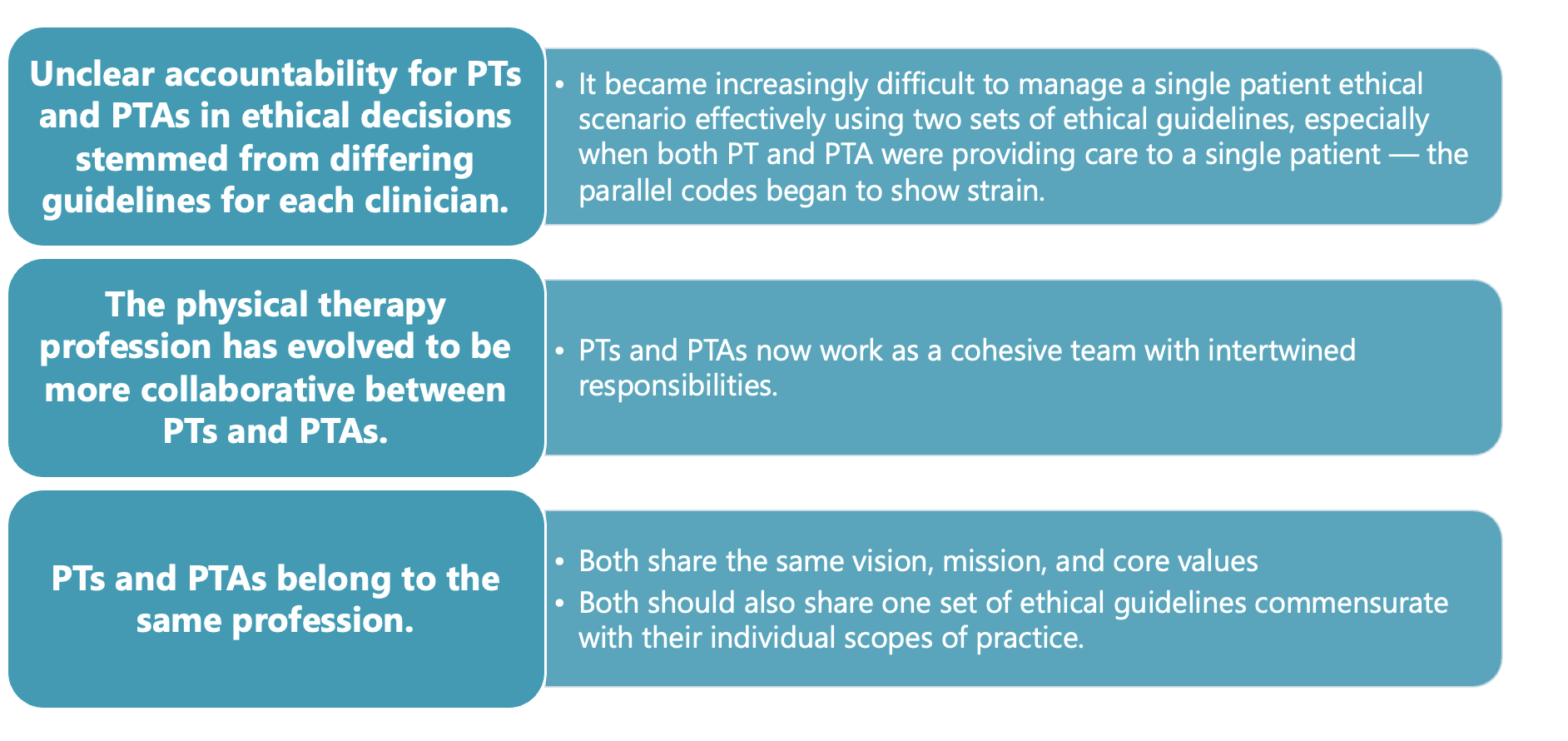
why is the new code unified
-unclear if had differing guidelines for PTs and PTAs
-PT profession has evolved to be more collaborative between PTs and PTAs
-PTs and PTAs belong to the same profession
Code of Ethics Revisions
*asked for input
-Drafted
-Shaped
-Approved by HOD

major components of the Code of Ethics
•Underlying Ethical Principles (*pillers)
•Ethical Commitments (*uphold pillers)
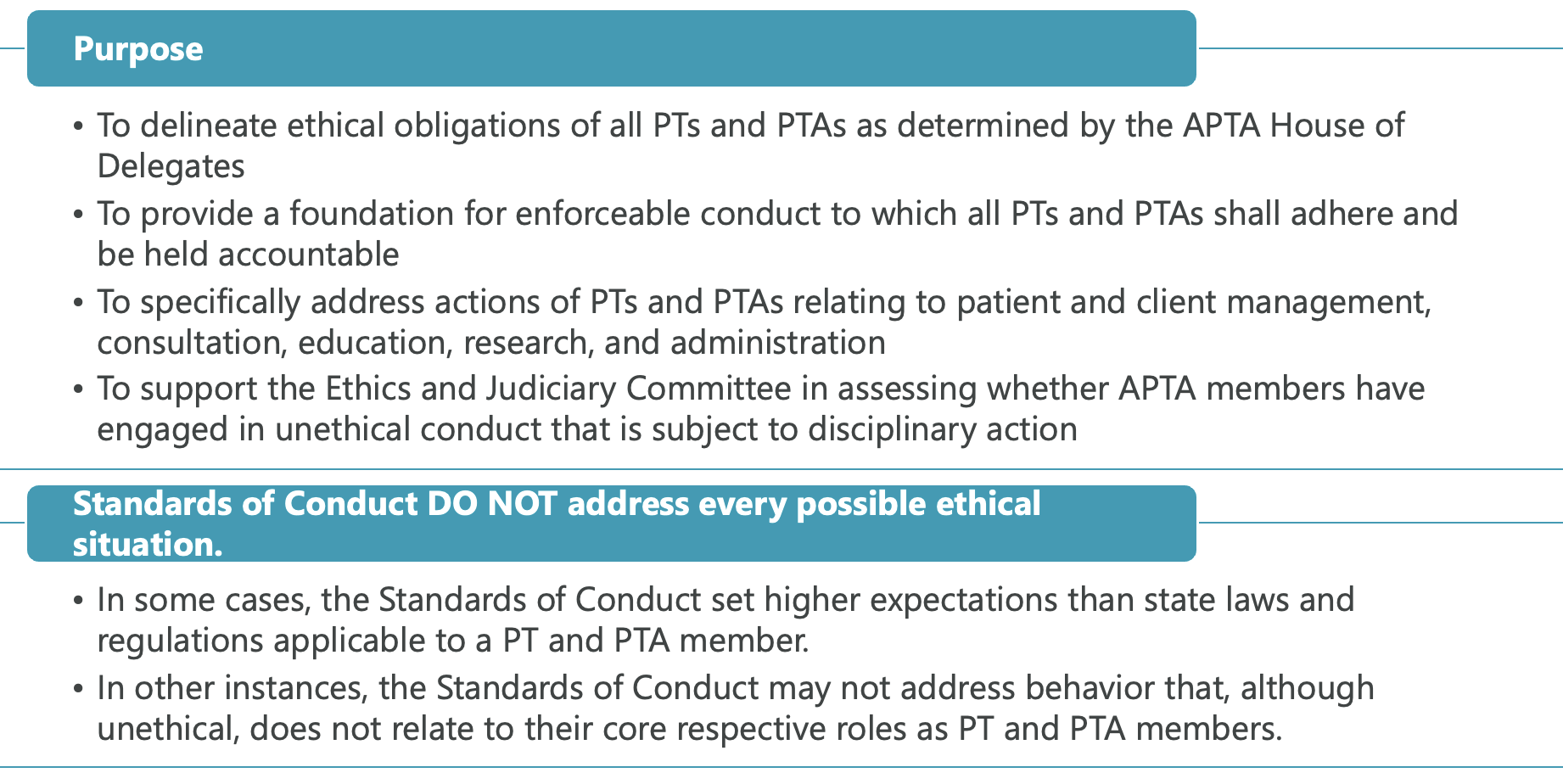
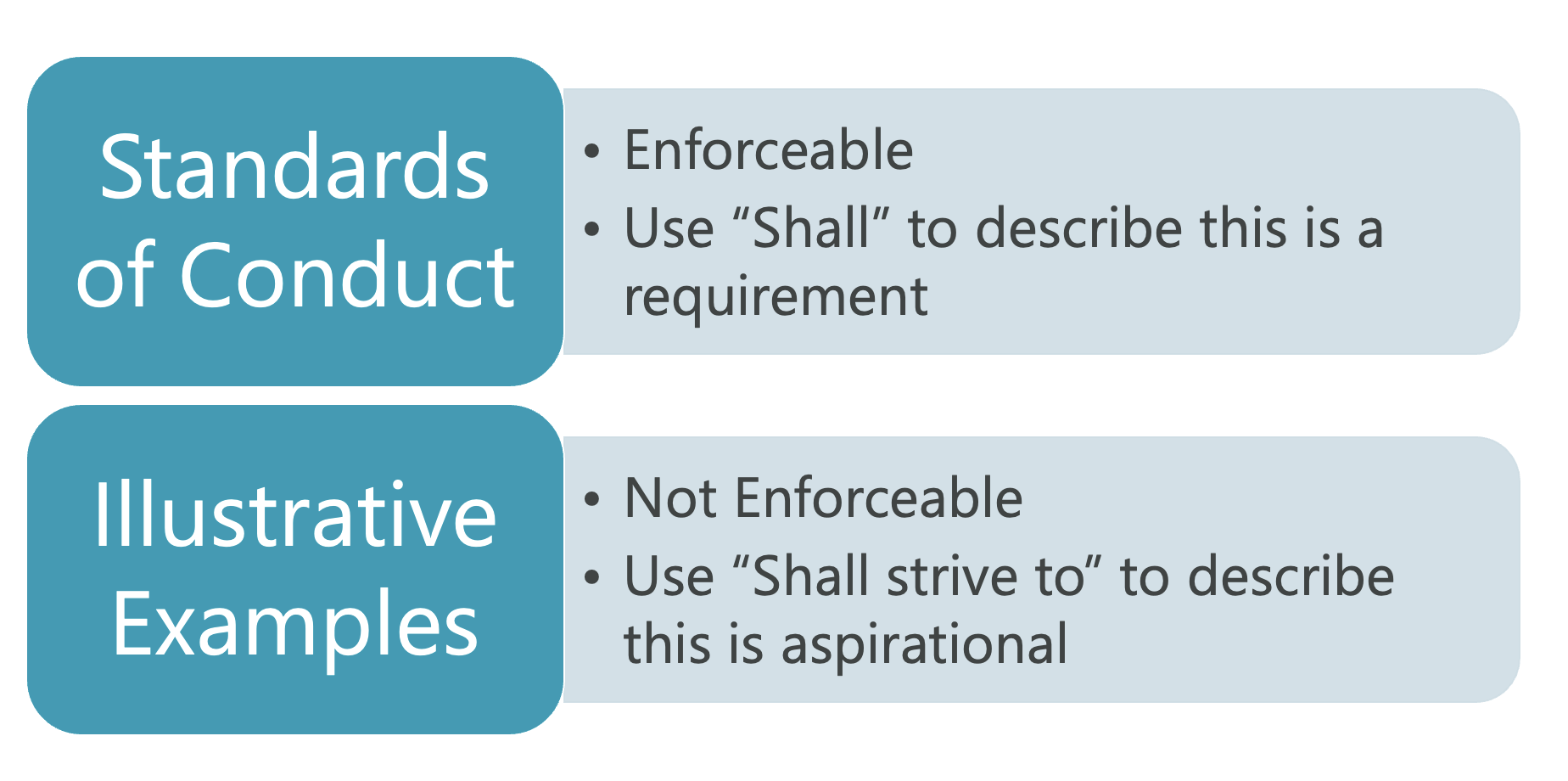
•Enforceable Standards of Conduct (*lowest baseline; legally agree to do)
•Aspirational Illustrative Examples (*ideal goals)
Classic ethical principles
Overarching; Six pillars of ethical decision-making that are part of PT-PTA ethical action at all levels (individual, organizational, and societal):
•Respect for autonomy: informed consent/pt in charge
•Beneficence: kind, caring
•Nonmaleficence: do no harm
•Justice: legal guidelines
•Veracity: tell truth
•Fidelity: fair and equal access
ethical commitments
*under principles
-Commitments detail elements of the ethical fiduciary duty of PTs and PTAs to act in patient’s or client’s best interest
-Each Ethical Commitment may include a relevant enforceable Standard of Conduct
-Serve as a basis for the Code’s enforceable Standards of Conduct

Standards of Conduct
how do bare minimum
Illustrative examples
-goal
more detalied w/ examples
-NOT enforceable

Standards of Conduct vs Illustrative Examples
-Standards of Conduct: enforceable; bare minimum
-Illustrative Examples: not enforceable; goal
Previous vs Current Code of Ethics
•A unified document that applies to both PTs and PTAs
•Includes:
•Nine ethical commitments
•Illustrative examples for each commitment.
•31 enforceable standards of conduct;
•Expressly discusses and highlights the connectivity between the foundational ethical principles and the nine enforceable standards of conduct
•Easy to use: One document that includes:
•Ethical commitments
•Enforceable standards of conduct
•Illustrative examples.
•Specifically addresses technology issues such as telehealth, AI, data security, and equitable digital access
Benefits of Code of Ethics
-one voice
-ease of use
-easy to educate
-easy to institute disciplinary process (*give examples)
-enhances public trust

challenges drafting new code of ethics
-tech
-buy-in
-regularly updated
-modules
-supporting documents

how to use code of ethics

Standard of Practice
-what look like in front of pt

What is in the Code of Ethics and Standards of Practice?

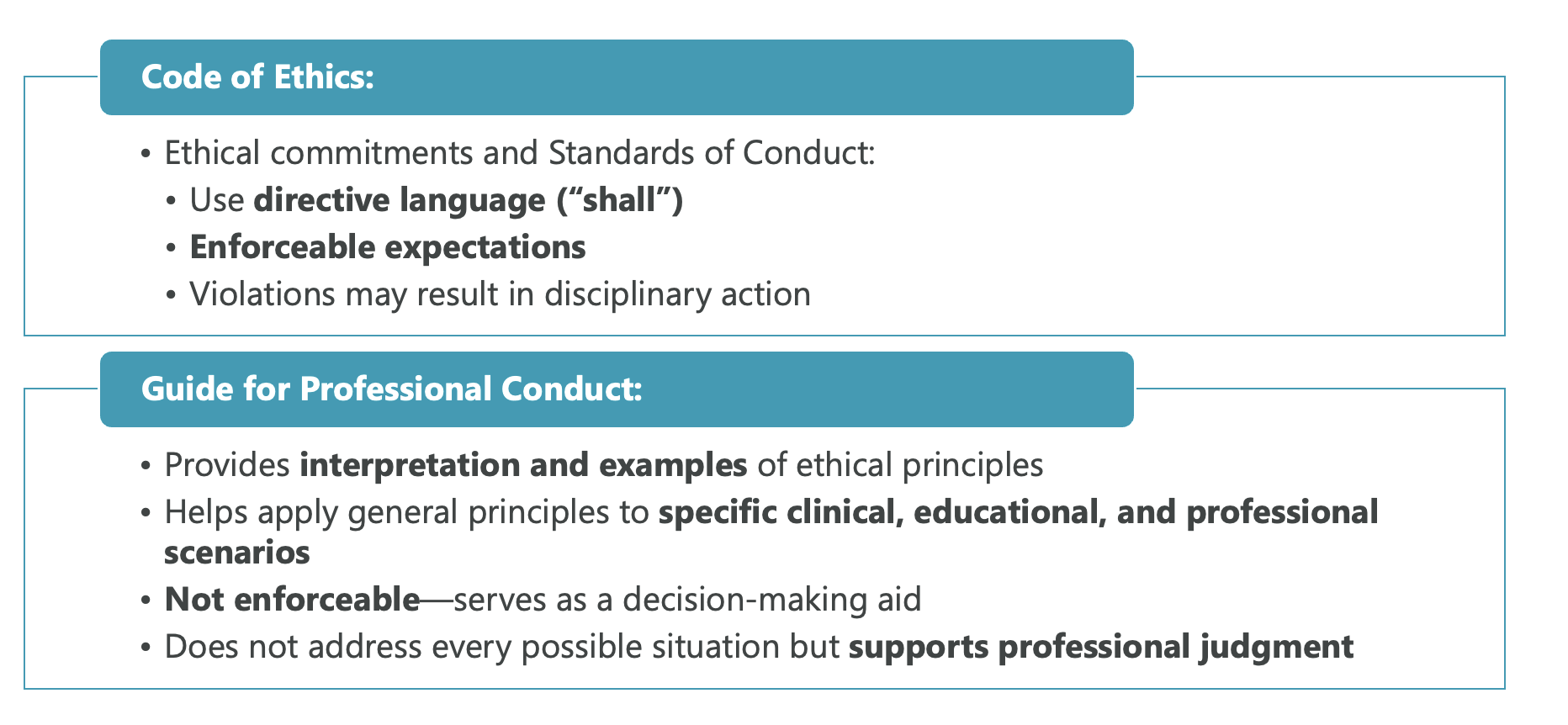
guide for professional conduct

What is in the Code of Ethics and the Guide to Professional Conduct
-code of ethics: enforceable expectations for standard of conduct
core values PT
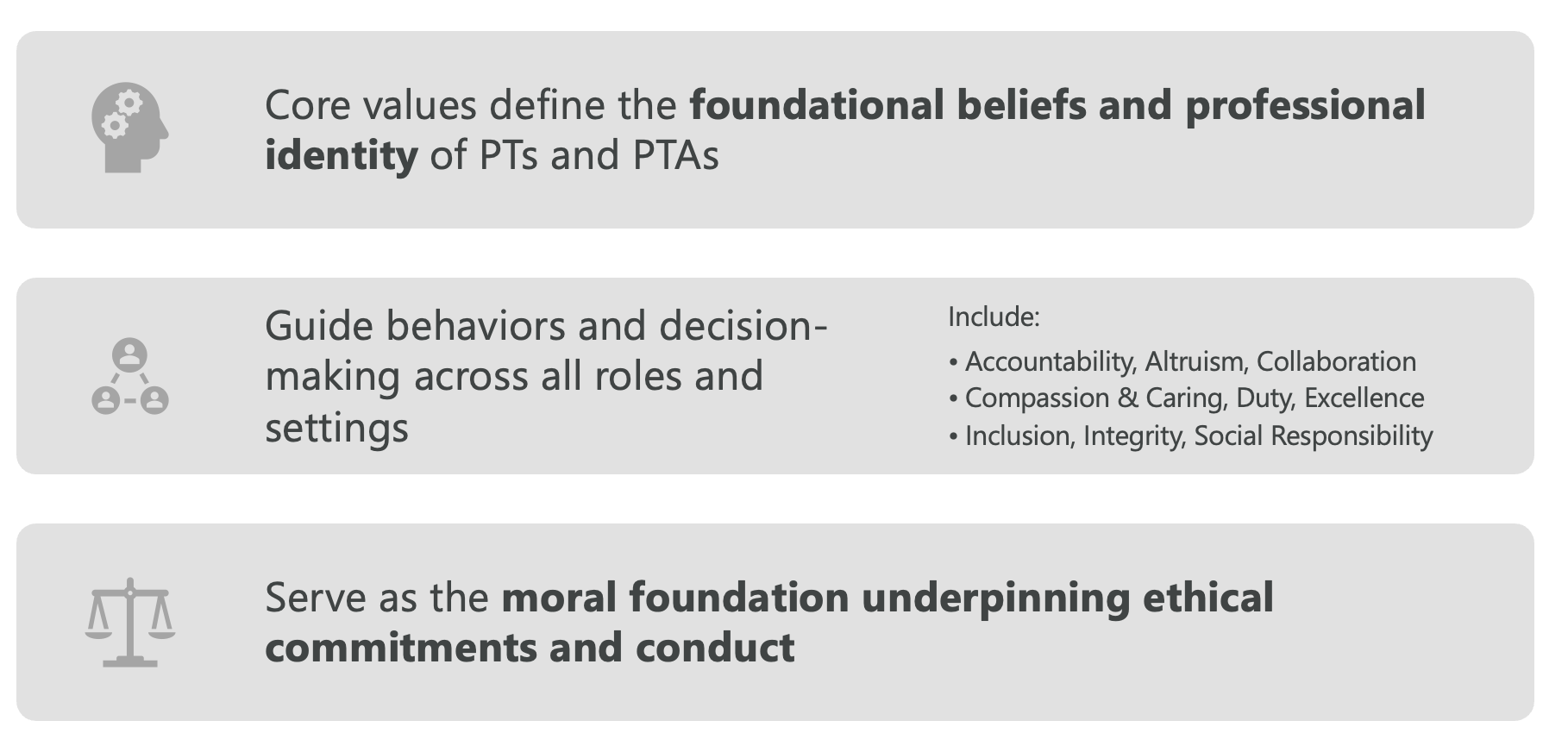
code of ethics and core values

how Guide, Core Values, and Code work together
-core values → foundation
-code of ethics → expectations
-Guide → application
