13. inguinal/femoral hernia
 Call Kai
 Learn
Learn Practice Test
 Spaced Repetition
 Match
Match Flashcards
 Knowt Play
1/35

There's no tags or description
Looks like no tags are added yet.
Name | Mastery | Learn | Test | Matching | Spaced | Call with Kai | Chat |
|---|
No analytics yet
Send a link to your students to track their progress
36 Terms
Bimodal
Infants (congenital)
Older adults (acquired weakness)
age distribution of inguinal hernias
Heavy lifting 🏋️
Chronic cough (COPD)
Constipation/straining
Pregnancy
Obesity or connective tissue weakness
Smoking (poor tissue integrity)
risk factors for inguinal hernias

Rectus abdominis (medial)
Inferior epigastric vessels (lateral)
Inguinal ligament (inferior)
what are the borders of Hesselbach's triangle?
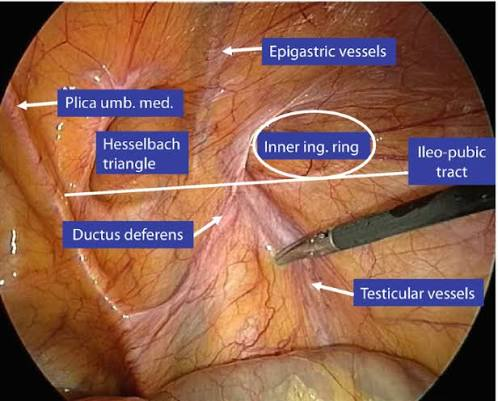
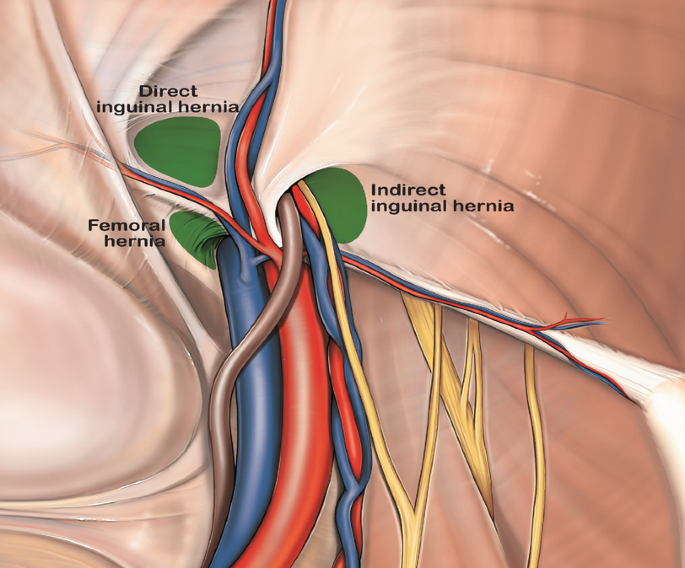
indirect inguinal hernia
most common type of hernia

Deep inguinal ring
Lateral to inferior epigastric vessels
*can extend into scrotum
“MDs don’t LIe”
Medial = Direct (s = hesselbac)
Lateral = Indirect (deeeep)
Relative to the inferior epigastric vessels.
location of indirect hernia
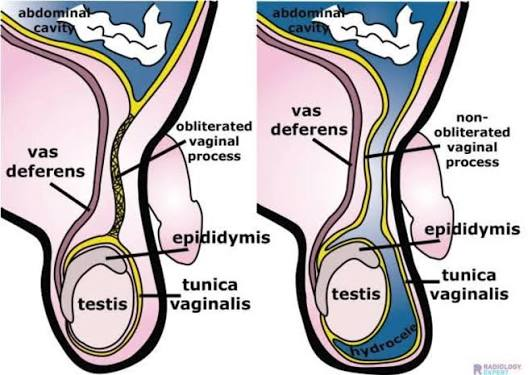
INdirect = INfants
Often congenital (patent processus vaginalis)
most common cause of indirect hernia

Medial to inferior epigastric vessels
Through Hesselbach triangle
“MDs don’t LIe”
Medial = Direct (s = hesselbac)
Lateral = Indirect (e=deeep)
Relative to the inferior epigastric vessels.
location of direct hernias

More common in women
High risk of strangulation
Finding | Incarceration | Strangulation 🚨 |
|---|---|---|
Reducible? | ❌ Non-reducible ⭐ | ❌ Non-reducible |
Pain | Increasing/local pain | Severe, constant pain ⭐ |
Hernia | Firm/tender | Very tender, tense |
Skin | Usually normal | Erythema, warmth, discoloration 🚨 |
GI symptoms | N/V, possible obstruction | N/V + obstruction, may progress to ileus |
Systemic signs | Usually absent | Fever, tachycardia, toxicity 🚨 |
Labs | May be normal | ↑ WBC, metabolic/lactic acidosis, ↑ lactate |
Meaning | Bowel trapped | Blood supply compromised → ischemia/necrosis |
Treatment | Urgent evaluation; reduction may be attempted if no strangulation signs | 🚨 Emergency surgery — DO NOT attempt forceful reduction |
Big red flags: severe worsening pain, erythema, fever, tachycardia, peritoneal signs, elevated lactate.
incarceration vs strangulation of a hernia
hydrocele
- collection of serous fluid within the tunica vaginalis surrounding the testicle.
Communicating hydrocele | Noncommunicating hydrocele | |
|---|---|---|
Cause | Patent processus vaginalis ⭐ | Processus vaginalis closed; fluid remains |
Connection to abdomen? | Yes | No |
Size changes? | Yes — larger with crying/standing, smaller when supine | Usually constant |
Associated with | Indirect inguinal hernia ⭐ | Usually isolated |
Transilluminates? | ✅ Yes | ✅ Yes |
Treatment in child | Often observe initially; surgical repair if persistent/associated hernia | Usually observe in infants |
Scrotal mass | Transilluminates? | Classic clue |
|---|---|---|
Hydrocele | ✅ YES | Painless fluid around testicle |
Varicocele | ❌ | “Bag of worms” |
Testicular tumor | ❌ | Firm, painless solid mass |
Inguinal hernia | ❌ | Reducible; may increase with Valsalva |
Epididymitis | ❌ | Painful + urinary symptoms |
Testicular torsion | ❌ | Sudden severe pain, high-riding testicle |
scrotal mass that transilluminates
= testicular cancer until proven otherwise
→ scrotal ultrasound first.
→ radical inguinal orchiectomy is the diagnostic + therapeutic approach.
⚠ If suspicious for cancer:
Never biopsy through the scrotum because it can disrupt lymphatic drainage and potentially seed tumor.
painless/ firm / solid testicular mass, no transillumination
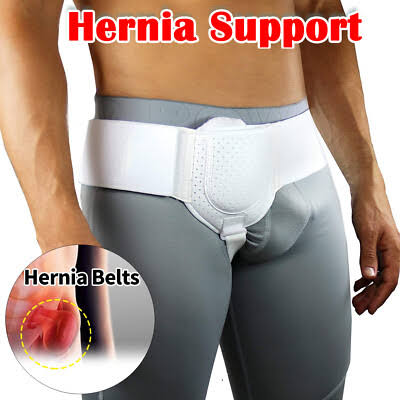
truss
hernia belt for nonoperative hernias
DO NOT observe (operate)
can you manage femoral hernias non-operatively?

Lichtenstein repair
-Tension free hernia repair with a patch (mesh)
-open repair

TEP = “Entirely Extra-Peritoneal”
→ Never enters the abdomen
(totally extraperitoneal)
OR
TAPP = “Through Abdomen → PrePeritoneal”
→ enters the peritoneal cavity, opens a peritoneal flap, places mesh underneath, then closes the flap.
(transabdominal preperitoneal)
Both vs open repair
TEP/TAPP = posterior approach → mesh covers the entire myopectineal orifice, protecting against direct, indirect, and femoral hernias.
Board pearl: For a bilateral inguinal hernia or recurrent hernia after an anterior/open repair, a laparoscopic/minimally invasive posterior approach (TEP or TAPP) is especially useful.
If a patient previously had a posterior/laparoscopic repair, recurrence is generally approached from the opposite plane → open anterior repair.
laparoscopic repiar types for hernias
femoral hernia
hernia type with the highest strangulation risk
sliding inguinal hernia
Why surgeons care?
During repair, you cannot simply dissect or excise the entire “sac” because what looks like the sac wall may actually be colon or bladder → risk of organ injury.
Board pearl:
Sliding hernia = organ forms part of the hernia sac wall.
Don't confuse it with a sliding hiatal hernia, where the GE junction and proximal stomach slide above the diaphragm.
Hernia where part of the sac wall is formed by an organ
Colon (most common)
Bladder
Sliding hernia
Large, chronic hernia
May have urinary symptoms (if bladder involved)
strangulated hernia
Hernia with compromised blood supply
older men
most common population of bilateral inguinal hernias
Laparoscopic repair preferred
Can fix both sides simultaneously
Less pain, faster recovery
preferred management of bilateral inguinal hernias
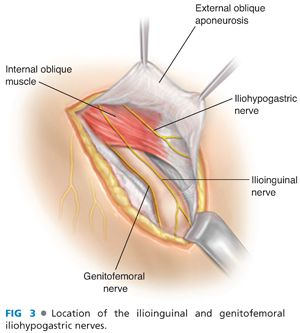
ilioinguinal nerve
nerve deficit associated with groin/scrotal numbness
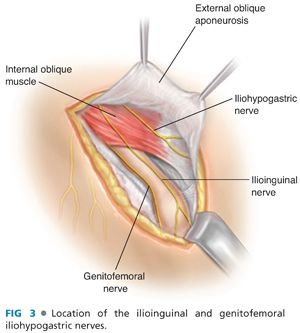
iliohypogastric
nerve deficit associated with lower abdominal sensation
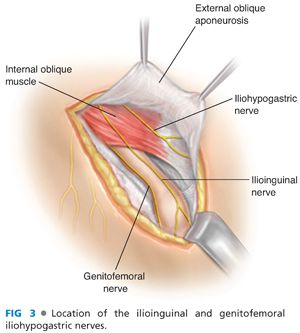
genitofemoral nerve
nerve: ok cremaster reflex, scrotal sensation

Category | Contents |
|---|---|
Arteries | Testicular artery, cremasteric artery, artery to ductus deferens |
Veins | Pampiniform plexus → testicular vein |
Nerves | Genital branch of genitofemoral nerve (cremaster reflex), sympathetic/autonomic fibers |
Duct | Vas (ductus) deferens |
Lymphatics | Testicular lymphatics → para-aortic (lumbar) nodes |
Other | Remnant of processus vaginalis |
note:
The ilioinguinal nerve travels through the inguinal canal alongside the spermatic cord, but is NOT actually contained within the spermatic cord.
injury to spermatic cord causes damage to:
hint: 3 nerves, 3 arteries, 3 other structures:
ischemic orchitis
Can happen after hernia repair
Swollen painful testicle
2/2 pampiniform plexus thrombosis or testicular artery ligation
Treat with NSAIDS
Orchiectomy is rare
Poor surgical technique
Tension on repair
Infection
Patient factors (obesity, smoking)
causes of hernia recurrence
mesh repair
best way to prevent hernia recurrence
Infection
Chronic pain
Mesh complications (rare)
risks associated with mesh use
organ forms sac wall
define a sliding hernia
lap hernia repair
best approcah for bilateral/recurrent hernias
Classic presentation:
Young man (15–35) + painless, firm testicular mass that does NOT transilluminate
Feature | Testicular cancer |
|---|---|
Pain | Usually painless |
Consistency | Firm/hard, solid |
Transillumination | ❌ No |
Location | Intratesticular |
Lymphatic spread | ⭐ Para-aortic (retroperitoneal) lymph nodes |
Major risk factor | Cryptorchidism |
Initial imaging | Scrotal ultrasound |
Tumor markers | AFP, β-hCG, LDH |
Diagnosis/treatment | Radical inguinal orchiectomy |
Avoid | ❌ Transscrotal biopsy |
NEVER biopsy testicular ca bc where will it spread?
Tumor | Histology |
|---|---|
Seminoma | “Fried-egg” cells with clear cytoplasm + lymphocytes |
Embryonal | Primitive, pleomorphic cells; glandular/papillary patterns |
Yolk sac | ⭐ Schiller-Duval bodies |
Choriocarcinoma | Cytotrophoblasts + syncytiotrophoblasts |
Teratoma | Multiple mature/immature tissue types from different germ layers |
extra
Tumor | Typical age | Classic presentation / board clues | Tumor marker |
|---|---|---|---|
Seminoma | 30–40 | ⭐ Painless testicular mass; homogeneous; radiosensitive; relatively later spread | β-hCG may ↑, AFP NEVER ↑ |
Embryonal carcinoma | 20–30 | Painless mass; aggressive, often heterogeneous with hemorrhage/necrosis | AFP ± β-hCG ↑ |
Yolk sac tumor | <3 years | ⭐ Most common testicular tumor in young children; Schiller-Duval bodies | AFP ↑ |
Choriocarcinoma | 20–30 | Small testicular primary but early hematogenous metastases → lungs/brain; may cause gynecomastia | ⭐ β-hCG markedly ↑ |
Teratoma | Children & young adults | Contains tissues from multiple germ layers; behavior depends strongly on age | Markers variable |
Super high-yield age associations
Child <3 + testicular mass → Yolk sac tumor → AFP ↑
30–40 + painless testicular mass → Seminoma → AFP normal
One more board age pearl: In an older man (~60+) with a testicular mass, think testicular lymphoma (usually diffuse large B-cell lymphoma), rather than a germ-cell tumor.

Varicocele | |
|---|---|
Cause | Dilated pampiniform plexus veins |
Side | Left > right |
Palpation | “Bag of worms” |
Pain | Usually painless; may cause dull aching/heaviness |
Standing/Valsalva | Becomes larger/more prominent |
Supine | Decreases/disappears |
Transillumination | ❌ No |
Complication | Infertility + testicular atrophy |
Diagnosis | Usually clinical; Doppler US if uncertain |
Adolescent/young man with painless scrotal swelling or heaviness that worsens with standing or Valsalva and improves when supine.
Clinical situation | Preferred approach |
|---|---|
Bilateral inguinal hernias | ⭐ TEP or TAPP |
Recurrent hernia after OPEN/anterior repair | ⭐ TEP or TAPP (posterior approach) |
Unilateral primary hernia | Open, TEP, or TAPP depending on patient/surgeon |
Need to inspect abdominal cavity / uncertain diagnosis | TAPP |
Larger/complex hernia where more working space helps | Often TAPP |
Want to avoid entering peritoneal cavity | TEP |
Significant prior lower abdominal/preperitoneal surgery | TAPP may be easier; approach individualized |
Recurrence after TEP/TAPP | ⭐ Open anterior repair (switch planes) |
TAPP | TEP | |
|---|---|---|
Full name | Transabdominal preperitoneal | Totally extraperitoneal |
Enter abdominal/peritoneal cavity? | ✅ YES | ❌ NO |
Basic route | Abdomen → open peritoneum → preperitoneal space | Directly into preperitoneal space |
Mesh location | Preperitoneal | Preperitoneal |
Peritoneum opened? | ✅ Yes, then closed over mesh | ❌ No |
Working space | Larger, easier visualization | Smaller, technically more difficult |
Can inspect abdominal cavity? | ✅ Yes | ❌ No |
Intra-abdominal complications | Higher potential risk | Lower risk |
Adhesion/bowel injury risk | Slightly higher | Lower |
Learning curve | Generally easier | More technically demanding |