malaborption and maldigestion in dogs and cats
 Call Kai
 Learn
Learn Practice Test
 Spaced Repetition
 Match
Match Flashcards
 Knowt Play
1/22

Earn XP
Description and Tags
Name | Mastery | Learn | Test | Matching | Spaced | Call with Kai | Chat |
|---|
No analytics yet
Send a link to your students to track their progress
23 Terms
exocrine pancreas function
and what are secreted by epithelial cells of ductules
production of enzymes
bicarbonate and water are secreted by epithelial cells of ductules
bicarbonate neutralises the HCl coming from the stomach
thus providing a suitable environment for pancreatic enzymes to work
effects of pancreatic dysfunction
protein maldigestion
carbohydrate maldigestion
fat maldigestion
impaired assimilation of fat soluble vitamins
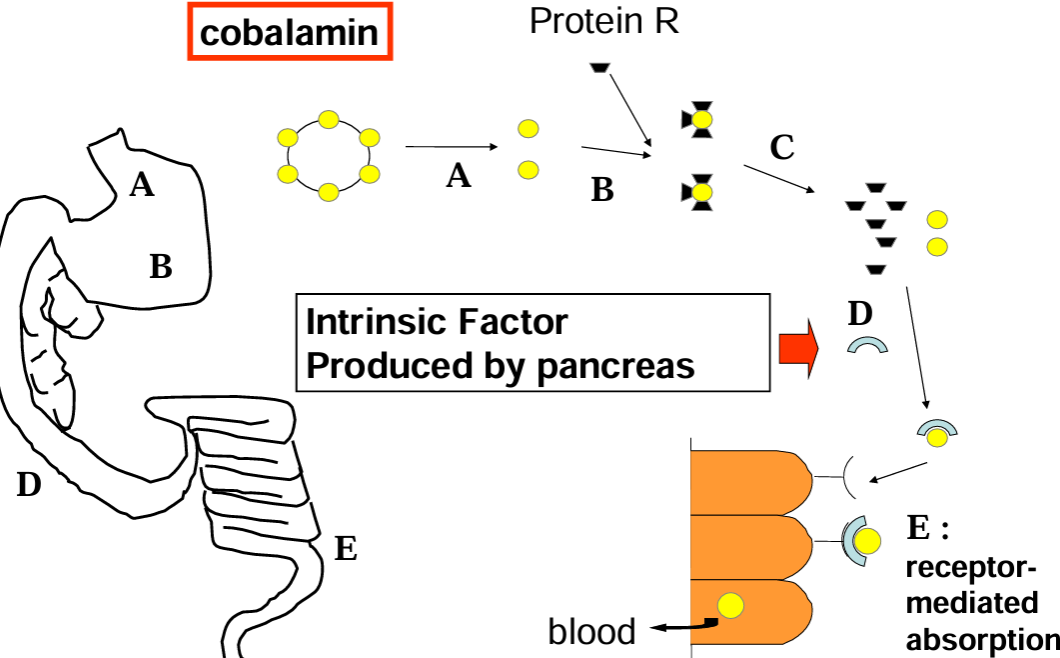
impaired absorption of cobalamin- vitamin B12
increased bacterial growth in small intestine
what are the fat soluble vitamins
A- retina and eyesight
d- calcium metabolism
e- protection form toxins, especially liver
k- clotting factors to be activators
why is there increased bacterial growth in the gut
chyme lies undigested in the upper gi tract
provides growth media for bacteria
leads to SIBO
sometimes antibiotics are necessary
impared cobalamin absorption in EPI
intrinsic factor essential to permit cobalamin absorption from gut is synthesised by pancreas
thus absent in exocrine pancreatic insufficiency (although there is some secreted in stomach)
also increased uptake of cobalamin by increased numbers of bacterias in gut- overgrowth
EPI
what is it
causes
insufficient production of pancreatic enzymes
insufficient bicarbonate to neutralised HCl
large reserve capacity
need loss of 90 percent pancreatic function before clinical signs occur
causes : pancreatic acinar arophy, pancreatitis, pancreatic hypoplasia (uncommon), pancreatic neoplasia (rare cuase of total loss of function)
causes of maldigestion
exocrine pancreatic insufficiency
secondary enzyme deficiency- lumenal conditions not optimal for pancreatic enzyme function
deficiency of bile acid
loss of brush border enzyme
pancreatic acinar atrophy
selective destruction of digestive enzyme producing acinar cells
endocrine function usually unaffective
progressive due to autoimmune disease
STAGE ONE : subclinical. inflammation-mT lymphocyte infiltration. partial acinar atrophy
STAGE 2 : clinical. severe endstage atrophy
breeds
increased prevalence and believed to be inherited in german shepherds and rough coated collies
suspected to be inherited in english setters
in uk chow chow over represented

chronic pancreatitis
what does it lead to
most common cause of epi in cats- uncommon
also occurs in dogs but PAA most common. middle aged to olde small medium dogs
progressive destruction of both exocrine and endocrine pancreas with fibrosis
can develop clinical signs of epi and diabetes mellitus
clinical signs of epi
weight loss but normal or increased appetite
increased faecal volume
abnormal faeces- grey/yellow, increased water due to maldigested carbs, greasy
flatulence
coprophagia
diagnosis of epi
not pathognomic and can occur with small bowel disease
specific blood test for trypsin like immunoreactivity- small amount of trysin and other digestive enzymes always leak into bloodstream, can be detected in species specific assay, low levels of epi
faeces may contain fat and starch seen micoscopically
treatment of epi
avoid high fat but very fat restricted also not good
high caloric density
highly digestible and low fibre as this impairs pancreatic enzyme activity and soluble fibre can absorb enzymes
feed two or more meals a ay
can often be maintained on a normal diet
epi due to pancreatitis in dogs do benefit from ow fat diets. in cats it does not matter
lifelong pancreatic enzyme replacement on food. must have a high lipase level
antimicrobial therapy 1-3 weeks
supplementation of fat soluble vitamin a and b12- weekly injection, initially 6-8 weeks, may need to be lifelong. oral supplementation may be fine due to gasri secertion of intrinsic factor
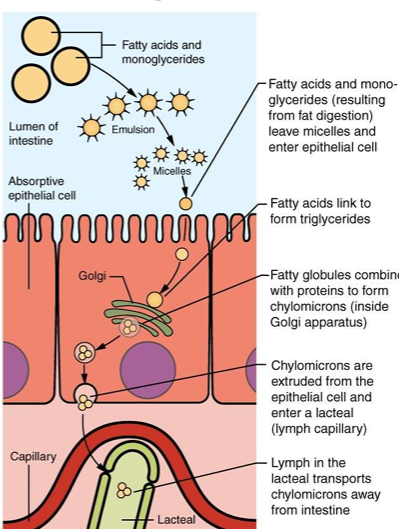
phases of absorption
luminal
mucosal
transport
pathology affecting the luminal phase
involves digestion as well
dysmotiliy- hyperthyroidism
pancreatic enzyme deficiency or inactivation due to gastric acid hypersecretion
fat maldigestion- epi, loss of or impaired bile salts actitivty due to ileal or liver disease
brush border enzyme deifcieny- congenital, trehalase in cats. aquired- relative lactose deficiency
brush border protein transport deficiency- congeital- intrinsic facto deifciency,.aquired- diffuse small intestinal disease
enterocyte defects eg ibd
lymphatic obstruction- primary lymphagiectasia, secondary (obrution due to neoplasia, infection or inflammation, most common)
vascular compromise- vasculitis, infection, immune mediated. portal hyerptaension, hepatopathy, right sided heart failire
malabsorption- primary GI
infiltrative diseases of the gut wall
parasitic
inflammatory bowel disease
lymphagiectasia
GI lymphoma or other diffuse neoplasia
severe SIBO
dry feline infectious peritonitis
deep mycoses (endemic areas)
clinical signs of malabsorption
weight loss
often despite normal or increased appetite
but can have decreased or capricious appetite
diarrhoea
from slight to severe
coprophagia
sometimes
malabsorption- secondary GI
hepatic disease
bile acids imporantfor assisting in digestiona and absorption especially of fats
right sided cardiac disease
hyperthyroidism
gut transit time of food decreased so less time for absorption
weight loss also due to increased metabolic rate
treatment- hepatic disease
depends on pathology
inflammatory
infectious
neoplasic
toxic
fibrosis
treatment- right sided cardiac disease
depends on cause
valvular disease
cardiac muscle disease
pericardial disease
treatment- hypeerthyroidism
anti thyroid drugs- tablets, oral liquid or transdermal cream
diet
surgery
radioactive iodine I 131
treatment of malabsorption
depends on cause
inflammatory
infectious
parasitic
neoplastic
dogs or cats that develop epi due to chronic pancreatic inflammation will also often have…
diabetes mellitus