AP US History: Period #2 Review
 Call Kai
 Learn
Learn Practice Test
 Spaced Repetition
 Match
Match Flashcards
 Knowt Play
1/36

There's no tags or description
Looks like no tags are added yet.
Name | Mastery | Learn | Test | Matching | Spaced | Call with Kai | Chat |
|---|
No analytics yet
Send a link to your students to track their progress
37 Terms
Act of Toleration
The first colonial statue granting religious freedom to all Christians, but it called for death of all non-Christians. It was created to provide a safe haven for Catholics.
Roger Williams
From Massachusetts and believed in separation of church and state; founded Rhode Island
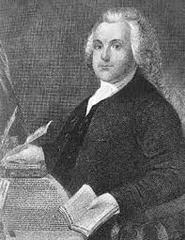
Anne Hutchinson
Puritan woman who believed in individual worship and was banished from Massachusetts
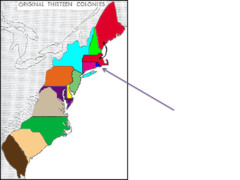
Rhode Island
Founded by dissenters from Massachusetts; known as "the sewer"
Halfway covenant
In the 1660s, people could now take part in church services and activities without making a formal commitment to Christ. It was created because the next generation of colonists were less committed to religious faith, but churches still needed members.
Quakers
Members of the Religious Society of Friends who believed in the equality of men and women, nonviolence, and resistance to military service.

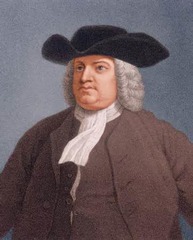
William Penn
In 1761, the royal family paid a large debt by granting his family a large parcel of American land. This Quaker, formed a colony.
Holy Experiment
William Penn put his Quaker beliefs to the test in his colony, Pennsylvania. He wanted the colony to provide a religious refuge for Quakers and other persecuted people, enact liberal ideas in government, and generate income and profits for himself.

rice plantations
These plantations required a large land area and many slaves; mainly located in the low country of the Southern colonies

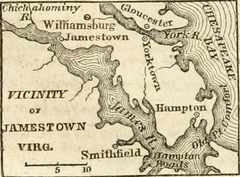
Jamestown
In 1607, the first permanent English colony in America was founded at this location. The Virginia Company, was a a joint-stock company chartered by England's King James I.

John Smith
Leader of Jamestown; You don't work you don't eat

John Rolfe
He helped Jamestown develop a new variety of tobacco which became popular in Europe and became a profitable crop.
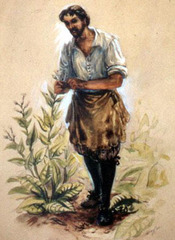
Pocahontas
She was the American Indian wife of John Rolfe in early settlement days in Jamestown.

Puritans
Group of dissenters that wanted to purify the Church of England. In 1630 they founded the Massachusetts Bay Colony at Boston; strict religious codes

Separatists
Radical dissenters to the Church of England, they were known by this name because they wanted to organized a completely separate church that was independent of royal control. They became known as Pilgrims, because of the travels.
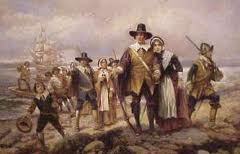
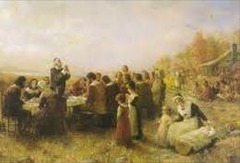
Plymouth Colony
Colony founded by the Pilgrims that celebrated the first Thanksgiving

John Winthrop
In 1630, he led about a thousand Puritans to America and and founded Boston and several other towns; city on a hill
New York
Founded by the Dutch for fur trade in beavers; most diverse colony

Georgia
Founded as a haven for debtors and a buffer for South Carolina
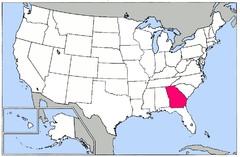
James Oglethorpe
Founder of Georgia's first settlement
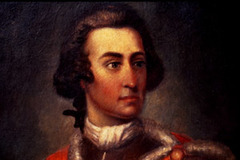
Metacom
This American Indian chief was known to the colonists as King Philip. He joined together the Native American tribes to fight the colonists in King Philip's War, a war that lasted from 1675 to 1676.
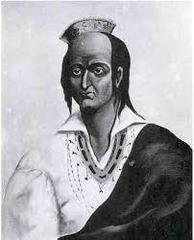
King Philip's War
From 1675 to 1676, the American Indian chief Metacom waged a vicious war against the English settlers in southern New England.
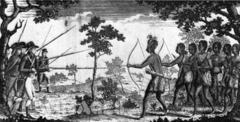
Mayflower Compact
In 1620, while they were sailing to America, the Pilgrims created this document that pledged them to make decisions by the will of the majority. It was a rudimentary written constitution.

Virginia House of Burgesses
In 1619, just 12 years after the founding of Jamestown, Virginia's colonists organized the first representative assembly in America

William Berkeley
Royal Governor of Virginia who favored large plantation owners and did not support or protect smaller farms from Indian raids. He put down Bacon's rebellion in 1676.
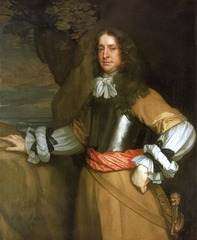
Bacon's Rebellion
In 1676, a group of army volunteers and former indentured servants that raided Native American villages, fought the governor's forces, and set fire to Jamestown. The rebellion was caused by the Governor's unfair favoritism of large plantation owners and refusal to protect small farms from Native American raids.

joint-stock company
Corporate colonies, such as Jamestown, formed to make money for the mother country and investors
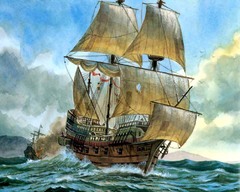
Virginia Company
a joint-stock company that founded the first permanent English colony in America at Jamestown in 1607.
mercantilism
An economic policy in which the colonies were to provide raw materials to the parent country of growth and profit of the parent country.
Navigation Acts
Between 1650 and 1673 England passed a series of acts which establish rules for colonial trade.
* Trade to and from the colonies could be carried only by English or colonial-built ships
* All goods imported in the colonies, except some perishables, had to pass through the ports in England.
* Specified goods from the colonies could be exported only to England.

indentured servants
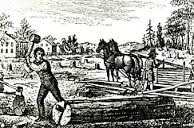
Young people from England under contract with a master who paid for their passage. Worked for a specified period for room and board, then they were free.
headright system
A method for attracting immigrants, Virginia offered 50 acres of land to each immigrant who paid for passage to America and to any plantation owner who paid for an immigrants passage.

triangular trade
Merchants traded colonist rum for African slaves, African slaves for West Indies sugar cane, and sugar cane was brought back to the colonies to make rum.

Middle Passage
Voyage from West Africa to the West Indies. It was miserable for the slaves transported and many died.

First Great Awakening
Religious revival in the colonies in 1730s and 1740s; George Whitefield and Jonathan Edwards preached a message of atonement for sins by admitting them to God. The movement attempted to combat the growing secularism and rationalism of mid-eighteenth century America. Religious splits in the colonies became deeper.
John Peter Zenger Trial
established freedom of the Press in Colonies
Poor Richard's Almanac
Benjamin Franklin's highly popular collection of information, parables, and advice