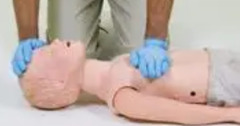
2025 AHA BLS
 Call Kai
 Learn
Learn Practice Test
 Spaced Repetition
 Match
Match Flashcards
1/99

There's no tags or description
Looks like no tags are added yet.
Name | Mastery | Learn | Test | Matching | Spaced | Call with Kai | Chat |
|---|
No analytics yet
Send a link to your students to track their progress
100 Terms
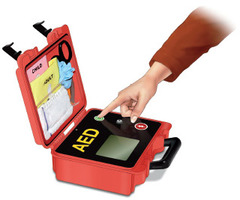
AED
Automated External Defibrillator
CCF
Chest Compression Fraction

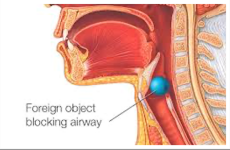
FBAO
Foreign Body Airway Obstruction
ROSC
Return of Spontaneous Circulation
BLS vs ALS
Basic Life Support
Advanced Life Support
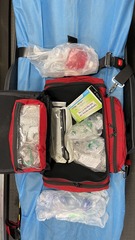
CPR
cardiopulmonary resuscitation
T-CPR
Telecommunicator-assisted Cardiopulmonary Resuscitation

CPR should be started within __ seconds of recognizing cardiac arrest.
10 seconds

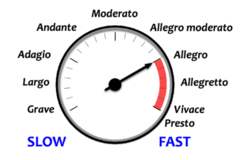
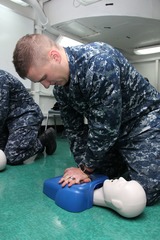
Compression Rate for Adults, Children, & Infants
100 - 120 beats per minute (110 is the most optimal)
Adult Compression Depth
at least 2 inches, but not more than 2.4 inches (5-6 cm)
Child Compression Depth
1/3 diameter of chest or 2 inches (5 cm)
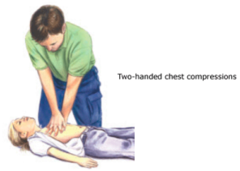
Infant Compression Depth
1/3 diameter of chest or 1.5 inches (4 cm)
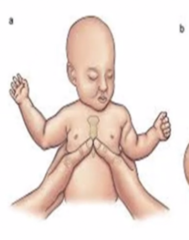
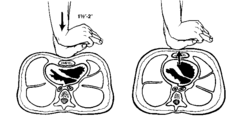
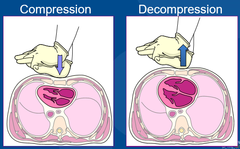
Chest Compression
Ejects blood from left ventricle
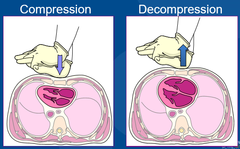
Chest Decompression (RECOIL!!!)
Refills blood into left ventricle
Limit interruptions in chest compressions to __ seconds or less.
10 seconds
How much air delivered with rescue breaths
Only enough to make the chest rise and fall
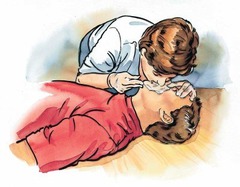
Risk of Excessive Ventilation
Gastric Distention (leads to VOMITING)

AHA age range for "Infant"
Younger than 1 year (excluding neonates)

With children, to determine if Child or Adult BLS is indicated, the rescuer should look for:
Signs of puberty, facial/chest/underarm hair, breast development

Program to place AEDs in public locations.
Public Access Defibrillation (PAD) programs
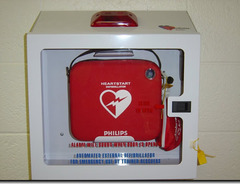
6 Links of the Chain of Survival
- Recognition/Activation
- High-Quality CPR
- Defibrillation
- Advanced Resuscitation
- Post-Cardiac Arrest Care
- Recovery

Check responsiveness in infants by
tapping the infant's heel.
Check responsiveness in adults by
tapping the shoulders and shouting "Hey! Are you OK?"
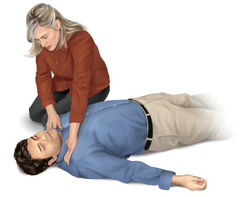
When arriving at a suspected cardiac arrest victim
check for a pulse and breathing simultaneously. (Max 10 seconds)
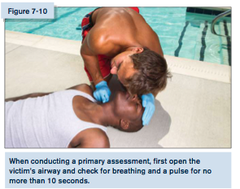
Compression to Ventilation Ratio (Adult, 1 rescuer)
30:2
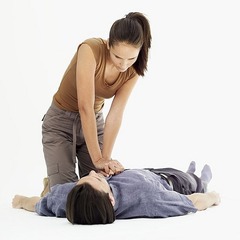
Compression to Ventilation Ratio (Adult, 2 rescuers)
30:2
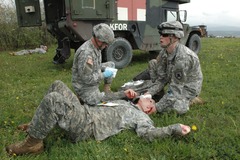
Compression to Ventilation Ratio (Child, 1 rescuer)
30:2
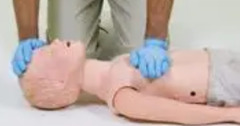
Compression to Ventilation Ratio (Child, 2 rescuers)
15:2
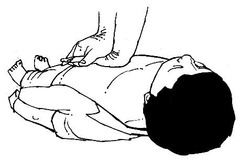
Compression to Ventilation Ratio (Infant, 1 rescuer)
30:2
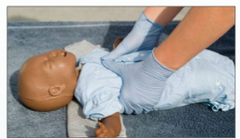
Compression to Ventilation Ratio (Infant, 2 rescuers)
15:2
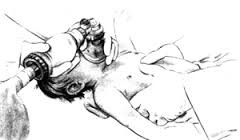
Adult Ventilation Rate when providing artificial ventilation
10 breaths per minute (Once every 6 seconds)

Pediatric Ventilation Rate when providing artificial ventilation (8 years or less)
20-30 breaths per minute (Once every 2-3 seconds)
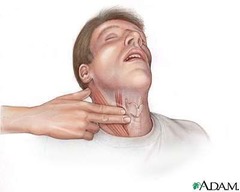
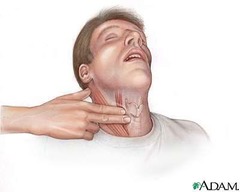
Adults & Children: Check pulse at the
Carotid Artery
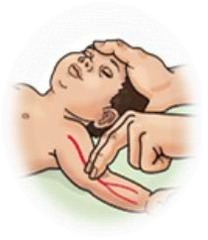
Infants: Check pulse at the
Brachial Artery
Target CCF for a resuscitation team
> 60% , with a goal of 80%
LUD
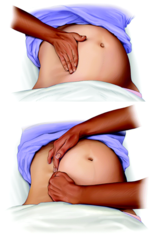
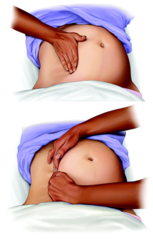
Lateral Uterine Displacement (if pt visibly pregnant)
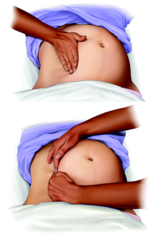
During manual LUD the uterus is moved to the patient's _____ side.
Left
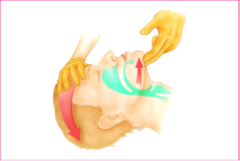
Maneuver to open the airway (no spinal injury)
Head-Tilt Chin Lift (HTCL)
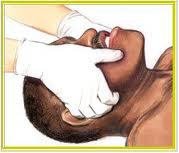
Maneuver to open the airway (suspected spinal injury)
Jaw Thrust
Mouth-to-Mask breaths without supplemental Oxygen
about 17% o2 delivered

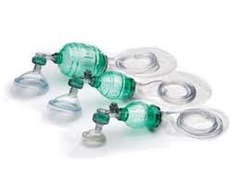
Bag-Mask breaths without supplemental Oxygen
about 21% o2 delivered

Bag-Mask breaths WITH supplemental Oxygen
up to 100% o2 delivered

Preferred way to deliver bag-mask ventilations
Using 2 rescuers: one to seal the mask and one to squeeze the bag
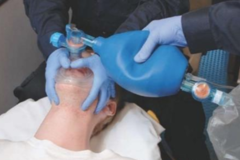
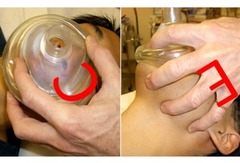
Technique if 1 rescuer delivers ventilations
E-C clamp
Compressors should swap every __ minutes.
every 2 minutes (5 cycles of 30:2)

Stopping an abnormal heart rhythm using electricity
Defibrillation

2 shockable arrhythmias
ventricular fibrillation & ventricular tachycardia

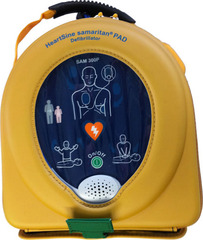
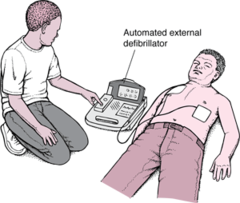
To operate an AED
1. Power on
2. Follow prompts
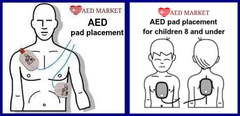
Anterolateral (AL) AED pad placement
Under right clavicle, Left lateral ribs

Anteroposterior (AP) AED pad placement
Center of chest, Center of back

Adult AED pads can be used on children & infants.
Child/Infant pads MUST NOT be used on adults.
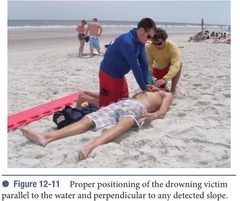
Cardiac Arrest victim just removed from water
Quickly wipe the chest before placing AED
Patients with implanted pacemakers
Avoid placing pad directly over the device (usually not a problem, pacemakers placed on left side, pad goes on right side)

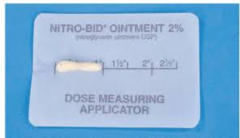
Patients with medication patches on the chest
Remove patch and wipe skin before placing pad
3 core components of Team Dynamics
1. Roles & Responsibilities
2. Communication
3. Debriefing

Responsible for monitoring CPR quality & providing real-time feedback
The CPR Coach
Closed-Loop Communication
Repeating back an instruction to verify you heard correctly

Best time to swap chest compressors
When AED is analyzing the rhythm (minimize interruptions in compressions)
Infant or Child has a Heart Rate less than 60 bpm
Begin CPR (even if the baby still has a pulse and/or spontaneous breathing)
a rate less than 60 bpm is not able to perfuse a child's brain

Why 15:2 in pediatric cardiac arrest?
1. more likely to be respiratory cause
2. less reserve oxygen in peds
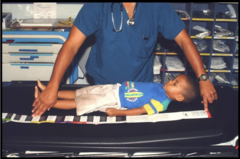
Device used to reduce the shock dose
Pediatric Dose Attenuator

Preferred defibrillation device for infants (less than 1 year)
Manual Defibrillator
these have the ability to deliver weight-based dose shocks, safer for infant, requires PALS training

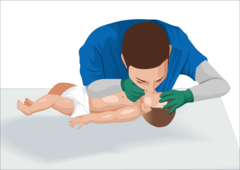
Preferred direct ventilation technique for infants
Mouth-to-Mouth-and-Nose
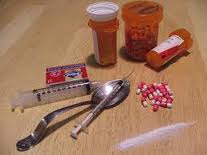
Class of drugs that cause respiratory depression, apnea, and risk for cardiac arrest
Opioids
(fentanyl, opium/heroin, morphine, codeine, oxycodone, hydrocodone)
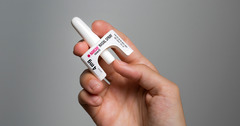
Reverses effects of opioids
Narcan (naloxone)
Top priority if cardiac arrest is suspected to be caused by overdose
High-Quality Chest Compressions are ALWAYS the top priority.
Narcan administration is important, but takes a back seat to CPR

Heart Attack vs Sudden Cardiac Arrest
Heart Attack- blood flow blockage, could cause cardiac arrest
Sudden Cardiac Arrest- rhythm (electrical) problem, a common cause of SCA is a person having a massive heart attack but there are many other causes of SCA.
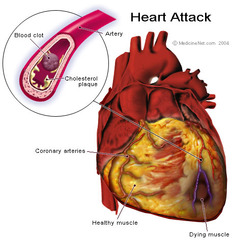
An alert adult is experiencing signs of a heart attack (chest pain, breathing difficulty, nausea/vomiting)
Give Aspirin (162 to 325 mg, chewed)

Stroke Assessment (F.A.S.T.)
Facial Droop?
Arm Drift?
Slurred Speech?
Time this started?

With Stroke Patients, Last known normal refers to
last known to be without signs of a stroke (important for treatment options)
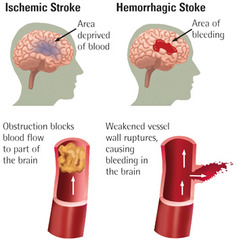
Leading cause of death children 1 to 4 years in the US
Drowning

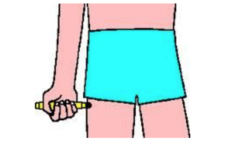
Anaphylaxis
Severe, life-threatening allergic reaction requiring immediate treatment with epinephrine
Mild vs Severe Airway Obstruction (Partial obstruction vs Complete obstruction
Mild/Partial: forceful coughing with some air exchange
Severe/Complete: unable to cough or exchange air
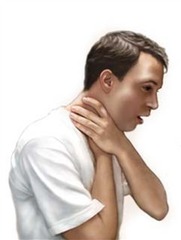
Adult or Child is choking and is still conscious
5 back blows, followed by 5 abdominal thrusts

Adult or Child was choking and is now unconscious
Begin CPR
Infant is choking and is still conscious
5 back blows, followed by 5 chest thrusts

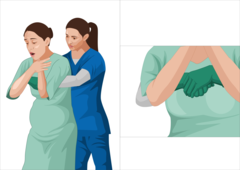
Modified choking treatment in late pregnancy & obese patients
Chest thrusts instead of abdominal thrusts
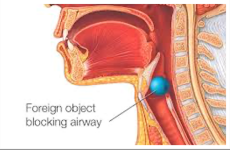
Extra step taken during CPR if choking
Check for visible object in airway
(only remove if can see all of the FBAO, no blind finger sweeps)
Chest Compression Fraction; CCF = _________________________
CCF = actual chest compression time / total code time
(ex. 16 minutes actual CPR / 20 minute total code = 80% CCF)

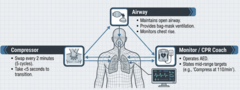
The Resuscitation Triangle
Airway- delivers breaths
Compressor- 100-120 bpm
Monitor/CPR Coach- AED, Real-time feedback
Maternal cardiac arrest: baby compresses the ___________
inferior vena cava
SpO2 target if having heart attack
90% (too much oxygen can worsen the damage)
SpO2 target if having a stroke
94% (too much oxygen can worsen the damage)

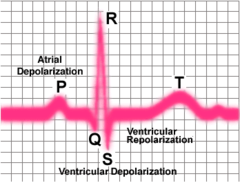
ECG
electrocardiogram
ACLS
Advanced Cardiac Life Support

PALS
Pediatric Advanced Life Support
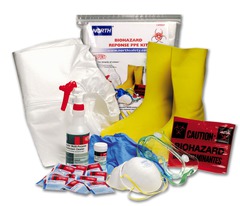
PPE
personal protective equipment
VT
ventricular tachycardia, v-tach

VF
ventricular fibrillation, v-fib
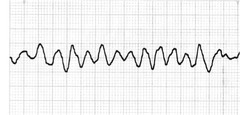
AED pads must contact
the patient's skin

BLS airway adjunct (no gag reflex present)
oropharyngeal airway (OPA)
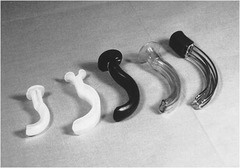
BLS airway adjunct (gag reflex is present)
nasopharyngeal airway (NPA)
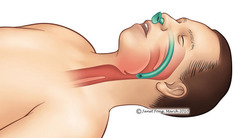
Top Priority when arriving at a cardiac arrest victim
Confirm Scene Safety
look for hazards like fire, chemicals, down lines, etc

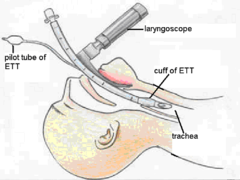
When advanced airway is placed
Swap to continuous compressions with ventilations at 10 breaths per minute (20-30 for peds)
Four Fatal Dysrhythmias
1. Ventricular Fibrillation (VF)
2. Ventricular Tachycardia (VT)
3. Asystole
4. Pulseless Electrical Activity (PEA)
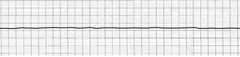
2 things MANDATORY before pressing shock
Check for Pulse
Clear the patient
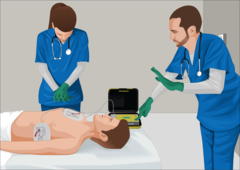
You just witnessed a cardiac arrest
Activate the emergency response (call 911 or code blue)

The AED should be used
immediately, when it becomes available
Apply pads around the hands of the compressor and turn it on
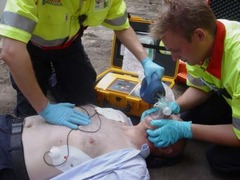
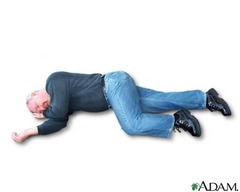
Assessing a suspected cardiac arrest and the patient has a pulse and adequate breathing
Position them into the recovery position and stay with them until 911 arrives
If you are the only rescuer for an infant or child and you did NOT witness the collapse, when should you activate the emergency response system and get AED?
After performing 5 cycles (2 min) of CPR
unwitnessed peds arrest: prioritize CPR before calling for help or retrieving the AED, likely respiratory cause, less oxygen reserves