CEA Aircraft Systems and Aerodynamics (Block 3)
 Call Kai
 Learn
Learn Practice Test
 Spaced Repetition
 Match
Match Flashcards
 Knowt Play
1/156

There's no tags or description
Looks like no tags are added yet.
Name | Mastery | Learn | Test | Matching | Spaced | Call with Kai | Chat |
|---|
No analytics yet
Send a link to your students to track their progress
157 Terms
What is aerodynamics?
The study of moving air and how it interacts with solid objects. Understanding aerodynamics is essential for heavier-than-air flight.
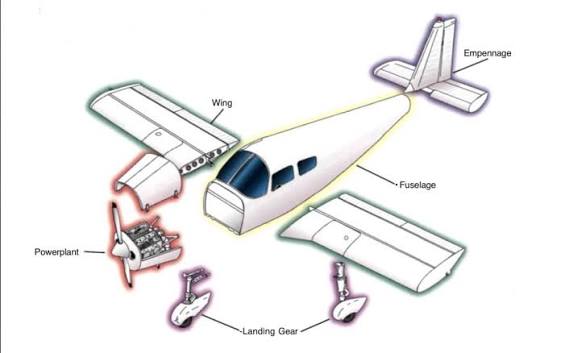
What are the 5 major fixed-wing aircraft components?
Fuselage (structure), Empennage (tail/stabilizers), Wings (produce lift), Landing Gear (supports aircraft & absorbs shock), Powerplant (produces thrust).
What are the four forces of flight?
Lift (up), Weight (down), Thrust (forward), Drag (backward).
What is lift and what creates it?
Lift is the main aerodynamic force that opposes weight. It is produced by an airfoil moving through the air.
Explain Bernoulli's Principle.
As fluid velocity increases, pressure decreases.
Air moves faster over the top of the wing, creating lower pressure above and higher pressure below, producing lift.
What is an airfoil?
Any surface designed to produce lift as it moves through the air.
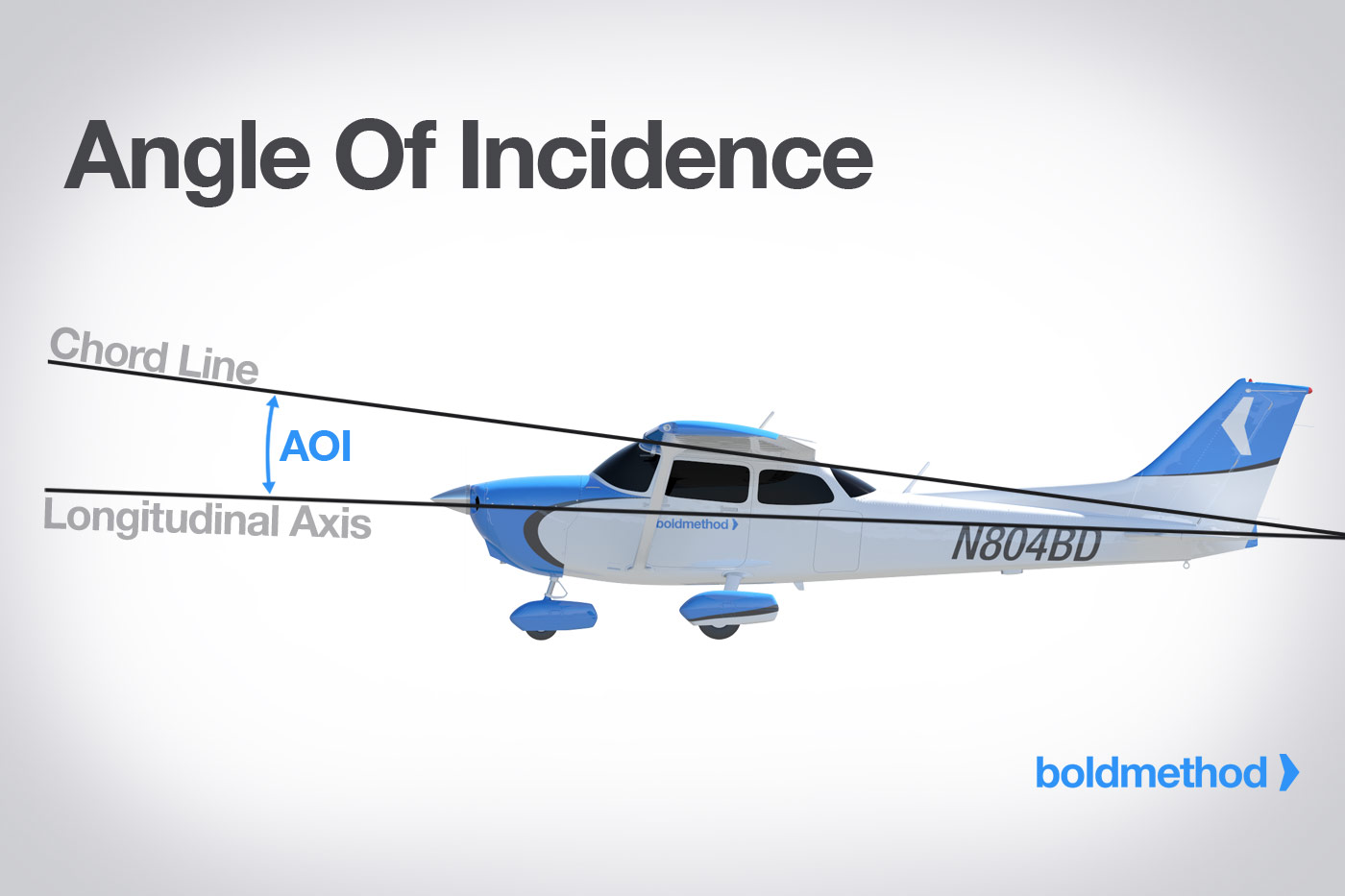
What is the Angle of Incidence?
The angle between the aircraft's longitudinal axis and the wing's chord line.
What is Relative Wind?
The direction of airflow relative to the wing.
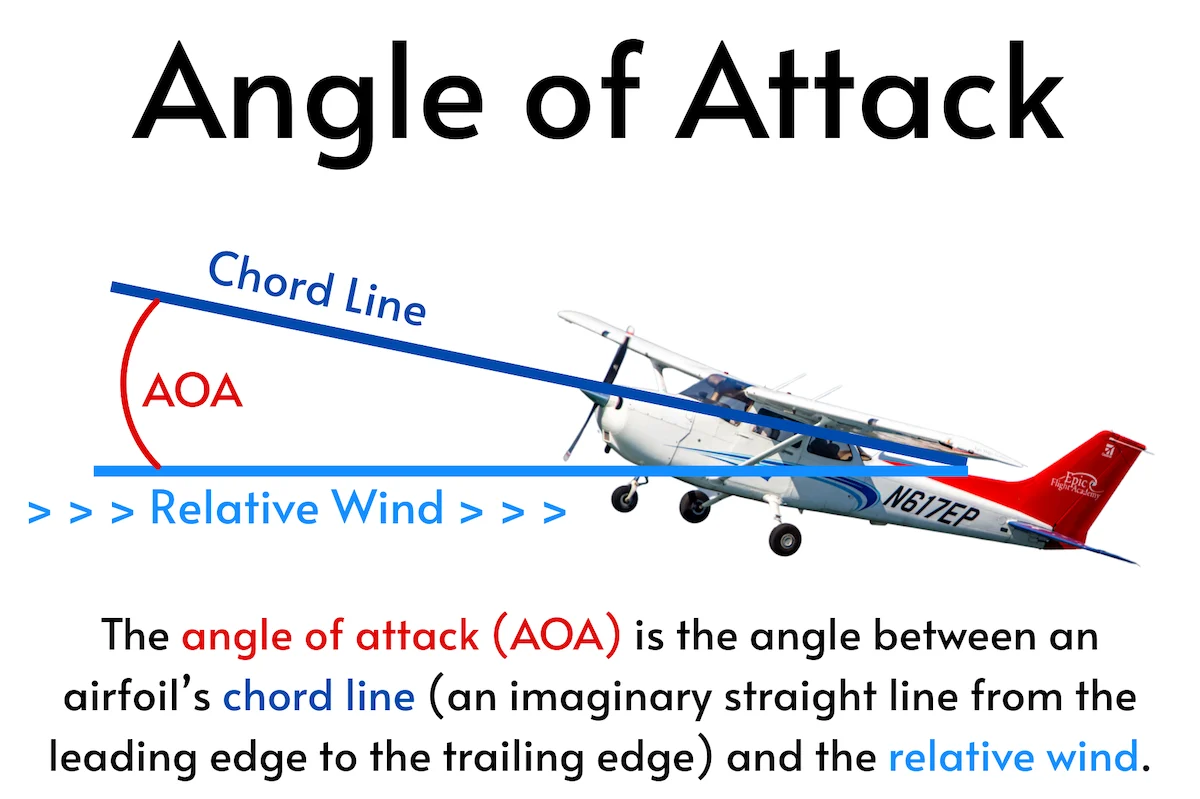
What is Angle of Attack (AoA), and what happens as it increases?
AoA is the angle between the wing's chord line and the relative wind. As AoA increases, lift initially increases, but drag and pressure under the wing also increase. Too much AoA causes burbling and can lead to a stall.
Explain the C-5 Garcia Stall Incident.
During a night flight with low visibility, the crew became confused about the Internal Navigation System (INSs) and extended full flaps. They fixated on the malfunctions, lost situational awareness, and continued climbing. Airspeed dropped, AoA became too high, and the aircraft stalled. The pilot held the stall until visual reference was regained, then lowered the nose to build airspeed and recover.
What is weight?
The constant force of gravity acting downward.
What is thrust, and what does it overcome?
Thrust is produced by the jet or propeller engine and overcomes drag.
What causes drag?
The disruption of airflow over the wings, fuselage, and other protruding parts of the aircraft.
What are the two types of drag?
Parasitic Drag: Caused by airflow around the aircraft's surface. Induced Drag: A by-product of lift that increases as lift increases.
What are the three types of parasitic drag?
Form Drag (shape/protruding structures), Interference Drag (airflows meeting), Skin Friction Drag (surface roughness).
How do thrust, drag, and airspeed relate?
Straight and level flight: Thrust = Drag.
If Thrust < Drag: Airspeed decreases.
If Thrust > Drag: Airspeed increases.
As airspeed increases, drag also increases—at about twice the rate of the increase in airspeed.
How does lift act relative to the relative wind?
Always perpendicular to the relative wind.
What five factors affect lift and drag?
Wing area, Airfoil shape, Flaps/Slats, Airspeed, Air density.
What are the three airfoil shapes?
Zero camber, Positive camber, Negative camber
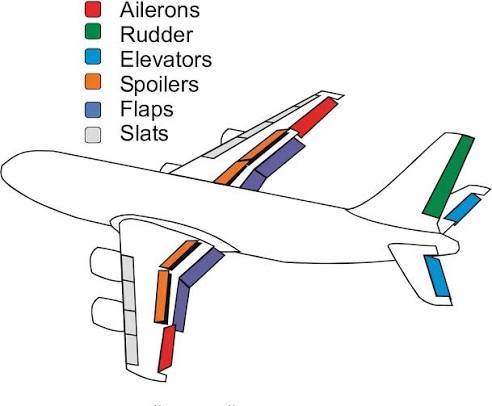
How do flaps, slats, elevators, and rudders affect flight?
Flaps and slats increase lift.
Elevators change the curvature of the horizontal tail.
Rudders change the curvature of the vertical stabilizer.
How do velocity and air density affect lift and drag?
Increasing either velocity or air density increases both lift and drag
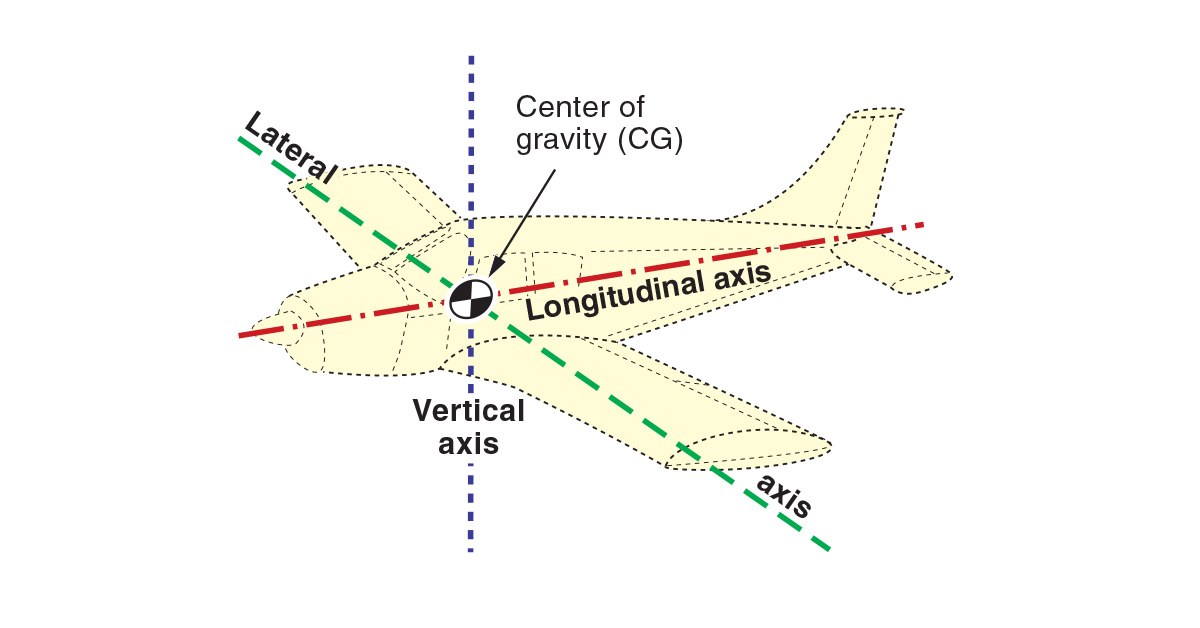
What are the aircraft's three axes and primary flight controls?
Longitudinal (nose to tail) → Roll → Ailerons
Lateral (wingtip to wingtip) → Pitch → Elevators
Vertical (top to bottom) → Yaw → Rudder
What are the secondary flight controls?
Control tabs and trim tabs.
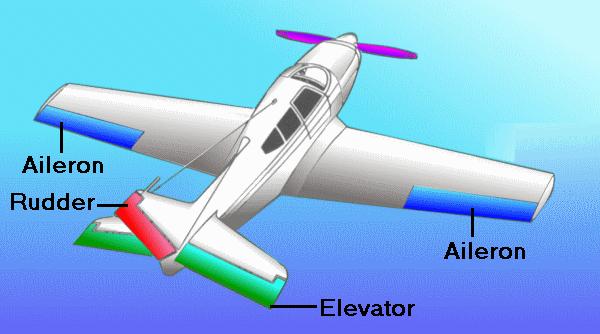
Where are the primary flight controls located?
Ailerons: Trailing edge of each wing.
Elevators: Trailing edge of the horizontal stabilizer.
Rudder: Trailing edge of the vertical stabilizer.
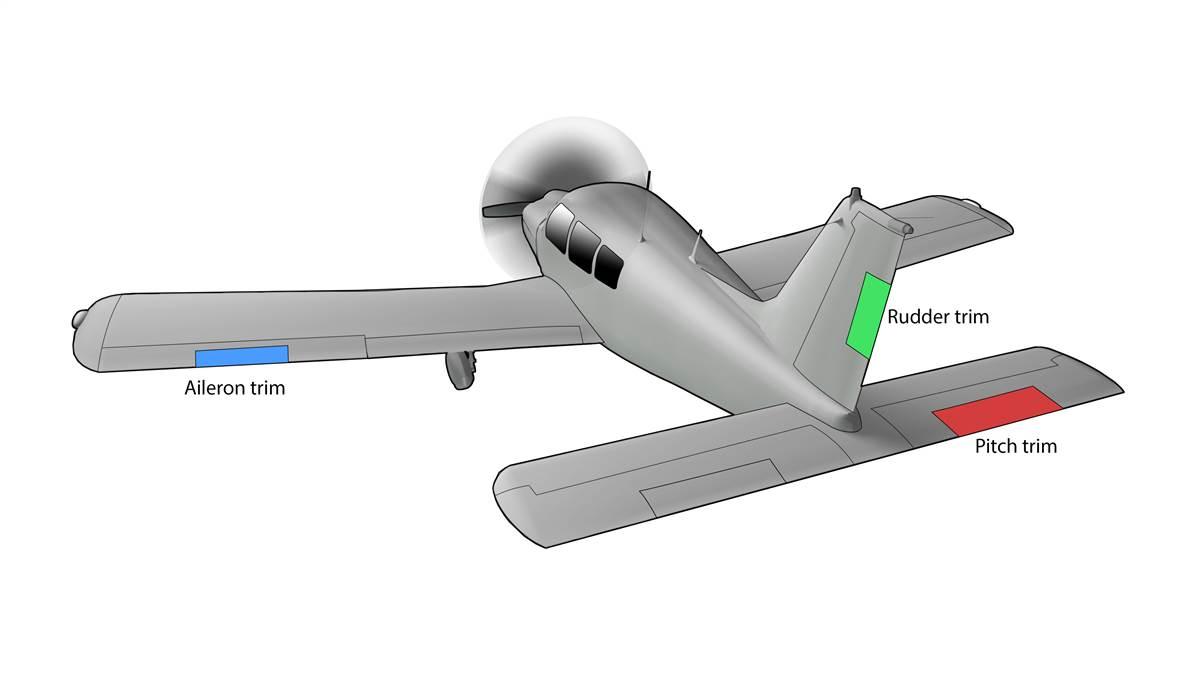
What do control tabs do?
They use aerodynamic pressure to help move the ailerons, elevators, and rudder.
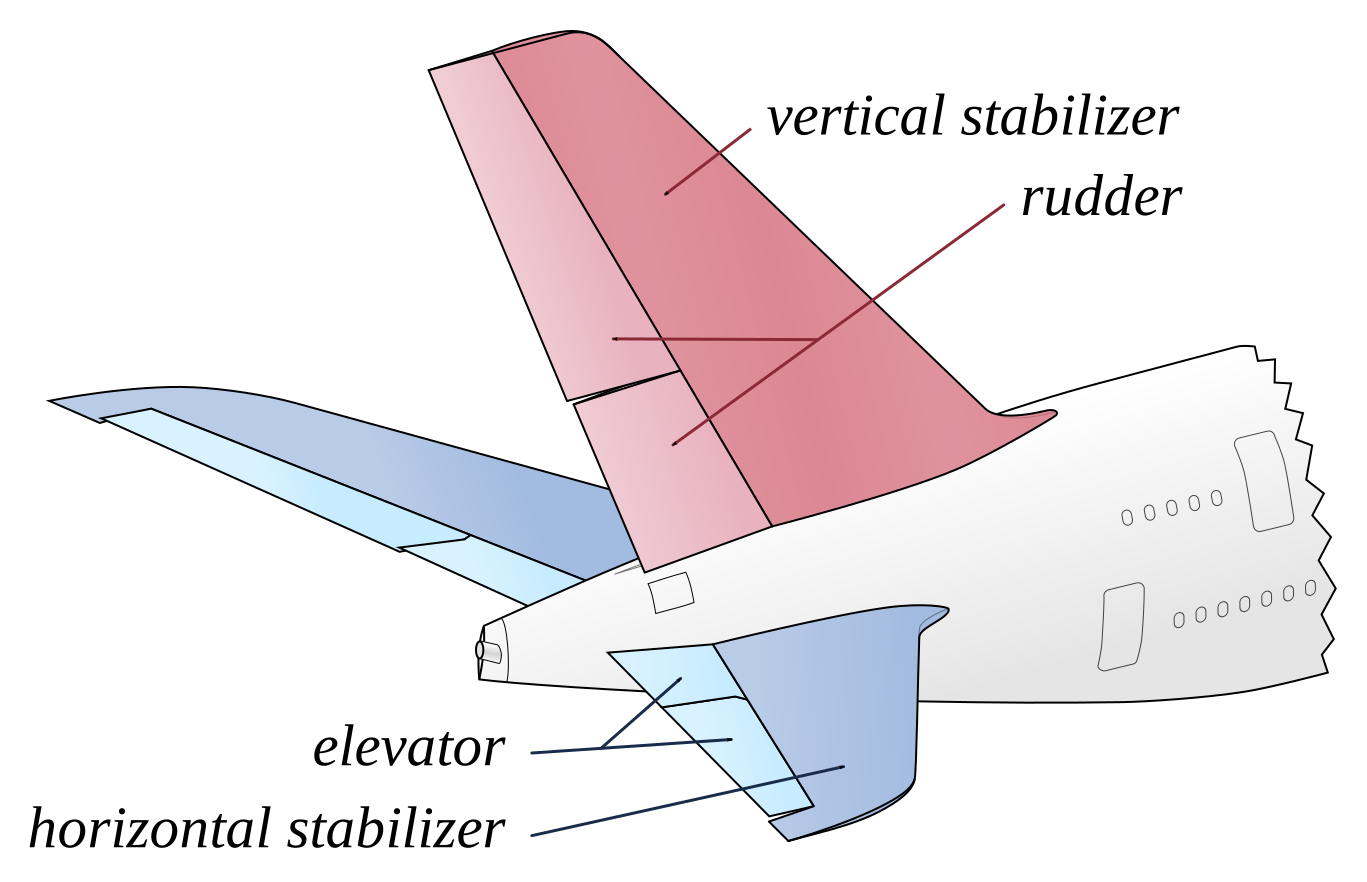
What is the horizontal stabilizer system used on?
Larger/passenger aircraft.
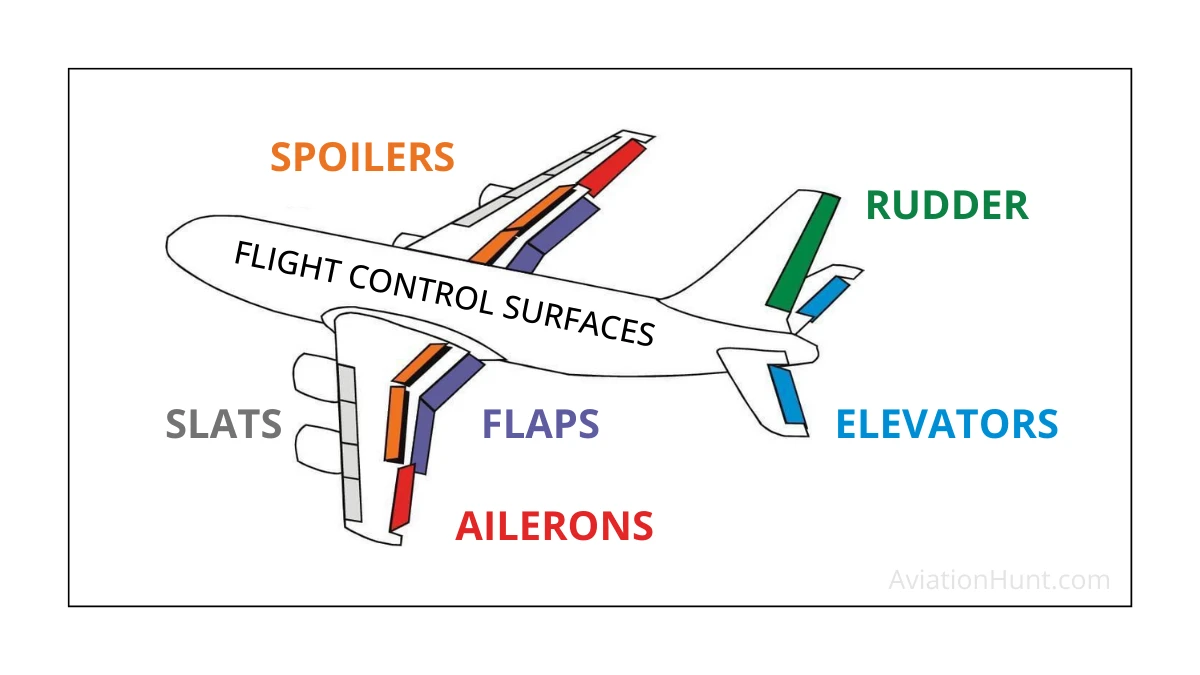
What are the auxiliary(extra) flight control surfaces?
Flaps, Slats, Spoilers
Explain the C-130J Jammed Elevator Incident.
An NVG case jammed the yoke while the elevators were held up during cargo loading. The aircraft rotated early, pitched to a high AoA, stalled, and crashed after the problem was mistaken for a trim malfunction. The crew did not follow procedures or use real-time risk management.
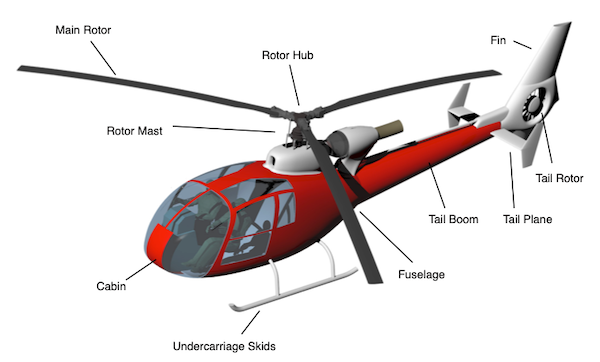
What are the five major rotary-wing components?
Airframe, Tail boom, Landing gear, Powerplant, Rotor group
What are the four forces of flight for rotary-wing aircraft?
Lift, Weight, Thrust, Drag.
What are the flight characteristics of rotary-wing aircraft?
Hovering and Autorotation.
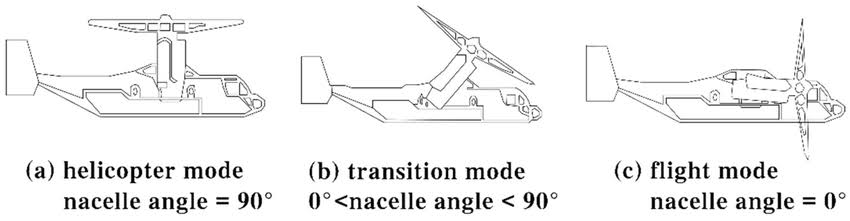
What are the three tiltrotor flight modes?
VTOL (Vertical Takeoff/Landing)
CONV (Conversion Mode)
APLN (Airplane Mode)
How do jet engines produce thrust?
By burning a fuel-air mixture and converting gas energy into mechanical force.
What are the four continuous stages of jet engine operation?
Intake → Compression → Combustion → Exhaust.
What are the seven jet engine sections?
Inlet, Compressor, Diffuser, Combustion, Turbine, Exhaust, Accessory.
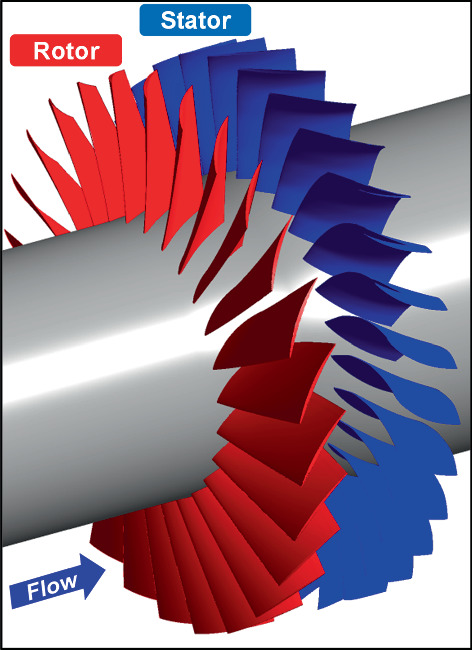
What makes up the compressor?
Rotors and stators.
Where is bleed air taken from, and what is it used for?
Taken from the diffuser. Used for anti-ice systems, air conditioning, and pressurization.
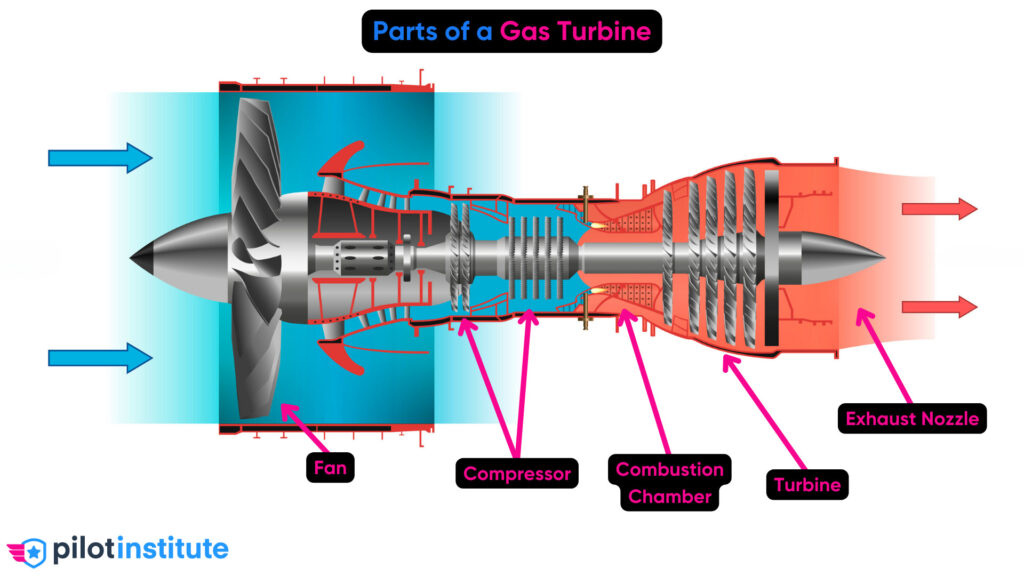
What does the turbine do?
Converts gas energy into mechanical energy to drive the compressor and accessories. It absorbs 60-80% of the total pressure energy.
How are fixed-wing engines rated, and who sets the rating?
Rated in pounds of thrust, with the rating determined by the manufacturer.
What factors affect engine power output?
Temperature, pressure, and bleed air.
What are the three types of jet engines?
Turbojet, Turbofan, and Turboprop.
What engine gauges are monitored? (4)
RPM (%), Temperature (TIT/EGT), Fuel Flow, and Oil System.
Explain the KC-10 Mishap.
The crew heard a loud boom, fuel flow dropped toward zero, and Exhaust Gas Temperature over-temped. The crew communicated, divided duties, used Risk Management, dumped fuel, calculated an overweight landing, inspected the aircraft, and landed safely instead of delaying.
What are the advantages and disadvantages of a turbojet engine?
Advantages: Best performance at high speeds. Disadvantages: Poor thrust at low speeds/altitudes and poor climb performance.
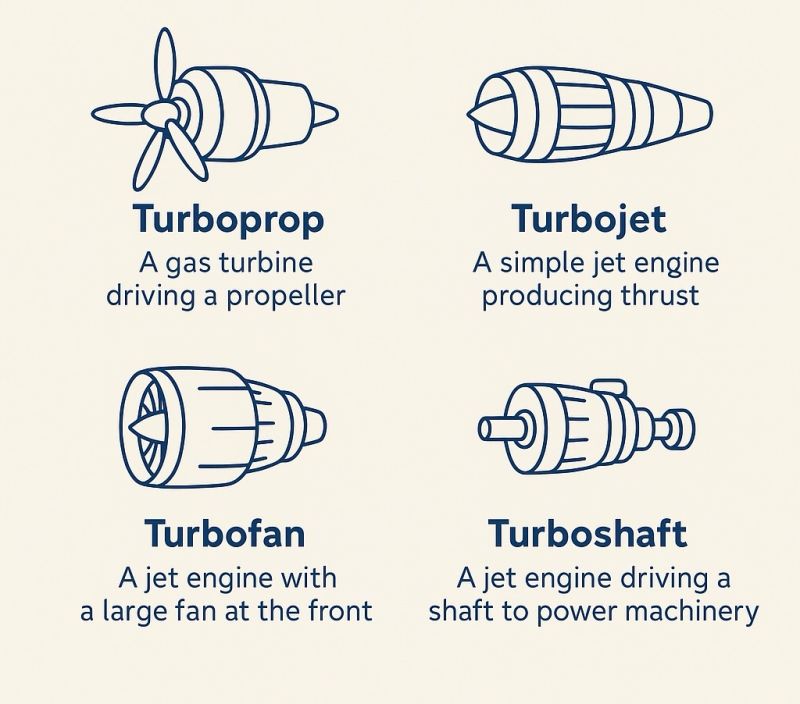
How does a turbofan engine produce thrust?
The large fan pulls incoming air into the engine and splits into:
Primary airflow through the engine core.
Secondary airflow that bypasses the core to produce additional thrust.
Fans produce 30-85% of total thrust
What are the advantages and disadvantages of a turbofan engine?
Advantages: Better at low speeds/altitudes, more fuel efficient, lighter, greater ground clearance, and quieter at high thrust. Disadvantages: Slow throttle response.
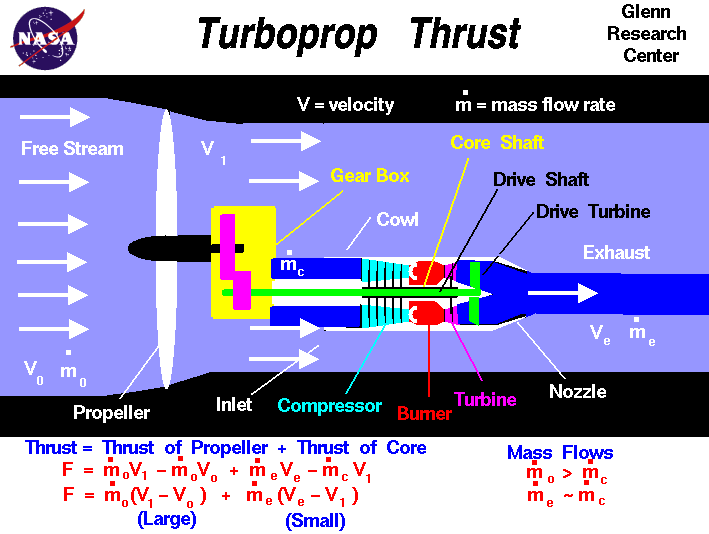
How does a turboprop engine work?
The turbine produces power, the drive shaft transfers it, and the reduction gearbox lowers turbine RPM to a safe propeller RPM. Most thrust comes from the propeller, and engine power is measured in shaft horsepower (torque meter).
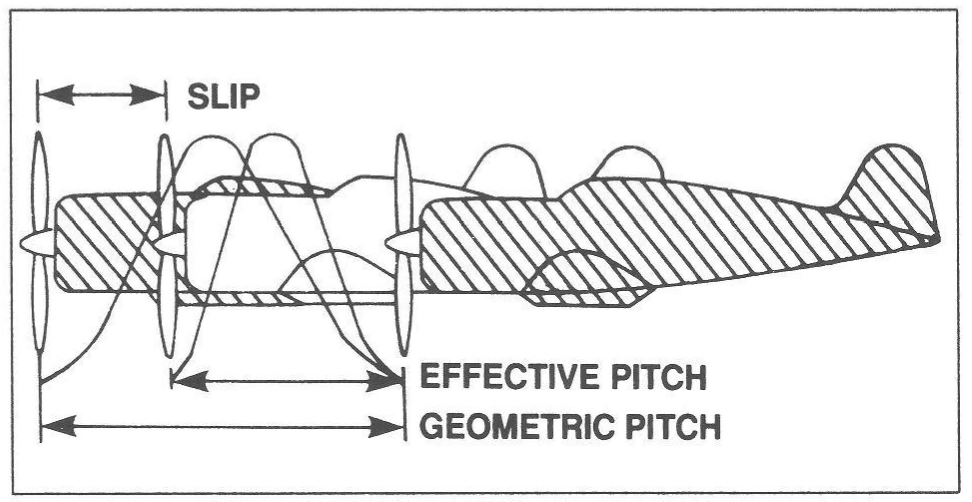
Propeller Slip-What is geometric pitch vs. effective pitch?
Geometric Pitch: Theoretical rotation through a solid.
Effective Pitch: Actual rotation through the air.
When are turboprop aircraft most efficient?
At lower airspeeds (under 450 mph).
What creates propeller thrust?
The shape and blade angle of the propeller.
What are the four propeller blade angles?
-Zero- No thrust, power is idle
-Positive- Forward thrust, normal operations
-Negative- Reverse thrust, Used to shorten landing roll/ short runways
-Feathered- Used to minimize drag when engine is shut down
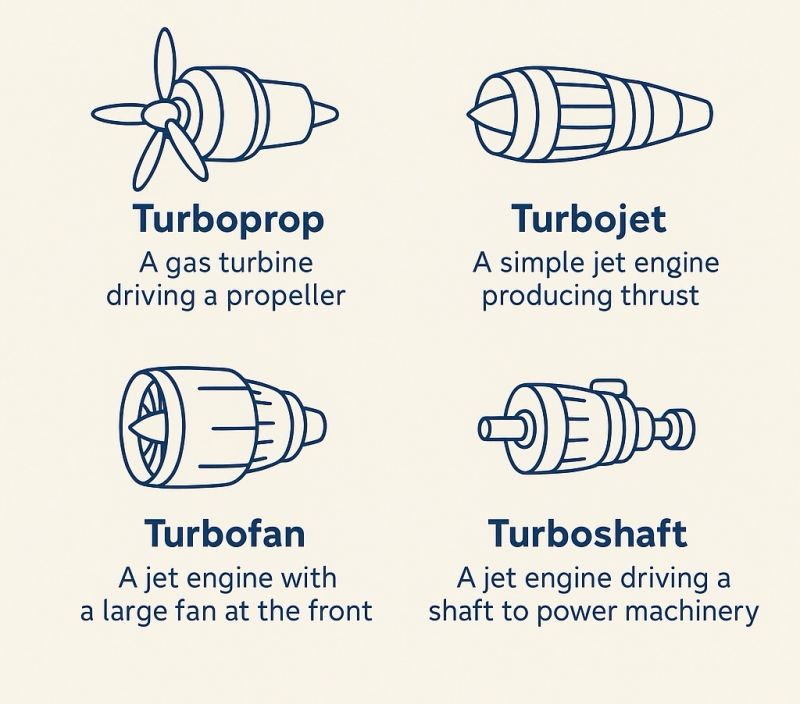
What are the advantages and disadvantages of a turboprop engine?
Advantages: High thrust at low altitude, excellent for heavy loads, near-instant throttle response.
Disadvantages: Efficiency decreases as altitude and airspeed increase.
Explain the WC-130H Mishap. -Decay
A poorly maintained aircraft suffered engine RPM decay during takeoff. The pilot incorrectly turned toward the failed engine and applied left rudder, causing the left wing to stall and the aircraft to crash. Contributing factors included poor discipline, lack of assertiveness, rank intimidation, and channelized attention.
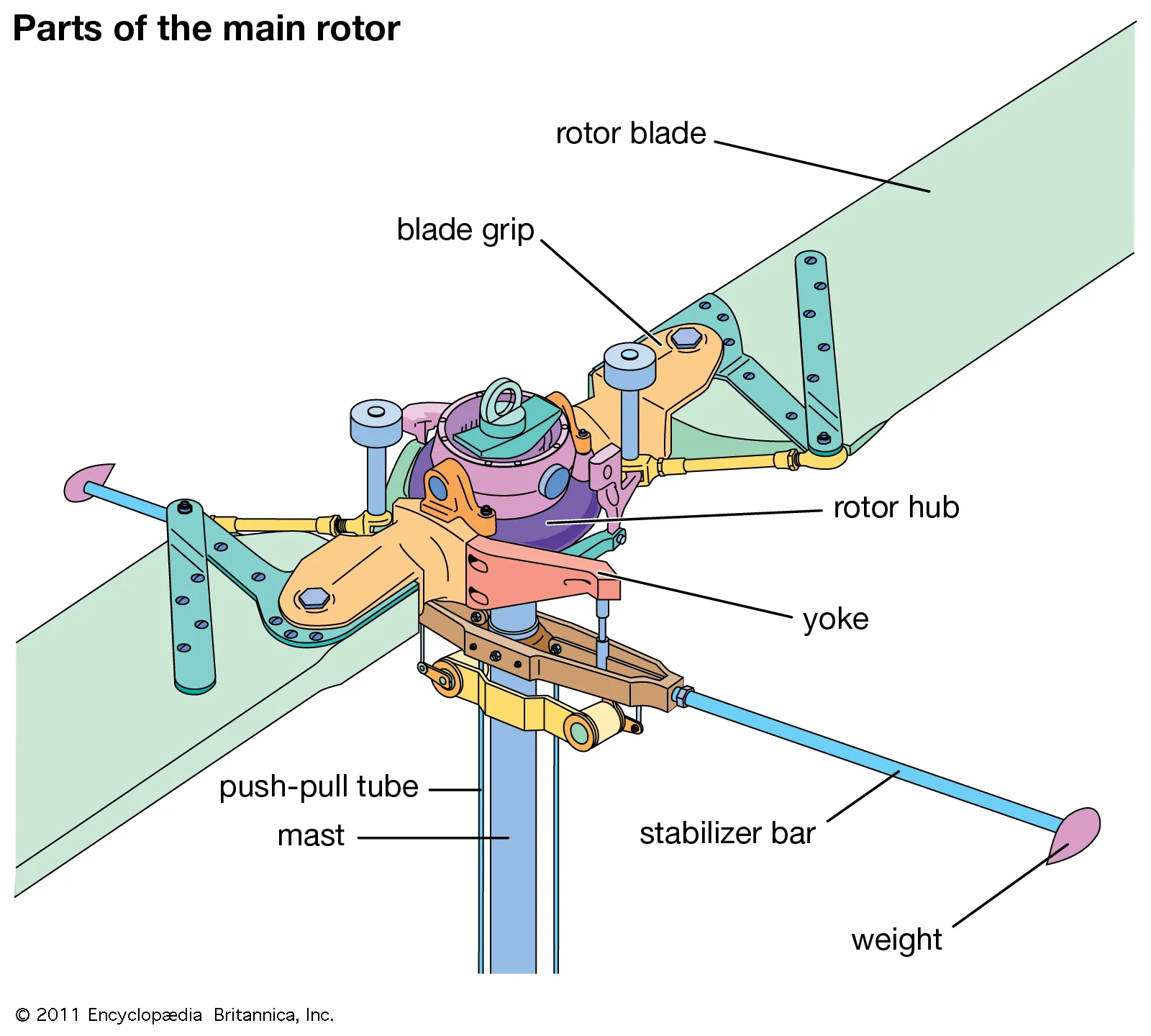
What does the main rotor do?
Provides lift, lateral movement, and altitude changes. It is controlled by the swashplate.
What does the tail rotor do?
Provides anti-torque and directional control.
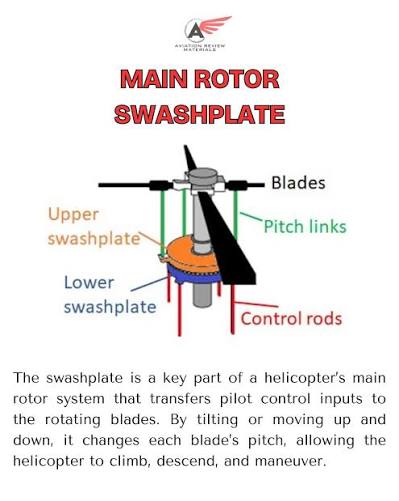
What are the main rotor components? (3)
-Main Rotor hub- Mounting point for all components and blades
-Pitch control rods-Transmits controls from swashplate to main rotor blades
-Swashplate-Transmits flight control movements to main rotor head through Pitch Control Rods
What are the tail rotor components?
Rotor head and Rotor blades.
What do transmission gearboxes do?
They transfer engine torque through the drive shafts to the main and tail rotors while reducing RPM.
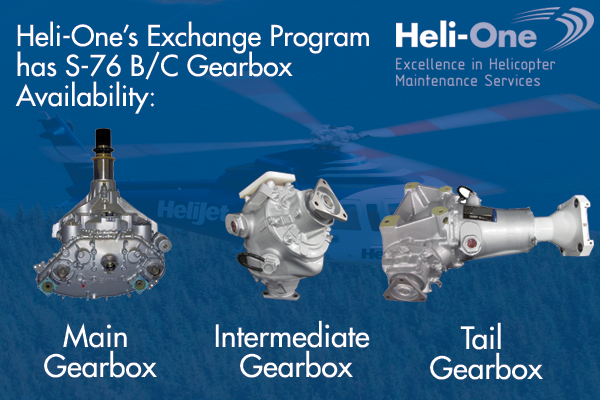
What do the intermediate and tail gearboxes do?
Intermediate Gearbox: Reduces RPM and changes the drive angle to the tail gearbox.
Tail Gearbox: Reduces RPM and changes the drive angle to the tail rotor.
What is the purpose of the free-wheeling unit?
It disconnects the engine from the transmission during engine failure, allowing autorotation if engine RPM drops below rotor RPM.
What powers the accessory gearboxes?
The main gearbox.
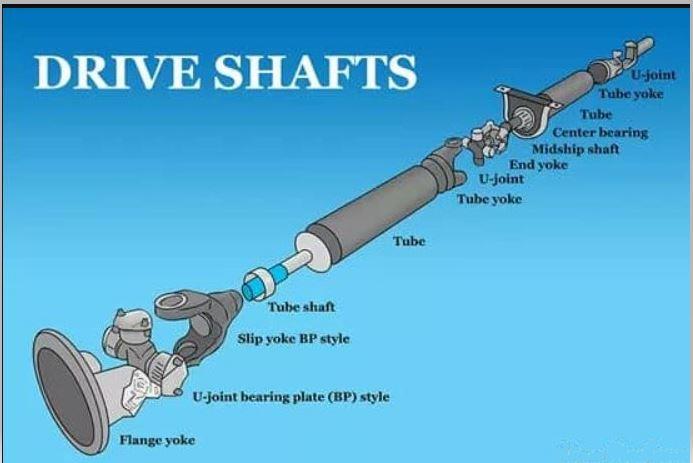
What do the driveshaft sections do?
Connect the engines to the transmission and drive all gearboxes.
What is an APU, and what does it provide?
An Auxiliary Power Unit (APU) allows aircraft operation without ground support equipment. It provides air for air conditioning, engine starting, shaft power, and backup bleed air.
What does an APU operate independently of?
Everything except the aircraft's starting system and fuel supply.
What are the main APU components? (3)
Compressor, Turbine, and Accessories.
Why are APU compartments fire-resistant?
To isolate and prevent the spread of fire.
What are the main fuel system operations? (6)
Pizza Fried Chicken Fries Drinks Always
Pressure checks, fuel transfer, cross-feed, fueling, defueling, and aerial refueling.
What are the characteristics of aircraft fuel?
Low freezing point, low vapor pressure, and high flash point.
What are the three fuel types and the recommended military fuel?
Military, Commercial, and NATO fuels. JP-8 is the recommended military fuel.
What are the three fuel tank types?
Integral, Bladder, and External
What are the three types of integral fuel tanks?
Main, Auxiliary, and Extended-Range.
What are the main fuel tank components and their functions? (7)
Smart Students Visit Every Flight Briefing violently
-Sump Box: Keeps the boost pump supplied with fuel using flapper valves.
-Sumps and Drains: Reservoirs at the lowest point of fuel tanks
-Vents: Prevent the tank from internal or external pressure
-Ejectors: Move fuel from the bottom of the tank to the sump box.
-Fuel Manifolds: Connect tanks through cross-feed or cross-ship.
-Boost pump check valve/ Most Common: Allows fuel to flow to the engine while preventing backflow/ Centrifugal boost pump.
-Valves (2): Checked: Limit fuel flow to one direction
Controlled: Open and close to direct fuel flow.
Explain the HC-130P King 56 Mishap.
During a training mission, the engines flamed out one by one and restart attempts failed, forcing the crew to ditch the aircraft in the ocean. The likely cause was improper fuel system management by the flight engineer, who used an unauthorized technique instead of following the TO. Proper use of the main tank pumps or cross-feed valves could have prevented the accident.
What does the bleed air system do, and where does bleed air come from?
Bleed air allows high-altitude flight by providing pressurization and temperature control. It comes from the engine compressor, APU, or an external air source.
What do the main bleed air components do? (4)
-Struts: Extract a controlled amount of air at the required temperature and pressure.
-Manifolds: Route bleed air through the engine, crosswind/main, and branch ducting sections.
-Check Valves: Prevent reverse airflow when an engine is shut down.
-Shutoff Valve: Closes when the fire handle is pulled during a fire or overheat.
What indicates bleed air system operation? (3)
Pressure gauges, temperature gauges, and valve annunciator lights.
What is the Inconel Loop System?
A series of heat-sensing elements placed around bleed air ducts that monitor for overheating through a controller.
Explain the C-130 Bleed Air Mishap.
A bleed air duct ruptured, causing smoke, mist, melted wires, and landing gear problems. The crew maintained control and landed safely.
The lesson: bleed air failures are insidious because they can cause multiple unrelated system malfunctions.
What is the purpose of the anti-ice system, and how is ice detected?
Anti-ice prevents ice buildup. Ice is detected automatically (probes) or manually (visual inspection).
How is heat produced for anti-ice systems?
Using engine bleed air or electrical heating elements.
What does the aircraft air conditioning (AC) system do?
Provides cabin temperature control and pressurized air using bleed air from the crosswind manifold.
How does the AC system cool and control temperature?
Air is cooled by air-to-air heat exchangers, then supercooled to about 2°C by a cooling turbine. The desired temperature is reached by mixing supercooled air with hot bleed air.
What affects heat exchanger cooling? (3)
what is Cooling airflow
Airflow volume, airflow speed, and outside air temperature.
Cooling airflow is controlled by the CAC (Cooling Air Control) Valve and cooling air fans/ejectors.
What are the major AC system components and functions? (7) R,W,F,C,D,G,C
-Refrigeration Unit: Main AC component
-Water Separators: Remove moisture
-Flow-Limiting Venturi: Limits bleed air and reduces air loss if a manifold ruptures
-Control Panel: Controls cabin temperature
-Diverter Valve: Provides limited airflow if an AC unit fails
-Gasper Outlets: Supply cooler air before it reaches the temperature control valve
-Cargo Floor Heat: Eliminates cold air layers
How is cabin pressurization maintained?
By continuously supplying air into the cabin while regulating the amount of air leaving through outflow valves.
What are the three aircraft pressurization ranges?
Unpressurized, Isobaric, and Differential.
What valves are used in the pressurization system? (3)
Outflow/Thrust Recovery Valve
Overpressure Safety Valve
Negative Pressure Relief Valve
What indicators monitor cabin pressurization? (4)
Cabin Altimeter,
Cabin Differential Pressure Meter,
Rate of Climb (Vertical Velocity) Meter,
and Cabin Altitude Warning System.
What are the three pressurization control modes?
AUTO, SEMI-AUTO, and MANUAL.
Which publication establishes aircrew oxygen requirements?
AFMAN 11-202 Volume 3.
What does the oxygen manual shutoff valve do?
Shuts off oxygen before it reaches individual regulator distribution lines during an emergency.
What are current, voltage, and resistance?
Current (Amps): Flow of electrons.
Voltage (Volts): Force pushing electrons.
Resistance (Ohms): Opposition to current flow.
What is Ohm's Law?
If resistance increases, current decreases proportionally.
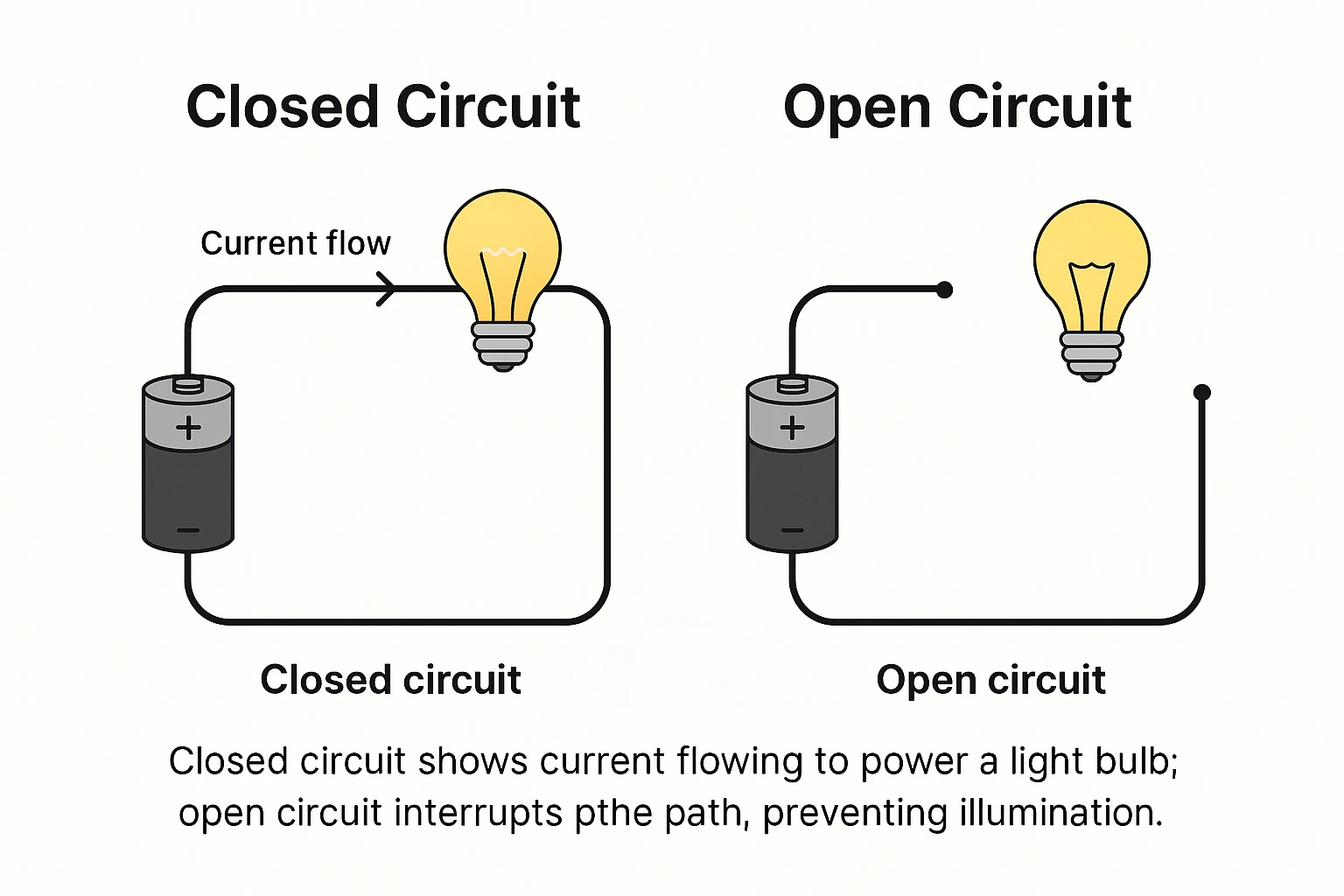
What are the different circuit types? (3)
Open Circuit: Broken path, no current flows.
Closed Circuit: Complete path, current flows.
Short Circuit: Current takes an unintended shorter path.
What are the secondary flight controls?
Control tabs, Trim tabs, and the Horizontal Stabilizer System.
What are the four types of electricity?
Static, Dynamic, Magnetism, Electromagnetism
What are the two types of dynamic electricity?
Alternating Current (AC) and Direct Current (DC).
What are the main electrical circuit configurations? (5)
Series, Parallel, Series-Parallel, Open, and Closed.
How do series and parallel circuits differ?
Series: Current flows through one path.
Parallel: Multiple devices receive power independently from the same source.
How is electricity produced on aircraft? (4)
Through thermoelectric, thermocouple, chemical, and mechanical methods.