l14 - cardio
 Call Kai
 Learn
Learn Practice Test
 Spaced Repetition
 Match
Match Flashcards
 Knowt Play
1/53

There's no tags or description
Looks like no tags are added yet.
Name | Mastery | Learn | Test | Matching | Spaced | Call with Kai | Chat |
|---|
No analytics yet
Send a link to your students to track their progress
54 Terms
define compliance
a measure of the elastic property of the lung
The magnitude of the change in lung volume produced by the given change in transpulmonary pressure
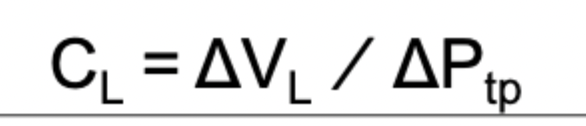
what is complinace inverse of
stiffness

why is this not a linear curve?
this is because compliance is not constant
The lungs are harder to expand at very low and very high volumes, but easier to expand at intermediate volumes > so it is not the same with every lung volume
low volume: harder to expand
middle: easiest to expand
high volume: harder to expand again
what determines lung compliance?
the elasticity of the lung
surface tension at the fluid gas interface
if a lung is more elastic what does this mean?
it means it is more stiff so therefore less compliant
name 2 conditions involved with elasticity/compliance of the lungs
emphysema
fibrosis (e.g. pulmonary fibrosis)
what is fibrosis?
this is when there is fibrotic scarring in the lung, which makes it difficult to expand as it is more elastic
this is when more energy is required to expand the lung
the same change in transpulmonary pressure is not enough to produce the same change in volume
what happens to someones compliance curve in a Tp vs volume graph when someone has fibrosis
the curve is shifted downwards and rightwards
blue line is representative of the extra energy required

is fibrosis restrictive or obstructive?
restrictive
what is emphysema?
this is where the alveoli become damaged, so the walls of the alveoli fuse and essentially become one big airspace
this makes the lungs flaccid/floppy
making them EXTREMELY COMPLAINT, with extremely little elasticity

what is the issue with emphysema?
for the same transpulmonary pressure, a much bigger increase of lung volume occurs
but this makes expiration much harder, because usually the lung relies on recoil to exspire, but an ephysema lung lacks this recoil
so a lot more energy is required to expire (has a lot of trouble returning to its pre-inspiration state)
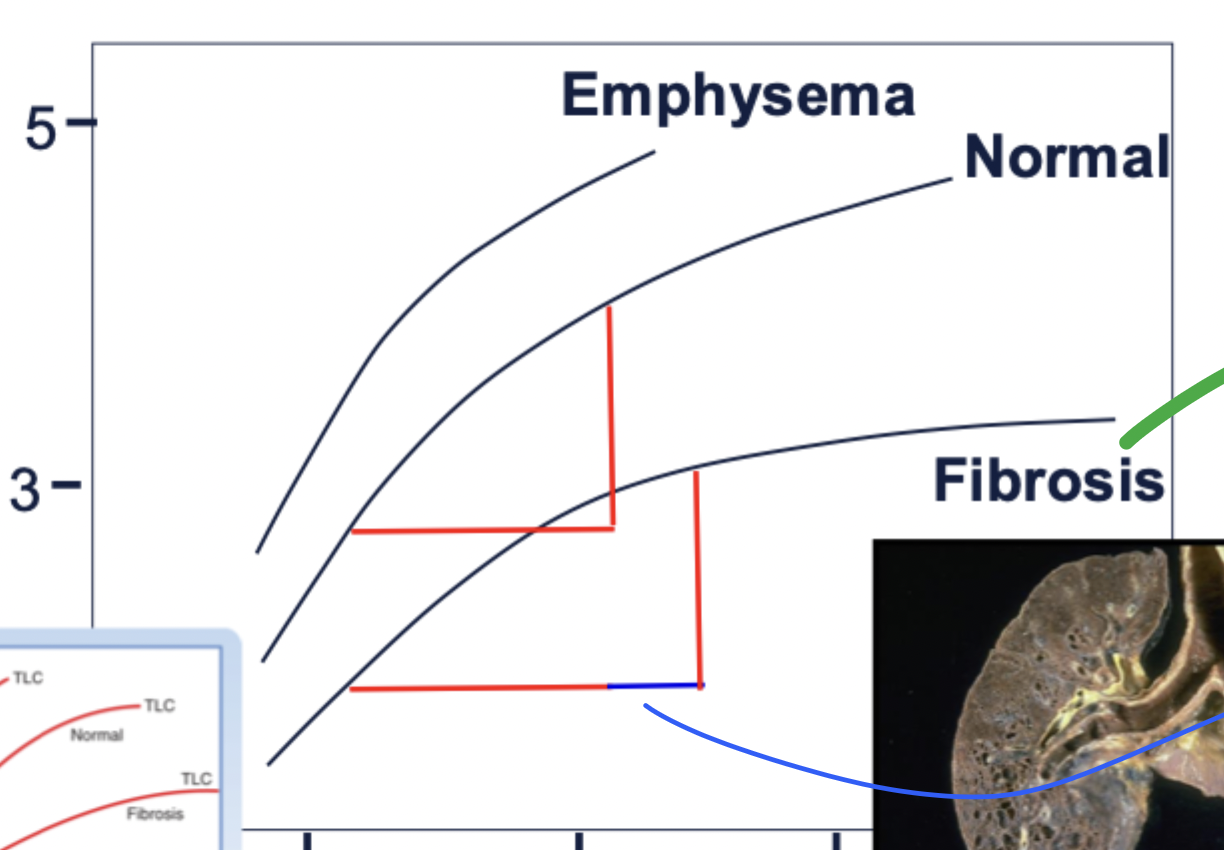
what happens to someones compliance curve in a Tp vs volume graph when someone has emphysema
shifted upwards and left
is emphysema restrictive or obstructive
obstructive
whats the difference between an obstructive vs restrictive lung condition?
obstructive lung disease makes it hard to exhale air, while restrictive lung disease makes it hard to fully expand the lungs to inhale air
both cause shortness of breath though
what is the second factor which effects lung compliance
surface tension
the inside of each alveoli has a very thin layer of fluid lining it that contains water molecules
these H2O molecules are very attracted to each other, so they pull together and resist expansion of the alveoli
this promotes alveolar collapse (especially in smaller alveoli)
why is surface tension a problem during breathing?
during inspiration our lungs are already working to overcome the elasticity of the lung, if we had lots of surface tension this would make it a lot harder
so it would lower compliance a lot
how do we overcome the surface tension problem of alveoli
we have type 2 alveolar cells (pneumocytes) which produce surfactant
this surfactant is responsible for overcoming surface tension
what is surfactant composition
proteins + lipids
MAIN component = phospholipids
how does surfactant work?
the surfactant (primarily phospholipid) inserts itself at the gas-fluid interface and gets in between the water molecules
this decreases the attractive forces between the H2O molecules
this makes the alveoli easier to expand, and increases lung compliance
type 1 vs type 2 alveolar cells?
type 1 = the alveolar cells involved in gas exchange
type 2 = the alveolar cells which produce surfactant
why is surfactant especially significant for smaller alveoli?
small alveoli naturally are more vulnerable to collapsing (due to laplaces law)
so a tiny alveolus has to fight a stronger inward collapsing force then a large alveoli would
so surfactant is very important for small alveoli specifically to prevent their collapse
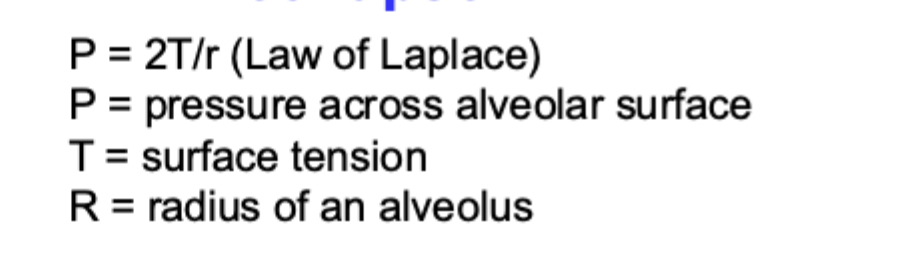
what is Law of Laplace?
for the same surface tension, a small radius will mean a much higher pressure across that alveoli wall
too high of a pressure will lead to collapse
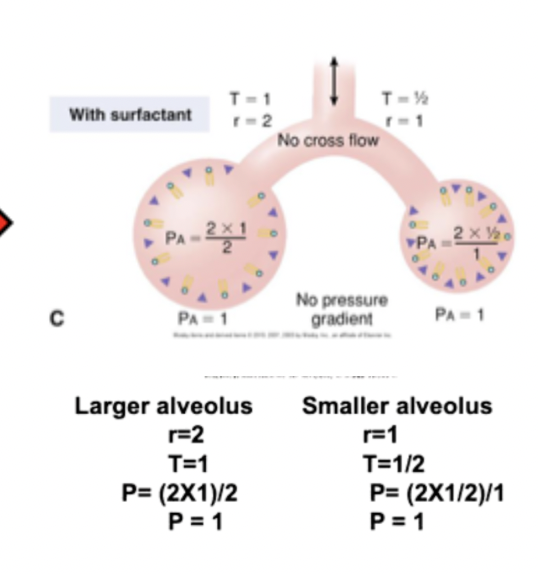
does surfactant work more strongly on smaller alveoli?
yes, because the molecules are closer together in a small alveoli, surfactant will work stronger causing the pressure in a smaller alveoli to be equal to that of a bigger alveoli
what is significant about compliane in premature infants?
premature infants (prior to 26 weeks) tend to lack surfactant
so this can result in respiratory distress syndrome (RDS)

whats the treatment for a premature infant with RDS?
treatment for respiratory distress syndrome
assisted ventilation and administration of synthetic surfactant via the infants trachea
what does the work of breathing overcome
elastic properties of the lung > how hard it is to expand the lung
compliance of the lung
surfactant
airway resistance
how hard is it to move air in and out of the airways (dependent on friction)
what flow is airflow during restful breathing
laminar flow
what is airway resistance determined by
Poiselles law
main component is radius
resistance is inversely proportional to r^4
so e.g half radius will increase resistance by 16

what are the main contributing airways of resistance?
bronchi > occurs mainly within the first 6 generations of the airway
SPECIFICALLY THE MEDIUM SIZED BRONCHI
howcome the bronchi have the most resistance if they are not the vessel with the smallest radius?
because bronchi are arranged in SERIES, so the air only has a very limited number of pathways it can rely on
whereas as the airway keeps branching into e.g. the bronchioles, these airways are arranged in parallel > so the air can split and travel through many different airways at once
so lots more CSA compared to the bronchi

hy is measuring airway resistance a poor test for small-airway obstruction?
Because there are many small bronchioles in parallel, so narrowing of some bronchioles may cause only a small change in total airway resistance.
meaning it can be impossible to pick up on
what tends to happen to airway resistance as the lungs volume increases?
airway resistance gets SMALLER
why does airway resistance decrease during inspiration? and whats the name for this
because when you breathe in, the alveoli expand > alveoli are physically attached to the adjacent airways
so when alveoli expand, they pull on the airways, making them wider
bigger radius = SIGNIFICANTLY less resistance
this outward pulling is called RADICAL TRACTION
when is resistance low vs high
low resistance = inspiration > due to radial traction
high resistance = expiration > due to lack of radial traction
what is dynamic airway compression?
this is the narrowing of SMALL airways during expiration due to increased INTRATHORACIC pressure around them
so small airways are very collapsible
this narrowing increases resistance and limits airflow
does dynamic airway compression occur in healthy people
yes, but only during FORCED expiration
why doesnt dynamic compression occur in larger airways. why only small airways?
because larger airways have more support
e.g. trachea has lots of cartilage, so it will not be compressed
when is dynamic compression worse?
in people with EMPHYSEMA
why? because emphysema means less elastic tissue in the lungs, so they reduced elastic recoil
AND they have loss of radial traction
so this makes the airway MUCH more collapsible > meaning this collapse/and resistance can happen even during NORMAL restful expiration, not just forceful expiration
whats the consequence of dynamic compression in someone with emphysema
reduced exercise ability and air trapping
the airway collapses, so air cannot get out, and remains trapped in the airways
how do patients counteract dynamic compression?
pursed lip breathing > so breathing out of partly closed lips
this helps because it increases intrathoracic pressure SLOWLY
**remember that it is the ^^^ of intrathoracic pressure which causes the airway collapse, so by breathing out of pursed lips, we slow this increase
so it helps to SPLINT the airway open
whats are some different diseases that INCREASE airway resistance?
ALL OBSTRUCTIVE
asthma > bronchial smooth muscle contracts (bronchoconstriction)
chronic obstructive pulmonary disease (COPD)
A. emphysema > loss of elastic tissue = loss of radial traction = airway collapse = increased resistance
B. chronic bronchitis > bronchi are chronically inflamed > increased resistance
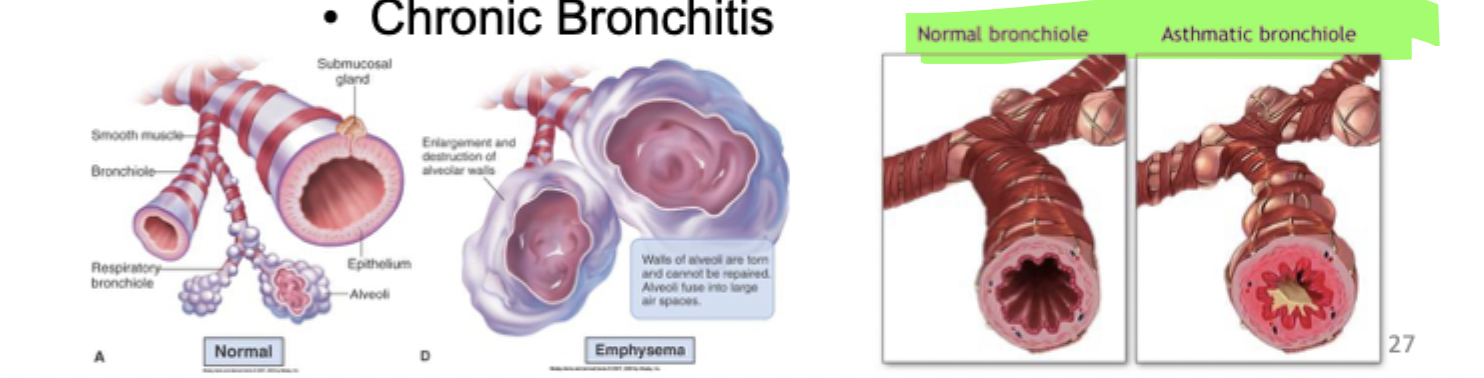
what are other non health related causes which can effect airway resistance
differences in viscosity and density of the gas you are breathing in
e.g. during scuba driving the density and viscosity of air can be effected > gas density rises
how do we measure/visualise how much work out lungs do during a breath?
a pressure-volume loop
intrapleural pressure VS. lung volume
loop is representative of one full breath in AND out and work is shown as AREAS on the graph
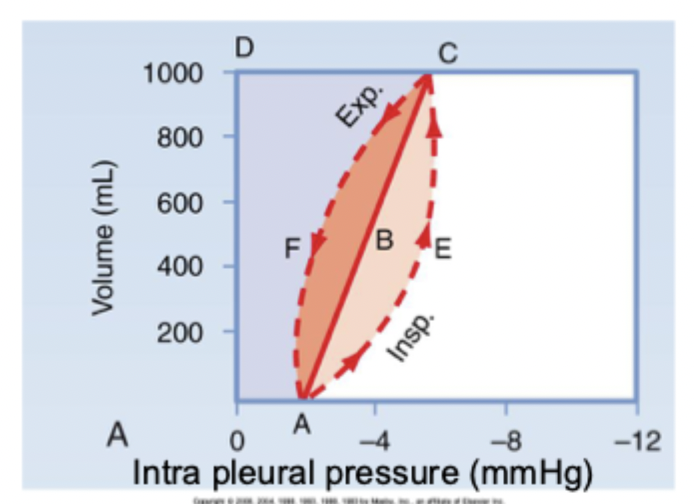

explain whats happening during the inspiration and expiration curve on this graph
during inspiration, intrapleural pressure becomes MORE negative and lung volume increases
during expiration, intrapleural pressure becomes LESS negative and lung volume decreases
what does a WIDER volume-pressure loop mean
more pressure is needed to move the same volume of air
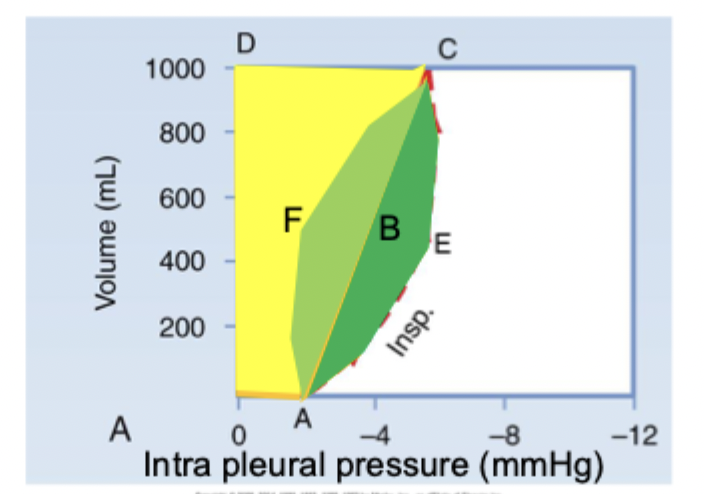
what is this graph showing?
yellow > this is showing the work required to overcome elastic resistance
0ABCD
green > this is showing the work required to overcome non-elastic resistance (aka airway resistance)
AECF
yellow + green = work of respiration
dark green = inspiration
lighter green = expiration > this is stored energy in the stretched lung tissue
what is work of respiration on a pressure volume loop
0AECD
this is showing the work required to overcome BOTH elastic resistance and non-elastic resistance
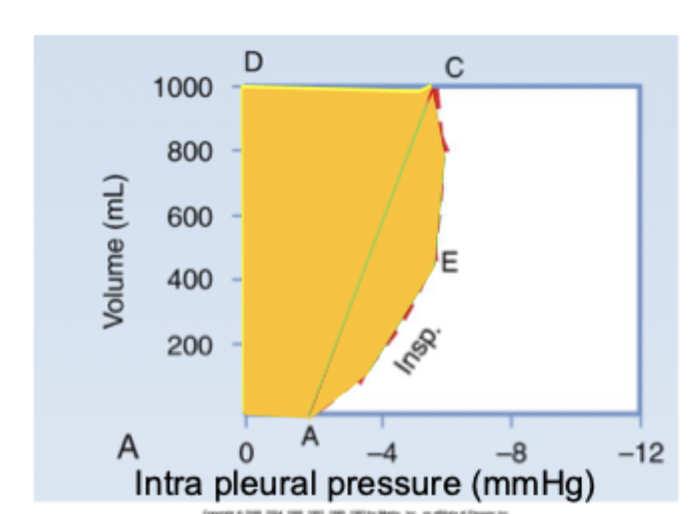
what shift occurs to the pressure-volume loop in restrictive conditions
e.g. when a lung becomes fibrotic (pulmonary fibrosis or fibrotic lung disease)
the whole pressure volume loop shifts RIGHT
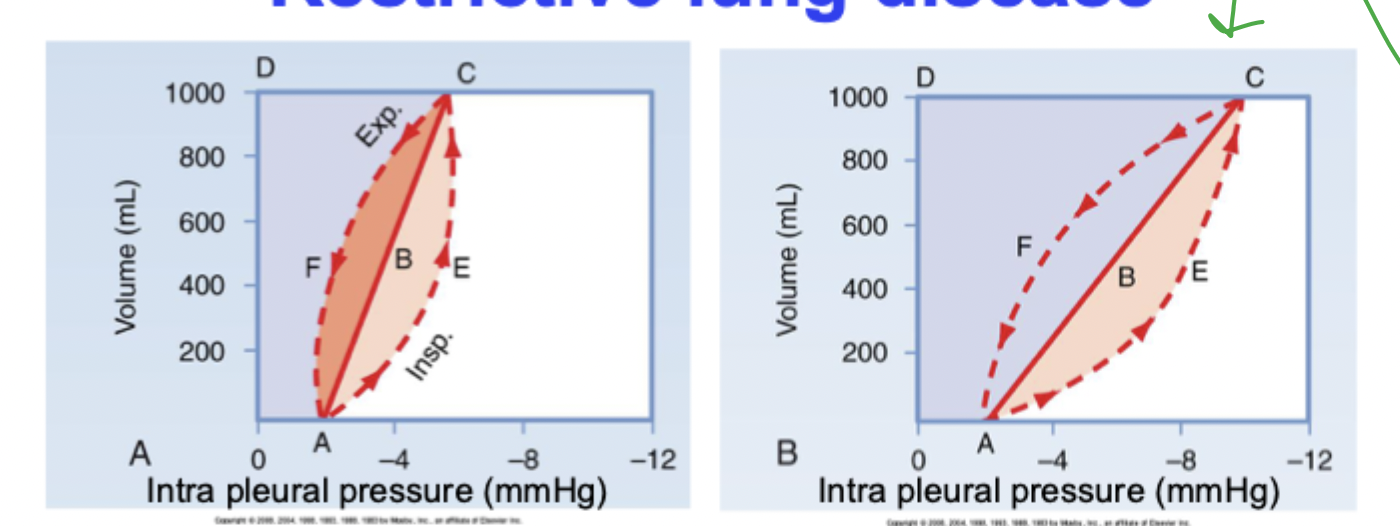

what work (area) changes occur in the pressure volume loop in restrictive conditions
“C” has been shifted further right
so the work to overcome ELASTIC resistance increases (bc compliance ^^)
non elastic resistance stays the same > so the green does not change
so to move the same amount of air, the work of respiration area increases (0AECD)


what shift occurs to the pressure volume loop in obstructive conditions
work to overcome NON-elastic conditions increases
can see that specifically the work during EXPIRATION (ABCF) has increased substantially
you can see that more work is required during both inspiration and expiration
BUT work to overcome elastic resistance has remained the same

what happens to expiratory pressure in obstructive lung disease
expiratory pressure = the pressure your body generates to push air out during expiration
it becomes more positive during expiration in obstructive lung disease
normally expiration is passive so do not need lots of pressure, but in obstructive disease, airways have more resistance so we need the assistance of accessory expiration muscles to make the pressure within the chest more positive, so that air wants to move OUT
what consequences occur in a RESTRICTIVE v OBSTRUCTIVE lung disease?
RESTRICTIVE:
lung compliance is DECREASED
so more work is required to overcome elastic resistance > a more negative intrapleural pressure is required to move the same amount of air
no change in airway resistance > so no work needed for non elastic resistance
OBSTRUCTIVE:
airway resistance is INCREASED
so more work is required to overcome non elastic resistance > a more positive expiratory pressure is required so energy is now needed
lung compliance is INCREASED
so approximately the same amount of energy is required to overcome elastic resistance
BUT, a more negative intrapleural pressure is required to move the same amount of air
in obstructive airway diseases the lungs are MORE compliant. howcome we still need a mroe negative intrapleural pressure then?
Because the lung tissue is easy to stretch (due to the increased compliance), but the airways are harder to keep open as they are more prone to collapse and air has more resistance moving through them. A more negative intrapleural pressure helps expand the lungs and pull the small airways open, so air can flow more easily.
why does chronic emphysema increase airway resistance?
chronic emphysema = obstructive disease
because the loss of elastic tissue reduces radial traction > so small airways are NOT held open as well