factors affecting the accuracy of eyewitness testimonies
 Call Kai
 Learn
Learn Practice Test
 Spaced Repetition
 Match
Match Flashcards
 Knowt Play
1/22

There's no tags or description
Looks like no tags are added yet.
Name | Mastery | Learn | Test | Matching | Spaced | Call with Kai | Chat |
|---|
No analytics yet
Send a link to your students to track their progress
23 Terms
what r the factors affecting the accuracy of eyewitness testimonies
misleading information
anxiety
what are leading questions
questions which suggest a certain answer because of the way it’s phrased.
who did research on leading questions
Loftus and Palmer
what was the research on leading questions
Loftus and Palmer
arranged 45 participants to watch film clips of car accidents then asked questions about accident
in critical questions (leading question/misleading information) participants asked to describe how fast the cars were travelling
5 groups and each group given different word in critical questions (either hit, contacted, bumped, collided, smashed)
verb ‘contacted’= mean estimated speed of 31.8mph
verb ‘smashed’ = mean estimated speed of 40.5mph
The leading question affected the eyewitness’ recall of the event
what is the response bias explanation
suggests wording of question doesnt affect participants memories, just how they decide to answer.
loftus and palmer 2nd experiment : participants who originally heard ‘smashed’ more likely to report seeing broken glass (there was none) than those who heard ‘hit’ → supported substitution explanation (wording of a leading question changes participants memory)
what is post event discussion
witnesses to an event discuss, with co- witnesses, what they have seen. This may influence the accuracy of each witnesses recall of the event.err
research on post-event discussion
Gabbert et al studied participants in pairs
each participant watched a video of the same crime but from different points of views
both participants discussed what they had seen individually before individually completing a task of recall
71% participants mistakenly recalled aspects they didn’t see in video but had picked up from discussion
in control group of no discussion, 0% participants mistakenly recalled aspects they didn’t see in video
→ evidence of memory conformity
what is memory contamination
when co-witnesses to a crime discuss it w eachother, their eyewitness testimonies may become altered or distorted. this is bc they combine misinformation from other witnesses w their own memories
what is memory conformity
witnesses go along w eachother either to win social approval or bc they believe other witnesses r right and they r wrong
unlike memory contamination, the actual memory is unchanged
strengths of research into misleading information
practical use in criminal justice system
leading qs can have such a distorting effect on memory that police officers need to be careful ab how they phrase their questions when interviewing eyewitnesses.
shows psychologists can help improve the way legal system and can [rptect innocent ppl from fault convictions based on unreliable eye witness testimonies
application
counterpoint
these practical applications may be affected by issues w research
Loftus and palmer’s particpants watched film clips in lab (laboratory experiment)
different experience from witnessing real event → less stressful
participants responses in research do not matter in same way as real eyewitnesses bc real eye witness testimonies has actual consequences
weaknesses Forfar substitution explanation
eye witness testimonies more accurate for some aspects of an event than for others
Sutherland and Hayne:
→participants shown video then asked misleading qs. their recall more accurate for central details of event than for peripheral ones
→participants attention was focused on central features so these memories relatively resistant to misleading info
substitution explanation incomplete explanation bc original memories for central details not distorted
weaknesses for memory conformity
what is anxiety
a state of emotional and physical arousal. emotions include having worried thoughts and feelings of tension. physical changes include increased heart rate and sweatiness. Can affect accuracy and detail of eyewitness testimony
wy would anxiety have a negative effect on recall
anxiety creates physiological arousal in body= prevents paying attention to important cues=recall is worse
who did research on anxiety having a negative effect on recall
Johnson + Scott
what was Johnson + Scott study
told participants they were taking part in lab study
low anxiety condition : heard casual convo in next room then saw man walk past carrying a pen w grease on his hands
high anxiety condition : heard argument + glass smashing then saw man walk out of room holding knife covered in blood
later participants picked out man from set of 50 photos.
49% who saw man carrying pen were able to identify him
33% who saw man carrying knife covered in blood were able to identify him
tunnel theory of memory suggests ppl have enhanced memory for central events → weapon focus as a result of anxiety
how does anxiety have a positive effect on recall
witnessing stressful event = creates anxiety through physiological arousal within the body = triggers flight or flight response = increases alertness = may improve memory for event as we become more aware of cues in situation
who did research on anxiety having a positive effect on recall
Yuille and Cutshall
what was Yuille and Cutshall study
actual shooting in a gun shop in Vancouver, Canada
shop owner shot theif dead
21 witnesses → 13 took part in study → interviews 4-5 months after incident. these interviews were compared w original police interviews at time of shooting
accuracy dtermined by number of details reported in each account
witnesses also asked to rate how stressed they felt at time of incident (on 7 point scale) + whether they had any emotional problems since event
witnesses vry accurate in accounts + there was little change in amount recalled or accuracy after 5 months
particpants who reported highest levels of stress = most accurate (ab 88% compared to 75% for less stressed group)
suggests anxiety does not have bad effect on accuracy of eye witness memory in real world context
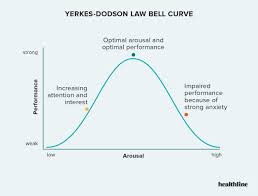
Yerkes - Dodson law
relationship between anxiety + accuracy of eye witness testimonies → inverted ‘U’
too little/too much anxiety lowers levels of recall accuracy
optimum level of anxiety → maximum recall accuracy
strengths of anxiety affecting eyewitness testimonies
evidence supporting view anxiety has negative effect on accuracy of recall
Valentine and Meson : used an objective measure (heart rate) to divide particpants into high + low anxiety groups
in this study, anxiety disrupted partipcnats ability to recall details ab the actor in the London Dungeon’s Labyrinth
suggests high levels of anxiety does have negative effect on eyewitness recall of stressful event
strengths of anxiety affecting eyewitness testimonies
evidence showing anxiety can have positive effects on accuracy of recall
Christianson + Hubinett interviews 58 witnesses to bank robberies in sweden
researchers assumed witnesses directly involved (eg bank workers) would experience most anxiety than witnesses indirectly involved (eg bystanders)
recall more than 75% accurate across all witnesses
these findings for actual crimes confirm anxiety doest reduce accuracy of recall for eyewitnesses
counterpoint
Christianson + Hubinette interviewed their participants several moths after event → researcher had no control over what happened to particpants in between (eg post event discussions) → lack of control over confounding variables → weakens research as support so lowers validity
weaknesses of anxiety affecting eyewitness testimonies
Johnson and Scott study may not have tested anxiety
maybe participants focused on weapon bc they were surprised rather than scared
Pickel conducted experiment using scissors, a handgun, a wallet or raw chicken as hand-held items in hairdressing salon video
scissors=high anxiety, low unusualness
eyewitness accuracy significantly poorer in high unusualness conditions (chicken+handgun)
suggests weapon focus effect due to unusualness rather than anxiety → lack of internal validity of Johnson and Scott study