lab midterm all tests
 Call Kai
 Learn
Learn Practice Test
 Spaced Repetition
 Match
Match Flashcards
 Knowt Play
1/37

There's no tags or description
Looks like no tags are added yet.
Name | Mastery | Learn | Test | Matching | Spaced | Call with Kai |
|---|
No analytics yet
Send a link to your students to track their progress
38 Terms
what does oxidase test test for and how
cytochrome c oxidase
in the presence of the cytochrome c oxidase the reagent is oxidized and turns a dark blue or black
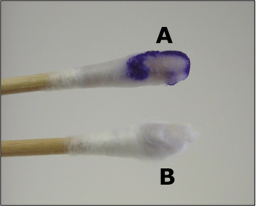
what is the oxidase test indicator
dimethyl-p-phenylenediamine hydrochloride
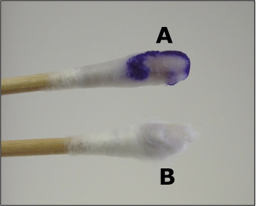
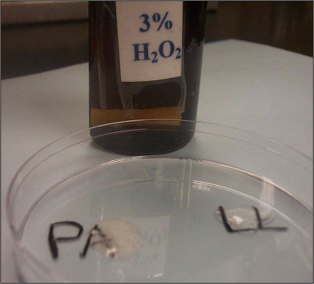
what does catalase test test for and how
catalase
once H2O2 is added, if bubbling occurs then the microbe has catalase
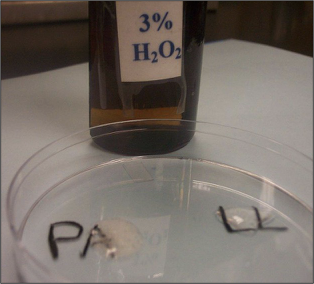
H2O2 equation, and for what test
H2O2 → 2 H2O + O2
catalase test
what does a nitrate test test for and how
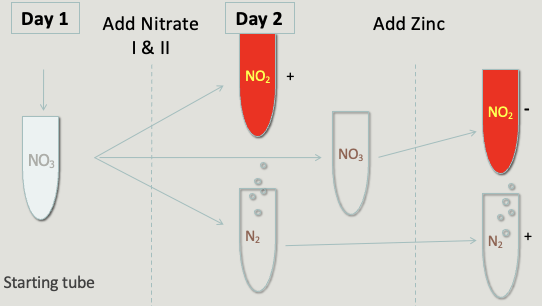
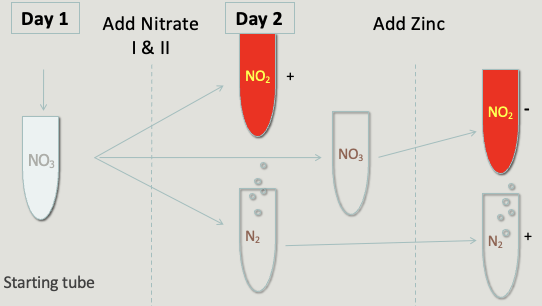
nitrate reductase (nitrate NO3 to nitrite NO2 or N2 gas)
1st round: nitrate I and II added, if it turns brick red its positive
2nd round: Zn added, if it turns brick red its negative
nitrate test reagents
nitrate I: sulfanilic acid
nitrate II: dimethyl-alpha-naphthylamine
Zn
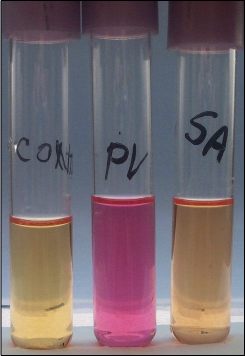
what does urea broth test for an how
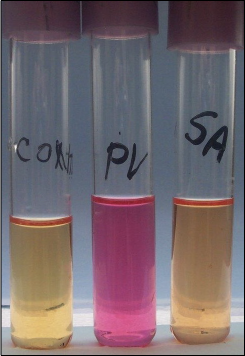
urease
degradation of urea into 2 ammonia NH3 and CO2 is alkaline and will turn cerise
urea broth indicator
phenyl red
positive is cerise, negative is yellow
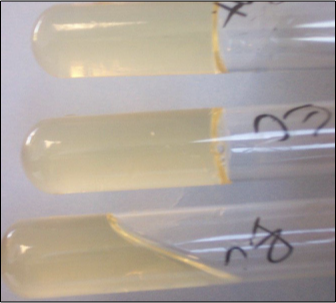
what does a gelatin test test for and how
gelatinase
if gelatin is hydrolyzed into amino acids it will remain liquid and indicates a positive result
what does a phenylalanine slant test for and how
phenylalanine deaminase
phenylalanine is turned into phenylpyruvic acid (PPA) and ammonia (NH3), if positive the slant turns green
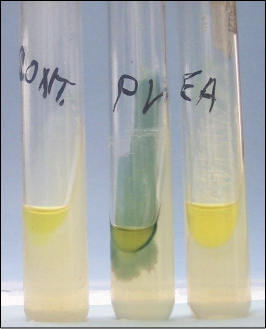
phenylalanine slant neumonic
pp in pool turns green
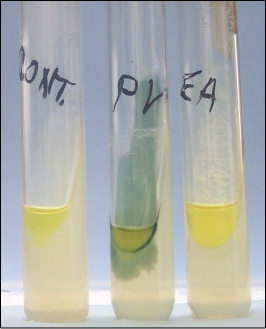
phenylalanine slant reagents
10% ferric chloride (FeCl3)
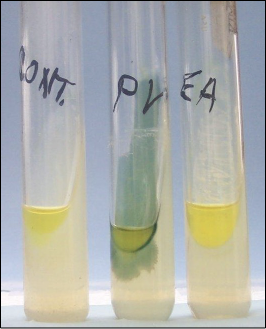
what three things does a SIM test test for and how
sulfide: H2S is produced from bacterium and turns black
Indole from tryptophanase
motility: turbidity
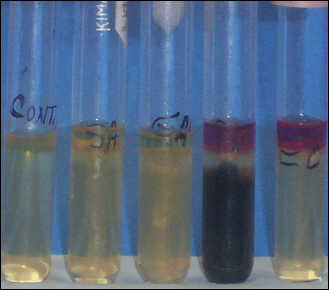
SIM reagent
Fe in medium- not a reagent but reacts with H2S to form a black precipitate
Kovac’s reagent
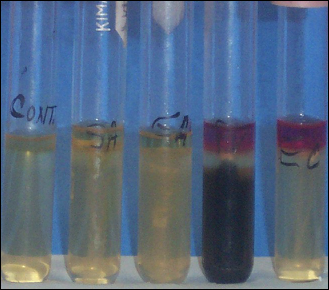
what does tryptone broth test for and how
tryptophanase
hydrolyzation of tryptophan produces indole, pyruvate and ammonia NH3; indole reacts to form a cerise ring
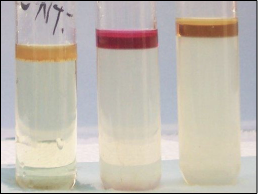
tryptone broth reagents
Kovak’s reagent: DMABA (p-dimethylaminobenzaldehyde) and HCl dissolved in amyl or butyl alcohol
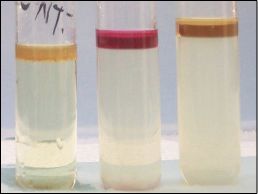
what does methyl red test test for and how
mixed acid fermentation
detection of high acid production, a positive result is a red color
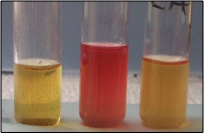
methyl red reagent
methyl red
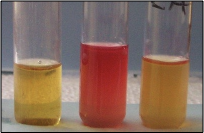
what does a voges-proskauer test tets for and how
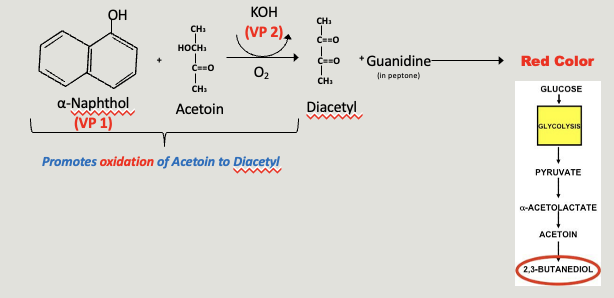
2,3-butanediol fermentation
the acetoin intermediate from this fermentation reacts with reagents to produce a red color
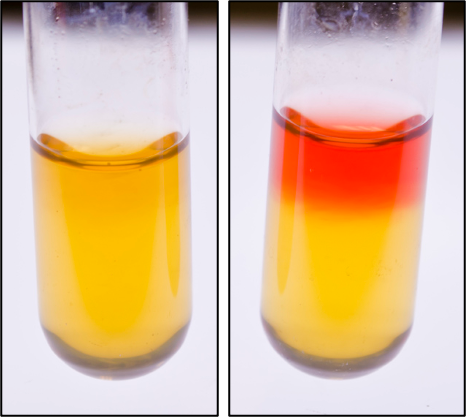
voges-proskauer reagents
baritt’s reagents
VP I: alpha naphthol
VP II: KOH
what does a simmons citrate slant test for
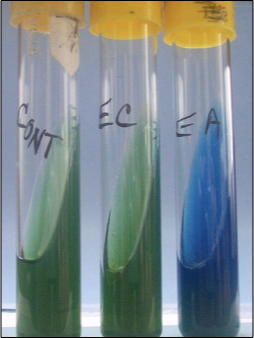
citrate as sole carbon source for growth; growth is a positive result and may be accompanied by blue color
simmons citrate slant indicator
bromothymol blue
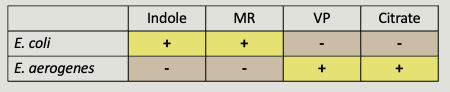
IMViC
Indole, MR, VP, Citrate
what 4 things does a litmus milk test test for
fermentation of lactose- acidic and curding
metabolism of proteins- alkaline
degradation of casein- proteolysis
litmus reduction
what 3 things does a litmus milk test contain
lactose
casein and other peptones
litmus pH indicator
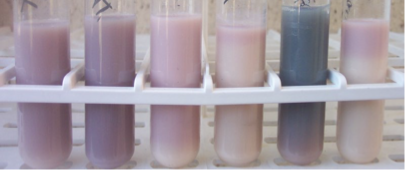
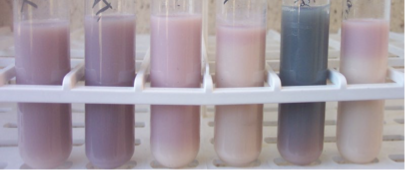
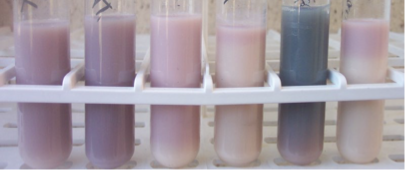
5 reaction of litmus milk test
acid production (pink)
alkaline production (blue, peptone deamination)
curd
reduction (white)
proteolysis (clearing, degradation of casein)
what three sugars can a phenyl red sugar broth contain
glucose, lactose, mannitol
phenyl red sugar broth indicator
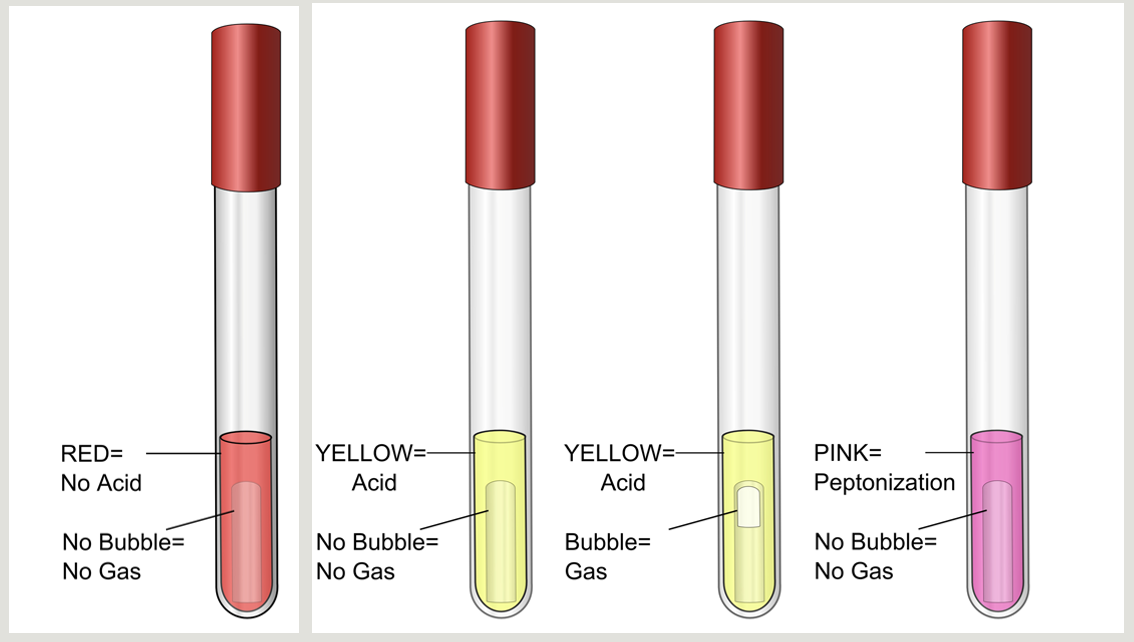
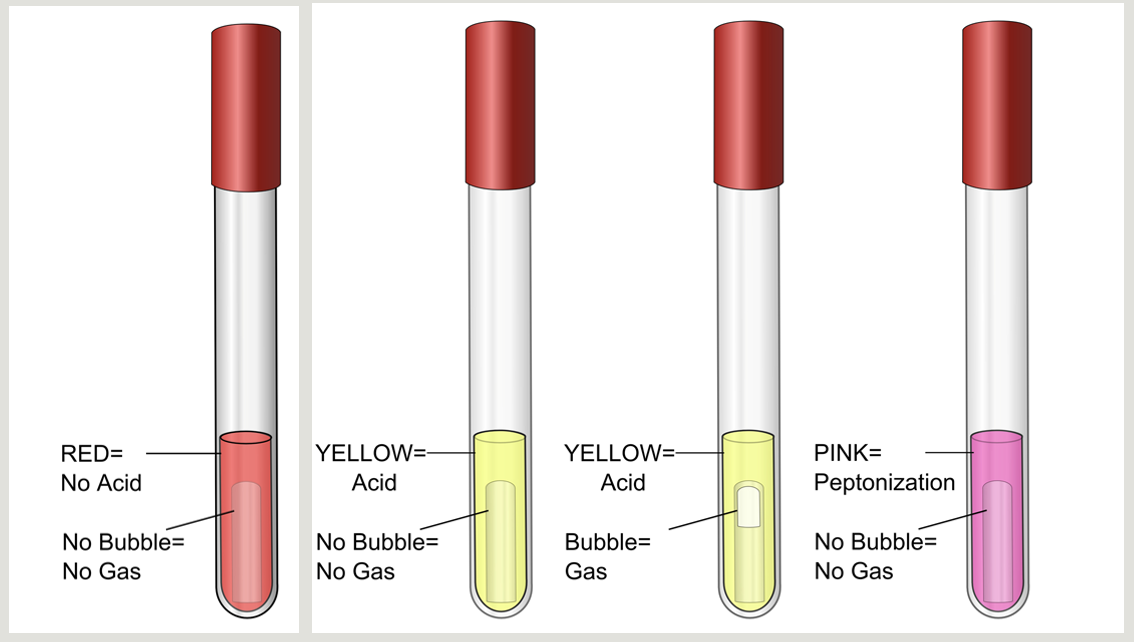
phenol red and durham tube (gas)
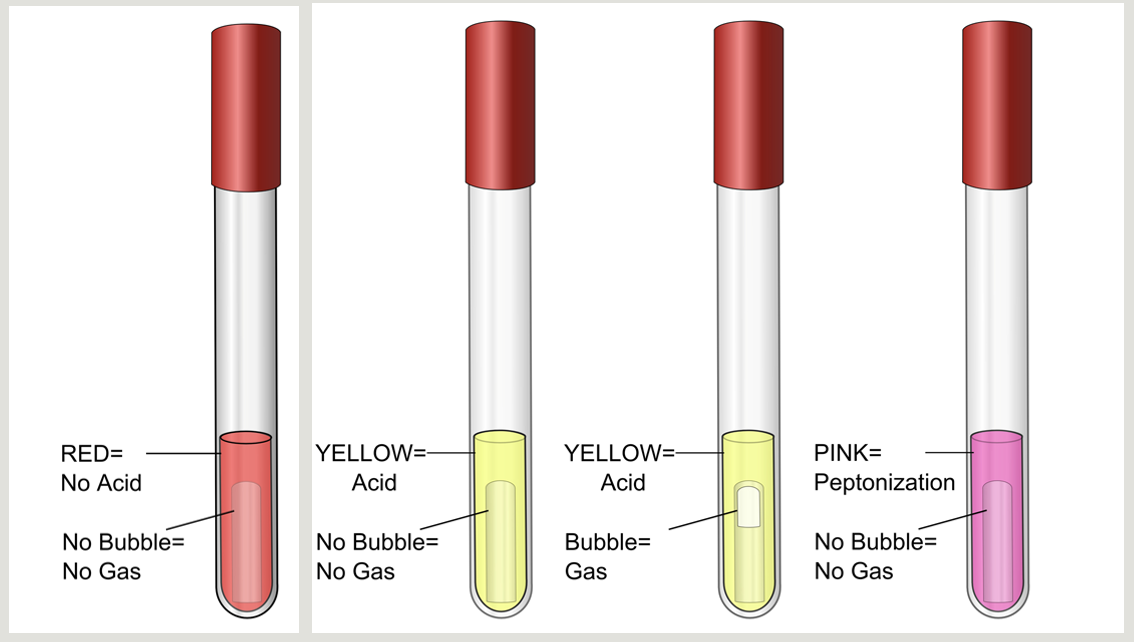
phenyl red sugar broth results
red: original state
cerise: peptone degradation releases ammonia
yellow: positive for fermentation of the sugar
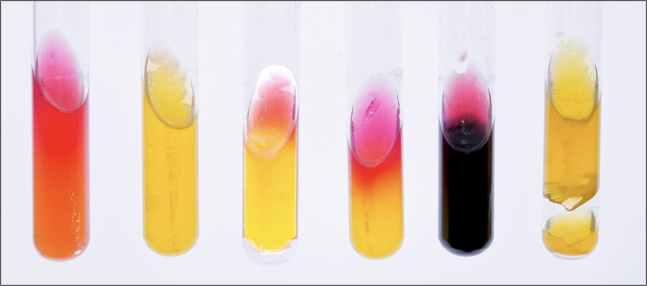
what 3 things does Kligler’s iron agar (KIA) test for
lactose fermentation; 1.0% lactose
glucose fermentation; 0.1% glucose
sulfur reduction
(1.0% peptone is also an ingredient)
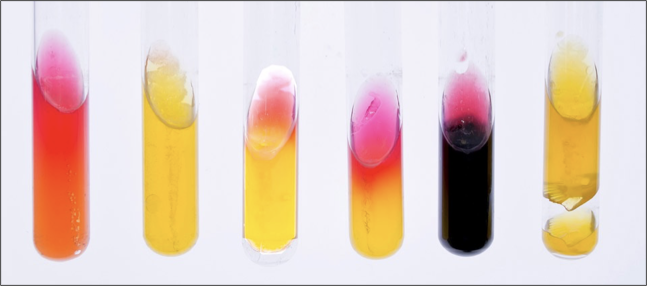
KIA indicators
phenol red for pH and iron from ferric ammonium citrate
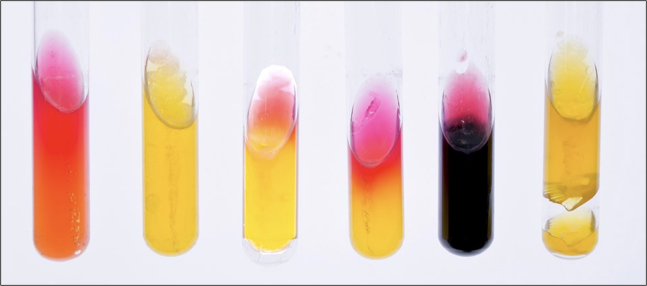
KIA results
yellow: acid is formed from fermentation of glucose and lactose exceeding ammonia produced
black: sulfur reduction produces H2S and combines w/ iron to form precipitate
reversion: 2,3-butanediol fermentation; less stable acids oxidized
half: only glucose is fermented and breakdown of peptones happens at the top where O is; peptone deamination reverses acidification
what type of plate is a lipase plate and what does it test for
differential
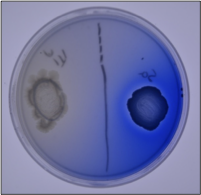
tests for enzyme lipase which hydrolyzes fats into glycerol and fatty acids
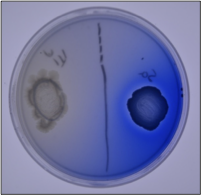
lipase plate indicator
spirit blue; positive result is dark blue zone around growth
what type of plate is a milk agar plate and what does it test for
differential
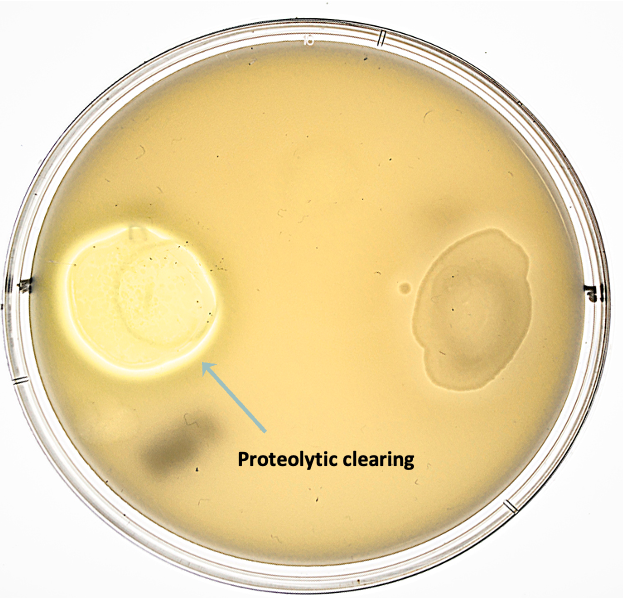
tests for enzyme caseinase which hydrolyzes casein into amino acids
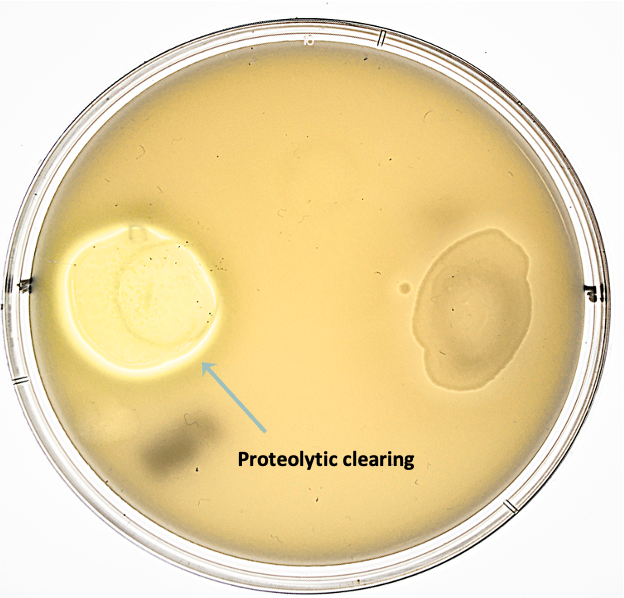
milk agar plate results
a clearing means that casein has been broken down (gives milk white color) by caseinase
what type of plate is a starch agar plate and what does it test for
differential
tests for enzyme amylase which breaks starch into simple sugars
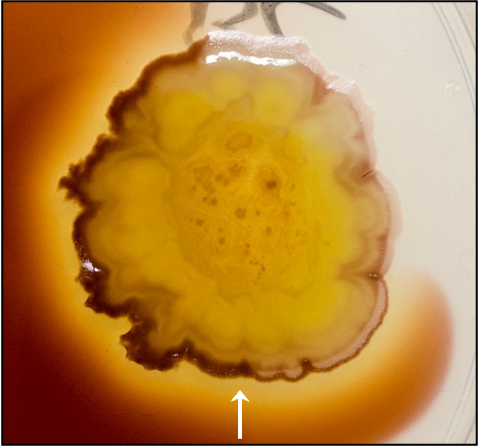
what is the indicator for a starch agar plate
gram iodine which reacts with starch to form a purple ring indicating a negative result
a positive result is a clearing around the growth which means amylase has broken the starch down