VT 113 Lecture Exam Accumulative
 Call Kai
 Learn
Learn Practice Test
 Spaced Repetition
 Match
Match Flashcards
 Knowt Play
1/39

There's no tags or description
Looks like no tags are added yet.
Name | Mastery | Learn | Test | Matching | Spaced | Call with Kai | Chat |
|---|
No analytics yet
Send a link to your students to track their progress
40 Terms
1st intermediate host: A planktonic crustacean
2nd intermediate host: Freshwater fish
Definitive Host: Humans (eating fish eating mammals such as bears, wolves, foxes)
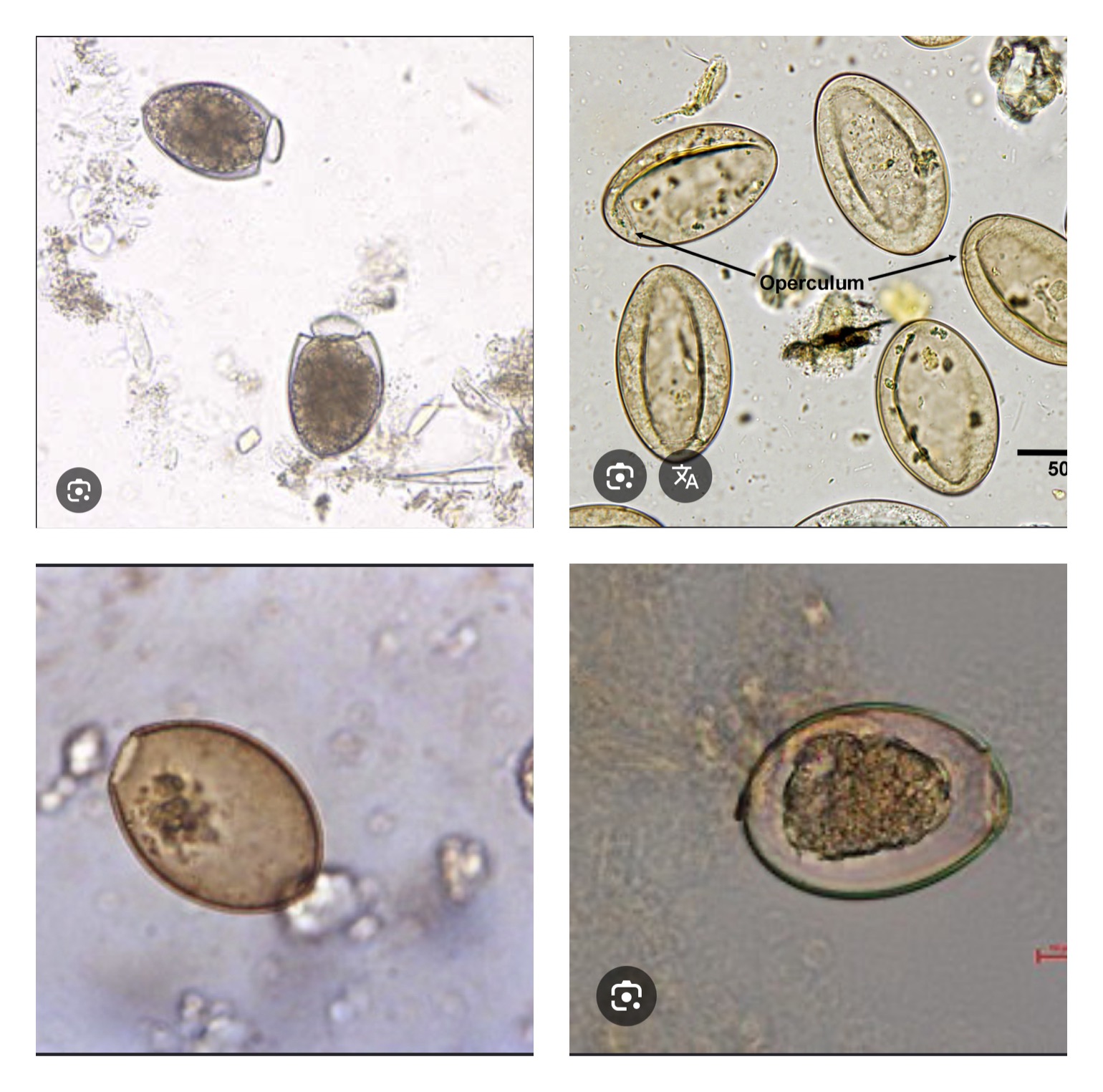
Diphyllobothrium latum
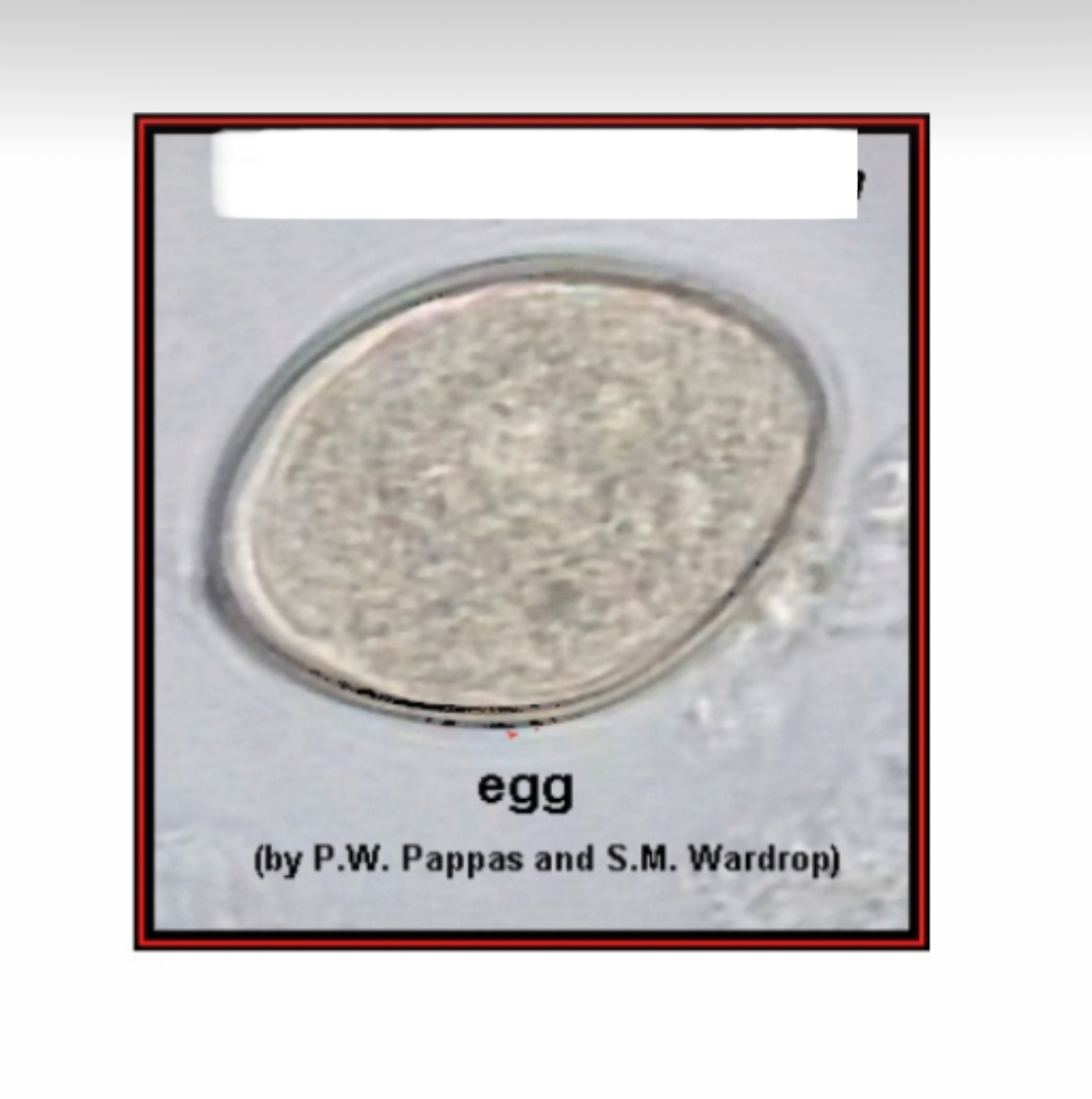
Diphyllobothrium latum ova
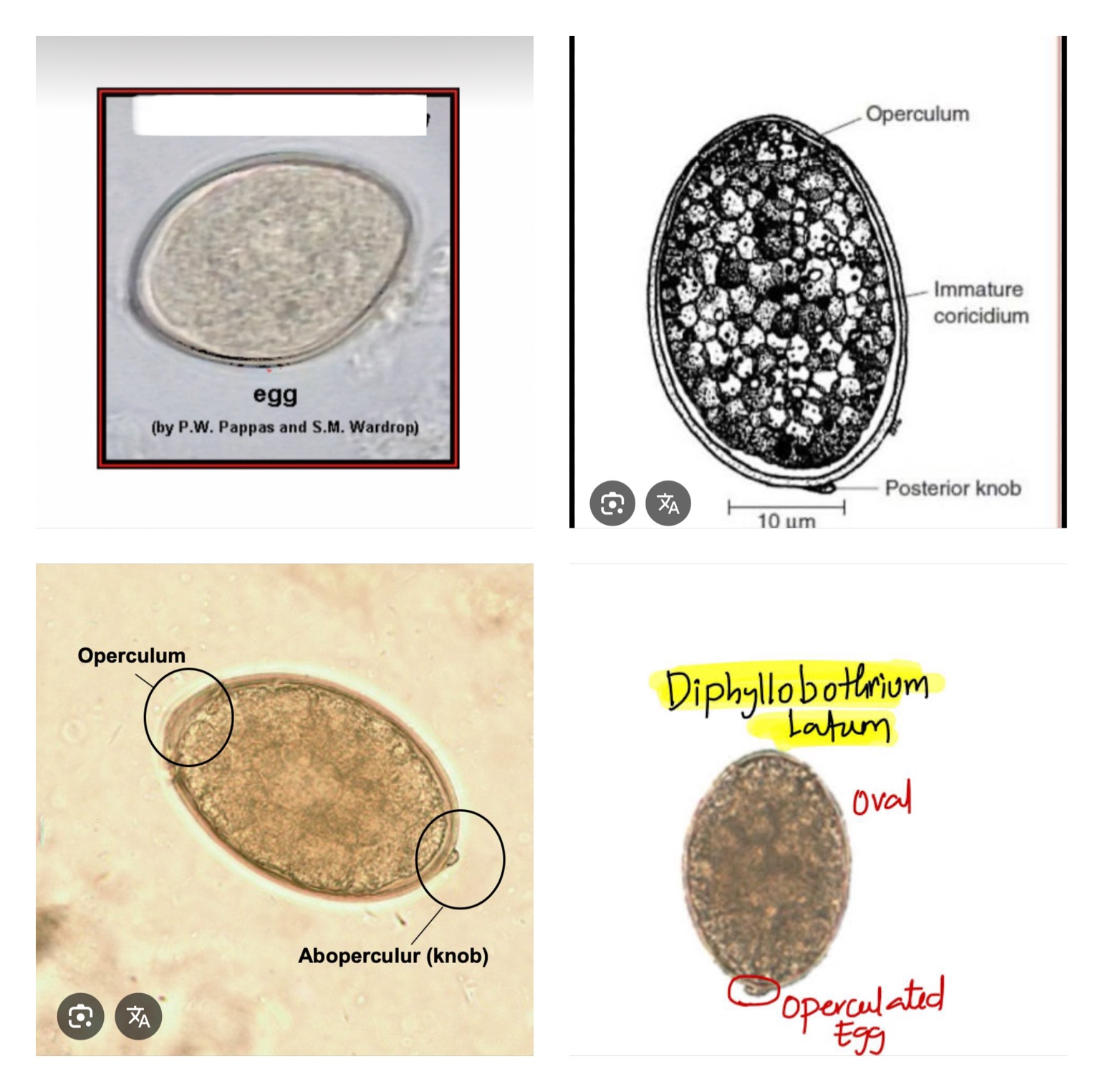
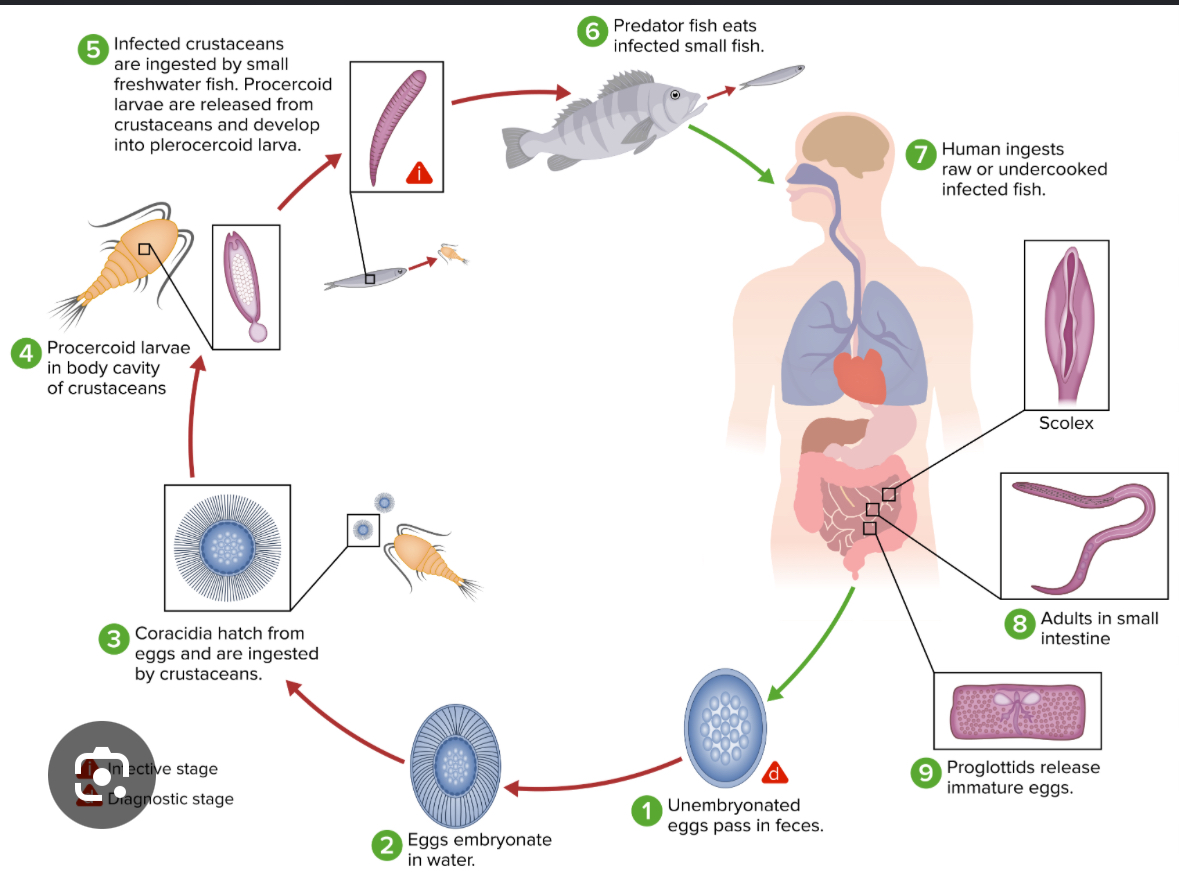
Diphyllobothrium latum
This cestode (the broad fish tapeworm) is found in fresh water regions
Adult tapeworm worm reside in the small intestine of humans or other mammals where they release the eggs(ova) via feces in the water
Eggs hatch in the fresh water into free-swimming larvae called coracidia which is ingested by crustaceans
While inside the crustaceans the larvae develop into procercoid larva then small freshwater fishes consume the infected crustaceans
The procercoid larvae migrate into the fish’s tissues and develop into the plerocercoid larva that gets ingested by humans by eating raw or uncooked fish
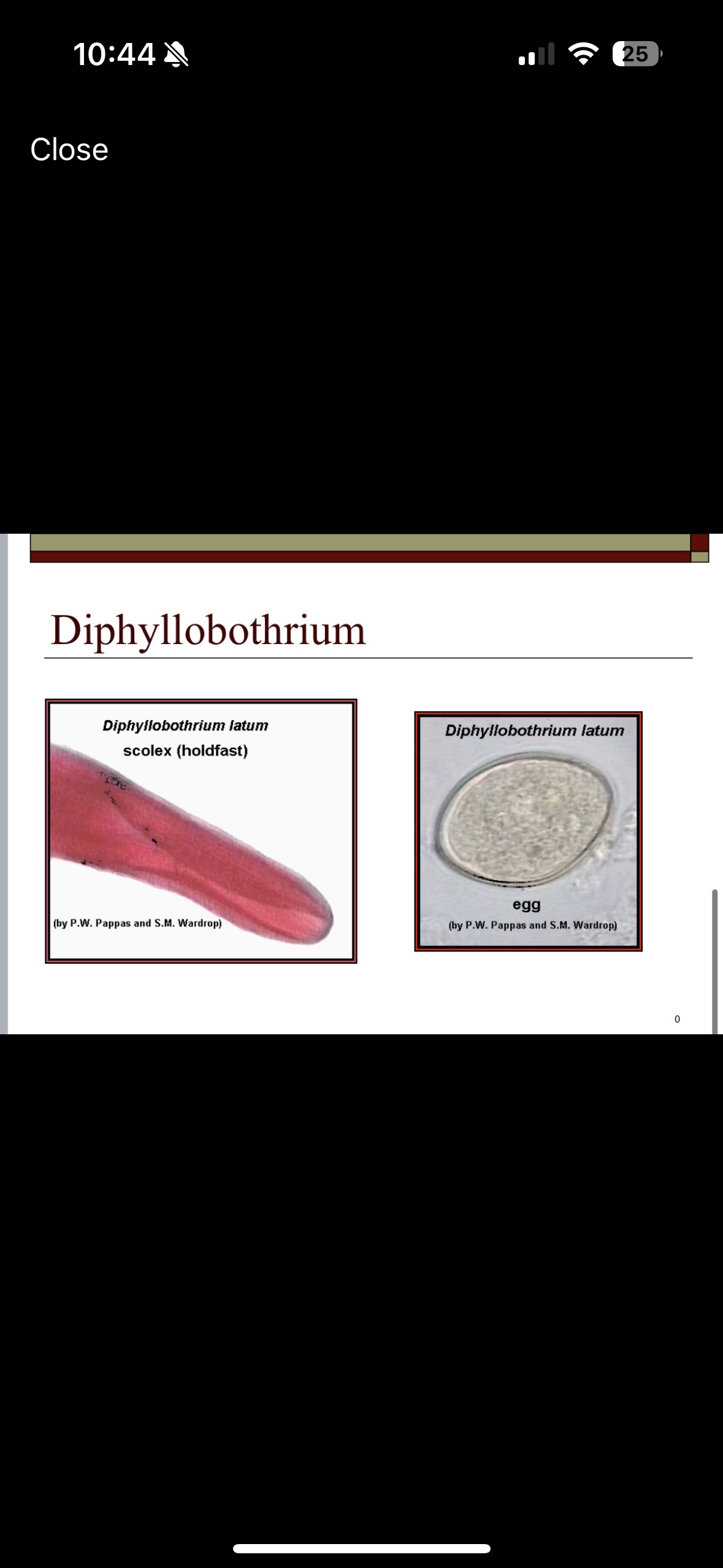
The prepatent period (time between it infects the host and before it can become detected) of Diphyllobothrium latum
3-4 weeks
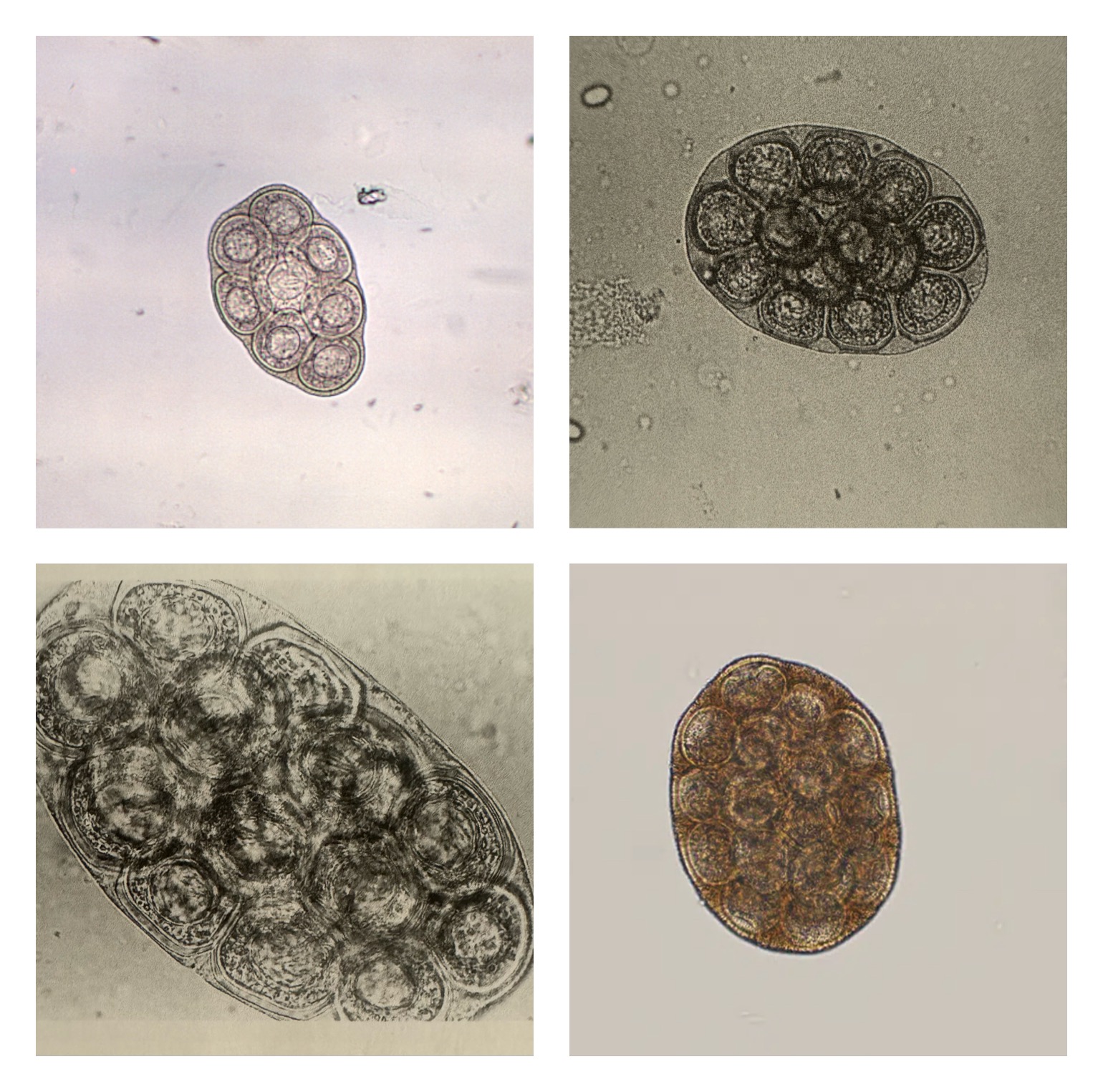
Dipylidium caninum ovum
The flea tapeworm affects dogs, cats and humans
Dipylidium caninum
This cestode grows in the small intestine of dogs, cats and can affect humans
Collection: Segments in feces or found in perianal region
Diagnostic: Fecal Flotation
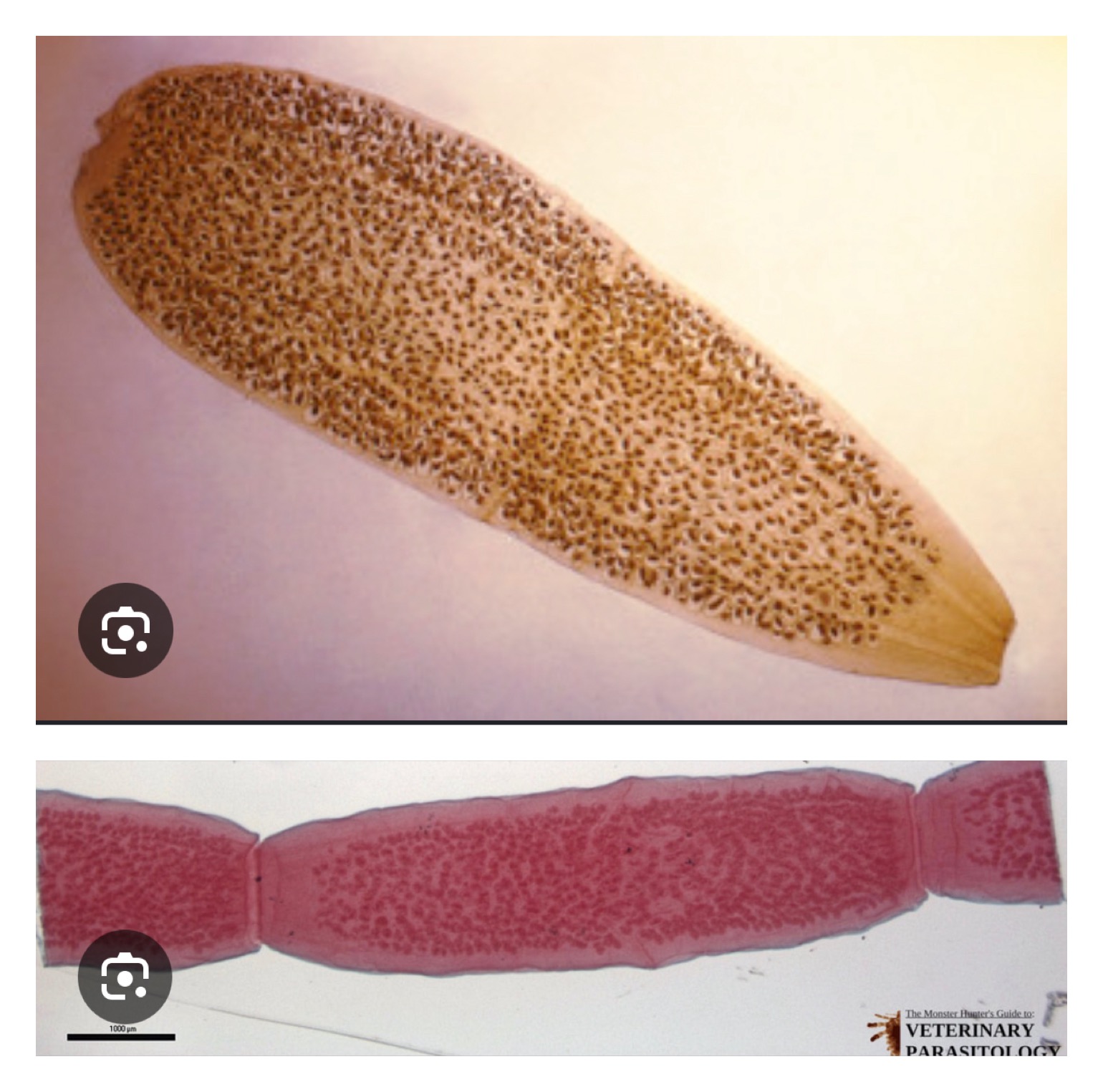
Intermediate host: fleas (Ctenocephalides)
Definitive host: Dogs, Cats, and even Humans
Dipylidium caninum adult stage

Type of Life Cycle:
Direct or Indirect?
The Dipylidium caninum life cycle
Indirect Life Cycle
The prepatent period (time between it infects the host and before it can become detected) of Dipylidium caninum
14-21 days (2-3 weeks)
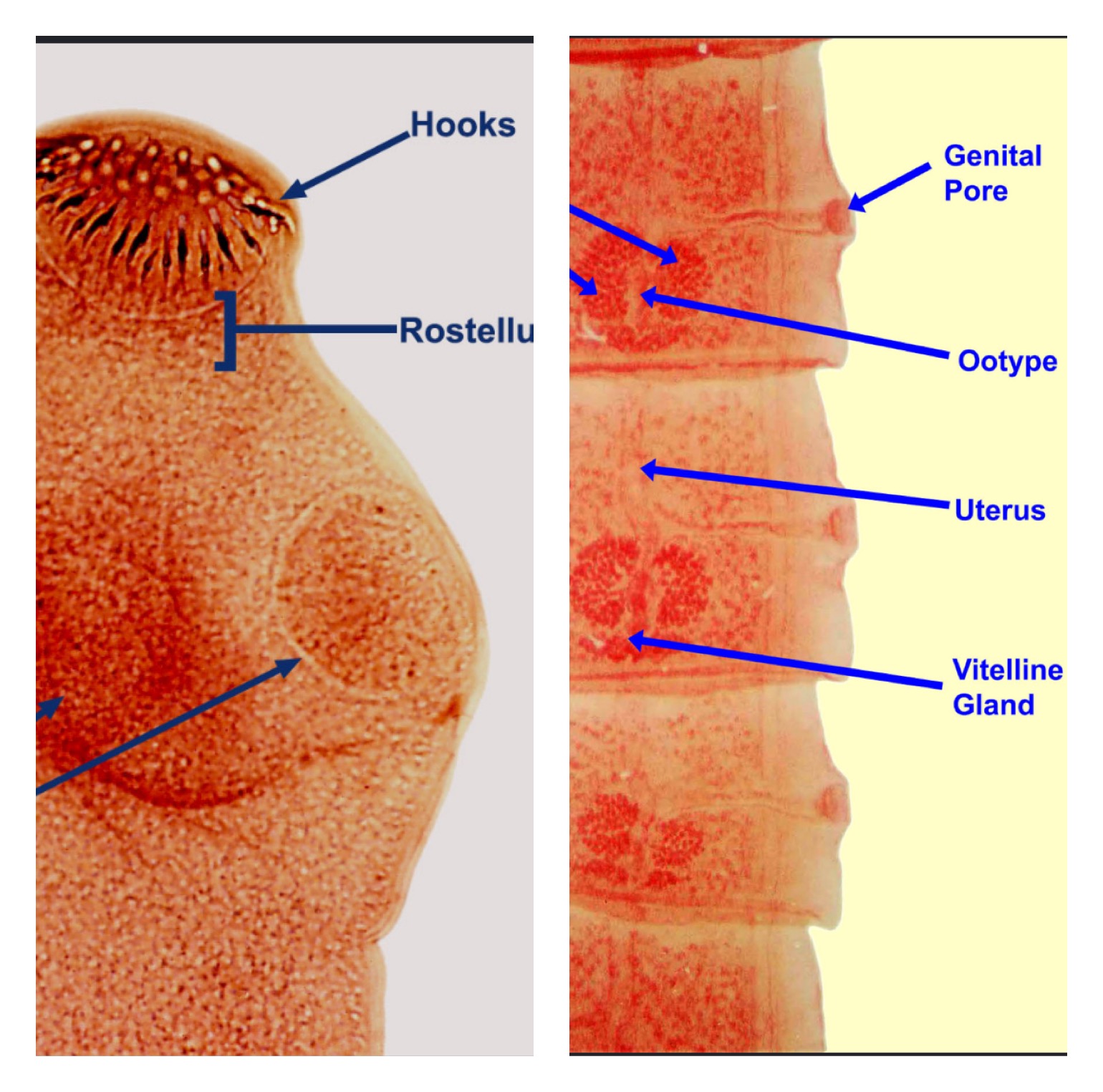
Taenia sp
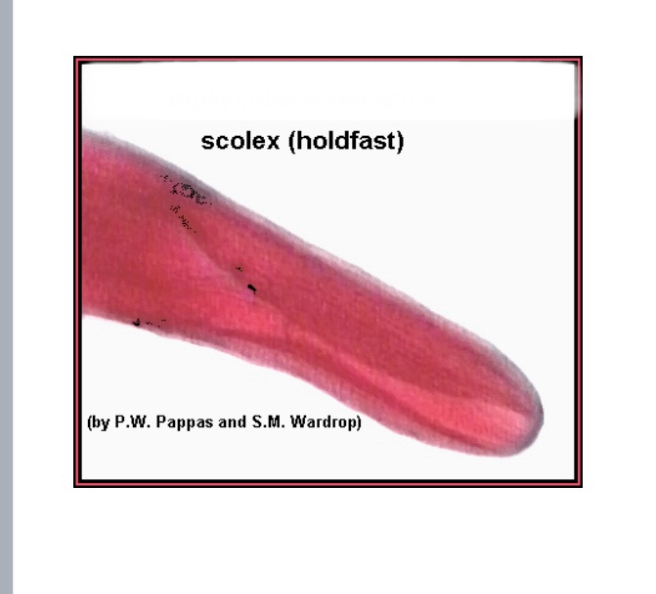
Cestode (Tapeworm) located in the small intestine that contains scolexes with 2 rows of hooks one lateral genital pore
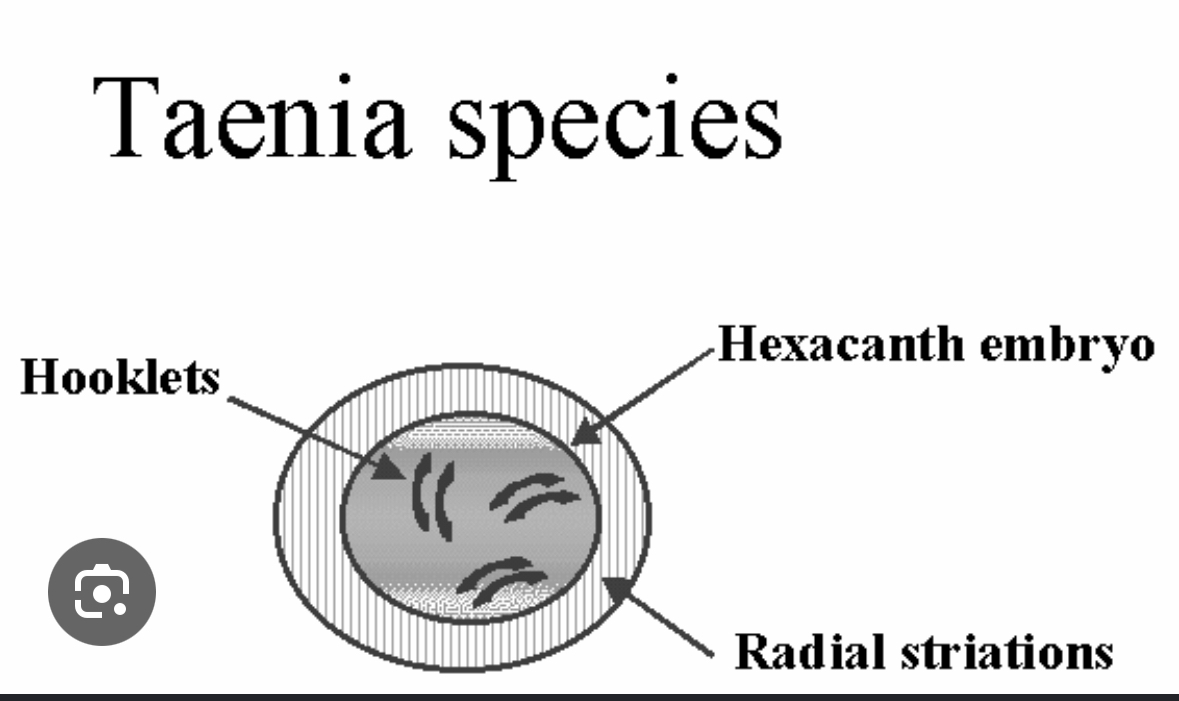
Eggs have striated shell with 6 hooks inside the ova
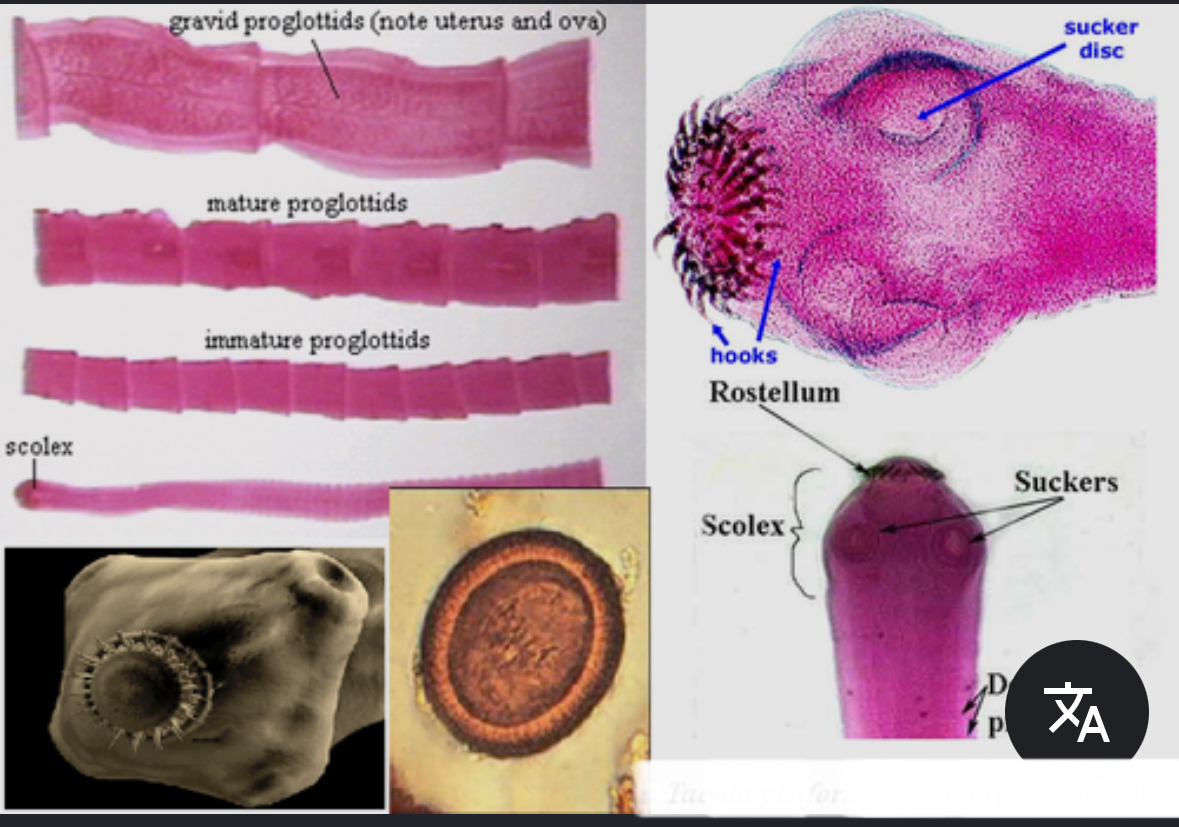
This cestode has the
Intermediate host: Rabbit
Found in the rabbit’s organs
Definitive host: Dogs, Coyotes, Foxes
Taenia pisiformis
The prepatent period (time between it infects the host and before it can become detected) T. pisiformis
2 months
This cestode has the
Intermediate host: Pigs
Found in the striated muscles, heart, tongue, and sometimes brain of infected pigs
Definitive host: Humans
Taenia solium
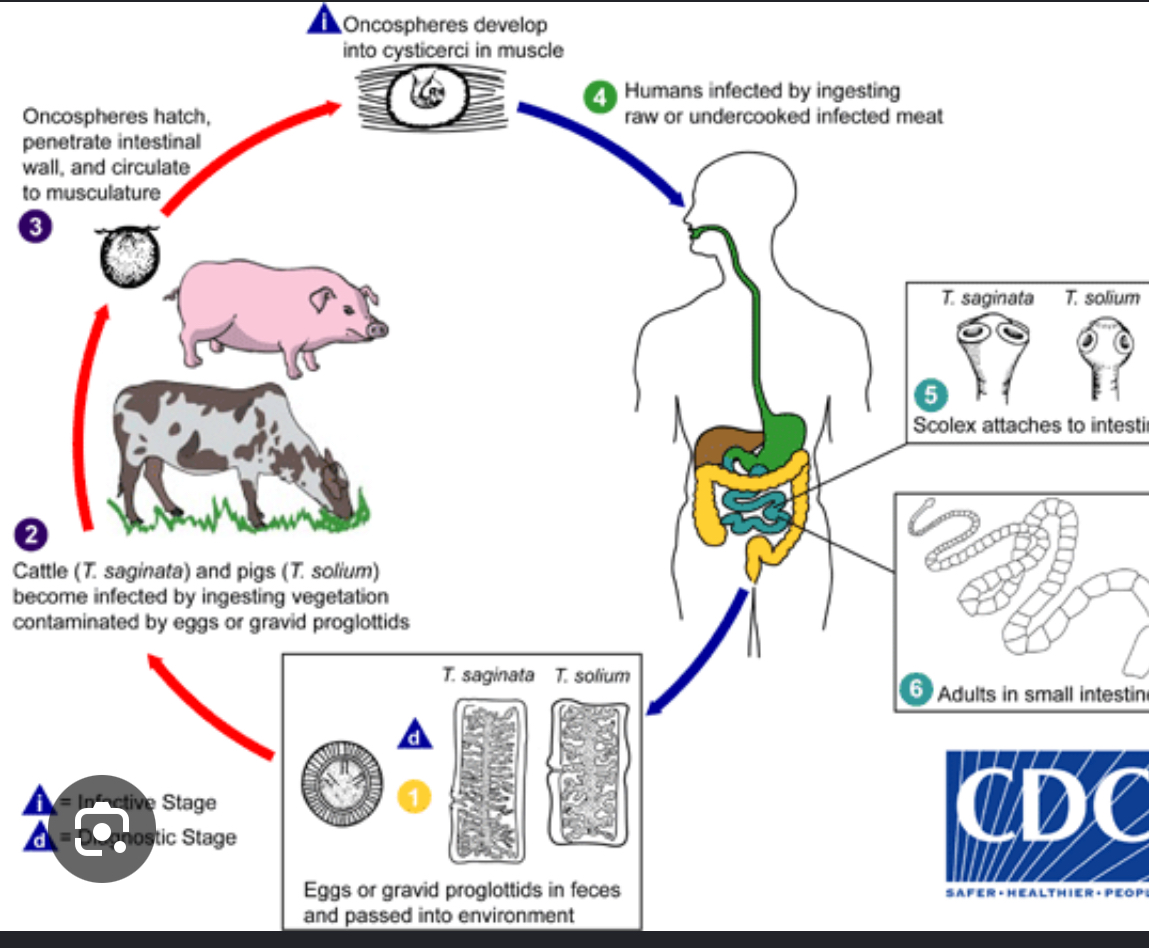
This cestode has the
Intermediate host: Cattle
Found in the striated muscle tissues of cattle, primarily the heart, masseter muscles (jaw), diaphragm, and tongue
Definitive host: Humans
Taenia saginata
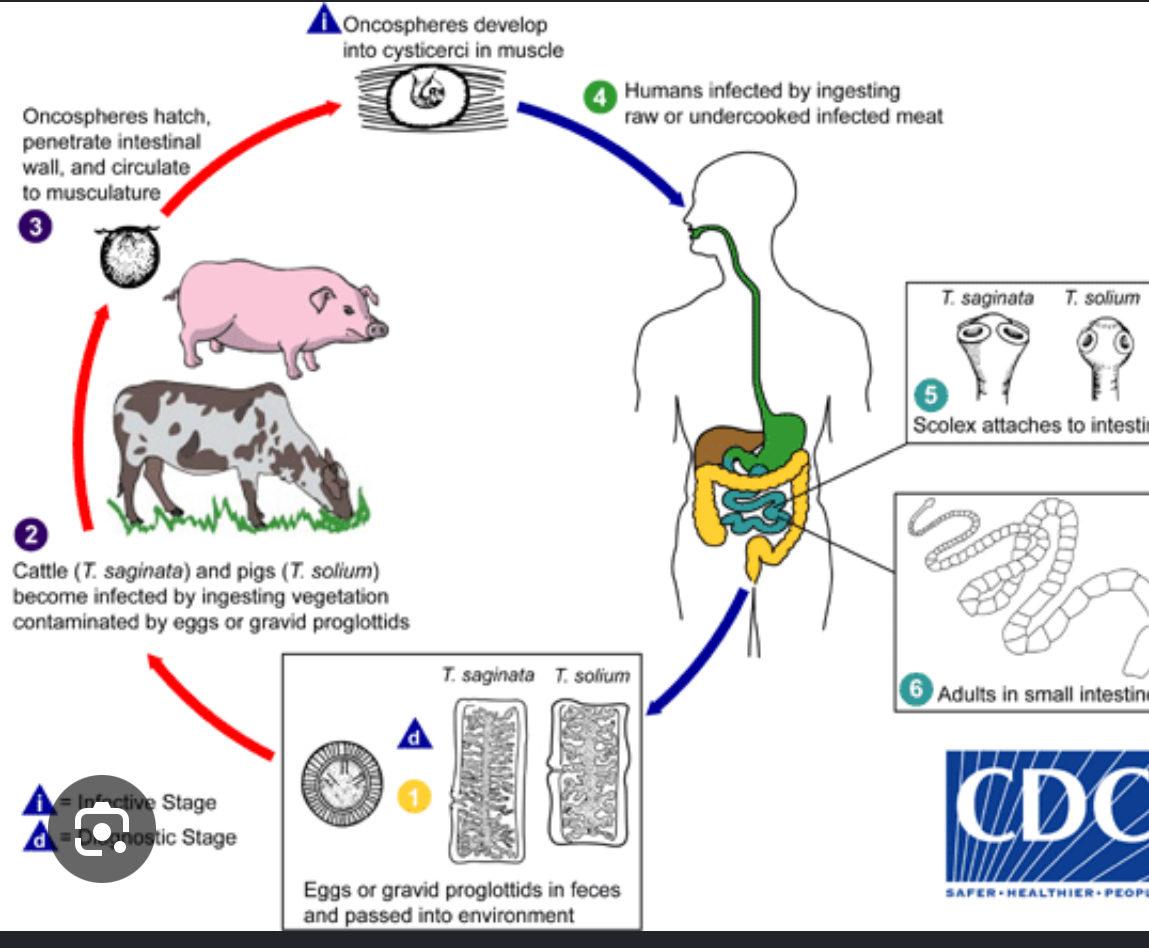
This cestode has the
Intermediate host: Sheep
Definitive host: Dogs, Coyotes, Foxes (Wild Canids)
Taenia ovis
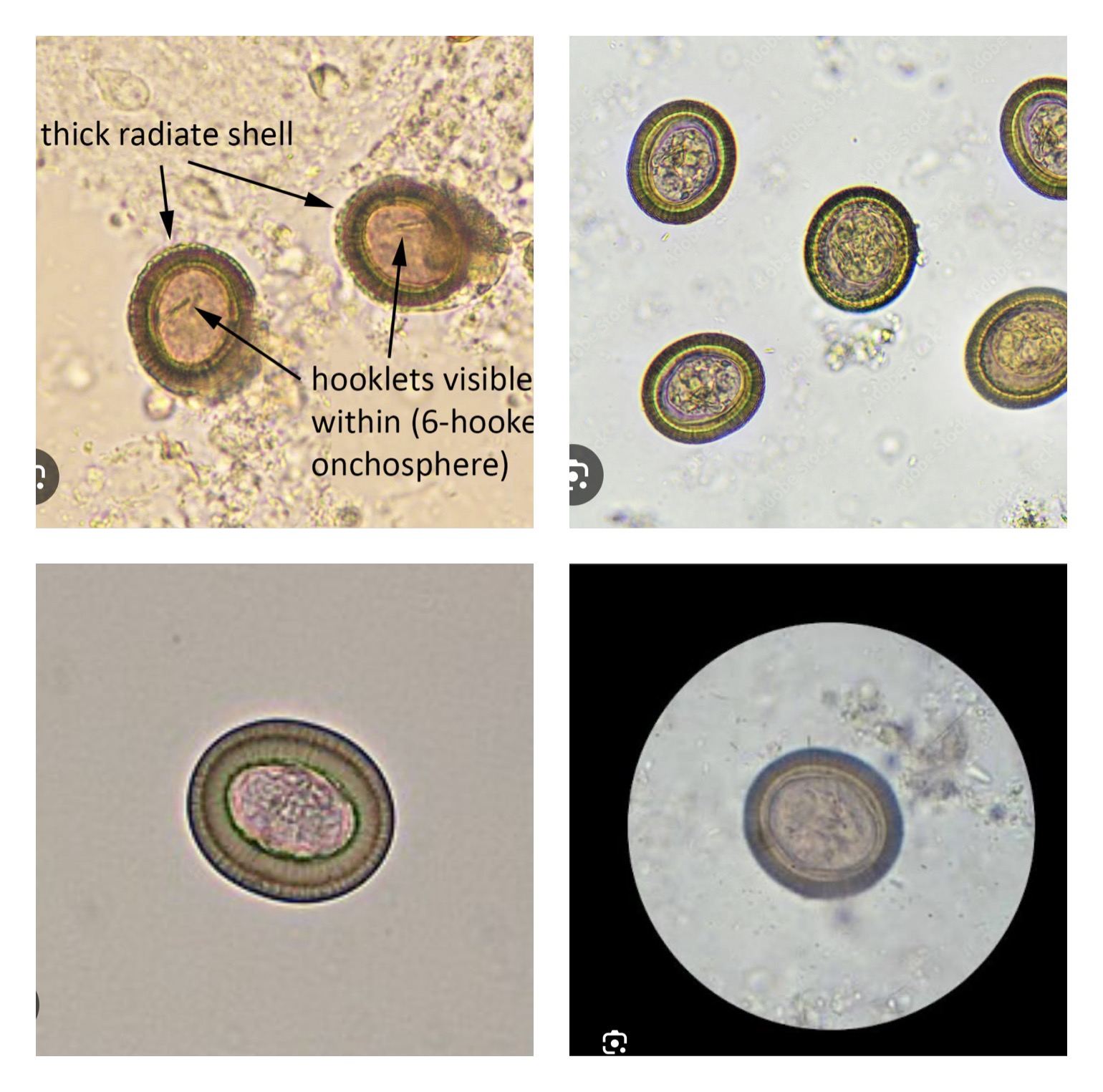
Taenia spp. ova
This cestode is
Intermediate host: Ruminants (harboring the larval stage)
Definitive host: Canids (commonly harboring the adult stage)
Taenia hydatigena

Type of Life Cycle:
Direct or Indirect?
The Taenia pisiformis life cycle
It’s an Indirect Life Cycle
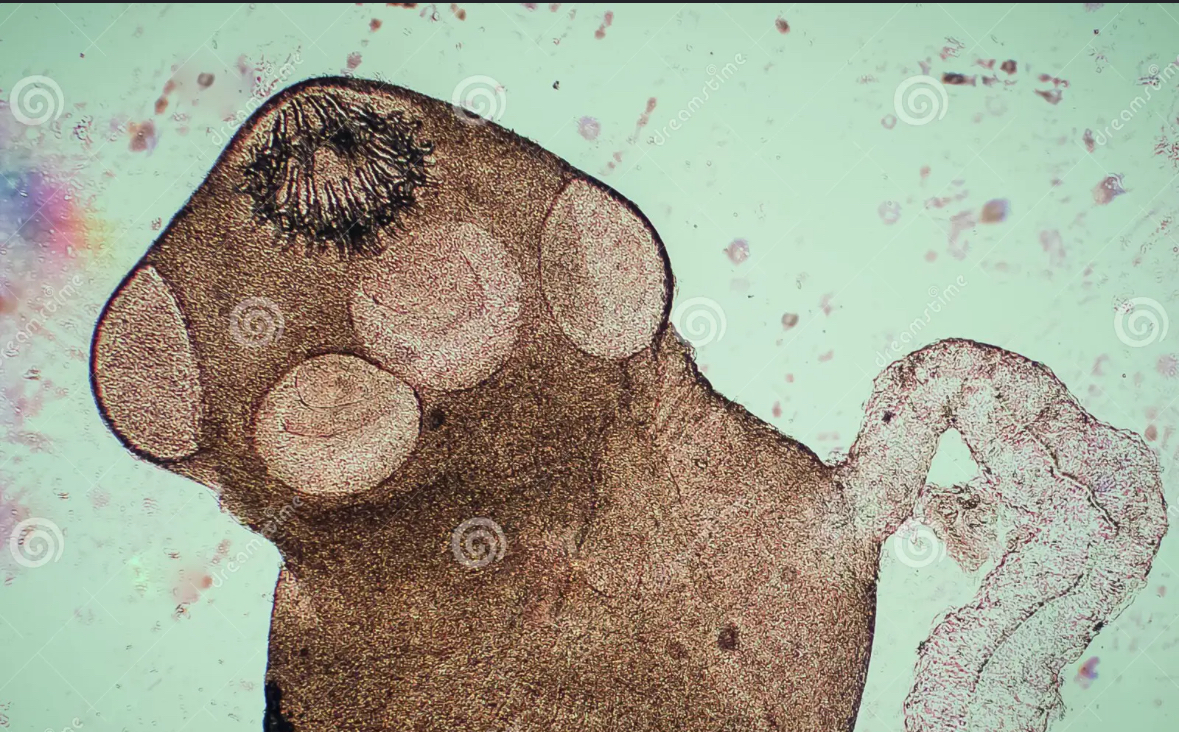
M. multiceps
Adult lives in small intestines of canids
Diagnostics: Eggs in fecal flotation, segments found in feces or perinatal region
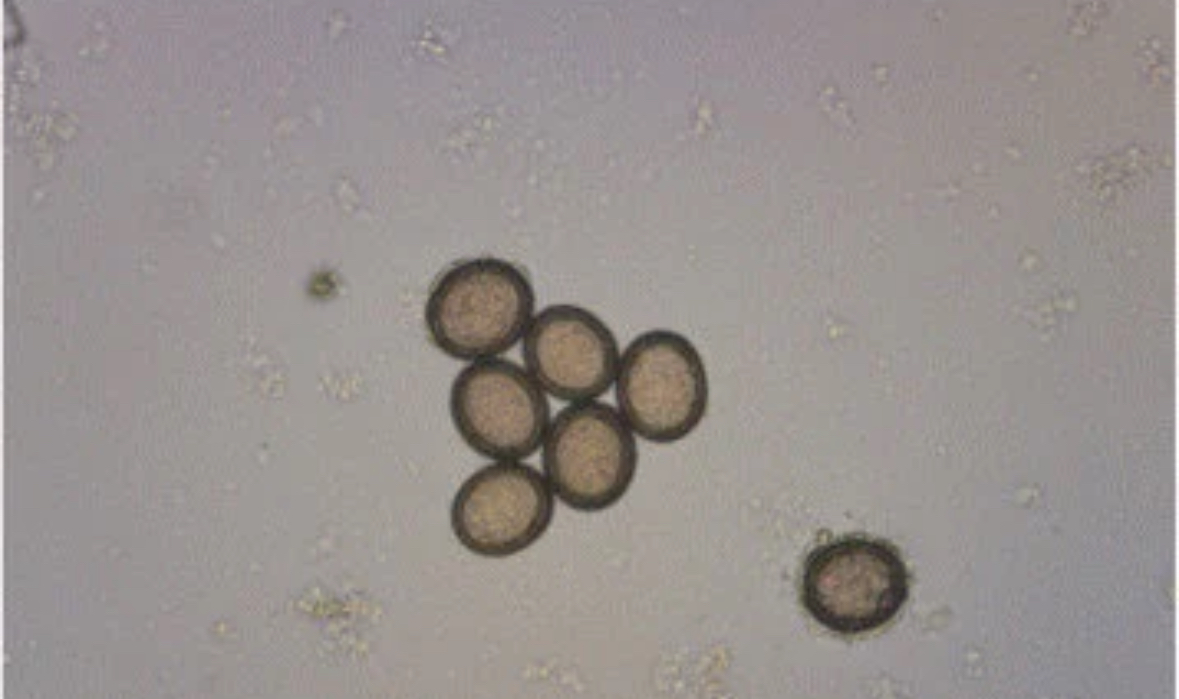
The prepatent period (time between it infects the host and before it can become detected) of Taenia multiceps
7-9 weeks
Coenurus
The larval stage of M. multiceps
The intermediate host of M. multiceps:
Sheep
The intermediate host of M. serialis:
Rabbits
M. multiceps coenurus produces space occupying lesions in the ___
Brain
M. serialis coenurus produces space occupying lesions in ____ of rabbit
Subcutaneous tissues
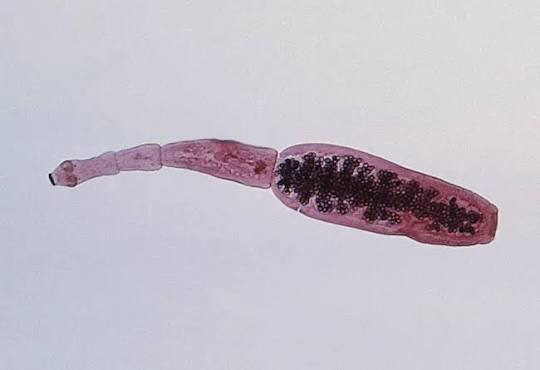
Echinococcus granulosus
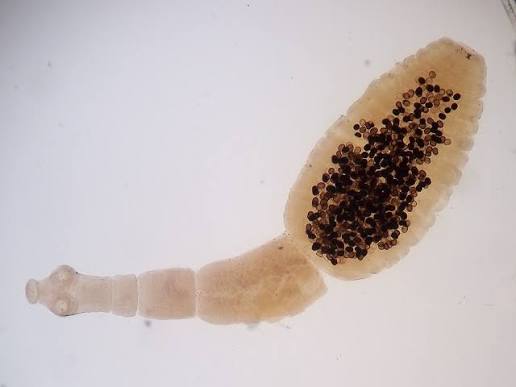
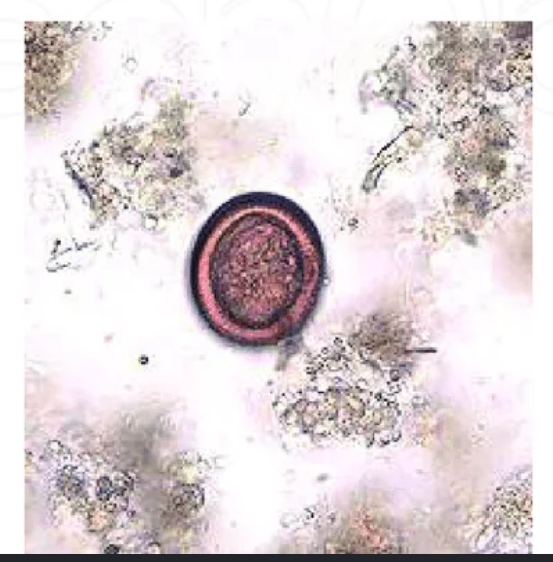
Intermediate host is ruminant
This is _____
Echinococcus granulosus ova
True or False: Echinococcus granulosus is highly zoonotic
True
Echinococcus granulosus is ___
Tapeworm (Cestode)
Does Echinococcus an Indirect or direct life cycle ?
Indirect life cycle
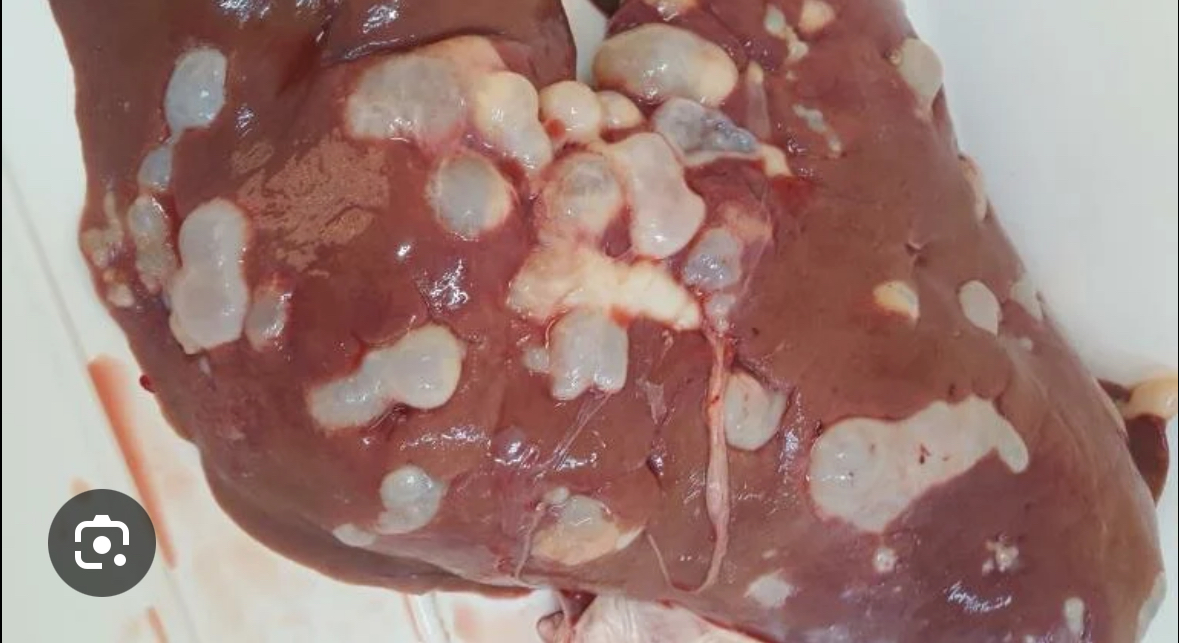
Echinococcus granulosus
The hydatid cyst forms in the intermediate host (ruminants) and it’s Unilocular hydatid cyst form is found in the liver, lung, brain.

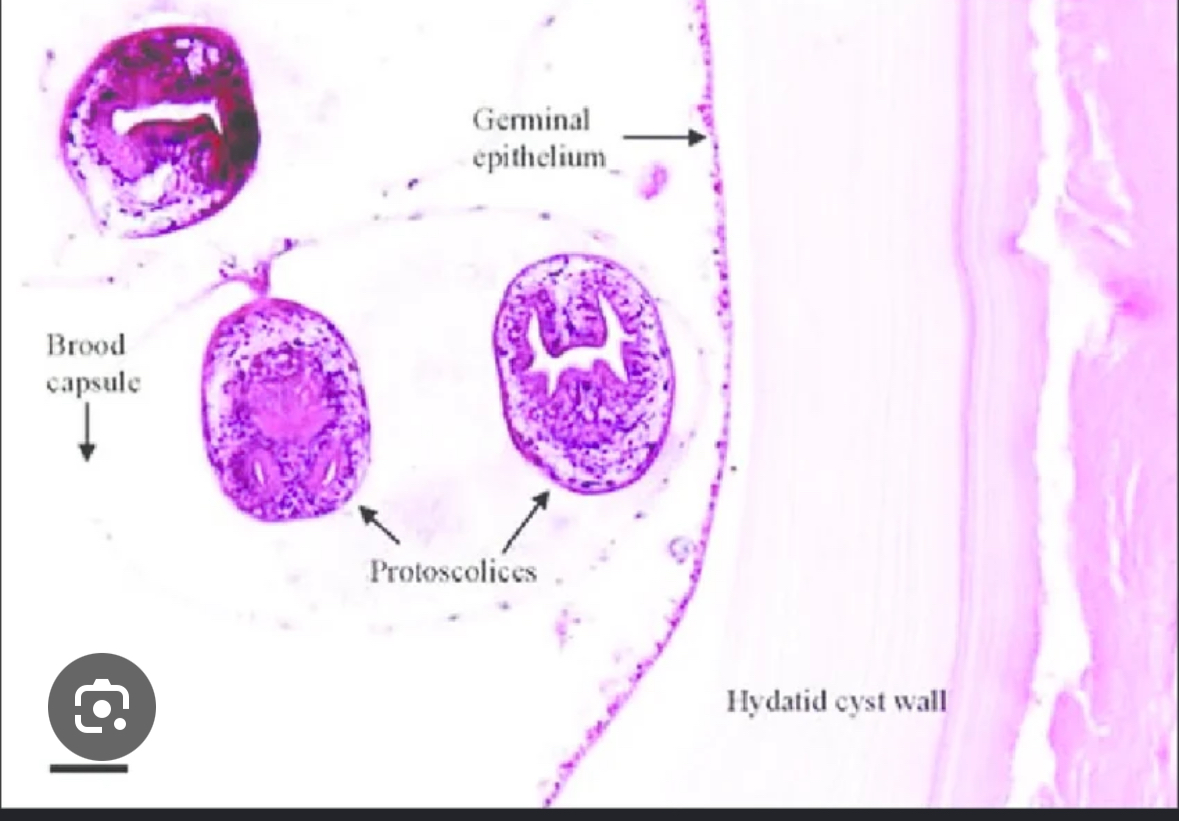
Echinococcus granulosus
Hydatid cyst has thick walk with a germinal membrane inside of it
Brood capsules containing protoscolices bud from germinal membrane
Echinococcus granulosus
In _____ every protoscolex when ingested can develop into an adult tapeworms
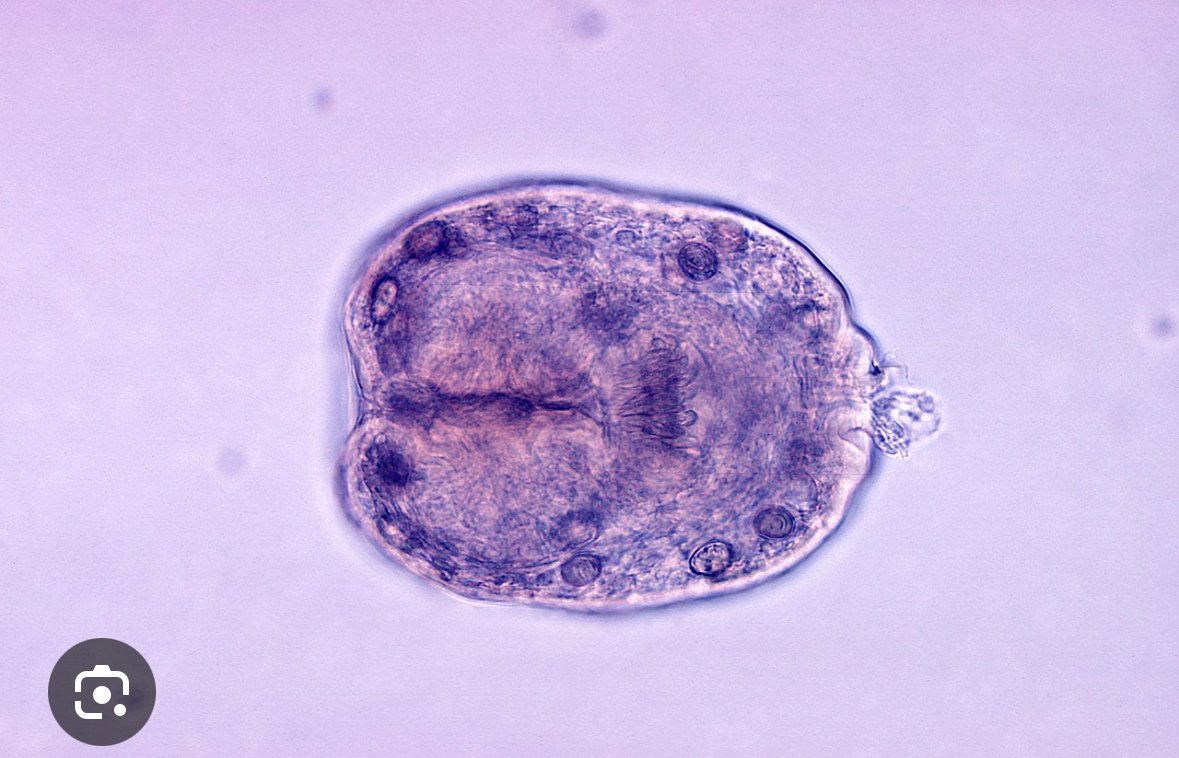
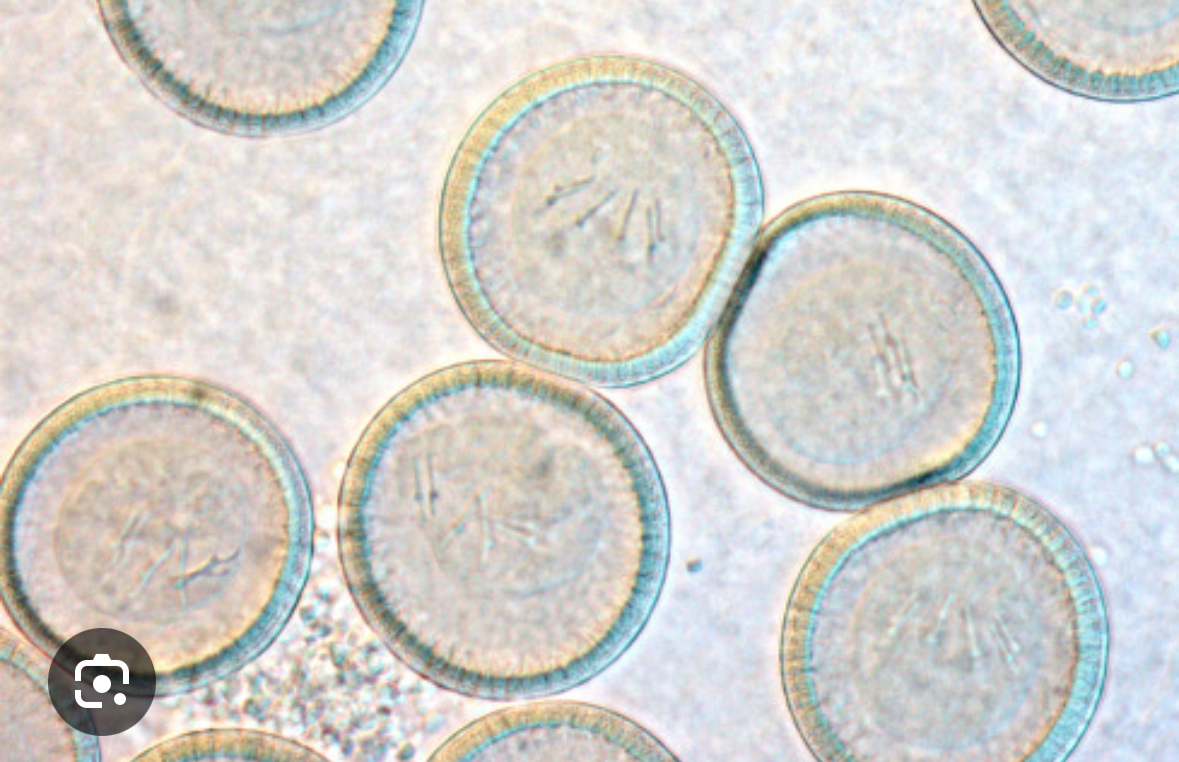
Echinococcus multilocularis
The intermediate host for ______ is the microtine rodent
E. multilocularis
____ lacks the thick cyst wall (key difference)
Looks alveolar or like a bunch of grapes
Very invasive and replaces normal tissues
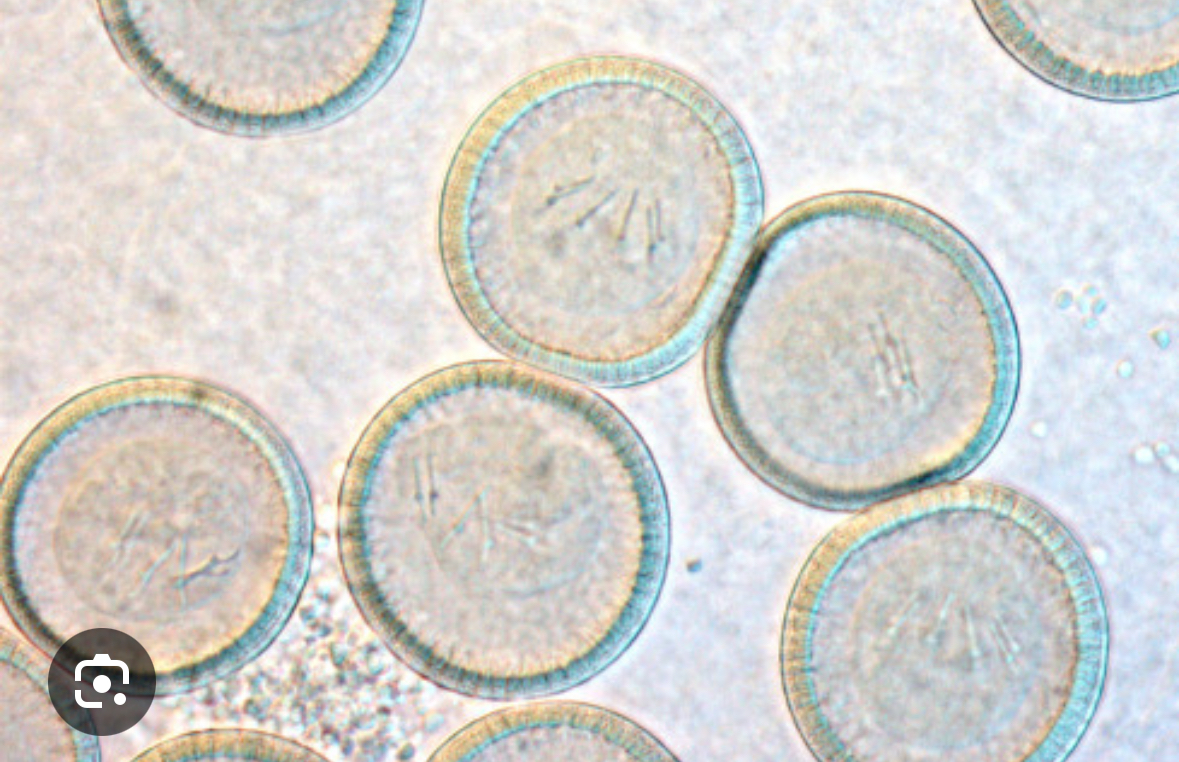
E. multilocularis
This tapeworm comes about via the cat eating rodents with hydatid cyst and each protoscolex develops into the adult tapeworm intestine
Mesocestoides
Found in the small intestine of carnivors
This is the ONLY tapeworm that uses 2 intermediates hosts
1st intermediate host: oribatid mite that ingest the proglottids which will then develop into the cysticercoid
2nd intermediate host: rodents, birds, reptiles, or amphibians that ingest the mite then the cysticercoid inside develops into the Tetrathyridium (larval tapeworm)
Definitive Host: Canids (Dogs, foxes, coyotes)
the tetrathyridial larvae multiply exponentially - huge numbers are of larvae are infective to the dogs and cats which are the definitive hosts.
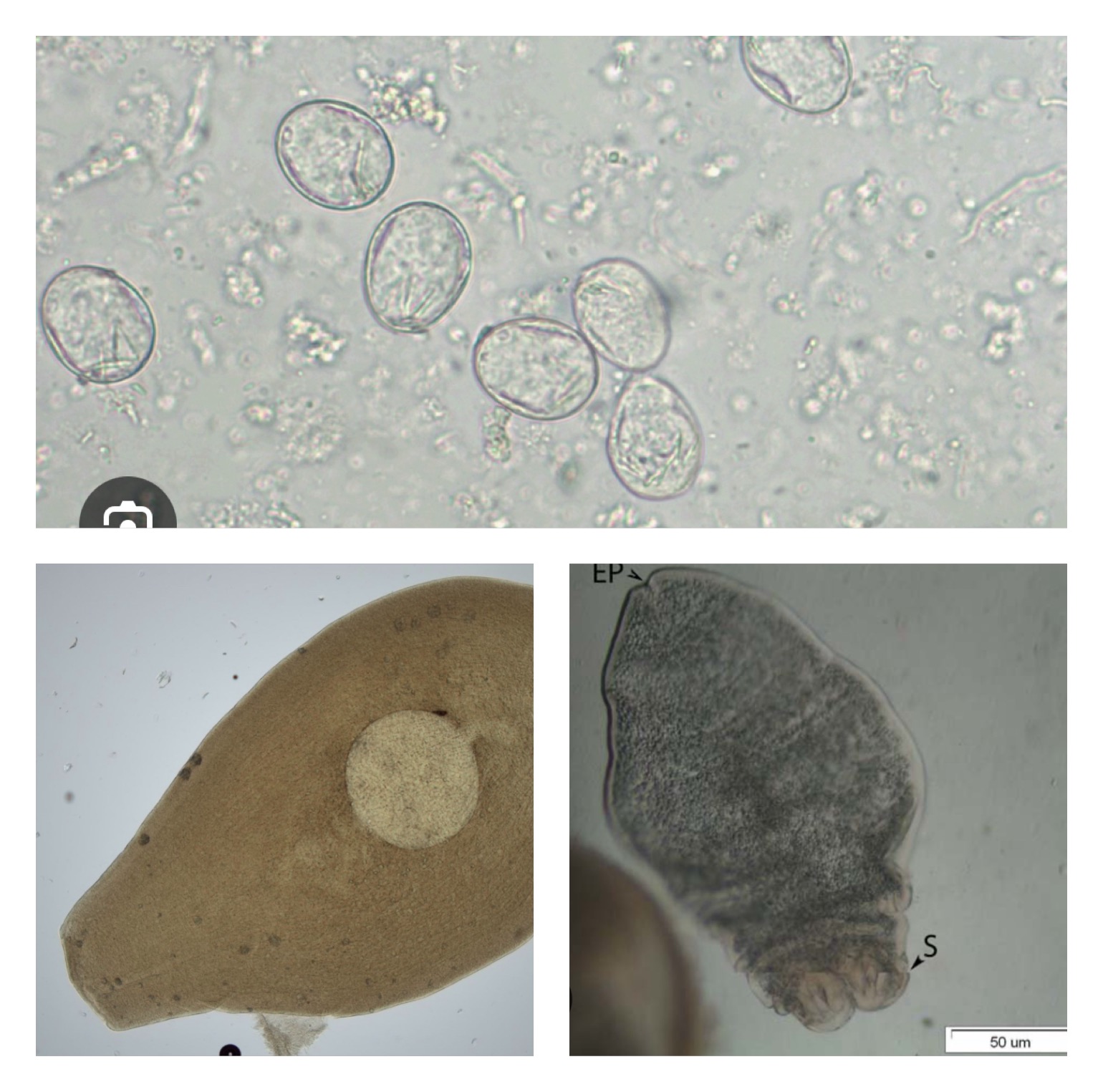
Pseudotapeworms
Spirometra
Diphyllobothrium
Spirometra
First Intermediate Host: Tiny freshwater crustaceans ingest the hatched parasite embryos in the water, which then develop into procercoids.
Second Intermediate Host: Vertebrates such as frogs, snakes, birds, or mammals. When the copepod is eaten, the larvae migrate to the muscles and tissues, developing into a stage called a plerocercoid (sparganum).
Definitive host of this pseudotapeworms is cats, raccoons, dogs and other carnivores.
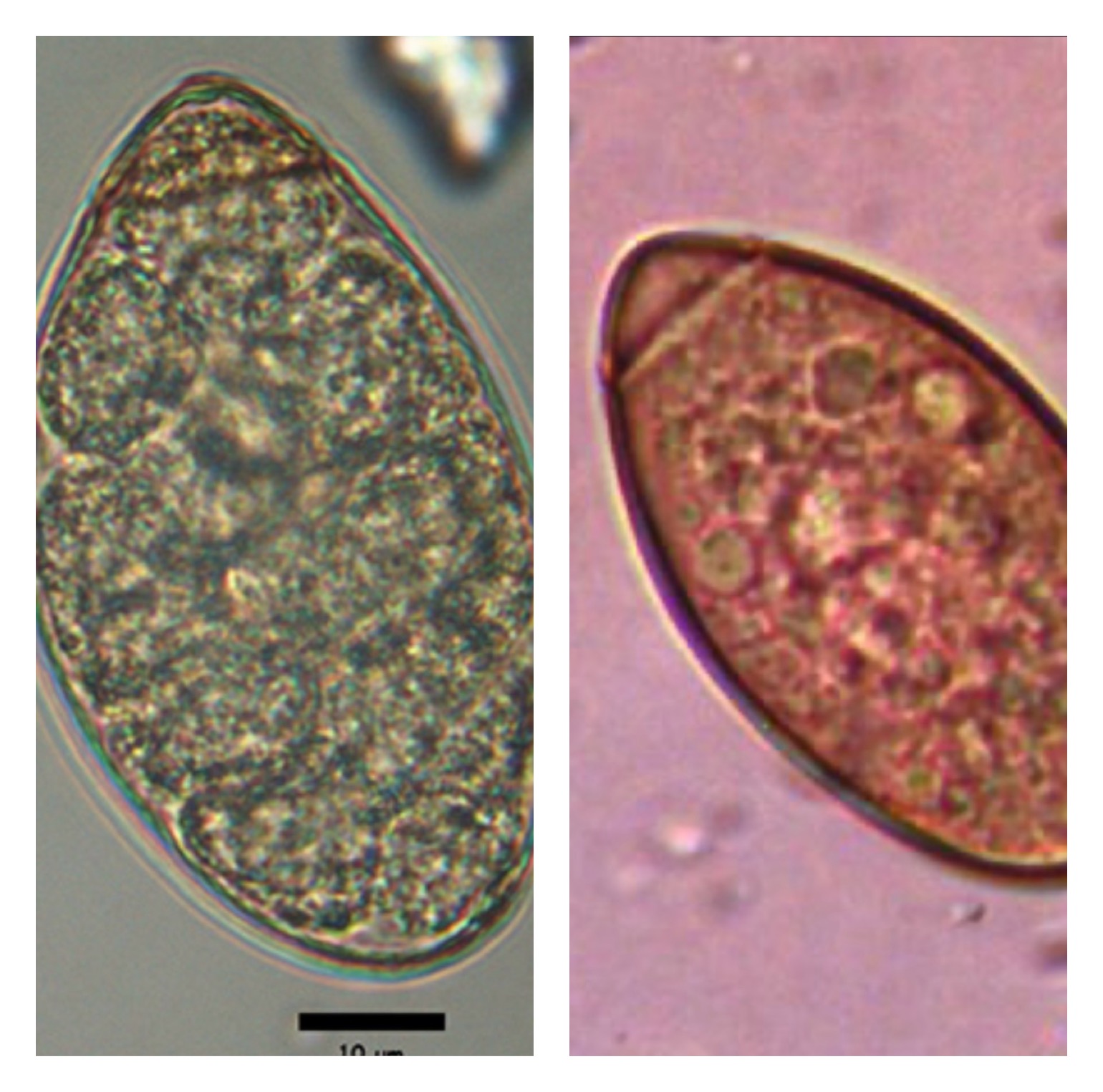
Diphyllobothrium
“Fish tapeworm”
Intermediate host: Fish
Definitive host: Dogs get infected by eating raw fish