ACT math formulas
 Call Kai
 Learn
Learn Practice Test
 Spaced Repetition
 Match
Match Flashcards
 Knowt Play
1/153

There's no tags or description
Looks like no tags are added yet.
Name | Mastery | Learn | Test | Matching | Spaced | Call with Kai | Chat |
|---|
No analytics yet
Send a link to your students to track their progress
154 Terms
to calculate a percentage increase in a product price from a to b
b-a/100 × 100 = c %
standard form of linear equation (slope intercept form)
y = mx + b
what does the y, m, x, and b stand for?
y= dependent variable (output), m= slope, x= independent variable (input), and b= y-intercept (crossing point)
the graph of a quadratic function is a parabola. if the parabola opens upward it is __ ; if it opens downward it is __
positive; negative
in order to find the vertex, you have to find the AOS first. what is the AOS formula?
-b/2a
what does the AOS give you?
the x of the vertex (x,y)
in order to find y in the vertex, you would have to
plug in the x value into the equation
what is an integer?
whole, positive, and negative numbers + 0
even + or - even =
even + or - odd =
even x any integer =
odd x odd =
even x even =
even x odd =
even
odd
even
odd
even
odd
area of a triangle
½ b x h
what does the b and h stand for? what units would the answer be?
b= base length; h= perpendicular height from the base. #cm²
For right angled triangles, use the
Pythagorean theorem (a² + b² = c²)
the sum of interior angles in any triangle is
180
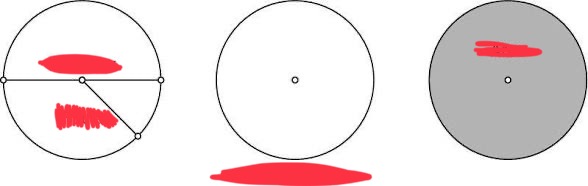
Name the 1st, 2nd, 3rd, and 4th and describe them
diameter= twice the radius
Radius= distance from the center to any point of circumference
Circumference= total distance around the circle
Area of a circle
pie r²
circumference of a circle
2 pie r or pie d
area of a rectangle
l x w
area of a square
s² (the s is one side of the square cuz they all the same)
Volume of a cube
s³
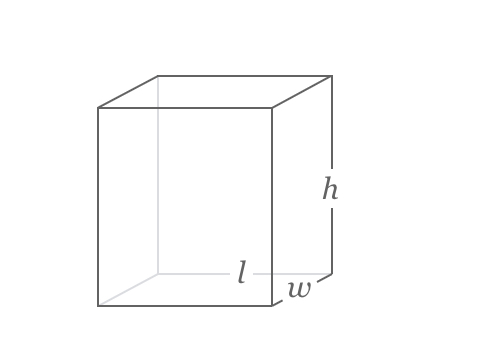
Volume of a rectangular prism
l x w x h
Volume of a cylinder
pie r² h (r is the radius of the base)
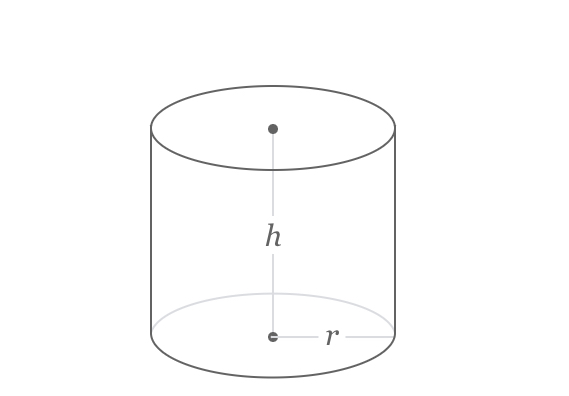
what are the units for the volume of a cylinder
#cm³
How do you get the mean
add all the values then divide by the number of values
how do you get the median
Arrange numbers from lowest to highest
for ODD numbers, the median is the middle
For EVEN numbers, add the 2 closest to the middle and then divide by 2
⭐️ the median is less affected by the extreme values
what is mode
The most frequent number in the data set
What is straight probability
number of favorable outcome / total number of possibilities
What is the formula for either/or probability
(Outcome A/total number of outcomes) + (outcome B/total number of outcomes)
⭐️called “non-overlapping” probability where it is impossible for 2 or more events to both happen at the same time.
⭐️sum will be the probability of either event happening
if the 2 (or more) events have the same total numerical of outcomes, just add them both over the total number of outcomes
what is combined probability
(outcome A/total number of outcomes) x (outcome B/total number of outcomes)
⭐️combined probability questions will ultimately have a lower probability then just one (or either) event occurring
questions will most likely look like, “what are the odds of 2 or more events both/all happening?”
What are simple probability questions like?
they are word problems where you are told a story and asked to find the probability of one or more events
could be straight, either/or, or a combined probability question
Quadratic formula
-b + or - the square root of (b)² - 4ac all over 2a
can only solve quadratic equations
the quadratic formula is most helpful when:
factoring doesn’t work
To find the number of solutions for an equation without solving it, use:
the discriminant (b² - 4ac)
the discriminant tells you whether your solutions are real + distinct, real + equal, or complex
if the discriminant is >, < and = 0, the solutions are
2 real and distinct solutions (crosses the x-axis twice)
positive values
2 complex (imaginary) solutions (never crosses the x-axis)
negative values
1 real and equal (repeated) solutions (touches the x-axis once)
zero values
the slope of a line is
y2 - y1 over x2 - x1
tells you how steep a line is
⭐️positive slopes: go upward from L to R
⭐️negative slopes: go downward
point-slope form
y-y1 = m(x-x1)
helpful for writing or identifying line equations quickly without converting to slope intercept form
Distance formula
The square root of (x2-x1)² + (y2-y1)²
useful for problems that ask you to find the length of a segment or the side of a triangle in a coordinate plane
perimeter of a rectangle
2(l+w)
this formula and the area of a rectangle, area and circumference of a circle, and the area of a triangle are all crucial for solving problems involving circles, particularly in plane geometry
Pythagorean theorem
a² + b² = c²
only applies to right triangles where c is the hypotenuse
Midpoint formula
(x1 + x2 over 2 , y1 + y2 over 2)
useful for finding the center point between 2 coordinates. This can show up in symmetry or shape-division problems.
Here is an example of a function notation question
if f(x) = 2x + 3, then find f(4)
plug in 4 as x
the equation for a line and parabola is?
y=mx+b
y=ax² + bx + c
to find where a line and parabola intersect:
Set equations = to each other
Rearrange into a quadratic equation
Solve for x, whether that is factoring or quadratic formula
Plug x into the equation to find y
prime number
a whole number greater than 1 that has only 2 factors: 1 and itself
composite number
a whole number that is greater than 1 and has more than 2 factors
2 is the smallest prime number
2 is the only even prime number
1 is not a prime number
Ex. 2, 3, 5, 7, 11, 13, 17, 19, 23, and 29
Even numbers
integers that are exactly divisible by 2
zero is an even number since 0/2=0
There are also negative even numbers
Ex. -4, -2, 0, 2, and 4
odd numbers
integers that are not divisible by 2
There are negative odd numbers
Ex. -5, -3, -1, 1, 3, and 5
Parallel lines have the __ slopes ; perpendicular lines have a __ __ slope
Same ; negative reciprocal
expanded notation form is
writing out what each digit in the number represents
Ex. (5×100) + (9×10) + (3×1) = 593
the 1st arithmetic series sum formula is
Sn = n/2 (a1 + an)
Sn - the total number of terms added together
n - number of terms
a1 - 1st term of sequence
an - last term of sequence
d - common difference between the terms
⭐️ use this formula when you know the 1st and last term
The common difference formula is
a(n) - a(n-1)
Fundamental counting principle
method to determine the total number of possible outcomes, w/o having to list them out .
multiply the # of choices for each event together
right triangles have _____ angle
one 90 degree
equilateral triangles
every side and angle is congruent
each side is 60 degrees
isosceles triangles
have 2 equal sides and 2 equal angles
scalene triangle
have no congruent sides; each side has a different length
acute triangle
has 3 acute angles
acute = less than 90 degrees
obtuse triangle
has an obtuse angle
obtuse = more than 90 degrees
reflection across y-axis flips the __ coordinate
x
Ex. (-2,3) —>
reflection across x-axis flips the __ coordinate
y
Ex. (6,7) —> (6,-7)
what is the perimeter of a rectangle
2L + 2W
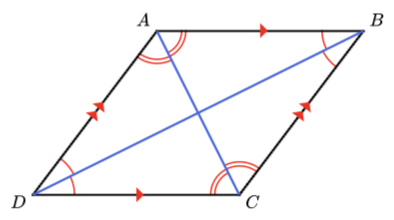
what’s the area of a rhombus
what’s the perimeter
½ x diagonal 1 x diagonal 2
4s
r
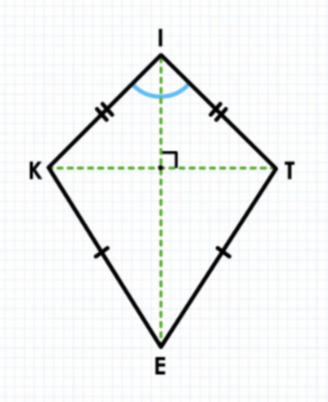
what’s the area and perimeter of a kite
½ x diagonal 1 x diagonal 2
add all the sides
what’s the area of a parallelogram
bh
consecutive angles add up to
180
complementary angles are
90
supplementary angles are
180
what is the area of a trapezoid
½ (base 1 + base 2) h
isosceles triangles have
2 congruent sides and the (bottom) base angles are congruent
for parallelograms, opposite sides are ___ and ___
opposite angles are ___
parallel and congruent
congruent
when diagonals bisect each other, what are they doing
splitting the angles in half
the diagonals of a rectangle are
congruent
for trapezoids, the bases are ___
upper base angles are ___
lower base angles are ___
diagonals are ___
and all 4 angles must = __
parallel
congruent
congruent
congruent
360
also, the slants on the side are congruent
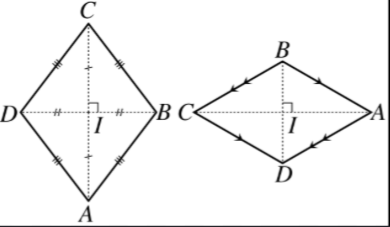
what is the area and perimeter of a rhombus
½ x diagonal 1 x diagonal 2
4 s
to calculate the height of a triangle, use heron’s formula
the formula is
s = a + b + c over 2
to calculate the area in order to find the height of a triangle (since the area of a triangle is A= 1/2 b h) the formula is
the square root of s(s-a)(s-b)(s-c)
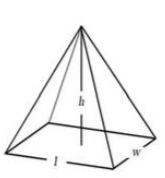
the volume of a pyramid
1/3 x B x H
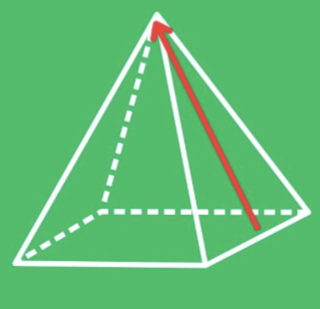
to find the slant height, what could you do?
use the pythagorean theorum
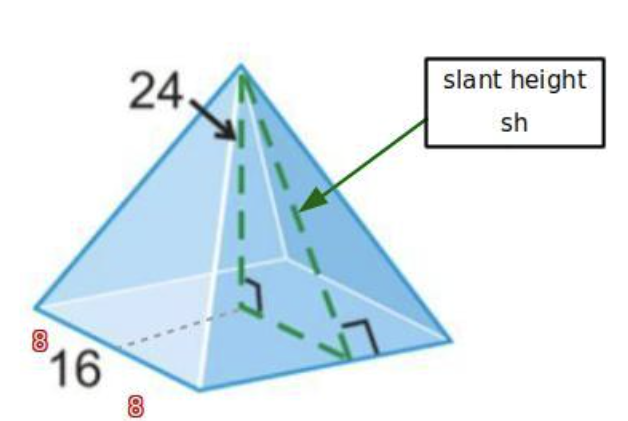
the surface area of a pyramid is
area of base + ½ P (perimeter) x s (slant)
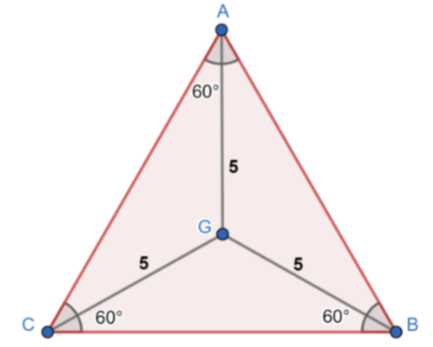
for an equilateral triangle, the surface area is
square root of 3 over 4 x b2 + 3(1/2 (b) (L))
if you have the height of the base (in an equilateral triangle), then use this for the area of the base
B = ½ bh
SA = (1/2 b h) + 3 (1/2 b L)
the volume of a cylinder is
pie r2 h
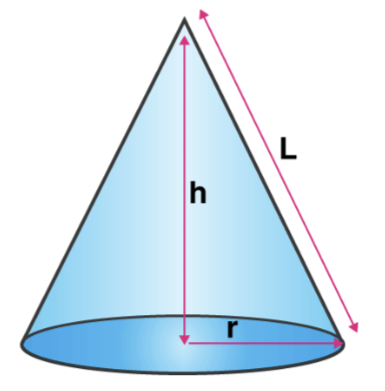
the volume of a cone
1/3 pie r2 h
to find the arc length in a circle, use this formula
angle/360 = arc length/2 pie r
to find the sector area, use this formula
angle/360 = sector area/pie r2
for degrees of a polygon, the sum of int. angles is
(n-2)180
for the degrees of a polygon, the measure of each angle is
(n-2)180 / n
for the diagonals of a polygon, the number of diagonals is
(n-3)n/2
use this instead of counting the diagonals
the form of ellipses is
(x-h)2/a2 + (y-k)2/b2
if the ellipse is more horizontal, that means that the a2 is bigger
if the ellipse is more vertical, that means that the b2 is bigger
you can find out the radius of the ellipse by square rooting a or b
hyperbola form is
(x-h)2/a2 - (y-k)2/b2
a = length of hyperbola if it is more horizontal
b = length of hyperbola if it is more vertical
even functions remain unchanged when flipped over the __-axis
___ = f(x)
y
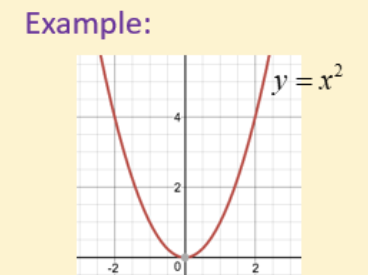
odd functions ___ when reflected over the y-axis
the f(x) function looks like
change
f(x) = f(-x)
y= x2 + 1 means
y= x2 - 1 means
y= (x+1)2 means
y= (x-1)2 means
f(-x) means
-f(x) means
up one (vertical)
down one (vertical)
left one (horizontal)
right one (horizontal)
over y-axis (reflection)
over x-axis (reflection)
3,_,5
_,8,10
_,12,13
7,24,_
8,_,17
_,40,_
_,60,61
4
6
5
25
15
9 and 41
11
reflect across y= f(x) →
reflect across x= f(x) →
reflect across origin= f(x) →
f(-x)
-f(x)
-f(-x)
when you have point b and the midpoint, how would you find point a?
now, what about to find point b?
multiply the midpoint by 2 and subtract b
divide the a by 2 and subtract the midpoint
what is logarithmic form?
logbX = y
what is exponential form?
by = x
what is the change of base formula?
logbX = logcX / logcb
default base is 10, so c = 10
sin2x + __ = _
cos2x
1
1 + __ = __
tan2x
sec2x