Aquatic Biomes: Physical Properties, Zones, and Adaptations
 Call Kai
 Learn
Learn Practice Test
 Spaced Repetition
 Match
Match Flashcards
 Knowt Play
1/25

There's no tags or description
Looks like no tags are added yet.
Name | Mastery | Learn | Test | Matching | Spaced | Call with Kai | Chat |
|---|
No analytics yet
Send a link to your students to track their progress
26 Terms
What are the major physical properties that differentiate air from water?
Viscosity, density, translucency, ability to conduct heat, salinity, water pressure, water currents, and velocity.
What are some major limiting resources in aquatic biomes?
Oxygen (O2) availability and nutrient availability (C, N, P, etc.).
What factors affect oxygen availability in aquatic biomes?
Temperature, sunlight, water movement, salinity, and organisms present in the system.
What is a thermocline?
A layer of water through which temperature changes rapidly.
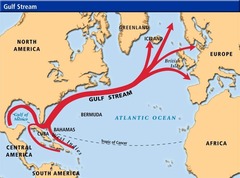
Why is the Atlantic coast warm?
The Gulf Stream transports tropical water from the Gulf of Mexico, raising temperatures to around 80 °F.
What is thermohaline circulation?
A process where freshwater freezes and salt sinks, creating pressure gradients that lead to upwellings.

What are upwellings?
Processes that bring deep nutrients to the surface of the ocean.

Why is the California coast cold?
Coastal upwellings force cold water from the deep, and the California current transports chilly water from Alaska.

What percentage of Earth's surface do oceans cover?
Approximately 70%.

What are the three major ocean basins?
Pacific Ocean, Atlantic Ocean, and Indian Ocean.
How many phyla are marine, and how many are endemic?
28 marine phyla, of which 13 are endemic.
What are the two major categories of aquatic biomes?
Saltwater and freshwater.
What are benthic habitats?
Habitats located at the bottom of the ocean.
What are pelagic habitats?
Habitats located in the water column above the benthic zone.
What is coral bleaching?
A phenomenon where corals lose their symbiotic algae due to stress, often caused by temperatures above ~29 °C.
What are the three types of coral reefs?
Fringing reefs, barrier reefs, and atolls.
What are the characteristics of freshwater wetlands?
Areas saturated with water for part of the year, including swamps, marshes, bogs, and vernal pools.
What are lotic systems?
Aquatic systems characterized by flowing water, such as rivers and streams.
What are lentic systems?
Aquatic systems characterized by standing water, such as lakes and ponds.
What is thermal stratification?
The layering of water in lakes based on temperature, typically involving epilimnion, metalimnion, and hypolimnion.

What is eutrophication?
The process by which water bodies become enriched with nutrients, leading to excessive growth of algae.

What is the significance of kelp forests and coral reefs?
They are among the most productive and diverse ecological systems, supporting a large percentage of marine life.
What adaptations do deep-sea organisms have for high pressure?
Lack of gas-filled cavities, flexible bodies, slow metabolism, and special compounds to protect proteins.
What is chemosynthesis?
A process that replaces photosynthesis in deep-sea environments, utilizing hydrogen sulfide and dissolved CO2 to create sugars.
What is the Marianas Trench?
The deepest point in the ocean, measuring 35,876 feet (10,935 meters).
What role do estuaries play in aquatic ecosystems?
They serve as transitional environments between freshwater and saltwater, supporting diverse biological communities.