The multi store model of memory
 Studied by 0 people
 Call Kai
 Learn
Learn Practice Test
 Spaced Repetition
 Match
Match Flashcards
 Knowt Play
1/15

There's no tags or description
Looks like no tags are added yet.
Name | Mastery | Learn | Test | Matching | Spaced |
|---|
No study sessions yet.
16 Terms
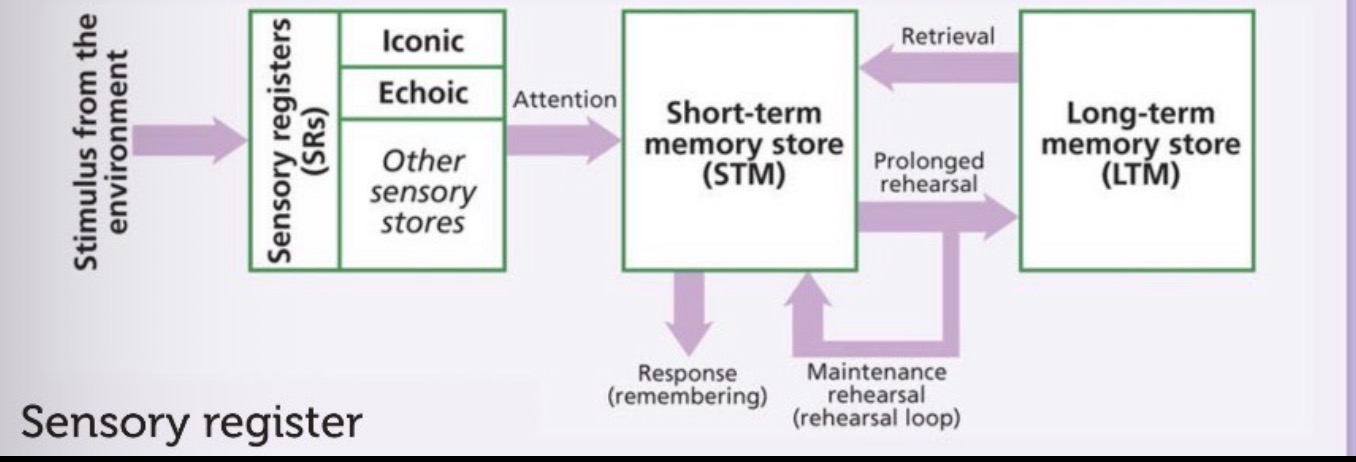
The multi-store model (MSM)
A representation of how memory works in terms of three stores
1. Sensory register
2. Short term memory
3. Long term memory
• describes how information is transferred from one store to another, what makes some memories last or disappear
Sensory register
The memory stores for each of our 5 senses
Iconic store
Vision store
visual
Echoic store
hearing
Acoustics (sounds)
Capacity of sensory registers
Huge
Information lasts for short time for iconic memory = 0.05 seconds
But longer for echoic memory = 3 seconds
2 psychologists came up with the multi store model
Richard Atkinson and Richard shiffrins
What does the Multi store model describe
How information flows the the memory
Strength of the multi store model
Supports research using modern techniques that still shows STM and LTM are separate stores
Limitation/ counterpoint to multi-store model
Ranganath and Blumenfeld argue this may be an oversimplified view.
• they point out that there is a significant overlap and interaction between the brain regions that the support the STM and LTM = hippocampus involved in STM tasks
• suggests that evidence for a clear cut separation is not as strong as assumed
What kind of store is short term memory
Acoustic
temporary store
Maintenance rehearsal
Happens when we repeat material to ourselves over and over again, we keep the information in our STM as long as we rehearse it
if we rehearse it long enough it passes into LTM
What store is LTM
Coded semantically
potentially permanent
Retrieval
When we want to recall information from LTM, it has to be transferred ack into STM by a process called retrieval
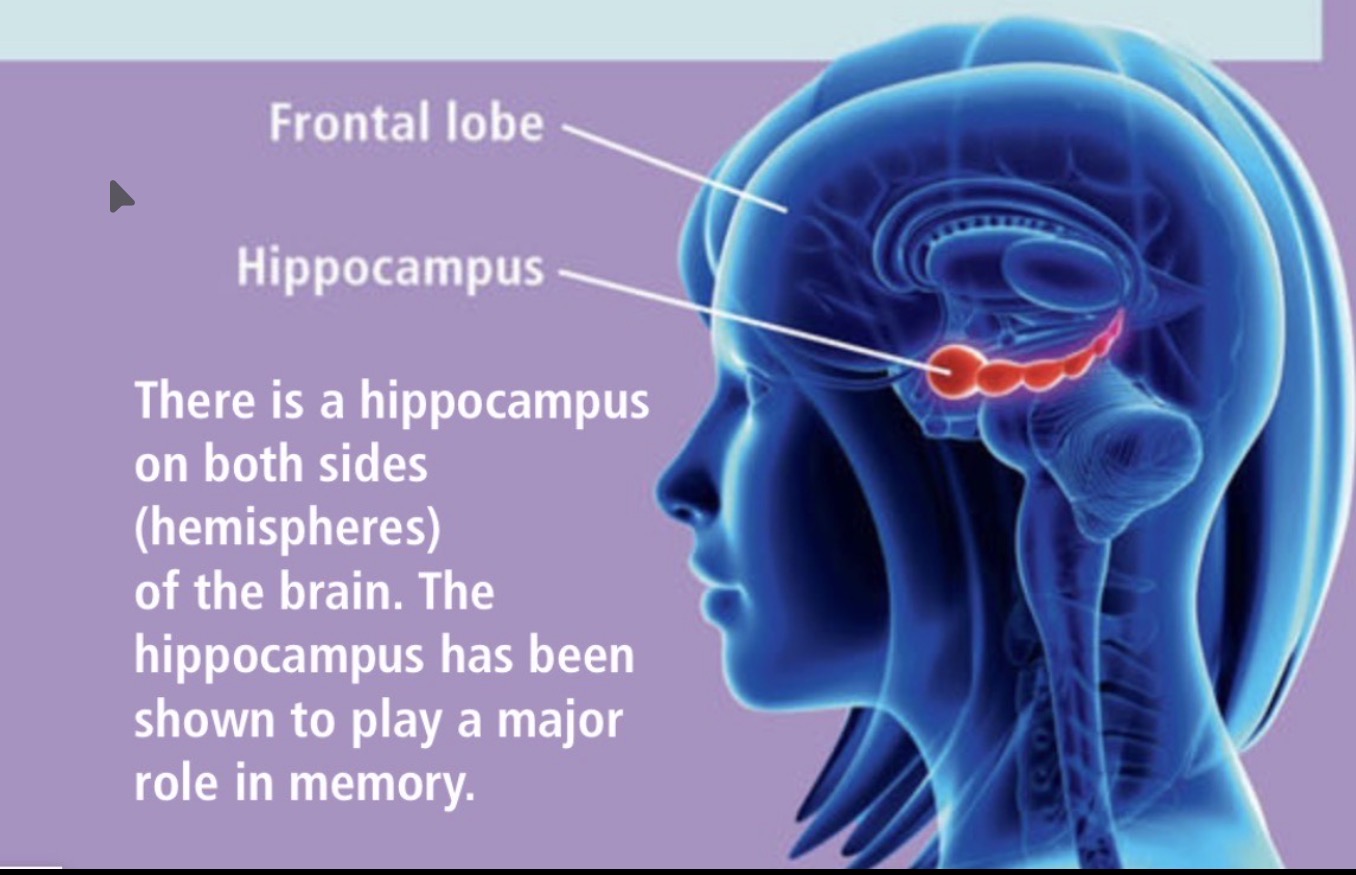
The case of HM (Henry Molaison)
• underwent surgery for epilepsy
• was not successful had to remove both sides of hippocampus, which is central to to memory function
• had very little recall ability but performed well on tests of immediate memory span, a measure of STM
Limitations of MSM
• evidence of more than one STM store.
Shallice and Warrington
• Amnesia patient was very poor at reading digits out loud by when read digits to themselves recall was much better
• suggests that there could be another short term store for non verbal sounds
• MSM is wrong In claiming that there is juts one STM store processing different types of information
Where is the frontal lobe and hippocampus