Immuno Week 11
 Call Kai
 Learn
Learn Practice Test
 Spaced Repetition
 Match
Match Flashcards
 Knowt Play
1/195

There's no tags or description
Looks like no tags are added yet.
Name | Mastery | Learn | Test | Matching | Spaced | Call with Kai | Chat |
|---|
No analytics yet
Send a link to your students to track their progress
196 Terms
Who pioneered the use of the first vaccine, and approximately when
Edward Jenner, approximately 200 years ago
After what was vaccination named, and what is it
Named after Vaccinia, the cowpox virus
What was the first deliberate scientific attempt to prevent an infectious disease
Vaccination (Jenner's smallpox vaccine)
What was the principle behind Jenner's vaccine
Infection with a mild disease (cowpox) might protect against infection with a similar but much more serious one (smallpox)
What did Pasteur use to generate enhanced immunity against the fully virulent organism
Altered preparations of microbes
What did Pasteur investigate in 1879, and how did he attenuate the pathogen
He investigated anthrax in 1879; he heated anthrax bacilli to attenuate them
What was the first vaccine against rabies, and how was it made
First vaccine against rabies – made from dried rabies-infected rabbit spinal cords
What type of vaccine was Pasteur's rabies vaccine
First inactivated vaccine
what did Frank Burnet do
propose Clonal selection theory (1957)
what did Nossal and Miller do
Discovery of T & B cells (1965)
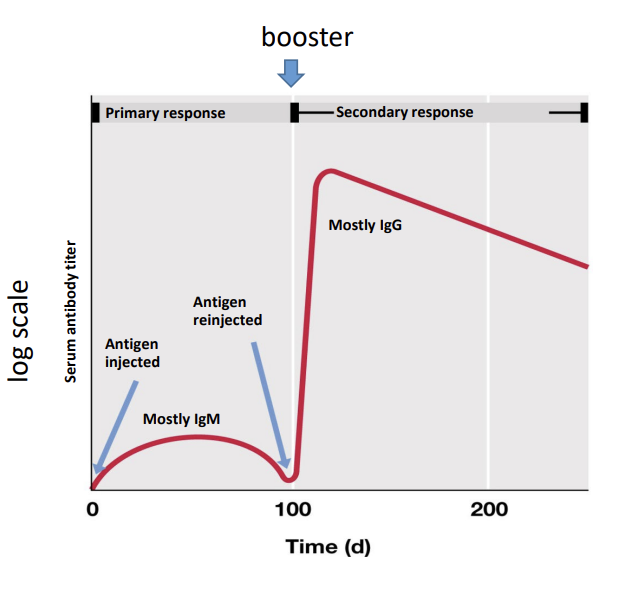
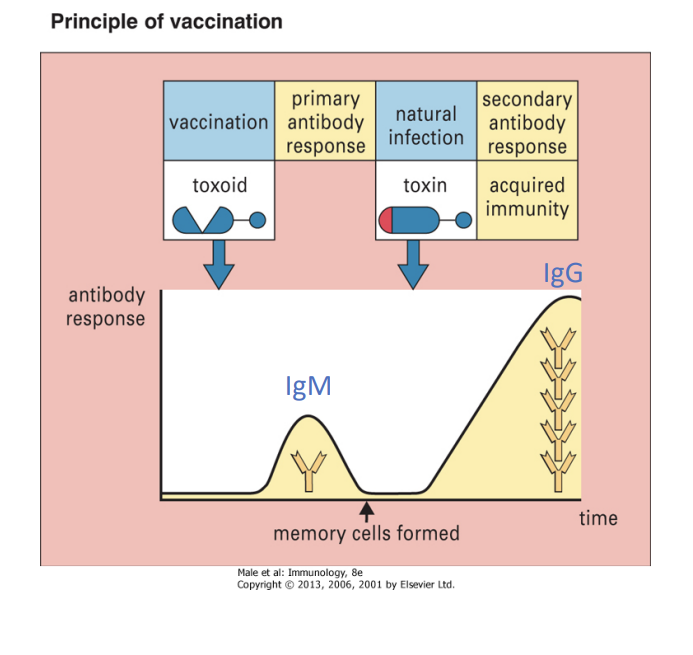
What does antigen induce in specific T/B cells
Clonal expansion, creating memory cells
What happens upon secondary exposure to the same antigen compared to primary response
More rapid and effective response than primary response (class switching)
What happens upon tertiary exposure to the same antigen
Response would be faster, with higher serum antibodies
what has been the result of vaccinations in Aus
very limited number of deaths from diseases which previously had high death rates
What are the two ways protective immunity can be achieved
Active or passive immunisation
How does passive immunisation work
By delivery of preformed antibody
For which conditions is passive immunisation still warranted
For use in patients with immune deficiency
Toxin or venom exposure with immediate threat to life
Useful if pathogens would cause death faster than effective immune response can develop (e.g., rabies)
Pregnant women exposed to viral infection
What hypersensitivity types can passive immunisation lead to
Type I or Type III hypersensitivities
Why can passive immunisation lead to hypersensitivity reactions
Non-specific binding to tissues
What does sufficient immune individuals in a population do
Reduce transmission of infection (herd immunity)
How can a population be immune
Either through vaccination or immunity developed through previous infection
What does the proportion of the population that needs immunity to prevent epidemics depend on
The nature of the infection
What happens if the organism is highly infectious (e.g., measles)
One person can infect several non-immune individuals
What proportion of the population must be immune to maintain herd immunity for a highly infectious organism
high proportion
If the infection is less readily transmitted, what proportion of immunity may be sufficient
Immunity in a lower proportion
what are the 3 principles of effective vaccines
1. Must be safe to administer (minimal/no side effects)
2. Induce the correct type of immunity (neutralising antibodies)
3. Be affordable by the population (E.g., developing countries)
what are some reccomended childhood vaccines
hepatitis B
tetanus
measles
What kind of antigens are better to retain in a vaccine
A diverse range of microbial antigens (usually more are better)
Which tend to be more effective: living or killed organisms, and why
Living organisms tend to be more effective; they also trigger PAMPs expressed on pathogen infected cells
What are 2 exceptions to the "living organisms are more effective" rule
Diseases where a toxin is responsible for the pathology – vaccine can be based on toxin alone
A vaccine in which microbial antigens are inserted into a vector and expressed in a host cell
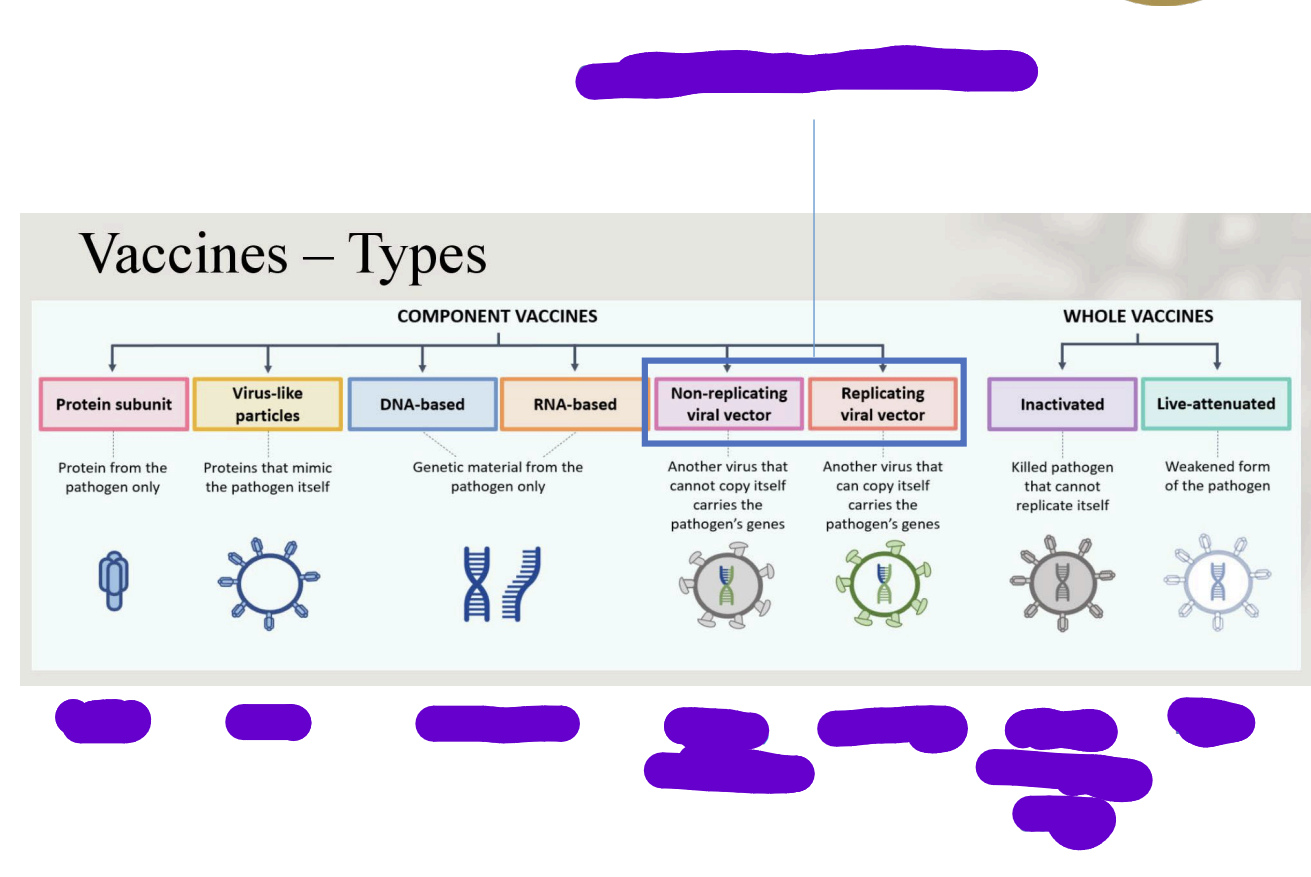
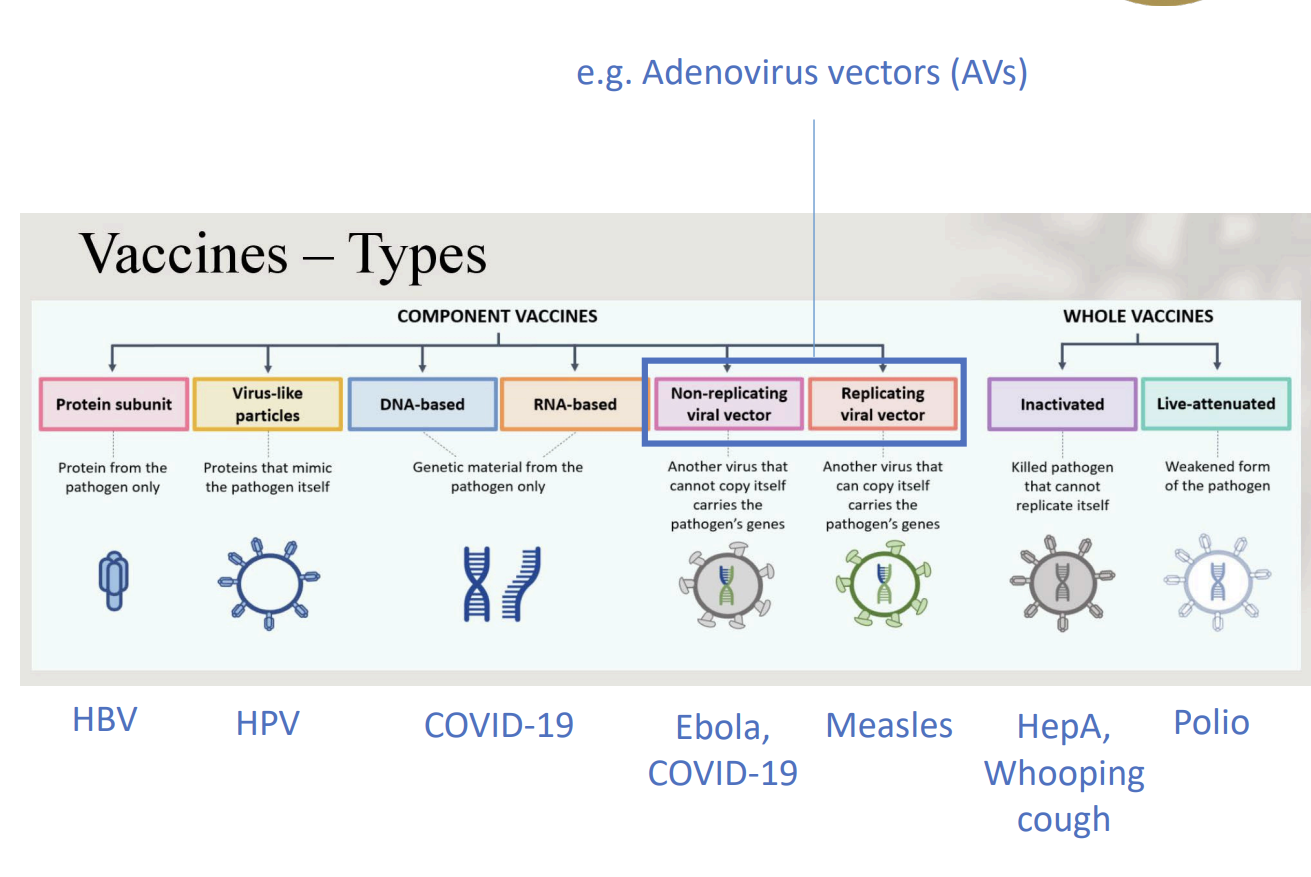
What is the strategy of attenuation in vaccine development
To attenuate a human pathogen, aiming to diminish virulence while retaining desired antigens
What is an example of an attenuated bacterium, and how was it developed
Mycobacterium bovis (BCG vaccine) – during 13 years (1908–1921) of in vitro culture developed much less virulent forms
What is an example of an attenuated virus, and how was it obtained
The 17D strain of yellow fever virus obtained by passage in mice and chicken embryos (1937)
For which other diseases have similar attenuation approaches been used
Polio, measles, mumps, and rubella
What is the difference between natural and attenuated pathogens
Natural strains have potential to cause disease; attenuated strains are usually less virulent
What is a risk associated with attenuated vaccines
Potential to revert to virulent form
What successful vaccines led to a decline in four diseases between 1950 and 1980
Vaccines for polio, measles, mumps, and rubella
What does passaging lead to in microorganisms
Attenuation – changes microorganisms to make them less able to grow and cause disease in their natural host
What is attenuation usually due to
A natural loss of specific virulence genes
What are live, attenuated vaccines made from
Weakened pathogens
What ability do live, attenuated vaccines retain, and what responses do they promote
Retain their ability to replicate, promoting both humoral and cell-mediated responses
Do live, attenuated vaccines often need boosters
Often do NOT need boosters (life-long immunity)
What is a risk of live, attenuated vaccines regarding mutation
May mutate back (revert) to pathogenic form
What is a disadvantage of live, attenuated vaccines
May have more side-effect complications
What storage requirement may live, attenuated vaccines need
May require a "cold chain" for stability during transport
what is an example of a Live, attenuated vaccine
Rotavirus vaccine
What are rotaviruses the most common cause of
Diarrheal disease among infants
What happened to the first live attenuated rotavirus vaccine developed in 1998
It had serious outcomes (fatal bowel disease) in some children, leading to its removal from human use
What enabled the development of safer rotavirus vaccines after the first failure
Greater understanding and manipulating the virus in vitro
How is Rotarix produced
Live attenuated virus produced by repeated passage in animal cell lines in the laboratory
What is RotaTeq
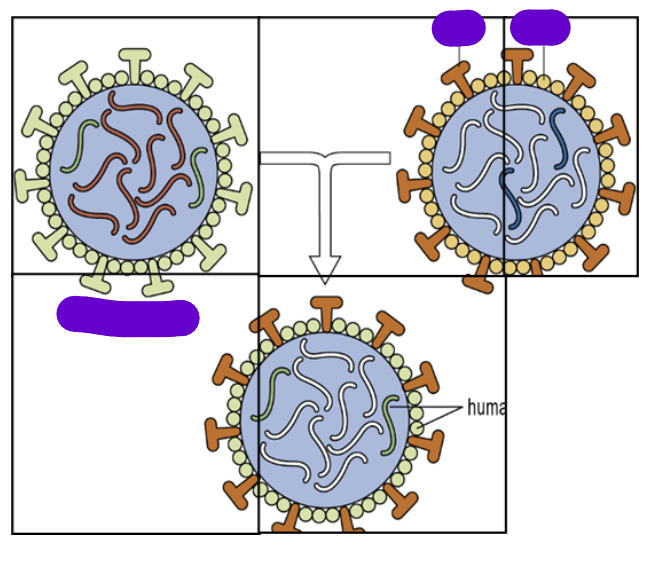
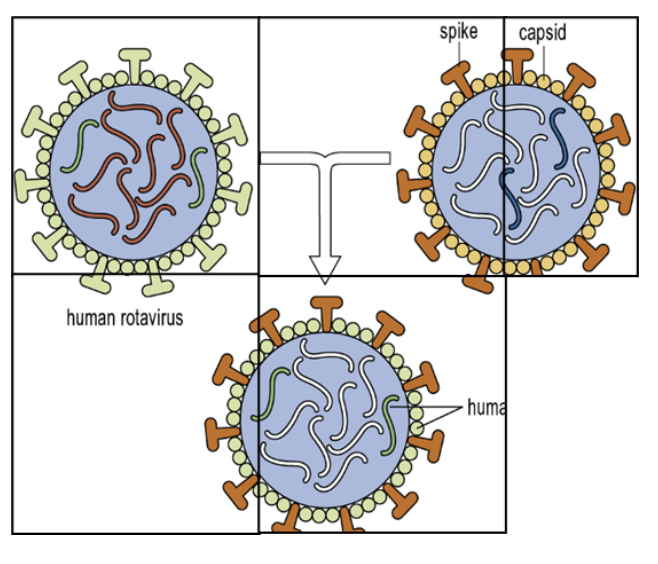
A complex of 5 different hybrid viruses providing immunity to the 5 most prevalent viral strains
What is the hybrid virus in RotaTeq based on, and why is this useful
Based on bovine rotavirus, which is naturally attenuated in human hosts
What human rotavirus proteins are incorporated into the hybrid virus, and what are they targets of
VP4 or VP7; targets of natural immunity in human rotavirus infection
What are inactivated vaccines also called, and how are they made
Inactivated or "killed" vaccines; heated or chemically treated to inactivate
What are examples of inactivated vaccines
Cholera
Influenza
HepA
Plague
Polio (Salk vaccine)
Rabies
what are pros of inactivated vaccines
No reversion to pathogenic form
Often more stable/easy to store and transport
what are cons of inactivated vaccines
Often require booster shots
Don’t replicate in host, so often don’t induce cell-mediated immunity (humoral only)
Possible chemical exposures/adjuvants often required
Potentially dangerous if not all pathogen is killed/inactivated
What can formalin do to toxins
Formalin can inactivate toxins into toxoids
What are the most successful of all bacterial vaccines, and what are they based on
Tetanus and diphtheria vaccines; based on inactivated exotoxins
What is CRM197, and what is it used for
An inactive, mutant form of diphtheria toxin; used as the basis for several newly generated conjugate vaccines
what are subunit vaccines
vaccines that use only specific purified macromolecules from a pathogen, not the whole organism
Do subunit vaccines use entire proteins or organisms
no
what are the three specific target antigens of subunit vaccines
inactivated exotoxins/toxoids
inactivated capsular polysaccharides
inactivated surface glycoproteins (or recombinant protein Ag)
How do the pros/cons of subunit vaccines compare to inactivated/killed vaccines
Similar to those of inactivated/killed vaccines
How can subunit vaccines be produced
Can be produced through recombinant DNA technology
What is an example of a subunit vaccine, and what does it consist of
Acellular pertussis vaccine, consisting of a small number of proteins purified from the bacterium
As part of which combination vaccine is the acellular pertussis vaccine usually administered, and to whom
As part of DTaP (Diphtheria, Tetanus, Pertussis) combination vaccine routinely given to infants
What is a conjugate vaccine
Purified polysaccharides linked to carrier proteins (e.g., tetanus or diphtheria toxoid) to induce a stronger immune response
Why do purified polysaccharides (e.g., from bacterial capsules) need to be conjugated
They are usually poorly immunogenic
How can protein carriers be produced
Can be produced in highly purified form by recombinant DNA techniques
What do protein carriers recruit, and what is the result
Recruit Th cells; conjugates induce IgG antibody responses and more effective long-lasting protection
Name three examples of conjugate vaccines
Haemophilus influenzae B (Hib)
Neisseria meningitidis (strains A, C, Y, W-135)
Streptococcus pneumoniae (pneumonia) — 7-valent conjugate vaccine
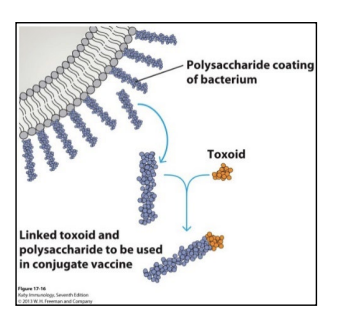
Why are conjugate vaccines needed for some molecules
Some molecules aren't strong enough antigens on their own to stimulate a strong immune response.
What can conjugate/multivalent vaccines improve
Immunogenicity
What does conjugation involve
Coupling antigen with an immunogenic substance (e.g., toxoid)
What is a limitation of simply linking a weak antigen with a stronger one
It may still not give the desired outcome. Need to consider what type of immune response is needed
what are 2 considerations for conjugate vaccines
Is the conjugate good at antibody induction?
What if you want to induce CTL responses?
How must antigen be delivered to induce CTL responses
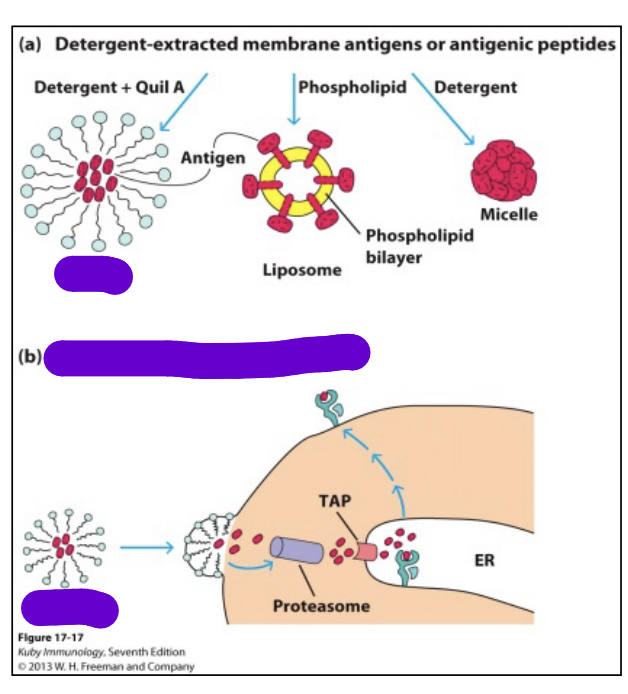
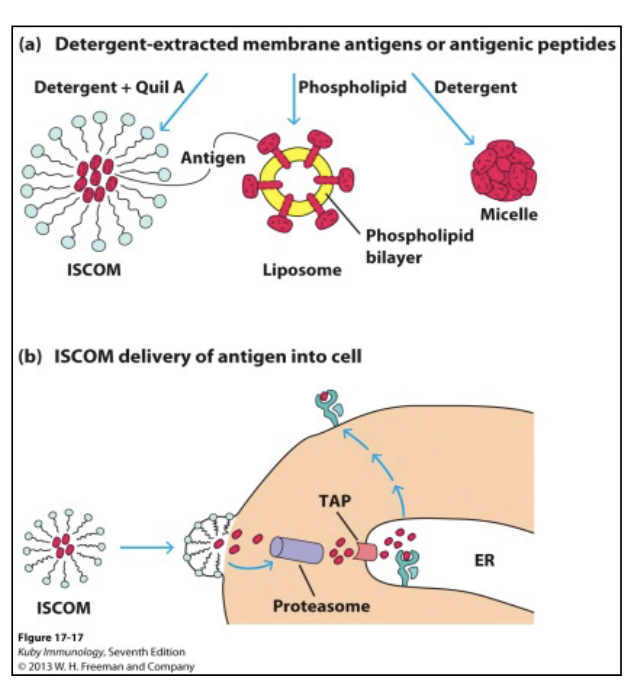
Antigen must be delivered into cells for presentation in MHC class I molecules (endogenous antigen pathway)
How can antigen be delivered into the MHC class I pathway
Through creation of lipid carriers known as immuno-stimulating complexes (ISCOMs) for antigen delivery
How are recombinant vector vaccines produced
Produced through recombinant DNA technology
What do recombinant vector vaccines use as a delivery vehicle
Use an attenuated pathogen (e.g., adenovirus, vaccinia virus)
What are recombinant vector vaccines genetically engineered to do
Genetically engineered to carry and express pathogen's genes
Which company is using a type of vaccinia virus viral vector
AstraZeneca
What are the two pros of recombinant vector vaccines
All the benefits of attenuated vaccines
Fewer risks – not using the actual pathogen, but something else entirely
What is a con of recombinant vector vaccines
some of the attenuated vaccine problems are still present (especially stability issues)
what are adjuvants
substances added to vaccines to boost immune responses
Why might purified or recombinant antigens need adjuvants
Purified or recombinant antigens can be weakly immunogenic on their own
What do adjuvants do
Adjuvants boost immune responses
What discovery was made in the 1920s regarding adjuvants
Aluminium salts (alum), added to or emulsified with an antigen, greatly enhanced antibody production – they act as adjuvants
What adjuvant is still widely used with diphtheria and tetanus toxoids
Aluminium hydroxide
what are advantages of adjuvants
Promoting inflammation → recruit more immune cells to the area → enhance effectiveness
Slowing down antigen release → promote longer interactions → enhance effectiveness
Depending on the vaccine, adverse/side effects can include what
Minor local pain or swelling at the injection site
Mild fever and muscle aches, fatigue, headaches, joint pain
Pathogen reversion to wild type – more virulent infection
Insufficient deactivation of pathogen (presence of live pathogen)
What do epithelial body surfaces contain
Non-specific physical and chemical defence mechanisms preventing entry of pathogens
what are secretions of epithelial barriers
mucus, saliva, tears, urine, milk, sweat