Art History 306 Quiz 1
 Call Kai
 Learn
Learn Practice Test
 Spaced Repetition
 Match
Match Flashcards
 Knowt Play
1/27

There's no tags or description
Looks like no tags are added yet.
Name | Mastery | Learn | Test | Matching | Spaced | Call with Kai | Chat |
|---|
No analytics yet
Send a link to your students to track their progress
28 Terms
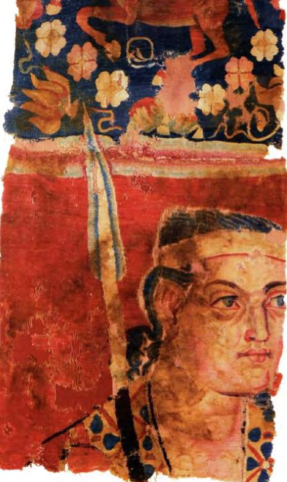
Tapestry fragment from the Sampul Grave Goods from the province of Xinjiang in NW China. Shows a centaur from greco-roman myth, likely spread from Alexanders conquests. This plays a horn and wears a cap and lion skin cloak, much different from other depictions of centaurs
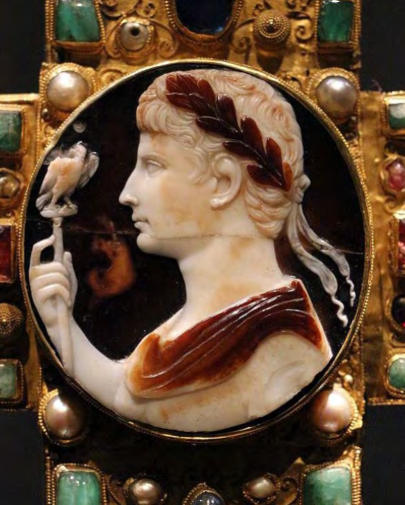
Lothar Cross, 1st century. features a large sardonyx cameo of Augustus in profile, like on a coin, holding a staff with an eagle. Likely an attempt to visually connect himself with Alexander by using similar imagery. Used to make a statement about the person who commissioned it, This example combines roman imperial ideology which medieval authorities attempted to imitate.

Ara Pacis Augustae, Altar of Augustan Peace, 13-9 BCE. Commemorates the peace treaties with Hispani and Gallia. high relief, anatomically correct, very ornate. Epitome of classical style. Early Christians didn’t like fancy art because it ws associated with Roman decadence. The ara shows the human form, Christian art of the time does not.

Tropaeum Traiani, the Trophy of Trajan. Commissioned by Trajan to celebrate the conquest of Dacia. Found in Romania, an example of blending of cultures on the Roman borders. Depicts warriors of high status, tells a story, not naturalistic.
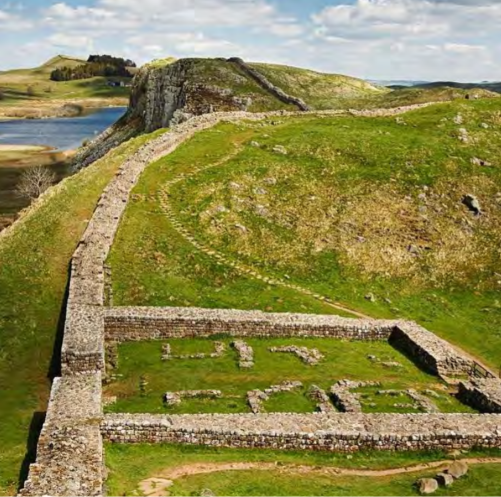
Hadrian’s Wall. England, ca. 125 CE. 130 km long. Built by Trajan’s adopted son Hadrian to control the Roman border in the British Isles. Every 11 km a fot with a legion stationed.
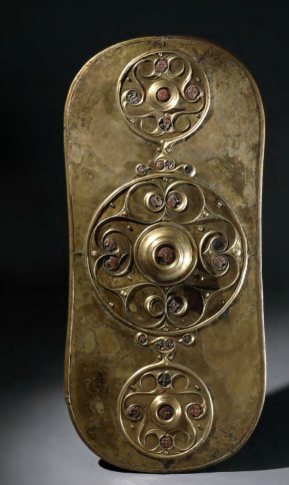
Battersea shield. 350-50 BCE. Found in the river Thames, curvilinear, notable of the celts. Ceremonial. Three panels decorated with opaque red glass and curving designs (repouisse technique, meaning hammered from the back).
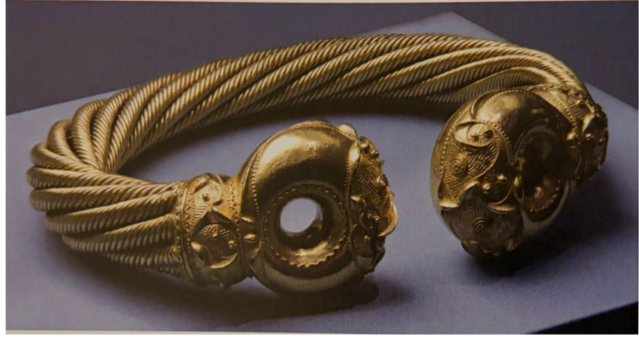
Snettisham Great Torc 150-50 BCE. A piece of jewellery meant to be worn around the neck. The round ends were likely made using the lost wax technique while the braided gold was made using thin wires woven together. Indicative of a culture with skilled artisans and knowledge of metalwork.
Dura-Europos
A town located on the Roman-Iranian borders. This town functioned like a crucible for religions; Mithrais, Judaism, and Christianity all flourished at this site. This proximity allows for different ideas and art works from different religious background to mix, thus why Mithras and Jesus share some common ideas or themes.
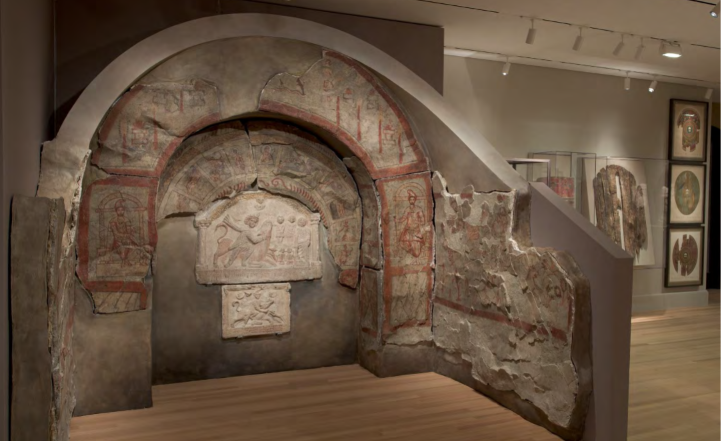
Mithraeum from Dura-Europos, ca. 240. Depicts a tauroctony (the killing of a bull) where Mitrhas kills the bull with a dagger and a dog and snake drink the blood. Mithraism was considered a mystery cult, very little is known about its operations and beliefs. We do know it was popular among soldiers which also happens with Christianity.
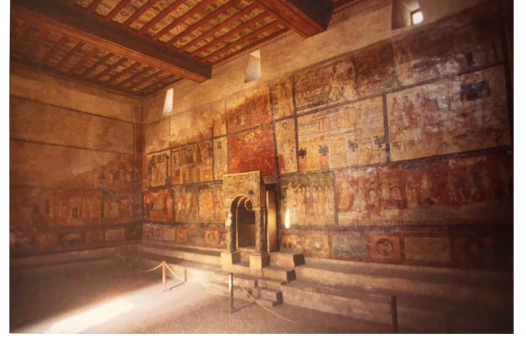
Synagogue from Dura-Europos. ca. 244. Jewish communities re-modeled a private house for their religious activities. Similar in structure to the Mitrhaeum. Stories from the Torah are painted on the walls, so those who cannot read can still access the divine.
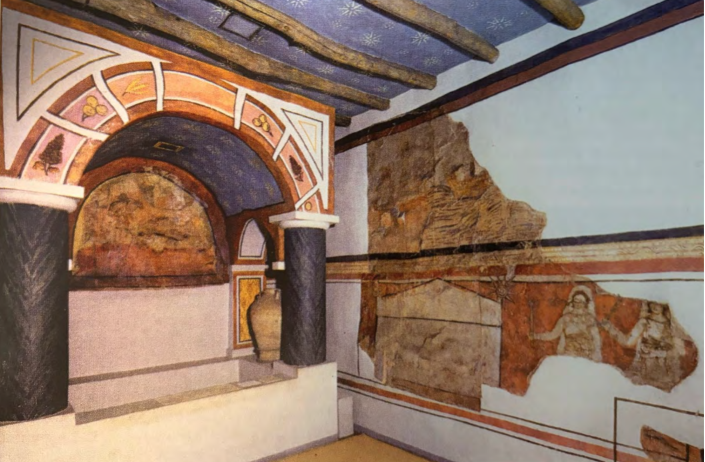
Baptistry from Dura-Europos. ca. 230. Also constructed in a renovated private house (not uncommon for Christians, early churches were held inside domestic environments). Also shares a similar style to the other structures at Dura-Europos. The early Christian world was very close to other religions, resulting in it being a hybrid of sorts

Crucifixion amulet, 2-3 c. Written in Greek. The empire shifted the Capital from Rome to Constantinople, a part of the world that primarily spoke Greek. Interesting to see crucifixion art given that doesn’t appear until much later.

Painted panels. 1st - 2nd c. Depicts Isis and her partner Serapis. Large eyes correlates to a connection with the divine, perhaps so they can see more?Probably part of a portable shrine that contained a shrine to the goddess.
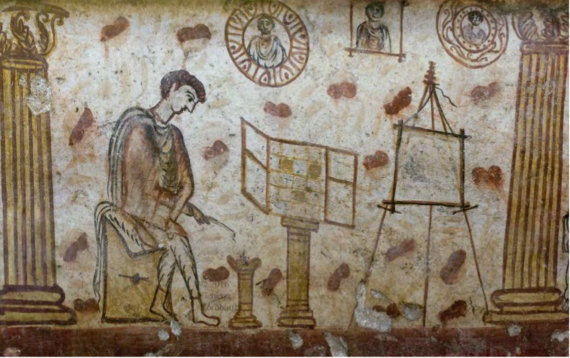
Kerch Sarcophagus (sarco = man, phagus = eater). The paintings appear on the inside of the sarcophagus. Shows a lectern, perhaps associated with Christianity. Perhaps it appears on the inside to remind the dead of who they are, or to hide the images considering the taboo around Christian art
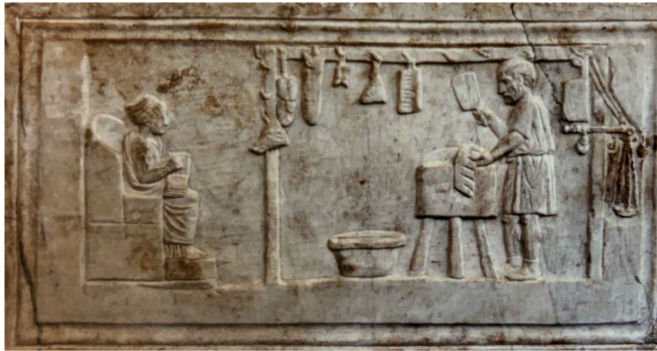
Funerary relief with a butcher shop. Memorizes the dead and their life. The hairstyle of the woman on the left indicates this is from the 2nd century. She is writing on a wax tablet which suggests literacy. She could be the wife and kept records of the shop.
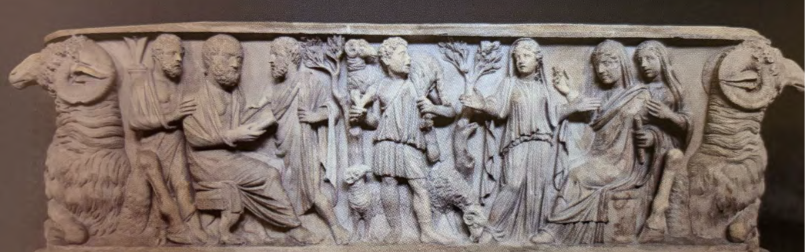
Shepard sarcophagus. Rams and sheep on either side. In the middle a shepard carries a sheep over his shoulders, which was a popular image during the period. A predecessor to the Good Shepard image of Christ perhaps? the deceased are a married couple, the two seated figures. The man is represented as a Greek philosopher and the woman addresses him while holding a scroll.
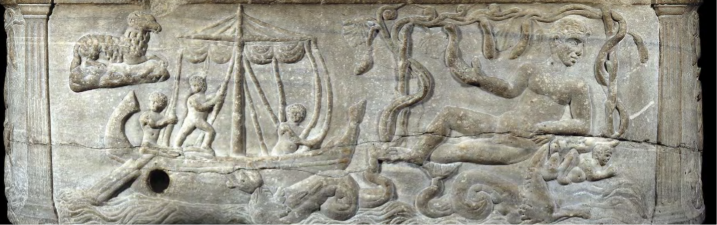
Jonah Sarcophagus, late 3rd c. The meaning of sarcophagus connects to the image of Jonah who was eaten by a whale for three days. Represents the hope of resurrection and the afterlife as well as connecting to Christ who was dead for three days.
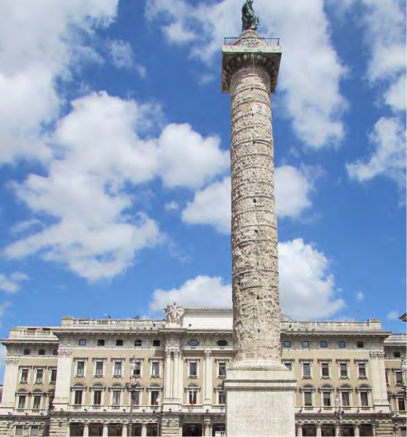
Column of Marcus Aurelius. Tells the story of Aurelius and his victory over the barbarians.

Lepcis Magna, Part of the building projects initiated by Septimius Severus. He rebuilt his home town, Lepcis Magna, which is in modern day Libya. Emphasis on public buildings. Romans considered how people would move and use the space.
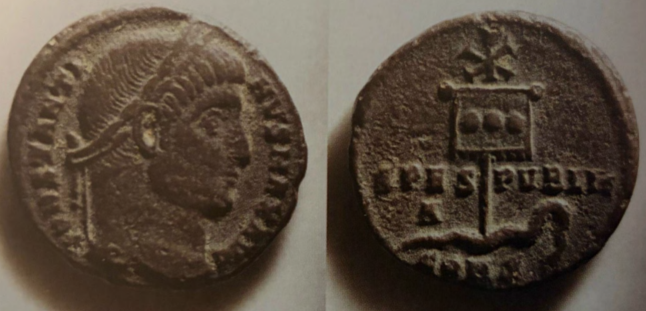
Spes Publica, the public hope. Constantine challenged Maxentius, the son of a Tetrarchy member, for power and won. Supposedly had a vision of the Chi-Rho before the battle of Milvian Bridge. Constantine also legalized Christianity with the edict of milan and became the first christian emperor. Coins such as this are propaganda pieces; they flooded the market, money symbolizes stability, power, and status. further, the death of a serpent and the Chi Rho are essential Christian symbols that were widely spread via this coin.

Missorium of Theodosius I, 388 ce. Abstact of natural forms, insistent frontality, rigid symmetry, hieratic scale, still shows the emperor as above humanity. Very roman imagery on the bottom, but Christians on top. Symbols of royal power through the soldiers
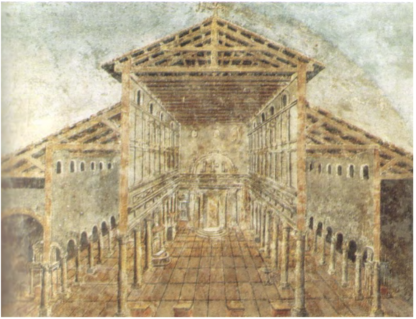
Drawing of Old St. Peter’s Basilica before the restoration. Originally built by Constantine, re used public roman buildings. We have drawings of the old basilica but the original does not remain. Structure draws the eyes toward the altar. Developments of the transept (very important with medieval churches) which comes out from the width of the building. When you come into a space, you change your attitude, so there’s a procession that prepares you for this.

Ceiling mosaic from the tomb of the Julii, Vatican necropolis. this was a space for the special dead, high cost so high status people were laid here. You’re therer to visit the dead, the divine is present in the fallen world. Also held the remains of St. Peter. A reliquary that holds the saint.

The Church of Santa Maria Maggiore. Has a coffin ceiling (it looks like the lid of a coffin from the inside). redone in the renaissance.

Apse mosaic from the Monastery of the Stoneworker. By the end of the 5th c. the round part of the pase is used to tell the story of creation. Mandola - completely holy and separate from the world (the circle around the figure in the middle). Powerful image of an individual, think something like Constantine. Note the good shepard, moving to the other imagery.

Vatican Vergil. Early manuscripts were scrolls, tells the classical story of the Aeneid. Shows how different things should be created visually, like a guide to how art should be produced.

Projekta Casket. large community space condensed into a portal object. Imperial or jesus sitting? use of Roman forms. May communicate the idea that the person entombed was a Christian or that the person who had it made hoped they would become Christian.

the Ascension Ivory. Has a flow of narrative. No clear direction. Modest. It is an image of veneration. Tells the story of the resurrection of Christ. small, for individual worship. “Your life is eternal if you follow Christ”