a&p - body plan and organization (chapter 1 - exam 1)
 Call Kai
 Learn
Learn Practice Test
 Spaced Repetition
 Match
Match Flashcards
 Knowt Play
1/104

Earn XP
Description and Tags
falls under exam 1
Name | Mastery | Learn | Test | Matching | Spaced | Call with Kai | Chat |
|---|
No analytics yet
Send a link to your students to track their progress
105 Terms
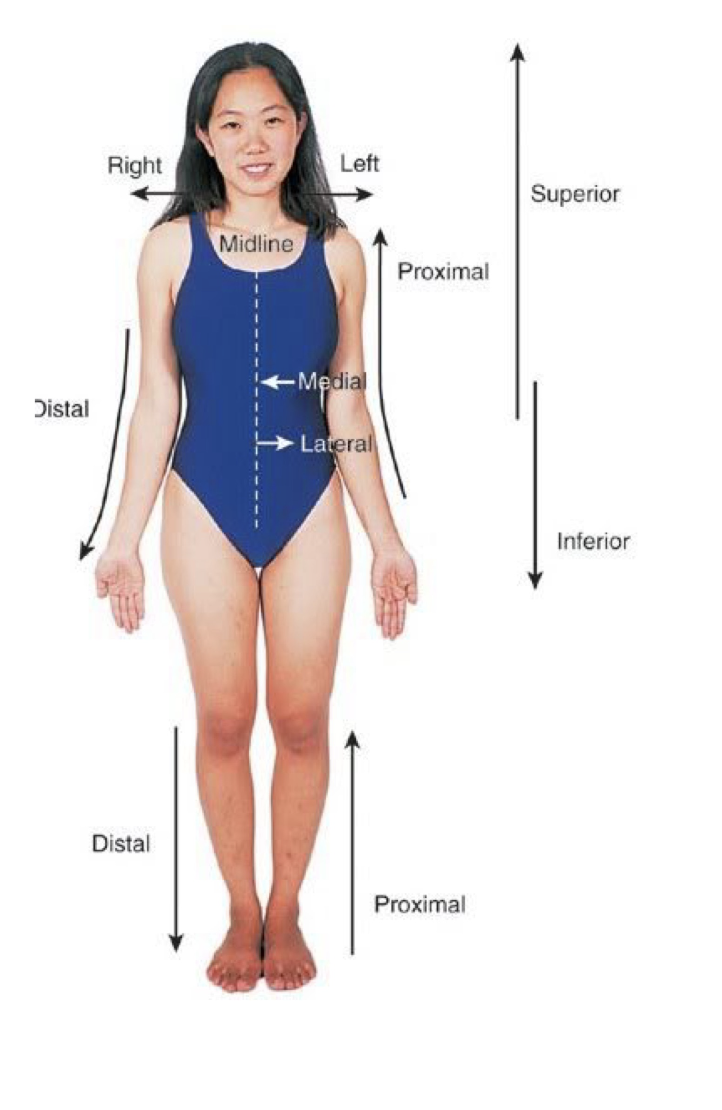
anatomical position
standard reference position used when describing the body
describe anatomical position
standing upright
facing forward
head level and eyes looking forward
arms at the sides
palms facing forward
feet flat and pointing forward
sagittal plane
divides body into left and right
example of sagittal plane
looking at one side of the brain
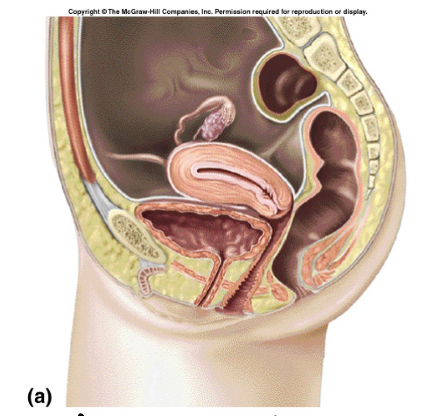
midsagittal plane
divides body into equal left and right halves
frontal (coronal) plane
divides the body into anterior and posterior portions
example of frontal (coronal) plane

transverse plane
divides the body into superior and inferior portions
dorsal body cavity
located toward the back (posterior) of the body
includes
cranial cavity
vertebral/spinal cavity
cranial cavity
contains the brain
vertebral/spinal cavity
contains the spinal cord
ventral body cavity
located toward the front (anterior) of the body
includes
thoracic cavity
abdominopelvic cavity
thoracic cavity
contains
heart
lungs
trachea
esophagus
also includes, pleural cavity, pericardial cavity, and mediastinum
pleural cavities
contains the lungs
pericardial cavity
contains the heart
mediastinum
central region containing the heart, trachea, esophagus, etc
abdominopelvic cavity
separated by the into:
abdominal cavity
pelvic cavity
how are the two parts (thoracic and abdominopelvic) of the ventral cavity separated?
by the diaphragm
abdominal cavity
stomach
liver
gallbladder
spleen
pancreas
small intestine
most of large intestine
kidneys
pelvic cavity
urinary bladder
internal reproductive organs
rectum
4 abdominopelvic quadrants
right upper quadrant (RUQ)
left upper quadrant (LUQ)
right lower quadrant (RLQ)
left lower quadrant (LLQ)
umbilicus = origin of 4 quadrants
frontal
forehead
orbital
eye/eye socket
nasal
nose
oral
mouth
mental
chin
cervical
neck
thoracic
chest
sternal
breastbone/sternum
axillary
armpit
mammary
breast
abdominal
abdomen/belly
umbilical
navel/belly button
pelvic
pelvis
inguinal
groin
pubic
genital region
thorax
chest region
abdomen
area between the chest and pelvis
dorsum
back
acromial
shoulder
brachial
upper arm
antecubital
front of elbow
olecranal
back of elbow
antebrachial
forearm
carpal
wrist
manus
hand
metacarpal
palm/hand between wrist and fingers
pollex
thumb
palmar
palm of hand
digital
fingers
femoral
thigh
patellar
front of knee
popliteal
back of knee
crural
lower leg
sural/gastrocnemius
calf
fibular/peroneal
outer side of the lower leg
pedal
foot
tarsal
ankle
metatarsal
foot between ankle and toes
digital
toes
hallux
big toe
calcaneal
heel
plantar
sole/bottom of foot
dorsum
top of foot
scapular
shoulder blade
vertebral
spinal column
lumbar
lower back
sacral
area over the sacrum
gluteal
buttocks
popliteal
back of knee
perineal
area between the anus and external genitalia
superior
above/towards the head
example of superior
the head is superior to the chest
inferior
below/toward the feet
example of inferior
the stomach is inferior to the heart
anterior
toward the front
example of anterior
the sternum is anterior to the heart
posterior
toward the back
example of posterior
the spine is posterior to the heart
medial
toward the midline
example of midline
the nose is medial to the eyes
lateral
away from the midline
example of lateral
the ears are lateral to the nose
proximal
closer to the point of attachment
example of proximal
the elbow is proximal to the wrist
distal
farther from point of attachment
example of distal
the fingers are distal to the elbow
superficial
toward/on the surface
example of superficial
skin is superficial to muscles
deep
farther beneath the surface
example of deep
bones are deep to skin
anatomy
structure
"what is it and where is it?”
physiology
function
“what does it do?”
anatomy + physiology
structure determines function
example of anatomy + physiology
anatomy: RBCs have a shape that provides large surface area
physiology: this shape helps them efficiently transport oxygen
regional anatomy
studies all structures in one specific body region
example: studying everything in the abdomen = muscles, organs, nerves
systemic anatomy
studies one organ throughout the entire body
example: studying the cardiovascular system (blood vessels) throughout the body
levels of organization
atoms —> molecule —> macromolecule —> organelle —> cell —> tissue —> organ —> organ system —> organism