ekg strip reading
 Call Kai
 Learn
Learn Practice Test
 Spaced Repetition
 Match
Match Flashcards
 Knowt Play
1/18

There's no tags or description
Looks like no tags are added yet.
Name | Mastery | Learn | Test | Matching | Spaced | Call with Kai | Chat |
|---|
No analytics yet
Send a link to your students to track their progress
19 Terms
normal sinus rhythm

sinus tachycardia
s/s: decreased cardiac output: syncope, hypotension, dizziness, fatigue, hypokalemia, fever
nursing interventions: treat underlying cause. ex: tylenol for fever

sinus bradycardia
s/s: normal for athletes, hypothermic, ICP, digoxin
causes: decreased cardiac output, decreased cardiac perfusion

NSR w/ premature ventricular contraction (PVC)
irregular heartbeat that occurs when ventricles contract unexpectedly
3+ in a row (non-sustained) → v-tach
s/s: palpitations, skippy heartbeat, hypokalemia, hypomagnesemia
nursing interventions: monitor electrolytes & treat, check labs

a-fib
no p-wave for every QRS
s/s: quivering of atrium, turbulent blood flow secondary to it; risk of stroke, can cause HF, valve issues
nursing interventions: anti-coags
rapid a-fib → cardizem

a-flutter
shark-toothed, no p-wave interval
s/s: hypokalemia, alcoholism, HF
nursing interventions: ablation therapy, anticoags, cardioversion

sinus arrhythmias
R-R not equal

v-fib
s/s: actively going into cardiac arrest
nursing interventions: cardioversion
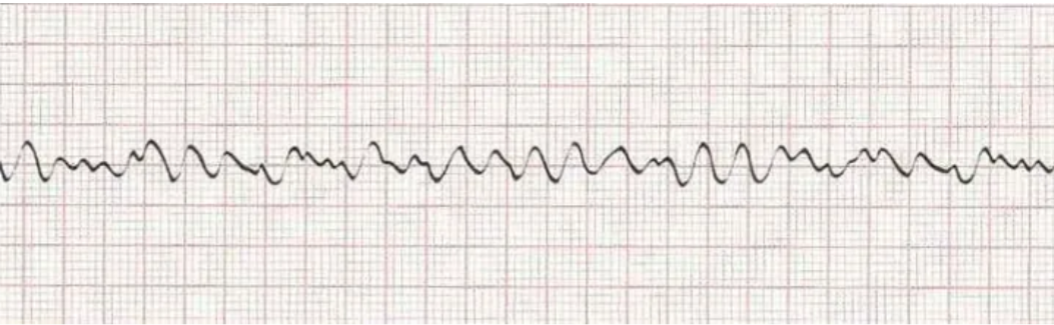
junctional (or idioventricular)
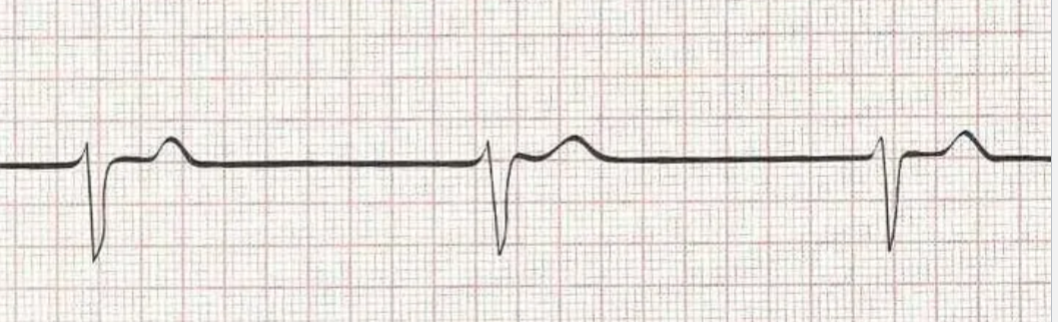
asystole
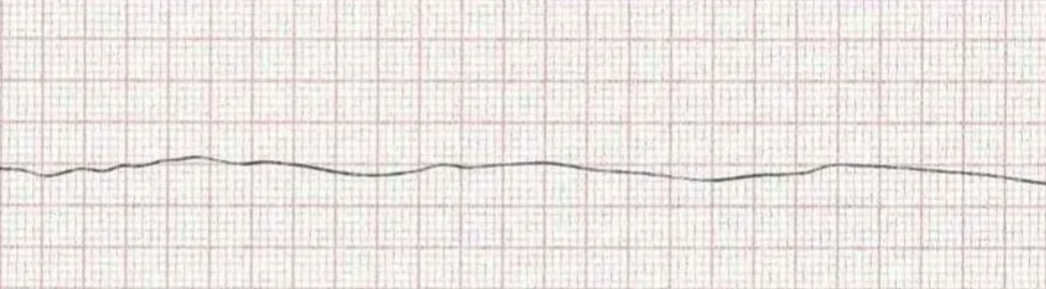
v-tach

complete heart block or 3rd degree heart block

sinus bradycardia w/ a pause
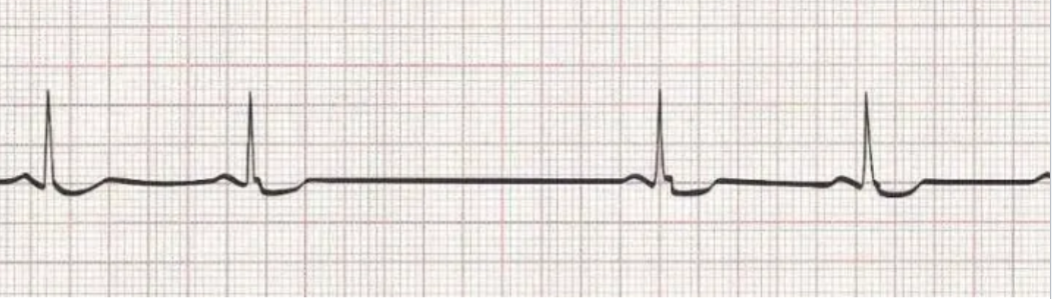
accelerated junctional
>100 bpm = junctional tachycardia

junctional escape

1st degree heart block

complete heart block or 3rd degree heart block
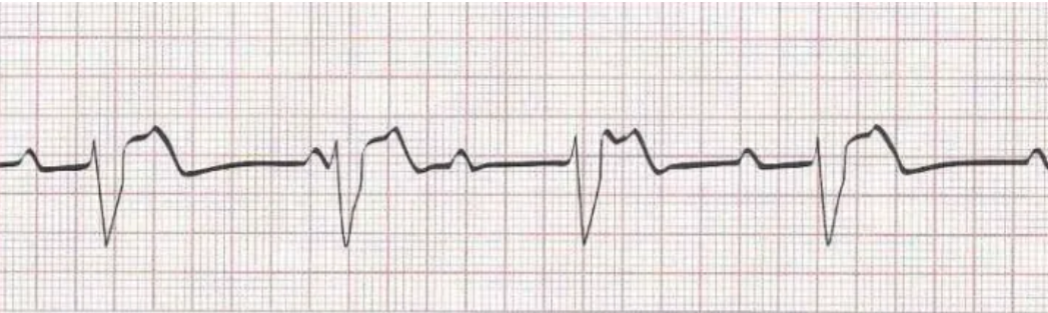
2nd degree AV block type II (mobitz II)
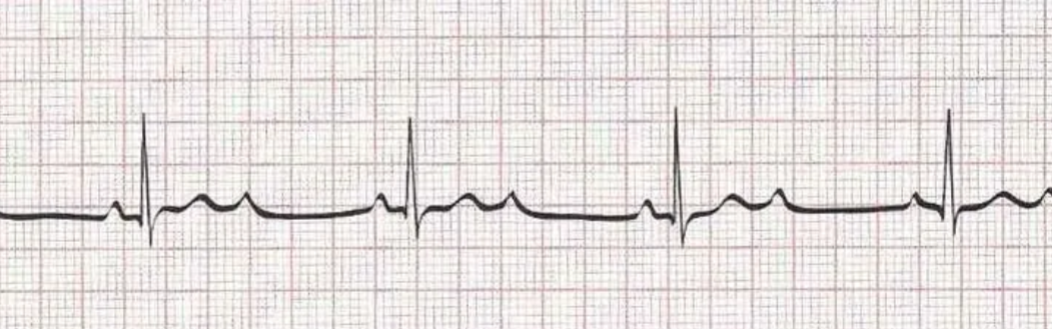
2nd degree AV block type I (Mobitz type I or Wenckebach)
