Shoulder Anatomy
 Call Kai
 Learn
Learn Practice Test
 Spaced Repetition
 Match
Match Flashcards
 Knowt Play
1/37

There's no tags or description
Looks like no tags are added yet.
Name | Mastery | Learn | Test | Matching | Spaced | Call with Kai | Chat |
|---|
No analytics yet
Send a link to your students to track their progress
38 Terms
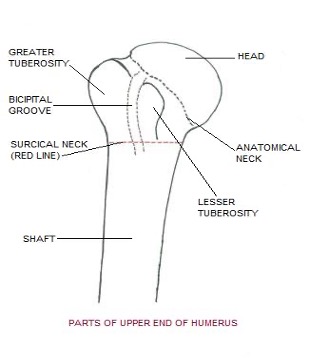
What is the ossesus anatomy of the shoulder
Humerus
Clavicle
Scapula
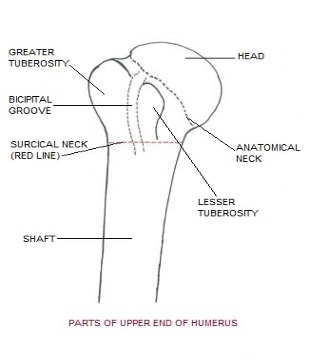
Name the 3 ossesus landmarks of the Humerus
Greater Tuberosity
Lesser Tuberosity
Anatomical Neck
Greater Tuberosity
Large bulge lateral, 3 rotator cuffs attach
Clavicle muscles that attach
Trapezius, superior
Deltoid, anterior and lateral
Pectoralis Major, Inferior
Humerus muscles that attach
Deltoid, anterior and lateral
What 3 rotator cuff muscles attach to the greater tuberosity
Supraspinatus
Infraspinatus
Teres Minor
Lesser tuberosity
Small bulge on anterior, 1 rotator cuff attached
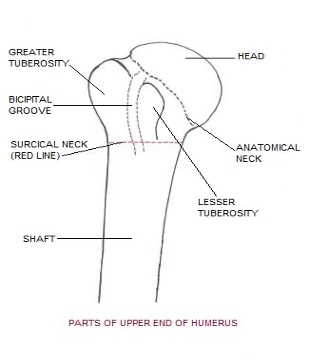
What rotator cuff muscle attaches to the lessser tuberosity
Subscapularis
Surgical neck of the humerus
Where the head meets the body
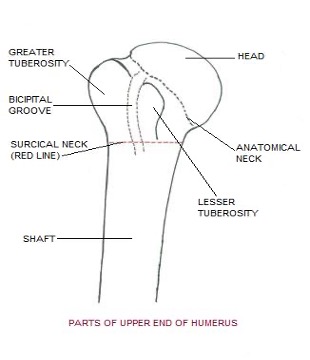
Anatomical neck of the humerus
Where the head meets the tubercules
Ossesus landmarks of the scapula
Coracoid process
Acromion
Glenoid
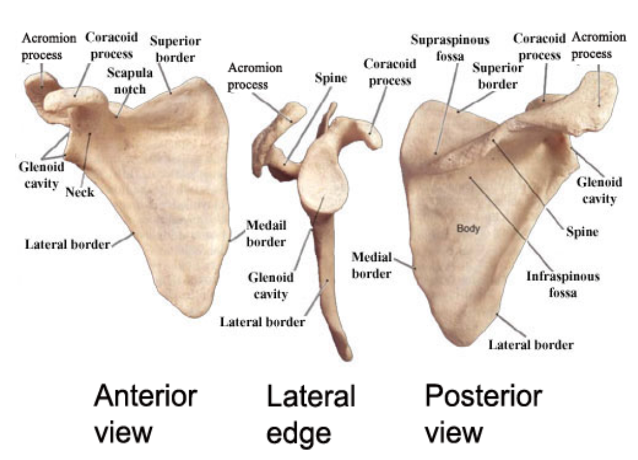
Coracoid process
Short head of bicep attachment, clavicular ligaments attach
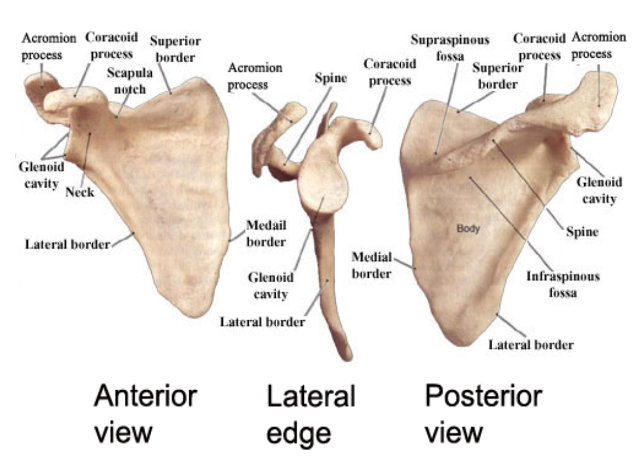
Acromion
Protects the rotator cuff, can develop bone spurs that damage rotator cuff
Glenoid
Humerus sits inside glenoid, attaches long head of biceps, attaches labrum
Gleno-humeral capsule
Tough outer layer, soft tissue stability, synovial fluid
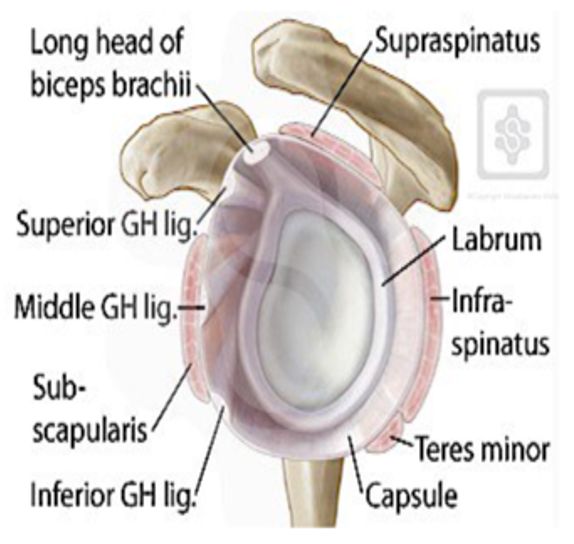
Labrum
Fibro-cartilage ring, provides stability, deepens glenoid socket
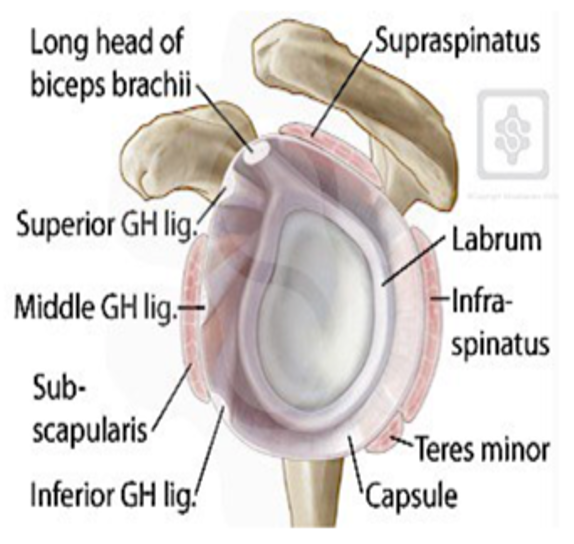
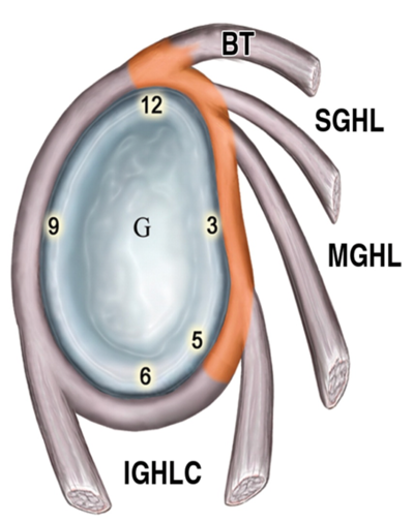
3 gleno-Humeral ligaments
Superior gleno-humeral ligament (SGHL)
Middle gleno-humeral ligament (MGHL)
Inferior gleno-humeral ligament (IGHL)
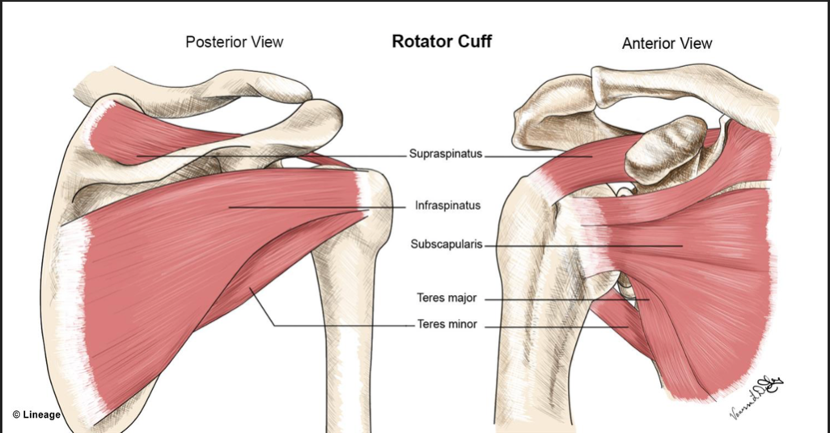
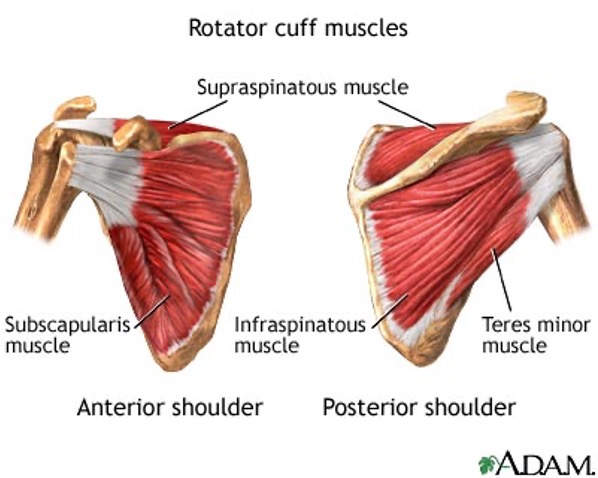
4 rotator cuff muscles
Supraspinatus
Infrasspinatus
Teres Minor
Subscapularis
Subscapularis tendon (function, attachment, movement)
Anterior support, attach lesser tuberosity, fibers connect greater tuberosity and support biceps long head, internal rotation
Supraspinatus tendon (function, attachment, movement)
Inferior to AC joint cora. ligaments, attach greater tuberosity, abduction
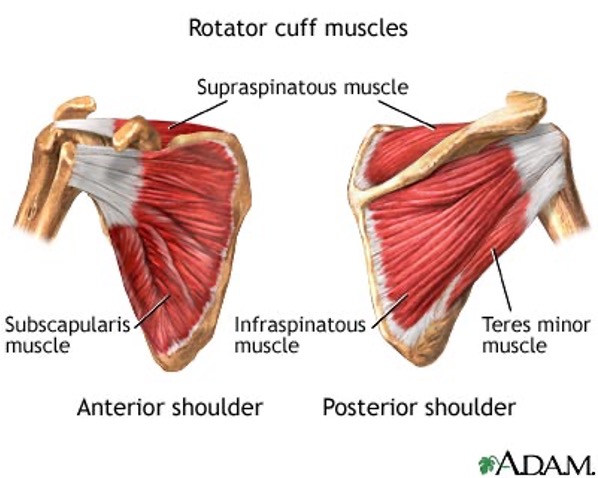
Infrapsinatus and Teres Minor (function, attachment, movement)
Prevents dislocations, attach greater tuberosity, external rotation
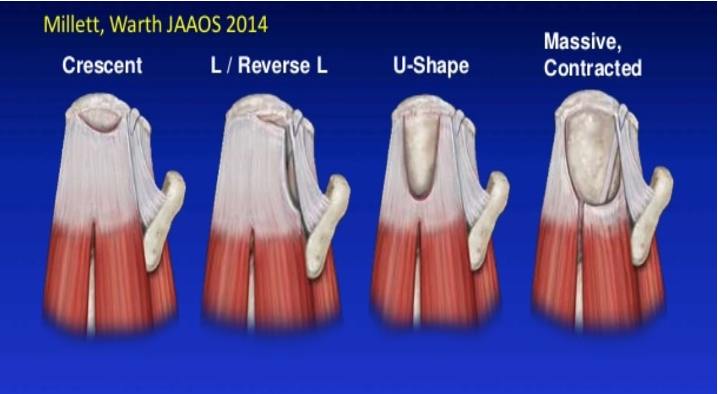
4 types of rotator cuff tears
Crescent tears
U shape tears
L shape tears
Reverse L tears
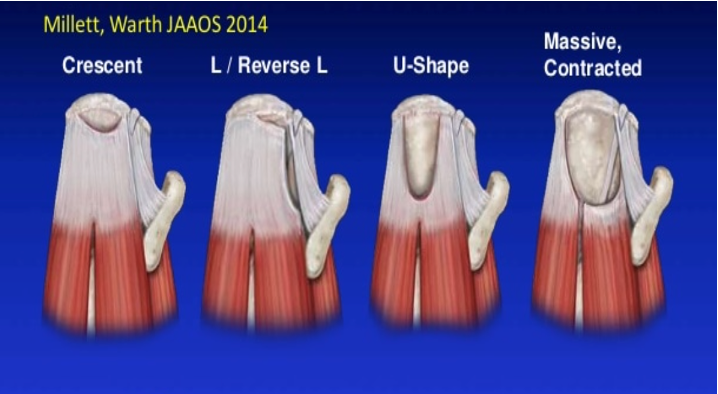
Crescent tears
minimal medial retraction
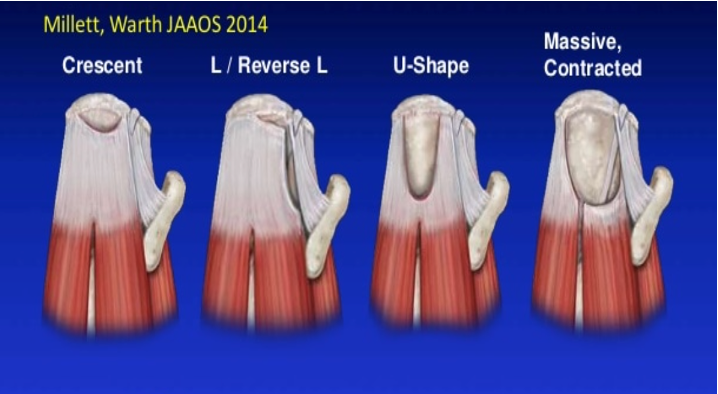
U shape tears
crescent tear with major medial retraction
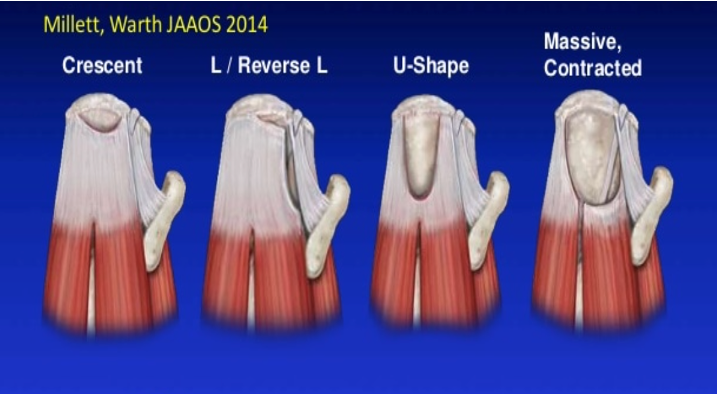
L shape tear
U shape tear with longitudinal split posteriorly
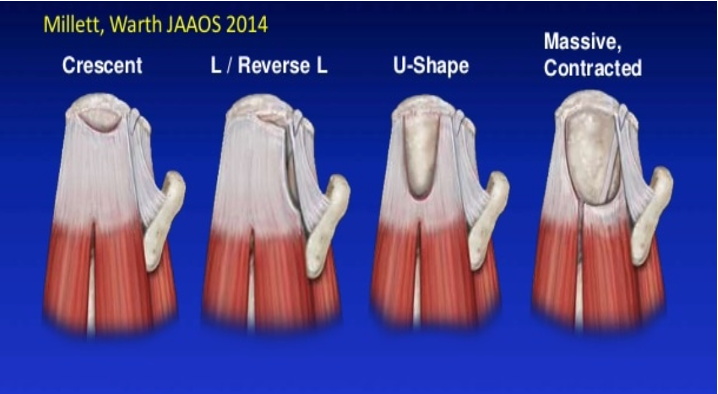
Reverse L tear
U shape tear with longitudinal split anteriorly
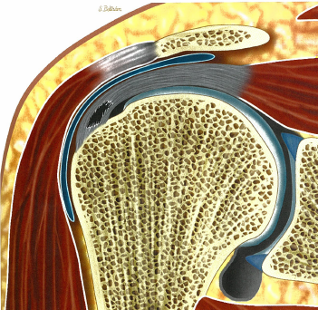
Inter-substance tear:
Difficult to see on MRI and anthroscopically
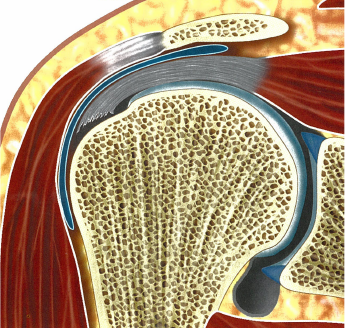
Full thickness tear:
Prone to retraction, acute repair needed
P.A.S.T.A. Lesions
Partial
Articular-sided
Supraspinatus
Tendon
Avulsion
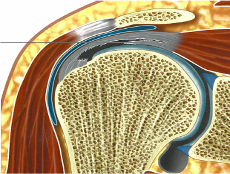
2 types of surgical positioning
Beach chair
Lateral decubitus
Beach chair positioning:
Deltopectoral approach, lowers venous pressure and bleeding
Lateral decubitus:
Joint dislocation, can result in neuropraxia
3 portal placements and purposes:
Posterior for viewing
Anterior for viewing
Lateral for viewing and insertions
2 nerves to avoid in portal placement and placement of risk
Axillary nerve, posterior inferior
Suprascapular nerve, posterior medial
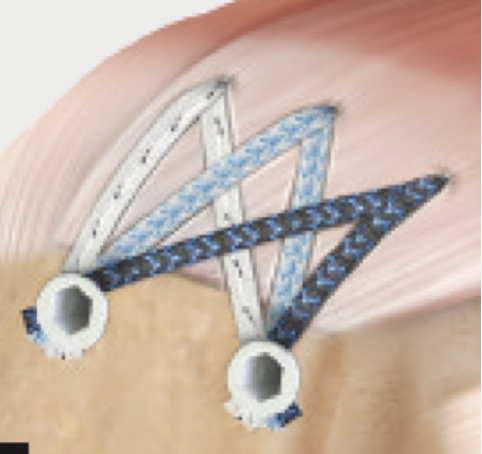
Single Row Repair
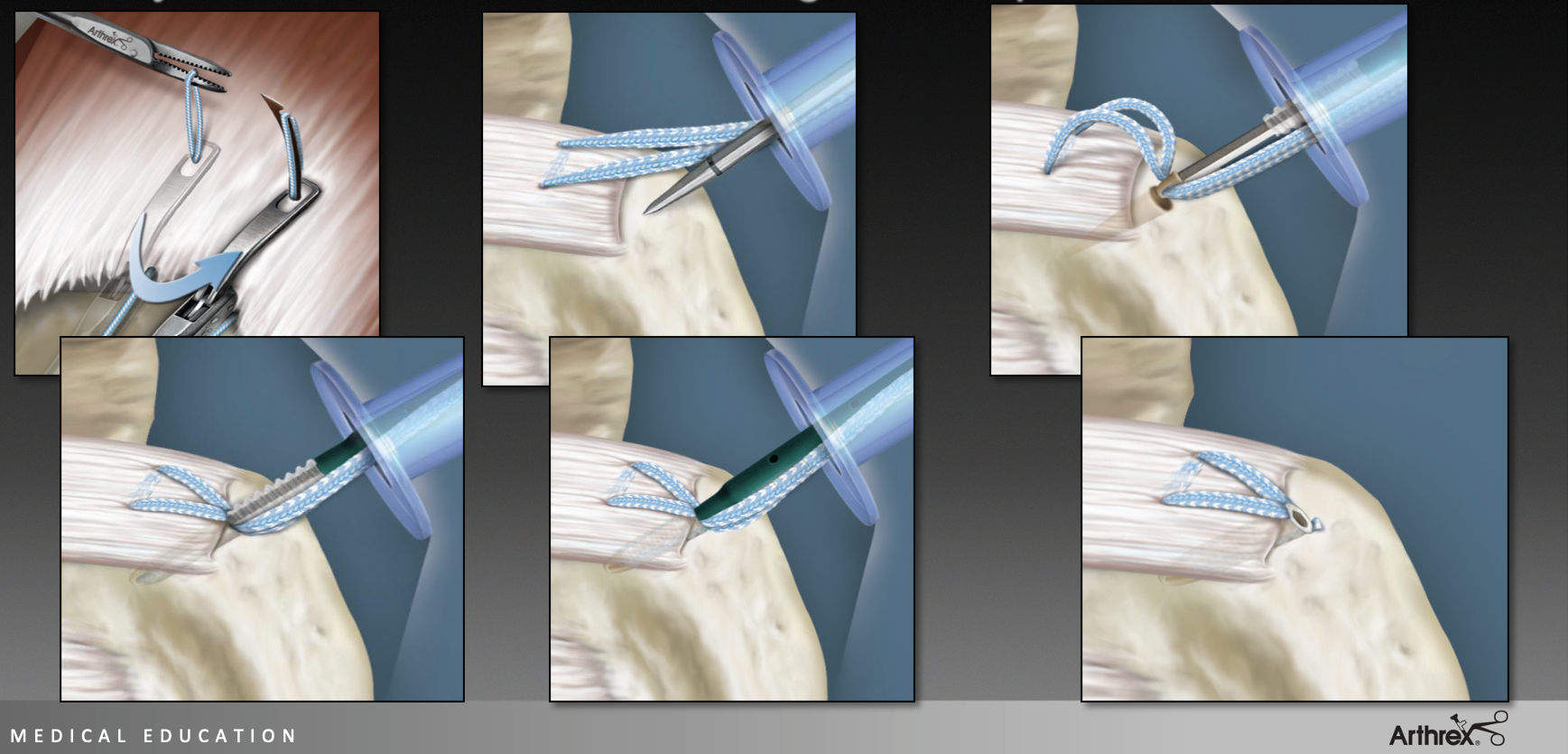
Knotless repair with SpeedFix and/or RipStop
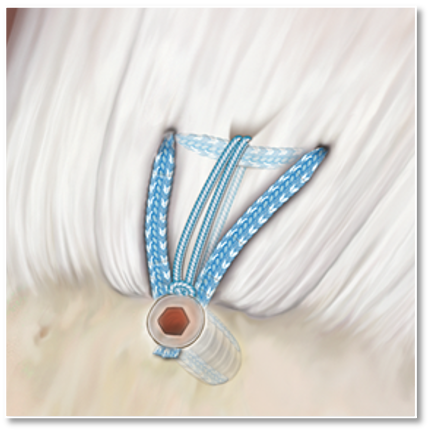
Steps for a SpeedFix repair
Double-Row Knotless Repair
Medium to large tears, minimizes crepidus, protects healing zone
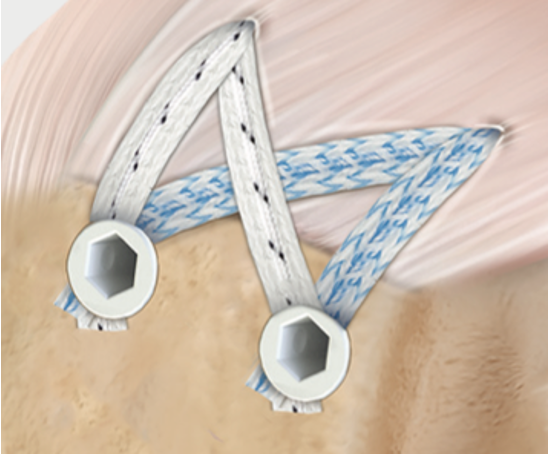
Knotless FiberTak SpeedBridge