Protein Trafficking
 Call Kai
 Learn
Learn Practice Test
 Spaced Repetition
 Match
Match Flashcards
 Knowt Play
1/13

There's no tags or description
Looks like no tags are added yet.
Name | Mastery | Learn | Test | Matching | Spaced | Call with Kai | Chat |
|---|
No analytics yet
Send a link to your students to track their progress
14 Terms
trafficking
a system of addresses and carriers that ensure delivery of cargo to the right place
forms of intracellular trafficking
gated
transmembrane
vesicular
can be unidirectional or bidirectional

single peptide proteins
inserted into the ER through a membrane translocation
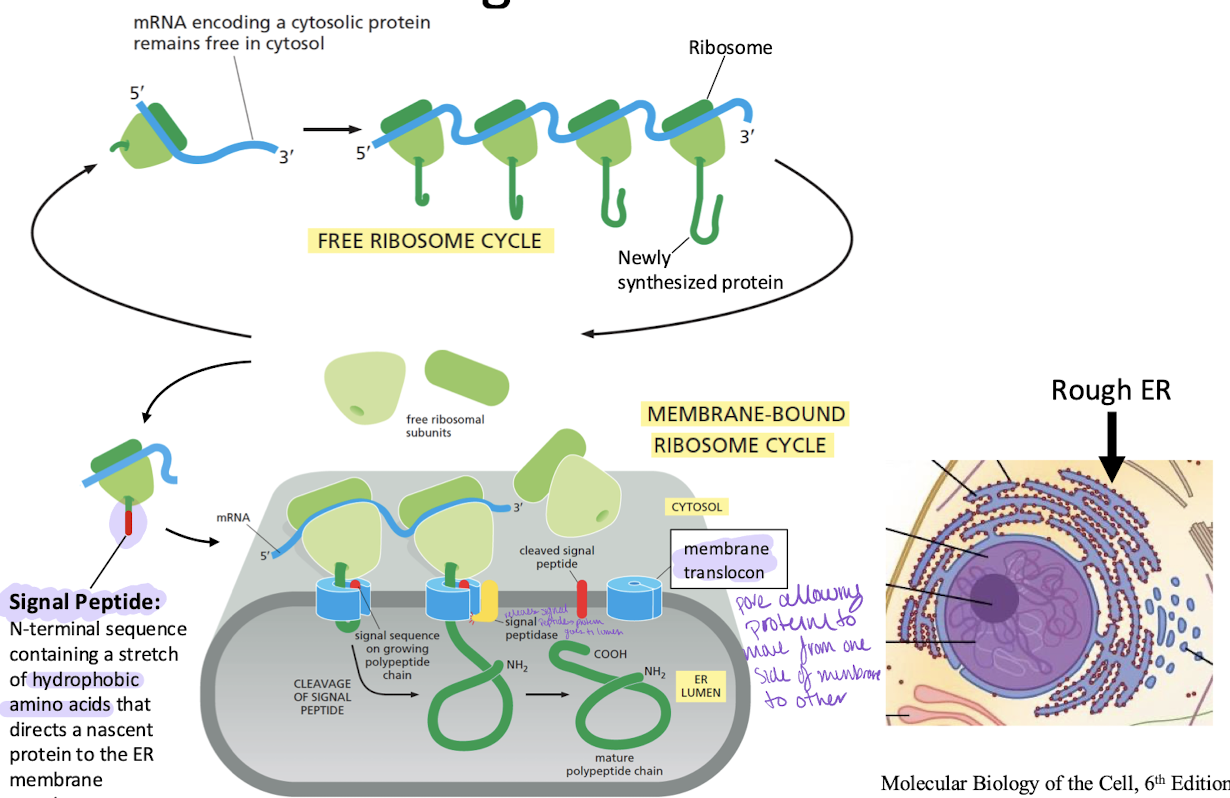
proteins with transmembrane domain
released into the ER membrane through a lateral translocon gate
enable communication across a membrane

vesicular transport
cargo is transported between compartments in vesicle pachages that bud and fuse
coat proteins mediate vesicle formation
recruit cargo via receptors
bend membranes to form vesicles
different coats for different vesicles
vesicles guided to target membranes by RAB proteins where SNARE proteins enable fusion
from ER to Golgi
ER chaperones assist protien folding
proteins are transported to the GOlgi for modification and sorting
ER resident proteins have retention signals
proteins that are leaving have exit signals - must be properly folded, quality control - improperly folded proteins are degraded
cystic fibrosis
change in F508 in CFTR chloride channel
folding defect prevents ER exit, channel can’t reach the plasma membrane
reduced Cl- transport results in thick mucus in lungs, overgrowth of bacteria
oligosaccharide processing and sorting
happens in Golgi
ordered series of compartments
biochemical/functional modifications
cargo sorting

Golgi to Lysosome
Lysosome - intracellular digestion/catabolism compartment
acid hydrolases: enzymes that use water to break a chemical bond, work best in acidic environment
low luminal pH achieved by proton pumping
transport of hydrolytic enzymes to lysosome
requires mannose 6-phosphate
activity restricted to lysosome by - M6P sorting signal, decreased pH required for activity

lysosomal storage disorders
Mutations disrupting the targeting or activity of lysosomal hydrolases or transport of enzymes
often (not exclusively) impacts the CNS
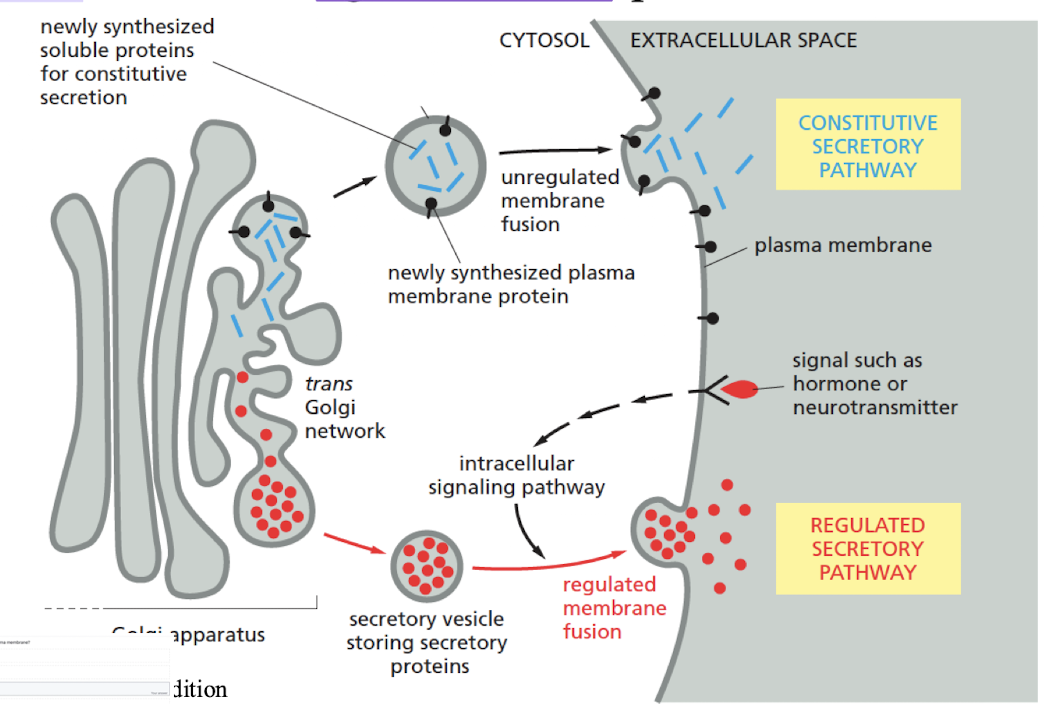
exocytosis
from the trans Golgi to the cell exterior
Constitutive secretion - continuous traffic to the plasma membrane or beyond as cargo is synthesized
regulated secretion - signal mediated plasma membrane fusion
synaptic transmission
requires regulated exocytosis
communication between neurons or neurons and muscle cells
Botulism - toxin cleaves SNAREs at neuromuscular junction preventing release of acetylcholine → flaccid paralysis
endocytosis
receptor mediated - uptake of specific macromolecules from the extracellular space, requires receptors, receptors recycled to cell surface
phagocytosis - uptake of large particles such as bacteria, macrophages, neutrophils, dendritic cells
rapid vesicle recycling
required to sustain synaptic transmission
exercise induced collapse in labs
flaccid paralysis
point mutation that slows dynamin-1 activity
vesicle recycling can’t keep up during periods of high activity