Lecture 5: Bovine Eutocia, Dystocia, Obstetrics, Fetotomy, and C-section
 Call Kai
 Learn
Learn Practice Test
 Spaced Repetition
 Match
Match Flashcards
 Knowt Play
1/53

There's no tags or description
Looks like no tags are added yet.
Name | Mastery | Learn | Test | Matching | Spaced | Call with Kai | Chat |
|---|
No analytics yet
Send a link to your students to track their progress
54 Terms
eutocia is
the normal delivery of a fetus
pre-partum changes
udder edema and milk production (1-2 weeks prior)
relaxation of the pelvic ligaments (raised tail head) → sacrosciatic and sacrotuberous ligaments
elongation and softening of the vulva
dilation and opening of the cervix just prior to parturition
melting of the cervical plug → appears at the vulva
stage 1 of bovine parturition is initiated by the
fetus → cortisol
bovine parturition stage 1
usual duration of 1-6 hours
restlessness, anorexia, signs of abdominal discomfort, increased pulse and respiration, nesting and/or isolation from others, shifting weight, arched back, elevated tail
fetus rotates itself
initiation of ferguson’s reflex
dilation of the cervix
dropping or availability of colostrum/milk in the teats
initiation of contractions of myometrium for short periods in stage 1 of bovine parturition
increasing in frequency and duration as second stage approaches
contractions begin in the apex of the pregnant horn in monotocous species or cranial to the most caudad fetus in polytocous species
what marks the end of stage 1 and beginning of stage 2 for bovine parturition?
rupture of the chorioallantoic membrane → breaking water
bovine parturition stage 2
begins with rupture of the chorioallantois
ends with delivery of the fetus
duration is 30-60 minutes in cows (may be up to 4 hours in heifers)
active straining and expulsion of fetus
rupture of the amnion
ferguson’s reflex in full force
heifers may not strain if in pain or not making progress
dam lies in sternal recumbency, then lateral for delivery
bovine parturition stage 3
expulsion of the fetal membranes → usually not considered retained until greater than 12 hours
dam grooms calf
dam may eat fetal membranes (afterbirth)
dystocia
more common in primipara than multipara
cattle have highest incidence
most common cause in cattle is FETAL MATERNAL MISMATCH
fetal maternal mismatch
fetal cause because the fetus is too big
caused my mismanagement
maternal causes of dystocia in cattle
primary uterine inertia
secondary uterine inertia
abnormalities of the birth canal
fetal causes of dystocia in cattle
fetal oversize → fetus too big to go through pelvis
abnormal presentation, position, and/or posture
fetal monsters → schistosomus reflexus, peresomus elumbus, curly calf syndrome, hydrocephalus, arthrogryposus, anasarca
primary uterine inertia
dam never progresses to stage 2 of labor
few weak abdominal contractions
cervix usually dilated on examination
secondary uterine inertia
exhaustion of myometrium after prolonged attempts to deliver fetus
abnormalities of birth canal
inadequate size of pelvis
pelvic deformities
incomplete cervical dilation
neoplasms
persistent mullerian ducts

what is this?
fetal monsters

what is this?
perosomus elumbus

what is this?
anasarca (water baby)
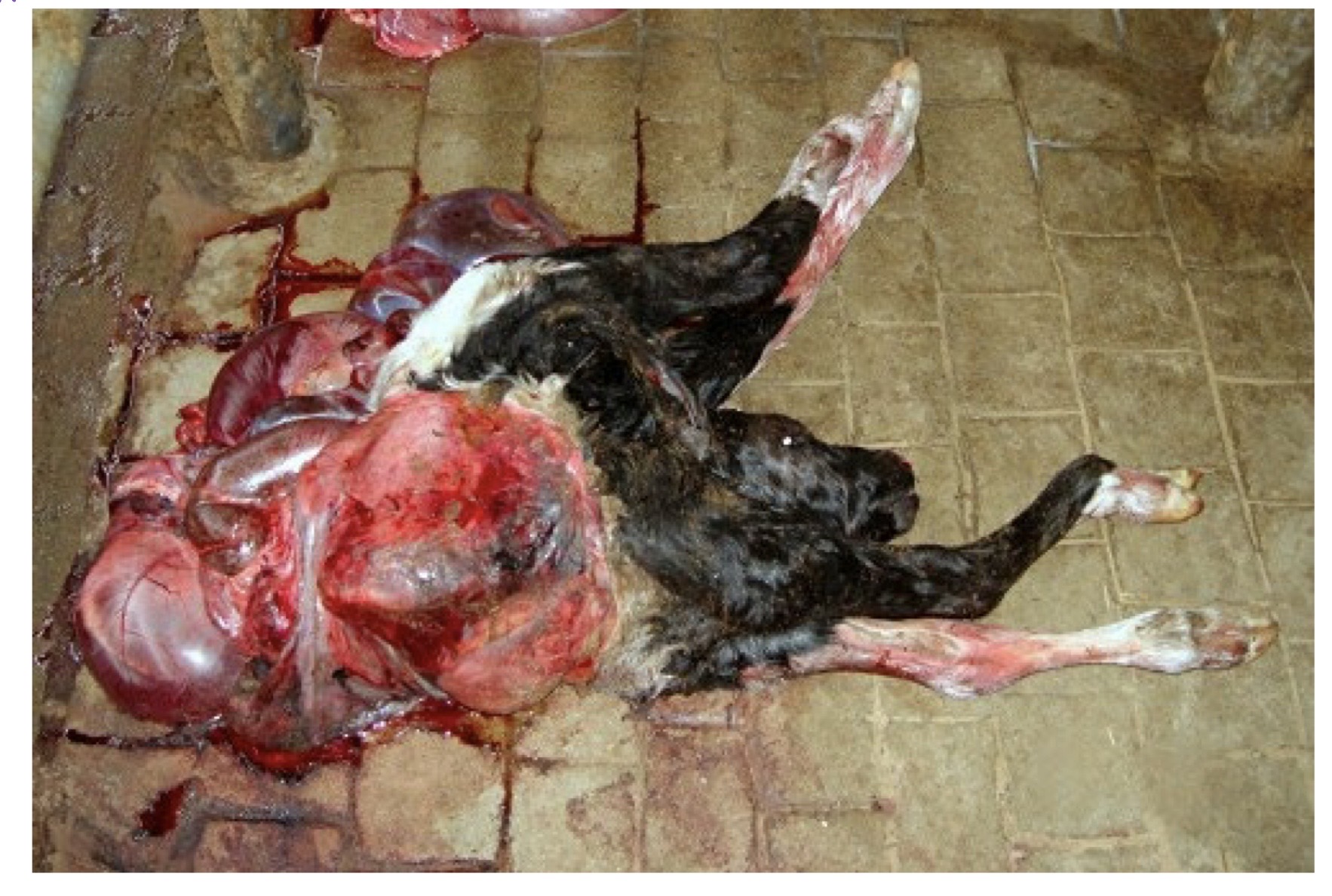
what is this?
schistosomus reflexus
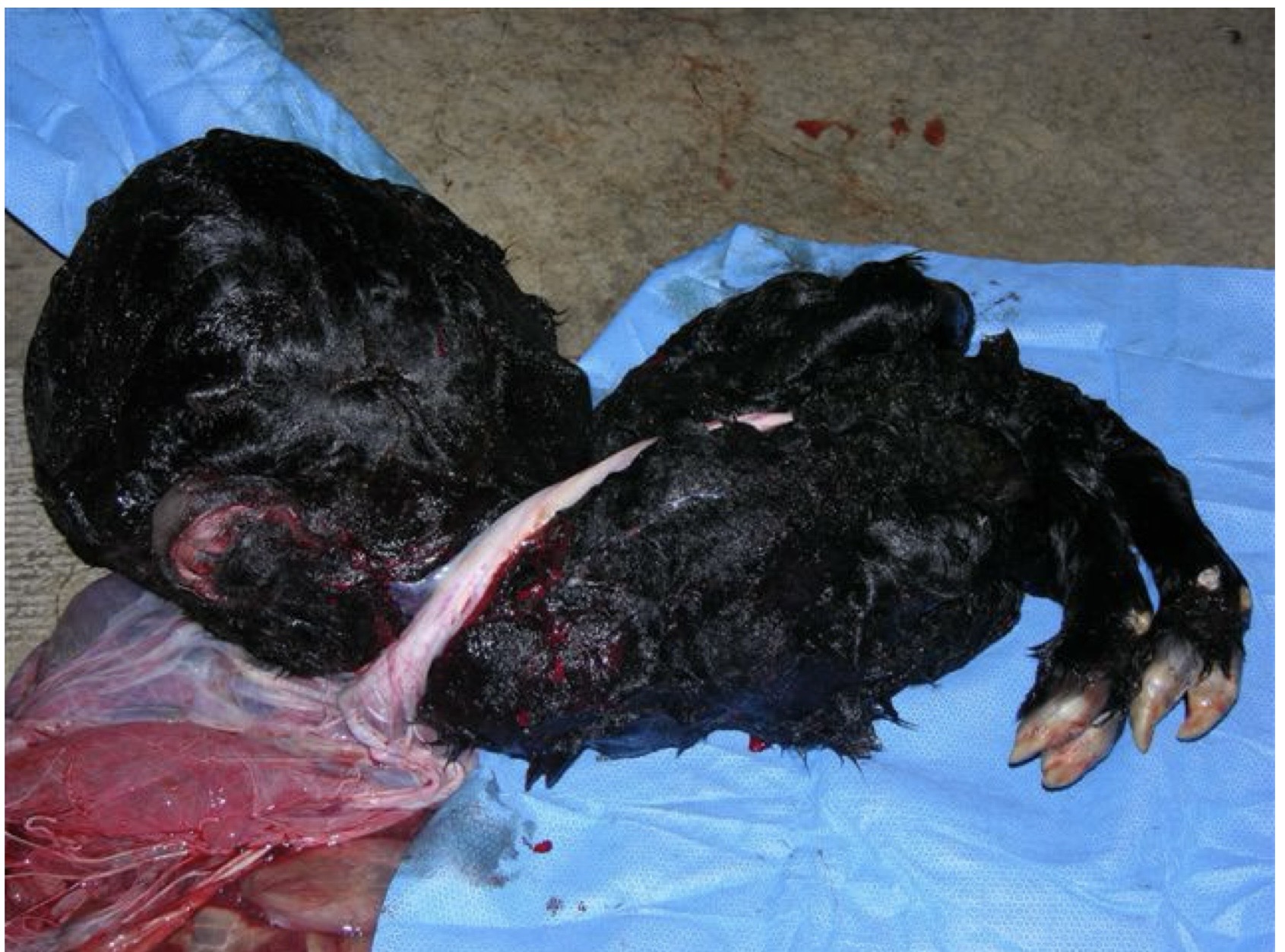
what is this?
curly calf
feto-maternal mismatch/fetopelvic dysproportion
etiology is management-related
most common cause of cow dsytocia
calf is too big
management issues → heifer bred too early, small heifer, bred to a bull that throws large calves rather than a heifer bull, dam is obese
clinical management of bovine dystocia
asking questions → how long has she been trying to calve?, history of dystocia on this farm?
restraint
dystocia vaginal exam
clean perineum with soap and water
assess fetal viability
assess fetal number
PPP
estimate fetal size
develop a delivery plan
epidural
lots of lube
fetal extraction
after mutations are completed, the fetus is in a favorable position and fetus is deliverable size-wise
hand delivery → no more than 2 adults on chains, traction is directed in an arc like fashion
mechanical fetal extractors aka calf-jack
what should you do when the cow pushes?
pull or push down
two people pulling a calf exerts about
400 psi
calf jack exerts about
2000 psi
episiotomy
incise vulva at 10 and 2 position
fetus fits through pelvic inlet just tight at level of vulva
delivery with traction is not possible so
fetotomy → partial or full
C-section
fetotomy is not
a last resort
indications for fetotomy
dead fetus → if fetus is not dead and you can euthanize, this still remains a possibility
uncorrectable fetal malposition
delivery by traction is not working
feto-maternal mismatch (large fetus)
certain fetal monsters/ankylosis
incomplete cervical dilation
true or false: a fetotomy should never be performed on a live fetus.
true
fetotomy requirements
adequate space between uterine wall and fetus
± with grossly oversized fetus or emphysematous fetus
want to be able to remove parts with easy traction
fetotomy is most commonly done in a
standing cow
partial fetotomy
most common fetotomy
amputation of the head, neck, or limbs
fetal malposture → wry neck
fetal oversize
fetotomy aftercare for bovine
± lavage uterus
systemic antibiotics
anti-inflammatories
IV or oral calcium
± IV fluids
ecbolics → oxytocin, PGF2alpha
C-section characteristics
more expensive and traumatic
increased recovery time and aftercare
potential impact on future fertility
requires assistance
may take more time
fetotomy characteristics
reduced expense and trauma
shorter recovery time and less aftercare
less impact on future fertility, milk production
especially in a partial fetotomy
indications for C-section
vaginal delivery unsafe for dam or fetus
usually a live fetus
inadequate room to place fetotome
oversized, large fetus
sometimes necessary just to save the dam’s life
90% if C-sections are due to
fetal oversize → pre and post emphysematous changes
incomplete cervical dilation of cervical closure on a dead fetus
irreducible uterine torsion
fetal deformity
errors of fetal PPP
C-section considerations
dam → behavior, ability to stand, intended use of animal
environment → dirty or clean
restraint
C-section surgical approach
several surgical approaches to choose from
case based
ask questions like is the calf alive or dead?, calf malformed?, physical conditions of the dam, etc
preference and experience of the surgeon
advantages of ventral midline C-section approach
best surgical exposure
least abdominal contamination
best cosmetic effect
disadvantages of ventral midline C-section approach
restraint
failure of suture line catastrophic
dorsal recumbency
C-section ventral midline
cast, oblique dorsal recumbency
general anesthesia rarely used or needed
line block
ace + butorphanol
epidural reduced straining
big skin incision, linea alba, reflect greater omentum
exteriorize uterus, incise uterus at greater curvature, cut from tip of toe to tip of hock
why should you incise the uterus at the greater curvature?
less blood supply
uterus closure for ventral midline C-section
inverting pattern, #1 or #2 absorbable, non-penetrating, bury knots
utrecht (most common)
cushing or lembert
do not include placenta
oxytocin for C-section
should be given to promote uterine contractions
before or after uterine closure
surgeon preference on when
post-op care for c-section
stall rest
± antibiotics
ecbolics (oxytocin and/or PGF2alpha)
analgesia + NSAIDs
advantages of standing flank c-section
restraint easy for healthy animal
closure simplified
surgeon comfort
disadvantages for standing flank c-section
less exposure
peritoneal contamination
standing animals can go down
standing flank c-section
be careful with sedation
local → distal or proximal paravertebral block, inverted L, line block
left flank most common
right flank if there is a presentation or anomaly issue that makes it easier
advantages of bovine recumbent flank c-section
moderate exposure
closure may be more secure
disadvantages of bovine recumbent flank c-section
hard to exteriorize
restraint
careful for contamination