Human Anatomy Exam 1
 Call Kai
 Learn
Learn Practice Test
 Spaced Repetition
 Match
Match Flashcards
 Knowt Play
1/153

There's no tags or description
Looks like no tags are added yet.
Name | Mastery | Learn | Test | Matching | Spaced | Call with Kai | Chat |
|---|
No analytics yet
Send a link to your students to track their progress
154 Terms
contralateral

ipsilateral

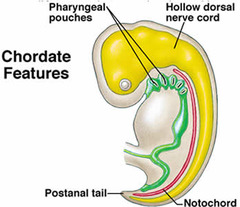
dorsal hollow nerve cord
a hollow, tubular structure derived from ectoderm, which is located dorsal to the notochord in chordates
E

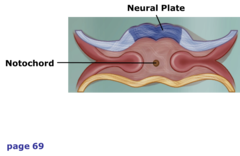
notochord
stiffening rod in the back just deep to the spinal cord
segments
repeating units of similar structure that run from the head along the full length of the trunk
the human body plan
1. tube within a tube
2. bilateral symmetry
3. dorsal hollow nerve cord
4. notochord and vertebrae
5. segmentation
6. pharyngeal pouches
pharyngeal pouch
outpockets of the human pharynx that occur in the embryonic stage
correspond to the clefts between fish gills
coelom
body cavity lined with serous membane
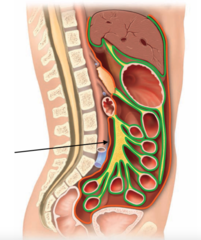
retroperitoneal cavity
cavity posterior to the peritoneum in the abdominal cavity
peritoneal cavity

sagittal plane

coronal plane

transverse plane

x-ray
radiation that pass through the body and get detected digitally or with film
dense objects block the radiation
when should we use x-rays?
- diagnose broken bones or examine teeth
- dtect foreign objects or disease in lungs
- detect dense areas of breast
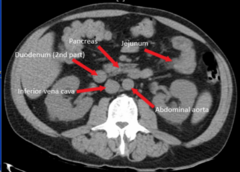
x-ray computed tomography (CT)
radiation is projectd through the body at multiple angles to produce a 3D image
- use of contrast dyes to enhace visibility of vessels
- diagnose abdominal, vertebral column, and brain injuries
Magnetic Resonance Imaging
uses a powerful magnet and radio waves to create images based on differential magnetic properties of organs/tissues
- 3D images, can use contrast
- images of SOFT TISSUES (abnormal vs. normal)

Positron Emission Tomography (PET)
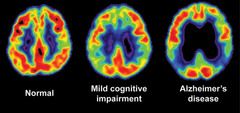
makes 3D images of tissue function instead of anatomy by using an injection of a radiolabeled substance that is absorbed by more active tissues
- can be combined with CT or MRI
- diagnose cancer, active brain areas
blastocyst
fluid-filled structure with an inner cell mass and trophoblast

embryo
inner cell mass of the blastocyst will form the _______
trophoblast
___________ will form the placenta
gastrulation
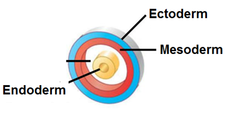
process by which the embryo grows from a two-layered disc to a three-layered disc (three primary germ layers)
complete by 3 weeks
endoderm
the inner germ layer that develops into the lining of the digestive and respiratory systems
mesoderm
middle germ layer; develops into muscles, and much of the circulatory, reproductive, and excretory systems
- mesenchymal-like, ability to migrate

ectoderm
outermost germ layer; produces sense organs, nerves, and outer layer of skin

neurulation
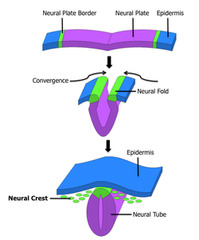
notochord will signal the ectoderm above it for _________, or thickening, into the neural plate
neural plate
layer of ectoderm that sinks in to form the neural folds

neural groove
invagination of neural plate
neural crest
A band of cells along the border where the neural tube pinches off from the ectoderm
mesoderm differentiation
forms 3 parts on both sides of notochord:
- somites
- splanchic mesoderm
- somatic mesoderm
somites
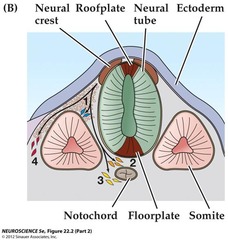
intermediate mesoderm
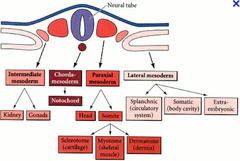
lateral plate
most lateral part of the mesoderm that will form the body cavity

neural crest cells
mesenchymal cells that induce formation of sensory neurons, skin structures, and some skull bones
mesenchymal cells
formed from mesoderm
- CT and blood vessels
- multipotent stem cells for CT (fibroblasts, osteoblasts, adipocytes)
- can mobilize, no cell adhesions, no apical-basal polarity
implantation
The process by which the zygote attaches to the uterine wall within the first week of fertilization
vertebrae
What replaces most of the notochord later in development?
ntervertebral discs
where are there remnants of notochord in adults?
somatic mesoderm
forms dermis of skin, bones, ligaments
splanchic mesoderm
Forms heart and blood vessels as well as visceral serosa, connective tissue and smooth muscle
self-renewal
differentiation`
What are basic properties of mesenchyme?
Originate from the neural folds through interactions of the neural plate with the presumptive epidermis
How do neural crest cells arise during development?

neural tube defects
congenital deformities of the brain and spinal cord caused by incomplete development of the neural tube, the embryonic structure that forms the nervous system

epithelial tissue
Tissue that covers outside of the body and lines organs and cavities.
connective tissue
A body tissue that provides support for the body and connects all of its parts
Where is epithelial tissue found?
Body surfaces, line body cavities, hollow organs and inside/outside of vessels, and are the major tissue in glands
Where is connective tissue found
bones, tendons, fat and other soft padding tissue
epithelial tissue
_____________ has a high regeneration and turnover of cells and is avascular
polarity
epithelial cells have ________, are interconnected, high cellularity, and tend to regenerate with mitosis
apical surface
surface of an epithelial cell that faces away from the basement membrane
site of adhesion proteins, tight junctions, and often cilia
basal surface
The bottom layer of epithelial tissue that attaches to the basement membrane
serves as a filter and foundation
simple cuboidal
_______________ is found in thyroid gland and kidneys and performs the functions of secretion and absorption.
simple columnar
_______________ is found lining most organs of the digestive tract including the stomach, and intestines
simple squamous
_______________ allows passage of materials by diffusion and filtration in sites where protection is not important; secretes lubricating substances in serosae
endocrine gland
a ductless gland that secretes hormones directly into the bloodstream
exocrine gland
gland that releases its secretions through tubelike structures called ducts
goblet cells
___________ are unicellular exocrine glands that release mucus in the airway and gut linings

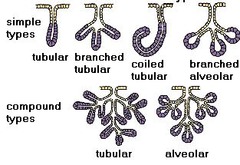
multicellular glands
include glandular epithelia and aggregations of gland cells that produce exocrine or endocrine secretions
- digestive glands, mammary glands
tight junction

desmosome
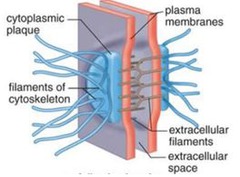
gap junction

ground substance
mostly water along with adhesion proteins and polysaccharide molecules
dense regular
tendons and ligaments
dense irregular
dermis of skin
hyaline cartilage
Most common type of cartilage; it is found on the ends of long bones, ribs, and nose
fibrocartilage
matrix is dense with collagen fibers in arranged pattern, chondrocytes are in lacunae
no perichondrium
resists compression/tension in different directions
- intervertebral discs, tendons at bone, pubic symphysis
fibroblasts
produce fibers and ground substance
chondrocytes
Cells that secrete cartilage.
osteoblasts
bone forming cells
loose areolar
mostly ground substance surround vessels, between skin+muscle, surrounds organs
adipose tissue
collection of fat cells
EMT
epithelial to mesenchymal transition
- loss of apico-basal polarity
- gain of mesenchymal proteins
- detachment

sarcomas
Cancers that arise in the connective tissue cells, including bones, ligaments, and muscles
- mesenchymal cancer
collagen fibers
strongest fibers; resist tension via bundles of crosslinked small fibrils
reticular fibers
meshlike, thin colalgen fibrils with more give
elastic fibers
contain elastin protein that allows stretched tissue to recoil
dense elastic CT
walls of large arteries
elastic cartilage
flexible but resilient to stretch
found in ear, epiglottis
epidermis
_________ is epithelial tissue derived from ectoderm
dermis
___________ is connective tissue derived from mesoderm
melanocytes
neural crest cells are progenitors for ___________, between ecto- and mesoderm
keratinocytes
epidermal cells that are connected with desmosomes and produced at the deepest layer from stem cells
stratum granulosum
most waterproof layer of the epidermis due to release of lipids by lamella granules
stretch marks
collagen bundles arranged in lines become torn, making _________________.
reticular
stretch marks originate from the _________ region of the dermis
hypodermis
subcutaneous layer of loos areolar CT under the dermis, with fibroblasts and adipocytes
- connects dermis to fascia of muscle
false
the hypodermis is a part of the skin
high
nail matrix and hair matrix are areas of ______ mitosis.
keratinocytes
nail and hair matrix produce keratinocytes to form keratinized nails and hair

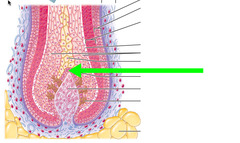
nail matrix

hair matrix
melanocytes
produce melanin pigment in granules that are transferred to keratinocytes and shields them from UV rays
light
melanin is digested by lysosomes in people with ________ skin.
keratin
a fibrous protein forming the main structural constituent of hair and nails
papillary dermis
layer of dermis directly under the epidermis; rich in blood vessels and cappilaries
- functions to increase surface area for diffusion from blood vessels
more
melanocytes produce _______ melanin in response to UV rays
eumelanin
Produces brown to black pigments in the hair
pheomelanin
Produces yellow to red pigments in the hair
melanoma
cancer of melanocytes
- likely to migrate in the blood because melanocytes arise from neural crest cells
curlier
the more ovular the hair shaft gets, the _________ the hair will be